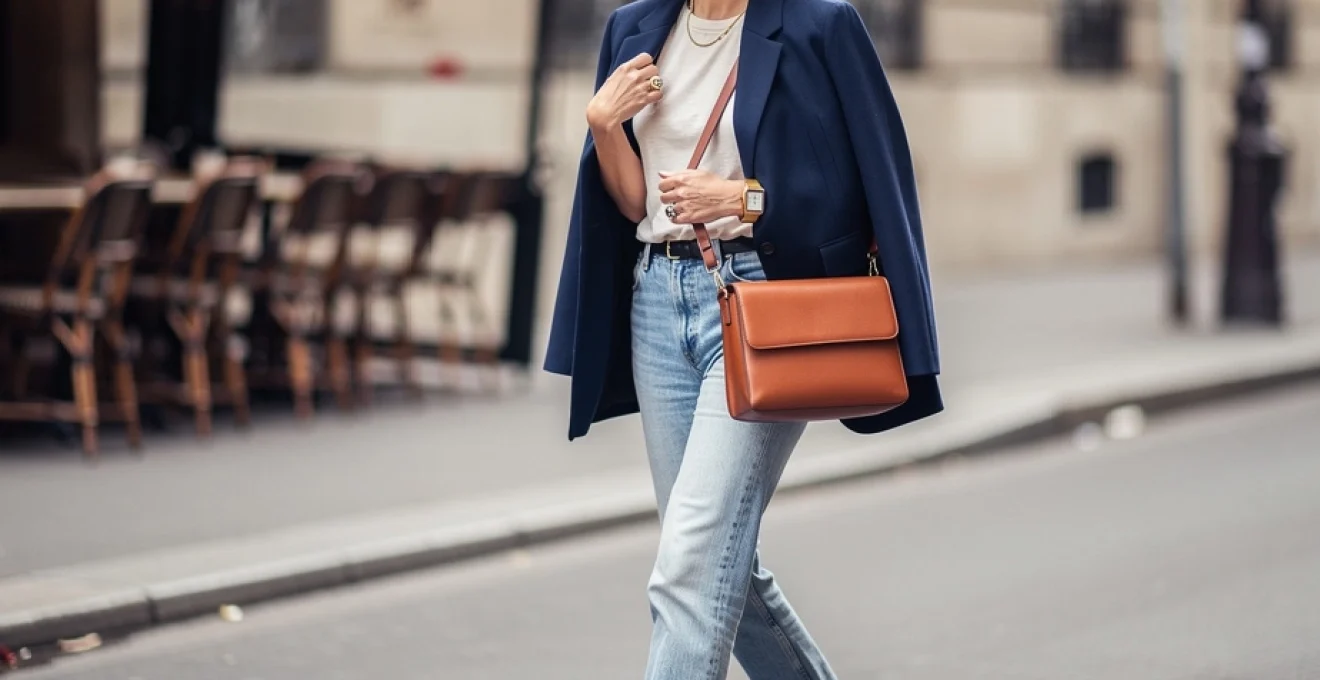
The pursuit of effortless style represents one of fashion’s most seductive paradoxes. Women spend countless hours perfecting an aesthetic that appears spontaneous, investing substantial resources in cultivating a wardrobe that suggests nonchalance. This carefully constructed illusion has captivated style enthusiasts for decades, from the sidewalks of Paris to the minimalist streets of Copenhagen. The truth behind this coveted aesthetic lies not in spontaneity but in meticulous preparation, strategic wardrobe curation, and an intimate understanding of personal style principles. What separates those who genuinely embody effortless elegance from those who merely chase trends is a foundational knowledge of garment architecture, proportional balance, and the subtle art of restraint.
Deconstructing french girl style: the parisian wardrobe philosophy
The Parisian approach to dressing has long served as the gold standard for effortless sophistication. This aesthetic philosophy prioritises quality over quantity, timelessness over trends, and authenticity over affectation. Understanding the architectural principles behind this wardrobe strategy reveals why certain women consistently appear polished without seeming overly styled.
Capsule wardrobe architecture: the 10-piece foundation system
Building a foundation of interchangeable, high-quality pieces forms the cornerstone of effortless dressing. The capsule wardrobe concept centres on approximately ten essential items that work harmoniously together, creating multiple outfit combinations without the paralysis of excessive choice. This system typically includes perfectly fitted dark denim, a crisp white shirt in premium cotton, a well-tailored blazer, a simple black dress, quality leather footwear, and versatile knitwear in neutral tones. Each piece must earn its place through exceptional fit, superior construction, and compatibility with existing wardrobe elements.
The strategic advantage of this approach extends beyond simplification. When every item coordinates seamlessly, you eliminate the mental overhead of outfit planning. This streamlined system allows for quick, confident dressing that appears uncontrived because the groundwork has already been established. Research indicates that decision fatigue significantly impacts daily productivity, and a curated wardrobe directly addresses this cognitive burden whilst simultaneously elevating your aesthetic presentation.
Colour psychology in neutral palettes: navy, camel, and charcoal dominance
The sophisticated use of neutral colour palettes creates visual cohesion that reads as effortlessly elegant. Navy serves as a more nuanced alternative to black, offering versatility whilst appearing less severe. Camel introduces warmth without overwhelming, functioning equally well as an accent or primary colour. Charcoal provides depth and gravitas, particularly effective in professional contexts. These colours possess inherent sophistication derived from their restraint and their ability to complement rather than compete.
Limiting your core wardrobe to three or four neutral tones creates a natural harmony in every outfit combination. This deliberate restriction paradoxically expands creative possibilities because you can focus on texture, proportion, and silhouette rather than colour coordination. The psychology of neutral dressing suggests confidence and intentionality—you’re secure enough in your style to let quality and fit speak rather than relying on bold colours for impact.
Natural fibre selection: linen, cotton, and cashmere as texture markers
Material quality fundamentally distinguishes genuinely effortless style from its imitation. Natural fibres possess inherent characteristics that synthetic alternatives cannot replicate: the way linen wrinkles beautifully, how cotton breathes and softens with wear, the luxurious drape of cashmere. These materials age gracefully, developing character rather than deteriorating. A cashmere jumper in excellent condition after five years signals investment dressing, whilst polyester blends often appear shabby after mere months.
The tactile and visual qualities of premium natural fibres communicate refinement at a subconscious level. Observers may not consciously identify fabric composition, yet they register the difference between authentic materials and synthetic reproductions. This distinction manifests in how garments move with your body, how they respond to light, and how they maintain their structure throughout the day. Investing in natural fibres represents a foundational commitment to sustainable elegance that transcends temporary fashion cycles.
The Anti-Trend approach: investment pieces over fast fashion cycles
Perhaps the most misunderstood element of “French girl style” is its relationship to trends. Parisian wardrobes are not immune to fashion’s evolution, but they engage with it selectively and slowly. Rather than overhauling their closet each season, stylish French women introduce one or two carefully chosen pieces that nod to the current mood while leaving the backbone of their style intact. This anti-trend approach relies on a clear internal filter: if a piece will not still feel relevant in three to five years, it rarely makes the cut.
From a practical standpoint, this strategy favours investment pieces over fast-fashion cycles. A sharply tailored wool coat, a pair of perfectly cut loafers, or a leather crossbody bag will be worn hundreds of times, amortising their initial cost and reducing environmental impact. Studies from the Ellen MacArthur Foundation show that extending the life of clothing by just nine months can reduce its carbon footprint by 20–30%, reinforcing that investment dressing is not only aesthetically powerful but also more sustainable. Effortless chic is built on this long-game mindset, where you curate with intention instead of constantly chasing novelty.
Mastering the art of strategic underdressing
Once the structural elements of your wardrobe are in place, the next layer of effortlessness comes from how you style those pieces. Strategic underdressing is the quiet skill that makes an outfit feel relaxed rather than overproduced. Instead of dressing at the exact formality level of the occasion, you intentionally step half a notch below—pairing a silk slip dress with flat sandals instead of stilettos, or wearing a blazer with vintage denim rather than matching trousers. This subtle downshift communicates ease, confidence, and a refusal to appear as though you laboured over your look.
Counterintuitively, underdressing in a controlled way often reads as more modern than being perfectly “appropriate.” It suggests that your life is full, that clothes serve you rather than the other way around. The key is precision: you are not turning up underdressed, but strategically underdressed, using contrast and balance to keep the outfit considered. Think of it as the style equivalent of an edited sentence—nothing unnecessary, nothing overly embellished, but all the information is still there.
The one statement piece rule: focal point theory in outfit composition
At the heart of strategic underdressing lies the “one statement piece” rule. This principle relies on focal point theory: the eye should have one primary place to land when it scans your outfit. When everything is competing for attention—bold shoes, dramatic earrings, a loud print, and a bright lip—the overall effect feels busy rather than effortless. Limiting yourself to a single hero element, such as a sculptural handbag or a striking red blazer, instantly introduces clarity and calm.
You can apply this by mentally assigning “volume” to each component of your look. If your coat is doing the talking, keep your jewellery quiet and your makeup soft. If your earrings are architectural, choose a simple knit and tailored trousers as their backdrop. This approach mirrors interior design, where a statement sofa or artwork is given space to breathe. When you treat your outfit as a composition rather than a collection of separate items, you naturally move toward that polished, effortless chic style you admire on others.
Proportional silhouette balance: Loose-Fitted versus tailored juxtaposition
Another hallmark of the effortlessly chic aesthetic is intelligent use of proportion. Rather than wearing everything tight or everything oversized, you juxtapose loose and fitted elements to create visual balance. A slouchy cashmere jumper looks intentional when paired with slim cigarette trousers; wide-leg jeans feel modern and neat with a close-fitting turtleneck. This tailored-versus-relaxed tension is what stops a simple outfit from slipping into either “too try-hard” or “just rolled out of bed.”
Think of silhouette balance as a set of scales—if one half of your outfit carries more volume, the other side should streamline. This is particularly useful if you’re dressing different body types while still aiming for an effortless style. For curves, a defined waist with a relaxed top can be far more flattering than head-to-toe bodycon. On taller frames, voluminous trousers with a sharp blazer suggest intention rather than overwhelm. Once you start seeing outfits in terms of shapes rather than individual pieces, achieving that model-off-duty ease becomes far simpler.
Skin-to-fabric ratio: the subtle exposure technique
Effortless chic rarely involves overt sexiness; instead, it plays with a refined balance between coverage and subtle exposure. Managing your skin-to-fabric ratio is like adjusting the lighting in a room—you want enough to create interest and warmth, but not so much that it feels glaring. A slightly open button at the collarbone, bare ankles between cropped trousers and loafers, or forearms revealed by pushed-up sleeves can be far more impactful than a plunging neckline.
This technique is particularly powerful because it aligns with the core idea of nonchalance. You appear as though you simply rolled up your sleeves to get on with your day or loosened your shirt after a coffee in the sun. When you choose one area of subtle exposure and keep the rest of the silhouette clean, you avoid sending mixed signals. The result is a look that feels grown-up, modern, and quietly alluring—elegant enough for the office, relaxed enough for weekend brunch.
The tuck, roll, and scrunch method: studied nonchalance in garment manipulation
The finishing touches that transform a basic outfit into an effortlessly stylish one are often tiny, almost invisible gestures. The tuck, roll, and scrunch method is essentially styling choreography: a half-tucked shirt to show the waistband of your trousers, a single cuff turn on your jeans to reveal the ankle, a jumper draped over your shoulders instead of worn properly. These micro-adjustments signal that you are in control of your clothes rather than being swallowed by them.
To put this into practice, build the habit of spending an extra 30 seconds adjusting your garments once you’re dressed. Try a front tuck with your T-shirt, then fully untucked, and note which looks more deliberate. Experiment with folding blazer sleeves back once instead of rolling them messily to the elbow. As with “natural” makeup, the difference is in these details; the more you practice, the more instinctive they become. Eventually, your “just-thrown-on” outfit will actually be the product of trained muscle memory.
Hair and makeup minimalism: the Low-Maintenance aesthetic
Clothing alone cannot deliver an effortlessly chic look; your hair and makeup must also support the narrative of ease. The goal is not to go bare-faced or unkempt, but to refine your routine down to what genuinely makes a difference. Minimalism here is less about doing the absolute minimum and more about doing only what matters. The result is a beauty look that feels lived-in rather than lacquered, aligned with the rest of your understated style.
This low-maintenance aesthetic has a practical benefit too: reduced decision fatigue and shorter mornings. A 2023 survey by Mintel found that 46% of women want to streamline their beauty routines, prioritising multitasking products and skincare over heavy makeup. When you approach hair and makeup with the same curatorial mindset as your wardrobe, you create cohesion—every element of your appearance tells the same story of quiet confidence.
The Lived-In hair texture: Second-Day styling and Air-Dry techniques
Perfect blowouts and intricate styling tend to clash with an “I didn’t overthink this” wardrobe. Lived-in hair—slightly tousled, with natural movement—aligns much more closely with the effortless chic ideal. French and Scandinavian women are known for embracing second-day hair, using dry shampoo, salt sprays, or light styling creams to enhance natural texture rather than fight it. The aim is a finish that looks as though it could have happened on its own, even if you spent a few minutes coaxing it into place.
Air-dry techniques are particularly useful if you’re cultivating this look. Applying a leave-in conditioner and a lightweight cream to mid-lengths and ends, then loosely twisting sections while the hair dries, can create soft waves without heat damage. Think of it like setting your hair on “autopilot” the night before so that the morning requires minimal effort. When your hair already has a relaxed, undone quality built in, you’re less tempted to overstyle—and your overall appearance syncs perfectly with a pared-back, stylish wardrobe.
The Five-Minute face: concealer, mascara, and lip balm formula
An effortlessly chic beauty routine hinges on strategic enhancement rather than full transformation. The “five-minute face” typically prioritises three key products: concealer to even out specific areas of concern, mascara to define the eyes, and a hydrating lip balm or tinted lip product to add life to the face. This combination respects your natural features while smoothing away the signs of fatigue or stress that can sabotage an otherwise polished outfit.
If you want to take this a step further without sacrificing speed, you can add a sheer skin tint and a cream blush that doubles as a lip colour. Cream formulas blend quickly with fingers, eliminating the need for a full brush kit. The philosophy is simple: instead of masking your face, you bring it into harmony with your clothes. When your makeup feels breathable and low-effort, your overall vibe reads as contemporary and unfussy—exactly what you’re aiming for.
Skincare-first philosophy: the french pharmacy approach
Underlying this minimalist makeup approach is a deep commitment to skincare. French women, in particular, are known for building routines around gentle, effective pharmacy products rather than constant experimentation. Cleansing milks, thermal water sprays, and barrier-supporting moisturisers form the backbone of their regimen, with retinoids or vitamin C serums added thoughtfully rather than impulsively. The goal is maintained health, not overnight transformation.
Adopting a skincare-first philosophy means you rely less on heavy foundation to create the illusion of good skin. According to a 2022 Statista report, the global skincare market is growing faster than colour cosmetics, reflecting a broader shift toward long-term care over short-term coverage. When your skin looks comfortable and well cared for, even on no-makeup days, your version of effortless style feels authentic rather than curated solely for show. The clothes, hair, and skin all tell the same story: you take care of yourself, but you have better things to do than fuss for hours.
Accessorising without Over-Accessorising: the edit principle
Accessories are where many aspiring minimalists lose their way. It’s tempting to use jewellery, bags, and scarves to “fix” an outfit that doesn’t quite feel right. Yet the most effortlessly chic women apply a strict edit principle: they add just enough detail to look intentional, then stop. This discipline prevents visual noise and supports the underlying simplicity of their wardrobe foundation.
Editing your accessories is a bit like editing a paragraph—every piece should justify its presence. Before you leave the house, take one last look in the mirror and ask: is anything here competing for attention? If the answer is yes, remove an item. Over time, this habit sharpens your eye: browsing curated women’s fashion essentials (in German) helps you build a small but powerful rotation of accessories that work hard without shouting.
Heritage timepiece selection: cartier tank and vintage watch investment
One of the most potent yet understated accessories in an effortlessly chic arsenal is a heritage-inspired watch. The appeal of classics like the Cartier Tank or a slim vintage mechanical watch lies in their quiet authority. They hint at history, craftsmanship, and continuity—qualities that mirror the investment mindset of an anti-trend wardrobe. Even if a Cartier is beyond your budget, there are many well-made, minimalist watches that reference this design language without veering into imitation.
When choosing a timepiece, focus on size, dial simplicity, and strap material. A watch that sits flat on the wrist and pairs equally well with a silk shirt or a white tee will earn far more wear than a heavily embellished piece. Think of this accessory as your style signature; it’s there every day, whether or not you wear other jewellery. Because it is both functional and decorative, a good watch quietly elevates even the most basic outfit of jeans and a knit, reinforcing that sense of considered ease.
The everyday bag hierarchy: from longchamp pliage to hermès constance
A well-chosen everyday bag does more than carry your essentials—it anchors your entire look. Effortlessly chic women tend to operate with a clear bag hierarchy: a practical, lightweight option for daily errands (think Longchamp Pliage), a structured leather bag for work, and a compact crossbody or shoulder bag for evenings and weekends. Each bag is neutral enough to work across outfits, yet distinct enough in shape or hardware to feel like a deliberate choice.
At the luxury end, designs like the Hermès Constance or Celine Box bag epitomise this philosophy: clean lines, minimal branding, and impeccable construction that improves with age. But the same principles apply at every price point. Prioritise bags that hold their shape, have reliable hardware, and align with your colour palette. A single well-loved, medium-sized leather bag that you carry for years will look infinitely more effortless than a revolving door of trend-driven, logo-heavy pieces that never quite feel like “you.”
Minimal jewellery layering: gold vermeil and signet ring stacking
When it comes to jewellery, the effortlessly chic aesthetic favours subtle repetition over maximalist layering. A slim gold vermeil chain, a pair of tiny hoops, and a single signet ring can become your daily uniform, worn so consistently that they feel like part of you. Additional pieces—perhaps a second chain or a delicate bracelet—are introduced sparingly, creating interest without clutter. The idea is to look as though you always wear these pieces, not as though you assembled them painstakingly that morning.
Ring stacking offers a useful example of this restraint. Two or three bands in similar metals, with varying textures or widths, provide depth without tipping into costume territory. Matching your metals across jewellery and hardware—belt buckles, watch cases, bag clasps—creates quiet cohesion. You do not need a jewellery box overflowing with options; you need a small, curated selection that works seamlessly with your wardrobe and aligns with your personal style narrative.
Posture, gait, and body language: Non-Verbal style communication
Even the most meticulously composed outfit can lose its impact if your body language tells a different story. Posture, gait, and expression are the non-verbal elements that either reinforce or undermine your visual message. Standing tall, with shoulders relaxed and an open chest, instantly changes how your clothes hang—blazers fall better, trousers skim rather than pull, and dresses drape as intended. Good posture is effectively free tailoring; it allows garments to perform at their best.
Your walk and gestures also contribute to this perception of ease. A hurried, jerky gait communicates tension, while a steady, unhurried pace reads as self-assured—even if you are heading to the same destination. You do not need to adopt an exaggerated “runway walk,” but bringing awareness to how you move in your clothes can transform your presence. Try thinking of your outfit as a quiet costume and your body language as the script; when they align, people register you as stylish before they consciously register any specific item you are wearing.
The cultural context: why italian sprezzatura and scandinavian lagom differ from parisian ease
While the phrase “effortlessly chic” is often shorthand for French style, other cultures have developed their own distinct interpretations of visual ease. Understanding these nuances can help you refine your own version rather than blindly copying an aesthetic that does not fully resonate. Italian sprezzatura, Scandinavian lagom, and Parisian nonchalance share a commitment to looking unforced, but they express it through different codes.
Sprezzatura—a concept dating back to Baldassare Castiglione’s 16th-century writings—celebrates deliberate imperfection. Think immaculate tailoring offset by an open collar, a slightly askew tie, or a boldly coloured pocket square. The message is: “I understand the rules so well that I can afford to break them.” Scandinavian lagom, by contrast, is rooted in moderation and functionality. Outfits prioritise practicality, sustainability, and comfort—clean lines, robust fabrics, and a muted palette that reflects the region’s landscapes.
Parisian ease sits somewhere between these poles. It is less polished than classic Italian dress, yet more sensual and decorative than Nordic minimalism. Where lagom might choose a technical parka, the Parisian might opt for a wool coat; where sprezzatura might embrace vibrant colour and sharp suiting, the French woman leans toward neutrals and softer tailoring. Recognising these differences frees you to borrow selectively: perhaps you love the structure of Italian jackets, the practicality of Scandinavian outerwear, and the understated romance of French blouses. True effortless style emerges when you edit these influences through the lens of your own life, body, and taste.