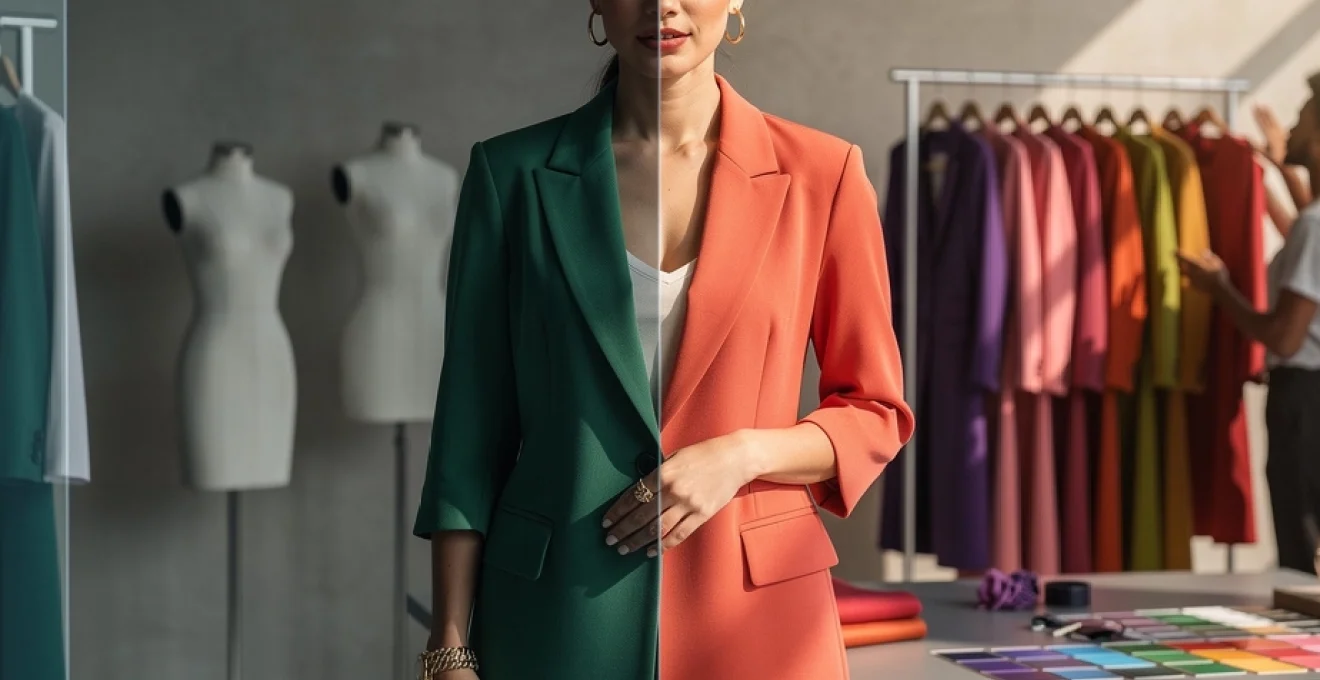
In an era where personal presentation significantly influences professional opportunities and social connections, transforming ordinary outfits into memorable ensembles has become an essential skill. The art of creating distinctive looks extends far beyond simply purchasing expensive garments or following fleeting fashion trends. Instead, it requires a sophisticated understanding of colour theory, fabric selection, styling methodology, and psychological principles that govern how others perceive and remember your visual presentation.
The science of memorable dressing draws from diverse disciplines including cognitive psychology, textile engineering, and cultural anthropology. Research indicates that individuals form lasting impressions within the first seven seconds of meeting someone, making strategic wardrobe choices crucial for personal and professional success. Moreover, studies show that people who dress distinctively are remembered 65% longer than those wearing conventional attire, highlighting the tangible benefits of thoughtful style curation.
Strategic colour theory application in everyday wardrobe transformation
The foundation of memorable dressing lies in understanding how colours interact with both your natural colouring and the psychological responses they evoke in observers. Professional stylists and fashion designers rely on established colour systems to create visually striking combinations that enhance the wearer’s natural attributes whilst creating lasting visual impressions.
Implementing the munsell colour system for personal style enhancement
The Munsell Colour System, originally developed for scientific colour classification, provides a precise framework for understanding colour relationships in fashion applications. This system evaluates colours across three dimensions: hue (the colour itself), value (lightness or darkness), and chroma (saturation intensity). When applied to wardrobe planning, the Munsell system enables you to create sophisticated colour combinations that appear intentional and polished rather than accidental.
Professional image consultants utilise this system to identify optimal colour ranges for individual clients. For instance, individuals with high-contrast natural colouring (dark hair with light skin) can successfully wear colours with extreme value differences, whilst those with lower contrast natural features should select colours within a narrower value range to maintain visual harmony. Understanding your position within this system eliminates guesswork and ensures consistently flattering colour choices.
Seasonal colour analysis techniques: determining your dominant undertones
Seasonal colour analysis extends beyond the superficial categorisation often popularised in fashion magazines, delving into the complex interplay between your natural colouring and the electromagnetic properties of different hues. This scientific approach examines how various wavelengths of light reflect off your skin, creating either harmonious or discordant visual effects.
The analysis process involves evaluating your skin’s undertones under natural lighting conditions, typically using draped fabric samples to observe how different colours affect your complexion. Cool undertones generally harmonise with blue-based colours, whilst warm undertones complement yellow-based hues. However, truly memorable dressing often involves strategically violating these rules through careful contrast manipulation.
Chromatic harmony principles: analogous and complementary palette creation
Creating memorable looks requires understanding the psychological impact of different colour relationships. Analogous colour schemes, utilising hues adjacent on the colour wheel, create sophisticated, harmonious appearances that appear effortlessly coordinated. These combinations work particularly well for professional environments where subtle distinction is preferred over bold statement-making.
Conversely, complementary colour schemes employ colours directly opposite each other on the colour wheel, creating dynamic visual tension that commands attention. The strategic use of complementary colours can transform a mundane outfit into a memorable ensemble. For example, pairing navy blue with burnt orange creates a sophisticated contrast that appears both intentional and striking without seeming garish or attention-seeking.
Advanced colour temperature manipulation for skin tone optimisation
The concept of colour temperature extends beyond simple warm and cool categorisations, encompassing subtle variations that can dramatically affect how others perceive your appearance. Understanding how to manipulate colour temperature allows you to enhance your natural colouring whilst creating memorable visual impact.
Professional stylists often recommend wearing colours that are slightly cooler than your natural undertones near your face, as this creates a subtle contrast that enhances skin clarity and brightness. This technique, known as temperature shifting, can make you appear more vibrant and memorable without requiring dramatic colour choices that might feel uncomfortable or inappropriate for your lifestyle
This approach is particularly effective in everyday looks where you want to appear refreshed and energised without drawing obvious attention to your clothing choices. By subtly cooling or warming the colours closest to your face—such as scarves, shirts, or knitwear—you can minimise shadows, neutralise redness, and create a soft-focus effect that makes your overall appearance more memorable. Over time, you will begin to notice which colour temperatures invite compliments and which seem to drain your features, allowing you to refine your wardrobe with strategic precision.
Fabric selection and textile engineering for visual impact maximisation
Whilst colour commands immediate attention, fabric is what determines how an outfit behaves in motion and in different lighting conditions. Strategic fabric selection allows you to sculpt your silhouette, control how garments drape over your body, and create tactile interest that elevates even the simplest look. Understanding basic principles of textile engineering—such as fibre composition, weave structure, and surface finish—empowers you to choose materials that support both comfort and visual impact in your everyday wardrobe.
Modern wardrobe planning benefits from an analytical approach to fabrics rather than relying solely on instinct or habit. By paying attention to drape, weight, and light reflection, you can transform a standard jeans-and-shirt combination into a carefully calibrated ensemble that feels intentional and refined. This is where concepts such as drape coefficient, textile weight distribution, and performance fibre technology become surprisingly practical for non-designers.
Drape coefficient analysis: choosing fabrics for body architecture enhancement
Drape coefficient refers to how a fabric falls or hangs when it is placed over a three-dimensional form. In simple terms, it measures whether a fabric collapses softly around the body or maintains a more architectural shape. Low-drape fabrics such as crisp cotton poplin or structured denim hold their form and can create sharp lines, whilst high-drape fabrics like silk, viscose, or fine merino wool flow and follow the contours of the body.
When you understand how drape interacts with your natural body architecture, you can use clothing almost like soft tailoring. For example, if you prefer to minimise the appearance of the midsection, choosing a top in a fabric with moderate drape will skim rather than cling, creating a smoother line. Conversely, if you want to emphasise angular shoulders or a defined waist, fabrics with more structure will create clear edges and visual definition. Think of drape as the difference between drawing in pencil (soft and fluid) and drawing in ink (sharp and precise)—both can be flattering, but they serve different style intentions.
Textile weight distribution techniques for silhouette manipulation
Textile weight, usually measured in grams per square metre (GSM), plays a crucial role in how clothing shapes the body and influences silhouette. Heavier fabrics naturally add volume and stability, whereas lighter materials introduce movement and softness. Strategic placement of fabric weight—light on top with heavy on the bottom, or vice versa—allows you to visually balance your proportions and draw the eye where you want it to go.
One effective technique for everyday outfit elevation is what stylists call “anchoring the silhouette.” This involves using slightly heavier textiles, such as wool, denim, or twill, on the part of the body you want to visually stabilise, while keeping the opposing half in lighter fabrics. For example, pairing tailored wool trousers with a fluid silk blouse creates an elegant contrast that looks intentional and refined. Ask yourself: where do you want visual emphasis and where do you want quiet support? Once you answer that, you can assign fabric weights accordingly rather than leaving the decision to chance.
Fibre composition impact on light reflection and visual texture
Beyond weight and drape, fibre composition determines how a fabric interacts with light, which directly affects how memorable an outfit appears. Natural fibres such as cotton, wool, linen, and silk each reflect light differently: silk and some wools tend to have a subtle lustre, whereas cotton and linen offer a more matte, relaxed appearance. Synthetic fibres like polyester and nylon can range from high-shine to semi-matte depending on their finish, but they often hold colour more intensely, which can be leveraged for statement pieces.
Understanding this relationship between fibre and light helps you create deliberate visual texture without relying on overt patterns. For instance, combining a matte cotton t-shirt with subtly lustrous satin trousers instantly adds depth to an otherwise simple look, as the eye registers variation in surface quality. In photography and in person, these nuanced contrasts allow your outfit to read as layered and sophisticated, even if the colour palette is minimal. Much like interior designers mix wood, metal, and glass to create interest in a room, you can mix matte and sheen within your wardrobe to make everyday combinations more striking.
Technical fabric innovations: incorporating performance materials into everyday looks
Advancements in textile technology have made high-performance fabrics widely accessible for everyday wardrobes. Moisture-wicking, temperature-regulating, and wrinkle-resistant materials are no longer confined to athletic wear; they now appear in shirts, trousers, blazers, and dresses designed for daily use. Incorporating these performance textiles can make your outfits not only more comfortable but also more consistently polished throughout a long day.
From a visual standpoint, technical fabrics often offer clean lines and resilience that support a sharp, memorable appearance. For example, a blazer constructed from a stretch, crease-resistant fabric will hold its shape from morning meetings to evening social events, preserving the integrity of your silhouette. When performance materials are blended with natural fibres—such as cotton with elastane or wool with technical yarns—you gain the best of both worlds: refined texture with practical wearability. As you refine your personal style, consider where performance fabrics could quietly support your lifestyle so that you look composed, even when the day is anything but.
Professional styling methodology: the coco chanel minimalist approach
Coco Chanel’s minimalist philosophy—prioritising simplicity, clarity of line, and a restrained colour palette—remains a powerful framework for transforming everyday outfits into memorable looks. Rather than relying on excess, her approach focuses on editing: removing what is unnecessary so that what remains can be fully appreciated. In a world saturated with visual noise, a clean, thoughtfully constructed outfit often stands out more than one overloaded with details.
Applying a Chanel-inspired methodology to your wardrobe begins with defining a core style vocabulary. This might include a limited palette of neutrals, a few accent colours that flatter your undertone, and a set of silhouettes that consistently work for your body type. Before adding anything extra, you evaluate each outfit against questions such as: Does every element serve a purpose? Is there a clear focal point? Could one piece be removed to make the look stronger? Chanel famously advised that you should “before you leave the house, look in the mirror and take one thing off”—a timeless reminder that memorability often lies in restraint, not excess.
Minimalism in this context does not mean deprivation or monotony. Instead, it is about intentional repetition and refinement. A well-cut black trouser, a perfectly proportioned white shirt, or a streamlined knit dress can be styled in multiple ways with subtle shifts in accessories, shoes, or outerwear. Over time, these consistent choices become part of your visual signature, making you recognisable and memorable for your clarity of style. By embracing a professional styling methodology grounded in minimalism, you create a wardrobe where every piece earns its place and every outfit communicates confidence with ease.
Accessory integration systems for elevated personal branding
Accessories function as the punctuation marks of your outfit, shaping its tone and directing attention to key areas. A structured bag, a sculptural earring, or a minimalist watch can transform a basic ensemble into a cohesive visual statement that people remember. When approached systematically, accessories become powerful tools for personal branding, allowing you to express identity, values, and aesthetic preferences through consistent, recognisable details.
Developing an “accessory system” means identifying a small set of recurring elements that appear frequently in your looks. These might include a preferred metal colour (gold, silver, or mixed), a signature jewellery shape (geometric, organic, or classic), or a recurring motif such as pearls, leather, or clean architectural lines. Rather than purchasing accessories randomly, you curate them as part of a unified style language. Over time, colleagues and friends may begin to associate you with these recurring details—your slim gold hoops, your structured tote, or your understated silk scarf—strengthening your visual identity in their memory.
From a practical standpoint, accessories also enable quick outfit elevation with minimal effort. A pair of polished loafers and a refined belt can instantly sharpen denim; a silk scarf can bring colour theory into play near your face; a statement cuff can serve as a focal point for an otherwise neutral outfit. Ask yourself: if someone sketched your typical look from memory, which accessory details would they include? By answering that, you can refine your accessory choices to support the personal brand you want to project.
Fashion psychology principles: creating memorable visual impressions
Behind every memorable outfit lies a set of psychological mechanisms that shape how others perceive, interpret, and recall your appearance. Fashion psychology explores how clothing influences not only external perceptions but also internal states—how you feel, behave, and perform when dressed a certain way. Understanding these principles allows you to move beyond aesthetics and use style as a strategic tool for communication and self-presentation.
Research in this field shows that what you wear can affect cognitive performance, confidence levels, and even the degree of trust others extend to you. For example, studies on “enclothed cognition” have demonstrated that wearing garments associated with competence, such as a blazer or lab coat, can actually enhance focus and task performance. When you deliberately align your outfit with the impression you wish to create—authoritative, approachable, creative, or precise—you increase the likelihood that others will perceive you accordingly and remember you for those traits.
Cognitive processing of visual style elements in social perception
When we encounter someone for the first time, our brains rapidly process a wealth of visual information: colour, contrast, symmetry, proportion, and movement. This information is filtered through cognitive shortcuts, or heuristics, that help us make quick judgements. Clothing functions as a high-speed data source during these initial assessments, influencing perceptions of professionalism, reliability, and approachability within seconds. In crowded or high-stakes environments, a clear, coherent style can help your image “stick” in others’ minds.
Visual clarity is one of the key factors that aids cognitive processing and recall. Outfits with a defined focal point—such as a strong colour accent, an interesting texture, or a distinctive silhouette—are easier for the brain to encode and later retrieve. Think of your appearance as a visual headline: too many competing details confuse the viewer, whilst a focused, well-edited look communicates your message immediately. By simplifying your palette, refining your lines, and choosing one or two distinctive elements, you make it easier for others to remember you accurately.
Anthropological significance of clothing choices in cultural context
From an anthropological perspective, clothing operates as a system of symbols that communicates group affiliation, status, role, and cultural values. Even in modern, globalised societies, we still interpret garments through learned cultural codes: a tailored suit may signal authority, streetwear may convey creative subcultural alignment, and traditional textiles can indicate heritage or identity. Understanding these cultural layers helps you navigate different environments without unintentionally sending conflicting messages.
When you align your personal style with the expectations and norms of a given context—while still expressing your individuality—you create a balanced impression that feels both respectful and distinctive. For example, in a conservative corporate setting, you might work within the boundaries of tailored separates and neutral tones but introduce subtle differentiation through accessories, texture, or refined colour accents. In creative industries, you might lean more heavily into experimental silhouettes or bolder colour combinations that signal innovation. By being aware of the cultural “language” of clothing, you can choose how closely to conform or diverge, making your appearance memorable for the right reasons.
Psychological impact of proportion and scale in personal presentation
Proportion and scale play a critical role in how we visually interpret outfits and bodies. Clothes that are well-proportioned to your frame create a sense of harmony that observers often experience as “stylish” or “put together,” even if they cannot articulate why. Conversely, garments that are consistently too large, too small, or disproportionate in key areas can create a visual dissonance that distracts from your message. Memorable style often emerges from deliberate manipulation of proportion rather than accidental imbalance.
One practical strategy is to play with the concept of volume contrast. Pairing a voluminous piece—such as wide-leg trousers or an oversized coat—with a more fitted counterpart prevents your shape from being overwhelmed while still feeling modern. The scale of accessories also matters: petite frames may be dominated by overly large bags or chunky jewellery, while larger frames can carry bolder pieces with ease. Think of yourself as both the subject and the canvas; you are adjusting the scale of each element so that, as a whole, the composition feels balanced, intentional, and visually pleasing.
Memory retention factors in style recognition and recall
For an outfit to be truly memorable, it must be both distinctive and coherent enough for the brain to encode as a clear mental image. Memory research suggests that we recall information better when it is associated with uniqueness, emotional resonance, or narrative context. In fashion terms, this means that people are more likely to remember your look if it features a recognisable signature element, evokes a particular mood, or fits into a story they can easily tell themselves about who you are.
Developing a personal “style signature” is one of the most effective ways to enhance recognition and recall. This might be a consistent colour family, a recurring silhouette (such as sharp tailoring or fluid dresses), or a particular accessory you wear often. Over time, these repeated choices become visual cues that others associate with you, much like a logo or brand mark in professional branding. By aligning colour theory, fabric selection, minimalist styling, and accessory systems with an understanding of how memory works, you can turn everyday looks into something not only aesthetically pleasing, but genuinely unforgettable.