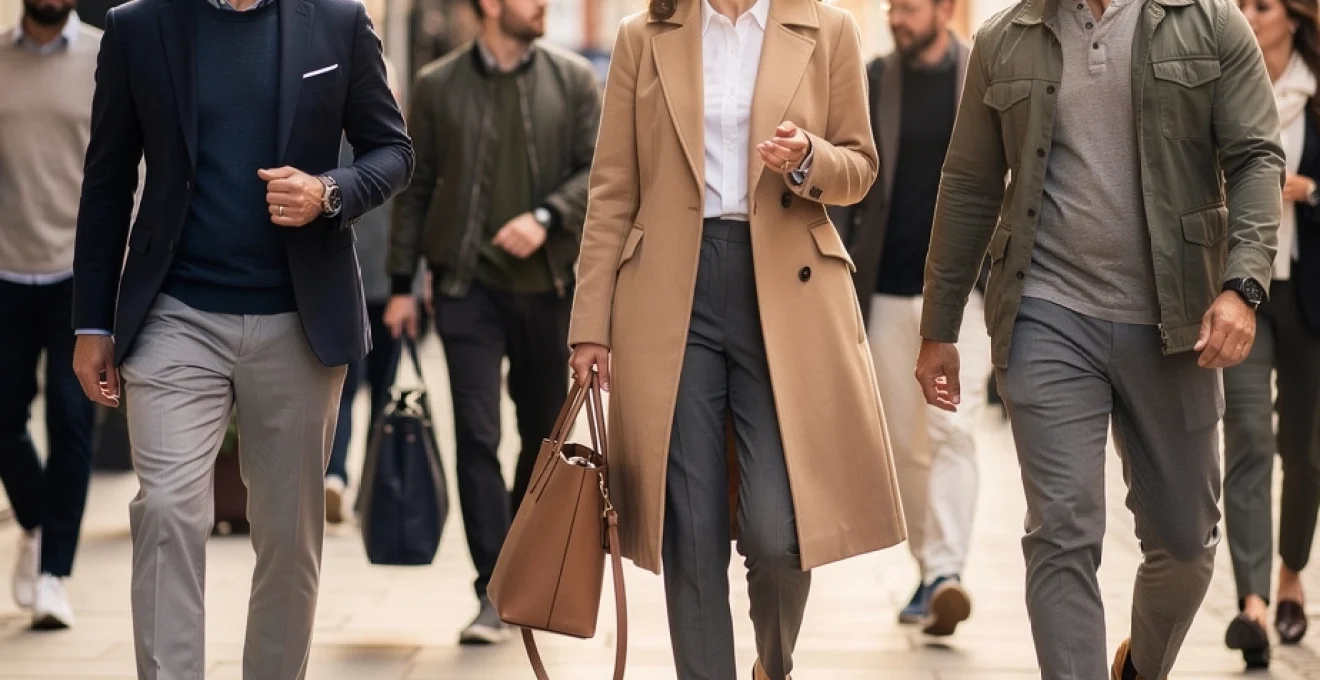
The modern dress code landscape has evolved dramatically, blurring traditional boundaries between formal and casual attire. Today’s sophisticated individuals seek outfits that seamlessly transition from professional environments to social settings whilst maintaining an elevated aesthetic. This shift represents more than mere fashion evolution; it reflects changing workplace dynamics and lifestyle priorities that value both comfort and refinement. The art of creating polished casual looks lies in understanding fabric quality, construction details, and strategic styling choices that elevate everyday pieces beyond their humble origins.
Contemporary fashion demands versatility without compromising sophistication. The challenge lies in curating pieces that appear effortless yet demonstrate careful consideration and attention to detail. Quality fabrications, thoughtful proportions, and refined finishing techniques transform basic silhouettes into investment-worthy wardrobe staples that command respect in any setting.
Smart casual dress codes: navigating business casual and elevated weekend wear
The smart casual dress code represents perhaps the most misunderstood concept in contemporary menswear. Unlike traditional formal wear with its clear parameters, smart casual exists in a fluid space that requires nuanced understanding of context, environment, and personal style expression. This ambiguity often creates anxiety amongst well-intentioned individuals who wish to appear appropriate whilst maintaining personal authenticity.
Decoding smart casual terminology in contemporary workplace settings
Modern workplaces increasingly embrace flexible dress policies that reflect evolving corporate cultures and employee expectations. Smart casual terminology encompasses everything from « business casual » to « relaxed professional, » each carrying subtle distinctions that impact wardrobe choices. Understanding these nuances prevents costly sartorial missteps whilst demonstrating cultural awareness and professional acumen.
The key lies in recognising that smart casual maintains formal wear’s structural principles whilst incorporating casual elements strategically. Think tailored trousers paired with premium knitwear, or unstructured blazers worn over sophisticated t-shirts. The overall silhouette remains polished, but individual components introduce comfortable, approachable elements that humanise the wearer without diminishing their professional credibility.
Transitioning from corporate formal to relaxed professional attire
The transition from traditional suiting to relaxed professional wear requires careful consideration of proportions, colours, and textures. Begin by replacing formal shirts with premium polo shirts or crew neck jumpers in refined materials like merino wool or high-quality cotton. Substitute traditional dress trousers with well-tailored chinos or smart jeans in darker washes that maintain visual weight and sophistication.
Footwear plays a crucial role in this transition. Exchange formal oxfords for leather loafers, premium trainers, or suede desert boots that maintain sophistication whilst introducing textural interest. The goal is creating outfits that feel approachable yet demonstrate the same attention to fit and quality that characterises excellent formal wear.
Weekend smart casual: elevating Off-Duty looks with structured elements
Weekend smart casual demands a different approach, emphasising comfort without sacrificing style consciousness. This context allows for greater experimentation with colours, patterns, and textures whilst maintaining the elevated aesthetic that distinguishes thoughtful dressing from mere casualness. Consider incorporating structured knitwear, premium denim, and sophisticated outerwear that elevates weekend activities without appearing overdressed.
The secret lies in mixing casual staples with one or two elevated pieces that anchor the entire look. A beautifully constructed cardigan transforms a simple t-shirt and jeans combination, whilst premium leather accessories add sophistication to otherwise relaxed ensembles. This approach ensures you appear put-together for spontaneous social encounters whilst remaining comfortable for leisure activities.
Geographic variations in smart casual expectations across UK regions
Regional variations significantly impact smart casual interpretation across the United Kingdom. London’s financial districts maintain more conservative standards, favouring tailored separates and premium accessories even in casual contexts. Meanwhile, creative industries in cities like Manchester or Edinburgh embrace more experimental approaches, incorporating streetwear influences and contemporary silhouettes whilst maintaining overall sophistication.
Understanding local context prevents sartorial faux pas and demonstrates cultural sensitivity. Research indicates that 68% of professionals adjust their casual wear standards based on geographic location, with Northern cities generally accepting more relaxed interpretations compared to traditional Southern centres. This awareness enables confident dressing choices
that respond intelligently to different social and professional environments. Whether you are commuting between cities, changing industries, or simply visiting a new office, treating smart casual as a flexible framework rather than a fixed rulebook will help your outfits remain both polished and context-appropriate.
Premium fabric selection and construction techniques for polished casual pieces
Refined casual outfits begin with fabric selection. Even the most minimal silhouette feels considered when cut from premium textiles that drape cleanly, resist creasing, and age gracefully. Investing in elevated fabrics for your casual wardrobe creates a foundation of garments that not only look sharp on day one but continue to perform after repeated wear and washing. This is where smart casual separates itself from purely casual clothing: quality materials signal intention and discernment.
When curating a polished casual wardrobe, pay attention to handle, weight, and construction details such as seam placement, reinforcement, and finishing. Subtle elements like taped seams, clean internal binding, or compact rib trims can make a simple crew neck or pair of trousers feel quietly luxurious. You are aiming for pieces that feel as good as they look, because tactile comfort is now as much a part of modern professionalism as visual impact.
Technical merino wool blends: uniqlo heattech and COS seamless knitwear
Technical merino wool blends represent one of the most effective ways to elevate casual outfits while maintaining comfort and practicality. Brands such as Uniqlo have democratised performance knitwear through their Heattech line, combining fine merino fibres with synthetic filaments to create base and mid-layers that regulate temperature, wick moisture, and resist odour. The result is a refined casual staple that looks like a classic jumper yet performs more like technical sportswear.
COS, by contrast, focuses on seamless knitwear that emphasises architectural lines and clean profiles. Their seamless merino pieces minimise bulk at the shoulder and side seams, creating an uninterrupted silhouette under blazers, bombers, and mac coats. If you find traditional knits bunch uncomfortably or distort the line of your jacket, these seamless constructions offer a noticeably smoother alternative. Consider them the knitwear equivalent of a well-engineered building: unobtrusive structure supporting elegant form.
From a smart casual perspective, technical merino excels because it bridges office, commute, and weekend wear with minimal effort. You can wear a fine merino crew neck with tailored chinos and loafers in a business casual setting, then pair the same knit with dark denim and minimalist trainers for dinner. The fabric’s ability to handle fluctuating temperatures and activity levels means you look composed even when the day’s schedule is anything but predictable.
Italian cotton poplin shirting: sunspel and oliver spencer construction methods
Italian cotton poplin remains a cornerstone of polished casual wardrobes thanks to its crisp handle, smooth surface, and subtle lustre. Unlike thicker oxford cloth, high-quality poplin drapes closer to the body, producing a cleaner line that sits comfortably under lightweight jackets and knitwear. Brands such as Sunspel use long-staple cotton yarns and compact weaving techniques to create shirts that resist puckering at the seams and retain their structure after repeated laundering.
Oliver Spencer approaches casual shirting with a slightly softer, more lived-in aesthetic while maintaining rigorous construction standards. Details such as French seams, reinforced side gussets, and carefully considered collar shapes differentiate their pieces from mass-market options. The collars are structured enough to sit neatly under an unstructured blazer yet relaxed enough to wear open-necked at the weekend without feeling overly formal. Think of these shirts as the smart casual equivalent of a well-tuned instrument: responsive, reliable, and capable of subtle nuance.
If you are transitioning from traditional corporate suiting, Italian cotton poplin shirts provide a familiar anchor within more relaxed outfits. Try replacing your classic spread-collar shirt with a soft-collar poplin style in muted tones like stone, eucalyptus, or slate blue. Paired with tapered chinos and suede loafers, this combination communicates refinement without the stiffness associated with full business formal attire.
Performance jersey fabrications: outlier slim dungarees and ministry of supply technology
Performance jersey fabrics have transformed how we think about trousers, blazers, and even shirting in refined casual wardrobes. Outlier’s Slim Dungarees, for example, use a highly engineered stretch fabric that combines the appearance of a cotton twill with the resilience and water-resistance of technical textiles. They move effortlessly with the body, resist stains, and maintain their shape far longer than conventional denim or chinos, making them ideal for travel-heavy roles or long commuting days.
Ministry of Supply takes a similarly innovative approach, infusing traditional menswear silhouettes with technology developed for athletic performance. Their use of 3D knitting, phase-change materials, and stretch-woven fabrics creates garments that adapt to body heat and motion. The result is business casual clothing that feels closer to activewear when worn but reads visually as classic office-appropriate attire. For anyone who dreads stiff waistbands or restrictive jackets, these pieces can be genuinely transformative.
From a styling standpoint, performance jersey trousers and blazers allow you to maintain a polished line while gaining the freedom associated with loungewear. You might pair a Ministry of Supply blazer with a merino crew neck and leather trainers for a modern smart casual look that handles back-to-back meetings, train journeys, and evening plans. In effect, these fabrics let you treat your day like a marathon while still crossing the finish line looking composed.
Ponte roma and milano knit applications in contemporary casual tailoring
Ponte Roma and Milano knits sit at the intersection of tailoring and knitwear, offering structure without rigidity. These dense, double-knit fabrics are heavier than standard jersey yet far more forgiving than traditional woven suiting. When used for blazers, trousers, and structured cardigans, they deliver a smooth, sculpted silhouette that reads as tailored from a distance but feels remarkably comfortable when worn. For many, they are the ideal fabric choice for elevated casual outfits that must withstand long hours at a desk or on the move.
Designers increasingly utilise Ponte and Milano knits to create unlined jackets with clean fronts, minimal shoulder padding, and subtle shaping through the waist. The inherent stretch allows these pieces to accommodate movement without creasing dramatically, which means you can wear them on flights or long drives and still arrive looking put-together. In trousers, these knits create a hybrid between joggers and dress pants: a tapered leg and sharp crease line combined with elasticated comfort and recovery.
If you have ever wished your favourite sweatshirt could look as refined as your smartest blazer, Ponte and Milano knit tailoring come close to delivering that fantasy. Pair a Milano knit blazer with a high-quality cotton tee, slim dark denim, and suede Chelsea boots for a look that sits perfectly between relaxed and refined. The key is to maintain simplicity elsewhere in the outfit; let the fabric’s subtle sophistication do most of the talking.
Strategic layering architecture for versatile polished combinations
Thoughtful layering is one of the most powerful tools for creating casual outfits that still feel polished and refined. Instead of treating layers as purely functional, consider them as architectural elements that build depth, structure, and visual interest. When you understand how base, mid, and outer layers interact, you can assemble combinations that adapt to changing temperatures and social contexts without sacrificing elegance. This is particularly valuable in climates where your commute, office, and after-work engagements all demand slightly different levels of formality.
Approach layering like designing a building: the foundation must be sound, the middle structure supportive, and the exterior both protective and visually coherent. Each layer should be able to stand alone but also integrate harmoniously with the others. By prioritising slim, breathable base layers, well-proportioned mid-layers, and refined outerwear, you create an effortless wardrobe system where individual pieces can be recombined in multiple ways throughout the week.
Base layer fundamentals: premium cotton tees and henley styling techniques
Base layers form the cornerstone of any polished casual look. Premium cotton t-shirts and Henleys in compact jersey or cotton-modal blends provide a clean, structured surface that sits smoothly under knitwear and jackets. Unlike cheaper, loosely knit tees that twist and lose shape, higher-quality versions maintain their neckline and hem integrity, preventing the sloppy appearance that can undermine otherwise refined outfits. For business casual settings, opt for mid-weight fabrics that are opaque enough to wear alone yet breathable enough to layer comfortably.
Henleys offer an excellent alternative to crew necks when you want a subtle point of difference without resorting to overt branding or graphics. The button placket introduces a vertical line that elongates the torso, and you can adjust the opening to modulate formality. Worn buttoned under a blazer, a Henley feels considered and contemporary; worn partially unbuttoned with a bomber or overshirt at the weekend, it leans more relaxed while still appearing intentional. Think of it as the smart casual midpoint between a t-shirt and an Oxford shirt.
In colour terms, base layers in off-white, soft grey, navy, and deep charcoal offer maximum versatility for refined casual wardrobes. You might ask, do small details like rib width or collar height really matter? They do, because these micro-proportions affect how the base layer frames your face and interacts with other garments. A slightly higher crew neck, for instance, can look more tailored under an unstructured blazer, whereas a lower, relaxed neckline might work better under chunky knitwear.
Mid-layer integration: cardigan weights and merino crew neck applications
Mid-layers provide both functional warmth and aesthetic structure, acting as the connecting bridge between your base layer and outerwear. Lightweight cardigans in fine merino or cotton-silk blends work brilliantly in office environments where you may need to remove your blazer but still wish to appear polished. Heavier shawl-collar cardigans, by contrast, can sometimes replace a jacket entirely in creative or relaxed professional contexts, especially when paired with tailored trousers and high-quality footwear.
Merino crew neck sweaters remain one of the most versatile mid-layer options for smart casual dressing. Their smooth, close-knit surface allows them to slide under blazers and mac coats without bulk, and their natural temperature regulation makes them comfortable from morning commutes to late-evening dinners. For a refined casual effect, choose slightly slimmer fits that follow the line of the body without clinging, and avoid overly prominent logos or excessive texture that can push the piece into overtly casual territory.
If you are building a capsule wardrobe, consider an ultra-light merino crew neck, a mid-weight cardigan, and a textured knit (such as a subtle waffle or seed stitch) as your mid-layer trio. This small selection enables multiple outfit permutations across seasons and dress codes. Much like layering flavours in cooking, the art lies in balance; combining too many heavy or textured mid-layers at once can feel visually overwhelming, while a single, well-chosen knit can add just the right level of depth.
Outer layer sophistication: unstructured blazer proportions and bomber jacket refinement
The outer layer is often the first element people notice, so its design plays a disproportionate role in how polished your casual outfit appears. Unstructured blazers, with minimal padding and soft construction, have become the backbone of modern business casual wardrobes. They maintain the V-shaped torso and strong shoulder line associated with traditional tailoring but offer the comfort and ease of a cardigan. When cut in textured wool, cotton twill, or technical blends, they pair as easily with dark denim as they do with flannel trousers.
Proportion is crucial when selecting an unstructured blazer. Aim for a length that covers the seat without falling too low on the thigh, and sleeves that allow a hint of shirt cuff or knitwear to show. Too long, and the blazer feels dated and overly formal; too short, and it veers into cropped trend territory that may date quickly. A gently nipped waist creates shape without the rigidity of traditional suiting, conveying informality while preserving a refined line.
Bomber jackets, when executed in premium fabrics, offer an excellent alternative outer layer for elevated casual looks. In suede, wool, or technical satin with matte finishes, they can appear every bit as sophisticated as a blazer while communicating a more relaxed attitude. The key lies in restraint: clean fronts, minimal branding, and subtle ribbing at the cuffs and hem prevent the piece from slipping into overtly sporty territory. Pair a dark suede bomber with a merino crew neck, tailored chinos, and leather trainers for an ensemble that feels contemporary, confident, and undeniably polished.
Seasonal transition pieces: lightweight mac coats and technical overshirts
Transitional outerwear ensures your refined casual outfits remain functional as weather and temperatures shift. Lightweight mac coats in cotton gabardine or technical bonded fabrics provide a streamlined silhouette that layers comfortably over blazers, knitwear, and base layers. Their clean lines and minimal detailing make them particularly effective in professional environments, where bulky parkas or highly branded rain jackets can feel incongruous with otherwise polished attire.
Technical overshirts occupy a slightly more casual space, bridging the gap between shirt and jacket. Often crafted from stretch cotton, nylon blends, or water-resistant fabrics, they can be worn buttoned over a tee in spring or layered under a heavier coat in winter. For weekend smart casual dressing, a technical overshirt over a Henley and slim jeans creates a relaxed yet deliberate look that transitions easily from brunch to gallery visits or informal gatherings.
Think of these transitional pieces as the connective tissue of your wardrobe. Without them, you may find yourself either underdressed for the weather or resorting to outerwear that undermines the refinement of the rest of your outfit. By choosing mac coats and overshirts in versatile neutrals such as stone, navy, or deep olive, you maximise their potential to integrate seamlessly with the majority of your existing pieces.
Footwear hierarchies: elevating casual silhouettes with premium construction
Footwear has an outsized impact on how casual outfits are perceived. The same combination of trousers and knitwear can read as business casual, creative professional, or off-duty depending on what you wear on your feet. Establishing a footwear hierarchy within your wardrobe helps you dial outfits up or down with precision, while keeping your overall aesthetic cohesive. In recent years, consumer data has shown a marked shift towards versatile silhouettes, with premium trainers and loafers outperforming traditional formal shoes in many metropolitan markets.
At the more refined end of the casual spectrum sit leather loafers, suede derbies, and sleek Chelsea boots. These styles complement tailored trousers and dark denim alike, adding structure and formality without the rigidity of classic Oxfords. Moving one step down, minimalist leather trainers with clean lines and low-contrast branding offer a contemporary option that pairs naturally with unstructured blazers and technical outerwear. The key is to avoid overly chunky soles or loud colour blocking, which can pull the outfit towards pure streetwear.
For weekends and relaxed professional environments, consider suede desert boots, refined chukka boots, or premium hybrid shoes that combine sneaker comfort with dress shoe uppers. These options handle a variety of terrains and weather conditions while maintaining a smart profile. Ask yourself: if you swapped your current shoes for a more considered pair, how dramatically would your outfit improve? Often, upgrading footwear is the single most effective way to transform everyday casual combinations into polished, grown-up ensembles.
Accessory integration strategies for elevated casual aesthetics
Accessories operate as the fine-tuning knobs of refined casual style. They may be smaller in scale than garments, but their impact on perceived polish is significant. A high-quality leather belt, for example, instantly sharpens the line between knitwear and trousers, while a well-chosen watch anchors the wrist and signals attention to detail. In an era where many workplaces no longer require ties, accessories have become a primary means of expressing personality within the boundaries of business casual dress codes.
When curating accessories for a polished casual wardrobe, prioritise coherence over quantity. A slim, minimally branded leather wallet, a simple metal or leather-strapped watch, and a compact cardholder can all contribute to a streamlined aesthetic that feels modern and intentional. Scarves in lightweight wool or cashmere add both warmth and visual interest in cooler months, particularly when chosen in tonal shades that complement your outerwear. Think of accessories as punctuation marks in an outfit: a belt is the comma that breaks the visual line; a bracelet or ring can serve as a subtle exclamation point.
Bags and carry goods also play a critical role. Replacing a worn backpack with a structured tote, brief, or technical messenger in quality leather or ballistic nylon can instantly elevate your overall appearance on commutes and client visits. Similarly, swapping loud logo caps for understated beanies or felt fedoras in appropriate contexts preserves the relaxed feel of your look while aligning it with a more refined aesthetic. The aim is not to overload yourself with “extras” but to select a few purposeful pieces that harmonise with your core wardrobe.
Colour psychology and tonal coordination in refined casual wardrobes
Colour choice is often the invisible factor that determines whether a casual outfit feels polished or haphazard. Neutrals such as navy, charcoal, stone, olive, and soft white form the backbone of most refined casual wardrobes because they are inherently calming, versatile, and easy to combine. Research into colour psychology suggests that cooler, desaturated tones are more likely to be associated with competence and reliability, making them especially suitable for business casual environments. By contrast, saturated primaries and high-contrast combinations tend to read as more energetic and informal.
Tonal dressing—building outfits from varying shades of a single colour family—is an effective strategy for creating sophisticated casual looks with minimal effort. For example, pairing charcoal trousers with a mid-grey merino crew neck and a light grey mac coat produces depth and interest without relying on bold patterns or accessories. This approach works equally well with navy, beige, and earthy greens, which can be mixed across fabrics like wool, cotton, and technical blends to add subtle texture.
That said, judicious use of accent colours can inject personality without compromising refinement. A muted burgundy scarf, forest green overshirt, or rust-toned knit can act as a focal point within an otherwise neutral outfit. The key is to treat strong colours like seasoning in cooking: a little goes a long way. If you are unsure, limit yourself to one statement shade per look and keep it away from the most formal elements, such as tailoring and dress shoes. Over time, you will develop an intuitive sense of which hues best complement your complexion, environment, and personal style.
Ultimately, colour and tonal coordination allow you to control the mood of your refined casual wardrobe. On days when you need authority and calm, lean into navy, charcoal, and deep green combinations. For social weekends or creative settings, experiment with warmer neutrals like camel, sand, and terracotta alongside soft blues. By understanding how colour influences perception, you can make more deliberate choices that align with your intentions—ensuring your casual outfits not only feel polished and refined but also communicate exactly what you wish to project.