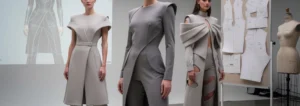
The silhouette represents perhaps the most fundamental decision in fashion design—it establishes the spatial relationship between garment and body, creates visual impact from across a room, and communicates design philosophy before a single detail becomes visible. In contemporary fashion, designers face the complex challenge of creating silhouettes that project strength and architectural presence while maintaining relevance in an era defined by fluidity, technological innovation, and evolving body consciousness. The question isn’t simply how to design a strong silhouette, but rather how to reconcile structural integrity with the sensibilities of 21st-century fashion. This pursuit has driven experimentation with new construction methodologies, material technologies, and conceptual frameworks that redefine what makes a silhouette feel both powerful and current.
Architectural principles of contemporary silhouette design in fashion
Fashion design shares fundamental principles with architecture—both disciplines manipulate space, manage structural forces, and create experiences through three-dimensional form. When designers reference architectural thinking in silhouette development, they’re accessing centuries of knowledge about how forms hold themselves in space, how visual weight creates presence, and how proportion systems generate aesthetic harmony. Contemporary silhouette design increasingly borrows from architectural vocabulary not merely as metaphor but as functional methodology.
Volumetric balance through geometric proportion systems
The most enduring silhouettes in fashion history demonstrate sophisticated understanding of proportion—the mathematical relationships between different volumes within a garment. Consider the New Look silhouette of 1947, which established a precise ratio between shoulder width, waist circumference, and skirt volume that read as revolutionary precisely because these proportions departed dramatically from previous norms. Contemporary designers working with strong silhouettes employ similar systematic thinking, though often with less conventional outcomes. The key lies in establishing intentional relationships rather than arbitrary dimensions.
Golden ratio principles, while sometimes overemphasized in design discourse, do offer useful frameworks for creating visually satisfying proportions. More practically relevant are modular proportion systems where one dimension governs others through multiplication or division. A designer might establish that shoulder width equals twice the waist dimension, which equals half the hem circumference—creating a coherent mathematical logic that holds the silhouette together conceptually even when the actual measurements seem extreme. This approach allows you to push proportions dramatically while maintaining an underlying structural coherence that prevents the silhouette from feeling arbitrary or chaotic.
Structural tailoring techniques from balenciaga and comme des garçons
Cristóbal Balenciaga’s approach to architectural tailoring established principles that remain foundational for designers pursuing sculptural silhouettes. His innovation lay not simply in creating volume but in engineering garments that held specific shapes independent of the body beneath—essentially creating wearable architecture. He achieved this through techniques including strategic seaming that followed structural rather than decorative logic, internal frameworks of interfacing and underlining that functioned like architectural armatures, and pattern cutting that incorporated three-dimensional thinking from the initial flat pattern stage. The resulting garments possessed what might be called structural autonomy—they maintained their intended silhouette regardless of the wearer’s movement or position.
Rei Kawakubo’s work at Comme des Garçons extended these principles into more conceptually radical territory, questioning fundamental assumptions about where garment volume should occur and how silhouettes should relate to body geography. Her Spring/Summer 1997 « Body Meets Dress, Dress Meets Body » collection featured padded protrusions that created silhouettes bearing no relationship to natural body contours—a provocation that nonetheless employed rigorous structural thinking. The technical achievement lay in creating these unconventional volumes in ways that remained wearable, balanced, and coherent as three-dimensional forms. This required sophisticated understanding of how weight distributes across the body, where structural support must concentrate, and how pattern pieces can create complex curves in space.
Negative space manipulation in modern pattern cutting
Strong contemporary silhouettes often derive their visual impact not from added volume but from strategic removal—creating negative spaces that define form through absence. This approach requires reconceptualizing the relationship between positive and negative space in garment design. Rather than thinking of cutouts or apertures as decorative elements applied to a complete form, designers working with negative space consider these voids as fundamental to the silhouette’s structure. The remaining fabric becomes a framework that articulates space, much as a building
holds together while intentionally exposing the space around and within the body. Contemporary pattern cutting uses this principle to create silhouettes that feel both strong and contemporary because the voids are as designed as the fabric itself. Think of curved armholes extended into deep scyes, exaggerated side vents, or carved-out back panels: each opening is drawn with the same rigor as a seam line, so the negative space reads as part of the garment’s architecture rather than an afterthought.
Effective negative space manipulation depends on controlling how the body appears in these voids. The designer must anticipate which anatomical landmarks will be visible and how they contribute to the overall composition—does the curve of the spine echo a shaped back cutout, or does a sliver of ribcage create a deliberate tension with a strict geometric aperture? Modern pattern cutting often begins with silhouette sketches in pure black, then progressively “erodes” areas to test which removals enhance clarity and which introduce confusion. In practice, you can mock up these ideas quickly in muslin or digital prototypes, evaluating silhouettes in backlit conditions or against high-contrast backgrounds to ensure that the interplay of fabric and emptiness still reads from distance.
Tension points and visual weight distribution methods
For a silhouette to feel strong rather than cumbersome, visual weight must be distributed with intentionality. In fashion design terms, tension points are areas where the garment visually or physically “anchors” to the body—shoulders, waist, hips, cuffs, or neckline. By concentrating or releasing tension at strategic points, you can guide the viewer’s eye and manage how weight appears to flow through the silhouette. This mirrors architectural load paths: just as a cantilever must visually resolve its support, an oversized sleeve or sculptural collar needs a clear anchor to avoid looking arbitrary.
Contemporary designers often use contrasting strategies—such as pairing a rigid, weighty shoulder line with a fluid lower body—to create dynamic equilibrium. The upper portion may carry most of the visual mass, but a carefully calibrated flare at the hem or a structured shoe rebalances the figure. You can think of this as plotting “gravity vectors” through the look: where does the eye believe the garment is heaviest, and how is that countered or echoed elsewhere? Mapping these vectors in sketch form or on a dress stand helps identify when a silhouette tips into visual instability (too much mass high up with no counterweight, for instance) and when it achieves that poised, architectural presence that feels deliberate and contemporary.
Material selection for sculptural strength and movement
However sophisticated the pattern, silhouette lives or dies through material behavior. In strong contemporary silhouettes, fabric choice operates like choosing concrete, steel, or glass in architecture: each material carries distinct structural and expressive possibilities. Designers today are no longer limited to traditional wools and silks; technical textiles, engineered knits, and hybrid constructions allow silhouettes that were previously impossible to support. The challenge is to balance sculptural strength with the kind of movement and comfort that modern wearers expect.
Understanding how different fabrics drape, recover, and respond to stress is essential to silhouette construction. Two garments cut from identical patterns can present radically different profiles depending on fiber content, weave, and finishing. As you develop a strong silhouette, you’re not simply choosing a “nice” fabric—you’re selecting a structural system for your design. Testing multiple fabric weights and compositions in toile form, even with simplified patterns, gives you a practical sense of how far you can push volume, cantilevers, and sharp lines before the material collapses or distorts.
Technical fabrics: scuba jersey and bonded knits in silhouette construction
Scuba jersey and bonded knits have become go-to materials for designers seeking bold, graphic silhouettes with minimal internal scaffolding. Their dense, spongy hand and inherent recovery act like a soft architectural foam, allowing sleeves to stand away from the body, peplums to flare crisply, and cocoon shapes to maintain volume. Unlike traditional tailoring cloths, these textiles can often hold a clean edge without heavy seam allowances or complex pressing, which supports the kind of simplified, monolithic silhouettes aligned with contemporary minimalism.
Yet the very qualities that make scuba and bonded knits powerful can also introduce challenges. Their thickness can create bulky seams, especially where multiple layers intersect, and their low breathability may conflict with everyday wearability. When using these fabrics for strong silhouettes, you’ll often need to rethink seam placement, minimize seam intersections, and consider partially unbonding layers in high-mobility areas like underarms or elbows. Treat these textiles as semi-structural panels: use them where you need architectural presence, then transition to lighter, more breathable materials in zones that require flexibility and comfort.
Interfacing and interlining systems for structural integrity
Even the most inherently stable fabric often needs an internal support system to achieve a truly architectural silhouette. Interfacings, interlinings, canvases, and fusible grids function as the garment’s internal skeleton, distributing stress, supporting edges, and preserving shape over time. In traditional tailoring, these components are largely invisible to the wearer; in contemporary design, they act as an engineered layer where you can fine-tune structure without overburdening the outer fabric.
The key is to think in zones rather than blanket application. Where must the shoulder line remain sharp? Where should the hem resist collapse despite heavy embellishment or volume? You might combine soft weft-insertion interfacings in curved areas that require subtle molding with stiffer horsehair or hymo in straight edges and plackets. In fashion houses known for strong silhouettes, it’s common to see complex “map” patterns of mixed interfacings within a single garment piece. By testing different reinforcement combinations in small samples, then subjecting them to pressing, steaming, and movement, you can identify a structural system that preserves your intended silhouette without compromising drape in adjacent areas.
Drape coefficient analysis in contemporary textile choices
To move beyond intuition, many designers and textile engineers look at drape coefficient—an objective measure of how a fabric hangs when suspended. While you don’t need sophisticated lab equipment to work effectively, understanding the spectrum from high-drape (fluid) to low-drape (stiff) textiles helps you predict how a given cloth will support your silhouette. Strong, sculptural silhouettes typically rely on low to medium drape coefficients in key zones, sometimes contrasted with high-drape panels to introduce movement where desired.
In the studio, you can approximate drape analysis through systematic testing: cut identical circles or rectangles of candidate fabrics, suspend them over a cylinder or mannequin shoulder, and photograph the resulting folds from multiple angles. Ask yourself: does this fabric create crisp, architectural folds, or does it puddle? Does it rebound after compression, or does it crease? By compiling this “drape library” for your own practice, you develop a vocabulary of textiles whose behavior you understand. This makes it far easier to design silhouettes that feel intentional—because you’re not fighting the fabric, but collaborating with its inherent physics.
Deconstructed tailoring methods in 21st century design
Deconstructed tailoring has become one of the most influential pathways to silhouettes that feel both strong and contemporary. Rather than rejecting structure, deconstruction repositions it—exposing inner architecture, displacing classic tailoring markers, and fragmenting garments into modular components. The result is not the absence of silhouette but a different kind of clarity: we see how the garment holds itself together, often in tension with how it historically should look. This productive dissonance generates a visual strength rooted in concept as much as in cut.
Practically, deconstructed silhouettes often retain some of the backbone of a tailored jacket or coat—shoulder canvases, lapel rolls, dart systems—but redistribute them. A lapel might migrate to the back, a shoulder pad might descend to the hip, or a classic princess seam might be opened into a vent that floats away from the body. These interventions create unexpected negative spaces and asymmetries while still referencing familiar tailoring codes, which helps audiences read the garment as sophisticated rather than purely chaotic. For you as a designer, this means studying traditional patterns not to replicate them, but to understand where they can be broken and why.
One effective strategy is to begin with a canonical tailored block and then systematically shift or remove structural elements. What happens if you rotate the side seam to the front and exaggerate its curve? If you detach the sleeve head and reattach it two inches lower, how does that drop affect the shoulder silhouette? Muslin prototypes where seams are drawn in marker and then cut open, overlapped, or staggered can quickly reveal new silhouette possibilities. This process echoes architectural adaptive reuse: you keep the load-bearing walls but carve new apertures, cantilevers, and circulation paths, creating spaces that feel both grounded and radically updated.
Digital pattern engineering for strong silhouette development
Digital tools have transformed how designers engineer silhouettes, shifting much of the trial-and-error from physical to virtual space. Where earlier generations relied on repeated calico toiles and hand-drafted pattern alterations, contemporary practice increasingly integrates 3D simulation, parametric pattern systems, and algorithmic adjustment. For strong silhouettes in particular, digital pattern engineering allows you to test exaggerated proportions, unconventional volumes, and complex layering with far more speed and precision than analogue methods alone.
The advantage is not only efficiency but also the ability to visualize silhouette behavior under different poses, body types, and fabric simulations. You can iterate through dozens of sleeve head heights, skirt flare angles, or collar stand heights in a single session, assessing which configurations read as powerful and contemporary from multiple camera distances. This does not replace physical sampling—especially when it comes to final material and movement—but it gives you a structured sandbox in which to explore extremes and refine them before cutting a single meter of fabric.
CLO3D and browzwear parametric design applications
Software platforms like CLO3D and Browzwear’s VStitcher are at the forefront of digital silhouette development. Their strength lies in parametric control: key pattern parameters—such as waist measurement, flare percentage, sleeve volume, or shoulder slope—can be adjusted numerically, instantly updating the 3D garment. This turns silhouette exploration into a kind of engineering exercise where you can systematically test proportional systems, tension zones, and fabric behaviors on a virtual avatar.
For example, you might set up a parametric coat block where hem circumference ranges from 1.2x to 2.5x shoulder width, with step changes of 0.1. By scrolling through these iterations in CLO3D, you can identify the threshold at which the coat’s A-line shifts from understated to dramatic to unmanageable. You can also store these states as versions, building a library of silhouette “families” that you can return to in future seasons. When combined with realistic fabric simulations—scuba, bonded knits, suiting wools—you get a much clearer preview of how strong silhouettes will actually inhabit space on a moving body.
Algorithm-driven dart manipulation and seam placement
Beyond simple grading, emerging workflows use algorithms to propose dart manipulation, seam placement, and panel subdivision based on pre-set silhouette goals. These systems, whether custom scripts in pattern software or AI-assisted modules, analyze curvature, strain maps, and target ease to suggest where darts might be rotated, split, or transformed into style lines that support the desired shape. Instead of manually experimenting with dart legs and pivot points, you can define regions of interest—say, the side body or shoulder blade—and let the algorithm generate options that you then curate.
This doesn’t mean relinquishing design authorship; rather, it’s akin to having a highly skilled pattern assistant capable of producing many technically sound variations very quickly. You might, for instance, specify that all darts in a bodice be redirected into a single sculptural side seam that wraps to the back, or that waist shaping be gradually transferred into a curved front yoke. The algorithm can generate multiple valid solutions, which you evaluate from the standpoint of aesthetic clarity, strength of line, and manufacturability. Over time, you can train your tools—through saved presets and rejected patterns—to align more closely with your signature silhouette language.
Virtual prototyping for silhouette testing and refinement
Virtual prototyping closes the loop by allowing you to test your engineered patterns in simulated movement. Strong silhouettes can look compelling in a static front view yet fail when the wearer sits, walks, or raises their arms. With 3D simulation, you can run quick “motion scripts”—walking cycles, seated poses, reaching gestures—and observe how volumes behave. Does the sculptural shoulder collapse when the arm lifts? Does the exaggerated hem catch awkwardly between the legs? These insights, which once required multiple physical fittings, are now accessible in minutes.
To make the most of virtual prototyping, approach it like a cinematographer studying an actor on set. Switch between long shots, mid-shots, and close-ups; use stark lighting to emphasize silhouette; rotate around the model while pausing at key angles. Capture screenshots of poses where the garment looks strongest, and note pattern areas contributing to that success. Likewise, document failure points and trace them back to specific seam placements, tension zones, or fabric choices. This iterative cycle—adjust pattern, re-simulate, reassess—helps you refine silhouettes until they project strength and coherence across a wide range of real-world scenarios.
Contemporary body architecture: beyond traditional fit standards
Strong contemporary silhouettes also demand a rethinking of what “fit” means. Traditional fit standards were built around narrow, often exclusionary body ideals and a focus on minimizing deviation from a prescribed norm. In contrast, current practice increasingly embraces the idea of body architecture—treating different bodies not as problems to be corrected but as varied structural bases upon which garments can build. This shift is central to making silhouettes feel current: power today is read not only in the clothes themselves, but in how inclusively they relate to the bodies wearing them.
Designing with body architecture in mind means expanding your block library beyond a single standard size and shape. You might develop multiple bases—a straight block, a fuller-hip block, a fuller-bust block, a short-torso block—and consciously test your strong silhouettes across them from the earliest stages. How does a sculptural shoulder read on a narrow versus broad frame? Does an exaggerated waist suppression rely on a body that very few people have, or can you engineer it through internal structure so that it flatters and empowers a range of wearers? These questions push silhouette development away from abstract runway fantasy and toward meaningful, contemporary relevance.
Another implication is rethinking where ease is allocated. Historically, fit optimization often meant smoothing or hiding certain curves; contemporary body architecture may instead highlight them as integral to the silhouette. A voluminous trouser might be cut to drape cleanly over a prosthetic limb, becoming a design statement rather than an attempted concealment. A tailored jacket might include gussets or modular panels that allow wheelchair users to maintain the same strong, architectural shoulder line when seated. By engineering silhouettes around a broader spectrum of postures, mobilities, and proportions, you create garments whose strength is not just visual but ethical—rooted in the reality of the people who wear them.
Case studies: rick owens, the row, and jacquemus silhouette methodologies
Abstract principles become far more tangible when we see them embodied in the work of specific designers. Rick Owens, The Row, and Jacquemus each pursue silhouettes that are unmistakably strong and resolutely contemporary, yet their methods and aesthetics diverge significantly. Studying their approaches offers concrete examples of how architectural thinking, material strategy, and body awareness converge into coherent silhouette languages.
Rick Owens, often described as the “godfather of glunge,” crafts monolithic, almost brutalist silhouettes that wrap the body in elongated volumes, dropped shoulders, and stacked layers. His use of heavy leathers, dense knits, and sharply carved pattern lines creates a sense of weight and permanence, yet strategic slits, cutouts, and asymmetric hems introduce fluidity and movement. If you analyze an Owens coat or tunic in pure black silhouette, you’ll notice how often the strength comes from a single dominant shape—an extreme funnel neck, a sharply angled shoulder, a towering boot shaft—anchored by lean underlayers that keep the overall figure legible rather than overwhelmed.
The Row operates almost at the opposite end of the spectrum, yet its silhouettes are no less decisive. Here, strength emerges from precision and restraint: impeccably set shoulders, exacting sleeve pitches, and long, uninterrupted verticals that skim rather than constrict the body. Fabrics tend toward luxurious yet structurally reliable wools, silks, and cashmeres with carefully calculated drape coefficients, allowing coats and dresses to fall in what appears to be an effortless line. In reality, countless pattern adjustments and fittings underpin that ease. For designers seeking to create powerful yet quiet silhouettes, The Row’s methodology illustrates how subtle shifts in shoulder width, armhole depth, and hem sweep can radically alter presence without resorting to extreme volume.
Jacquemus, by contrast, plays with scale, asymmetry, and strategic bareness to generate silhouettes that feel both playful and architecturally sharp. Cropped jackets with enlarged lapels, micro hemlines paired with exaggerated hats or bags, and off-kilter waistlines demonstrate how shifting visual weight across the body can create a memorable, contemporary outline. Negative space is central: a bare midriff between a shrunken blazer and high-waisted skirt, or a scooped-out back framed by strong shoulders, becomes part of the silhouette’s architecture. For your own work, Jacquemus offers a reminder that strong silhouettes don’t have to be heavy or serious—they can be light, sunlit, and even humorous, so long as the underlying proportional logic and structural thinking remain sound.
Taken together, these case studies show that there is no single formula for creating silhouettes that feel strong and contemporary. What unites them is not a shared shape but a shared rigor: each designer treats silhouette as foundational, aligning proportion systems, material behavior, construction techniques, and body politics into a cohesive whole. As you develop your own practice, you’re not copying these signatures but learning from their methods—using architecture as a lens, digital tools as amplifiers, and the diversity of real bodies as the ultimate testing ground for silhouettes that truly belong to the 21st century.