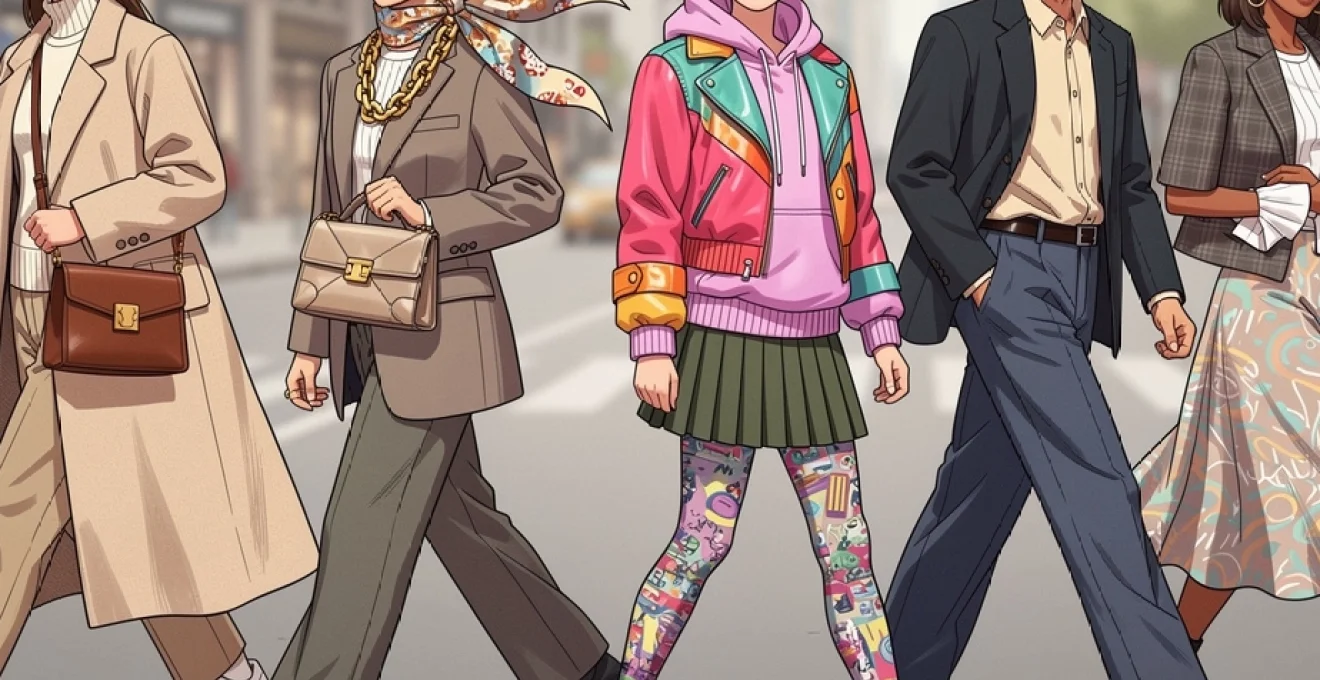
Street style photography from global fashion weeks has evolved from simple documentation into a powerful source of everyday fashion inspiration. The authentic styling choices captured outside runway shows offer a unique blend of high fashion accessibility and practical wearability that traditional magazine editorials often lack. These candid moments showcase how fashion insiders, influencers, and style-conscious individuals translate seasonal trends into real-world outfits that function in urban environments. Understanding the fundamental principles behind these street style moments can transform your approach to daily dressing, moving beyond basic outfit coordination into sophisticated styling territory.
Layering techniques from copenhagen fashion week street style
Copenhagen Fashion Week has established itself as a masterclass in sophisticated layering techniques that prioritise both style and functionality. The Scandinavian approach to layering extends far beyond simply adding warmth; it creates visual depth and textural interest whilst maintaining the clean aesthetic lines that define Nordic fashion sensibilities. Street style photographers consistently capture attendees who demonstrate how strategic layering can transform basic wardrobe pieces into complex, visually engaging ensembles that work seamlessly in transitional weather conditions.
Scandinavian minimalist layering with ganni and stine goya influences
The minimalist layering approach championed by Danish brands translates beautifully into everyday styling through careful colour coordination and thoughtful proportion management. This technique involves building outfits around a neutral base layer, typically in cream, beige, or soft grey tones, then adding carefully selected accent pieces that maintain visual cohesion. The key principle lies in limiting your colour palette to three complementary shades whilst varying textures and weights to create visual interest without overwhelming the overall aesthetic.
Danish fashion enthusiasts frequently demonstrate how to layer lightweight knits over crisp cotton shirts, creating subtle textural contrasts that add sophistication to simple combinations. This approach requires investing in high-quality basics with impeccable fits, as each layer remains visible and contributes to the overall silhouette. The Scandinavian preference for natural fibres like organic cotton, wool, and linen ensures that multiple layers maintain breathability whilst providing the structured appearance that defines this aesthetic approach.
Textural contrasts using wool, leather, and technical fabrics
Street style masters in Copenhagen excel at combining disparate fabric types to create dynamic visual narratives within their outfits. The juxtaposition of soft wool knits against structured leather pieces creates an compelling tension that elevates simple colour combinations into sophisticated styling statements. Technical fabrics, including water-resistant materials and performance textiles, add contemporary edge whilst maintaining the practical functionality essential for navigating urban environments in varying weather conditions.
This textural mixing technique requires understanding how different materials interact both visually and physically when layered together. Heavy wool coats pair beautifully with lightweight technical shirts, whilst soft cashmere scarves provide luxurious contrast against structured leather blazers. The success of this approach depends on balancing weights and textures so that no single material dominates the overall composition whilst ensuring comfort and freedom of movement throughout daily activities.
Proportional balance in oversized outerwear combinations
Copenhagen’s street style scene demonstrates masterful handling of oversized outerwear through careful attention to proportional relationships between different garment layers. The technique involves balancing voluminous outer pieces with more fitted underlayers to maintain flattering silhouettes whilst achieving the relaxed aesthetic that defines contemporary Scandinavian fashion. This approach requires understanding how oversized pieces interact with your body’s natural proportions and adjusting underlying layers accordingly.
Successful oversized outerwear styling often involves strategic tucking, belting, or rolling techniques that create shape definition without compromising the deliberately relaxed appearance. Wide-shouldered coats benefit from fitted turtlenecks underneath, whilst oversized blazers work effectively when paired with high-waisted trousers that create waist definition. The goal remains creating visual harmony between contrasting volumes whilst maintaining the effortless appearance that characterises Scandinavian styling approaches.
Monochromatic layering systems for urban environments
Monochromatic layering systems observed in Copenhagen street style photography demonstrate how tonal dressing can create sophisticated depth without relying on colour contrasts. This technique involves building outfits within a single colour family whilst varying shades, tex
tures, and finishes to avoid flatness. A charcoal wool coat layered over a slate cashmere knit and soft grey denim, for instance, feels elevated yet entirely wearable in a busy city. The effectiveness of monochromatic street style lies in the subtle interplay of light and shadow within one colour family, rather than in bold contrasts. To translate this into your daily wardrobe, start with your most-worn colour (often black, navy, or beige) and build a “layering stack” of three to four pieces that can be combined in multiple ways for commuting, office days, and evenings out.
Urban environments demand practicality, so monochromatic layering systems also need to consider climate, movement, and storage. Lightweight down vests that slip under tailored coats, packable rain shells in matching tones, and slim merino base layers help you stay warm without bulk. In cities where you move between public transport, offices, and outdoor spaces, this modular approach to layering allows you to add or remove pieces without disrupting the visual harmony of your outfit. Over time, you’ll find that investing in a few high-quality items in your chosen colour family creates an almost foolproof street style wardrobe that looks intentional even on rushed mornings.
Statement accessories translation from milan fashion week attendees
Milan Fashion Week street style offers a masterclass in using statement accessories to transform otherwise simple outfits. Italian attendees often start with a clean foundation—well-cut trousers, a sharp blazer, a sleek slip dress—and allow accessories to provide personality, polish, and trend relevance. This approach is particularly useful if you prefer a capsule wardrobe but still want your street style outfits to feel current. By focusing on a few high-impact pieces, you can achieve the kind of striking yet wearable looks captured by street photographers outside the shows.
Accessories in the Milanese context are not afterthoughts; they are deliberate styling tools deployed with precision. From chunky gold chains to structured handbags and directional sunglasses, each element is chosen to support both proportion and mood. Ask yourself before leaving the house: which accessory is the hero of this outfit? Once you identify that focal point, you can dial back everything else to create balance rather than visual overload. This mindset mirrors how many Italian stylists work backstage and on set, and it translates seamlessly into real-life street style inspiration.
Chunky gold chain integration with bottega veneta styling principles
The resurgence of chunky gold chain jewellery, popularised in part by Bottega Veneta’s accessories, has become a defining feature of contemporary street style outfits. When styled well, a substantial chain necklace or bracelet can act almost like a built-in collar or frame for the face, drawing attention upward and giving structure to softer silhouettes. The key is to treat chunky gold chains as part of your outfit’s architecture rather than as a last-minute addition. In many Milan Fashion Week looks, you’ll notice that the neckline, lapels, and even bag hardware echo the boldness of the jewellery for cohesive impact.
To integrate chunky gold chains into your everyday wardrobe, start by simplifying the surrounding elements. A plain white T-shirt, a black turtleneck, or a minimal slip dress provides an ideal canvas for a substantial chain, allowing it to shine without competition. Think of it as the “bridge” between casual and elevated—much like upgrading trainers to loafers instantly sharpens an outfit. If you’re concerned about overdoing it, limit yourself to one dominant chain and perhaps one supporting piece, such as small hoops or a slim bracelet, to maintain the refined edge associated with Bottega Veneta-inspired styling.
Structured handbag positioning techniques from prada street style
Prada’s influence on street style is particularly visible in how fashion editors and influencers carry their structured handbags. Beyond the bag itself, positioning—how and where you hold or wear a bag—can dramatically change the perceived proportion and attitude of your outfit. In Milan, you’ll often see rigid shoulder bags tucked high under the arm to create a neat, compact silhouette that contrasts with oversized outerwear. This technique shortens the visual line between shoulder and hip, which can be especially flattering over boxy coats or padded jackets.
For real-life street style, experiment with three main carrying positions: high on the shoulder with a shortened strap, hand-held at thigh level, and crossbody worn slightly higher on the torso. High-shoulder positioning works best with structured, mid-size bags and tailoring-heavy looks, echoing Prada’s polished mood. Hand-held styles feel more relaxed and are ideal with denim or wide-leg trousers, adding a subtle sense of purpose, as though you are in transit between meetings. Crossbody placement, when adjusted to sit just below the ribcage rather than at the hip, helps define the waistline over voluminous pieces and keeps your hands free—a practical advantage in busy city environments.
Oversized sunglasses styling from influencer street photography
Oversized sunglasses have long been a staple of street style photography, but recent seasons have shifted towards more angular, architectural frames influenced by both Y2K and futurist aesthetics. The right pair can act as a “visual filter” for your outfit, instantly adding mystery and sophistication. Influencers in Milan and Paris often use bold sunglasses to anchor otherwise delicate or romantic looks, such as floral dresses or soft knits, creating a tension that feels distinctly modern. When selecting oversized frames, consider them as seriously as you would a blazer: they affect proportion, balance, and even the mood of your entire look.
To style oversized sunglasses in a way that feels intentional rather than costume-like, align their shape with your outfit’s dominant lines. Rectangular or shield-style frames pair well with sharp shoulders, crisp shirting, and straight-leg denim, reinforcing clean verticals. Rounded or cat-eye oversized styles soften structured pieces and can complement draped fabrics or voluminous skirts. If you’re hesitant about going large, try a slightly upsized version of your usual frame shape first. Over time, you may find that a single pair of directional sunglasses becomes your go-to shortcut for turning basic jeans-and-blazer combinations into street style-worthy outfits.
Scarf draping methods inspired by italian fashion editors
Italian fashion editors are renowned for their effortless scarf styling, often captured by street photographers as they move between shows. Rather than neat, symmetrical knots, they tend to favour more fluid, asymmetrical drapes that introduce movement and volume. A lightweight wool or silk scarf can function almost like an additional layer, softening sharp tailoring or adding texture to a minimal coat. The aim is to look as though the scarf simply fell into place, even if you’ve adjusted it several times—much like “undone” hair that actually requires careful styling.
To recreate these scarf draping methods in your daily street style outfits, experiment with three foundational techniques. First, the “loop and tail”: fold the scarf in half, loop it around your neck, then pull one tail longer than the other and twist slightly for an off-centre effect. Second, the “shoulder throw”: drape the scarf around your neck with equal lengths, then toss one side over the opposite shoulder, letting it cascade down your back. Third, the “belted wrap”: spread a larger scarf or stole across your shoulders like a cape and secure it at the waist with a belt, ideal for transitional weather. Each technique adds different degrees of drama and warmth, allowing you to adapt to changing temperatures while maintaining that editor-approved nonchalance.
Colour coordination strategies from tokyo harajuku district
The Harajuku district in Tokyo offers some of the most inventive street style colour stories in the world, blending saturated hues, pastels, and unexpected combinations with fearless creativity. While full Harajuku looks may feel too bold for everyday wear, the underlying colour coordination strategies are surprisingly adaptable. At their core, these outfits treat colour as a primary design tool rather than a secondary consideration, much like a graphic designer uses a palette to guide the viewer’s eye. For those looking to inject more personality into their urban wardrobes, studying Harajuku street style can be transformative.
One of the most accessible techniques is the use of a “hero colour” repeated in different intensities across an outfit. For example, a bright cobalt jumper might be echoed in a softer blue sock and a navy bag strap, creating cohesion without feeling overly matched. Another common strategy is pairing traditionally clashing hues (such as pink and red or orange and fuchsia) but moderating them with neutral anchors like white trainers or a black blazer. If you’re hesitant, start small: you might introduce a vivid beanie or bag to an otherwise neutral look, then gradually increase the colour dosage as your confidence grows. Over time, you’ll likely find certain combinations—such as mint with chocolate brown or lilac with charcoal—that become signatures in your personal street style vocabulary.
Silhouette mixing principles from new york fashion week photography
New York Fashion Week street style is an invaluable reference point for mixing silhouettes in ways that feel dynamic yet wearable. Because the city’s fashion crowd moves constantly between shows, meetings, and commutes, their outfits have to balance drama with functionality. This results in a wealth of real-world-tested proportions: wide-leg trousers grounded with structured tops, cropped blazers over fluid dresses, and oversized shirts neatly tucked to reveal the waist. If you’ve ever wondered why some outfits look “off” despite consisting of great individual pieces, the answer often lies in silhouette balance rather than in colour or print.
To apply NYFW-inspired silhouette mixing in your own wardrobe, think of each outfit as a conversation between volume and structure. When one element is loose or oversized, another should provide definition—whether at the shoulder, waist, or ankle. This doesn’t mean you must avoid all-over volume, but you will need intentional anchors, such as a cinched belt, a sharp collar, or a fitted knit. Treat your mirror like a photographer’s viewfinder: step back, assess the overall shape, and tweak proportions with small adjustments like cuffing trousers, half-tucking a shirt, or swapping bulky shoes for something more streamlined. These seemingly minor changes can turn an ordinary look into something that feels editorially polished yet entirely appropriate for daily wear.
Wide-leg trouser styling with fitted upper garments
Wide-leg trousers have become a street style staple in New York, favoured for their comfort, movement, and ability to elongate the leg line. However, the most successful outfits balance this lower-volume silhouette with more fitted upper garments to maintain clarity and structure. Slim turtlenecks, ribbed tanks, and tailored shirts all work as effective counterpoints, creating a clean torso that allows the trousers to take centre stage. The underlying principle mirrors architectural design: a solid, streamlined upper “framework” supports a more expansive base without feeling unstable or overwhelming.
In practical terms, focus on where the waistband of your wide-leg trousers hits. High-waisted styles pair particularly well with cropped or neatly tucked tops, visually lifting the waist and making the legs appear longer—a frequent trick seen in NYFW street photography. If you prefer mid-rise trousers, opt for tops that skim the body and hit just at or slightly below the waistband to avoid unnecessary bulk. Footwear also plays a crucial role: pointed or almond-toe boots, sleek loafers, or minimalist trainers that disappear under the hem help maintain an elongated silhouette. Ask yourself: if a photo were taken of this outfit from across the street, would the overall shape read as intentional and streamlined? Adjust your proportions until the answer is yes.
Cropped blazer proportioning over flowing midi skirts
Cropped blazers over flowing midi skirts have emerged as a key silhouette in New York and Paris street style, blending tailoring with movement in a way that feels both modern and romantic. The shortened jacket length effectively highlights the waist, providing structure to the softer, swishing lines of the skirt. This combination is especially helpful if you love wearing skirts but want them to feel less bohemian and more city-ready. Think of the cropped blazer as the “comma” in your outfit’s sentence: it creates a natural pause and point of emphasis before the eye travels down to the skirt.
To get the proportions right, aim for the blazer hem to hit at the narrowest part of your torso or just above the top of the skirt’s waistband. If your blazer is slightly longer, you can still create a similar effect by belting it at the waist or opting for a subtle French tuck with an under-layer to define shape. Pleated midis, bias-cut satin skirts, and lightweight A-line styles all respond beautifully to this pairing, especially when kept in relatively simple colours or prints. On your feet, choose footwear that echoes the outfit’s overall tone: heeled ankle boots for a sharper feel, ballet flats for understated elegance, or chunky trainers if you want to lean into a sport-luxe aesthetic seen often outside NYFW venues.
Oversized shirt tucking techniques for streamlined silhouettes
Oversized shirts are one of the most versatile pieces in a street style wardrobe, but without considered styling they can quickly overwhelm your frame. New York street style regulars often rely on strategic tucking techniques to preserve volume while revealing enough structure to keep the look intentional. The classic full tuck, the relaxed half-tuck, and the “nipped-back” tuck (where only the back hem is tucked in) each create different effects on the overall silhouette. Choosing the right method can be as impactful as changing the shirt entirely.
For a streamlined city look, try pairing a roomy shirt with straight or slim trousers and experimenting with the half-tuck: tuck in just one side of the front hem and allow the other to drape, creating an asymmetrical line that adds movement without bulk. If you’re wearing wide-leg trousers or a voluminous skirt, a full tuck usually works best, then gently pull a few centimetres of fabric out over the waistband to soften the line—this is often called “blousing.” The nipped-back tuck, where you tuck only the back hem into high-waisted trousers or a skirt, is particularly effective under long coats, ensuring the front hem hangs cleanly while the back stays controlled. These small adjustments can turn an oversized shirt from “borrowed and baggy” to “editorial and effortless” in seconds.
Pattern clashing methodologies from london fashion week street style
London Fashion Week street style is synonymous with fearless pattern clashing, reflecting the city’s eclectic cultural mix and experimental fashion history. While print-on-print outfits can appear intimidating, the most successful examples follow clear, repeatable rules. Rather than random chaos, they rely on shared colour stories, scale contrasts, and recurring motifs to keep the eye grounded. If you have ever admired a checkerboard coat paired with a floral dress or stripes layered under plaid and wondered why it works, you are essentially analysing these underlying methodologies.
A practical starting point is to choose one dominant pattern and one supporting pattern, then link them through at least one shared colour. For instance, a navy-and-white striped top can pair harmoniously with a navy-based floral skirt, even if the motifs are very different. Varying scale is also crucial: small polka dots with oversized checks or fine pinstripes with bold animal print create visual hierarchy, preventing the patterns from competing equally for attention. One useful analogy is to think of pattern clashing like mixing music tracks—one should act as the baseline, steady and consistent, while the other provides melody and flair. Finish with neutral accessories (black boots, tan bag, or simple gold jewellery) to give the eye a place to rest.
For those ready to experiment further, London’s most daring dressers often introduce a third pattern through accessories such as scarves, bags, or tights. The key here is subtlety: a micro-print sock peeking out from trousers, or a small graphic-print bag, can add complexity without tipping into visual overload. Ask yourself a simple question before stepping outside: does my eye know where to land first? If the answer is no, reduce one pattern’s presence by covering part of it with a coat, opting for a solid top layer, or swapping one item for a simpler alternative. With practice, you’ll build confidence and may find that pattern clashing becomes one of the most expressive tools in your street style toolkit.
Footwear selection strategies from parisian arrondissement street photography
Street photography from Paris’s various arrondissements consistently reveals one unifying truth: footwear can make or break a street style outfit. Parisians are experts at choosing shoes that balance elegance, comfort, and practicality for walking on cobblestones, climbing metro stairs, and navigating long days. Rather than relying solely on trend-driven styles, they prioritise shape, proportion, and material. A simple outfit—straight-leg jeans, a trench coat, a fine knit—can look instantly elevated when paired with a sharply pointed ankle boot or a beautifully cut loafer, whereas an ill-matched shoe can undermine even the most considered look.
One effective strategy is to categorise your footwear not only by style (trainers, boots, flats, heels) but also by the silhouette they create when viewed from the side. Slim, low-profile trainers or loafers lengthen the leg and work especially well with cropped trousers and midis, a common combination photographed in the Marais or Saint-Germain. Chunkier soles and platform styles, popular in more youthful districts like the 10th and 11th arrondissements, are best balanced with either bare ankles or shorter hemlines to prevent the outfit from feeling too heavy. As a rule of thumb, the more volume your shoe adds, the more intentional you need to be with your hem length and trouser break.
Material choice also plays a significant role in Parisian footwear styling. Smooth leather in black, chocolate, or tan remains a staple because it ages beautifully and coordinates with a wide range of outfits, supporting the “low effort, high impact” aesthetic that defines much French street style. Suede boots or Mary Janes can soften sharp tailoring, while patent finishes or metallic accents introduce subtle glamour for evening without requiring a full outfit change. When you’re building your own footwear capsule for city life, consider investing first in three pairs that echo what you see most often in street photographs: a sleek everyday trainer, a polished ankle boot with a stable heel, and a classic flat or loafer. With these anchors in place, you can confidently assemble street style outfits that feel as at home in your neighbourhood as they would on the pavements of Paris.