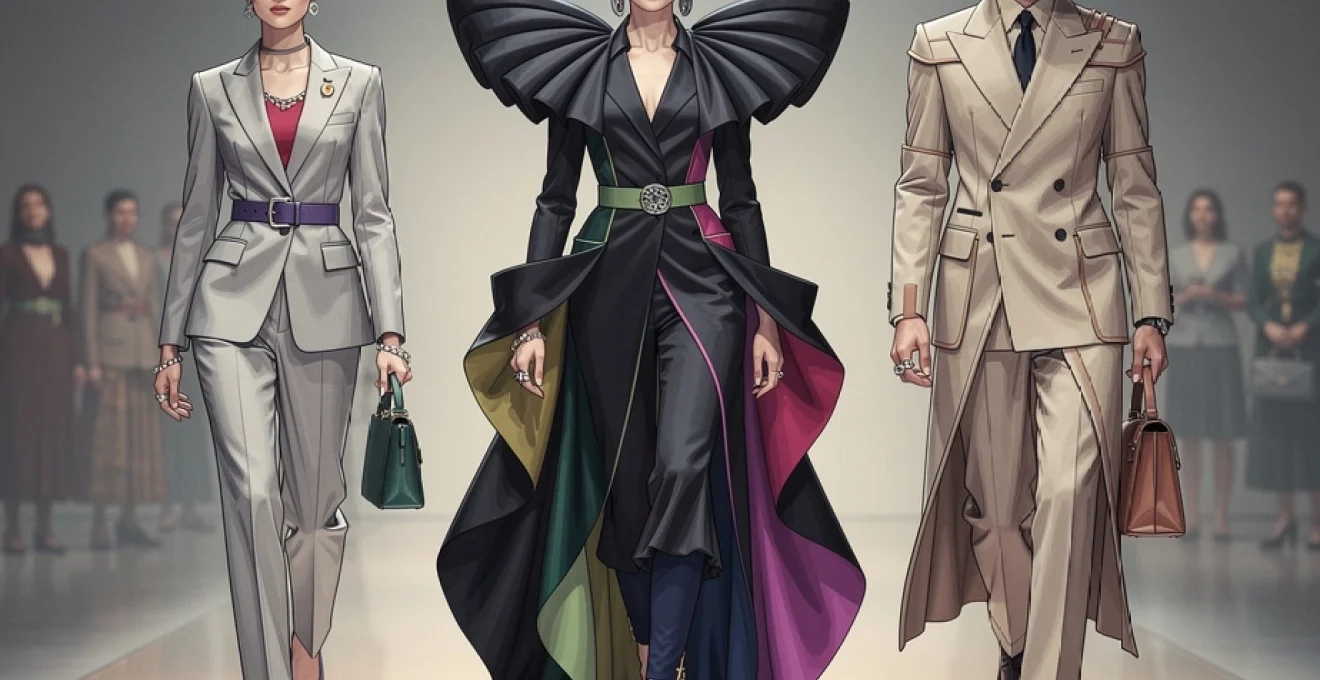
Fashion has always been a delicate dance between convention and rebellion, where the most memorable styles emerge from those who dare to challenge established norms whilst maintaining an air of sophistication. The modern fashion landscape presents unprecedented opportunities for sartorial experimentation, yet the question remains: how does one push creative boundaries without sacrificing the timeless appeal of elegance? This exploration requires understanding that true style innovation isn’t about abandoning refinement—it’s about reimagining it through contemporary lenses.
The fashion industry’s most influential moments have consistently emerged from designers who understood that breaking rules requires first mastering them. From Coco Chanel’s revolutionary approach to women’s liberation through clothing to contemporary designers who deconstruct traditional silhouettes, the path to meaningful style evolution demands both courage and restraint. Today’s fashion enthusiasts find themselves at a unique crossroads where technological advances in textile production meet centuries-old craftsmanship traditions, creating endless possibilities for sophisticated risk-taking.
Understanding contemporary fashion Risk-Taking within classical aesthetic frameworks
Contemporary fashion risk-taking operates within established aesthetic frameworks that have defined elegance for generations. The most successful style experiments acknowledge these foundations whilst introducing elements that challenge conventional expectations. This approach requires understanding the psychology behind what makes certain combinations feel harmonious versus jarring, and why some departures from tradition enhance sophistication whilst others diminish it.
The concept of sophisticated rebellion has become increasingly relevant as fashion consumers seek authentic self-expression without compromising professional credibility or social acceptance. This balance manifests in subtle subversions: unexpected fabric combinations that maintain visual cohesion, unconventional silhouettes that flatter the wearer’s proportions, or bold colours applied within restrained palettes. The key lies in maintaining one consistent element of traditional elegance whilst allowing others to venture into uncharted territory.
Deconstructing coco chanel’s revolutionary approach to sophisticated rebellion
Coco Chanel’s enduring influence stems from her masterful ability to challenge societal expectations whilst creating garments of undeniable refinement. Her approach involved systematically identifying elements of men’s clothing that could enhance women’s comfort and confidence, then adapting these features within distinctly feminine frameworks. The iconic Chanel suit exemplifies this philosophy: borrowing the structured jacket concept from masculine tailoring whilst maintaining curves and proportions that celebrate the female form.
Chanel’s colour philosophy demonstrates how constraints can enhance creativity rather than limit it. Her preference for neutral palettes—black, white, beige, and navy—created a foundation that allowed for subtle experimentation with texture, proportion, and detail. This approach proves that pushing boundaries doesn’t require dramatic colour statements; sometimes the most impactful innovations emerge from perfecting subtleties within established parameters.
Alexander McQueen’s theatrical couture as template for elegant experimentation
Alexander McQueen’s legacy illustrates how theatrical elements can enhance rather than overwhelm sophisticated design when applied with precision and purpose. His collections demonstrated that avant-garde concepts could coexist with impeccable craftsmanship, creating garments that were simultaneously shocking and beautiful. McQueen’s approach involved identifying emotional or conceptual themes, then translating these ideas through technical excellence and attention to traditional couture details.
The McQueen methodology proves particularly relevant for contemporary style experimenters because it emphasises story-telling through clothing. Rather than adding unusual elements arbitrarily, successful risk-taking involves identifying personal narratives or aesthetic concepts, then finding sophisticated ways to express these ideas through fabric choice, silhouette manipulation, or unexpected detail placement. This approach ensures that bold choices feel intentional rather than accidental.
Maison margiela’s conceptual design philosophy for refined edge
Maison Margiela’s deconstructionist approach offers valuable insights into how intellectual concepts can inform wearable fashion without sacrificing accessibility. The brand’s signature techniques—exposed seams, unfinished edges, and reconstructed vintage pieces—demonstrate how traditional tailoring methods can be reimagined to create contemporary relevance. This philosophy encourages experimentation with garment construction whilst maintaining respect for craftsmanship traditions.
The Margiela influence extends beyond professional designers to everyday fashion enthusiasts who wish to incorporate conceptual thinking into their personal style. Simple techniques like wearing garments inside-
out or layering pieces with visible linings allows you to nod to this conceptual edge without compromising elegance. The goal is to treat deconstruction like a whisper rather than a shout: one off-kilter element in an otherwise classic outfit can be enough to convey intelligence and intention. Think of a traditional trench coat with raw-edged cuffs, a white shirt with subtly exposed seams, or a tailored blazer styled with deliberately visible labels. These quiet disruptions keep your look polished while signalling that you understand fashion as both craft and concept.
Rick owens’ architectural silhouettes within luxury fashion context
Rick Owens demonstrates how radical silhouettes can still read as luxurious when anchored in premium materials and a restrained colour palette. His work often relies on elongated proportions, strong shoulders, and sculptural draping, yet the consistent use of high-quality leather, cashmere, and silk jersey keeps everything firmly within a high-end fashion context. For you, this offers a blueprint for experimenting with more daring shapes—dropped crotch trousers, exaggerated collars, or elongated coats—while staying rooted in refined, monochrome styling.
To translate Owens-inspired architectural silhouettes into an elegant everyday wardrobe, start by altering just one structural element at a time. You might pair a sharply structured, long-line blazer with slim tailored trousers, or choose a softly cocooned coat worn over a simple column dress. By keeping your colour story muted—charcoal, black, ivory, or deep chocolate—you allow the form of each garment to take centre stage without appearing costume-like. This balance between drama and discretion is what makes boundary-pushing silhouettes wearable in real life.
Strategic colour theory applications for advanced style evolution
Pushing your style boundaries often begins with colour, yet colour is also where elegance can most easily be lost. Strategic colour theory gives you a framework to experiment intelligently rather than relying on trial and error. Instead of randomly adding bright shades, you can use psychological research, runway references, and brand colour strategies to decide which hues support your personal brand of sophistication. When used with intention, advanced colour combinations transform your wardrobe into a curated palette rather than a chaotic spectrum.
Many luxury houses build entire collections around tightly controlled colour stories, proving that disciplined choices can still feel daring. As you evolve your style, consider how each new hue interacts with your skin tone, existing wardrobe, and lifestyle demands. Are you introducing a statement shade that works across multiple outfits, or a one-off piece that will languish unworn? By treating colour like a design tool rather than a novelty, you elevate every outfit while still giving yourself room to play.
Pantone colour psychology in High-End wardrobe transformation
Pantone’s annual Colour of the Year and seasonal forecasts shape global fashion trends, but their deeper value lies in colour psychology. Shades associated with calm (dusty blues, soft greens), authority (navy, charcoal), or creativity (vibrant corals, rich violets) can reinforce the message you want your wardrobe to send. Luxury brands frequently harness these associations to influence how collections are perceived, blending emotional resonance with visual impact. You can do the same on a personal level, using colour to support both your mood and your desired image.
To apply Pantone colour psychology to an elegant wardrobe, select one or two emotionally aligned accent colours each season rather than chasing every trend. For instance, if you wish to project quiet power, integrate deep petrol blue accessories into your neutral outfits. If you want to soften a severe tailored look, consider adding a blouse or scarf in a serene, desaturated green. This targeted approach lets you push beyond black and beige while maintaining cohesion and sophistication across your high-end wardrobe transformation.
Monochromatic palette manipulation techniques by jil sander
Jil Sander is renowned for demonstrating how a monochromatic outfit can feel more luxurious than the most complex print. Her collections often feature head-to-toe looks in a single hue, yet they avoid monotony through subtle shifts in tone, texture, and proportion. This approach is ideal if you want to experiment with bolder silhouettes or unusual fabrics while preserving a sense of calm, minimalist elegance. The eye reads a monochrome palette as unified, allowing you to take greater risks elsewhere.
To employ Jil Sander–inspired monochromatic palette manipulation in your everyday style, start by choosing one base colour—ivory, camel, navy, or charcoal—and build an outfit using three variations of that shade. Mix matte with sheen, structured tailoring with fluid drape, and smooth fabrics with textured knits. You might be surprised how daring a look can feel when you push extremes in cut and fabrication while remaining faithful to a single colour family. The result is an outfit that feels experimental but still polished enough for the most formal settings.
Jewel tone integration methods from versace collections
Versace has long mastered the art of using jewel tones—emerald, sapphire, amethyst, and ruby—to convey glamour without tipping into excess. These saturated hues instantly elevate an ensemble, yet they can be intimidating for someone used to neutrals. The key lies in borrowing Versace’s method: treat jewel tones like precious stones in a jewellery box, using them as focal points against more understated surroundings. This allows you to enjoy high-impact colour while preserving balance and elegance.
Begin by introducing jewel tones through one hero piece at a time: a silk blouse in deep emerald, a pair of sapphire wide-leg trousers, or a structured amethyst coat. Anchor these items with black, charcoal, or soft beige to avoid visual overload. Over time, you can experiment with pairing two jewel tones together—such as emerald and amethyst—provided the silhouettes remain clean and the accessories minimal. This method of jewel tone integration encourages you to step outside your comfort zone but keeps your overall style firmly grounded in sophistication.
Neutral base foundation systems for statement piece integration
Neutrals are the silent architecture of an elegant wardrobe, providing a foundation that lets statement pieces shine. Luxury houses from The Row to Max Mara rely on meticulously crafted neutral base systems—camel coats, black trousers, white shirts, ivory knitwear—to support more experimental items. When your core pieces are well-chosen and consistent, you can rotate in bold prints, unexpected textures, or directional silhouettes without disrupting your overall aesthetic. Think of neutrals as the gallery wall that allows each artwork to be appreciated in its best light.
To build a neutral base that supports style risk-taking, identify three to four primary neutrals that flatter your skin tone and lifestyle. Common combinations include black, white, grey, and camel; or chocolate, cream, olive, and stone. Ensure that your most-worn categories—trousers, skirts, blazers, coats, and knitwear—are available in these shades with impeccable fit and quality. Once this foundation is in place, you can confidently introduce a statement print dress, sculptural shoes, or an avant-garde bag, knowing your base wardrobe will harmonise with each new addition.
Fabric innovation and textile technology in contemporary elegance
Modern textile technology allows you to experiment with form and function in ways that were unimaginable a generation ago, without sacrificing elegance. Performance fabrics, sustainable blends, and innovative weaves now appear in high-end collections, offering stretch, breathability, and durability wrapped in a luxurious finish. According to recent industry reports, the global smart textiles market is projected to grow by over 25% annually through 2030, driven partly by fashion’s desire to merge practicality with sophistication. This trend gives you new tools to push your style boundaries while keeping comfort and longevity in mind.
When selecting fabrics for an elevated yet experimental wardrobe, prioritise materials that balance technical performance with tactile pleasure. Double-faced wool, recycled cashmere, and silk blends with elastane provide structure and drape while allowing freedom of movement. Bonded fabrics can create sharp, architectural lines ideal for statement coats, while modern satin and silk finishes reduce snagging and static, making them easier to wear daily. By choosing innovative textiles with a refined hand-feel, you ensure that even your most daring pieces remain a pleasure to wear, not just to look at.
Proportional engineering and architectural tailoring principles
Proportion is one of the most powerful yet underused tools for pushing your style boundaries while staying elegant. Architectural tailoring treats the body like a dynamic structure, using seam placement, volume distribution, and length variations to sculpt a visually harmonious silhouette. Designers across the globe—from Tokyo to London—apply proportional engineering to make bold shapes feel balanced rather than overwhelming. For you, understanding these principles makes the difference between an outfit that feels « too much » and one that reads as confidently directional.
Consider proportion as the grammar of your wardrobe: once you master the rules, you can bend them with intent. Lengthening the leg line with high-waisted trousers, softening strong shoulders with fluid skirts, or counterbalancing oversized coats with slim under-layers are all examples of architectural thinking. This approach encourages you to experiment with volume and structure, knowing that each choice has a visual consequence. Instead of asking, « Is this too dramatic? » you begin to ask, « What do I need to add or subtract to make this drama feel deliberate? »
Japanese minimalism through issey miyake’s geometric construction
Issey Miyake’s work, especially his Pleats Please and A-POC lines, exemplifies how geometric construction can be both radical and serene. His garments often begin as flat, two-dimensional shapes that transform into three-dimensional forms when worn, proving that complexity can coexist with minimalism. The signature pleating technology allows fabric to move with the body, creating sculptural silhouettes that remain surprisingly practical. This Japanese minimalism offers a roadmap for those who want to experiment with form while respecting the ease and purity associated with elegance.
To incorporate Miyake-inspired geometric construction into your wardrobe, look for pieces that play with folds, pleats, and origami-like details in simple colourways. A pleated midi skirt in ink black, a boxy top with architectural sleeves, or a dress that shifts shape as you move can all serve as entry points. Notice how these garments often require fewer accessories because their structure is already visually rich. By allowing geometry to become the focal point, you can keep your colour and styling minimal, achieving a refined yet boldly modern look.
Savile row traditional techniques for modern silhouette innovation
Savile Row represents the pinnacle of traditional tailoring, yet its techniques are increasingly used to create innovative silhouettes that push beyond classic suiting. Canvassed construction, hand-set sleeves, and precise pattern cutting enable garments to hold unusual shapes while remaining comfortable and flattering. Many contemporary designers collaborate with Savile Row-trained tailors to realise experimental proportions—cropped suit jackets, elongated lapels, or sculpted waistlines—without losing the integrity of the garment. This fusion of heritage and innovation provides a compelling template for your own style evolution.
When you invest in tailored pieces, whether bespoke or ready-to-wear, pay attention to these underlying construction methods. A blazer with a softly nipped waist and slightly extended shoulder can create a powerful yet elegant line, especially when paired with wide-leg trousers or a sleek pencil skirt. Subtle deviations from tradition—such as a curved hem, asymmetric fastening, or unusual pocket placement—can make a classic piece feel contemporary. By anchoring your risk-taking in Savile Row–level craftsmanship, you ensure that bold silhouettes age gracefully rather than dating quickly.
Italian craftsmanship standards from giorgio armani’s deconstructed suits
Giorgio Armani revolutionised tailoring in the 1980s by softening the traditional suit, removing rigid padding and heavy structure to create a more relaxed, fluid silhouette. His deconstructed suits embody Italian craftsmanship at its finest: meticulous attention to fabric, hand-finishing, and internal construction that feels almost imperceptible when worn. This approach offers a powerful lesson in pushing style boundaries through subtraction rather than addition. Instead of adding embellishment, Armani stripped suits back to their essence, proving that ease can be as sophisticated as formality.
To adapt Armani’s deconstructed philosophy, seek out blazers and trousers in softly draped wool, silk blends, or high-quality linen with minimal internal scaffolding. These pieces follow the body’s natural lines, allowing you to mix them with more rigid items—like structured leather accessories or sharply tailored shirts—for a nuanced play of soft and hard. Have you ever tried swapping a traditional office suit for a deconstructed version in a refined neutral? You may find that the resulting look feels more modern, more comfortable, and paradoxically more luxurious, despite its apparent simplicity.
Belgian design methodology using ann demeulemeester’s asymmetrical approaches
Ann Demeulemeester, a key figure in the Antwerp Six, is known for her poetic use of asymmetry, monochrome palettes, and layered silhouettes. Her designs often feature off-centre closures, uneven hems, and mismatched lengths that create a sense of movement and intrigue. Yet, despite this visual complexity, her work rarely feels chaotic; the limited colour range and careful control of volume keep everything grounded. This Belgian design methodology illustrates how asymmetry can be used as a subtle form of rebellion within an otherwise elegant framework.
To integrate Demeulemeester-inspired asymmetry into your wardrobe, start small: a blouse with an asymmetric neckline, a skirt with a diagonal hem, or a jacket that fastens off-centre. Keep your colour palette restrained—black, white, and soft greys—to let the lines of the garment take priority. You can then experiment with layered outfits where lengths intentionally don’t match, such as a longer shirt under a cropped blazer over tapered trousers. Like a well-composed piece of music, the tension between balance and imbalance creates an emotional resonance that feels sophisticated rather than theatrical.
Luxury accessory integration for sophisticated statement making
Accessories are often the safest place to push your style boundaries, yet they are also where missteps can most quickly undermine elegance. Luxury accessory integration is about choosing fewer, better pieces that articulate your personality without overwhelming your look. High-end watches, sculptural jewellery, artful bags, and considered footwear can transform a simple outfit into a deliberate statement. According to recent market data, the luxury accessories segment has outpaced apparel growth, reflecting how consumers increasingly use accessories to refresh their wardrobes sustainably.
When elevating your accessory game, think in terms of strategic contrast. A minimalist monochrome outfit gains depth from a single bold cuff bracelet or an architectural heel, while a more experimental silhouette might call for understated jewellery and a classic leather bag. Ask yourself: is this accessory amplifying the story of my outfit, or competing with it? By curating a selection of timeless pieces—such as a clean-lined leather tote, a pair of sculpted gold earrings, and one distinctive statement belt—you create a toolkit for sophisticated statement making that works across seasons and trends.
Cultural appropriation versus appreciation in global style fusion
As fashion becomes increasingly globalised, drawing inspiration from diverse cultures can enrich your wardrobe—but it also comes with ethical responsibilities. The line between cultural appropriation and appreciation often hinges on context, credit, and power dynamics. Appropriation tends to extract visual elements from marginalised cultures without understanding or acknowledging their meaning, often for profit or novelty. Appreciation, on the other hand, seeks to honour and support the communities from which these aesthetics originate, engaging with them respectfully and transparently.
To practice mindful global style fusion, begin by asking where a particular motif, garment, or technique comes from and what it signifies. Are you purchasing a kimono-inspired jacket from a fast-fashion brand, or supporting a Japanese label that respects and evolves its own traditions? Are you drawn to beadwork, embroidery, or headwraps without learning about their cultural significance? Whenever possible, buy directly from artisans, independent designers, or brands rooted in the culture you admire, and be open about that inspiration when discussing your style. This not only ensures a more ethical approach but also deepens your connection to what you wear.
Incorporating global influences elegantly often means focusing on craftsmanship and narrative rather than surface-level aesthetics. A handwoven scarf purchased from a local cooperative on your travels, a pair of shoes made using traditional Italian techniques, or jewellery created by Indigenous designers can all enrich your look with authenticity. Think of it as building a library of stories in your wardrobe; each piece carries history and meaning rather than being a decorative costume. By approaching cultural references with humility, curiosity, and a willingness to learn, you can expand your style vocabulary while contributing to a more respectful and inclusive fashion landscape.