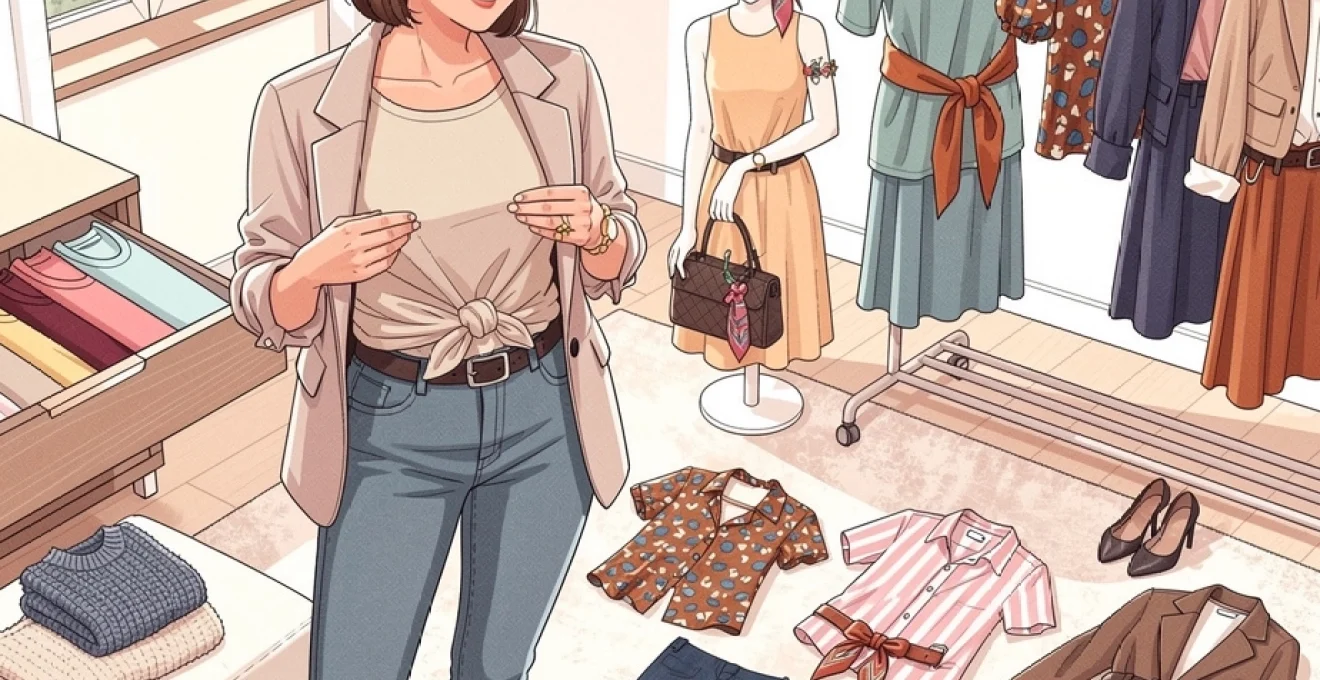
The average person wears only 20% of their wardrobe 80% of the time, according to sustainable fashion research—a staggering statistic that reveals the untapped potential hiding in closets everywhere. Before investing in new garments, consider this: the fashion industry ranks among the world’s most significant environmental polluters, and every unnecessary purchase contributes to textile waste and carbon emissions. The solution isn’t to shop harder but to shop smarter—specifically, to shop your own wardrobe with fresh eyes and creative strategies.
Refreshing your personal style doesn’t require a shopping spree or a complete wardrobe overhaul. Instead, it demands a systematic approach to rediscovering forgotten pieces, mastering versatile styling techniques, and maximising the potential of existing garments through strategic organisation and care. This transformation begins with understanding what you already own and developing the skills to manipulate those pieces into countless new combinations. The result? A revitalised wardrobe that feels entirely new without the financial burden or environmental guilt of fast fashion consumption.
Wardrobe auditing: the capsule method for rediscovering hidden pieces
A comprehensive wardrobe audit forms the foundation of any successful style refresh. This process goes beyond simple decluttering—it’s an investigative exercise that reveals the true contents of your closet, identifies gaps in your collection, and highlights underutilised pieces with significant styling potential. The capsule wardrobe methodology provides an excellent framework for this audit, encouraging you to view your wardrobe as interconnected pieces rather than isolated garments.
Begin by removing every item from your wardrobe and sorting them into three distinct categories: pieces you wear regularly, items you’ve forgotten about, and garments that no longer serve your current lifestyle or aesthetic. This physical separation creates clarity and prevents you from defaulting to familiar combinations. During this process, many people discover they own multiples of nearly identical items—four black blazers that differ only slightly, or seven white t-shirts with minimal variation. Recognising these duplications helps you understand your natural style preferences and shopping patterns.
The KonMari folding technique for inventory visualisation
The KonMari method, developed by organising consultant Marie Kondo, revolutionises wardrobe storage through vertical folding techniques. Rather than stacking garments horizontally—which obscures items at the bottom of piles—this approach arranges clothing vertically in drawers, allowing you to see every piece simultaneously. This visual inventory system dramatically increases the likelihood that you’ll wear forgotten items simply because they’re now visible and accessible.
To implement this technique, fold each garment into a compact rectangle that stands upright independently. T-shirts, knitwear, casual trousers, and even jeans benefit from this method. The folding process itself becomes meditative, encouraging you to handle each piece mindfully and consider its place in your wardrobe. Items that feel outdated or unworn during this process reveal themselves naturally, making edit decisions easier and more intuitive.
Colour palette analysis using seasonal theory frameworks
Seasonal colour analysis—a theory that categorises individuals into Spring, Summer, Autumn, or Winter based on their natural colouring—can transform how you perceive and combine your existing wardrobe. Even without professional colour consultation, you can identify which hues complement your skin tone, hair colour, and eyes by observing which garments receive the most compliments and make you feel most confident.
Once you’ve identified your optimal colour families, arrange your wardrobe accordingly. This visual organisation immediately highlights pieces that fall outside your ideal palette and may explain why certain garments remain unworn despite their quality or cost. More importantly, colour-coordinated organisation reveals unexpected combination opportunities. That burgundy blouse you’ve only worn with black trousers suddenly pairs beautifully with the camel-coloured skirt you’d forgotten about entirely.
Identifying orphaned garments and integration opportunities
Orphaned garments—pieces purchased without consideration for existing wardrobe compatibility—represent significant untapped potential. These items often remain unworn because they don’t obviously pair with anything else you own. The styling challenge lies in finding creative integration solutions that transform these isolated pieces into valuable wardrobe contributors.
Begin by pulling out each « problem » piece and challenging yourself to style it in at least three different ways using only what you already own. Treat this like a mini styling session: pair a statement skirt with both trainers and heels, or dress down a sequin top with denim and a blazer. If you repeatedly struggle to create outfits, ask whether the issue is colour, fit, or lifestyle mismatch. Pieces that cannot be integrated, even after experimentation, might be better candidates for resale, swapping, or gifting—freeing up space for garments that truly earn their place in your everyday wardrobe.
Digital wardrobe mapping with stylebook and accloset applications
Once you’ve physically audited your clothes, digitising your wardrobe can dramatically increase how often you wear what you already own. Apps like Stylebook and Accloset allow you to photograph each garment and create a virtual catalogue, transforming your smartphone into a portable style hub. This digital wardrobe mapping makes it easier to plan outfits in advance, track cost per wear, and identify which pieces sit idle month after month.
To get started, set aside an afternoon to photograph items against a plain background, focusing first on your core essentials and most-worn pieces. From there, you can gradually add occasion wear, outerwear, and accessories. Many wardrobe apps offer outfit statistics, calendar views, and packing planners, helping you avoid last-minute panic buying before events or holidays. Over time, you’ll see patterns in your style habits—perhaps you wear your favourite blazer weekly but rarely reach for certain dresses—guiding future decisions about alterations, upcycling, or responsible letting go.
Advanced styling techniques: the rule of thirds and proportion play
Once you understand the contents of your wardrobe, the next step in refreshing your style without buying anything new is learning how to manipulate proportion. The same garments can look dramatically different depending on how you balance lengths, volumes, and focal points. The « rule of thirds »—a principle borrowed from visual art and photography—suggests that outfits are more visually pleasing when divided into thirds rather than halves, creating a more dynamic, elongated silhouette.
Think of your body as a canvas divided vertically: when your top covers exactly half your body and your trousers or skirt cover the other half, the result can feel boxy or static. Shift the visual line higher or lower—by tucking, belting, or cuffing—and you instantly create movement and structure. Proportion play is one of the most powerful tools you have for refreshing your wardrobe, because it transforms familiar clothes into new, elevated outfits purely through styling.
French tucking and half-tuck methods for silhouette modification
The French tuck (or half-tuck) is a deceptively simple technique with outsized impact on your overall look. By tucking just the front portion of your shirt, blouse, or knit into your waistband and leaving the back loose, you define your waist without losing the relaxed ease of a longer top. This breaks up that unflattering « 50/50 » body split and subtly lengthens the legs—a valuable trick when you’re working with existing jeans, trousers, and skirts.
To master the technique, start with a lightweight shirt or tee. Tuck in the centre front by a few centimetres, then gently pull out a little fabric so it drapes softly rather than clinging. For a more directional, off-duty look, try tucking just one side of your shirt into high-rise trousers or a midi skirt, leaving the other side loose. Ask yourself: does this version feel more balanced, or would a full tuck or no tuck at all serve the outfit better? With practice, you’ll instinctively know which tuck works best for different pieces in your wardrobe.
Layering formulas: the 3-piece maximum principle
Layering is often presented as an advanced styling move, but it becomes far less intimidating when you apply a simple structure. One effective guideline is the « 3-piece maximum principle »—base layer, main garment, and a third piece (usually outerwear or a standout accessory). This formula helps prevent bulky, overworked outfits while still allowing you to experiment with depth and texture using clothes you already own.
For example, a classic combination might be: a fitted turtleneck (base), a slip dress (main), and a tailored blazer (third piece). On warmer days, the third piece could be a statement belt or a longline waistcoat instead of a jacket. Think of the third piece as the « stylist’s signature » that pulls everything together, much like a frame enhances a painting. By rotating your third pieces—cardigans, blazers, vests, long shirts, scarves—you can refresh the same base outfits repeatedly without ever adding new garments to your closet.
Belt placement strategies for waist definition and visual interest
Belts are among the most underrated tools for transforming existing garments, particularly dresses, blazers, and oversized shirts. Strategic belt placement can visually reshape your proportions, create the illusion of longer legs, or soften a rigid silhouette. The key is to experiment with three main zones: natural waist (the narrowest part of your torso), high waist (just below the bust), and low waist or hip level.
Belting at your natural waist works well for fit-and-flare dresses or to give structure to a roomy jumper. A high-waisted belt placement, often called an « Empire line, » can balance proportions if you have a shorter torso or want to highlight your bust while skimming the midsection. Wearing a belt lower on the hips adds a casual, laid-back feel, particularly with jeans or shirt dresses. Try using what you already have—leather belts, fabric ties from other garments, even long scarves—to test different placements and discover which lines feel most flattering and modern on your body.
Sleeve rolling techniques: the master roll and casual cuff
Subtle tweaks like rolling your sleeves can shift the entire mood of an outfit, making tailored pieces feel more relaxed and casual garments appear intentional. The « master roll » is a popular method for shirts and lightweight jackets: unbutton the cuff, fold the sleeve back so the cuff reaches just below your elbow, then fold or roll the remaining fabric until only a sliver of the cuff peeks out. This technique adds texture and structure while keeping your forearms visible—a small styling change that often makes outfits look more current.
For knitwear or heavier fabrics, a casual cuff works better. Gently push or fold sleeves up to mid-forearm, allowing the fabric to bunch naturally. You can also layer a slim-fitting long-sleeve top under a short-sleeve tee and roll the outer sleeve slightly, revealing a contrast colour underneath. These minor changes can help you « re-see » familiar pieces—if you’ve always worn a blazer with sleeves down, pushing them up and layering with stacked bracelets or a watch instantly refreshes the look without a single new purchase.
Textile care revival: professional finishing without the dry cleaner
Sometimes our wardrobes feel tired not because the clothes are outdated, but because the fabrics look dull, creased, or worn. Investing time in textile care is one of the most cost-effective ways to refresh your style without buying anything new. Professional-quality finishing can restore drape, colour depth, and surface texture, allowing garments to look close to new even after years of wear.
Think of textile care as maintenance for your style investment, much like servicing a car to keep it running smoothly. According to environmental reports, extending the life of clothing by just nine months can reduce its carbon, water, and waste footprints by up to 20–30%. With the right tools and techniques at home, you can achieve many of the results you’d expect from a dry cleaner, while avoiding harsh chemicals and repeated trips.
Steam pressing versus traditional ironing for fabric restoration
Steam and heat both remove wrinkles, but they interact with fibres in different ways. Traditional ironing applies direct pressure with a hot plate, which can create sharp creases ideal for cotton shirts, linen trousers, and structured pieces. However, it also risks « shining » delicate fabrics or flattening pile on materials like velvet. Steaming, by contrast, uses gentle vapour to relax fibres without compressing them, making it ideal for silk, viscose, wool blends, and garments with pleats or volume.
If you want to revive an old dress or blouse that has been squashed at the back of your wardrobe, hanging it and running a handheld steamer over the fabric can dramatically improve its appearance in minutes. For pieces that genuinely benefit from structure—like crisp collars or tailored waistbands—combine both methods: steam the overall garment to relax wrinkles, then use an iron selectively on areas that need definition. Always check care labels, test heat settings on an inconspicuous area, and use a pressing cloth for delicate fibres to avoid scorching or shine.
Fabric pilling removal using sweater stones and electric defuzzers
Pilling—the tiny balls of fibre that form on the surface of knitwear and some woven fabrics—is one of the main reasons clothes start to feel old before their time. Fortunately, it’s also one of the easiest issues to fix at home. Sweater stones (made from porous volcanic rock) and electric fabric shavers or defuzzers gently remove pills from the surface, restoring a smooth, uniform texture to jumpers, coats, and even upholstery.
Lay the garment flat on a hard surface and work slowly, using light pressure to avoid snagging the fabric. With electric defuzzers, empty the lint compartment regularly to maintain effectiveness. You might be surprised how « new » a bobbled favourite looks after just a few minutes of attention—many people rediscover and fall back in love with pieces they had mentally written off as worn out. By adding pilling removal to your seasonal wardrobe refresh routine, you extend the life of knitwear and reduce the urge to replace it prematurely.
Wrinkle release spray formulations and application methods
Wrinkle release sprays offer a low-effort way to refresh clothes between washes, particularly for fabrics that don’t respond well to frequent laundering. Many commercial formulas work by slightly relaxing fibres and adding weight, allowing gravity and gentle smoothing to do the rest. You can also create a simple DIY version by mixing distilled water with a small amount of fabric softener or alcohol in a spray bottle—though always patch-test first to avoid staining.
To use, hang the garment, lightly mist from a distance of 20–30 centimetres, then gently tug and smooth the fabric with your hands. For best results, allow the item to dry fully before wearing. Wrinkle release sprays are especially useful for travel capsules and workwear that you’d rather not iron every time. Combined with spot cleaning and fabric fresheners, they help you keep clothes looking polished and presentable, extending the period between full washes and preserving fibre quality over time.
Accessory rotation: maximising impact through strategic styling
Accessories are often the fastest route to refreshing your style without buying anything new, because they drastically change the mood of an outfit while taking up minimal space. A simple jeans-and-shirt combination can shift from office-appropriate to evening-ready with nothing more than a swap of earrings, a change of shoes, and a different bag. By consciously rotating the accessories you already own, you unlock a surprising range of looks from a relatively small set of core garments.
Start by gathering all your accessories—bags, belts, scarves, jewellery, hats, and even hair accessories—into one place instead of scattering them across drawers and boxes. Seeing the full picture often reveals forgotten pieces: that statement necklace from a wedding, a silk scarf you haven’t worn since a holiday, or a structured tote hiding behind everyday backpacks. Challenge yourself to build outfits around an accessory rather than adding it last; for example, style three completely different looks centred on one bold belt or pair of boots. Over time, you’ll develop a personal « accessory capsule » that can update your wardrobe in seconds, whether you’re dressing for work, weekends, or special occasions.
Garment reconstruction: no-sew alterations and temporary transformations
When you feel bored with your clothes, it’s easy to assume you need something new, but often what you really need is a new configuration of what you already own. Garment reconstruction doesn’t always require sewing skills or permanent changes; temporary hacks can be just as effective for testing ideas and refreshing your style. By experimenting with no-sew alterations, you can shorten hemlines, add shape to oversized items, or create asymmetry and drape—all without committing to irreversible tailoring.
Think of these techniques as the fashion equivalent of rearranging your furniture: the pieces stay the same, but the room feels completely different. With a few simple tools—safety pins, fashion tape, hem clips, and scarves—you can trial new silhouettes and see what excites you before investing in professional alterations. This playful approach helps you reconnect with your wardrobe, especially pieces you’ve considered donating but aren’t quite ready to part with.
Safety pin couture: hem adjustments and ruching techniques
Safety pins may not sound glamorous, but in the hands of a creative dresser they become powerful styling tools. You can temporarily adjust the length of skirts and dresses by folding the hem inward to the desired level and securing it from the inside with several small pins. This allows you to test whether a midi dress feels more « you » as a mini, or if cropped trousers better suit your existing footwear, before committing to a professional alteration.
Ruching techniques offer another dimension for shaping garments you already own. On a loose dress or top, pinch small sections of fabric at the side seams or back, then secure them with safety pins from the inside to create subtle gathers. This can define the waist, shorten a top, or add interest to an otherwise simple piece. Always use multiple pins to distribute tension and test your movement before heading out. When you’re satisfied that a particular adjustment improves the garment, you can either keep it as a long-term no-sew solution or have a tailor reproduce the effect more permanently.
Scarf conversion methods: belts, headwear, and bag embellishments
Scarves are among the most versatile items in any wardrobe, and reimagining how you use them is an easy way to update your style without buying anything new. A long, narrow scarf can double as a belt, threaded through denim loops or tied around the waist of a dress to introduce colour and pattern. Square silk scarves can be folded into headbands, twisted into turbans, or tied at the neck for a subtle nod to vintage styling.
You can also use scarves to embellish bags and outerwear. Tie one around the handle of a classic tote for a fresh accent, or knot a patterned scarf around the collar of a trench coat to create the effect of contrast lapels. These small changes operate like filters on a photograph—same base image, different mood. By rotating scarf placements and pairings, you amplify the styling potential of both your accessories and your core garments.
Knotting strategies for oversized shirts and asymmetric draping
Oversized shirts and tees are prime candidates for knotting, which can instantly shift proportions and add shape. For a classic front knot, unbutton the lower buttons of a shirt, gather the two hem corners, and tie them once or twice at your natural waist or slightly off-centre. This reframes the shirt as a cropped piece without any cutting or sewing, making it easier to pair with high-waisted jeans, skirts, or tailored trousers you already own.
If you want a more directional look, experiment with asymmetric draping. Pull one side of a long tee or knit to the back and secure it with a discreet hair elastic or small clip, creating a diagonal line across the body. You can also twist the hem before knotting to add texture and ensure the fabric sits smoothly. Ask yourself how these new shapes interact with your existing bottoms and outerwear—does an asymmetric hem balance a slim skirt, or does a front knot highlight the details on your favourite belt? With a few knots and twists, previously « shapeless » pieces can become some of the most interesting items in your wardrobe.
Temporary tailoring with fashion tape and hem clips
Fashion tape and hem clips allow you to test tailoring ideas without a needle and thread. Double-sided fashion tape can secure wrap tops, hold gaping necklines in place, and create mock cuffs or temporary pleats. You can also use it to tuck excess fabric inside a waistband for a cleaner silhouette or to keep lapels sitting neatly on a blazer you’ve decided to wear open. Because the tape is removable, you retain full flexibility to revert garments to their original state.
Hem clips—small, often adjustable devices used in professional fittings—are useful for experimenting with trouser and skirt lengths. Clip up the hem to trial a cropped cut above the ankle, or to see whether a maxi dress feels more wearable as a midi. Wear the clipped garment around the house to check comfort and movement; if it transforms how often you reach for the piece, that’s strong evidence that a permanent alteration could be a worthwhile investment. In the meantime, the clips themselves serve as a practical, non-destructive way to customise your clothes for different shoes and occasions.
Outfit formula architecture: creating capsule combinations from existing stock
Once you’ve audited, cared for, and experimented with your clothes, the final step in refreshing your style without buying anything new is developing reliable outfit formulas. Think of these as algorithms for getting dressed: repeatable structures that you personalise with different pieces from your wardrobe. Instead of starting from a blank slate each morning, you draw from a bank of tried-and-tested combinations that you know work for your lifestyle, body, and aesthetic.
Begin by identifying three to five scenarios you dress for most often—perhaps « office smart-casual, » « weekend errands, » and « evening social. » For each, create 2–3 base formulas, such as « structured blazer + simple top + straight-leg trousers + statement shoe » or « midi dress + ankle boots + longline coat. » Use your digital wardrobe app or a simple photo roll on your phone to document successful outfits and group them by formula. Over time, you’ll notice which silhouettes you gravitate towards and which garments act as true workhorses across multiple looks.
From here, building a functional capsule from your existing stock becomes much easier. Instead of viewing your clothes as isolated items, you see them as components that plug into your formulas. That printed blouse you rarely wear might suddenly make sense when slotted into « jeans + interesting shirt + loafers, » while a formal skirt could become an everyday piece when used in « graphic tee + tailored skirt + trainers. » By refining and rotating your outfit formulas seasonally, you keep your style evolving and expressive—without defaulting to new purchases every time you feel uninspired.