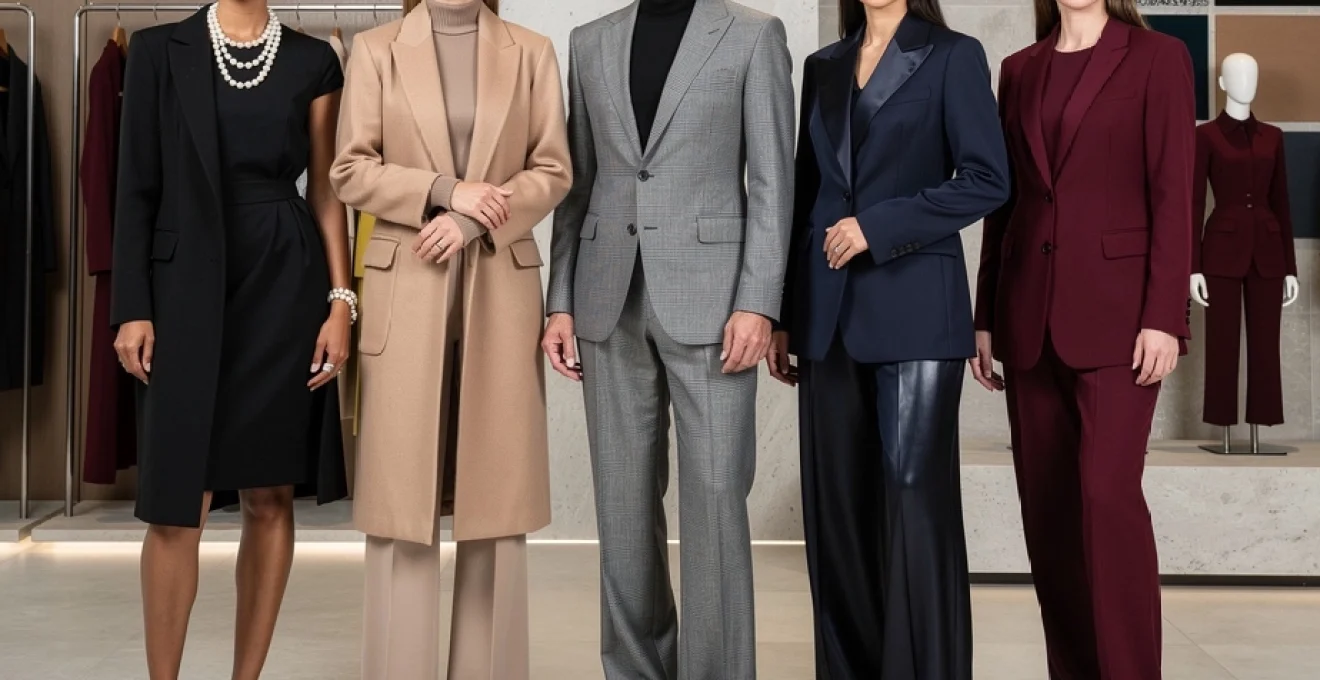
In a world saturated with fast fashion trends and overwhelming colour combinations, monochrome dressing emerges as a beacon of timeless sophistication. This powerful styling approach transcends seasonal fluctuations and cultural boundaries, offering an effortless path to elegance that has captivated fashion enthusiasts for decades. From the boardroom to the red carpet, monochromatic ensembles consistently deliver impact through their inherent simplicity and refined aesthetic appeal.
The psychology behind our attraction to single-hue styling runs deeper than mere visual preference. When the eye encounters a monochromatic outfit, it processes the information more efficiently, creating an immediate impression of intentionality and polish. This streamlined visual experience allows the wearer’s personality and confidence to shine through, unencumbered by the potential distractions of competing colours or patterns.
Psychology and visual impact of monochromatic color theory in fashion
The human brain processes monochromatic combinations with remarkable efficiency, creating what fashion psychologists term « cognitive ease » when viewing single-colour ensembles. This neurological response stems from our evolutionary preference for visual harmony and simplicity. When you encounter someone dressed monochromatically, your eye travels seamlessly from head to toe without interruption, creating an immediate impression of sophistication and intentionality.
Colour temperature and emotional response in Single-Hue dressing
Different monochromatic palettes evoke distinct emotional responses through their inherent temperature qualities. Warm monochrome schemes, such as variations of camel, rust, or terracotta, project approachability and groundedness, making them ideal for creative professionals and casual social settings. These earthy tones tap into our primal associations with safety and comfort, subconsciously communicating reliability and warmth to observers.
Conversely, cool monochromatic palettes featuring blues, greys, or whites convey professionalism, clarity, and innovation. These colour families activate the brain’s association with sky and water elements, triggering feelings of trust and competence. Corporate environments particularly favour these cooler monochromatic approaches, as they align with traditional business psychology principles whilst maintaining contemporary relevance.
Visual elongation principles through tonal continuity
The science behind monochrome’s flattering effect lies in its ability to create unbroken vertical lines that guide the eye upward and downward without pause. This optical illusion phenomenon works regardless of body shape or height, as the continuous colour flow eliminates natural breaking points that might otherwise segment the silhouette. Fashion stylists have long exploited this principle to create the appearance of additional height and streamlined proportions.
Research conducted by fashion institutes demonstrates that monochromatic dressing can visually add up to three inches to perceived height, whilst also creating a slimming effect through the elimination of horizontal colour blocks. This scientific backing explains why monochrome remains a cornerstone technique in professional styling and personal shopping services worldwide.
Cognitive load reduction in wardrobe Decision-Making
Neuroscientists studying decision fatigue have identified monochromatic dressing as a powerful tool for reducing daily cognitive load. When you limit your colour palette to variations of a single hue, you eliminate numerous micro-decisions that typically complicate the morning routine. This mental efficiency translates into more decisive, confident outfit choices and reduced styling stress.
The concept of decision architecture applies directly to wardrobe planning, where constraining options paradoxically increases satisfaction with final choices. Successful executives and creative professionals often embrace monochromatic wardrobes specifically to preserve mental energy for more critical business decisions throughout their day.
Cultural symbolism of monochrome palettes across global fashion markets
Different cultures assign varying symbolic meanings to monochromatic dressing, creating rich layers of communication beyond mere aesthetic appeal. In East Asian fashion markets, monochromatic black ensembles signal sophistication and urban awareness, whilst in Nordic countries, tonal grey and white combinations represent minimalist luxury and environmental consciousness.
Mediterranean fashion cultures embrace monochromatic earth tones as expressions of heritage and connection to natural landscapes. These cultural underpinnings influence global
Mediterranean fashion cultures embrace monochromatic earth tones as expressions of heritage and connection to natural landscapes. These cultural underpinnings influence global perceptions of monochrome style, shaping everything from luxury branding campaigns to street-style trends. As fashion continues to globalise, we see hybrid interpretations emerge, such as Japanese-inspired minimalism rendered in Scandinavian neutrals or Middle Eastern designers reimagining traditional dress in contemporary, single-hue palettes. Understanding these cultural nuances allows you to use monochrome dressing not only as a style tool but also as a subtle form of visual storytelling that connects you with a broader fashion conversation.
Technical construction methods for seamless monochromatic wardrobes
Beyond visual theory, the power of monochrome dressing lies in how well individual pieces are constructed and combined. A truly successful monochromatic wardrobe functions almost like a modular system: each item can connect effortlessly with several others, regardless of season or trend. To achieve this level of cohesion, you need to think technically about fabric, weight, texture, and surface finish in the same way a designer or pattern cutter would. When these elements are planned with intention, you gain a wardrobe that feels streamlined yet never repetitive.
Fabric weight layering techniques for tonal depth
One of the most effective ways to keep a monochrome outfit from feeling flat is to vary fabric weight within the same colour family. Combining lightweight, mid-weight, and heavier textiles creates a sense of depth, even when everything is, say, black, navy, or beige. Think of it as building topography in your look: a fluid silk blouse under a dense wool blazer, grounded by structured twill trousers, offers far more interest than three pieces in identical cloth.
From a practical standpoint, mastering fabric weight layering allows your monochrome wardrobe to work across climates and dress codes. In cooler seasons, you might pair merino base layers with brushed cotton shirts and cashmere coats, all in charcoal or chocolate, to maintain warmth without bulk. In warmer weather, you can invert the hierarchy by making the lightest fabrics the outermost layer—an unlined linen blazer over a soft cotton tank, for example—preserving the integrity of your single-colour outfit while staying comfortable.
Texture mixing strategies within single colour families
If colour is the melody of an outfit, texture is its rhythm. In monochrome dressing, texture mixing becomes critical, because it replaces the contrast that print and colour-blocking would normally provide. The goal is to orchestrate a balance between smooth and tactile surfaces so the eye remains engaged as it moves over your silhouette. You might combine a ribbed knit with smooth leather, crisp poplin with brushed suede, or boucle with satin, all within one tonal range.
To keep your textured monochrome looks sophisticated rather than chaotic, anchor each outfit with one dominant texture and use the others as accents. For instance, a matte wool coat and tailored trousers can provide the base, while a single high-texture piece—like a cable-knit scarf or croc-embossed bag—adds dimension. Ask yourself: which element do I want to be the “lead character” here? Let that answer dictate the proportion of each fabric and avoid overloading the outfit with too many competing textures at once.
Pattern integration through scale and proportion variation
Patterns can absolutely coexist with monochrome style when handled with care. The key is to work with tone-on-tone motifs or prints rendered in very close shades of the same colour so they read as texture from a distance. Pinstripes, herringbone, jacquard, broderie anglaise, and subtle animal prints are all examples of patterns that integrate seamlessly into a single-hue wardrobe when chosen in low-contrast combinations. They inject personality into monochrome looks without breaking the continuous line that makes them so flattering.
Scale management is crucial when you introduce pattern into monochrome outfits. Large-scale prints have more visual weight and should usually appear on only one garment in the look—often the piece you want to emphasise, such as a coat or dress. Smaller patterns, like micro-checks or fine ribbing, can be layered together as long as they share a similar intensity of colour. As a rule of thumb, limit yourself to one statement pattern and one secondary, more understated motif in a single outfit to keep your monochrome style controlled and elevated.
Surface treatment applications: matte, satin, and glossy finishes
Surface finish is one of the most underrated tools in monochrome styling. Even when fabrics share almost identical colour values, differences in sheen can create sophisticated contrast. Matte finishes—like brushed cotton, wool flannel, and crepe—absorb light and visually slim, making them ideal for areas where you prefer subtlety. Satin, silk, and taffeta introduce a gentle glow, while patent leather, vinyl, or high-shine hardware provide sharp, directional highlights.
A strategic approach is to place shinier surfaces where you want to draw the eye and matte textures where you want it to glide past. For example, pairing matte black trousers with a satin black blouse shifts attention toward your upper body, while glossy boots or a structured patent bag can punctuate an otherwise soft outfit. Think of surface finishes as your lighting rig: with careful placement, you can sculpt your silhouette, emphasise movement, and prevent even an all-black ensemble from feeling heavy or severe.
Iconic monochrome fashion moments and designer case studies
The enduring appeal of monochrome dressing is written into fashion history through a series of landmark designs and runway revolutions. When you study how visionary designers have used single-colour palettes, you begin to understand why monochrome wardrobes feel inherently modern, no matter the decade. These case studies also offer practical lessons you can translate directly into everyday outfits—proof that high fashion and real-life dressing are more connected than they sometimes appear.
Gabrielle chanel’s little black dress revolution and legacy impact
When Gabrielle “Coco” Chanel introduced the little black dress in the 1920s, she transformed black from a colour of mourning into the uniform of chic modernity. A simple, unadorned black sheath was radical at the time precisely because of its restraint: it relied on cut, proportion, and movement rather than ornate decoration. Chanel understood that a monochrome dress could act as a canvas, allowing jewellery, personality, and presence to take centre stage.
Today, the philosophy behind the little black dress underpins many successful monochrome wardrobes. Investing in well-cut black pieces—dresses, trousers, blazers—gives you a flexible foundation that adapts to countless settings with minimal adjustment. Swap flats for heels, add or remove a bold lip colour, layer a cardigan or leather jacket, and the same monochrome base can move seamlessly from office to evening. Chanel’s legacy reminds us that true power dressing often lies in deliberate simplicity.
Yves saint laurent’s le smoking tuxedo and masculine tailoring influence
In 1966, Yves Saint Laurent’s Le Smoking tuxedo redefined both eveningwear and gender norms. The sharply tailored, predominantly black suit was a monochrome statement that borrowed from menswear but reimagined it for the female form. By paring the look back to a single dark palette, Saint Laurent highlighted the precision of the cut, the line of the lapel, and the interplay between matte wool and satin lapel facings. Colour was no longer the story; structure and attitude were.
The influence of Le Smoking is visible every time you see a head-to-toe black suit worn with confidence, regardless of gender. It teaches us that monochrome tailoring can be both authoritative and sensual when the silhouette is honed to the wearer’s body architecture. For your own wardrobe, this translates into prioritising fit and proportion on core pieces—blazers, trousers, waistcoats—instead of relying on colour to do the heavy lifting. When the line is right, a single shade becomes incredibly powerful.
Giorgio armani’s minimalist suiting and corporate dressing standards
Giorgio Armani’s rise in the 1980s cemented a new vision of corporate dressing built on soft, neutral monochrome palettes. His deconstructed grey and beige suits, often styled as tonal separates, stripped away the stiffness of traditional business wear. By working with subtle gradations of taupe, stone, and charcoal, Armani created an image of relaxed authority that still dominates modern office style. The focus was on drape, fabric hand, and ease of movement—all heightened by a restricted colour story.
For anyone building a monochrome work wardrobe today, Armani’s approach is particularly instructive. A range of suits and separates in closely related neutrals allows you to assemble numerous professional outfits without visual clutter. When shades are carefully calibrated, you can mix a darker blazer with lighter trousers or vice versa, maintaining the elongating effect of tonal continuity while avoiding uniformity. This is monochrome as a strategic tool for everyday professionalism.
Contemporary monochrome masters: jil sander and phoebe philo’s aesthetic philosophy
In more recent decades, designers like Jil Sander and Phoebe Philo (notably during her tenure at Céline) have refined a new language of minimalist, monochrome luxury. Their collections often hinge on restrained palettes—ivory, navy, black, camel—executed with impeccable tailoring and innovative fabrication. Rather than shouting for attention, these clothes whisper, relying on proportion, negative space, and quiet detail to create impact. The message is clear: true sophistication does not need loud colour to be memorable.
From these designers, we can borrow several principles for our own monochrome dressing. First, edit ruthlessly—own fewer pieces, but ensure each earns its place through fabric quality and cut. Second, experiment with silhouette: wide-leg trousers, sculptural coats, and precise knitwear all look more architectural in a single hue. Finally, embrace a sense of calm in your wardrobe; when your rails are dominated by coherent, tonal pieces, getting dressed feels less like problem-solving and more like curating.
Seasonal adaptation strategies for year-round monochromatic styling
One of the great strengths of monochrome dressing is its adaptability across the seasons. With a considered approach to fabric, saturation, and layering, you can maintain a coherent single-colour aesthetic 12 months of the year. The secret lies in treating seasonality not as a reason to overhaul your palette, but as an opportunity to reinterpret it through different materials and proportions. This way, your monochrome wardrobe becomes a stable framework that flexes with changing temperatures and trends.
In spring and summer, lighter fabrics and airier silhouettes are your allies. Opt for breathable cottons, linens, and technical blends in softer tints of your chosen colour family—think stone instead of charcoal, sky instead of navy, or milk instead of pure optic white. Cropped trousers, sleeveless dresses, and unlined blazers maintain the visual continuity of monochrome while allowing for ventilation. You might even introduce semi-sheer layers within the same tone to play with light and movement without compromising coverage.
Autumn and winter invite a shift toward deeper tones and more substantial textures. This is where tonal stacking truly shines: you can layer multiple shades of the same colour to create warmth both visually and physically. A camel turtleneck under a toffee coat with cognac boots, or an ink-blue roll-neck beneath a navy overcoat with midnight trousers, illustrates how rich and cosy monochrome can feel. Accessories such as scarves, gloves, and hats in near-identical shades extend the uninterrupted line that makes monochrome so flattering.
Professional styling techniques for different body architectures
While monochrome dressing is inherently inclusive, the way you deploy it can be tailored to your unique body architecture. Because single-colour outfits emphasise line and shape, small adjustments in tone, fabrication, and proportion can have a significant impact on how balanced your silhouette appears. Rather than thinking in terms of “rules,” consider these strategies as levers you can pull to highlight the features you love most and create overall harmony.
If you have a more petite frame, uninterrupted columns of colour are particularly effective for creating the illusion of height. Choosing high-rise trousers in the same shade as your top, and matching your shoes as closely as possible, reduces visual breaks and lengthens the leg line. Vertical design details—such as long cardigans, single-breasted coats, or centre-front seams—reinforce this effect. Ask yourself whether each horizontal line in your outfit (hems, belts, contrasting cuffs) is necessary; when in doubt, keep them to a minimum.
For curvier or fuller figures, monochrome can deliver structure without severity. Darker tones are often used to minimise, but what really matters is where light and dark sit relative to your body. Placing slightly deeper shades over areas you prefer to recede and lighter tones where you want to draw attention can subtly sculpt your silhouette. For example, a deep aubergine skirt with a softer plum top focuses the eye upward, while strategic use of matte fabrics on wider zones and subtle sheen on narrower ones further enhances balance.
Taller or more angular body types can benefit from using monochrome dressing to soften lines and introduce fluidity. Oversized knits, wide-leg trousers, and cocoon coats in a single hue create an elegant, statuesque impression without overwhelming the frame. Texture plays an important role here: boucle, brushed wool, and textured knits add gentle volume and tactility. If you find a head-to-toe dark look too stark, experiment with mid-tone monochrome outfits—olive, taupe, or steel blue are excellent alternatives that retain polish while feeling less severe.
Investment piece selection and wardrobe longevity in monochrome fashion
Because monochrome dressing relies on repetition and interchangeability, quality and longevity become essential. Each piece in your wardrobe works harder, appearing in multiple outfit combinations, so it makes sense to treat key items as investments rather than disposable purchases. When you prioritise durability and timeless design, your monochrome collection evolves slowly and sustainably, saving both money and mental energy over the long term.
Start by identifying your core colour or colours—typically one dark neutral, one light neutral, and, if you enjoy bolder looks, a signature accent shade. Within each of these, allocate your budget toward high-impact, high-rotation pieces: tailored trousers, a blazer, a coat, a versatile dress, and premium knitwear. Look for fabrics with proven longevity such as wool, cashmere blends, quality cottons, and well-constructed technical materials. Examine seams, linings, and fastenings; in monochrome fashion, construction quality is more visible because there are no busy prints to disguise flaws.
To extend the life of your monochrome wardrobe, develop a considered maintenance routine. Dark tones benefit from gentle washing or dry-cleaning to prevent fading, while lighter shades require prompt attention to stains to maintain their crisp effect. Rotating shoes and bags in similar hues helps distribute wear and keeps the overall palette consistent over time. When you do add new items, ask whether they can be styled in at least three monochrome outfits using what you already own—if the answer is yes, they are far more likely to become true investment pieces rather than fleeting trends.