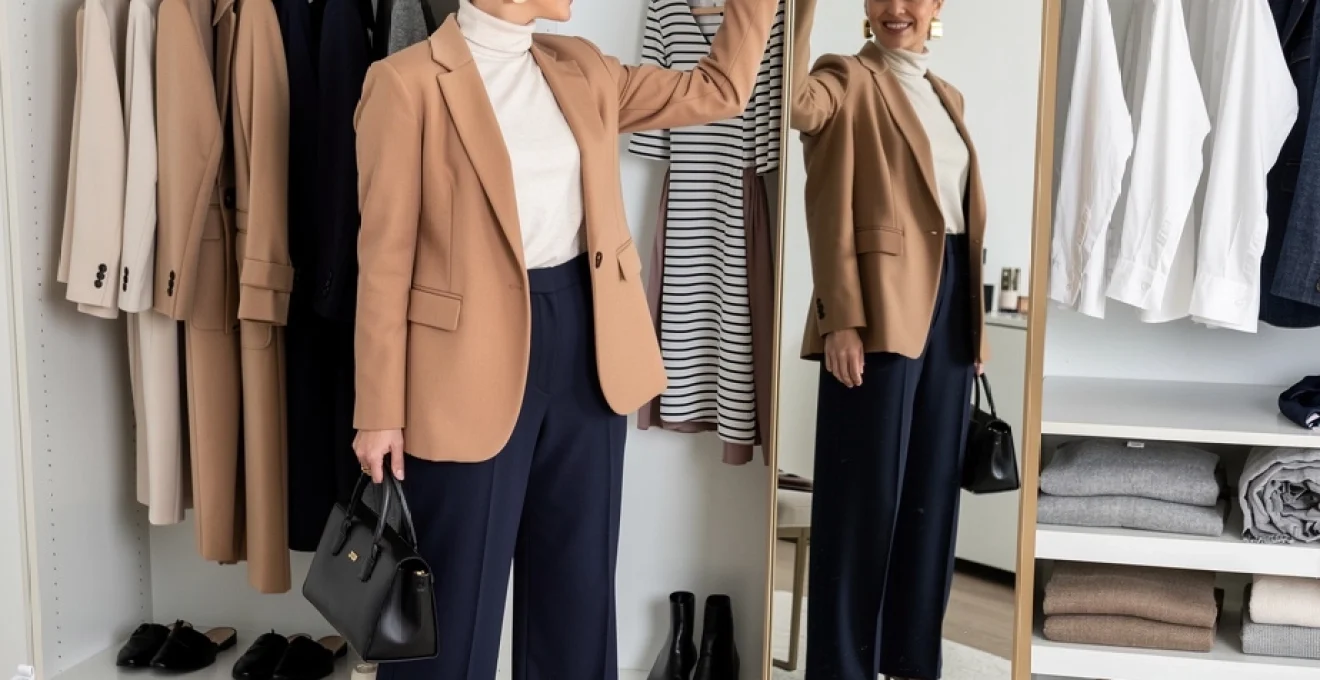
Fashion has evolved beyond mere trend-following into a sophisticated language of self-expression. Today’s confident woman understands that a thoughtfully curated wardrobe serves as both armour and art, projecting competence whilst reflecting personal style. The modern approach to dressing combines timeless sophistication with contemporary functionality, creating looks that transition seamlessly from boardroom presentations to evening soirées. This strategic approach to style recognises that confidence emanates not from following every seasonal trend, but from understanding which pieces enhance your natural presence and support your lifestyle demands.
Contemporary minimalist wardrobe architecture: building capsule collections
The foundation of modern style lies in understanding capsule wardrobe architecture – the art of selecting pieces that work harmoniously together whilst maximising outfit possibilities. This approach treats your wardrobe as a carefully orchestrated system rather than a random collection of garments. Contemporary minimalism demands precision in selection, with each piece earning its place through versatility, quality, and alignment with your personal aesthetic vision.
French girl aesthetic: effortless sophistication through neutral palettes
The French approach to dressing embodies the principle of studied nonchalance – looking effortlessly put-together through careful consideration rather than apparent effort. This aesthetic centres on neutral palettes of navy, cream, camel, and grey, creating a cohesive visual language that speaks to refined taste. The key lies in understanding proportions and textures, pairing a structured blazer with relaxed trousers or combining a silk camisole with tailored jeans. French-inspired dressing proves that sophistication emerges from restraint rather than excess.
Scandinavian design philosophy: clean lines and functional fashion
Scandinavian fashion philosophy prioritises functional beauty – garments that perform well whilst maintaining aesthetic appeal. This approach emphasises clean lines, quality fabrics, and thoughtful construction details that enhance both comfort and appearance. The Nordic influence brings forth pieces like streamlined knitwear, well-cut trousers, and structured outerwear that embody the principle of form following function. These designs prove that minimalism need not sacrifice warmth, comfort, or style.
Japanese Wabi-Sabi influence: imperfect beauty in textile selection
The Japanese concept of wabi-sabi celebrates the beauty of imperfection and impermanence, translating into fashion through textures that improve with age and silhouettes that embrace natural drape. This philosophy encourages selecting pieces in natural fibres that develop character over time – linen that softens beautifully, leather that gains patina, and wool that becomes more supple with wear. The wabi-sabi approach values authenticity over perfection, creating wardrobes that feel lived-in rather than costume-like.
Investment piece strategy: Cost-Per-Wear analysis for luxury basics
Strategic wardrobe building requires understanding the mathematics of fashion investment. A £300 cashmere coat worn twice weekly for five years delivers a cost-per-wear of approximately £1.15, making it more economical than a £50 coat requiring annual replacement. This analytical approach helps justify investment in quality basics: the perfectly fitted blazer, the impeccable trench coat, or the leather handbag that improves with age. The key lies in identifying which pieces you’ll reach for repeatedly and investing accordingly in superior construction and timeless design.
Quality is never an accident; it is always the result of intelligent effort. In fashion, this translates to choosing pieces that demonstrate superior craftsmanship and thoughtful design over fleeting trends.
Power dressing evolution: executive presence through strategic styling
Contemporary power dressing has evolved beyond the aggressive shoulder pads of previous decades into a more nuanced approach that combines authority with approachability. Modern executive style recognises that presence and confidence emerge from clothes that fit impeccably and reflect your personality rather than conforming to rigid corporate uniforms. This evolution acknowledges that different industries and roles require different expressions of professional competence.
Blazer engineering: structured shoulders and contemporary tailoring techniques
<p
begins with understanding shoulder structure, lapel width, and overall length. For a confident, modern wardrobe, look for blazers with lightly padded, engineered shoulders that create a defined line without feeling restrictive. Contemporary tailoring often incorporates subtle waist shaping, slightly elongated hemlines, and strategic darting to refine your silhouette. You might opt for a single-breasted blazer in navy or black for maximum versatility, then add a second option in camel or grey to soften stronger looks without diluting your authority.
Fabric selection also plays a crucial role in blazer performance. High-twist wool, wool blends, and technical suiting fabrics resist creasing and maintain a sharp profile from early meetings to late dinners. Details such as horn buttons, refined topstitching, and quality linings distinguish an investment blazer from a fast-fashion alternative. When you consider cost-per-wear, a well-constructed blazer worn weekly for several years becomes one of the most efficient tools in your power dressing arsenal.
Trouser silhouettes: wide-leg revival and high-waisted proportions
The resurgence of wide-leg trousers and high-waisted proportions has transformed modern power dressing. These silhouettes create a long, clean line from waist to floor, visually lengthening the legs and conveying deliberate, grounded presence. A high-rise waistband also anchors tucked-in blouses and fine knitwear, preventing the constant adjustment that can undermine how confident you feel in your clothes. When paired with a structured blazer, wide-leg trousers offer a contemporary alternative to the classic pencil skirt suit whilst remaining entirely office-appropriate.
For a confident, modern wardrobe, prioritise trousers in mid-weight wool, wool-blend, or high-quality crepe that drape rather than cling. Look for subtle front pleats, pressed centre creases, and hems tailored to your preferred footwear height—grazing the top of a pointed flat or sitting just above the floor with heeled boots. If you are hesitant to embrace the full wide-leg revival, a tailored straight-leg cut with a high waist can provide a similar elongating effect with a slightly more conservative profile. The key is choosing silhouettes that allow you to move, sit, and stand without restriction, so your posture communicates ease and authority.
Statement accessories: architectural jewellery and structured handbags
Power dressing in 2026 is less about head-to-toe formality and more about strategic emphasis. Statement accessories—particularly architectural jewellery and structured handbags—act like visual punctuation, finishing your outfit with intention. Think sculptural gold hoops, a sleek cuff bracelet, or a geometric pendant that adds interest without overwhelming your look. These pieces serve as focal points that draw the eye towards your face and hands, where you communicate most during meetings and presentations.
Structured handbags, meanwhile, function as both design objects and organisational tools. A top-handle or boxy crossbody in smooth leather or subtle grained calf instantly sharpens even the simplest jeans-and-blazer combination. When your bag stands upright on the boardroom table and houses everything neatly—from tablet to notepad—it reinforces the impression of order and preparedness. Just as an architect uses clean lines to convey stability, you can use accessories with defined shapes and minimal hardware to project calm control.
Colour psychology in professional attire: navy, burgundy, and camel authority
Colour psychology remains a powerful, often underutilised tool in building a confident, modern wardrobe. In professional environments, navy, burgundy, and camel have emerged as key authority colours that balance gravitas with approachability. Navy conveys trust, reliability, and clarity; it is less severe than black yet equally polished, making it a safe choice for interviews, negotiations, and high-stakes presentations. Burgundy introduces depth and individuality without veering into overtly bold territory, ideal for days when you want to stand out subtly.
Camel, on the other hand, communicates quiet luxury and understated confidence. A camel coat, blazer, or knit softens sharper tailoring while still reading as sophisticated and intentional. When you combine these hues—navy tailoring with a camel knit, or burgundy trousers with a crisp white shirt—you create layered messages of competence, warmth, and self-assurance. Ask yourself before important occasions: what do I need my outfit to say on my behalf? Aligning your colour choices with that intention transforms your wardrobe into a strategic communication tool.
Sustainable fashion integration: conscious consumption and ethical sourcing
As style conversations evolve, a truly confident, modern wardrobe also reflects conscious choices about impact. Sustainable fashion integration is not about perfection; it is about progressive refinement—buying less, choosing better, and keeping pieces in rotation for longer. Recent industry reports suggest that extending the life of a garment by just nine months can reduce its carbon, water, and waste footprint by 20–30%. When you approach your wardrobe as a long-term project, sustainability and capsule wardrobe thinking naturally reinforce each other.
Practical integration starts with three questions: Do I love it? Will I wear it at least 30 times? Do I know, at least broadly, who made it and how? Favour brands that publish transparent supply chain information, use certified organic or recycled fibres, and invest in fair labour practices. When possible, select timeless silhouettes in resilient fabrics such as organic cotton, responsible wool, or recycled blends that can withstand frequent wear. You might also explore resale platforms, rental services for occasionwear, and local tailors who can revitalise existing pieces—each step reinforcing a wardrobe that feels both luxurious and responsible.
Texture mixing mastery: advanced fabric pairing techniques
Texture is one of the most powerful yet subtle tools for elevating a confident, modern wardrobe. Thoughtful fabric pairing can transform simple silhouettes into complex, visually engaging outfits without relying on loud prints or extreme cuts. Consider texture mixing as similar to curating an art gallery: each piece must be interesting on its own, but the real magic emerges in how they interact. Smooth leather against soft cashmere, crisp poplin beside fluid silk, or dense wool contrasted with airy chiffon all create depth and intrigue.
The key to advanced texture mixing lies in balancing contrast and cohesion. You might ground an outfit in one dominant texture—say, a matte wool trouser—and then layer in one or two complementary surfaces, such as a silk blouse and a suede pump. This prevents your look from appearing chaotic. Pay attention to sheen as well: pairing multiple highly reflective fabrics can feel overdone for daytime, while combining entirely matte pieces may flatten your ensemble. By deliberately alternating matte and subtle shine, rigid and fluid, you cultivate outfits that photograph beautifully and feel considered from every angle.
Seasonal transitional styling: layering systems for year-round versatility
Transitional seasons often expose the weaknesses of an unplanned wardrobe: coats that are too heavy for mild days, dresses that feel too light once the sun sets. A confident, modern wardrobe solves this through layering systems designed for year-round versatility. Rather than owning separate outfits for each temperature shift, you build modular combinations—base layers, mid layers, and outer layers—that can be added or removed as conditions change. The result is a more sustainable, less cluttered closet and less time spent wondering what to wear when the forecast is unpredictable.
Lightweight knitwear: merino wool and cashmere blending strategies
Lightweight knitwear sits at the heart of effective transitional dressing. Fine-gauge merino wool and cashmere blends regulate temperature exceptionally well, keeping you warm when it is cool and comfortable when indoors. Because these fibres are naturally breathable and moisture-wicking, a merino turtleneck or cashmere crewneck becomes the ultimate layering piece under blazers, trench coats, and wool coats. For a confident, modern wardrobe, prioritise neutral tones—stone, charcoal, navy—that integrate effortlessly across seasons.
Blending strategies can significantly extend the life and performance of your knitwear. Merino-silk blends offer a subtle sheen and elevated drape for office environments, while merino-cotton mixes provide a slightly more casual, breathable option for warmer months. Cashmere blended with a small percentage of synthetic fibre can improve durability and reduce pilling without sacrificing softness. Think of these knits as your wardrobe’s “operating system”: reliable, barely noticeable when functioning well, yet critical to overall performance.
Outerwear hierarchy: trench coats, wool coats, and technical performance pieces
A refined outerwear hierarchy ensures you are prepared for almost any climate scenario with minimal pieces. At the core sits the classic trench coat—lightweight, water-resistant, and inherently polished. A beige or khaki trench instantly sharpens casual looks and layers seamlessly over suiting or denim. Next in the hierarchy is the roomy wool coat, ideally in camel, black, or grey, which serves as your winter workhorse and elevates even loungewear during off-duty days. Its structure and length communicate sophistication before you have even removed it.
Technical performance pieces complete the system, addressing days of heavy rain, wind, or travel. Modern designs in matte, non-shiny fabrics with clean lines blend practicality with quiet luxury, avoiding the overtly sporty look of traditional outerwear. When you curate these three core outerwear categories with intention—trench, wool coat, and technical layer—you gain the freedom to move through seasons and settings without sacrificing style or comfort. Ask yourself: which coat would make me feel composed in an unexpected meeting, a last-minute dinner, or a long commute home? Those answers guide the best investments.
Footwear rotation: chelsea boots, pointed flats, and statement trainers
A strategic footwear rotation anchors your layering system and supports a confident, modern wardrobe from the ground up. Chelsea boots, with their sleek elastic gussets and ankle-skimming height, bridge the gap between smart and casual. In black or deep brown leather, they pair equally well with tailored trousers, midi skirts, and straight-leg denim. Pointed flats, meanwhile, offer the elongating effect of a heel without sacrificing comfort—perfect for long office days, city walking, or travel.
Statement trainers inject ease and personality into your capsule wardrobe. Opt for streamlined silhouettes in predominantly neutral palettes—white, cream, or soft grey—with subtle accents of metallic or colour. These trainers work seamlessly with wide-leg trousers, knit dresses, and even suiting on more relaxed days, subtly nodding to contemporary fashion without compromising professionalism. By rotating between Chelsea boots, pointed flats, and refined trainers, you preserve the longevity of each pair and ensure your outfits always feel intentional, not improvised.
Scarf styling techniques: oversized cashmere and silk square applications
Scarves are among the most versatile accessories in a confident, modern wardrobe, functioning as both style enhancers and practical layering pieces. Oversized cashmere scarves can act as portable blankets during travel, voluminous shawls over evening dresses, or structured collars when tucked neatly into a tailored coat. Experiment with different wrapping techniques—looped once around the neck with the ends hanging long for vertical emphasis, or draped asymmetrically over one shoulder for a softer effect. The tactile richness of cashmere instantly elevates even the simplest knit and denim combination.
Silk squares, by contrast, bring colour, pattern, and polish in compact form. Folded into a narrow band and tied at the neck, they frame the face and add interest to minimalist outfits without overwhelming them. You can also thread a silk scarf through belt loops, tie it to the handle of a structured handbag, or wrap it around a low ponytail for an elegant finishing touch. Think of scarves as the “lighting design” of your look: subtle adjustments in placement and style can dramatically change the mood of your outfit.
Body geometry and fit optimisation: tailoring for individual proportions
Confidence in clothing is rarely about having a so-called “perfect” body; it is about understanding your unique body geometry and using fit optimisation to your advantage. Tailoring translates this understanding into fabric, refining garments so they align with your proportions rather than generic size charts. The same blazer that feels unremarkable off the rack can become a signature piece once sleeves are shortened, waist seams adjusted, and shoulders subtly refined. When your clothes follow the lines of your body without pulling, gaping, or collapsing, you move differently—and that ease reads instantly as self-assurance.
Begin by observing recurring fit issues: do waistbands gape, do trousers pool at the ankle, do dresses twist at the shoulders? These patterns reveal where custom adjustments will have the greatest impact. Investing in a skilled tailor may feel like an extra step, but over time it is often more cost-effective than continually buying new pieces that never quite feel right. Consider tailoring as the final, crucial stage in building a confident, modern wardrobe—one that translates all your strategic choices in colour, texture, and silhouette into outfits that feel unmistakably your own. When your clothes are literally made to suit you, rather than the other way around, style becomes a natural extension of who you are instead of a costume you put on.