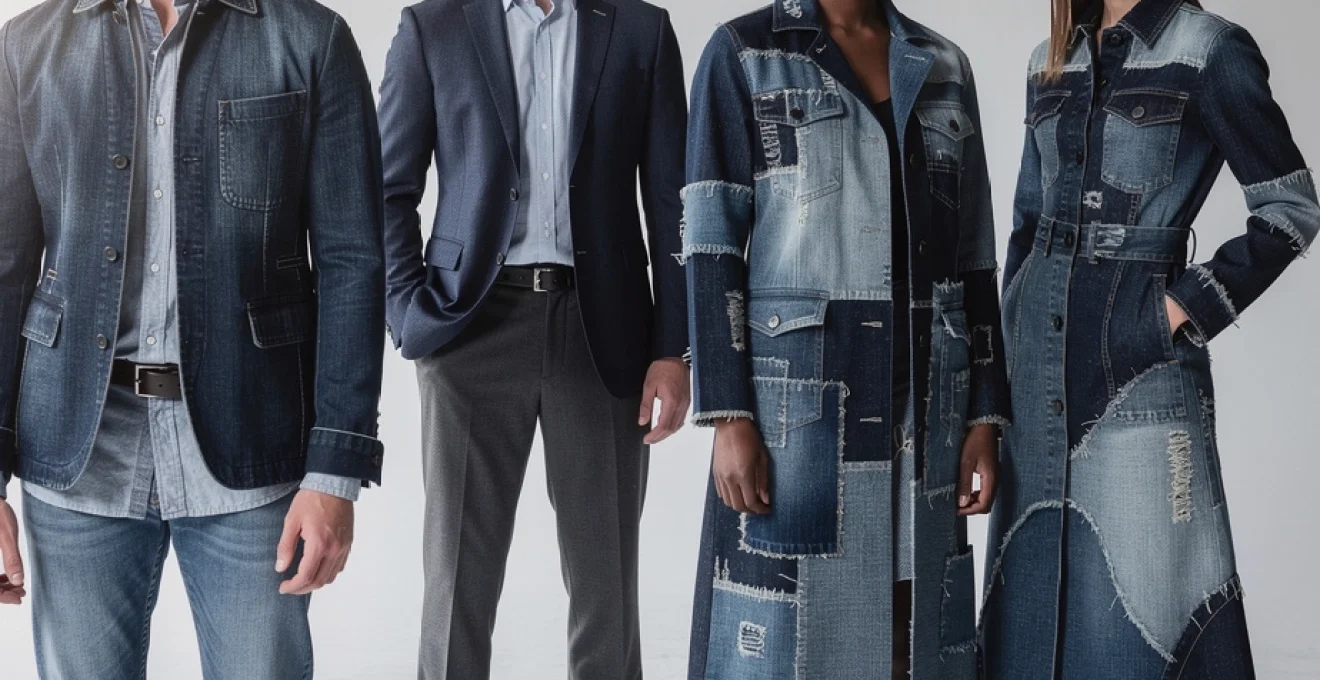
The fashion industry stands at a critical juncture where sustainability meets innovation, particularly in the realm of denim manufacturing and styling. As consumers become increasingly aware of the environmental impact of their clothing choices, the traditional approach to denim is undergoing a revolutionary transformation. The staggering water consumption of up to 10,000 litres per pair of jeans and the 33.4kg CO2 emissions generated throughout a garment’s lifecycle demand immediate attention from both industry professionals and conscious consumers.
This shift towards sustainable denim practices has sparked unprecedented creativity in styling approaches, moving far beyond the conventional jeans-and-t-shirt combinations that have dominated casual wear for decades. Contemporary fashion enthusiasts are discovering that denim’s versatility extends into formal environments, avant-garde deconstruction, and sophisticated seasonal adaptations. The material’s inherent durability and timeless appeal make it an ideal canvas for innovative styling techniques that challenge traditional fashion boundaries whilst addressing environmental concerns.
Double denim styling techniques: mastering tonal variations and texture contrasts
The art of wearing multiple denim pieces simultaneously requires sophisticated understanding of colour theory, texture manipulation, and proportion balance. Modern double denim styling transcends the outdated notion that matching denim pieces create a cohesive look, instead embracing deliberate contrasts that showcase technical expertise and fashion-forward thinking.
Canadian tuxedo revival: pairing raw selvedge with Stone-Washed finishes
The contemporary interpretation of the Canadian tuxedo leverages the stark contrast between raw selvedge denim’s deep indigo saturation and the weathered appearance of stone-washed finishes. This combination creates visual depth through opposing textures whilst maintaining colour harmony within the blue spectrum. Raw selvedge pieces, typically weighing between 14-21 ounces, provide structural foundation when paired with lighter stone-washed garments that offer movement and softness.
Professional stylists recommend positioning the heavier raw selvedge piece as the foundation garment—whether trousers or a jacket—whilst incorporating stone-washed elements as accent pieces. This approach prevents the outfit from appearing overly rigid whilst ensuring the investment piece receives appropriate prominence. The natural fading patterns that develop in raw selvedge create an organic progression that complements the artificially aged stone-washed textures.
Indigo gradient layering: light to dark wash progression methods
Gradient layering represents one of the most sophisticated approaches to double denim styling, requiring careful selection of pieces that progress naturally from light to dark washes. This technique draws inspiration from ombré effects in textile design, creating visual flow that guides the observer’s eye whilst maintaining colour family cohesion. The key lies in selecting pieces with sufficient tonal variation to create distinction without jarring contrasts.
Successful gradient layering typically employs three to four tonal variations, starting with bleached or light-wash pieces closest to the face and progressing to darker indigo tones in lower garments or outer layers. This approach naturally flatters most complexions whilst creating an intentional, curated appearance that demonstrates advanced styling knowledge. The technique works particularly well in spring and summer collections where lighter washes feel seasonally appropriate.
Mixed weight combinations: 21oz heavy denim with lightweight chambray
The juxtaposition of heavyweight denim with lightweight chambray creates compelling textural contrasts that add dimension to double denim ensembles. Heavy denim, typically weighing 21 ounces or more, provides substantial structure and premium feel, whilst chambray’s lighter weave offers breathability and drape. This combination works exceptionally well for transitional seasons where temperature variations require adaptable layering options.
When combining these weight variations, consider the garment’s intended function and positioning within the outfit. Heavy denim jackets or trousers serve as anchor pieces that define the silhouette, whilst chambray shirts or accessories add refinement without overwhelming the composition. The contrast between rigid structure and flowing movement creates dynamic visual interest that elevates the overall aesthetic beyond simple casual wear.
Distressing level juxtaposition: clean rinse against heavy fading techniques
The strategic combination of pristine clean rinse denim with
heavily distressed denim allows you to control focal points within an outfit. Clean rinse pieces act as a visual reset, grounding the look and communicating polish, while whiskering, honeycombs and blown-out knees introduce attitude and movement. By pairing a dark, unmarked rinse jacket with vintage-inspired, heavily faded jeans, for example, you achieve a balance similar to pairing a crisp white shirt with a bold patterned tie: one element leads, the other supports.
To avoid visual chaos, limit high-intensity distressing to a single hero piece and keep the rest of your denim relatively restrained. You can then echo the distressed areas with your accessories—a beaten leather belt, aged metal jewellery or sun-faded cap—to make the styling feel intentional rather than accidental. This level of curation is what transforms distressing from random wear and tear into a conscious aesthetic choice, and helps your double denim outfits feel mature and modern rather than juvenile.
Elevated denim integration in formal and business-casual environments
As workplace dress codes evolve and hybrid working becomes the norm, denim is quietly moving from weekend staple to credible office wear. The key to integrating denim into formal and business-casual environments lies in fabric quality, garment construction and precise styling rather than the simple presence or absence of jeans. When you treat denim as a tailoring cloth rather than casual wear, it suddenly becomes capable of negotiating boardrooms, client meetings and evening events.
This shift aligns neatly with growing demand for sustainable fashion: high-quality denim garments are built to last, can be repaired rather than replaced, and often age beautifully rather than dating quickly. By investing in fewer, better denim pieces, you reduce wardrobe churn and the associated environmental impact. The question becomes not “Can I wear denim to work?” but “Which denim pieces communicate professionalism and intention?”
Premium raw denim tailoring: japanese selvage in structured blazer construction
Premium raw denim tailoring, particularly when cut from Japanese selvage, offers an elegant bridge between classic suiting and contemporary casual wear. Japanese mills are renowned for slow, shuttle-loom weaving, which produces dense, characterful cloth with clean selvage edges that can be showcased in interior seams or subtle cuff details. When translated into a structured blazer, this fabric behaves much like a traditional wool twill, holding sharp lapels and crisp shoulder lines while still reading as modern and relaxed.
For office-ready styling, opt for a mid-weight selvage in the 12–14oz range; this weight maintains structure without feeling rigid or overly workwear-inspired. Pair a raw denim blazer with tailored chinos or pressed wool trousers rather than matching jeans to avoid veering into full denim suit territory unless your industry embraces more experimental looks. You can soften the intensity of raw indigo by layering it over a fine-gauge knit or an Oxford shirt in white, pale blue or soft ecru, which keeps the focus on clean lines and texture rather than loud contrast.
Denim shirting under wool suiting: fine denier cotton weaves
Denim shirting has become a subtle yet powerful way to modernise wool suiting, particularly in business-casual and creative industries. The most office-appropriate denim shirts are cut from fine denier cotton yarns that produce a smoother, lighter-weight fabric closer to chambray than rugged workwear. These shirts typically sit in the 5–7oz range, drape cleanly under a blazer, and avoid the bulk that can distort jacket lines.
When layering a denim shirt under a wool or wool-blend suit, prioritise minimal detailing: a neat point collar, concealed button-downs if you want extra structure, and tonal stitching rather than heavy contrast. Medium to light indigo tones pair well with navy, charcoal and mid-grey tailoring, creating a subtle tonal play that feels thoughtful rather than forced. If your office leans conservative, skip the tie and let the open collar and matte texture of denim provide just enough visual interest; in more relaxed environments, a slim knitted tie or silk knit in a complementary shade can complete the look.
Designer denim accents: tom ford and saint laurent luxury interpretations
Luxury houses such as Tom Ford and Saint Laurent have long championed elevated denim, demonstrating how the fabric can function as a core component of a refined wardrobe. Their approach focuses on cut, hardware and finish: razor-sharp jeans with precise tapering, jet-black or deep indigo rinses, and minimal yet perfectly executed details like gunmetal rivets or tonal embroidery. In these interpretations, denim becomes less about casual utility and more akin to a luxury textile—structured, sculpted and meticulously finished.
Drawing inspiration from these designer denim aesthetics does not require a runway budget. Instead, pay attention to silhouettes that elongate the leg, mid- to high-rise waistlines that sit cleanly under tailored jackets, and uniform wash treatments that avoid patchy fading. You can then introduce “luxury codes” through your styling—pairing dark denim with a silk blouse, cashmere knit or sharp leather pump, for instance. Think of denim here as the quiet backdrop that allows elevated materials and accessories to stand out.
Corporate-appropriate denim weights: 12–14oz professional standards
When it comes to corporate-appropriate denim, fabric weight is one of the most overlooked yet decisive factors. Denim in the 12–14oz range offers enough heft to hold a tailored line, resist knee bagging and maintain a polished surface throughout a working day. Lighter weights can read too casual or prone to creasing, while heavier workwear cloths may feel stiff, hot and visually bulky in a meeting room or office setting.
To maximise versatility, opt for clean, dark rinses with minimal or no distressing, and avoid heavy contrast stitching or oversized branding. A slim-straight or gently tapered leg works in most professional contexts, especially when hemmed to sit just above the shoe without pooling. You can then rotate your tops—crisp shirting, lightweight merino knits, structured blazers—to dial the formality up or down depending on your schedule, all while maintaining a foundation of considered, office-ready denim.
Avant-garde denim deconstruction and reconstruction approaches
While many of us rely on denim as a wardrobe basic, designers and makers at the experimental edge see it as raw material for sculptural, avant-garde fashion. Deconstruction and reconstruction techniques allow denim to be taken apart, reconfigured and recontextualised, highlighting the fabric’s history and extending its lifecycle. This is where sustainability and high concept design meet: the very act of reworking old jeans into new silhouettes prevents “denim dumping” and challenges our idea of what a pair of jeans should be.
If you have ever wondered how to turn a stack of worn-out denim into something runway-worthy, these approaches offer a roadmap. They rely on meticulous pattern cutting, creative use of seams and hardware, and a willingness to embrace imperfection as a design feature rather than a flaw. The result is clothing that carries visible traces of its previous life, much like a renovated industrial building that proudly retains exposed brick and beams.
Patchwork denim assemblage: boro-inspired repair aesthetics
Patchwork denim assemblage borrows heavily from Japanese boro traditions, where textiles are repeatedly repaired over decades, creating layered surfaces of stitching and cloth. Instead of hiding wear and tear, this approach celebrates it, turning every fade line and frayed edge into part of a larger narrative. Multiple pairs of jeans can be unpicked and recombined into new panels, which are then quilted or flat-seamed into jackets, skirts or wide-leg trousers.
From a sustainability perspective, patchwork offers a powerful way to upcycle denim remnants and offcuts that would otherwise be discarded. For a wearable, everyday interpretation, keep your colour palette consistent—perhaps multiple shades of indigo—or limit your patches to strategic zones such as knees, elbows and pocket areas. More adventurous dressers can mix contrasting washes and even incorporate non-denim fabrics such as deadstock cotton or recycled linings, using visible sashiko-style stitching as both reinforcement and decoration.
Deconstructed seam exposure: inside-out construction methods
Inside-out construction flips traditional garment rules, putting seam allowances, overlocking and selvage edges on display. In denim, this deconstructed approach creates a compelling dialogue between the raw, utilitarian side of the fabric and its familiar polished exterior. Exposed flat-felled seams, zig-zag tack stitching and overlocked edges become intentional design lines, tracing the skeleton of the garment like visible bones beneath the skin.
To experiment with deconstructed seam exposure, start small by inverting simpler pieces such as skirts or gilets and refining the internal finish so it can withstand external wear. Designers pushing this language further often splice inside-out panels with right-side-out panels, using contrast to break up large areas of indigo and emphasise asymmetry. The effect is architectural and slightly rebellious, making it a natural fit for those who want their denim to feel more like wearable art than everyday basics.
Asymmetrical hemline treatments: stepped and curved cutting techniques
Asymmetrical hemlines offer a subtler, yet still directional, entry point into avant-garde denim. Stepped hems—where the back hem extends lower than the front—can visually lengthen the leg while drawing attention to statement footwear. Curved hems that rise at the side seams or dip into a soft arc at the front introduce movement and soften the blocky appearance that straight hems can sometimes create, especially on rigid denim.
These treatments work particularly well on cropped jeans, midi skirts and denim dresses, where hem shape has an outsized influence on overall proportion. When altering hems yourself, mark the desired shape while wearing the garment with your usual shoes to ensure the curves fall exactly where you want them. You can leave the cut edge raw for a controlled fray that nods to deconstruction, or bind it with contrast tape for a graphic finish that highlights the unconventional silhouette.
Hardware integration: exposed zip installations and eyelet detailing
Hardware has always played a role in denim—think rivets, shank buttons and zips—but avant-garde approaches push these functional elements into the spotlight. Exposed zips can slash through side seams, trace diagonal lines across jackets or open up gussets that allow garments to expand, contract or transform. Similarly, clusters of metal eyelets along seam lines or hems introduce an industrial feel and create anchor points for lacing, straps or detachable components.
When integrating bold hardware into your own denim pieces, consider both aesthetics and longevity. Reinforce the surrounding fabric with interfacing or additional layers to prevent tearing, and test the garment’s movement to ensure zips and eyelets don’t create uncomfortable pressure points. Thoughtfully placed hardware can turn a straightforward denim jacket into a modular piece—sleeves that zip off, panels that unhook, slits that can be cinched or released—expanding styling possibilities without consuming new resources.
Seasonal denim adaptation: climate-specific fabric technologies
Denim’s global popularity means it has to perform across radically different climates—from humid tropical cities to dry, sub-zero winters. Advances in textile engineering have made it possible to adapt traditional cotton denim for these varied conditions without losing its characteristic look and feel. Climate-specific technologies such as moisture-wicking yarns, thermal linings, and blended fibres help denim behave less like a stubborn, single-season fabric and more like a responsive tool in your wardrobe.
In warmer environments, look for lightweight denims (8–11oz) that use open weaves, TENCEL™ or recycled polyester blends to increase breathability and reduce cling. Some mills now incorporate cool-touch finishes or moisture-management treatments similar to those found in performance sportswear, making “summer denim” a genuine category rather than a contradiction. In colder climates, brushed-back denims, flannel-lined jeans and stretch blends designed to accommodate base layers provide insulation without resorting to bulky outerwear, extending the life of your favourite silhouettes year-round.
Vintage denim authentication and contemporary styling applications
As awareness of fashion’s environmental footprint grows, vintage denim has shifted from niche collector’s item to mainstream wardrobe cornerstone. Authentic vintage pieces offer not only distinctive fades and constructions rarely found in modern mass production, but also a built-in sustainability story: choosing a pre-existing garment avoids the resource costs of manufacturing a new one. The challenge lies in distinguishing genuinely vintage denim from reproduction styles and integrating these finds into a contemporary wardrobe without feeling like you are in costume.
Authenticating vintage denim involves examining details such as selvage edges, rivet stamping, pocket shape and internal labels, which often indicate production era and mill origin. For example, chain-stitched hems, hidden rivets on back pockets and single-stitch arcuates can signal mid-20th-century production in certain brands, while specific care labels and lot numbers map to later decades. Once you have identified a piece’s approximate age and provenance, you can make informed decisions about restoration, repair and styling—preserving historically significant details while adapting the fit to your present-day taste.
To style vintage denim in a modern way, treat it as the hero item and keep the rest of your outfit clean and current. A pair of 1980s high-rise straight-leg jeans, for instance, can anchor a look built around minimalist sneakers, a sharp blazer and a fine knit, avoiding head-to-toe retro cues. Likewise, a trucker jacket from the 1970s pairs seamlessly with tailored trousers and a crisp T-shirt, allowing you to enjoy heritage fades and patina through a present-day lens. By thoughtfully combining old and new, you help keep denim in active use for decades, closing the loop between style and sustainability.