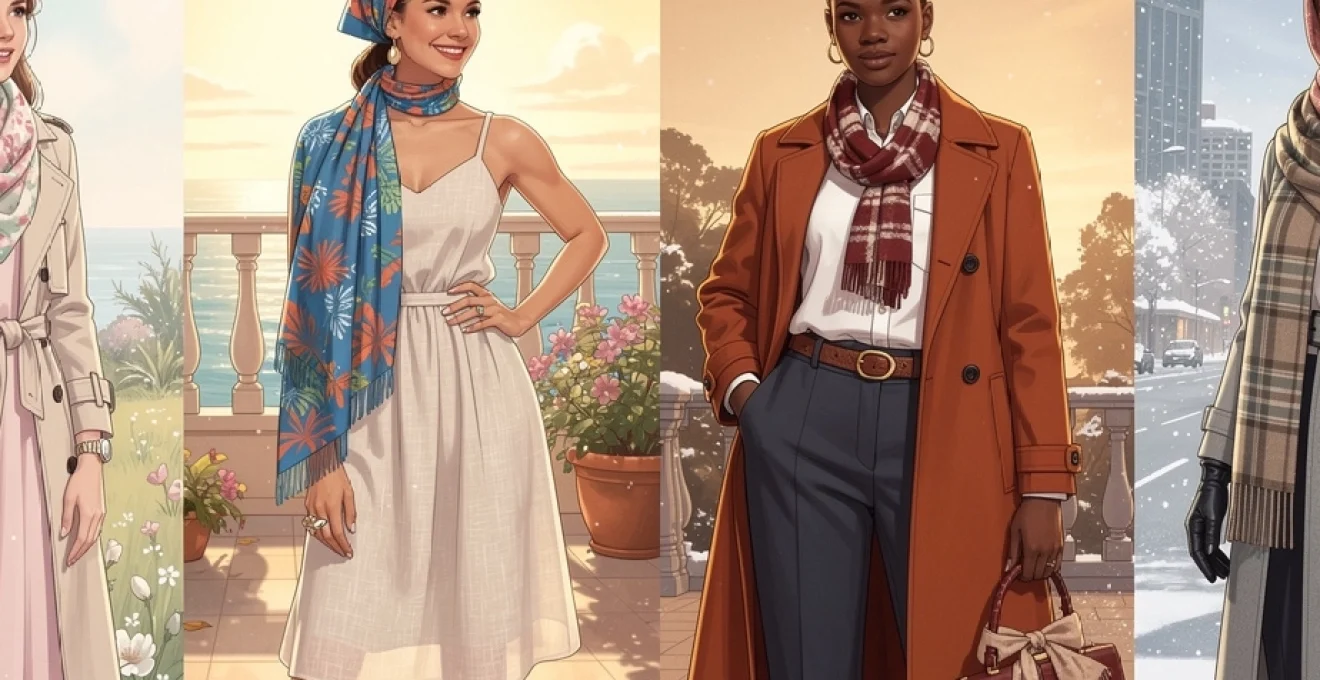
Scarves represent one of fashion’s most enduring and versatile accessories, transcending seasonal boundaries and style preferences with remarkable ease. Whether draped casually over the shoulders during a mild spring evening or wrapped snugly around the neck against biting winter winds, these elegant pieces of fabric offer both functional warmth and aesthetic enhancement. The art of scarf styling has evolved significantly over the decades, moving from purely practical garments to sophisticated fashion statements that can transform an entire outfit. Understanding how to select, style, and adapt scarves throughout the changing seasons empowers you to maximise your wardrobe’s potential whilst expressing your personal style with confidence and flair.
Scarf fabric selection and seasonal adaptability: silk, cashmere, and linen properties
The foundation of successful year-round scarf styling begins with understanding the distinct properties of various fabrics and their seasonal applications. Each material offers unique characteristics that make it particularly suited to specific weather conditions and styling approaches. Silk, renowned for its lustrous appearance and smooth texture, provides lightweight elegance whilst offering surprising temperature regulation properties. Cashmere, derived from the soft undercoat of cashmere goats, delivers exceptional warmth without excessive bulk, making it ideal for layering during cooler months. Meanwhile, linen’s breathable weave structure allows air circulation, preventing overheating during warmer periods whilst maintaining a sophisticated appearance.
When building a versatile scarf collection, consider investing in pieces across different fabric categories to ensure you’re prepared for every season. Natural fibres generally offer superior breathability and temperature regulation compared to synthetic alternatives, though modern textile innovations have produced impressive performance fabrics that warrant consideration. The weight of the fabric plays an equally important role in seasonal appropriateness—lightweight materials work best for transitional seasons and summer months, whilst heavier weaves provide necessary insulation during winter. Understanding these fundamental properties enables you to make informed purchasing decisions and style your scarves appropriately throughout the year.
Lightweight silk and chiffon scarves for spring layering techniques
Spring weather presents unique styling challenges, with temperatures fluctuating throughout the day and unpredictable conditions requiring adaptable wardrobe solutions. Lightweight silk and chiffon scarves excel in these circumstances, offering a protective layer without causing overheating as temperatures rise. These delicate fabrics drape beautifully, creating elegant silhouettes that enhance rather than overwhelm spring outfits. The natural protein fibres in silk provide gentle insulation during cooler morning hours whilst remaining comfortable as the day warms, making them exceptionally practical for transitional weather.
For spring styling, consider loosely draping a silk scarf around your neck, allowing the ends to fall naturally for an effortless, romantic appearance. This approach works particularly well with floral prints and pastel hues that echo the season’s botanical renewal. Alternatively, you might fold a square silk scarf into a narrow band and tie it as a neckerchief, creating a refined accent that adds visual interest without excessive warmth. The versatility of lightweight scarves extends beyond neck styling—they can be threaded through belt loops, tied onto handbag handles, or even worn as hair accessories, demonstrating their remarkable adaptability.
Merino wool and cashmere blends for autumn and winter insulation
As temperatures decline with the arrival of autumn and the depths of winter, the insulating properties of merino wool and cashmere become invaluable. Merino wool stands apart from standard wool varieties through its finer fibres, which provide warmth without the itchiness often associated with coarser wool. This material naturally wicks moisture away from the skin whilst regulating temperature, making it comfortable across varying activity levels. Cashmere represents the pinnacle of luxury winter scarves, offering exceptional softness and warmth relative to its weight. The finest cashmere fibres measure just 14-16 microns in diameter, creating an incredibly smooth texture that feels sumptuous against the skin.
Cashmere blends offer an excellent middle ground, combining cashmere’s luxury with the durability and affordability of other fibres such as merino wool or silk. These blended fabrics often perform admirably in real-world conditions, maintaining their appearance through repeated wear whilst providing substantial warmth. When selecting winter scarves, pay attention to the ply—
higher-ply scarves contain multiple yarns twisted together, resulting in a denser, more insulating fabric that is ideal for harsh winter conditions. Thicker knits and woven twills create a barrier against wind, while still allowing enough drape to sit comfortably around the neck and shoulders. For autumn, medium-weight merino blends are often sufficient worn over a light jumper or under a tailored coat, whereas deep winter justifies an oversized cashmere wrap styled almost like a portable blanket. To prolong the life of these investment pieces, avoid hanging heavy wool or cashmere scarves by one end, as this can distort their shape over time; instead, fold them neatly or roll them gently when storing between seasons.
Styling-wise, merino and cashmere scarves lend themselves to more structured knots and wraps that trap warm air close to the body. You might opt for a snug European loop on frosty mornings, or layer a wide cashmere stole over a blazer and secure it with a belt at the waist for added insulation and a refined silhouette. Dark, saturated tones such as charcoal, forest green, and deep burgundy complement the richness of these fibres and integrate easily into most autumn and winter wardrobes. By combining considered fabric selection with thoughtful styling, you can rely on a small rotation of merino wool and cashmere blends to see you comfortably and stylishly through the coldest months of the year.
Cotton voile and linen weaves for summer breathability
When temperatures climb, the priority shifts from insulation to breathability, and this is where cotton voile and linen scarves come into their own. Voile is a semi-sheer, lightweight cotton weave that feels almost weightless against the skin yet still provides modest coverage and light sun protection. Linen, by contrast, has a slightly crisper hand-feel and a visible weave structure that allows air to circulate freely, helping to keep you cool in humid conditions. Both fabrics absorb moisture efficiently and dry quickly, making them ideal companions for summer city breaks and beach holidays alike.
To style scarves in hot weather without feeling overheated, keep your wraps loose and your knots minimal. A narrow cotton voile scarf can be tied in a simple bandana style around the neck or worn as a lightweight headscarf to shield your scalp and hair from the sun. Wider linen scarves work beautifully draped across the shoulders as a shawl over strappy dresses or swimwear, providing protection from midday rays while maintaining a relaxed, effortless look. Because cotton and linen are easy to launder, you can confidently experiment with lighter colours and bolder prints, knowing that regular washing will help keep them fresh throughout the season.
From a practical perspective, cotton and linen scarves are also excellent for travel due to their packable nature and versatility. Rolled tightly, they occupy minimal suitcase space, yet can be transformed into sarongs, makeshift tops, or even beach blankets at a moment’s notice. If you are prone to temperature swings between air-conditioned interiors and outdoor heat, a gauzy scarf can act as a functional buffer, preventing the chill that often accompanies sudden shifts. In this way, cotton voile and linen weaves allow you to enjoy summer style and comfort while still taking full advantage of the many ways to wear a scarf.
Synthetic microfibre and modal fabrics for year-round versatility
Alongside natural fibres, modern synthetic and semi-synthetic materials such as microfibre and modal have become increasingly popular for year-round scarf styling. Microfibre, typically made from finely spun polyester, offers impressive warmth relative to its weight, strong colour retention, and excellent durability. Modal, a regenerated cellulose fibre derived from beech trees, combines the softness of cotton with a silky drape, making it particularly comfortable against sensitive skin. Both fabrics tend to resist creasing more effectively than pure natural fibres, which is useful if you commute, travel frequently, or simply prefer low-maintenance accessories.
The key advantage of these performance-oriented textiles is their adaptability across different seasons. A lightweight modal scarf can function as a transitional layer in spring and autumn, then double as a soft neck wrap in winter when paired with a heavier coat. Microfibre knits, often used in outdoor and athleisure wear, can provide wind resistance and moisture-wicking properties ideal for active days, from city cycling to weekend hikes. Because synthetic fibres can be engineered to specific thicknesses and textures, you will find everything from ultra-fine drapey designs to plush, fleecy winter options within this category.
Styling microfibre and modal scarves is largely about exploiting their resilience and colour vibrancy. Strong geometric prints, saturated jewel tones, and experimental patterns tend to show particularly well on these fabrics and withstand repeated washing without fading. You might choose a modal scarf in a bold print as a focal point for minimalist outfits, or rely on a microfibre snood for sports and commuting, where performance matters as much as aesthetics. For those seeking a compact, do-it-all piece, a mid-weight modal or microfibre scarf in a neutral shade can be worn twelve months of the year, adapting to different knotting techniques and outfit combinations with ease.
Classic knotting methods: the french knot, parisian twist, and drape techniques
Once you have an understanding of scarf fabrics, the next step is mastering classic knotting methods that work across the seasons. These timeless techniques form the backbone of scarf styling, allowing you to switch from relaxed weekend looks to polished professional ensembles with a few simple adjustments. Much like learning to tie different types of neckties, becoming comfortable with essential scarf knots creates a toolkit you can rely on without thinking. The French knot, Parisian twist, and various drape techniques may sound elaborate, yet they are easy to execute with a little practice and can dramatically alter the mood of your outfit.
To get the most from these methods, pay attention to scarf length, width, and fabric weight. Structured knots such as the European loop or ascot knot suit medium to long rectangular scarves in wool, cashmere, or modal blends, as these materials hold shape well. Looser drapes and asymmetrical throws are better suited to lightweight silk, chiffon, or linen scarves, which move fluidly and create visually interesting lines as you walk. By combining the right fabric with the appropriate knotting technique, you ensure that your scarf looks intentional rather than improvised, whether you are dressing for a winter commute or a summer evening event.
The european loop method for structured winter styling
The European loop, also known as the Parisian knot, is one of the most practical and visually balanced ways to style a scarf in cold weather. To create it, fold a long rectangular scarf in half lengthways, then drape the folded scarf around your neck so that the loop sits on one side and the loose ends on the other. Pull the loose ends through the loop and adjust until the scarf sits snugly against your neck, with the ends hanging evenly down your chest. This method creates a double layer of fabric at the front, effectively sealing the gap at your collar and offering excellent protection against wind and cold.
Because the European loop creates a clean, symmetrical line, it works particularly well with tailored coats, structured wool jackets, and smart-casual blazers. Merino wool, cashmere, or dense modal scarves are ideal here, as they maintain a neat silhouette rather than collapsing or slipping out of place. You can experiment slightly with the tightness of the loop: keep it close for frosty mornings, or loosen it a touch for indoor wear where you still want the look without excessive warmth. If you are wondering how to style a scarf in a way that feels secure and polished for commuting or business travel, this method is an excellent starting point.
Infinity wrap technique for casual spring outfits
For relaxed spring days, the infinity wrap technique offers an easy, no-fuss way to style scarves that looks intentionally casual. You can either use a purpose-made infinity scarf—a continuous loop of fabric—or transform a standard rectangular scarf into an infinity style by tying the short ends together in a small, discreet knot. Once you have your loop, place it over your neck, then twist it once in front of you to create a figure-eight before bringing the second loop over your head. Adjust the inner and outer loops until they sit comfortably, usually with one slightly shorter for a layered effect.
This technique is well suited to lighter fabrics such as cotton blends, modal, or fine wool that drape softly without too much bulk. It pairs beautifully with denim jackets, trench coats, and lightweight knitwear, adding dimension without overpowering your outfit. Because the loops rest securely around the neck and upper chest, you do not need to worry about ends coming loose in the wind or slipping off your shoulders. If you enjoy a streamlined silhouette but still want to incorporate pattern or colour near your face, the infinity wrap is a particularly versatile choice for everyday spring styling.
Loose draping and asymmetrical throws for summer elegance
When styling scarves in warmer months, structure often gives way to fluidity, and loose draping becomes the technique of choice. Asymmetrical throws, where one end of the scarf is deliberately longer than the other, create a sense of movement and visual interest without trapping excess heat. To achieve this, place a lightweight scarf—silk, chiffon, cotton voile, or linen—around your neck with one end significantly longer. Allow the shorter end to rest at your collarbone while you sweep the longer end across your chest and over the opposite shoulder, leaving it to cascade naturally down your back or side.
This relaxed approach works wonderfully with simple summer outfits, such as a linen dress, cotton T-shirt and jeans, or a minimalist jumpsuit. Because the scarf is only lightly touching the neck and shoulders, it adds an elegant layer of texture while remaining breathable in warm weather. You can also adapt the same throw to create a shoulder-covering shawl by widening the spread of fabric across your upper back and arms. For evening occasions, a semi-sheer silk or chiffon scarf styled in this way can function almost like jewellery, catching the light and framing the face while adding just enough coverage for cooler night air.
The ascot knot and neck bow styles for professional settings
In professional environments, scarf styling often requires a more polished, deliberate approach, and this is where the ascot knot and neck bow come into play. The ascot knot, inspired by traditional menswear, lends an air of understated sophistication when paired with blazers, tailored dresses, or crisp shirts. To tie it, drape a medium-length scarf around your neck so that one end is slightly longer. Cross the longer end over the shorter, bring it up and through the loop near your neck, then fold it over the front so it lies flat like a soft tie. You can tuck the ends into your shirt or blazer for a sleek finish, or leave them visible for a more relaxed interpretation.
Neck bow styles, on the other hand, provide a slightly softer, more expressive option that still reads as professional when executed in refined fabrics like silk or satin. Fold a narrow scarf into a band, wrap it around your neck, and tie a bow at the side or centre front, adjusting the loops for proportion and symmetry. This technique adds visual interest near the face, drawing attention upwards and complementing simple blouses or knit tops. If you work in a conservative office and wonder how to style a scarf without conflicting with a dress code, subtle colour palettes and smaller-scale prints keep neck bows and ascots appropriate while still allowing your personality to show.
Head wrap styling: turban folds, bandana ties, and retro pin-up configurations
Scarves are not limited to the neck; worn on the head, they can be both practical and visually striking. From protecting hair against the elements to expressing cultural identity or simply adding a playful element to your look, head wraps offer endless styling possibilities. The key is choosing the right size and fabric for the desired effect: square silk scarves lend themselves to retro pin-up and Audrey Hepburn-inspired looks, while larger rectangular or square cotton and modal pieces are ideal for fuller turban-style wraps. By mastering a few foundational techniques, you can transition smoothly from a beach-ready bandana to an elegant evening headscarf.
Comfort is crucial when styling scarves as headwear, especially if you plan to wear them for several hours. Lightweight fabrics such as silk, cotton, and viscose reduce tension on the scalp and minimise friction on hair, helping to prevent breakage and frizz. You may also find it helpful to use discreet hairpins or small elastic bands to anchor the scarf in place, particularly if you have fine or very smooth hair. With a little experimentation in front of the mirror, you will quickly discover which folds and knot positions best suit your face shape and personal style.
Classic audrey hepburn-inspired headscarf positioning
The iconic headscarf look popularised by Audrey Hepburn and other mid-century style icons remains timeless for a reason. It is simple, flattering, and distinctly elegant, making it ideal for both everyday wear and special occasions. To recreate this style, start with a medium to large square scarf in silk or a silky blend and fold it in half diagonally to form a triangle. Place the folded edge along your forehead or slightly back at the hairline, allowing the point of the triangle to fall towards the nape of your neck. Bring the two corners under your chin and tie them in a small, secure knot or bow, adjusting the tension so it feels comfortable but stable.
This configuration not only frames the face beautifully but also offers practical protection from wind, light rain, and sun—making it an excellent choice for driving with the windows down or strolling along breezy coastal paths. For a slightly more modern interpretation, you can tie the ends behind your head at the nape of your neck instead of under the chin, creating a sleeker profile. Soft, solid colours, classic polka dots, or vintage floral prints work particularly well with this headscarf style, echoing its retro roots while still feeling relevant in contemporary wardrobes.
Bohemian turban twists for festival and summer occasions
For a more dramatic, bohemian-inspired approach, turban-style head wraps are perfect for festivals, holidays, and summer evenings. They not only make a statement but also serve a practical purpose by keeping hair off the face and concealing second-day or pool-tousled hair. To create a simple turban twist, use a long rectangular scarf or a large square folded into a band. Place the centre of the scarf at the nape of your neck and bring the ends forward, crossing them over your forehead once or twice to form a twist. Then take the ends back again and tie them in a knot at the nape or tuck them securely under the wrapped layers.
The resulting look is sculptural yet relaxed, particularly effective when styled with lightweight cotton, modal, or bamboo fabrics that grip the head slightly without feeling tight. Rich colours, ethnic-inspired patterns, or textured weaves enhance the bohemian mood, especially when paired with flowing dresses, wide-leg trousers, or off-the-shoulder tops. If you are new to turban styling and worry about the wrap slipping, consider starting with a thin headband or elastic scarf cap underneath to provide grip. With practice, you will find that these twists become second nature, offering one of the most creative ways to style scarves in summer and beyond.
Protective winter headscarves with coat collar integration
In winter, headscarves can be cleverly integrated with your coat collar to create a cocoon of warmth that rivals a hood. This approach is particularly useful if you dislike hats or find that they flatten your hair. Choose a wide, soft scarf in wool, cashmere, or a cosy synthetic blend, long enough to wrap comfortably around both your head and neck. Start by placing the centre of the scarf at the back of your neck, then pull the middle section up over your head to form a hood. Cross the ends under your chin, wrapping them around your neck and tucking them into or under your coat collar.
When done correctly, the scarf and collar work together to block drafts and trap warm air, keeping your ears, neck, and upper chest protected in harsh conditions. This styling trick allows you to adapt to changing temperatures quickly: when you step indoors or onto public transport, simply pull the hooded section back while leaving the neck wrap in place. Opt for darker, winter-appropriate colours or subtle patterns that coordinate with your outerwear, ensuring the overall effect looks intentional rather than improvised. For those who find traditional wool hats itchy or restrictive, winter headscarves integrated with coat collars provide a stylish, functional alternative.
Scarf-to-accessory transformations: belt styling, bag adornments, and wrist accents
One of the most compelling reasons scarves remain a staple in fashion is their ability to transform from clothing accessory to jewellery-like accent with minimal effort. When not worn around the neck or head, scarves can be repurposed as belts, bag adornments, or wrist wraps, extending their usefulness and allowing you to express creativity in subtle ways. This is particularly valuable if you enjoy a capsule wardrobe approach; a few well-chosen scarves can significantly expand your outfit combinations without adding bulk to your closet.
To style a scarf as a belt, choose a medium-length rectangular or long square scarf in a fabric with enough structure to hold its shape—silk twill, cotton, or light wool all work well. Fold the scarf into a narrow band, thread it through your belt loops, and tie a knot or bow slightly off-centre at the front or side. This technique defines the waist on dresses, wide-leg trousers, or high-rise jeans while injecting colour or pattern into otherwise simple ensembles. For a softer effect, you can also tie a scarf loosely around the waist of a dress or oversized shirt without using belt loops, letting the ends hang casually for a boho-inspired finish.
Bag adornments offer another effortless way to style scarves throughout the year. A small silk square or skinny scarf can be tied around the handle of a structured handbag, either in a neat bow or wrapped several times for a more layered look. Not only does this personalise your bag—especially useful for making high-street pieces feel more unique—but it also introduces colour near your hands, balancing outfits where the neckline is left unadorned. Similarly, wrapping a narrow scarf around your wrist and securing it with a small knot or tuck creates a bracelet-like effect that is softer and more tactile than traditional jewellery. These scarf-to-accessory transformations invite experimentation; you can switch positions, combinations, and ties according to your mood, season, and outfit needs.
Seasonal colour palettes and pattern coordination: paisley, geometric, and floral motifs
Beyond fabric and knotting techniques, colour and pattern selection play a crucial role in successful scarf styling throughout the year. Because scarves often sit close to the face, their tones and motifs can dramatically influence how an outfit feels and how your complexion appears. Well-chosen colours can brighten tired skin, while harmonious patterns can pull diverse wardrobe pieces into a cohesive whole. Classic motifs such as paisley, geometric designs, and florals each carry different visual messages—paisley tends towards bohemian elegance, geometric prints feel modern and graphic, and florals range from romantic to bold depending on scale and palette.
A useful way to think about scarf colours is to align them with seasonal palettes while also considering your existing wardrobe. Autumn invites deeper, earthy hues; winter favours neutrals and rich, cool tones; spring is naturally aligned with soft pastels and botanical prints; and summer welcomes bright, sun-drenched shades. By selecting a few scarves that resonate with each seasonal palette, you can refresh core garments—such as a black coat, navy blazer, or white shirt—without needing to replace them. In this sense, scarves operate almost like paint for your wardrobe, allowing you to shift the mood of your outfits as the year progresses.
Autumnal earth tones: burnt orange, ochre, and deep burgundy selections
As leaves change colour and the light softens, autumn is the perfect time to introduce earth-toned scarves into your rotation. Shades like burnt orange, ochre, deep burgundy, and moss green echo the natural landscape and pair seamlessly with classic wardrobe staples such as denim, camel coats, and brown leather accessories. These hues also tend to be flattering on a wide range of skin tones, lending warmth and depth to the complexion as daylight hours shorten. Paisley prints, in particular, shine in this context, their swirling motifs and layered colours complementing the richness of the season.
To style scarves in autumnal palettes, consider grounding brighter pieces with neutral bases. For example, a deep burgundy wool scarf looks sophisticated draped over a grey or navy blazer, while a burnt orange cashmere wrap instantly enlivens a simple black knit. If you are cautious about wearing strong colours near your face, opt for scarves that blend earth tones with softer neutrals, such as cream or soft taupe, creating a gentler transition. Layering multiple analogous shades—think rust, caramel, and chocolate—through scarves, bags, and shoes can also produce a refined, tonal look that feels deliberate and seasonally appropriate.
Spring pastels and floral prints: cherry blossom and botanical patterns
Spring is synonymous with renewal, making it an ideal moment to experiment with lighter colours and floral motifs in your scarf collection. Pastel tones—such as blush pink, soft lavender, mint green, and powder blue—convey freshness and pair beautifully with classic spring fabrics like cotton, linen, and silk. Florals can range from delicate cherry blossom-inspired patterns to more abstract botanical designs, each bringing a sense of life and optimism to your outfits after the muted tones of winter. Smaller-scale prints tend to read as more subtle and refined, while oversized florals make a bolder, more fashion-forward statement.
When styling spring scarves, harmonise their colours with at least one element of your outfit, whether that is a shirt, a pair of trousers, or even a lipstick shade. A pastel floral silk scarf tied in a loose French knot at the neck can instantly elevate a white T-shirt and jeans, while a larger botanical-print wrap draped over a trench coat adds texture and visual interest on cooler days. If you worry that florals might feel overly romantic, look for designs that mix botanical elements with geometric borders or graphic lines; this balance keeps the overall look contemporary. In any case, incorporating spring-ready scarves is one of the simplest ways to signal the seasonal shift in your wardrobe without overhauling your entire closet.
Winter neutrals and tartan checks: stewart, burberry-inspired plaids
Winter often calls for practicality and durability in clothing, and scarf patterns are no exception. Neutrals such as black, grey, camel, and navy form the backbone of many cold-weather wardrobes, making them a logical starting point for scarf choices. However, incorporating tartan and plaid designs—like classic Stewart and Burberry-inspired checks—adds visual interest while still remaining firmly within a timeless aesthetic. These patterns work especially well in wool, cashmere, and heavier cotton blends, where their structured lines and intersecting colours are clearly defined.
Styling tartan scarves can be as simple as draping them over a solid-colour coat, allowing the pattern to function as the focal point of your outfit. If your outerwear is already patterned, choose a scarf that either echoes one of its key colours or remains in a more subdued, tone-on-tone check to avoid visual overload. Neutrally based plaids—camel with black and red stripes, for example—tend to be the most versatile, shifting easily between casual weekend looks and office-appropriate ensembles. For those who prefer minimalism but still want some seasonal flair, a single tartan scarf worn repeatedly with different winter outfits can become a signature style element.
Summer brights: mediterranean blues, coral, and tropical prints
Summer provides the perfect canvas for brighter, more saturated scarf colours that might feel overwhelming in other seasons. Mediterranean blues, vivid turquoise, coral, sunny yellow, and hot pink all come into their own under strong natural light, complementing sun-kissed skin and lighter summer fabrics. Tropical prints, abstract watercolour patterns, and bold geometric designs suit this season particularly well, adding energy and playfulness to simple silhouettes such as white dresses, denim shorts, and linen separates.
To style scarves in summer brights without feeling overdone, treat them as accent pieces rather than the main event. A turquoise cotton voile scarf knotted loosely at the neck or worn as a headband can inject colour into a neutral outfit with minimal effort. Similarly, a tropical-print sarong-style scarf tied at the hip over swimwear can transition from beach to bar while providing coverage and style. If you enjoy colour-blocking, try pairing a coral scarf with a navy dress or combining complementary shades, such as blue and orange, for a striking yet harmonious contrast. Because summer scarves are typically lighter in fabric and mood, they invite experimentation and spontaneity; you can easily adjust or remove them as temperatures change.
Garment-specific scarf pairing: blazers, coats, dresses, and casual wear integration
Finally, understanding how to pair scarves with specific garments will help you move from theoretical styling ideas to practical, everyday outfits. Different clothing categories call for different scarf shapes, fabrics, and knotting methods, and recognising these relationships can save time when you are getting dressed. Think of your outerwear, tailoring, dresses, and casual basics as distinct canvases, each offering opportunities for scarves to shine in complementary ways. By planning a few go-to combinations for each category, you create a reliable framework for how to style scarves throughout the year, no matter what your day involves.
Blazers and structured jackets, for instance, benefit from scarves that echo their clean lines. Narrow silk or modal scarves tied in ascot knots, neck bows, or slim European loops sit comfortably within blazer lapels without adding excessive bulk. Solid colours or subtle geometric prints tend to look most professional, making them ideal for client meetings, interviews, or presentations. For more relaxed tailoring, such as oversized blazers or unstructured jackets, you can experiment with slightly larger scarves in looser knots, allowing a hint of nonchalance while retaining polish.
Coats—particularly wool overcoats, trench coats, and padded parkas—offer more space for experimentation with volume and texture. In deep winter, long rectangular wool or cashmere scarves wrapped in European loops, double wraps, or hooded configurations provide both style and insulation. Trench coats pair beautifully with mid-weight cotton or silk-blend scarves in classic prints like stripes, checks, or small florals, tied either in simple drapes or light knots that sit just above the coat’s button line. When your coat has a dramatic collar or statement hardware, consider styling the scarf underneath rather than over the collar so that both elements remain visible and harmonious.
Dresses, whether casual or formal, invite more playful scarf styling options. A lightweight silk square folded into a band and tied at the neck can transform the feel of a simple shift dress, adding a Parisian touch without requiring additional jewellery. For sleeveless or strappy dresses, especially in the evening, larger scarves worn as shawls or wraparound stoles provide coverage and warmth while contributing to the overall aesthetic. You might also experiment with using scarves as belts over dresses—cinching the waist of a shirt dress with a printed silk scarf, for example, instantly sharpens the silhouette and introduces an eye-catching focal point.
Casual wear—think T-shirts, knitwear, denim, and loungewear—is perhaps the easiest setting in which to test different scarf styles. Here, comfort and ease take precedence, so opt for soft fabrics like cotton, modal, or light wool and relaxed knots such as the simple loop, waterfall drape, or loose asymmetrical throw. A striped Breton top with a solid-colour scarf in a complementary hue can feel effortlessly chic, while a hoodie layered under a coat gains extra interest from a chunky knit scarf wrapped once and thrown over the shoulder. If you work from home or spend much of your time in jeans and sweaters, a rotation of a few well-chosen scarves can prevent outfits from feeling repetitive, allowing you to adapt quickly to changes in temperature and mood.
Ultimately, the art of pairing scarves with specific garments lies in balance: matching the scale of the scarf to the structure of the clothing, aligning fabrics with seasons, and choosing colours and patterns that either harmonise or deliberately contrast. By approaching your styling decisions with this in mind, you turn scarves from occasional afterthoughts into integral, hard-working elements of your wardrobe all year round.