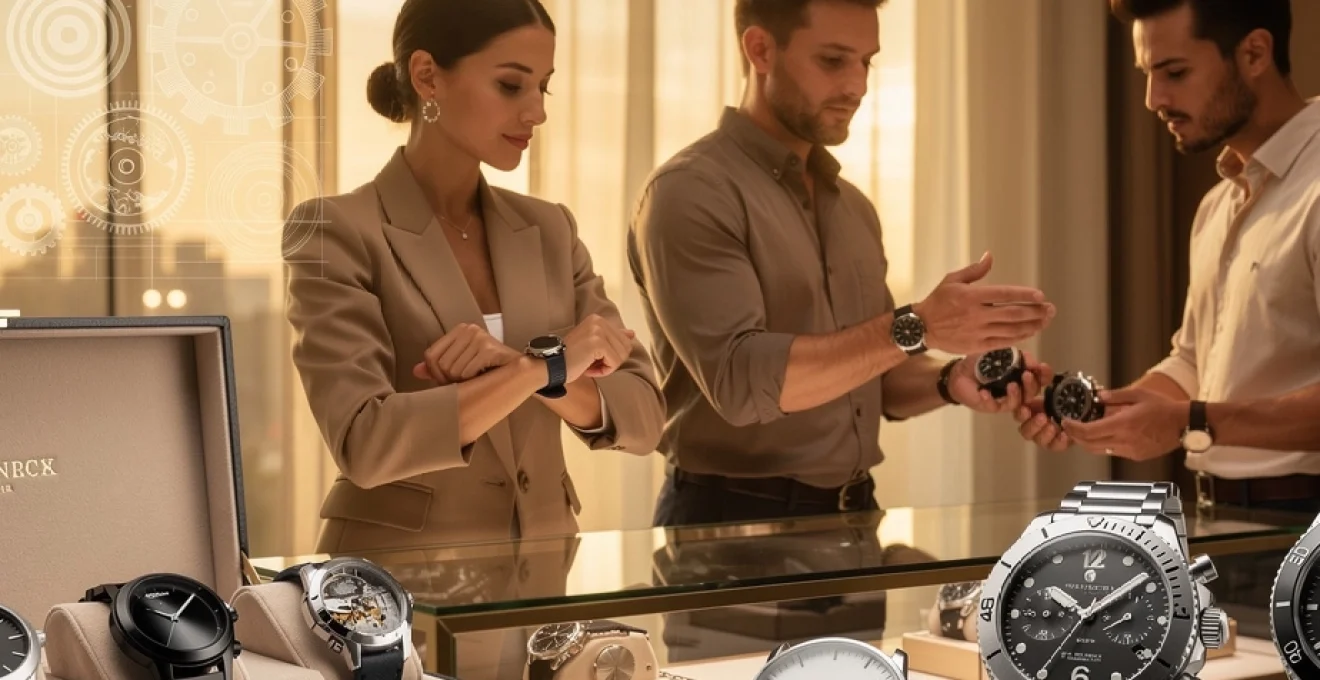
The modern watch landscape presents a fascinating dichotomy where technical excellence meets aesthetic sophistication. Today’s discerning consumers no longer settle for timepieces that merely tell time; they demand instruments that seamlessly blend horological mastery with contemporary design sensibilities. The convergence of Swiss precision engineering, Japanese innovation, and cutting-edge materials science has created an unprecedented opportunity for watch enthusiasts to own pieces that excel in both performance and style.
This evolution reflects broader shifts in luxury consumption, where authenticity and craftsmanship command premium positioning. Whether you’re navigating boardroom negotiations or weekend adventures, the right timepiece communicates volumes about your appreciation for quality engineering and refined taste. Understanding the intricate balance between mechanical sophistication and visual appeal becomes essential when selecting a watch that truly complements your lifestyle demands.
Understanding horological movement types for Fashion-Forward timepieces
The heart of any exceptional timepiece lies in its movement, where centuries of mechanical engineering converge with modern manufacturing precision. Contemporary watch movements represent the culmination of horological evolution, offering reliability that previous generations could only dream of achieving. The choice between automatic, manual, and quartz calibres fundamentally shapes both the wearing experience and long-term ownership satisfaction.
Modern movement technology has democratised access to exceptional timekeeping performance across various price points. Swiss ETA movements continue setting industry standards for reliability and accuracy, whilst Japanese manufacturers have revolutionised affordable precision through innovative manufacturing techniques. Understanding these technical foundations empowers informed decision-making when balancing aesthetic preferences against functional requirements.
Swiss ETA 2824-2 automatic movements in designer collections
The ETA 2824-2 represents the gold standard for automatic movement reliability in contemporary watch manufacturing. This 25-jewel calibre delivers exceptional accuracy within COSC chronometer specifications, whilst maintaining the robust construction necessary for daily wear scenarios. Its widespread adoption across luxury and mid-range collections speaks to its proven track record in diverse applications, from dress watches to professional diving instruments.
Fashion-forward brands increasingly specify ETA 2824-2 movements for their flagship collections, recognising that technical credibility enhances brand prestige. The movement’s 42-hour power reserve ensures consistent timekeeping through weekend periods, whilst its bidirectional winding system maximises efficiency during active wear. Premium finishing options allow manufacturers to customise the movement’s visual appeal through decorative techniques like perlage and Côtes de Genève patterns.
Japanese miyota 9015 calibres for contemporary aesthetics
Miyota’s 9015 automatic movement has emerged as a compelling alternative to Swiss calibres, offering exceptional value without compromising performance standards. Its slim 11.5mm profile enables designers to create elegantly proportioned cases that enhance wrist presence without sacrificing comfort. The movement’s 42-hour power reserve matches Swiss competitors, whilst its robust construction withstands the rigours of active lifestyles.
Contemporary watch brands appreciate the 9015’s reliability and cost-effectiveness, enabling them to focus resources on case finishing and design innovation. The calibre’s hack seconds function and quickset date mechanism provide practical convenience during daily use. Japanese manufacturing precision ensures consistent quality across production runs, supporting brand reputation for reliability and customer satisfaction.
Seiko NH35A movements in Fashion-Forward micro brands
The Seiko NH35A has democratised automatic movement access for emerging watch brands, offering Swiss-level reliability at accessible price points. This 24-jewel calibre features hack seconds and quickset date functions, providing premium functionality typically reserved for more expensive movements. Its 41-hour power reserve ensures practical usability, whilst the robust construction tolerates the manufacturing variations common in smaller production runs.
Micro brands leverage the NH35A’s proven reliability to establish credibility within competitive market segments. The movement’s standardised dimensions simplify case design and manufacturing, allowing brands to focus on aesthetic innovation rather than technical development. Customisation possibilities include decorated rotors and coloured jewels, enabling brands to create distinctive visual identities whilst maintaining mechanical integrity.
Quartz ronda calibres for Ultra-Thin dress watches
Ronda quartz movements represent the pinnacle of
affordable precision in dress-oriented timepieces. Their ultra-thin architecture allows designers to create slim, elegant cases that slide effortlessly under a cuff, a key requirement for truly versatile office-to-evening watches. Because quartz movements require less vertical space than automatics, fashion houses can prioritise minimalist dials, polished bezels and refined case profiles without compromising reliability.
For style-conscious buyers, Ronda-powered watches offer an ideal blend of fashion and functionality at accessible price points. Battery life often extends beyond three years, reducing maintenance while maintaining dependable timekeeping for busy professionals. When paired with thoughtfully designed cases and high-quality straps, Ronda quartz calibres underpin ultra-thin dress watches that feel discreet on the wrist yet project a considered, contemporary aesthetic.
Case materials and construction technologies for durability
Once you understand what drives the hands, the next priority is the exterior architecture protecting that movement. Case materials and construction technologies directly influence how a watch ages, how it feels on the wrist, and how convincingly it communicates quality. The same 40 mm silhouette can appear bold, sporty, or quietly luxurious depending on the metallurgy, finishing, and engineering details.
Modern watchmaking leverages advanced alloys, ceramics, and composites to balance scratch resistance, weight, and structural integrity. As you compare fashionable watches, paying attention to case specifications helps you separate genuinely well-engineered pieces from those relying purely on branding. In practice, this means understanding what terms like 316L stainless steel, Grade 2 titanium, or zirconia ceramic truly deliver in daily wear.
316L stainless steel finishing techniques in luxury timepieces
316L stainless steel remains the backbone of contemporary watch cases due to its excellent corrosion resistance, hypoallergenic properties, and relative affordability. However, what truly differentiates an entry-level fashion watch from a luxury timepiece is not the base alloy itself but the finishing techniques applied to it. High-end manufacturers invest significant time in brushing, polishing, and beveling surfaces to create sophisticated light play that enhances perceived value.
Fine longitudinal brushing on the case flanks combined with mirror-polished chamfers, for example, creates visual contrast that instantly reads as premium. These transitions are not merely cosmetic; precise finishing requires exacting tolerances that speak to overall manufacturing quality. When you evaluate a watch in person, tilt the case under light and observe how cleanly brushed surfaces meet polished edges—sharp, consistent lines are a hallmark of elevated craftsmanship in 316L stainless steel watches.
Titanium grade 2 applications in sports-luxury hybrids
Titanium Grade 2 has become increasingly popular in sports-luxury hybrids, where brands aim to deliver bold wrist presence without the associated weight of steel. This aerospace-derived material is roughly 40% lighter than stainless steel yet offers exceptional strength-to-weight performance and high corrosion resistance, particularly important for frequent travellers and outdoor enthusiasts. Its naturally darker hue also lends itself to a modern, technical aesthetic that appeals to design-conscious buyers.
Because Grade 2 titanium is softer than hardened steel, top-tier manufacturers often apply advanced surface treatments like micro-bead blasting or nitriding to improve scratch resistance. These finishes create a matte, tool-like appearance that pairs well with integrated bracelets and sporty dials. If you prioritise all-day comfort and a contemporary look, a Grade 2 titanium sports-luxury watch can be an excellent option, especially when combined with a robust automatic movement and 100 m or greater water resistance.
Ceramic zirconia integration in contemporary watch design
High-tech zirconia ceramic has transitioned from niche experimentation to mainstream luxury over the past decade, especially in fashion-forward collections. Its primary advantage is extreme scratch resistance: where steel and titanium inevitably show hairline marks, zirconia ceramic maintains its glossy or satin finish for years under normal wear. This makes it particularly attractive for bezel inserts and entire cases on watches designed as long-term style investments.
Ceramic’s visual versatility also plays a key role in contemporary watch design. Deep blacks, rich blues, and even pastel tones can be achieved with remarkable colour stability, enabling brands to create statement pieces that do not fade with exposure to UV light. The trade-off is that ceramic can be more brittle than metal, so thoughtful engineering—such as steel inner cores or metal inserts at stress points—is essential. When executed correctly, ceramic zirconia integration delivers a compelling blend of futuristic aesthetics and everyday durability.
Carbon fibre composite cases for performance-oriented styles
Carbon fibre composite cases embody the performance-oriented side of modern watchmaking, drawing inspiration from motorsport, aerospace, and high-end athletic equipment. Layers of woven carbon, impregnated with resin and cured under pressure, create cases that are both incredibly light and structurally rigid. The resulting marbled or layered patterns are unique to each piece, giving fashion-conscious collectors a sense of individuality and technical sophistication.
These materials excel in watches aimed at active lifestyles, where reduced weight and impact resistance enhance comfort and practicality. When combined with rubber straps and high-contrast dials, carbon composite watches project a distinctly contemporary, almost architectural presence on the wrist. For buyers who appreciate avant-garde design and want a timepiece that looks at home alongside performance sneakers and technical outerwear, carbon fibre cases offer a powerful visual and functional statement.
Water resistance standards and real-world applications
Beyond aesthetics and movement choice, water resistance ratings are among the most misunderstood specifications in watch buying. Labels such as 30 m, 50 m, or 200 m create an impression of depth capability that often does not align with real-world usage. In practice, these ratings are based on static laboratory tests rather than dynamic conditions like swimming strokes, temperature changes, or pressure shocks.
For a fashion-focused yet functional watch wardrobe, it helps to translate technical ratings into practical guidelines. A 30 m (3 ATM) watch is typically suitable for incidental contact, such as hand washing or light rain, but not for swimming. 50 m to 100 m coverage starts to support recreational water use, while 200 m and above generally indicates genuine dive-ready capability when paired with screw-down crowns and unidirectional bezels. Asking yourself how often you truly swim, dive, or sail ensures you choose water resistance aligned with your lifestyle rather than marketing hyperbole.
Strap and bracelet engineering for comfort and style
Straps and bracelets act as the interface between a watch and your daily life, influencing comfort as much as they shape visual identity. Even the most beautifully engineered case can feel awkward if paired with a poorly designed bracelet or stiff leather strap. Modern watchmaking pays increasing attention to ergonomic articulation, quick-release systems, and advanced materials that adapt to different climates and dress codes.
Steel bracelets with solid links and precision-machined end links offer durability and a cohesive aesthetic, especially on sports-luxury pieces. Meanwhile, integrated micro-adjustment mechanisms in the clasp allow you to fine-tune fit as your wrist expands throughout the day, a feature you will appreciate more than any complication on a hot afternoon. On the more sartorial side, high-quality leather straps—often padded at the lugs and tapering toward the buckle—lend dress watches a refined, tailored feel. Increasingly, fashion-forward brands also experiment with FKM rubber, textile, and hybrid straps that bring technical flair and sweat resistance while maintaining a streamlined look.
Complications balance: GMT functions and chronographs in fashion watches
Once the fundamentals of movement, case construction, and strap engineering are in place, complications become the next layer where fashion and functionality intersect. Two of the most practical and visually engaging complications for style-conscious buyers are GMT functions and chronographs. Both add dynamic dial layouts that catch the eye, while providing practical tools for travel and timing everyday activities.
The key is finding a balance between dial complexity and legibility. Overly cluttered designs can undermine the elegance of an otherwise well-proportioned watch, particularly if you plan to wear it in formal environments. On the other hand, a thoughtfully executed GMT or chronograph can signal technical sophistication and global lifestyle aspirations. When considering such pieces, ask yourself: will I actually use these functions, or am I primarily drawn to the visual drama they add to my wrist?
Tudor GMT-Master alternative complications for travel enthusiasts
For travel enthusiasts who appreciate Rolex GMT-Master heritage but seek a more accessible or understated option, Tudor’s GMT offerings provide compelling alternatives. Their GMT movements allow you to track a second time zone via an independently adjustable hour hand or a 24-hour hand set against a bi-colour bezel. This functionality is more than a visual flourish; it simplifies jet lag–ridden schedule management when crossing continents for work or leisure.
From a style standpoint, Tudor’s approach preserves classic sports-watch proportions while introducing contemporary colour palettes and robust construction. The slightly thicker case required to house the GMT movement actually adds to the tool-watch presence many buyers seek. On the wrist, a Tudor GMT pairs seamlessly with everything from a navy suit to technical outerwear, projecting the image of someone who moves fluidly between time zones without sacrificing sartorial coherence.
Tissot PRC 200 chronograph functionality in business settings
The Tissot PRC 200 chronograph exemplifies how timing functions can integrate into a business-ready aesthetic. With its 200 m water resistance and cleanly organised sub-dials, it straddles the line between professional tool and refined everyday watch. In corporate environments, the ability to time presentations, commute durations, or workout intervals discreetly can be surprisingly useful, turning the chronograph from a purely enthusiast feature into a genuine productivity aid.
Designed with legible indices, a balanced date window, and measured case dimensions, the PRC 200 avoids the excessive bulk that makes some chronographs unsuitable for shirt cuffs. When paired with a leather strap, it reads as a sporty-dress hybrid, whereas a metal bracelet emphasises its technical roots. This versatility means you can transition from client meetings to after-hours social events without feeling the need to change watches.
Seiko prospex solar chronograph for active lifestyles
For those whose calendar includes as much outdoor activity as office time, the Seiko Prospex Solar Chronograph offers a compelling balance of rugged functionality and modern styling. Its solar-powered movement removes the need for battery changes, an advantage if you subject your watch to frequent water exposure or impact. With typical power reserves stretching several months from a full charge, you can leave the watch in a drawer for a period and still expect it to function the moment you strap it on.
The Prospex line’s bold indices, high-contrast sub-dials, and generously lumed hands deliver excellent legibility in varied lighting conditions, from gym interiors to trail runs at dusk. Case designs often feature protective crown guards and screw-down pushers, reinforcing durability without appearing overly industrial. Styled with a rubber strap or steel bracelet, a Seiko Prospex Solar Chronograph complements athleisure, technical outerwear, and casual weekend attire, making it a go-to option for an active, fashion-conscious lifestyle.
Hamilton khaki aviation Day-Date complications for vintage appeal
Hamilton’s Khaki Aviation Day-Date models tap into the romantic heritage of pilot’s watches while offering complications that prove genuinely useful in daily life. The prominent day and date apertures at 12 and 6 or 3 and 6 o’clock positions provide at-a-glance information during busy schedules, a small but appreciated convenience when juggling meetings or travel itineraries. The design language, inspired by mid-century cockpit instruments, bridges classic military tool aesthetics with modern finishing.
On the wrist, the combination of vintage-style Arabic numerals, cathedral or syringe hands, and a slightly domed crystal creates a soft, nostalgic presence that pairs beautifully with denim, chinos, and leather jackets. At the same time, the automatic movements and robust cases ensure contemporary reliability. For collectors who want a watch that tells a story—evoking the early days of commercial aviation—while remaining fully compatible with modern wardrobes, the Khaki Aviation Day-Date strikes a compelling balance.
Brand heritage analysis: omega seamaster vs. tag heuer formula 1 collections
When choosing a watch that combines fashion and functionality, brand heritage often plays a decisive role. Omega and TAG Heuer occupy prominent positions in this landscape, each leveraging decades of history to shape distinct visual identities and technical priorities. Comparing the Omega Seamaster and TAG Heuer Formula 1 collections illustrates how two respected maisons interpret the intersection of performance and style in very different ways.
The Seamaster line, with roots dating back to 1948, is closely associated with ocean exploration and professional diving, as well as its long-standing connection to the James Bond franchise. This heritage underpins design elements such as screw-down crowns, helium escape valves on certain models, and distinctive wave-pattern dials. In contrast, the Formula 1 collection channels TAG Heuer’s deep involvement in motorsport, expressed through bold colour accents, tachymeter scales, and case shapes that evoke racing instrumentation. For buyers, the choice often comes down to which narrative—sea or circuit—better reflects their personal style and aspirational lifestyle.
From a technical standpoint, Omega typically positions the Seamaster at a slightly higher specification tier, with features such as METAS-certified Master Chronometer movements, anti-magnetic technology up to 15,000 gauss, and ceramic bezels with liquidmetal inlays on many models. These innovations translate into outstanding accuracy and long-term resilience, attributes that appeal to collectors who value cutting-edge engineering. TAG Heuer’s Formula 1 range, meanwhile, focuses on robust quartz and automatic options at more accessible price points, offering 200 m water resistance and durable case constructions that stand up well to everyday wear.
Stylistically, Seamaster designs tend to balance technical detailing with a degree of restraint, making them surprisingly versatile with business attire despite their dive-watch roots. The iconic “Bond” Seamasters, for example, can shift seamlessly from neoprene to navy suit. Formula 1 models lean more overtly sporty, with angular case lines, bright accent colours, and textured dials that shine alongside streetwear, athleisure, and casual weekend looks. Neither approach is inherently better; the decision hinges on where you want your watch to sit on the spectrum from understated sophistication to energetic boldness.
Ultimately, evaluating these collections through the dual lens of fashion and functionality encourages you to think beyond specifications alone. Ask yourself which heritage story resonates more strongly, which design language complements your existing wardrobe, and how the technical features support your real-world activities. Whether you gravitate toward the oceanic legacy of the Omega Seamaster or the high-octane energy of the TAG Heuer Formula 1, aligning brand identity with your personal narrative ensures your watch feels like a natural extension of your style rather than a mere accessory.