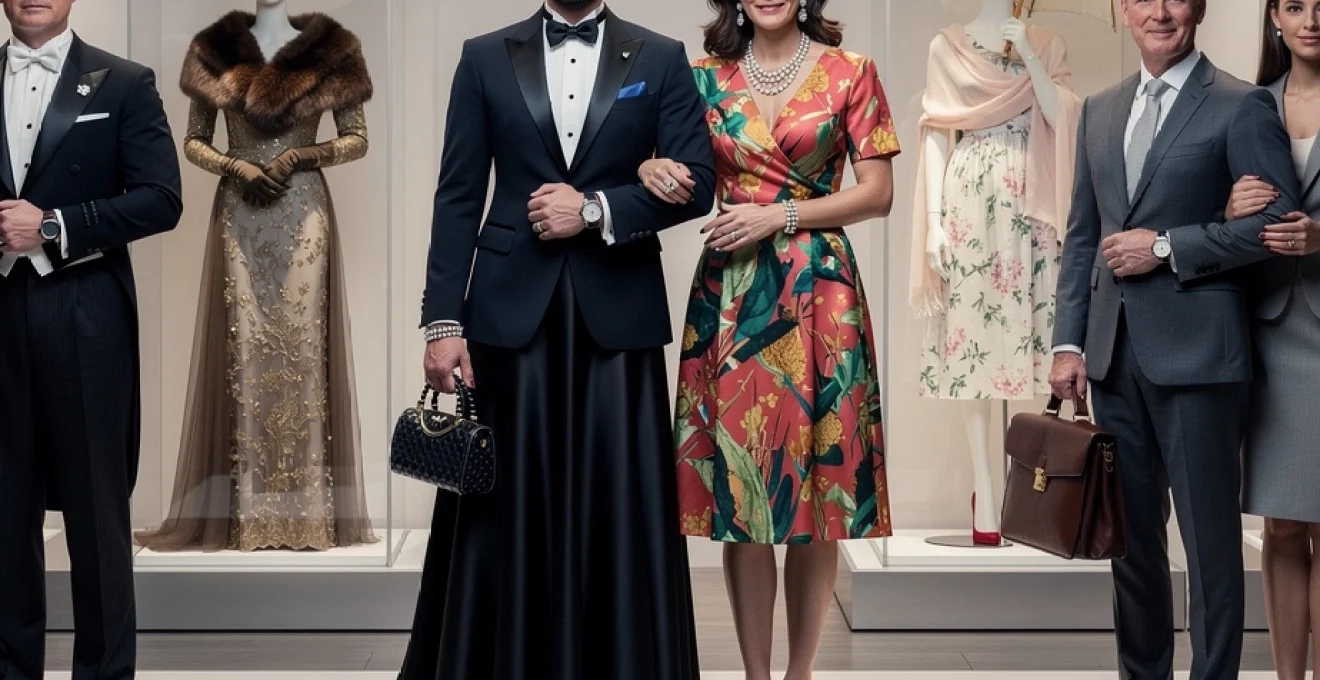
Navigating the intricate world of formal dress codes whilst maintaining impeccable accessory coordination requires both sophistication and strategic planning. The art of accessorising extends far beyond simply matching colours or selecting statement pieces; it demands an understanding of cultural nuances, seasonal appropriateness, and the subtle psychology behind professional presentation. Whether attending a white-tie diplomatic function or a casual corporate networking event, your accessory choices communicate volumes about your attention to detail and cultural awareness.
Modern dress codes have evolved considerably from their traditional origins, yet the fundamental principles of appropriate accessorising remain steadfast. The difference between a well-dressed individual and a truly distinguished presence often lies in the thoughtful selection and coordination of accessories that complement both the occasion and the wearer’s personal style. Understanding these distinctions becomes particularly crucial in today’s globalised professional environment, where a single accessory misstep can undermine an otherwise perfect ensemble.
Understanding contemporary dress code classifications and accessory requirements
Contemporary dress codes operate within a sophisticated hierarchy that extends beyond the basic formal-to-casual spectrum. Each classification carries specific expectations regarding accessory selection, material quality, and overall presentation standards. The modern professional must navigate these requirements whilst maintaining personal authenticity and cultural sensitivity.
Understanding the underlying philosophy behind each dress code proves essential for successful accessory coordination. Formal dress codes emphasise tradition and respect, whilst business casual environments prioritise functionality without sacrificing professionalism. The key lies in recognising that accessories serve as the bridge between personal expression and social conformity, allowing individuals to demonstrate their understanding of appropriate boundaries whilst showcasing their personal style.
White tie protocol: formal jewellery selection and timepiece etiquette
White tie events represent the pinnacle of formal dressing, demanding absolute precision in accessory selection. Traditional protocols dictate that gentlemen should wear only minimal jewellery, typically limited to wedding rings, cufflinks, and dress studs. Pocket watches remain the preferred timepiece choice, as wristwatches, regardless of their value, are considered inappropriate for this level of formality.
For ladies attending white-tie events, jewellery selection becomes an exercise in refined elegance. Pearls, diamonds, and precious metals dominate the acceptable palette, with particular emphasis on pieces that complement rather than compete with formal gowns. Tiaras or formal hair ornaments may be appropriate depending on the specific event’s cultural context and the wearer’s social position.
Black tie standards: cufflink choices and evening bag specifications
Black tie events offer slightly more flexibility whilst maintaining formal standards. Gentlemen’s cufflinks should feature precious metals or mother-of-pearl, avoiding overly decorative or novelty designs that might detract from the ensemble’s sophistication. Dress watches with leather straps and understated faces become acceptable alternatives to pocket watches, though the latter remains preferable.
Evening bags for black-tie events require careful consideration of size, material, and ornamentation. Clutches crafted from satin, beaded materials, or precious metals complement formal gowns without overwhelming the overall aesthetic. The bag’s size should accommodate only essential items, as oversized accessories contradict the refined nature of black-tie protocol.
Cocktail attire guidelines: statement piece integration and colour coordination
Cocktail events present opportunities for creative accessory expression whilst maintaining appropriate formality levels. This dress code allows for bold jewellery choices, including statement necklaces, cocktail rings, and elaborate earrings that would be excessive in more formal settings. The key lies in selecting one primary statement piece and building the remaining accessories around it.
Colour coordination becomes particularly important in cocktail settings, where accessories can transform a simple ensemble into something memorable. Metallics serve as versatile options, complementing virtually any colour palette whilst adding sophistication. Bold colour choices should be carefully balanced against the outfit’s base colours, creating visual interest without appearing chaotic or poorly planned.
Business professional expectations: brief case selection and watch face preferences
Business professional environments demand accessories that project competence and reliability whilst remaining appropriately conservative. Briefcases or professional bags should feature quality leather construction in neutral colours, avoiding ov
-bright colours or overt logos that might distract in conservative industries. Structured totes or slim laptop bags offer a contemporary alternative to traditional briefcases, provided they maintain a clean silhouette and high-quality hardware.
Watch selection in a business professional context should prioritise discretion and functionality. Opt for classic round or rectangular watch faces with minimal complications, avoiding oversized designs or heavily embellished bezels. Metal bracelets in steel or gold and leather straps in black or brown remain the most appropriate choices. Your watch should suggest punctuality and reliability, not ostentation. When in doubt, a slim, understated timepiece will always support a polished, professional impression.
Seasonal accessory adaptation strategies across formal settings
Beyond basic dress code expectations, seasonal factors significantly influence how you should match your accessories with different dress codes. Temperature, daylight hours, and venue conditions all shape what is both appropriate and comfortable. Accessories that feel perfect for a winter gala would be impractical, or even uncomfortable, at a summer garden party.
By adapting your accessories to the season, you not only respect the practical demands of the climate but also demonstrate aesthetic awareness. Textures, colours, and materials can subtly echo seasonal themes: think light, airy fabrics in spring and summer, contrasted with richer textures and deeper tones in autumn and winter. The goal is to integrate seasonal elements without compromising the underlying formality of the event.
Spring racing carnival millinery: melbourne cup hat etiquette and fascinator placement
Spring racing carnivals, particularly the Melbourne Cup, are renowned for their focus on millinery. In this environment, your hat or fascinator is not merely an accessory; it is often the focal point of your entire look. Traditional etiquette suggests that hats should be worn during the day rather than into the evening, with brims becoming smaller as the day progresses. At the races, you can safely embrace larger brims and bolder silhouettes, provided the proportions flatter your face and do not obstruct others’ views.
Fascinator placement is crucial to achieving a polished racing look. Most milliners recommend positioning the fascinator on the side of the head, typically the right, anchored securely with a headband or comb. The angle should complement your hairstyle and facial structure, drawing the eye upward and outward. When coordinating with your outfit, decide early whether the millinery will be your statement piece. If your hat or fascinator is elaborate, keep jewellery and handbags more restrained so the overall effect remains cohesive rather than chaotic.
Winter gala accessories: opera glove length standards and fur stole positioning
Winter galas invite a level of drama that lighter seasons rarely permit, making them ideal occasions for opera gloves and fur or faux-fur stoles. Traditional glove etiquette dictates that longer gloves pair best with sleeveless or short-sleeved evening gowns, while three-quarter-length sleeves call for shorter gloves or none at all. The glove should meet, but not overwhelm, the sleeve line, creating a continuous, elegant visual without bunching or awkward gaps.
Fur stoles and wraps, whether genuine or faux, should sit gracefully across the shoulders, never haphazardly bunched at the neck. When seated, you may slip the stole off your shoulders and drape it neatly over the back of your chair rather than letting it slide down your arms. Coordinate glove and stole colours with your gown and jewellery: soft neutrals and deep jewel tones work particularly well in winter. By treating these pieces as extensions of your gown rather than afterthoughts, you maintain a harmonious silhouette that still offers warmth.
Summer garden party elements: parasol coordination and lightweight scarf techniques
Summer garden parties and outdoor receptions introduce practical concerns such as sun exposure and heat, which your accessories can address elegantly. Parasols, once considered old-fashioned, have returned as stylish sun protection at daytime events. When choosing a parasol, coordinate it with your dress or suit in either a matching tone or a complementary pastel. Avoid heavy, dark fabrics that absorb heat; instead, opt for lace, cotton, or silk blends that feel airy and refined.
Lightweight scarves become invaluable in navigating fluctuating temperatures between sunlit gardens and shaded marquees. Silk, chiffon, or fine cotton scarves can be tied loosely around the neck, worn as a shawl, or even threaded through a handbag handle for a coordinated effect. A simple knot at the front or a draped, cape-like arrangement keeps the look effortless rather than fussy. When you match your scarf to one of the accent colours in your outfit, it acts as a visual “bridge” that unites shoes, jewellery, and headwear into a cohesive whole.
Autumn wedding guest protocol: pashmina draping methods and brooch placement rules
Autumn weddings often take place in transitional weather, where a pashmina or wrap becomes both a style element and a necessity. The way you drape your pashmina can dramatically change your silhouette. For more formal ceremonies, wear it symmetrically over both shoulders, with the ends falling evenly down your back or softly crossing at the front. For relaxed receptions, you might choose an asymmetrical drape, with one end thrown over the opposite shoulder for a more fluid effect that still feels intentional.
Brooches serve as both decorative accents and practical tools for securing wraps. As a rule, place a brooch slightly below the collarbone rather than directly at the shoulder seam, which can distort the fabric. On structured dresses or jackets, brooches sit best on the left side, echoing traditional placement for name badges and honours. When combining brooches with other jewellery, keep either the brooch or the necklace minimal to avoid competing focal points. In many cases, a single, well-positioned brooch and simple earrings will feel more refined than multiple elaborate pieces.
Professional environment accessory calibration techniques
Calibrating your accessories for different professional environments is much like adjusting the volume on a speaker: too low and your presence may feel forgettable, too high and you risk overwhelming the room. The same watch, bag, or bracelet can read as either powerful or inappropriate depending on the organisation’s culture and the context of the meeting. Understanding the implicit “dress code dial” of your workplace is therefore essential.
Begin by observing senior leaders and clients in your sector. Law firms, financial institutions, and government bodies typically favour understated, high-quality accessories in conservative colours and classic shapes. Creative industries, tech start-ups, and design agencies often welcome more expressive pieces, such as bold eyeglass frames, patterned scarves, or distinctive belts. In both cases, your accessories should support your professional credibility rather than distract from your message.
A useful guideline is the “two accent rule” for office environments. Limit yourself to two visually prominent accessories at once – for example, a statement watch and patterned tie, or a bold necklace and distinctive shoes. Everything else should recede into the background. This approach ensures that you appear polished and intentional without tipping into over-accessorising, which can be perceived as a lack of judgment in conservative cultures.
Practicality also plays a role in accessory calibration. Can you move comfortably between meetings, commute, and work at your desk without constantly adjusting your pieces? Oversized rings that tap loudly on keyboards, jangling bracelets, or oversized tote bags that invade neighbouring seats can all create low-level irritation for colleagues. Choosing accessories that are silent, streamlined, and secure helps you project quiet confidence and respect for shared spaces.
Cultural and regional dress code adaptations
In an increasingly globalised world, you may find yourself matching your accessories with different dress codes across cultures and regions. What reads as confident and stylish in one context may appear ostentatious or even disrespectful in another. Understanding these nuances is less about memorising strict rules and more about appreciating the values those rules reflect.
Many international organisations now provide cultural briefings before high-level meetings or diplomatic events. If you do not have access to formal guidance, subtle research can still go a long way: review photographs of past events, observe how local hosts accessorise, and when in doubt, choose the more conservative option. In cross-cultural settings, understatement is rarely criticised, whereas overt displays of luxury or disregard for modesty can damage relationships.
Middle eastern business etiquette: modest jewellery selection and head covering coordination
In many Middle Eastern business environments, modesty and respect are central considerations when you match your accessories with different dress codes. Jewellery should be elegant but not flashy, with a preference for high-quality materials in simple designs. Women may opt for small stud earrings, fine bracelets, and classic watches rather than large statement pieces. Men typically limit visible jewellery to a watch, wedding band, and sometimes discreet cufflinks.
Head coverings, where culturally or religiously appropriate, require thoughtful coordination. Scarves, hijabs, or traditional head coverings should harmonise with the rest of the outfit in colour and fabric weight. Avoid overly sheer materials in formal or conservative settings, and keep prints subtle if you are representing a corporate or governmental institution. Rather than treating the head covering as a separate element, consider it the anchor of your ensemble, ensuring that your bag, shoes, and jewellery quietly support its colour palette.
Japanese corporate standards: minimalist accessory philosophy and handbag positioning
Japanese corporate culture tends to favour minimalism and uniformity, with accessories playing a subtle, supporting role. Both men and women are expected to keep jewellery restrained: simple stud earrings, fine chains, and classic watches are common choices. Loud logos, oversized brand symbols, or bright fashion jewellery may be perceived as prioritising personal style over group harmony, which runs counter to the cultural emphasis on collective professionalism.
Handbag positioning and selection also reflect this understated philosophy. Structured, medium-sized bags in black, navy, or beige are favoured over large, slouchy totes or backpacks in bright colours. In formal meetings, place your bag neatly by your chair or on a designated stand; avoid placing it on the table, which can appear casual or cluttered. Think of your bag as part of the office “architecture”: it should integrate seamlessly into the environment rather than demand attention.
European diplomatic functions: traditional timepiece protocols and formal glove requirements
European diplomatic events often retain traditional protocols that influence how you match your accessories with formal dress codes. Timepieces remain a subtle but important status signifier. For evening diplomatic functions, men may choose slim dress watches or forgo visible timepieces entirely in white-tie contexts, echoing the idea that one does not appear rushed. Women may wear elegant, jewellery-style watches, though at the highest levels of formality, a bracelet or cuff can replace the watch to maintain visual purity.
Formal gloves still appear at specific state occasions, particularly in parts of continental Europe and the United Kingdom. For women, glove length corresponds to sleeve length, similar to winter gala standards, while colours are typically light (ivory, cream, soft grey) for daytime and darker (black, navy) for some evening events. Men may wear gloves as part of ceremonial uniforms or outerwear but generally remove them when shaking hands indoors. Observing whether senior diplomats are gloved or ungloved provides real-time guidance; when uncertain, follow the most conservative, established example.
American corporate networking: power dressing accessory psychology and status symbol integration
In American corporate culture, accessories often play an overt role in power dressing. Watches, briefcases, and even pens can serve as subtle markers of success and reliability. However, the psychological impact of these “status symbols” depends on context. In industries such as finance or law, a high-quality but understated watch and a well-crafted leather portfolio may reinforce your professional credibility. In start-up or non-profit environments, the same pieces could feel out of step if they appear excessively luxurious.
The key is to integrate status symbols in a way that feels aligned with your industry’s norms and your personal brand. Rather than collecting conspicuous logos, focus on craftsmanship, materials, and condition. A mid-range watch kept in pristine condition often sends a stronger signal of discipline than a luxury piece worn carelessly. Similarly, a clean, organised briefcase or laptop bag suggests efficiency and attention to detail, both of which are more meaningful in networking situations than the brand name alone.
Luxury brand coordination principles for high-profile events
High-profile events – from film premieres to charity galas – frequently bring luxury brands into sharp focus. When every other guest is also wearing designer labels, how do you use accessories to stand out for the right reasons? The answer lies less in the number of visible brands and more in the coherence of your overall story. Think of your look as a curated exhibition rather than a display cabinet of logos.
One effective principle is to “elevate one hero” among your luxury accessories. Perhaps you allow a distinctive designer clutch to serve as your focal piece, while shoes, jewellery, and hair accessories recede in subtle, complementary tones. Alternatively, you might build your look around an heirloom watch or couture earrings, choosing an understated gown or suit that showcases their craftsmanship. By limiting overt statements to one or two items, you avoid the visual clutter that can accompany head-to-toe branding.
Another consideration is brand mixing. While it is perfectly acceptable to combine labels, ensure that the design languages do not clash. A minimalist, architectural handbag pairs best with similarly clean-lined shoes and jewellery, even if they come from different houses. Overly ornate pieces from competing brands can create an effect similar to mixing too many patterns in one outfit. Ask yourself: if you removed the logos, would the shapes, materials, and colours still feel harmonious together?
Finally, remember that subtle markers of quality – hand-stitched leather, precise metalwork, flawless stone settings – outlast short-lived trends. A well-chosen luxury accessory should be versatile enough to accompany you to multiple high-profile events, adapting to different dress codes with small styling tweaks. This long-term perspective not only makes better financial sense but also signals confidence: you are not chasing every new trend, but curating a considered, enduring collection.
Accessory colour theory applications in professional wardrobe planning
Colour theory provides a powerful framework for matching your accessories with different dress codes, particularly when you are building a professional wardrobe that must function across seasons and contexts. Rather than purchasing random pieces, you can create a strategic “accessory palette” that supports your core garments. This approach saves time when dressing and ensures that most items in your wardrobe work together effortlessly.
Begin by identifying your base neutrals – often black, navy, grey, beige, or chocolate brown – and one or two accent colour families you naturally gravitate towards, such as blues and greens or reds and pinks. Accessories should primarily fall within these chosen families. For example, if navy and grey are your base neutrals, burgundy and soft blush could serve as your accents, allowing you to coordinate scarves, ties, pocket squares, belts, and handbags without rethinking every outfit from scratch. Over time, you build a cohesive ecosystem where each new accessory multiplies your outfit options rather than standing alone.
Understanding combinations like complementary (opposite on the colour wheel), analogous (adjacent colours), and monochromatic (different shades of the same colour) can further refine your choices. A navy suit with a deep orange-brown leather briefcase and watch strap, for instance, uses a softened complementary scheme that feels both professional and visually engaging. A charcoal dress with a slate-grey scarf and silver jewellery demonstrates a monochromatic approach that reads as sleek and modern. By deliberately applying these schemes, you create outfits that feel “right” to the eye even if the viewer cannot explain why.
Finally, consider the psychological impact of colour in professional settings. Blues and greens often convey calm and reliability, making them excellent choices for client meetings or presentations. Subtle reds and burgundies can suggest confidence and authority when used sparingly in ties, lipstick, or small leather goods. Neutrals and metallics act as stabilisers, grounding bolder hues and maintaining formality. When you consciously select accessory colours to support your message – reassurance, innovation, leadership – you transform your wardrobe from a collection of items into a strategic communication tool.