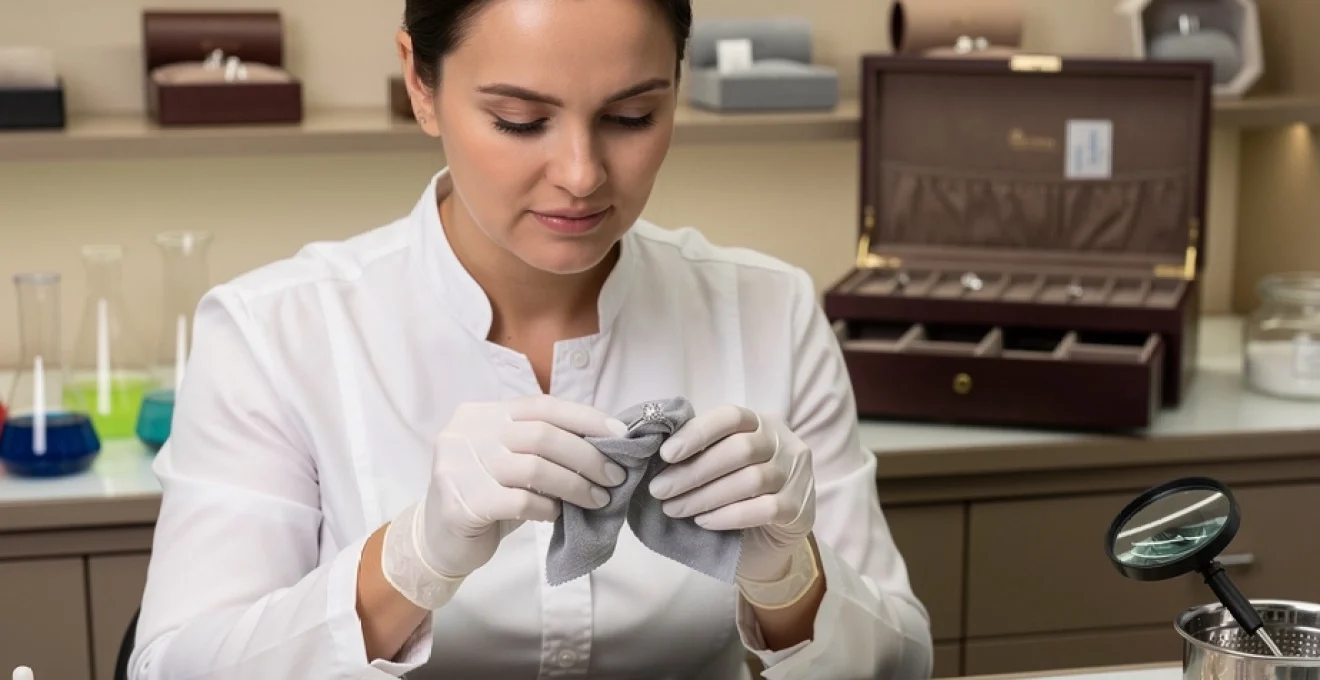
Your precious jewellery collection represents far more than mere accessories—these pieces embody memories, investments, and expressions of personal style that deserve meticulous care. Whether you’ve inherited a vintage diamond ring, purchased a contemporary gold necklace, or received pearls as a special gift, understanding proper maintenance techniques can dramatically extend their lifespan and preserve their lustrous beauty. The distinction between jewellery that maintains its brilliance for decades versus pieces that quickly lose their sparkle often comes down to implementing the right care protocols from day one.
Professional jewellers and gemologists agree that preventive maintenance costs significantly less than restoration services. Modern jewellery faces unique challenges from environmental pollutants, chemical exposure from cosmetics, and daily wear that our ancestors’ pieces never encountered. Understanding the specific vulnerabilities of different metals and gemstones enables you to create targeted care routines that address these contemporary threats whilst preserving the intrinsic beauty of your collection.
Material-specific cleaning protocols for precious metal alloys
Different precious metals exhibit unique chemical properties that require tailored approaches to cleaning and maintenance. Understanding these fundamental differences prevents inadvertent damage whilst maximising the effectiveness of your care routine. The composition of metal alloys directly influences their reactivity to various cleaning agents, environmental factors, and storage conditions.
Professional jewellers recommend establishing material-specific protocols because what works brilliantly for one metal type can cause irreversible damage to another. The key lies in recognising that precious metals rarely exist in pure form within jewellery—they’re typically alloyed with other metals to enhance durability, alter colour, or reduce costs. These alloy compositions create unique maintenance requirements that must be carefully considered.
Sterling silver tarnish prevention using Anti-Sulphide compounds
Sterling silver’s susceptibility to tarnishing stems from its 7.5% copper content, which reacts with sulphur compounds present in air, creating the characteristic black or greyish discolouration. Anti-sulphide compounds work by creating a protective barrier that neutralises these reactive elements before they can bond with the silver surface. Professional-grade anti-tarnish strips contain activated charcoal and zeolites that actively absorb sulphur compounds from the surrounding environment.
The most effective tarnish prevention strategy involves controlling the storage environment through humidity regulation and chemical neutralisation. Silica gel packets combined with anti-tarnish cloth linings create an optimal microenvironment that significantly slows oxidation processes. When tarnishing does occur, gentle polishing with rouge compounds or specialised silver cleaning solutions removes the oxidation without abrading the underlying metal surface.
White gold rhodium plating maintenance techniques
White gold’s distinctive appearance relies heavily on its rhodium plating, a ultra-thin layer of this platinum group metal that provides the brilliant white finish consumers expect. This plating naturally wears away through friction, exposure to chemicals, and general handling, revealing the slightly yellowish tone of the underlying white gold alloy. Professional replating services typically become necessary every 12-18 months for frequently worn pieces, though this timeline varies significantly based on individual lifestyle factors.
Extending rhodium plating lifespan requires minimising exposure to abrasive substances and harsh chemicals. Removing white gold jewellery before swimming, cleaning, or applying cosmetics prevents premature plating degradation. When cleaning becomes necessary, lukewarm water with mild soap provides adequate cleansing power without compromising the rhodium surface. Professional jewellers recommend against home polishing of rhodium-plated pieces, as this can accelerate plating removal.
Rose gold copper content oxidation management
Rose gold’s romantic hue comes from its copper alloy content, typically comprising 20-25% of the total composition. This copper component makes rose gold particularly vulnerable to oxidation when exposed to moisture, acidic substances, or elevated temperatures. The oxidation process manifests as a gradual darkening or the development of greenish patinas that can transfer to skin or clothing if left unchecked.
Effective oxidation management focuses on moisture control and gentle cleaning protocols. Storing rose gold pieces with desiccant materials and avoiding exposure to perfumes, lotions,
and self-tanning products dramatically reduces contact with corrosive ingredients. For routine cleaning, use lukewarm water and a few drops of mild, pH-neutral soap, followed by a thorough rinse and gentle drying with a soft, lint-free cloth. Avoid abrasive polishing compounds on rose gold, as excessive mechanical friction can thin the surface and subtly alter the alloy’s colour balance over time. When oxidation becomes noticeable, a professional jeweller can perform controlled polishing and, if necessary, micro-finishing to restore the warm blush tone without compromising the metal’s structural integrity.
Platinum surface patina restoration methods
Platinum behaves differently from gold alloys and sterling silver because it displaces rather than loses metal under wear. Instead of thinning, platinum develops a soft, greyish patina formed by thousands of microscopic scratches that diffuse light. Many collectors value this platinum patina as a sign of age and character, but if you prefer a high-gloss finish, periodic surface restoration is both possible and safe when performed correctly. The key is to remove the appearance of micro-abrasions without stripping significant metal volume.
Professional jewellers typically restore platinum’s mirror polish using a sequence of increasingly fine abrasives followed by specialised buffing wheels charged with platinum-specific compounds. At home, you should limit maintenance to gentle cleaning in warm water with a mild detergent and a very soft brush to remove embedded grime from settings. Avoid generic metal polishes marketed for multiple metals, as some contain abrasive or chemical agents optimised for softer alloys rather than dense platinum. For high-value platinum jewellery care, many experts recommend restricting full machine polishing to once every few years, supplemented by light professional “refresh” buffing as needed.
Gemstone preservation strategies by mohs hardness scale classification
Unlike metals, gemstones exhibit a wide range of hardness, toughness, and chemical sensitivity that directly influences how you should clean and store them. The Mohs hardness scale, which ranks minerals from 1 (talc) to 10 (diamond), offers a practical framework for gemstone preservation strategies. However, hardness alone does not tell the whole story—cleavage patterns, internal inclusions, and treatments (such as oiling or fracture filling) all affect durability under mechanical and chemical stress.
To protect your gemstone jewellery and keep it shining longer, it helps to group stones by both hardness and structural sensitivity. Hard gemstones like diamonds, sapphires, and rubies tolerate more robust cleaning protocols than softer or treated stones such as emeralds, opals, and pearls. A useful analogy is to think of your jewellery box as a library: hardcover books (hard stones) can withstand more handling, while rare manuscripts (soft or treated stones) demand gloves and controlled conditions. Designing gemstone-specific routines prevents the most common damage scenarios—scratches, chips, and clouding—before they occur.
Diamond brilliance restoration through ultrasonic cleaning
With a Mohs hardness of 10, diamonds are incredibly resistant to scratching, but they are not immune to dullness. Everyday oils, skin products, and microscopic debris accumulate on the stone’s surface and in the setting, creating a film that reduces light return and diminishes sparkle. Ultrasonic cleaning is one of the most effective methods for diamond brilliance restoration because it uses high-frequency sound waves to dislodge contaminants from hard-to-reach crevices. In professional workshops, this process can restore a diamond’s fire to near showroom condition in minutes.
However, ultrasonic cleaners are not suitable for every diamond or every setting. Stones with significant inclusions, feathers near the girdle, laser drill channels, or fracture fillings can be compromised by intense vibration, much like a hairline crack in glass can spread when exposed to repeated stress. Before using an ultrasonic cleaner at home, confirm that your diamond is structurally sound and that the setting—particularly prongs and pavé work—is in good condition. When in doubt, ask a qualified jeweller to inspect and, if appropriate, clean the piece using calibrated professional equipment rather than consumer-grade devices.
Emerald oil treatment maintenance for jardin inclusions
Emeralds typically fall around 7.5–8 on the Mohs scale, but they are considerably more fragile than their hardness rating suggests due to their characteristic jardin (garden-like) inclusions. These internal features are often stabilised and visually softened with colourless oil or resin treatments during cutting. Over time, exposure to heat, strong solvents, or aggressive ultrasonic cleaning can displace these oils, making inclusions more visible and, in some cases, compromising structural integrity. Preserving the appearance of treated emeralds therefore depends on minimising anything that might dehydrate or leach out those filler materials.
To maintain emerald jewellery, avoid ultrasonic or steam cleaning and instead rely on lukewarm water, a tiny amount of mild soap, and a very soft brush, taking care not to scrub directly over surface-reaching fractures. Never soak emeralds for extended periods, and keep them away from alcohol-based cleaners, harsh detergents, and sudden temperature changes. If your emerald begins to look notably cloudier or more “fractured” than before, a professional gemologist can assess whether re-oiling is appropriate. This controlled retreatment, when performed by an expert, can rejuvenate the stone’s vibrancy without altering its fundamental character.
Pearl nacre layer protection from acidic environments
Pearls occupy a unique position in jewellery care because they are organic gemstones composed of aragonite platelets and conchiolin, structured in delicate nacre layers. On the Mohs scale, they sit around 2.5–4, making them softer than most common dust particles and easily scratched by metals or harder stones. Even more critically, pearl nacre is vulnerable to acids and harsh chemicals; everyday substances such as perfume, hair spray, perspiration, and even skin pH can gradually etch and dull their surface. Protecting pearls, therefore, is as much about what you avoid as what you actively do.
Adopt the classic rule of thumb: “pearls last on, first off.” Put them on after all cosmetics, fragrance, and hair products have fully dried, and remove them before exercise or showering. After each wear, gently wipe your pearl strand or earrings with a soft, slightly damp cloth to remove surface salts and residues, then allow them to air dry flat before storing. Never use ultrasonic cleaners, steam, or abrasive cloths on pearls, and avoid prolonged storage in airtight plastic, which can trap moisture. For necklaces worn regularly, have the string checked and potentially re-strung (preferably knotted between each pearl) every 1–2 years to prevent breakage.
Opal hydration balance control to prevent crazing
Opals are often described as “living” gemstones because their beauty depends on a delicate balance of internal water content and microstructure. With a Mohs hardness of 5.5–6.5 and a significant proportion of bound water (typically 3–21%), opals are highly sensitive to rapid dehydration and extreme temperature changes. When this balance is disrupted, they may develop a network of fine surface cracks known as crazing, which permanently affects both structural integrity and play-of-colour. Once crazing has occurred, it is generally irreversible, making prevention the cornerstone of opal care.
To maintain opal hydration, avoid prolonged exposure to direct sunlight, radiators, or very dry environments such as safes with aggressive desiccants. At the same time, do not soak opals or expose them to high-pressure steam, as rapid expansion and contraction can be equally damaging. Store opal jewellery in a softly lined box away from hard stones and metals, ideally in a space with moderate, stable humidity—some jewellers even recommend keeping a slightly damp cotton pad nearby (not touching the stone) in very dry climates to buffer environmental changes. Remove opals before cleaning, showering, or using household chemicals, and restrict cleaning to a soft, damp cloth with plain water unless a specialist recommends otherwise.
Professional storage solutions using anti-tarnish technologies
Even the most meticulous cleaning routine cannot compensate for poor jewellery storage. Environmental factors—airborne sulphur, humidity, temperature fluctuations, and contact with incompatible materials—gradually degrade metals and gemstones between wears. Professional storage solutions using anti-tarnish technologies address these issues by creating controlled microclimates around your pieces. Think of these systems as climate-controlled vaults in miniature, designed specifically to slow chemical reactions and mechanical wear.
Modern jewellery boxes and cases often incorporate anti-tarnish linings impregnated with metal-chelating agents or activated carbon that capture sulphur compounds before they reach silver and other reactive alloys. Complementing these linings with silica gel packets helps regulate humidity, keeping it in the ideal range (around 35–50%) to minimise both corrosion and organic material degradation. For high-value collections, modular drawer systems with individual padded compartments or soft pouches prevent physical abrasion and tangling, particularly for delicate chains and pieces with raised settings. Storing different metals and hardness categories separately further reduces the risk of harder stones scratching softer neighbours.
Chemical cleaning agents and ph balance considerations
When selecting chemical cleaning agents for jewellery, understanding pH balance is critical to avoiding unintended damage. Many household cleaners are either strongly acidic or alkaline to improve degreasing power, but these extremes can attack metal alloys, strip protective coatings, or etch sensitive gemstones. A practical rule is to reserve such products for sinks and tiles, not for your most valuable jewellery. For most pieces, a mildly alkaline solution—such as a few drops of pH-neutral or near-neutral dish soap in lukewarm water—provides sufficient cleaning without destabilising alloys or treatments.
Acidic solutions, including vinegar and lemon juice, are sometimes promoted in DIY jewellery cleaning guides, particularly for silver. While they can remove tarnish quickly, they also risk over-etching surfaces and weakening solder joints when used repeatedly or at high concentrations. On the opposite end of the scale, strong alkalis like ammonia or baking soda pastes may scratch softer stones or undercut rhodium plating. Whenever you consider a new cleaning product, ask yourself: is this formulated specifically for jewellery, and is it compatible with my piece’s metal and gemstones? When in doubt, choose gentler chemistry and longer cleaning times over aggressive, instant results.
Ultrasonic cleaning equipment specifications and frequency settings
For collectors managing multiple high-value pieces, investing in an ultrasonic cleaner can be tempting. However, not all ultrasonic cleaning equipment is created equal, and incorrect frequency settings or power levels can cause more harm than good. Professional units typically operate in the 35–45 kHz range, which offers an effective balance between cavitation strength and safety for robust jewellery. Higher frequencies (upwards of 60 kHz) produce smaller, gentler bubbles, making them better suited to delicate items, whereas lower frequencies can deliver overly aggressive cleaning that risks chipping or loosening stones.
Before using ultrasonic technology at home, verify that your machine allows precise control over frequency, cycle duration, and solution temperature. Always fill the tank with the manufacturer-recommended, jewellery-safe cleaning solution rather than improvising with household detergents, which can foam excessively or react with metals. As a guiding analogy, think of ultrasonic cleaning as a pressure washer for microscopic dirt: powerful and efficient when correctly adjusted, but potentially destructive if pointed at fragile masonry. Never place porous, heavily included, or treated stones—such as emeralds, opals, pearls, or heat-sensitive organics—into an ultrasonic bath, and stop immediately if you notice stones rattling or settings vibrating.
Preventive maintenance schedules for high-value jewellery collections
Establishing a structured preventive maintenance schedule is one of the most effective ways to keep your jewellery shining longer while safeguarding its financial and sentimental value. Rather than waiting until damage is obvious, you treat each piece much like a high-performance vehicle: routine inspections, timely servicing, and occasional professional overhauls based on usage. For frequently worn items such as engagement rings, wedding bands, and everyday necklaces, monthly at-home inspections combined with annual professional check-ups create a robust baseline of care.
During your own inspections, look for tell-tale signs of wear: thinning prongs, rough edges that catch on fabric, micro-gaps between stones and settings, or clasps that no longer close with a firm click. Schedule a professional review immediately if you notice any of these issues, especially on pieces with significant gemstones or intricate pavé work. As a general guideline, plan for a comprehensive professional cleaning and structural check every 12 months for daily-wear items and every 24–36 months for special-occasion pieces. For white gold, incorporate rhodium replating intervals; for pearls and bead strands, include re-stringing assessments. By integrating these proactive steps into your calendar, you transform jewellery care from an occasional emergency fix into a predictable, protective routine that preserves brilliance, integrity, and value over the long term.