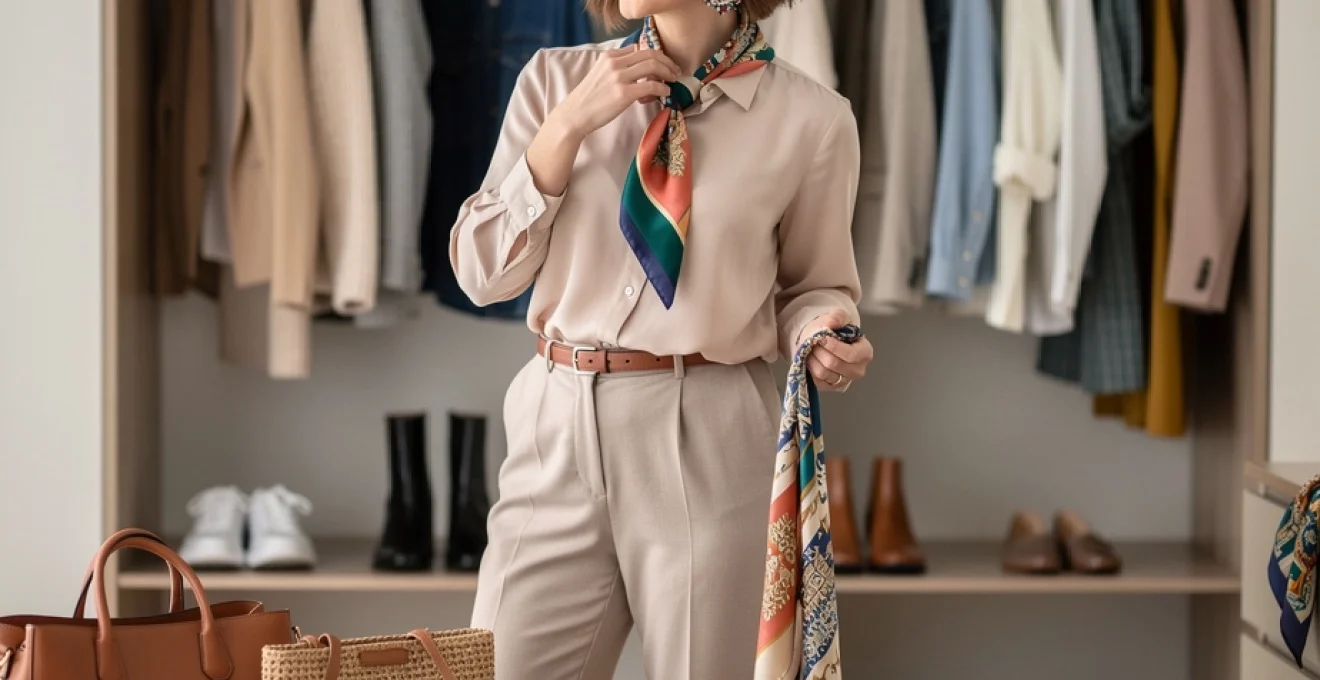
That familiar feeling of opening your wardrobe and experiencing complete fashion fatigue strikes nearly everyone at some point. Standing before a collection of perfectly good clothes that somehow fail to spark any excitement or creativity can feel particularly frustrating, especially when budget constraints make a complete wardrobe overhaul unrealistic. The solution lies not in purchasing new pieces, but rather in reimagining how you utilise what you already own.
Professional stylists understand that the most impactful transformations often come from subtle adjustments rather than dramatic changes. By applying strategic styling techniques, experimenting with colour theory, and reconsidering the potential of existing garments, you can breathe fresh life into your current collection. These methods prove particularly valuable during transitional seasons when your wardrobe needs to adapt without requiring entirely new purchases.
The psychology behind wardrobe boredom often stems from habitual dressing patterns rather than inadequate clothing options. Most people wear only 20% of their wardrobe regularly, leaving 80% of their pieces underutilised. This phenomenon creates the illusion of having nothing to wear when, in reality, numerous untapped combinations await discovery through innovative styling approaches.
Strategic accessory layering techniques for instant visual impact
Accessories possess transformative power that extends far beyond their decorative function. They serve as the punctuation marks of personal style, capable of shifting an outfit’s entire mood, formality level, and visual weight. Professional stylists rely heavily on accessory manipulation because these elements require minimal investment whilst delivering maximum impact.
Statement earring placement with existing jewellery collections
The strategic use of earrings can completely reframe your facial features and draw attention upward, creating an instant focal point. When working with statement earrings, consider the negative space principle – larger earrings require cleaner necklines and minimal competing elements. Conversely, smaller, delicate pieces allow for more elaborate necklace layering or higher necklines without visual overload.
Mixing metals has evolved from a fashion faux pas to a sophisticated styling technique that adds depth and modernity to any look. The key lies in maintaining consistent proportions rather than matching metals exactly. For instance, pairing chunky gold hoops with delicate silver chain necklaces creates intentional contrast that appears thoughtfully curated rather than accidental.
Scarf integration methods for neck, waist, and hair styling
Scarves represent perhaps the most versatile accessory category, capable of serving multiple functions within a single outfit. Beyond traditional neck styling, scarves can transform into statement belts when threaded through belt loops or tied around the waist of oversized blazers. This technique particularly benefits those seeking to define their silhouette without purchasing additional accessories.
Hair integration offers another dimension of scarf styling that many overlook. Weaving thin silk scarves through braids or using them as headbands creates visual interest whilst maintaining sophistication. This approach proves especially valuable for extending the life of work-appropriate outfits into weekend settings through subtle styling adjustments.
Belt repositioning strategies for silhouette transformation
Belt placement significantly impacts perceived body proportions and overall outfit silhouette. Moving a belt from its intended waistline position to the natural waist can create an entirely different look, particularly with oversized shirts or dresses. This technique, known as waist definition, can make loose-fitting garments appear more tailored and intentional.
Consider using unexpected belt combinations, such as pairing a structured leather belt with flowing feminine pieces or incorporating fabric belts with sharp, tailored garments. These contrasts create visual tension that prevents outfits from appearing too predictable or one-dimensional.
Bag selection principles for colour and texture contrast
Handbag selection extends beyond mere functionality to become a crucial element in overall outfit composition. The bag you choose communicates specific messages about formality, personality, and style awareness. Switching from a structured tote to a slouchy crossbody bag instantly casualises an outfit, whilst the reverse elevates casual pieces.
Texture contrast through bag selection offers another styling opportunity
Texture contrast through bag selection offers another styling opportunity that many people overlook. A woven straw bag paired with sharp tailoring, or a glossy patent clutch worn with a chunky knit, introduces an extra layer of interest without changing the core outfit. When your wardrobe feels uninspired, rotating between structured, soft, shiny, and matte bags can make repeat outfits feel deliberately styled rather than recycled.
Advanced colour coordination systems using existing wardrobe pieces
Colour is often the fastest route to an outfit refresh, especially when you are working with a limited wardrobe. Instead of defaulting to the same safe combinations, you can apply simple colour coordination systems that stylists use to build visually cohesive looks from existing pieces. Thinking in terms of palettes and proportions rather than isolated items allows you to unlock new outfit formulas without adding anything new to your wardrobe.
Monochromatic styling with tonal variation techniques
Monochromatic outfits – looks built from a single colour family – create instant polish and elongate the body, even when every piece is basic. The key to avoiding a flat or “uniform” effect lies in tonal variation: combine light, mid, and dark versions of the same hue. For example, you might pair a pale blue shirt with mid-wash denim and a navy blazer to create depth within one colour story.
Texture and fabric choice also matter in monochromatic styling. Mixing matte cotton, soft knits, and subtle sheen (like satin or silk) stops a one-colour outfit from feeling monotonous. When your wardrobe feels uninspired, choose one colour you already own in multiples – such as black, beige, navy, or olive – and experiment with all the variations you can create by layering those shades together.
Complementary colour theory application in daily outfits
Complementary colours sit opposite each other on the colour wheel (for instance, blue and orange, red and green, purple and yellow). When combined in an outfit, they create high-impact contrast that feels energetic and intentional. You do not need bright primary shades to benefit from this approach; muted or pastel versions work just as well for everyday wear.
To make complementary colour styling more wearable, think in terms of one dominant colour and one supporting accent. A rust blouse with teal earrings, or a forest green dress with burgundy lipstick, uses colour theory in a subtle, sophisticated way. When your wardrobe feels repetitive, select one piece in a favourite colour and deliberately pair it with its opposite, starting with accessories if you prefer a softer introduction.
Neutral base integration with strategic pop colour placement
Most wardrobes contain a strong foundation of neutral pieces: black, white, grey, navy, camel, and denim. These neutrals create an ideal canvas for strategic “pop” colour placement that refreshes familiar outfits without feeling overwhelming. Think of your neutrals as the background of a photograph and your accent colours as the focal points that guide the eye.
To use this technique, build your outfit from two or three neutral garments, then introduce one or two small but deliberate bursts of colour. This could be a bright belt over a black dress, a vivid scarf against a beige coat, or coloured shoes grounding an otherwise minimalist look. By limiting yourself to one statement colour at a time, you maintain cohesion while still injecting energy into pieces you already own.
Seasonal colour palette adaptation for year-round versatility
Refreshing your style does not require separate wardrobes for each season; instead, you can adapt a core colour palette throughout the year. One effective approach is to identify three to five signature colours that flatter you and appear frequently in your wardrobe, then adjust their intensity and pairing according to the season. For instance, navy might appear as lightweight cotton in summer and as wool tailoring in winter, while still feeling coherent with your overall aesthetic.
Transitional styling becomes much easier when you think in terms of seasonal palettes built from existing pieces. A pastel blouse that felt strictly spring-like can be grounded for autumn by pairing it with deeper tones such as chocolate, charcoal, or burgundy. When your wardrobe feels uninspired at the turn of a season, look for ways to “season shift” pieces you already own by re-anchoring them with darker or lighter supporting colours.
Garment reconstruction methods without permanent alterations
One of the most powerful ways to refresh your wardrobe is to change how garments sit on the body without permanently altering them. Simple reconstruction methods – tucking, tying, rolling, and clipping – modify proportions and silhouettes using only your hands and a few basic tools. These non-permanent techniques are ideal if you are hesitant to commit to tailoring or if you like the flexibility of wearing pieces in multiple ways.
Tucking variations for blouses and oversized shirts
The way you tuck a top can dramatically influence your outfit’s shape and perceived formality. A classic full tuck, where the entire hem is neatly placed inside the waistband, instantly sharpens the look of a blouse or shirt and defines the waist. This approach works particularly well with high-waisted trousers and skirts, creating a clean line and elongating the legs.
For a more relaxed effect, experiment with partial tucks. A front tuck (only the front centre of the hem tucked in, with the sides and back left loose) adds structure without feeling overly precise, ideal for oversized shirts that can otherwise overwhelm your frame. A side tuck, where one side of the hem is tucked while the other drapes freely, creates asymmetry and visual interest, making even familiar tops feel newly styled.
Layering protocols for lightweight cardigans and jackets
Layering is a strategic way to manipulate both warmth and style, especially when working with lightweight cardigans and jackets you already own. Instead of defaulting to simply putting a cardigan over a T-shirt, consider using it as a mid-layer between a shirt and a structured coat. This three-tier approach adds depth and allows each piece to play a distinct role in the outfit.
You can also reframe lightweight layers as statement pieces rather than purely functional ones. Wearing a fine-knit cardigan buttoned up as a top, or draping a blazer over your shoulders instead of inserting your arms, shifts the mood from practical to polished. When your wardrobe feels uninspired, try restyling your usual outer layers as core elements of the outfit or vice versa.
Sleeve manipulation techniques for different arm silhouettes
Sleeves are often overlooked as a styling tool, yet minor adjustments can dramatically alter the balance of an outfit. Rolling shirt sleeves to just below the elbow, for example, exposes the forearm and creates a more relaxed, approachable impression, while also drawing attention to bracelets or a watch. This technique works especially well with structured shirts or blazers, softening them for everyday wear.
For knitwear and jackets, consider pushing sleeves up rather than rolling them, which creates vertical lines and a more contemporary silhouette. Alternatively, folding cuffs back to reveal a contrasting lining or an underlayer adds a deliberate styling detail. These sleeve manipulation techniques are quick, reversible, and particularly effective when you want to breathe new life into pieces that feel too formal, conservative, or heavy.
Hemline adjustment using styling tools and accessories
Adjusting hemlines without sewing opens up multiple new outfit possibilities from existing garments. Simple tools such as safety pins, double-sided fashion tape, and slim belts can temporarily change the length and drape of skirts, dresses, and trousers. For instance, lightly tucking the front hem of a long jumper into your waistband creates a high-low effect that reveals more of your trousers or skirt, altering the outfit’s proportions.
You can also experiment with knotting techniques. Tying a small knot at the side or back of a T-shirt dress shortens the hem and adds shape, while gathering the hem of a maxi skirt and pinning it on the inside can create a softly draped, asymmetric line. These micro-adjustments allow you to test new silhouettes – midi instead of maxi, cropped instead of standard – without committing to permanent alterations or new purchases.
Texture mixing principles for enhanced visual interest
Texture is to clothing what seasoning is to food: the right combination can transform something simple into something memorable. When your wardrobe feels uninspired, focusing on texture mixing rather than entirely new silhouettes is an efficient way to elevate familiar outfits. Pairing smooth, rough, shiny, and matte surfaces together creates depth that reads as sophisticated, even if every garment is a basic piece.
Start by identifying the dominant textures in your wardrobe – perhaps cotton, denim, and wool – then deliberately introduce contrast. A chunky knit jumper with a satin slip skirt, a leather jacket layered over a soft jersey dress, or a crisp poplin shirt tucked into corduroy trousers all rely on juxtaposition to create interest. If you prefer a minimalist colour palette, texture becomes even more crucial, as it prevents head-to-toe neutrals from feeling flat or uniform.
Footwear rotation impact on overall outfit perception
Shoes are often the most powerful variable in shifting how an outfit is perceived, yet many of us default to the same pair daily. Rotating your footwear – even within your existing collection – can make a repeat outfit feel fresh and context-appropriate. The same jeans and blazer combination, for example, reads very differently with white trainers, sleek ankle boots, or classic loafers.
When your wardrobe feels uninspired, challenge yourself to restyle one go-to outfit with three distinct shoe options. Notice how trainers introduce ease and movement, heeled boots add vertical lift and a sense of occasion, and flat mules communicate effortless chic. Considering heel height, toe shape, and material (suede, leather, canvas) as design elements allows you to use footwear as a deliberate styling tool rather than an afterthought.
Hair and makeup coordination with wardrobe refresh strategies
Outfit refreshes do not stop at clothing; hair and makeup choices contribute significantly to the overall effect. A simple change in hairstyle – from a low bun to loose waves, or from a sleek ponytail to a textured updo – can shift an outfit’s mood from formal to relaxed or from daytime to evening. Treat your hair as another “accessory layer” that either softens, sharpens, or modernises the clothes you already own.
Makeup functions in a similar way, especially when used strategically rather than routinely. A bold lip can elevate a basic jeans-and-shirt combination into something intentional, while a softly defined eye look can add polish to casual knitwear. On days when your wardrobe feels uninspired, consider adjusting either your hairstyle or one makeup element instead of changing your entire outfit; you may find that these small refinements provide the refresh you were seeking without a single new garment.