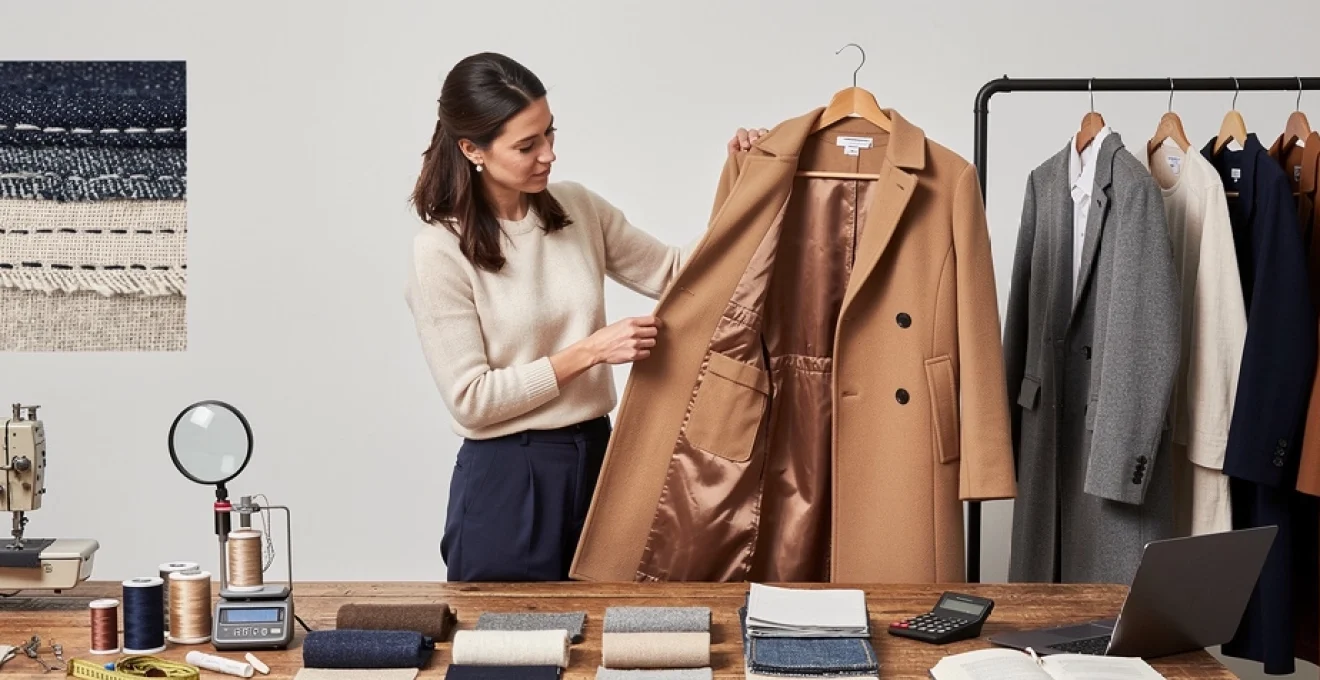
In an era where the average garment is worn just seven times before disposal, the concept of purchasing clothing that endures has become revolutionary. The fashion industry produces over 100 billion garments annually, yet studies indicate that nearly 60% of these items end up in landfills within twelve months of manufacture. This staggering waste isn’t merely an environmental crisis—it represents a fundamental disconnect between consumers and the clothing they purchase. Understanding what makes a garment genuinely durable requires moving beyond marketing claims and developing a technical literacy in textile performance, construction methodology, and garment engineering. The principles that separated workwear from disposable fashion a century ago remain remarkably relevant today, offering a framework for identifying pieces that will serve wardrobes for decades rather than seasons.
Understanding fabric quality metrics and textile performance standards
The foundation of any long-lasting garment begins with the fabric itself, yet the textile industry employs dozens of technical specifications that rarely reach consumer awareness. Professional buyers and quality control specialists rely on quantifiable metrics that predict how fabrics will perform under real-world conditions, measurements that tell far more than a simple touch test ever could.
GSM weight specifications and thread count analysis
Grams per square metre (GSM) represents the most fundamental indicator of fabric substance and durability. A lightweight summer shirt typically measures 80-120 GSM, whilst a substantial Oxford cloth shirt ranges from 200-280 GSM. This numerical value directly correlates with longevity—heavier fabrics generally withstand more wear cycles before showing degradation. However, weight alone doesn’t tell the complete story. Thread count, the number of threads woven per square inch, interacts with GSM to determine overall fabric integrity. Premium shirting typically features thread counts between 100-180, whilst anything exceeding 200 enters luxury territory. The relationship between these two metrics becomes critical: a high thread count with insufficient GSM produces delicate fabric prone to tearing, whilst heavy GSM with low thread count yields coarse, uncomfortable textiles.
Natural fibres vs synthetic blends: durability comparison
The natural versus synthetic debate extends far beyond environmental considerations into pure performance territory. Pure cotton garments offer exceptional breathability and comfort but tend to wrinkle easily and may degrade faster under UV exposure. Wool provides remarkable resilience, naturally resisting odours and wrinkles whilst offering superior longevity—quality woollen garments regularly serve for 20-30 years. Linen, though prone to creasing, actually strengthens with washing and can outlast cotton by several years. Synthetic fibres like polyester offer excellent colour retention and wrinkle resistance but suffer from pilling and microfibre shedding. The optimal solution often lies in intelligent blending: a 67% cotton, 33% polyester blend in chinos provides the breathability of cotton with enhanced durability, whilst an 80% merino wool, 20% nylon sock combines natural comfort with reinforced wear points.
Pilling resistance and martindale abrasion testing
Pilling—those frustrating fabric balls that appear after washing—signals fibre degradation and dramatically shortens garment lifespan. The Martindale abrasion test quantifies fabric resilience by subjecting textiles to controlled circular rubbing motions, measuring how many cycles occur before visible damage appears. Standard upholstery requires 25,000-30,000 cycles, whilst heavy-duty contract fabrics exceed 60,000 cycles. Quality clothing fabrics should withstand minimum 20,000 cycles, with premium suiting materials reaching 40,000-50,000. Fabrics with lower Martindale ratings might look identical on the rack but will show wear significantly faster. Manufacturers rarely publicise these specifications, making direct inquiry essential for investment pieces.
Colourfast ratings and ISO 105 wash permanence standards
Few disappointments match watching a cherished garment fade after several washes, yet colourfastness remains largely invisible until problems emerge. The ISO 105 standard encompasses multiple tests evaluating colour stability against washing, light exposure, rubbing, and perspiration. Ratings range from 1 (poor) to 5 (excellent), with quality garments achieving minimum grade 4 for wash fastness.
While brands seldom share ISO figures on swing tags, many premium manufacturers test to these standards internally. When you are considering a higher-priced piece, it is entirely reasonable to ask customer service or in-store staff whether fabrics have been tested for wash fastness and light fastness, and what grades they achieve. Dark denim, saturated reds, and deep blacks are particularly vulnerable to colour loss, so prioritise garments that quote at least grade 4 for washing and rubbing. At home, you can support colourfast performance by washing inside out, using cooler temperatures, and avoiding aggressive detergents. Think of colourfast ratings as a quiet insurance policy: you are protecting not only how your clothes look today, but how they will look dozens of wash cycles from now.
Evaluating construction techniques and garment engineering
Even the finest fabric will fail prematurely if paired with weak construction. Longevity in fashion is as much about garment engineering as it is about fibre science, and subtle details often separate disposable clothing from heirloom pieces. When you start to recognise quality stitching, reinforcement, and internal structure, shopping becomes less about brand prestige and more about objective build quality. You do not need formal training in pattern cutting to evaluate this—simply knowing where to look and what to feel for can dramatically improve the durability of your wardrobe. In many ways, you are inspecting clothes the way an architect inspects a building: checking the foundations and stress points, not just the façade.
French seams, flat-felled seams, and reinforced stitching methods
Seams bear the constant tension of movement, washing, and friction, making them critical to garment lifespan. French seams—where raw edges are enclosed within a double-stitched channel—are common on high-quality blouses and lightweight shirts, as they prevent fraying and create a clean interior finish. Flat-felled seams, familiar from quality denim and workwear, overlap fabric edges and secure them with two visible rows of stitching; this method is exceptionally strong and resists seam splitting even under heavy wear. When you inspect a garment, gently pull at the seam: if light shows through or stitches distort easily, you are likely looking at a cost-cut construction that will not tolerate frequent wear.
Reinforced stitching methods go beyond basic straight seams. Look for twin-needle topstitching on areas that experience strain, such as side seams, armholes, and yokes. In knitwear, fully fashioned construction—where pieces are knitted to shape rather than cut from fabric—reduces bulk at seams and improves structural integrity. You can also check stitch density: tighter, even stitches indicate better tension control and fewer weak points. A high-GSM fabric paired with secure French or flat-felled seams forms the core of truly long-lasting garments, especially in a capsule wardrobe you plan to wear heavily.
Bar tacking and stress point fortification
Stress points are the places where your clothes work hardest: pocket corners, belt loops, fly openings, and the base of a placket. Bar tacking—a dense zigzag or straight stitch worked repeatedly over a small area—acts like a miniature seatbelt for these zones, distributing force and preventing tearing. On durable jeans or chinos, each belt loop should be both box-stitched at the base and bar tacked at the top; if you can lift the loop and see only a single line of stitching, expect it to fail sooner rather than later. The same applies to pocket openings: reinforced corners are a sign the brand expects the garment to be used, not just worn.
Why does this matter for thoughtful fashion purchases? Because repairs at stress points are some of the most common—and avoidable—issues that send garments into early retirement. When you are comparing two similar pieces at different price points, deliberately inspect these microscopic details. The presence of bar tacks, rivets where appropriate, and reinforced stitching reveals that longevity has been engineered into the garment. You are effectively reading the maker’s priorities: did they design for a quick sale, or for years of reliable use?
Interlining, interfacing, and structured garment support
Inside tailored garments, unseen layers play a major role in how well a piece ages. Interlinings add warmth and structure, while interfacings provide shape and stability to areas such as collars, cuffs, waistbands, and button plackets. High-quality jackets and coats often use woven interfacings that are stitched or lightly fused, allowing the garment to drape naturally and recover its shape over time. Cheaper pieces rely heavily on low-cost fusible interfacings that can bubble, delaminate, or warp after several washes or exposure to high heat.
You can assess interlining quality with your hands. Gently pinch the outer fabric and lining of a jacket or coat between your fingers—if there is a soft, even layer that returns smoothly when you release it, the interlining is likely well-integrated. In contrast, if certain zones feel stiff, crunchy, or uneven, this often signals over-fused areas that may deteriorate. For shirts, feel the collar and cuff: a high-quality interfacing will feel firm yet flexible, like a good hardback book cover, while a cardboard-like stiffness suggests it might crack or bubble. Thoughtful purchasing means choosing garments where this internal architecture has been considered as carefully as the outer fabric.
Hand-stitched buttonholes vs machine-made closures
Buttonholes and closures are small details that experience disproportionate stress, particularly on coats, blazers, and trousers. Hand-stitched buttonholes, common in bespoke tailoring and some heritage brands, are individually cut and bound with dense, even stitching, often featuring a small bar tack at the end for reinforcement. They are beautiful to look at and highly resilient, but they are also time-consuming to produce and thus rare in mass-market fashion. More commonly, you will find machine-made buttonholes, which can still be excellent if executed with appropriate density, thread quality, and clean cutting.
When you evaluate a garment, look closely at each buttonhole. Are the stitches tight, consistent, and free of loose threads? Is the opening just large enough for the button, or is there excessive gaping that will worsen with wear? Tug gently at the button itself to see whether it has been cross-stitched and shanked, allowing it to move slightly without ripping the fabric. Well-made closures may seem like minor details, but they are among the first failure points on cheaper clothing. By prioritising precise buttonholes, sturdy zips with metal teeth, and reinforced fastening areas, you are choosing garments engineered for repeated, daily use rather than occasional wear.
Decoding care labels and GINETEX textile care symbols
Even the best-constructed garment will age prematurely if it is cared for incorrectly, which is why understanding care labels is integral to making fashion purchases that truly last. GINETEX, the International Association for Textile Care Labelling, standardises the symbols you see on most global clothing labels: the basin for washing, triangle for bleaching, square for drying, iron for ironing, and circle for professional cleaning. Each symbol, along with dots, lines, and bars, encodes very specific information about temperature limits, mechanical action, and chemical exposure. Treat these labels as the operating manual for your clothes: a concise set of instructions designed to preserve shape, colour, and structural integrity.
When you read a care label before buying, you are effectively previewing the garment’s maintenance demands. A piece that is “dry clean only” may be less suitable if you prefer low-maintenance laundry, while “hand wash, dry flat” might be perfectly acceptable for knitwear you intend to keep for a decade. Pay attention to maximum wash temperatures and tumble-drying permissions: lower recommended temperatures often indicate delicate finishes, coatings, or fibres that could degrade quickly under heat. If a supposedly everyday item requires frequent dry cleaning, ask yourself whether the ongoing environmental and financial cost aligns with your values and lifestyle.
You can also use care labels to make more sustainable choices. Symbols that permit lower-temperature washing, line drying, and non-chlorine bleach support reduced energy use and fewer harsh chemicals in your laundry routine. If you are building a mindful, long-lasting wardrobe, aim for fibres and constructions that tolerate gentle machine washing and air drying—these conditions are both kinder to the environment and to the garment. Learning to decode GINETEX symbols takes only a few minutes, but it will pay dividends every time you stand in a fitting room wondering, “Will I actually look after this the way it needs?” Thoughtful purchasing starts long before you get to the till; it starts with honestly assessing how you will care for each piece over its lifetime.
Cost-per-wear calculation models for investment pieces
Price tags can be deceptive. A £40 shirt that falls apart within a year is far more expensive, on a cost-per-wear basis, than a £160 shirt worn weekly for a decade. Cost-per-wear (CPW) models help you move beyond initial outlay and evaluate garments as long-term assets rather than short-lived consumables. This mindset is central to thoughtful fashion purchases: you are not simply asking, “Can I afford this today?” but “How efficiently will this serve me over time?” When you factor in durability, versatility, and maintenance, many so-called “investment pieces” become surprisingly rational choices.
Amortisation formulas for capsule wardrobe planning
Cost-per-wear is essentially a simple amortisation formula applied to your wardrobe. At its most basic, you divide the total cost of a garment by the number of times you realistically expect to wear it. For example, a £250 coat worn 120 times over four winters has a CPW of just over £2, whereas a £60 trend-led jacket worn six times has a CPW of £10. By thinking in these terms when you shop, you automatically prioritise pieces that integrate easily into a capsule wardrobe and can be styled across multiple outfits and seasons.
To make this more actionable, you can sketch a rough projection before purchasing. Ask yourself: how many times per month will I wear this? How many months per year is it appropriate for my climate and lifestyle? Multiply these figures by a conservative number of years, then divide the price by that total. If a garment fits neatly into your existing wardrobe and uses durable fabrics and construction methods, you can justifiably plan for a longer life and a lower CPW. This approach is particularly powerful when deciding between a cheaper item of questionable quality and a more expensive piece built to last: the sticker shock of the latter often disappears when viewed through a long-term, amortised lens.
Quality-to-price ratios across high street and designer brands
Not all high prices signal high quality, and not all accessible brands produce disposable clothing. Evaluating the quality-to-price ratio means comparing objective indicators—fabric GSM, stitching quality, reinforcement, and care requirements—against what you are being asked to pay. Some heritage or niche labels invest heavily in materials and construction, keeping margins relatively modest, while certain designer brands charge primarily for logo and marketing. Likewise, certain high street brands offer robust basics with respectable construction alongside more fragile, trend-led pieces.
How can you navigate this? Think like a quiet detective. Compare two similar garments—a wool coat from a mid-range label and one from a luxury house. Check fibre composition (is it 100% wool or diluted with acrylic?), examine seams, feel interlinings, and inspect buttons and buttonholes. If the construction details are comparable but one costs three times more, most of that premium is brand value, not longevity. Conversely, if a slightly higher-priced piece offers markedly better materials and finishing, its quality-to-price ratio is likely excellent. Over time, you will build a mental map of which brands reliably deliver durable garments at fair prices and which rely more on image than substance.
Seasonal versatility scoring and trans-seasonal adaptability
Longevity is not only about how long a garment survives physically; it is also about how often you can wear it across the year. A trans-seasonal piece—like a mid-weight merino crewneck or an unstructured cotton-twill blazer—earns a far lower cost-per-wear than a hyper-seasonal item limited to a few weeks of the year. One practical tactic is to give each potential purchase a simple “seasonal versatility score”: in how many seasons, and in how many distinct contexts, can this item be comfortably and stylishly worn?
You might rate versatility on a scale from 1 to 5, where 1 represents a highly specific, short-lived trend piece and 5 represents a foundational basic usable in at least three seasons and multiple settings (work, casual, social). A lightweight trench coat layered over knitwear in autumn, over a tee in spring, and even on cool summer evenings likely scores a 4 or 5. A sequinned party top suitable only for December events might be closer to 1 or 2. By consciously considering seasonal adaptability alongside construction quality, you ensure that your investment pieces are not just durable in theory but actively worn in practice.
Heritage brand analysis: makers with proven longevity track records
One of the most reliable signals of long-lasting fashion is time itself. Heritage brands—those with decades or even centuries of continuous operation—have typically survived because their products earn repeat use and repair, not just repeat purchase. Many of these makers began as suppliers of functional workwear, military uniforms, or technical outdoor gear, where failure had real consequences and durability was non-negotiable. When you invest in clothing from such brands, you are often buying into a culture of repair, spare parts, and continuity of design that supports long-term ownership.
Of course, heritage status alone is not a guarantee; some legacy names have outsourced production or diluted materials over the years. This is where your technical literacy becomes crucial. Look beyond the story and examine current fabrics, stitching, and care guidance with the same scrutiny you would apply to any other garment. Does the brand offer repair services, replacement buttons, or resoling for footwear? Do older pieces from the same maker, found in vintage shops or family wardrobes, still perform well? Positive answers to these questions indicate a brand whose commitment to longevity is baked into both design and aftercare.
For thoughtful purchasers, heritage labels can also serve as benchmarks when evaluating newer companies. If a young brand claims “future heirloom” status, compare its construction standards to those of long-standing makers: are they using comparable GSM weights, robust seam finishes, and repair-friendly designs? Many contemporary slow-fashion businesses are, in fact, reviving heritage production methods—limited runs, made-to-order manufacturing, and localised supply chains—to recreate the durability of pre-fast-fashion clothing. By choosing brands, new or old, that demonstrate concrete, tested commitments to longevity, you help shift industry demand away from disposability and towards enduring quality.
Alterations, repairs, and professional garment maintenance services
Even the most carefully chosen garment will eventually need adjustment or repair. Building a wardrobe that truly lasts is not a one-time act at the point of purchase; it is an ongoing relationship with your clothes. Simple alterations—hemming trousers, taking in a waist, shortening sleeves—can dramatically extend the wearable life of a piece as your body, style, or needs evolve. Likewise, timely repairs to seams, zips, and linings prevent minor issues from becoming terminal failures. In many European cities, tailors and cobblers are still part of everyday life; rediscovering these services is one of the most effective ways to reduce fashion waste.
From a cost-per-wear perspective, small investments in maintenance are often remarkably efficient. Resoling a pair of quality leather shoes, replacing a coat lining, or reinforcing elbow patches on a favourite knit can add years of use for a fraction of the cost of replacement. If you do not feel confident sewing on buttons or darning small holes yourself, consider building a relationship with a local alterations specialist. Over time, they become partners in your sustainability journey, helping you adapt and rescue pieces that might otherwise be discarded. Many slow-fashion and heritage brands now actively encourage this by offering in-house or partner repair programs, sometimes even including spare fabric and thread with your purchase.
You might also create your own basic maintenance kit at home: a set of needles, strong polyester or cotton thread in neutral colours, spare buttons, a lint shaver, fabric comb for knitwear, and a mild detergent suitable for delicates. Think of this as a first-aid kit for your wardrobe. When a small issue appears—a loose button, a pulled thread, light pilling—you can intervene immediately rather than letting damage accumulate. Ultimately, alterations and repairs are not signs of failure, but of success: they mean a garment has been worn and loved enough to justify the care. In a culture conditioned to treat clothes as disposable, choosing to mend is a quiet, powerful act of resistance—and one of the most practical ways to make your fashion purchases truly last.