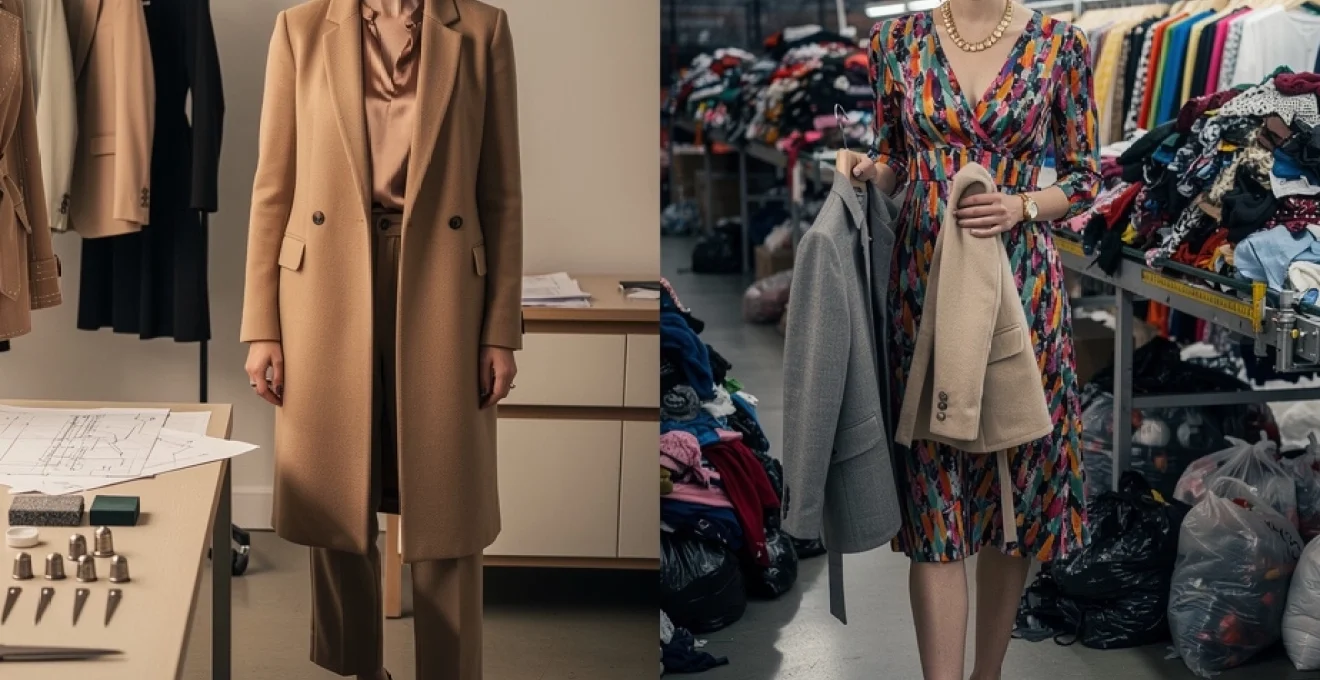
The fashion industry stands at a crossroads between artisanal excellence and mass accessibility, where the tension between quality and quantity defines consumer choices and market dynamics. This fundamental divide shapes everything from manufacturing processes to pricing strategies, influencing how garments are conceived, created, and consumed. Understanding these differences becomes crucial for making informed decisions about wardrobe investments, whether you’re seeking timeless pieces that transcend seasons or staying current with rapidly evolving trends. The distinction extends far beyond simple price points, encompassing material science, craftsmanship traditions, environmental considerations, and the psychology of fashion consumption itself.
Material construction and textile engineering in High-End fashion
The foundation of fashion quality lies in material selection and textile engineering, where luxury brands invest significantly in sourcing premium fibres and developing advanced weaving techniques. High-end fashion houses typically work with exclusive mills that have perfected their craft over generations, creating fabrics that offer superior performance, aesthetics, and longevity. These partnerships enable access to rare materials and cutting-edge textile innovations that mass market producers cannot economically justify.
The relationship between fibre quality and garment performance demonstrates why luxury brands command premium prices. Superior materials exhibit enhanced drape characteristics, colour retention, and structural integrity that become apparent through extended wear. Investment in premium textiles represents approximately 40-60% of production costs for luxury items, compared to just 15-25% for fast fashion alternatives, reflecting the significant material quality differential between market segments.
Natural fibre superiority: cashmere, silk, and virgin wool manufacturing
Natural fibres represent the pinnacle of textile luxury, with cashmere, silk, and virgin wool commanding respect for their unique properties and processing requirements. Cashmere production involves meticulous harvesting from specific goat breeds in Mongolia and Kashmir, where each animal yields only 100-200 grams annually. The finest cashmere fibres measure 14-16 microns in diameter, requiring specialised sorting and processing techniques that preserve their inherent softness and insulating properties.
Silk manufacturing maintains traditional techniques dating back millennia, with top-grade silk requiring precise temperature control and expert handling throughout production. Virgin wool processing emphasises fibre integrity, with premium grades sourced from specific sheep breeds raised in optimal conditions. These natural materials offer breathability, moisture management, and thermal regulation that synthetic alternatives struggle to replicate, justifying their premium positioning in luxury fashion.
Thread count and weave density impact on garment longevity
Thread count and weave density directly correlate with garment durability and aesthetic appeal, with luxury manufacturers employing significantly higher specifications than mass market producers. Premium dress shirts typically feature thread counts between 140-200, compared to 80-120 for standard alternatives, resulting in smoother texture and enhanced strength. The weaving process itself becomes more complex at higher densities, requiring advanced machinery and skilled operators to maintain consistency.
Weave structure significantly influences fabric behaviour, with luxury items often employing complex patterns like herringbone or twill that enhance visual interest while improving durability. These sophisticated weaves distribute stress more effectively across the fabric, reducing wear concentration points that commonly cause failure in simpler constructions. The investment in superior weaving techniques translates to garments that maintain their appearance and structural integrity through multiple seasons of regular wear.
Advanced fabric treatment technologies in luxury production
Luxury fashion brands increasingly incorporate advanced fabric treatments that enhance performance while maintaining aesthetic appeal. Nano-coating technologies provide stain resistance without compromising breathability, while enzymatic treatments improve softness and reduce environmental impact during processing. These innovations require significant research and development investment, typically reserved for high-value product lines where the cost can be justified.
Finishing processes in luxury production often involve multiple stages of treatment, each designed to enhance specific fabric properties. Anti-pilling treatments, colour-fastness enhancement, and wrinkle resistance applications require precise chemical formulations and controlled application environments. The sophistication of these treatments explains why luxury garments often perform better over time, maintaining their appearance and functionality long after mass-produced alternatives show signs of deterioration.
Synthetic blend alternatives: performance vs aesthetic trade-offs
Modern synthetic blends offer compelling performance advantages while addressing some traditional limitations of natural fibres. High-quality synthetic blends can provide moisture-wicking properties
and quick-drying capabilities, making them ideal for activewear and everyday basics that must withstand frequent laundering. However, the trade-off often appears in tactile quality and long-term aesthetics, where synthetics may pill, hold odours, or develop a sheen that cheapens the overall look. Luxury fashion brands therefore tend to use synthetics sparingly, often as reinforcement in linings, stretch panels, or performance layers rather than as the primary fabric. When evaluating quality vs quantity in fashion, understanding exactly where and why synthetic fibres are used helps you distinguish thoughtful engineering from cost-cutting shortcuts.
From a sustainability perspective, synthetic blends present a complex picture. While they can increase durability and reduce the need for frequent replacement, they also contribute to microplastic pollution and rely on fossil fuel inputs. High-end brands increasingly experiment with recycled polyester, bio-based polyamides, and closed-loop regeneration systems to mitigate these issues, but these technologies remain more expensive than conventional synthetics. For conscious consumers, the key is to balance performance requirements with environmental impact, selecting synthetic-heavy garments only where their technical benefits clearly outweigh their drawbacks.
Manufacturing processes: couture craftsmanship vs mass production
The divide between quality and quantity in fashion becomes even more pronounced at the manufacturing stage, where couture craftsmanship and mass production follow fundamentally different logics. Luxury houses prioritise precision, manual skills, and time-intensive techniques, while fast fashion chains optimise for speed, volume, and cost reduction. This contrast affects not only the visible finish of a garment but also its internal structure, comfort, and lifespan. When you turn a jacket inside out or inspect a hem, you are often looking directly at the outcome of these opposing production philosophies.
In high-end fashion, production runs are deliberately limited, allowing ateliers to focus on meticulous construction and stringent quality checks. Mass market brands, by contrast, may produce tens of thousands of units of a single style across multiple factories, accepting higher defect rates as a trade-off for scale. The result is a stark difference in consistency, fit, and long-term performance, even when two garments appear similar on the rack. Understanding these manufacturing processes empowers you to see beyond branding and evaluate quality in more objective, technical terms.
Hand-stitching techniques in savile row tailoring standards
Savile Row tailoring exemplifies the highest standards of hand-stitching in the fashion industry, where a single bespoke suit can require 50 to 80 hours of manual labour. Key structural elements, such as the canvas interlining in the chest and lapel, are attached using thousands of tiny hand stitches that allow the garment to mold to the wearer’s body over time. This floating canvas construction, often made from horsehair and natural fibres, creates a sculpted silhouette and breathability that fused, glued interlinings simply cannot match. It is the sartorial equivalent of a hand-built engine versus a mass-produced one.
Hand-felling hems, pick-stitching along lapels, and hand-set sleeves further differentiate Savile Row standards from industrial tailoring. These techniques provide micro-adjustments and subtle elasticity at stress points, reducing strain on the fabric and seams during movement. In mass-produced suits, sleeves and linings are typically attached by machine in a single pass, prioritising speed over nuance. When you see fine, almost imperceptible irregularity in stitching on a luxury garment, that slight inconsistency often signals the human hand—and a level of quality that quantity-based models struggle to replicate.
Pattern cutting precision and seam construction methodologies
Pattern cutting is the architectural blueprint of any garment, and its precision has a direct impact on fit, drape, and comfort. In luxury production, experienced pattern cutters refine prototypes through multiple fittings, adjusting millimetre by millimetre to account for how fabrics behave on the body rather than just on a flat table. These refinements address posture differences, shoulder slope, and ease of movement, resulting in garments that feel intuitive and balanced when worn. In contrast, mass production frequently relies on simplified grading rules and fewer fit sessions to keep development costs low.
Seam construction reveals further differences between quality and quantity in fashion. High-end garments use reinforced seams, such as French seams, bound seams, or flat-felled seams, which encase raw edges and significantly reduce fraying. These methods require additional fabric and more time at the sewing machine, but they dramatically extend the life of the garment. Fast fashion garments often use basic overlocked seams with minimal seam allowance, which accelerates production but makes repairs more difficult and failures more likely after repeated wear and washing.
Quality control protocols in artisanal vs industrial settings
Quality control in artisanal fashion houses typically involves multiple human checkpoints, with skilled technicians inspecting each garment at several stages of production. They assess not only visible defects but also subtler issues like tension inconsistencies in stitching, grain alignment of the fabric, and the hand-feel of finishes. This approach is closer to a craftsman inspecting a piece of furniture than a technician on an assembly line, emphasising holistic assessment over numerical throughput. Defective items are more likely to be reworked or discarded rather than quietly entering the supply chain.
Industrial quality control, by contrast, leans heavily on sampling and statistical processes. Inspectors may check only a limited percentage of garments from each batch, relying on defect thresholds to determine acceptability. While efficient for high volumes, this method inevitably allows more flawed pieces to reach consumers, especially when factories are under pressure to meet aggressive delivery schedules. For shoppers, this explains why two identical fast fashion items can vary in fit and finish—whereas luxury items, though not perfect, tend to exhibit far greater consistency across sizes and colourways.
Time investment analysis: hermès birkin vs zara production cycles
The Hermès Birkin bag has become a reference point for extreme craftsmanship, with each piece typically requiring between 15 and 25 hours of work by a single artisan. Every stitch is hand-sewn, the leather is cut and skived manually, and edges are burnished through repeated passes for a flawless finish. This extended production timeline is not just a marketing story; it is built into the brand’s capacity planning, waiting lists, and pricing structure. When you purchase a Birkin, you are effectively paying for time as much as for materials.
By comparison, a Zara handbag or jacket may pass through an automated, segmented production line in a matter of minutes, from cutting to final assembly. Design-to-store cycles can be as short as two to three weeks, with factories optimised to switch rapidly between styles rather than perfect any single piece. This speed-to-market model underpins fast fashion’s ability to chase micro-trends but inevitably limits the complexity and durability of the products. The stark contrast between a weeks-long artisanal process and a minutes-long industrial one encapsulates the core difference between quality and quantity in fashion.
Brand positioning strategies: investment pieces vs trend-driven collections
Beyond physical construction, the tension between quality and quantity in fashion plays out in brand positioning strategies. Luxury and heritage labels tend to emphasise “investment pieces” designed to outlast seasons, both structurally and stylistically. These garments and accessories often feature restrained silhouettes, versatile colour palettes, and recognisable yet subtle design signatures that hold relevance over many years. The brand narrative centres on longevity, craftsmanship, and a slower, more deliberate approach to style.
Trend-driven brands, especially in the fast fashion segment, build their business on rapid turnover and constant novelty. Their collections lean heavily on micro-trends sourced from social media, celebrity culture, and runway knockoffs, often at the expense of timelessness or durability. While this strategy delivers immediate gratification and accessibility, it also encourages a “wear it a few times and move on” mentality. For consumers trying to build a sustainable wardrobe, the key question becomes: Is this piece a long-term anchor or a short-lived experiment?
Cost per wear analysis and wardrobe return on investment
Evaluating quality vs quantity in fashion becomes far more rational when we shift from sticker price to cost per wear. Cost per wear (CPW) divides the purchase price of a garment by the number of times you realistically expect to wear it. A €600 coat worn 150 times over five winters has a CPW of €4, while a €60 trendy jacket worn five times before falling apart or feeling dated costs €12 per wear. Suddenly, the “expensive” piece looks more economical than the cheaper alternative.
This wardrobe return on investment framework encourages you to prioritise versatility, durability, and timeless design over impulse purchases. It also highlights why quality often proves cheaper over the long term, especially for categories like outerwear, tailoring, denim, and footwear. By consciously estimating how often you will use an item before you buy, you can align your spending with real-life value rather than momentary desire. In practice, this mindset leads to smaller wardrobes, higher average quality, and fewer regrets.
Depreciation curves of designer items vs fast fashion alternatives
Just as assets in finance depreciate at different rates, garments follow their own depreciation curves depending on quality, brand equity, and trend sensitivity. Many fast fashion items experience “rapid depreciation,” losing most of their perceived value after just a few wears as fabrics degrade, shapes distort, or trends fade. In some cases, these pieces reach zero resale value almost immediately, effectively becoming disposable. The low purchase price conceals a steep decline in utility and desirability.
Designer items, particularly from established houses, typically follow a slower depreciation curve and, in certain categories, may even appreciate. Classic handbags, iconic coats, and limited-edition collaborations can retain 60–80% of their retail price on the secondary market within a few years. A rare subset—such as specific Chanel flap bags or Hermès Birkins—has historically outperformed some traditional investment vehicles. While not every luxury purchase will behave this way, the potential for value retention further differentiates quality-driven fashion from quantity-based consumption.
Seasonal versatility metrics in capsule wardrobe planning
To maximise the return on high-quality fashion purchases, seasonal versatility becomes a crucial metric. A well-chosen wool coat, for example, can work across autumn, winter, and early spring, while a tailored blazer transitions from office to evening and even weekend wear. In capsule wardrobe planning, each piece ideally functions in multiple outfits and contexts, multiplying its effective wear count. This is where neutral colours, classic cuts, and high-grade materials distinguish themselves from short-lived statement pieces.
When building a capsule wardrobe, it helps to ask: Can I style this in at least three distinct ways across different seasons? Garments that pass this test are more likely to justify a higher upfront investment, as their quality is fully leveraged. Fast fashion, by contrast, often produces hyper-specific items that photograph well for a particular trend but struggle to integrate into diverse looks. By focusing on seasonal versatility metrics, you align your shopping behaviour with both sustainability goals and long-term style coherence.
Maintenance cost calculations for premium garments
Quality fashion does not end at the point of purchase; ongoing maintenance plays a significant role in total cost of ownership. Premium garments may require professional dry cleaning, specialised detergents, or periodic repairs, which can intimidate some consumers. However, these costs are often modest when spread across years of wear, particularly if you adopt a preventative care mindset. Simple habits like using wooden hangers, shoe trees, garment bags, and correct washing cycles dramatically extend the life of quality pieces.
When comparing quality vs quantity in fashion, it is worth factoring in these maintenance expenses alongside cost per wear. A pair of well-made leather shoes might require resoling every few years, but that intervention can double or triple their lifespan. In contrast, cheap footwear constructed with glued soles and low-grade materials cannot be economically repaired, forcing full replacement. Seen through this lens, a slightly higher annual maintenance budget supports a far lower rate of wardrobe turnover.
Resale value performance: chanel vs contemporary brand comparisons
The resale market offers hard evidence of how quality and brand equity translate into financial value. Chanel handbags, for instance, are renowned for retaining a high percentage of their retail price, with certain classic models and colours regularly selling above original RRP on the secondary market. This performance reflects not only craftsmanship but also controlled supply, brand heritage, and consistent design language. In effect, these pieces operate as both functional accessories and semi-liquid assets.
By contrast, contemporary mid-market brands—even when they produce solid quality—rarely enjoy similar resale dynamics. Their items may resell at 20–40% of retail value, if they sell at all, due to lower brand recognition and weaker demand on resale platforms. For you as a consumer, this difference matters when considering large purchases: a higher-priced Chanel bag with 70% potential resale recovery may be a better value proposition than a cheaper alternative with negligible resale market. While not every wardrobe item needs investment-grade resale value, understanding these tiers can help you allocate your fashion budget more strategically.
Environmental impact assessment: sustainable fashion economics
The environmental impact of fashion is closely tied to the debate between quality and quantity. Mass-produced, low-cost garments contribute to overproduction, with estimates suggesting that more than 50 billion items of clothing are discarded globally each year. Many of these pieces are barely worn before ending up in landfills or incineration plants, releasing greenhouse gases and toxins. High-quality garments, by contrast, are more likely to be cherished, repaired, resold, or passed on, extending their useful life and reducing overall resource consumption.
From a sustainable fashion economics perspective, fewer, better purchases represent a powerful form of impact reduction. Producing a single durable wool coat with responsible sourcing and ethical labour may require more upfront energy and cost than a fast fashion equivalent, but its extended life and lower replacement rate can deliver a smaller footprint over time. Moreover, quality-focused brands are often the first to invest in traceable supply chains, regenerative agriculture, and circular initiatives such as take-back schemes and recycling programs. When you choose quality over quantity, you indirectly support these progressive industry shifts.
The environmental calculus also includes microplastics, dye pollution, and water usage. Synthetic-heavy, cheaply made garments shed more microfibres in washing machines, contributing to ocean pollution and entering food chains. Lower-quality dyeing processes, common in cost-driven factories, may bypass strict wastewater treatment, exacerbating river contamination in production hubs. Investing in brands that prioritise robust environmental standards—often correlated with higher-quality products—helps counter these systemic issues. The more we treat clothing as a long-term asset rather than a disposable good, the more sustainable the industry can become.
Consumer psychology and purchase decision frameworks
Underlying the clash between quality and quantity in fashion is a powerful layer of consumer psychology. Many shoppers experience a dopamine rush from frequent, low-cost purchases, a pattern sometimes described as “the fast fashion hit.” This short-term gratification can overshadow rational considerations such as cost per wear, environmental impact, and storage space. Algorithms and social media feeds amplify the cycle by constantly presenting new must-have items, often framed as limited or urgent, triggering fear of missing out.
Breaking this cycle requires adopting more deliberate purchase decision frameworks. Before buying, you might pause to ask: Will I still want to wear this in a year? Does this item complement what I already own? Do I value the story behind how and where it was made? By reframing purchases as long-term commitments rather than spontaneous treats, you naturally gravitate towards higher-quality fashion choices. This mindset shift turns shopping into a strategic exercise instead of a reflexive response to marketing stimuli.
Another psychological factor is identity expression. We are often told that more outfits equal more ways to express who we are, but in practice, a coherent, well-curated wardrobe communicates personal style far more clearly. Think of it like editing a book: the strength of the message often lies in what you remove, not what you add. When you invest in fewer, better pieces that genuinely reflect your values and aesthetics, you reduce decision fatigue while increasing confidence in what you wear. Over time, this clarity can be more satisfying than a constantly rotating rail of trend-driven clothing.
Finally, social norms around outfit repetition are slowly changing, especially as sustainability enters mainstream discourse. Where once wearing the same dress multiple times might have felt like a faux pas, it is increasingly seen as a sign of conscious consumption and strong personal style. As these norms evolve, choosing quality over quantity in fashion becomes not only a private preference but also a public statement about what kind of industry we want to support. By aligning your purchasing behaviour with long-term value, craftsmanship, and environmental responsibility, you position yourself on the side of a more sustainable and meaningful fashion future.