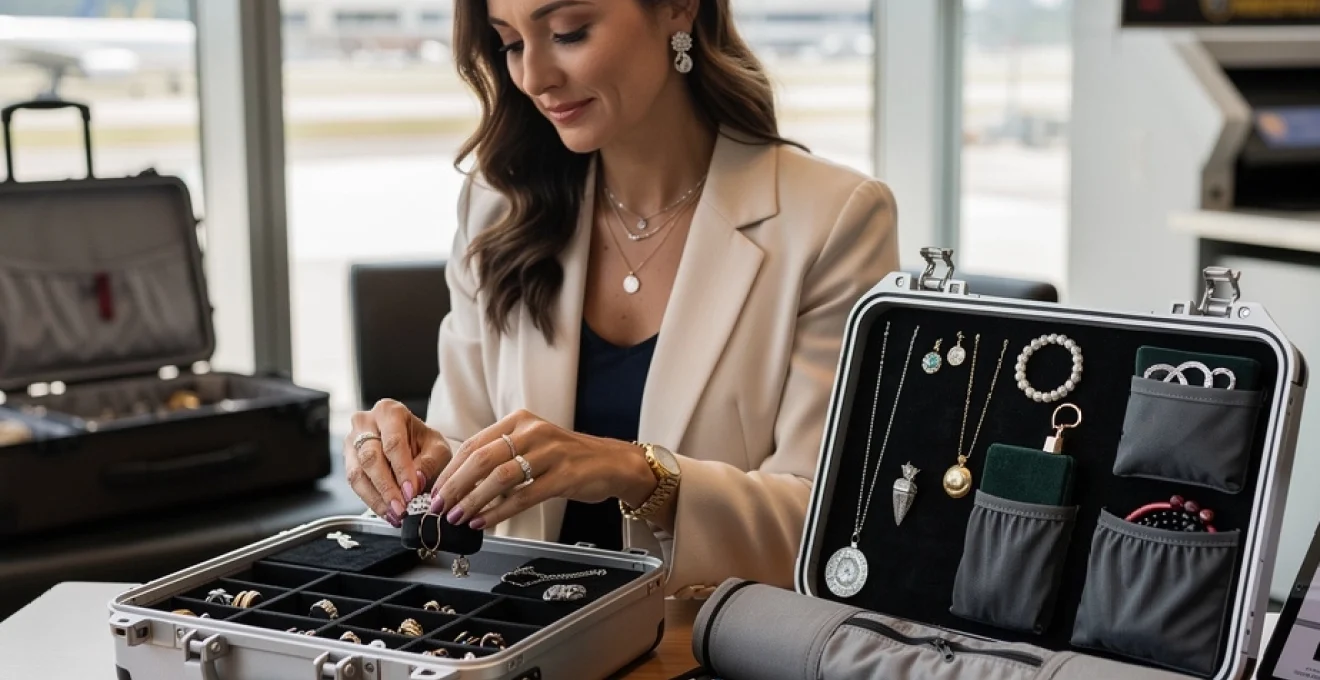
Travelling presents unique challenges for jewellery enthusiasts who wish to maintain their signature style whilst ensuring their precious pieces remain secure. Whether you’re embarking on a business trip to New York, a Mediterranean holiday, or attending a destination wedding in the Cotswolds, the prospect of packing valuable jewellery can trigger legitimate concerns about loss, theft, or damage. According to recent travel insurance data, jewellery claims account for approximately 23% of all high-value item losses during international travel, with an average claim value exceeding £3,500. The good news? With proper planning, professional-grade storage solutions, and strategic security measures, you can confidently travel with your favourite pieces without compromising on style or peace of mind.
The contemporary traveller faces a delicate balancing act: selecting versatile pieces that elevate multiple outfits whilst minimising the risk associated with carrying valuable possessions across borders, through airport security, and into unfamiliar accommodation. This comprehensive guide addresses every dimension of travelling with jewellery, from pre-departure documentation to destination-specific security protocols, ensuring your gems sparkle as brilliantly at your destination as they do in your home jewellery box.
Pre-travel jewellery organisation and documentation strategies
Thorough preparation before departure forms the foundation of safe jewellery travel. Professional jewellers and insurance specialists consistently emphasise that documentation completed before travel significantly expedites claims processing and recovery efforts should the unfortunate occur. This preparatory phase requires methodical attention to detail but provides invaluable protection for your investment.
Creating a detailed photographic inventory with appraisal values
A comprehensive photographic inventory serves multiple critical functions: it provides evidence of ownership, documents condition prior to travel, and substantiates insurance claims. Capture high-resolution images of each piece from multiple angles, including close-ups that reveal distinguishing characteristics such as hallmarks, unique settings, or minor imperfections. Photograph pieces both individually against a neutral background and being worn, as this demonstrates scale and provides additional verification. Include a ruler or coin in frame to establish size reference points that prove authenticity.
Pair each photograph with detailed written descriptions noting metal composition (18ct gold, platinum, sterling silver), gemstone specifications (carat weight, cut, clarity, colour for diamonds), designer or maker’s marks, and current appraisal values. Store this documentation across multiple platforms—cloud storage services like Google Drive or Dropbox, plus email copies to yourself. This redundancy ensures access even if your primary device becomes unavailable during travel. Industry experts recommend updating photographic inventories annually, as jewellery values fluctuate with precious metal markets and gemstone availability.
Obtaining insurance certificates for High-Value pieces
Standard travel insurance policies typically cap jewellery coverage at £500-£1,500 per item, rendering them inadequate for engagement rings, heirloom pieces, or designer jewellery. Specialist jewellery insurance or scheduled personal articles policies provide comprehensive worldwide coverage without geographical restrictions. Leading UK insurers such as T. H. March, Assetsure, and ValueMyStuff offer policies specifically designed for high-value jewellery travel, with premiums starting around 1-2% of declared value annually.
Request certificates of insurance that specify each covered piece, its appraised value, and policy terms. Carry digital copies accessible offline on your smartphone, alongside physical copies stored separately from the jewellery itself. Some insurers now offer blockchain-verified digital certificates that cannot be falsified, providing additional security during customs declarations. Critical consideration: review policy exclusions carefully, as many standard policies exclude coverage during « hazardous activities »—definitions that sometimes surprisingly encompass water sports, hiking, or even beach visits.
Categorising jewellery by material: precious metals, gemstones, and costume
Organising jewellery by material type streamlines packing, facilitates customs declarations, and informs appropriate storage decisions. Precious metals (gold, platinum, silver) require anti-tarnish storage, particularly sterling silver which oxidises rapidly when exposed to air moisture and sulphur compounds prevalent in certain climates. Gemstones present varying durability profiles: diamonds, rubies, and sapphires withstand travel rig
oxidises rapidly when exposed to air moisture and sulphur compounds prevalent in certain climates. Gemstones present varying durability profiles: diamonds, rubies, and sapphires withstand travel rigours well, while pearls, opals, emeralds, and tanzanite are significantly softer and more porous. Classify your pieces into three broad categories—fine jewellery, semi-precious, and costume—then decide what truly needs to come with you. Many travellers find that taking high-quality costume substitutes for daytime wear dramatically reduces anxiety, reserving fine pieces for specific events and controlled environments. This categorisation also allows you to allocate appropriate storage: robust protection for high-value items and simpler pouches for fashion jewellery.
As you sort, note which metals are prone to scratching (such as gold and softer silver alloys) and which gemstones should never be stored together. For example, diamonds can scratch almost any other gemstone if they come into contact, so mixed storage is rarely advisable. Treat this process like curating a miniature travel collection rather than emptying your entire jewellery box into your suitcase. By the time you have finished, you should have a clearly defined set of pieces, each with its own documentation and storage plan, ready for the next phase: how to physically transport them.
Digital record-keeping using apps like sortly and MyStuff2
Digital inventory apps provide an efficient, searchable way to manage jewellery records when travelling internationally. Platforms such as Sortly, MyStuff2, and Collector allow you to upload photos, enter appraisal values, add purchase dates, and attach documentation like receipts and grading certificates. Think of them as a portable vault of information that stays with you even if physical paperwork is lost or delayed in transit. Many apps include QR code labels, enabling you to scan a pouch or case and instantly see which items should be inside.
When preparing to travel with jewellery, create a specific “Travel Collection” folder or tag within your chosen app. List each piece you plan to bring, note where it will be stored (hand luggage pocket, hotel safe, safety deposit box), and record its insurance policy number. Some platforms can export this information as a PDF, providing a simple summary should you need to show customs officials or insurers that your jewellery is documented. Ensure offline access is enabled so your records are available even without roaming data—much like carrying a paper map as backup for your satnav. This combination of photographic evidence, written details, and digital organisation forms a robust foundation for secure, confident jewellery travel.
Professional-grade travel cases and storage solutions
Once your jewellery is documented and curated, the next priority is physically protecting it during transit. Professional-grade travel cases offer far more security and impact resistance than improvised solutions, especially when you are navigating crowded airports, overhead bins, and unpredictable baggage handling. While a simple travel jewellery roll may suffice for low-value pieces, fine jewellery benefits from the same level of protection you would expect for camera gear or technical equipment. Selecting the right combination of hard-shell cases, roll-up organisers, and individual pouches ensures your jewellery travels as safely as your laptop or passport.
Hard-shell cases: pelican and SKB models for maximum protection
For high-value collections or destination events where you are carrying multiple pieces, hard-shell cases from manufacturers such as Pelican and SKB offer exceptional protection. Originally designed for professional photography and audio-visual equipment, these cases feature crushproof exteriors, pressure-equalisation valves, and customisable foam inserts that can be cut to fit individual jewellery boxes or pouch clusters. When used as part of your hand luggage, they function as a portable safe, shielding your jewellery from impact, moisture, and opportunistic theft.
Models like the Pelican 1200 or SKB iSeries Micro Case are compact enough to fit inside a cabin bag yet robust enough to deter casual tampering. You can nest travel jewellery boxes or velvet trays within the foam, ensuring each bracelet, necklace, and ring remains isolated and immobilised. Many travellers pair these with TSA-compliant padlocks for an additional layer of security. Is a hard-shell case overkill for a single engagement ring? Perhaps—but for multiple heirloom pieces, it can be the difference between a minor inconvenience and an irreplaceable loss.
Roll-up organisers with anti-tarnish lining technology
Roll-up jewellery organisers are ideal for travellers who prioritise compact storage and easy access in hotel rooms or cruise cabins. Modern designs incorporate anti-tarnish linings impregnated with proprietary compounds that absorb atmospheric sulphur and moisture, significantly slowing the tarnishing process for silver and low-carat gold alloys. Brands using technologies comparable to 3M anti-tarnish strips or Pacific Silvercloth help ensure your sterling pieces emerge from transit as bright as when they were packed. For jewellery that will be worn daily, this is especially valuable on longer trips or in humid destinations.
Look for organisers with separate zipped pockets, necklace tabs, and ring bars to prevent friction between metals and gemstones. Anti-tarnish technology is not a substitute for proper cleaning, but it functions much like SPF for your jewellery: an extra layer of defence against environmental stress. Roll-up organisers also have a practical styling advantage—they can be hung on a bathroom hook or wardrobe rail, allowing you to see your entire travel jewellery wardrobe at a glance. This visibility reduces the risk of leaving pieces behind on bedside tables or sinks, a common cause of jewellery loss when travelling.
Individual pouches with microfibre and velvet material specifications
Even within larger travel cases, individual pouches remain crucial for preventing scratches, tangles, and gemstone abrasion. The best pouches for travel jewellery storage are made from tightly woven microfibre or high-quality velvet, both of which are soft enough to protect polish yet dense enough to resist trapping dust and grit. Microfibre is particularly effective for high-polish metals and faceted diamonds, while velvet provides excellent cushioning for more fragile stones such as opals and pearls. Avoid unlined leather or coarse textiles, which can create micro-scratches over time.
Assign each fine jewellery piece its own pouch, and reserve shared pouches for robust costume jewellery or stainless-steel items. For chains and necklaces, consider pouches with internal snap loops or channels to keep clasps away from pendants and prevent knotting. Labelling each pouch with a discreet tag or colour code can save time when dressing, especially if you are balancing multiple events in a single trip. Think of these pouches as the inner compartments of a well-organised suitcase—each item has its place, reducing both physical damage and the mental load of keeping track of your favourites.
Tsa-approved lockable jewellery boxes for international travel
For travellers who prefer a single, elegant solution, TSA-approved lockable jewellery boxes strike a practical balance between security and style. These compact cases integrate combination or key locks compatible with airport security protocols, allowing officials to inspect your luggage without damaging the lock. Interior design is critical: prioritise boxes with ring rolls, necklace hooks, covered compartments for earrings, and a soft, non-abrasive lining. A well-structured layout reduces the temptation to tuck loose pieces into pockets or cosmetic bags, where they are more likely to be misplaced.
When evaluating lockable boxes, consider weight and dimensions relative to your cabin baggage allowance, particularly on budget airlines with stricter limits. A jewellery box that fits into your personal item—rather than your main carry-on—lets you keep your most valuable pieces within arm’s reach at all times. Combine this with your digital inventory, and you have a self-contained system that can quickly be presented at security or customs if questions arise. Remember, a lock acts more as a deterrent and organisational aid than an absolute defence, so it should complement, not replace, broader security strategies.
Airport security protocols and customs declaration requirements
Navigating airport security with jewellery demands both practicality and awareness of regulations. The goal is to move smoothly through checkpoints without exposing your valuables to unnecessary risk or scrutiny. Understanding how security systems interact with jewellery, and when you must declare high-value items, helps you avoid last-minute panic at the metal detector or customs desk. With a little planning, you can keep your jewellery close, compliant, and discreet.
Hand luggage versus checked baggage: risk assessment analysis
From a security perspective, the safest way to travel with jewellery is almost always in your hand luggage or personal item. Checked baggage passes through multiple handling stages, is occasionally delayed or lost, and may be opened for inspection out of your sight. Industry data from major European carriers suggests that lost or delayed luggage incidents, while statistically low, still affect hundreds of thousands of bags annually—numbers you do not want associated with an engagement ring or heirloom necklace. By keeping jewellery on your person, you maintain direct oversight and can respond immediately if anything seems amiss.
There are, however, nuances to consider. Very bulky hard-shell cases may need to be removed from your cabin bag at security, so ensure jewellery is contained within internal pouches or boxes that cannot be easily snatched or misplaced in trays. Avoid placing loose items directly into security bins, where they can slide under dividers or be forgotten in the rush. Think of your jewellery as you would your passport: it should never leave your immediate control, and it should certainly not travel in the aircraft hold unless absolutely unavoidable.
Declaring high-value items over £10,000 at UK customs
When travelling with jewellery whose total value exceeds £10,000, UK regulations require that you make a customs declaration when entering or leaving Great Britain with cash or certain high-value goods. While jewellery is not “cash” in the strictest sense, high-value items may still attract customs interest, particularly if you are carrying commercial quantities or newly purchased pieces from overseas. Failing to declare when required can result in significant delays, seizure of items, or fines. This is where your photographic inventory and insurance documentation become invaluable, proving that the jewellery is personal property rather than undeclared imports.
Before departure, check the latest guidance from HMRC and the customs authorities of your destination country, as thresholds and forms vary widely. In some jurisdictions, you may need to complete a temporary export or re-import form, demonstrating that your jewellery was owned before travel and is not subject to local duties upon return. Store digital copies of receipts and appraisals on your phone and in the cloud, so they can be produced quickly if questioned. Approaching customs proactively—declaring where needed and answering questions calmly—usually results in a smoother, faster experience than hoping valuable items go unnoticed.
X-ray scanner effects on diamonds, pearls, and opals
One common concern is whether airport X-ray scanners can damage fine jewellery, particularly delicate gemstones such as pearls and opals. Fortunately, standard baggage X-ray systems used in airports emit low levels of radiation that do not affect the crystal lattice of diamonds or the organic structure of pearls and opals. In other words, your jewellery is far more likely to be harmed by a drop onto a hard floor than by a pass through an X-ray tunnel. The same technology is used routinely for high-end watches and cameras without adverse effects. Knowing this can help reduce anxiety as your hand luggage disappears briefly on the conveyor belt.
That said, consider how your jewellery is packed when it goes through security. Ensure pieces are secured inside padded compartments so they do not rattle or collide during handling. If you are wearing substantial metal jewellery that may trigger metal detectors, it can be more efficient to place those items in your locked travel case and send them through the X-ray rather than removing them at the last second. For ultrahigh-value pieces, some travellers choose to request a private screening area, where jewellery can be inspected without public exposure. While not often necessary, it is an option worth knowing about if you are transporting particularly significant pieces.
On-transit security measures and wearing strategies
Security considerations do not end once you have cleared airport screening. The transit phase—from gate areas to taxis and train stations—can be one of the most vulnerable periods for jewellery, as fatigue and distraction increase. Adopting sensible wearing strategies and on-the-move habits reduces the chances of accidental loss or opportunistic theft. Think of it as building a travel routine for your jewellery, just as you might for your passport and wallet.
Where possible, wear your most valuable everyday pieces, such as wedding rings or signature necklaces, rather than leaving them loose in a bag. Items on your body are less likely to be forgotten under a seat or left in a restroom. At the same time, consider keeping overtly flashy or attention-grabbing pieces tucked away until you reach your destination, especially when passing through crowded urban transport hubs. A discreet chain worn under clothing is far less of a target than a bold diamond choker on display in a busy station. Ask yourself: “Do I need this visible right now, or can it wait until dinner at the hotel?”
During flights or long train journeys, resist the temptation to remove rings or bracelets and leave them on fold-down tables where they can easily slide off or be knocked to the floor. If you must remove jewellery—for example, when applying hand cream—place it immediately into a dedicated zip pocket or travel case rather than balancing it on a napkin. Many in-flight jewellery losses occur not through theft but simple forgetfulness. Building small habits, like always using the same secure pocket, creates muscle memory that greatly reduces risk over multiple trips.
Destination-specific considerations: hotel safes and accommodation security
Once you arrive at your destination, the focus shifts from transit to storage and daily use. Accommodation security varies widely between luxury hotels, business-focused chains, boutique properties, and rental villas or Airbnbs. Understanding the capabilities—and limitations—of each option helps you decide where and how to store your jewellery when it is not being worn. As with home security, a layered approach usually works best: combine physical safeguards with discretion and common sense.
In-room safe specifications and limitations by hotel chain
Most mid-range and luxury hotels provide in-room safes, often advertised as suitable for laptops and passports. While convenient, these safes are not all created equal. Many are secured by simple keypad codes and anchored only lightly within furniture, making them a deterrent to opportunistic theft but not necessarily to determined professionals. Some hotel chains publish guidance on safe capacity and insurance coverage; in many cases, liability for items stored in-room is limited, even if the safe is used as instructed. It is wise to confirm these terms at check-in if you are travelling with a significant amount of fine jewellery.
When using an in-room safe, choose a unique access code unrelated to your birth date or room number, and avoid entering it in clear view of open doors or mirrors that might reflect the keypad. Place jewellery into its travel case or pouches before locking it away, rather than leaving pieces loose on the safe floor where they can be scratched or overlooked. For very high-value jewellery, you may wish to split storage—keeping a small selection in the room for daily use and entrusting especially valuable items to the property’s main safe or deposit boxes, where available.
Safety deposit box services at four seasons, Ritz-Carlton, and hilton properties
Luxury hotel brands such as Four Seasons, Ritz-Carlton, and many flagship Hilton properties offer safety deposit box facilities located in secure back-of-house areas. These deposit boxes provide a level of protection closer to that of a bank vault, with dual-control access and detailed logging of entries. For guests travelling with jewellery collections for weddings, red-carpet events, or photo shoots, this service can be invaluable. You typically sign items in and out, sometimes with inventory notes, creating a clear record should any issues arise.
Using a hotel safety deposit box does require a little more planning, as you will need to visit reception or concierge to access your pieces. However, this extra step can act as a beneficial friction point, encouraging intentional decisions about when and where to wear high-value jewellery. Treat the deposit box as your destination vault and your in-room safe as a more casual day-to-day drawer. When combined with your documented inventory and insured values, this approach offers a strong security framework without sacrificing the enjoyment of wearing your favourite pieces on special evenings.
Rental villa and airbnb security risk mitigation techniques
Private rentals, including villas and Airbnb properties, can pose different security challenges from hotels. While many are equipped with basic safes and alarm systems, standards are far from uniform, and you may not have staff on-site to assist. Before booking, review listing details and guest reviews for information on security measures, then message the host to clarify whether a safe is provided and how it is anchored. If jewellery security is a priority, it may be worth selecting properties that explicitly mention reinforced doors, safes, or gated communities.
Once on-site, avoid leaving jewellery in obvious spots such as bedside tables or bathroom counters, even if the property feels secluded. Instead, use your travel jewellery case as a portable safe, and store it out of sight in an inconspicuous location, ideally within a locked suitcase. Consider keeping only a small selection of pieces at the rental at any one time, leaving the remainder in a bank safe or hotel deposit box if possible. Above all, maintain the same habits you would use at home—locking doors, closing windows when out, and not advertising your most valuable pieces on social media in real time with precise location tags.
Styling versatile jewellery capsule collections for multi-day trips
Security and organisation are only half the story; travelling with jewellery should also support effortless, cohesive style. A well-planned jewellery capsule collection functions much like a curated wardrobe: a small number of versatile pieces that mix and match to suit a range of outfits and occasions. By prioritising adaptability over quantity, you reduce both packing volume and decision fatigue, without sacrificing impact. The aim is to arrive prepared for everything from casual brunches to formal dinners, using a core selection of pieces that work hard for you.
Convertible pieces: detachable pendants and reversible designs
Convertible jewellery is particularly valuable when building a travel capsule. Detachable pendants, slider necklaces, and bracelets that convert into chokers or anklets allow you to create multiple looks from a single base. Reversible designs—such as a pendant with diamonds on one side and polished metal on the other—provide both understated daytime elegance and evening sparkle without adding weight to your luggage. Think of these pieces as the wrap dresses of your jewellery box: endlessly adaptable and ideal for carry-on-only trips.
When planning what to travel with, look for items that can be worn in more than one way or combined with different chains and hoops. A pair of huggie earrings with removable drops, for example, can serve as minimalist studs for daytime excursions and statement-makers for evening events. Similarly, a single long chain can be doubled for a layered effect or worn long over a simple dress. By prioritising convertibility, you free up space for one or two true statement pieces without overloading your jewellery case.
Coordinating metals and gemstones for day-to-night transitions
Another key strategy in crafting a travel jewellery capsule is to select a cohesive metal and gemstone palette that transitions smoothly from day to night. Choosing a primary metal—whether yellow gold, white gold, platinum, or sterling silver—and sticking to it for most pieces creates an instant sense of harmony, even when outfits vary widely. You can then introduce accent tones, such as a single rose gold ring or a pair of mixed-metal earrings, to add interest without visual clutter. This approach is similar to packing clothing in a neutral colour palette with a few highlight hues.
Gemstone selection also plays a role. Clear or near-colourless stones like diamonds, white sapphires, and moissanite are inherently versatile, pairing well with both casual denim and formal evening wear. Coloured gemstones that echo your travel wardrobe—blues for seaside trips, deep greens for city breaks—help tie looks together without requiring multiple separate sets. Ask yourself whether each piece can complement at least three planned outfits; if not, it may not deserve precious space in your case. This level of intentionality ensures your travel jewellery works as hard as your favourite blazer or pair of shoes.
Minimalist stacking rings and layered necklace combinations
Minimalist stacking rings and layered necklaces are ideal for travellers who like to fine-tune their look throughout the day without carrying dozens of pieces. A core set of slim bands—perhaps a plain gold ring, a pavé diamond band, and a textured or engraved piece—can be worn alone for subtle elegance or stacked for greater impact. Similarly, a trio of necklaces at different lengths (for example, a choker, a mid-length pendant, and a longer chain) offers countless styling combinations. By varying which pieces you wear together, you can create the impression of a much larger collection.
From a practical standpoint, stacking pieces also pack efficiently. Rings nest together in ring rolls, and necklace layers can be threaded through individual straws or secured via necklace tabs to prevent tangling. When planning your travel jewellery capsule, map out a few “signature stacks” in advance, just as you might pre-plan outfits. This reduces morning decision fatigue, leaving you more time to enjoy your destination. The beauty of minimalist stacking is that it remains appropriate in most settings, from client meetings to beachside dinners, simply by adjusting the number of pieces you wear.
Statement earrings as travel wardrobe elevators
If you favour a streamlined approach to packing but still want moments of drama, statement earrings are one of the most efficient ways to elevate a travel wardrobe. A single pair of bold hoops, chandelier earrings, or sculptural studs can transform a simple black dress or linen shirt into an evening-ready look without the need for additional necklaces or bracelets. Because they sit close to the face, statement earrings also show up beautifully in photographs—a consideration for many travellers documenting their journeys.
When selecting statement earrings for travel, prioritise designs that are lightweight yet visually impactful, with secure backings that will not loosen during long days or nights out. Materials such as hollow gold, resin, or well-crafted costume pieces can deliver scale without strain on the earlobe. Pack them in a dedicated, padded compartment or foam card to prevent bending or loss of stones. With one or two carefully chosen pairs, you can keep your overall jewellery selection minimal while still enjoying that “special occasion” feeling whenever the itinerary calls for it.