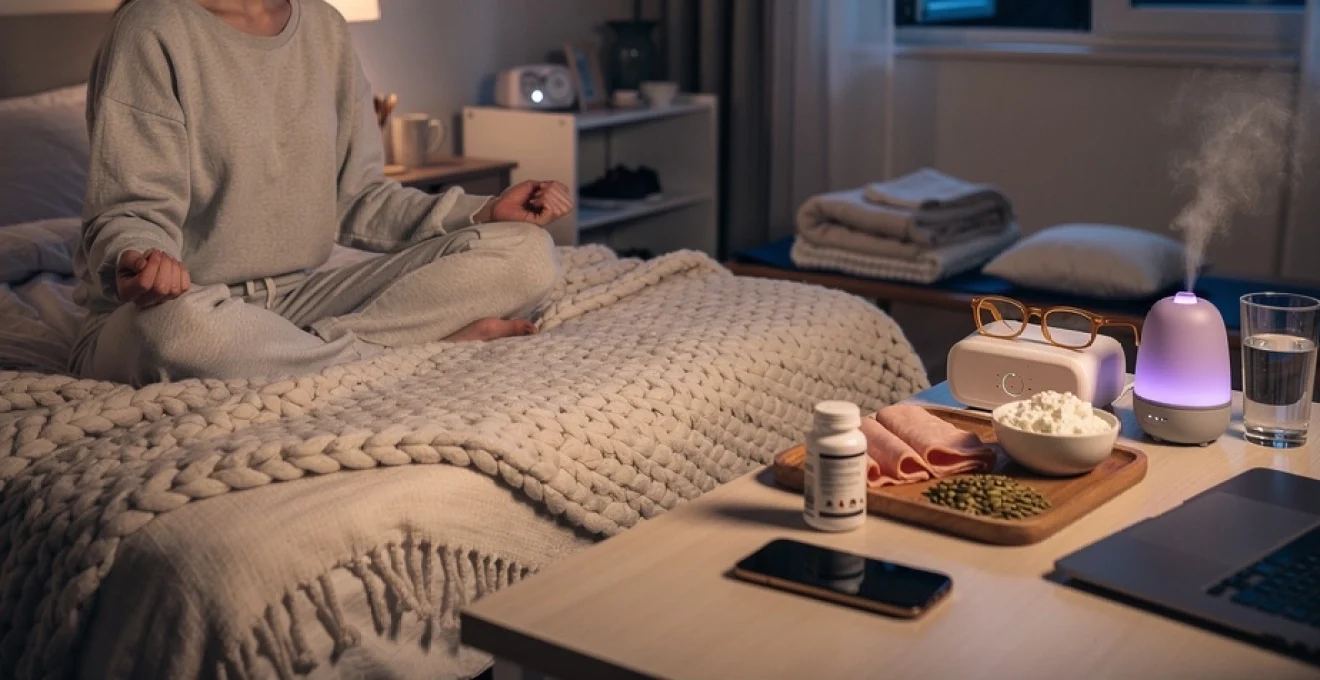
# How to create a calming evening routine for better rest
The quality of your sleep tonight is shaped by the choices you make this evening. Modern lifestyles often disregard the body’s fundamental need for gradual transition from wakefulness to sleep, creating a disconnection between our biological requirements and daily habits. Research consistently demonstrates that adults experiencing poor sleep quality often lack structured evening routines that support natural circadian processes. When you establish intentional pre-sleep practices, you’re not simply engaging in relaxation—you’re actively programming your neurological and physiological systems to prepare for restorative rest. The consequences of neglecting these evening hours extend beyond mere tiredness; chronic sleep disruption correlates with compromised immune function, impaired cognitive performance, and increased metabolic dysregulation. Understanding the science behind effective wind-down protocols empowers you to construct personalised routines that align with your body’s innate sleep architecture.
Understanding circadian rhythm regulation and sleep pressure mechanisms
Your body operates according to an internal timekeeper known as the circadian rhythm—a roughly 24-hour cycle governed by the suprachiasmatic nucleus located within the hypothalamus. This master clock responds primarily to environmental light cues, orchestrating the release of hormones like cortisol and melatonin at appropriate times throughout the day. As evening approaches, diminishing light exposure should signal your pineal gland to increase melatonin secretion, the hormone responsible for inducing drowsiness. However, artificial lighting and digital screens significantly interfere with this ancient mechanism, delaying melatonin onset and subsequently disrupting sleep timing. Research published in sleep medicine journals indicates that even moderate light exposure in the evening can suppress melatonin production by up to 50%, effectively pushing your biological bedtime later whilst simultaneously reducing total sleep duration.
Complementing your circadian rhythm is a separate process called sleep pressure, mediated by the accumulation of adenosine in your brain throughout waking hours. Adenosine is a neurotransmitter that builds up as a byproduct of cellular energy metabolism; the longer you remain awake, the more adenosine accumulates, creating an increasing drive towards sleep. Caffeine functions by blocking adenosine receptors, temporarily masking this sleep pressure without actually dissipating it. When you understand these dual systems—circadian timing and homeostatic sleep pressure—you recognise why consistency matters enormously. Going to bed and waking at irregular times confuses your circadian clock, whilst insufficient waking hours fail to build adequate sleep pressure. Your evening routine should therefore support both mechanisms: maintaining consistent timing to reinforce circadian patterns whilst avoiding substances or activities that artificially manipulate adenosine signalling.
Temperature regulation represents another crucial component of circadian physiology. Your core body temperature naturally decreases by approximately 1-2 degrees Celsius during the night, with the lowest point occurring roughly two hours before natural awakening. This temperature drop is not merely coincidental but actively facilitates sleep initiation and maintenance. Disrupting this cooling process—through overheated rooms, heavy meals that increase metabolic heat production, or vigorous exercise close to bedtime—can substantially impair your ability to fall asleep. Conversely, strategic manipulation of body temperature through warm bathing approximately 90 minutes before sleep can actually enhance the subsequent cooling effect, creating favourable conditions for sleep onset. The science is remarkably clear: respecting these fundamental biological rhythms rather than fighting against them forms the foundation of any effective evening routine.
Pre-sleep environmental optimisation for melatonin production
Creating an environment conducive to melatonin secretion requires deliberate modification of your surroundings as evening transitions into night. Your bedroom should function as a sleep sanctuary—a space specifically optimised for rest rather than a multipurpose area accommodating work, entertainment, and leisure activities. This conceptual separation reinforces psychological associations between the space and sleep, strengthening what sleep researchers term « stimulus control ». When you consistently use your bedroom exclusively for sleep and intimacy, your brain develops powerful conditioned responses that facilitate sleep onset upon entering the environment.
Blue light filtration strategies: f.lux software and Amber-Tinted glasses
Blue wavelength light, particularly in the 460-480 nanometre range, exerts disproportionate influence over melatonin suppression compared to other visible light spectrums. Electronic
devices, LED bulbs, and even some e‑readers emit high concentrations of this blue light, sending a daytime signal to your circadian clock even when it is late evening. To protect melatonin production without completely abandoning technology, you can implement layered blue light filtration strategies. Software solutions such as f.lux or native night modes on operating systems gradually shift your screen colour temperature toward warmer, amber tones as the sun sets, reducing the most disruptive wavelengths.
However, software alone rarely eliminates blue light exposure from all household sources. Amber-tinted or orange-tinted blue light blocking glasses provide an additional physical barrier, filtering out a substantial portion of short-wavelength light regardless of the device or bulb you are using. For an optimal calming evening routine, aim to activate screen-filtering software around sunset and put on amber glasses at least 90 minutes before your target bedtime. You might ask, « Do I need to be perfect about this every night? » The answer is no—but the more consistently you reduce blue light in the evening, the more reliably your body will learn to shift into sleep mode at the same time each night.
Thermoregulation protocols: maintaining 15.5-19.4°C bedroom temperature
Just as light tells your brain what time it is, temperature provides another powerful cue that it is time to rest. Research suggests that maintaining a bedroom temperature between approximately 15.5°C and 19.4°C (60°F–67°F) creates an optimal thermal environment for sleep. Within this range, your body can efficiently offload heat through peripheral vasodilation (the widening of blood vessels in your hands, feet, and face), which supports the natural decline in core body temperature associated with sleep onset. If your room is warmer than this, your body must work harder to cool itself, often resulting in restlessness, sweating, and fragmented sleep.
To apply thermoregulation protocols in your own evening routine, think in terms of layers and timing. Lightweight, breathable bedding made from cotton, linen, or bamboo fabrics allows better airflow than heavy, synthetic duvets. If you live in a warm climate, using a fan to circulate air or a cooling mattress topper can help maintain that 15.5–19.4°C zone around your body, even if the ambient temperature is slightly higher. Counterintuitively, a warm shower or bath 60–90 minutes before bed can actually improve your ability to cool down afterward; by briefly raising skin temperature, it triggers a rebound mechanism that accelerates heat loss once you step out. You can think of this like pre-cooling a car engine before a long drive—the system runs more efficiently when it starts from the right temperature range.
Acoustic environment management: white noise generators and decibel reduction
Even if your light and temperature environment are carefully controlled, unpredictable noise can repeatedly jolt your nervous system out of deeper sleep stages. Sudden sounds—traffic, neighbours, appliances, or pets—can cause micro-arousals, increasing overall sleep fragmentation even when you do not fully wake. Studies suggest that chronic exposure to night-time noise above 40–45 decibels can elevate heart rate and stress hormones, subtly undermining the restorative quality of your rest. An effective calming evening routine therefore includes acoustic environment management as a core pillar of sleep hygiene.
White noise generators, fans, and dedicated apps play a key role by introducing a constant, broadband sound that masks sporadic external noises. Unlike silence, which allows every creak or siren to stand out, a gentle whoosh of white or pink noise creates a stable sonic backdrop that your brain can more easily tune out. If you live in a noisy urban area, combining soft silicone earplugs with a bedside white noise machine can significantly reduce disruptive decibel spikes. Think of this as creating an « audio blackout curtain » for your ears, analogous to how blackout blinds block intrusive light. When you deliberately structure your soundscape as part of your evening routine—turning on the fan, cueing up ocean sounds, closing windows facing the street—you send an additional signal to your nervous system that it is safe to relax.
Olfactory sleep cues: lavandula angustifolia and chamomile aromatherapy
Smell is often overlooked in discussions of sleep hygiene, yet olfactory cues exert direct effects on emotional and physiological states via the limbic system. Essential oils derived from Lavandula angustifolia (true lavender) and chamomile have been studied for their anxiolytic and mild sedative properties, making them valuable tools in a calming evening routine. In several small clinical trials, inhalation of lavender oil has been associated with reduced heart rate, lowered blood pressure, and improved self-reported sleep quality, particularly in individuals with mild insomnia or anxiety.
Chamomile, often consumed as a herbal tea but also available as an essential oil, contains apigenin, a flavonoid that binds to benzodiazepine receptors in the brain and may exert gentle calming effects. You might diffuse a few drops of lavender or chamomile essential oil in your bedroom 20–30 minutes before bed, or lightly mist your pillow with a diluted spray. Over time, these scents become powerful conditioned stimuli: your brain begins to associate their aroma with winding down, much like the smell of coffee signals waking up. If you have sensitive skin or allergies, opt for a room diffuser rather than topical application, and always ensure adequate ventilation. The goal is not to overwhelm your senses but to create a subtle, consistent olfactory backdrop that complements your other sleep cues.
Neurological wind-down activities for parasympathetic activation
Beyond environmental adjustments, what you do in the final hour before bed has a direct impact on your nervous system. The autonomic nervous system oscillates between sympathetic (« fight or flight ») and parasympathetic (« rest and digest ») dominance. Many evening behaviours—late-night emails, intense exercise, emotionally charged conversations, or thrill-based entertainment—keep you locked in sympathetic activation, even as your clock says it is time to sleep. Neurological wind-down activities are deliberate practices designed to shift the balance toward parasympathetic activation, slowing heart rate, deepening breathing, and quieting mental chatter.
You can think of this transition like landing a plane: trying to go straight from high-altitude stress to deep sleep is jarring and inefficient, whereas a gradual descent through structured relaxation practices leads to a smoother arrival. Regularly incorporating progressive muscle relaxation, controlled breathing, meditative techniques, and specific auditory inputs into your evening routine creates a predictable « neural runway » to sleep. Importantly, these methods are skill-based: their benefits accumulate with practice, meaning that even short nightly sessions can train your nervous system to downshift more reliably over time.
Progressive muscle relaxation: jacobson’s technique implementation
Progressive muscle relaxation (PMR), originally developed by physician Edmund Jacobson in the early 20th century, is a systematic method for releasing physical tension that often goes unnoticed until you attempt to relax. The technique involves tensing specific muscle groups for several seconds and then deliberately releasing them, moving in sequence from your feet up to your face (or vice versa). This contrast between tension and relaxation heightens bodily awareness and facilitates deeper muscular release, which in turn sends calming signals to the brain via proprioceptive feedback.
To integrate Jacobson’s technique into your calming evening routine, lie comfortably on your bed or a yoga mat, close your eyes, and work through major muscle groups: feet, calves, thighs, glutes, abdomen, hands, arms, shoulders, neck, and face. For each group, inhale as you gently but firmly tense the muscles for about 5–7 seconds, then exhale as you release completely for 15–20 seconds, noticing the difference between the two states. If you are short on time, you can focus on just a few high-tension areas, such as shoulders, jaw, and forehead—regions where many of us unconsciously hold stress throughout the day. Regular practice not only improves sleep onset but also trains you to detect early signs of physical stress during waking hours.
Box breathing and 4-7-8 pranayama methods
Breathwork is one of the most accessible tools for nervous system regulation because it is always available, requires no equipment, and directly influences heart rate variability and vagal tone. Two particularly effective methods for evening relaxation are box breathing and the 4-7-8 technique, both of which slow respiratory rate and lengthen exhalation—the phase most associated with parasympathetic activation. Box breathing, often used by athletes and even military personnel to manage stress, follows a simple four-part pattern: inhale for a count of four, hold for four, exhale for four, and pause with empty lungs for four, then repeat.
The 4-7-8 method, adapted from yogic pranayama practices, extends this further: inhale quietly through the nose for four seconds, hold the breath for seven seconds, then exhale audibly through the mouth for eight seconds. You might wonder, « Why does counting my breath make such a difference? » The answer lies in how slow, deliberate breathing communicates safety to the brainstem; it is nearly impossible for your body to remain in high-alert mode while maintaining a calm, extended exhalation pattern. Incorporating 3–5 minutes of either box breathing or 4-7-8 breathing into your pre-sleep routine—perhaps after turning off devices and before reading or meditation—provides a reliable signal to your nervous system that the day is done.
Yoga nidra and body scan meditation protocols
Yoga Nidra, often translated as « yogic sleep », is a guided meditation technique explicitly designed to induce a state between wakefulness and sleep. Unlike traditional yoga, Yoga Nidra is practiced lying down and involves no physical postures; instead, it guides your awareness through different parts of the body, breath, emotions, and imagery. This structured inward journey systematically reduces cortical activity, similar to slowly dimming the lights in a busy office until only a few lamps remain on. Body scan meditation, widely used in mindfulness-based stress reduction (MBSR) programs, operates on a similar principle by directing non-judgmental awareness to successive regions of the body, noticing sensations without trying to change them.
To incorporate these protocols into your calming evening routine, you can follow a recorded Yoga Nidra or body scan audio for 10–30 minutes after you have completed basic hygiene tasks and climbed into bed. Many people find that even when they start the session fully awake, they drift into sleep before the recording ends—a sign that the practice is effectively disengaging cognitive rumination. If you prefer to work without audio, you can mentally scan from toes to head, spending a few breaths on each region and silently naming sensations such as warmth, tingling, pressure, or neutrality. Over time, this nightly ritual becomes a familiar bridge from waking consciousness to sleep, helping to reduce insomnia driven by overthinking.
Binaural beats therapy: delta wave frequency entrainment
Auditory stimulation does not always have to take the form of white noise; more targeted sound-based interventions, such as binaural beats, may also support sleep. Binaural beats occur when two slightly different frequencies are played separately to each ear (for example, 200 Hz in the left ear and 204 Hz in the right), leading the brain to perceive a third, pulsing tone equal to the difference between them (in this case, 4 Hz). Frequencies in the delta range (0.5–4 Hz) are associated with deep, slow-wave sleep, and some preliminary studies suggest that listening to binaural beats in this range can promote relaxation and potentially enhance sleep depth.
To experiment with delta-wave binaural beats as part of your evening routine, you will need stereo headphones and a reliable audio track specifically designed for sleep. Begin playing the track at low volume 10–20 minutes before your intended bedtime, ideally while you are already lying down in a darkened room. You can combine this with light breathwork or a body scan to reinforce relaxation. It is important to maintain realistic expectations: binaural beats are not a magic switch, and research findings are still emerging, but many individuals report subjective improvements in calmness and reduced sleep latency. As with all elements of a calming evening routine, consistency and personal preference are key—if the pulsing sensation feels distracting, you may prefer simple ambient music or nature sounds instead.
Digital device disconnection and screen time cessation strategies
Digital disconnection is one of the most challenging yet impactful components of an effective evening routine. Smartphones, tablets, laptops, and televisions combine multiple sleep-disrupting factors: blue light exposure, cognitive stimulation, emotional arousal, and constant social comparison or news-related stress. It is not just the light itself that keeps you awake; it is also the content. Late-night emails can trigger work-related rumination, social media can evoke anxiety or envy, and news feeds often amplify fear or outrage—none of which are compatible with winding down for rest.
To protect your sleep, aim to establish a « digital sunset »—a set time, ideally 60–90 minutes before bed, when screens are switched off or placed out of reach. You might charge your phone in another room, activate « Do Not Disturb » mode, or use app blockers to prevent access to particularly stimulating platforms during your wind-down window. Think of this as creating a mental boundary between your daytime responsibilities and your nighttime restoration. If you rely on your phone for guided meditations or calming music, consider downloading content for offline use and enabling airplane mode to avoid incoming notifications. Over time, your brain learns that once screens go dark, it is time to shift into a different, quieter state of being.
Evening nutrition timing and sleep-promoting micronutrients
What and when you eat in the hours before bed significantly influences both sleep onset and sleep continuity. Heavy, high-fat meals close to bedtime can increase gastrointestinal activity and core body temperature, while large sugar loads may cause blood glucose spikes followed by reactive dips that trigger nocturnal awakenings. At the same time, certain nutrients—particularly those involved in serotonin and melatonin synthesis or GABAergic signalling—can subtly support the body’s natural sleep processes. Designing a calming evening routine therefore includes thoughtful planning of your last meal, any bedtime snacks, and the timing of stimulants or supplements.
From a circadian perspective, it is generally advisable to finish your main evening meal at least 2–3 hours before bedtime, allowing adequate time for digestion and for core body temperature to begin its natural decline. If you notice that going to bed hungry also disrupts your sleep, a light, balanced snack that includes both protein and complex carbohydrates can be helpful. The following subsections outline specific food components and micronutrients that can be strategically incorporated into your evening pattern without turning nutrition into another source of stress.
Tryptophan-rich foods: turkey, cottage cheese, and pumpkin seeds
Tryptophan is an essential amino acid and a biochemical precursor to serotonin, which in turn can be converted into melatonin in the pineal gland. While simply eating tryptophan-rich foods will not instantly make you sleepy, including moderate amounts in your evening meal or light snack can support your body’s ability to synthesise these key neurotransmitters. Common dietary sources include turkey, chicken, eggs, cottage cheese, Greek yogurt, pumpkin seeds, sunflower seeds, and certain legumes. Combining tryptophan with a small quantity of complex carbohydrates may further enhance its availability in the brain by influencing amino acid transport across the blood–brain barrier.
For a practical, calming evening routine, you might choose a snack such as a small bowl of cottage cheese topped with pumpkin seeds, or a piece of wholegrain toast with a thin layer of turkey and sliced avocado. The goal is not to consume large quantities but to provide a gentle, supportive substrate for your neurochemistry. As always, individual tolerance matters—if dairy or specific proteins cause digestive discomfort, opt for plant-based sources instead. Remember that nutrition is one piece of a larger sleep puzzle; pairing these foods with low lighting, quiet activities, and relaxation practices will yield far better results than relying on them in isolation.
Magnesium glycinate supplementation for GABA receptor modulation
Magnesium is involved in more than 300 enzymatic reactions in the body and plays a specific role in regulating neuronal excitability. It acts as a natural calcium channel blocker and supports the function of GABA (gamma-aminobutyric acid), the primary inhibitory neurotransmitter that helps calm neural activity. Low magnesium intake has been associated with increased stress and poorer sleep quality in observational studies. Among the many supplemental forms available, magnesium glycinate is often recommended for evening use because it is well absorbed and tends to be gentler on the digestive system than some alternatives.
If you are considering magnesium glycinate as part of your calming evening routine, typical supplemental doses for adults range from 100–300 mg of elemental magnesium taken 1–2 hours before bed, though you should always consult a healthcare professional to determine what is appropriate for your individual circumstances. You can think of magnesium as a « brake pad » for an overactive nervous system, supporting the body’s natural shift toward parasympathetic dominance. Combining supplementation with magnesium-rich foods—such as leafy greens, nuts, seeds, and whole grains—provides a dual approach. Be mindful that excessive intake can cause loose stools; starting at the lower end of the dosage range and observing your body’s response is a sensible strategy.
Caffeine half-life considerations: 6-hour pre-sleep cut-off protocol
Caffeine is one of the most widely consumed psychoactive substances in the world, prized for its ability to increase alertness by blocking adenosine receptors in the brain. However, this same mechanism can significantly disrupt sleep if caffeine remains in your system too close to bedtime. The average half-life of caffeine in healthy adults is approximately 5–6 hours, meaning that half of the dose you consume at 3:00 p.m. may still be active at 9:00 p.m. Individual variation is substantial—genetic differences, liver function, medications, and hormonal status (including pregnancy and oral contraceptive use) can all lengthen or shorten this window.
As a general guideline for a calming evening routine, many sleep specialists recommend a « caffeine curfew » at least six hours before your intended bedtime, with some individuals benefiting from an even earlier cut-off. This includes not only coffee but also tea, energy drinks, cola, pre-workout supplements, and even dark chocolate in sensitive individuals. You might wonder, « If I fall asleep easily after an evening espresso, does that mean caffeine is not affecting me? » Not necessarily—caffeine can still reduce deep slow-wave sleep and REM sleep, leaving you feeling less restored even if total sleep time appears adequate. Experiment by shifting your last caffeinated beverage earlier in the day for two weeks and notice any changes in your ability to unwind at night and your alertness in the morning.
Glycaemic load management: avoiding blood sugar spikes before bed
Blood sugar fluctuations exert a major influence on sleep architecture. Consuming high-glycaemic, sugary foods or drinks shortly before bed can lead to rapid spikes in blood glucose, followed by exaggerated insulin responses and subsequent dips. These reactive lows may trigger the release of counter-regulatory hormones such as adrenaline and cortisol, which can cause night-time awakenings, sweating, or vivid dreams. Over time, this rollercoaster pattern undermines the stability of your sleep and may contribute to metabolic dysregulation.
To manage glycaemic load in your calming evening routine, prioritise whole, minimally processed foods and pair carbohydrates with fibre, protein, and healthy fats to slow absorption. For instance, instead of ice cream or sugary cereal before bed, choose a small bowl of unsweetened yogurt with a handful of berries and nuts. If you enjoy dessert, aim to consume it with or shortly after your evening meal rather than as a separate late-night indulgence. This approach is analogous to smoothing out the peaks and valleys of a mountainous landscape—by levelling extremes, you create a more stable internal environment in which restorative sleep can unfold.
Sleep hygiene ritualization and consistency anchoring techniques
Even the most scientifically informed strategies will fall short if they are applied sporadically. The real power of a calming evening routine lies in ritualisation—transforming individual behaviours into a predictable sequence that your body and mind come to expect. Humans are inherently rhythmic creatures; we thrive when there is a reliable pattern that delineates day from night, work from rest, stimulation from recovery. Sleep hygiene ritualisation means choosing a handful of evidence-based practices and repeating them in the same order most nights of the week, so that each action becomes a cue for the next.
One effective approach is to anchor your routine to an existing, non-negotiable behaviour, such as finishing dinner or brushing your teeth. From this anchor point, you can build a simple sequence—for example: tidy the living space for 10 minutes, dim the lights, make herbal tea, jot down tomorrow’s key tasks, perform 5 minutes of breathwork, and read a physical book in bed. Over time, this chain of actions becomes almost automatic, much like muscle memory when learning a new instrument. If life circumstances occasionally disrupt your full routine, maintain at least one or two core elements (such as dimming lights and doing a brief body scan) to preserve continuity.
Consistency anchoring also involves stabilising your sleep and wake times within a reasonable window, even on weekends. While occasional deviations are inevitable, aiming to go to bed and get up within 30–60 minutes of your usual schedule helps keep your circadian rhythm aligned. To support adherence, you might set a « get ready for bed » alarm rather than only a morning alarm, reminding you to begin your wind-down sequence at the same time each night. Ultimately, the goal is not perfection but reliability: a calming evening routine that is sustainable, enjoyable, and flexible enough to accommodate real life, while still sending a clear, nightly message to your body that rest is on the way.