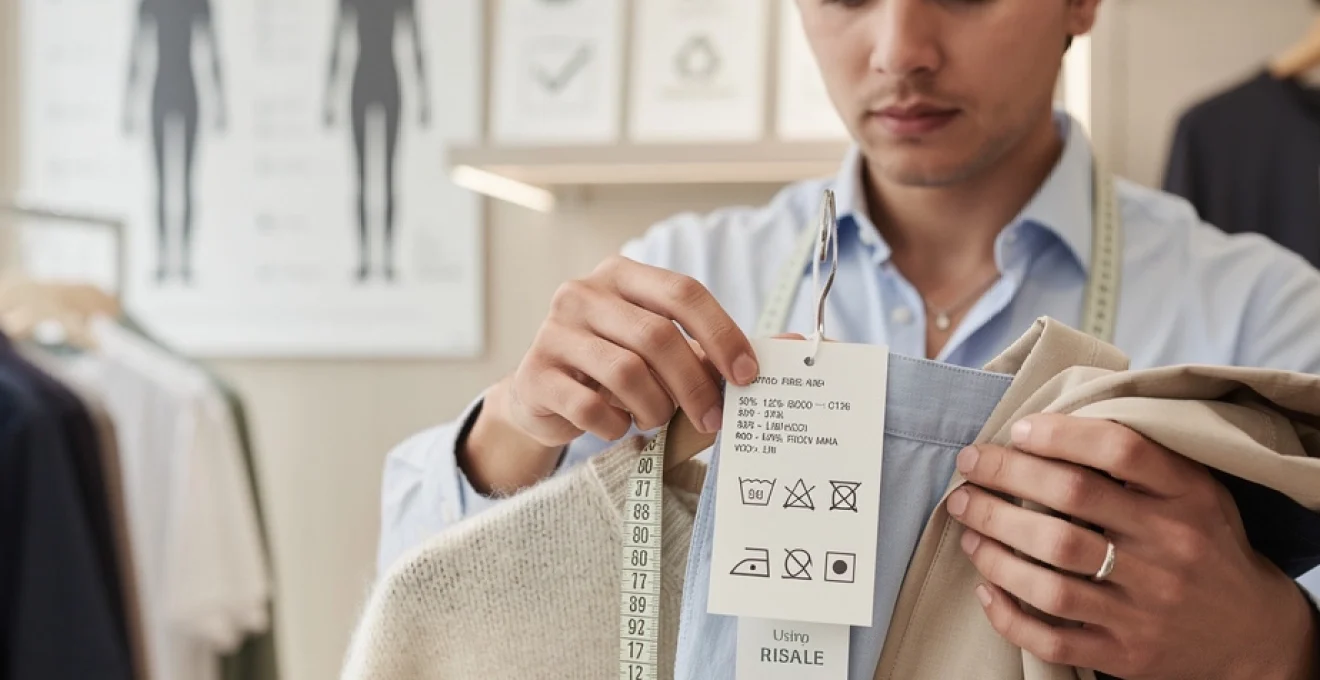
Every garment tells a story through its labels, and understanding these silent storytellers can transform your shopping experience from guesswork into informed decision-making. Clothing labels serve as comprehensive guides that reveal everything from fabric composition and care requirements to manufacturing origins and quality standards. These small but mighty tags hold the key to making purchases that align with your values, budget, and lifestyle needs.
The information contained within clothing labels has evolved significantly over the years, moving beyond simple brand identification to encompass detailed regulatory compliance and consumer protection measures. Modern shoppers increasingly rely on this labelled information to assess garment durability, environmental impact, and ethical production standards. Understanding how to decode these labels empowers you to make choices that reflect both practical considerations and personal values.
Label literacy has become particularly crucial in today’s fast-fashion environment, where marketing claims may not always align with product reality. Research indicates that approximately 41% of clothing items may contain inaccurate composition claims on their labels, making it essential to understand what to look for and how to interpret the information presented. This knowledge gap between consumer expectations and label accuracy highlights the importance of developing comprehensive label-reading skills.
Decoding fabric composition and fibre content labels
Fabric composition represents the foundation of any garment’s performance characteristics, durability, and care requirements. UK regulations mandate that all textile products clearly display their fibre content in descending order by weight percentage, with any fibre comprising more than 5% of the total weight requiring specific disclosure. This regulatory framework ensures consumer protection while enabling informed purchasing decisions based on material preferences and performance expectations.
The accuracy of composition claims has become increasingly scrutinised following investigations that revealed significant discrepancies between stated and actual fibre content. Advanced testing technologies, such as near-infrared spectroscopy used in Fibersort machines, have exposed inconsistencies in up to 41% of tested garments. These findings underscore the importance of understanding not just what labels claim, but also recognising potential variations in actual composition.
Natural fibres: cotton, linen, wool and silk identification
Natural fibres offer distinct advantages in terms of breathability, comfort, and environmental sustainability, though each type presents unique characteristics that influence both performance and care requirements. Cotton, the most widely used natural fibre, provides excellent moisture absorption and softness but may shrink if not pre-treated. High-quality cotton garments typically feature tighter weaves and longer staple fibres, resulting in improved durability and reduced pilling over time.
Linen stands out for its exceptional cooling properties and natural antimicrobial characteristics, making it ideal for warm-weather clothing. However, linen’s propensity to wrinkle and its initial stiffness before washing require specific care considerations. Wool varieties range from fine merino to robust tweeds, each offering different thermal properties and texture profiles. Silk provides unparalleled luxury and natural temperature regulation, though it demands gentle handling and specialised cleaning methods.
Synthetic materials: polyester, nylon and acrylic properties
Synthetic fibres dominate modern textile production due to their durability, cost-effectiveness, and performance characteristics. Polyester, accounting for approximately 60% of global fibre production, offers excellent colour retention, wrinkle resistance, and moisture-wicking properties when engineered appropriately. However, polyester’s environmental impact includes microplastic pollution, with synthetic garments releasing up to 1.5 million microfibres per wash cycle.
Nylon excels in strength and elasticity applications, making it essential for activewear, hosiery, and outerwear components. Its quick-drying properties and resistance to abrasion make it valuable for performance-oriented garments. Acrylic serves as a wool alternative, providing warmth without the weight while maintaining hypoallergenic properties. Understanding these synthetic properties helps you evaluate whether a garment’s performance claims align with your intended use and environmental considerations.
Blended fabrics: understanding percentage ratios and performance
Fabric blends combine multiple fibre types to optimise performance characteristics while balancing cost considerations. Cotton-polyester blends, representing the most common combination, typically feature ratios ranging from 50
–50 to 80–20. A higher cotton percentage usually improves comfort and breathability, while a higher polyester content enhances wrinkle resistance and drying speed. When you see a label stating “70% Cotton, 30% Polyester”, you can expect a fabric that feels mostly natural against the skin but needs less ironing than pure cotton. In contrast, a “50% Cotton, 50% Polyester” blend will often feel slightly slicker and may trap more heat, but it will typically be more durable and colourfast.
Performance blends are also common in activewear and outdoor clothing. Combinations like “90% Polyester, 10% Elastane” or “80% Nylon, 20% Elastane” provide stretch and recovery for sports leggings or swimwear, but they also tend to trap more odour and shed more microfibres. When reading blended fabric labels, think of the percentages as a performance recipe: each fibre contributes certain strengths and weaknesses. If you have sensitive skin, prioritise blends where natural fibres dominate; if you need easy-care workwear, a higher synthetic content may be more practical.
Speciality fibres: bamboo, modal and tencel characteristics
Speciality fibres like bamboo, modal and Tencel (lyocell) are often marketed as sustainable, silky-soft alternatives to conventional cotton and synthetics. On labels you might see them listed as bamboo viscose, modal or lyocell/TENCEL™. All three belong to the wider family of regenerated cellulose fibres, meaning they start from plant-based raw materials but are chemically processed into yarn. Their main attraction is a smooth hand-feel, excellent drape and good moisture management.
Modal, usually derived from beech wood, is known for its softness and resistance to shrinking and pilling, making it popular for underwear, T‑shirts and loungewear. Tencel (a branded form of lyocell) offers similar comfort but stands out for its closed-loop production process, where up to 99% of the solvent is recovered and reused. Bamboo fibres can be highly breathable and naturally antibacterial, but the environmental benefits depend heavily on processing methods; “mechanically processed bamboo” is rare and more eco-friendly than standard bamboo viscose. When you encounter these terms on clothing labels, it’s worth remembering that not all “eco” claims are equal—checking for credible certifications alongside fibre names can help you separate genuine innovation from greenwashing.
Care instructions and laundry symbols interpretation
Once you understand what a garment is made from, the next step is decoding how to look after it. Care labels condense a lot of technical information into a small set of laundry symbols and short phrases. These instructions aren’t just suggestions; they’re tested guidelines designed to preserve fit, colour and fabric integrity over the garment’s lifetime. Following them closely can significantly extend how long your clothes stay wearable, which in turn saves money and reduces environmental impact.
For many shoppers, care labels can look like a secret code: little tubs of water, triangles, circles and squares. Yet once you grasp the basic logic, they become much easier to interpret. Most labels in Europe and the UK follow harmonised symbol systems, so the same icons will apply across many brands. As you read care symbols before buying, ask yourself: does the recommended routine fit my lifestyle? A “hand wash only” jumper, for example, may not be ideal if you rely on quick machine cycles several times a week.
GINETEX international washing symbol standards
In most European countries, including the UK, care labels are based on the GINETEX system, an internationally recognised standard for textile care symbols. Under this system, each activity—washing, bleaching, drying, ironing and professional cleaning—has a dedicated pictogram. The aim is to provide clear, language‑independent guidance that remains consistent across borders and brands. You’ll usually see a sequence of symbols in a row, each describing one stage of the care process.
The basic washing symbol is a stylised washtub, sometimes containing a temperature or dots, while bleaching is represented by a triangle, drying by a square, ironing by a small iron shape and professional cleaning by a circle. Modifiers such as bars underneath, crosses through the symbol, or extra letters inside the circle refine the instructions. Recognising this common visual language makes it far easier to compare care requirements between garments while you’re still in the shop. If you regularly buy clothes online, quickly scanning product images for these symbols can help you avoid items that demand high‑maintenance routines.
Temperature guidelines: 30°C, 40°C and cold wash requirements
Temperature recommendations are among the most important details on a clothing label, as they have a direct impact on both garment longevity and energy use. Within the GINETEX system, the number inside the washtub symbol (such as 30, 40 or 60) indicates the maximum washing temperature in degrees Celsius. In some markets, you may instead see one to six dots, with more dots representing a hotter wash. Exceeding these temperatures can cause shrinking, colour bleeding or distortion, especially in natural fibres like wool and cotton.
For everyday laundry, many brands now recommend 30°C as the default, especially for mixed loads and colour garments. Lower temperatures are generally kinder to fibres and dyes, and according to several energy agencies, washing at 30°C can use up to 38% less energy than a 40°C cycle. A “cold wash only” symbol, sometimes accompanied by wording such as “cold gentle cycle”, signals particularly delicate fabrics or finishes that could be damaged by heat. When deciding whether to buy a piece, think about whether you’re willing to separate it into special low‑temperature loads, or whether a more robust fabric with a 40°C tolerance would better suit your habits.
Drying methods: tumble dry settings and air drying protocols
Drying instructions often receive less attention than washing temperatures, yet they can be just as critical. On labels, the drying symbol appears as a square; if there is a circle inside the square, tumble drying is allowed, with one or two dots indicating low or normal heat. A crossed‑out tumble symbol means the garment should never go in a tumble dryer. Many delicate or elasticated items, such as lace underwear, wool knits or technical sportswear, are better preserved through air drying.
Additional variations include a square with a horizontal line (dry flat), three vertical lines (line dry), or a curved line at the top (line dry in shade). These icons tell you not only whether to tumble, but also how to position the garment to prevent stretching or sun damage. From a practical standpoint, you might ask yourself: do I have space to dry this item flat or on a rack? If your living situation limits air‑drying options, favour labels that permit low‑heat tumble drying without restrictions. Remember that tumble dryers are among the most energy‑hungry appliances; whenever the care label permits it, air drying is both more sustainable and gentler on fibres.
Professional cleaning codes: dry clean only and wet cleaning
The circular symbol on a label refers to professional textile care, most commonly dry cleaning. A plain circle, sometimes accompanied by the words “Dry clean only”, indicates that the garment should be taken to a specialist rather than washed at home. Letters inside the circle (traditionally P or F) guide the cleaner on which solvents to use, while bars underneath the circle specify handling restrictions, such as reduced mechanical action or controlled moisture. Although you may not need to know all of these technicalities, spotting a prominent dry‑clean‑only marking is vital before you buy.
Some labels now reference professional wet cleaning as a more environmentally friendly alternative to classic dry cleaning. This method uses water and specialised detergents in carefully controlled processes and may appear on labels as additional wording or symbols. If you’re striving for a low‑maintenance wardrobe, frequent dry‑cleaning requirements might be a red flag, both for ongoing costs and environmental impact. Whenever you see a professional cleaning symbol, ask yourself whether you’re realistically going to follow that recommendation—if not, it may be wiser to choose a machine‑washable alternative.
Ironing classifications: heat settings and steam compatibility
The small iron icon on care labels gives essential information about how much heat a fabric can tolerate during pressing. One dot inside the iron signifies low heat (often suitable for synthetics), two dots recommend medium heat (typical for wool blends), and three dots indicate that high temperatures are safe (usually for linen and cotton). A crossed‑out iron symbol means you should avoid ironing altogether, as heat could damage coatings, prints or delicate textures. Some labels also specify “do not steam” for garments with particular finishes or structures.
In practice, this means you should match your iron’s setting to the highest permitted level on the label, rather than relying on guesswork. Steaming is generally gentler than direct ironing and may be a good alternative for many fabrics marked with low‑heat instructions. If you dislike ironing, pay attention to fabric composition as well as ironing symbols when you shop: polyester blends, certain knits and crinkle‑effect fabrics often require minimal pressing, while pure linen shirts will demand regular, high‑heat ironing to look crisp.
Size charts and fit specifications across brands
Beyond fabric and care, clothing labels play a crucial role in helping you find the right fit. Size indications can be surprisingly complex, varying not only by country but also by brand and even by product line. Misunderstanding these labels is one of the leading causes of returns in online fashion retail, with some studies estimating that up to 40% of returns are size‑related. Learning how to cross‑reference size labels with your own body measurements can minimise frustration and help you build a wardrobe that truly fits.
Many garments will show a primary size system (for example, UK 10 or M) alongside secondary equivalents such as EU or US sizing. Increasingly, brands also add basic measurement ranges on tags or online product pages, especially for jeans and tailored pieces. Before purchasing, taking a moment to compare the size label to a reliable size chart—and to your own tape‑measure numbers—can save you from compromising on comfort or style.
UK sizing standards versus international size conversions
In the UK, women’s clothing sizes typically range from 4 to 32, while men’s garments often use chest or waist measurements in inches (such as 38R or 32W). However, there is no single, legally enforced standard, so these numbers represent rough guides rather than fixed measurements. When you buy from international brands, labels may list multiple systems: UK 10 / EU 38 / US 6, for instance. Shoe labels commonly show UK, EU and US sizes side by side, but the conversions are not always identical between brands.
Understanding these differences is especially important when shopping online or when travelling. A UK 12 might roughly correspond to a US 8 or EU 40, but fit can differ significantly depending on cut and intended silhouette (slim, regular or relaxed). Many brands publish detailed conversion tables and fit notes on their websites; checking these against the size label before you buy will give you a more realistic expectation. If you frequently shop cross‑border, keeping a small note of your most successful sizes in different systems can be surprisingly helpful.
Body measurement guidelines: chest, waist and hip dimensions
While size letters and numbers give a quick reference, your actual body measurements are a far more reliable guide to choosing the right garment. Most brands base their size labels on three key points: chest or bust, waist and hips. For tailored items like formal shirts or suits, additional measurements such as neck circumference, inside leg or sleeve length may also appear on the tag. Labels sometimes include these in centimetres or inches, or reference them indirectly through codes like “34R” (34‑inch chest, regular length).
To use size labels effectively, measure your body with a flexible tape while standing naturally: wrap it around the fullest part of your chest, the narrowest part of your waist and the widest part of your hips. Then, compare these numbers to the brand’s published size chart rather than relying purely on your “usual size”. Think of your tape measure as a translator between your body and the label: it bridges the gap between vague size codes and real‑world fit. Over time, you’ll develop an intuitive sense of which measurements matter most for the types of garments you wear, whether that’s hip measurements for jeans or chest for blazers.
Brand-specific variations: marks & spencer, next and zara sizing
Even within the same country, different retailers interpret size labels in their own way. UK high‑street brands such as Marks & Spencer, Next and Zara offer a useful illustration of this. Marks & Spencer traditionally targets a slightly more classic fit, with many customers finding that garments run true to size or slightly generous. Next often balances between comfort and a contemporary silhouette, but sizing can vary across collections, particularly between casual and formal lines.
Zara, by contrast, is known for more fashion‑forward cuts and a slimmer fit profile, especially in women’s clothing. A shopper who wears a UK 10 in Marks & Spencer might need a UK 12—or even 14—in certain Zara pieces, despite what the labels suggest. Because of these brand‑specific variations, it pays to read any fit notes on hang tags or product pages, such as “slim fit”, “relaxed fit” or “runs small”. Over time, you’ll build a mental map of how different brands interpret their size labels, allowing you to choose more accurately without needing to try on multiple options each time.
Vanity sizing trends and authentic measurement practices
Vanity sizing—the gradual inflation of clothing sizes so that a larger garment is labelled as a smaller size—has become a widespread phenomenon over the last few decades. This means that a size 12 today may measure closer to what used to be a 14 or even 16, depending on the brand and garment type. For consumers, this trend can be psychologically appealing but practically confusing, especially when comparing older pieces in your wardrobe to new purchases. Vanity sizing complicates second‑hand shopping and makes cross‑brand comparisons more difficult.
The most reliable way to cut through this confusion is to focus on actual measurements rather than the label’s nominal size. When possible, check the garment’s flat measurements (like waistband width or garment length) provided in online listings or ask retailers for this information. Some sustainable and made‑to‑measure brands lead the way by offering transparent sizing systems based on body dimensions rather than arbitrary numbers. By prioritising labels and product descriptions that disclose clear measurement data, you effectively opt out of vanity sizing and choose clothes that fit your real body, not an inconsistent number.
Manufacturing origin and ethical production indicators
Country‑of‑origin labels—such as “Made in Bangladesh”, “Made in Turkey” or “Made in UK”—offer more than just geographical trivia. In many jurisdictions, including the UK and EU, this information is a legal requirement, originally intended to prevent misrepresentation and protect local industries. For today’s consumer, origin labels can also provide clues about labour conditions, regulatory oversight and supply‑chain transparency. However, it’s important to remember that a country name alone does not guarantee ethical or unethical production; responsible and irresponsible factories can exist side by side in any region.
Alongside the basic origin statement, some brands now include additional indicators of ethical production on tags or secondary labels. Phrases such as “Made in a Fair Trade Certified™ factory”, “SA8000 certified facility” or “member of the Ethical Trading Initiative” point to frameworks that set clear standards for worker treatment, wages and safety. You might also see QR codes or digital product passports emerging on labels, which you can scan to access more detailed information about the garment’s supply chain, including factory locations, material sourcing and audit results. When assessing origin labels before a purchase, look for these extra layers of detail—they can be a strong signal that a brand takes social responsibility seriously rather than using vague feel‑good slogans.
Quality certifications and textile standards verification
Beyond basic legal requirements, many garments carry additional marks or logos that certify compliance with specific quality, safety or sustainability standards. These certifications act as shorthand, allowing you to quickly assess whether a product meets criteria that matter to you—such as reduced chemical use, organic farming practices or recycled content. As with any label claim, the strength of a certification depends on who issues it, how it is verified and whether audits are regular and independent.
Common textile labels include OEKO‑TEX® STANDARD 100, which tests finished garments for harmful substances, and GOTS (Global Organic Textile Standard), which sets strict requirements for organic fibre content as well as social criteria along the supply chain. You may also encounter the Global Recycled Standard (GRS) for recycled materials, the Better Cotton Initiative (BCI) for more responsible cotton farming, or animal‑welfare labels such as Responsible Wool Standard (RWS). When you see these logos on hang tags or sew‑in labels, it’s worth taking a moment to consider what they certify: is it just the fibre content, or also dyeing, finishing and labour conditions? A quick search on your phone while shopping can clarify the scope of a standard and help you avoid overestimating what a particular badge actually guarantees.
Price point analysis and value assessment through label information
Label information can be a powerful tool for judging whether a garment’s price reflects genuine value or mainly branding. By cross‑referencing fabric composition, care requirements, origin details and any certifications, you gain a clearer picture of what you are paying for. A higher price may be justified by durable natural fibres, complex construction, ethical production schemes or robust quality standards—but it can just as easily stem from marketing and logo prestige. Asking “What does this label tell me about why this item costs what it does?” is a useful habit before committing to a purchase.
Start by matching the price to the fabric: is a premium tag attached to a simple high‑polyester blend that may pill or feel clammy after a season, or to a well‑constructed piece in high‑quality wool, linen or certified organic cotton? Next, consider the care label: garments that withstand 40°C washing and low‑heat tumble drying may offer better long‑term practicality than those requiring hand washing or dry cleaning, which add ongoing costs. Origin and certification labels can also factor into your assessment; you might be willing to pay more for a T‑shirt made from GOTS‑certified organic cotton in a transparently audited factory than for a similar‑priced, uncertified item with minimal provenance.
Ultimately, understanding clothing labels allows you to look beyond first impressions and price tags. Instead of asking “Is this cheap or expensive?” you begin to ask “Is this good value for what it offers?” Over time, these informed decisions tend to yield a wardrobe with fewer impulse buys, higher overall quality and pieces that align more closely with your ethics and lifestyle.