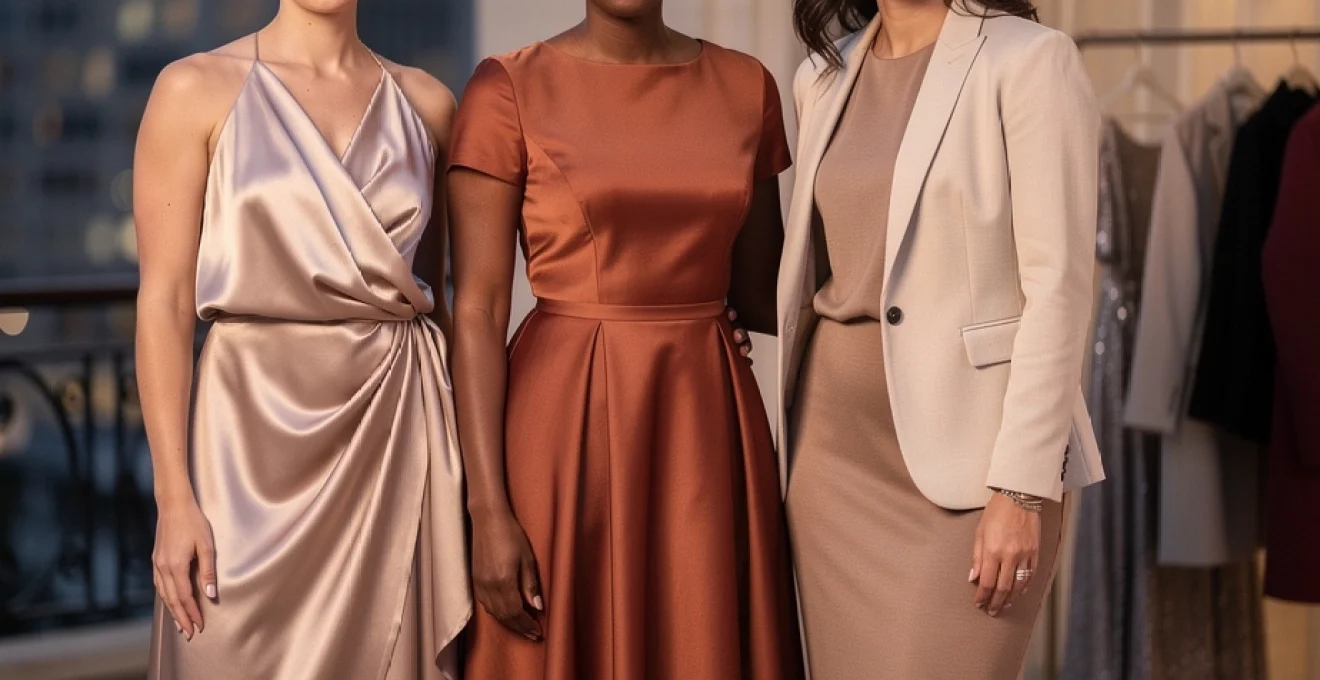
The art of occasion dressing has evolved significantly beyond traditional formal wear conventions, embracing a sophisticated approach that prioritises comfort without sacrificing elegance. Modern wardrobing demands pieces that transition seamlessly between contexts whilst maintaining an air of understated sophistication. This shift reflects a deeper understanding of contemporary lifestyle requirements, where versatility and ease of wear have become as important as aesthetic appeal. The key lies in selecting garments that possess inherent structural integrity and fabric quality, allowing the wearer to move with confidence and grace regardless of the occasion’s demands.
Effortless elegance emerges from the intersection of technical garment construction and intuitive styling choices. Rather than relying on overtly formal elements or excessive embellishment, contemporary occasion wear focuses on refined silhouettes, premium materials, and thoughtful design details that create impact through subtlety. This approach recognises that true sophistication often lies in restraint, where the quality of construction and the precision of fit speak louder than obvious displays of formality.
Fabric selection and drape mechanics for effortless elegance
The foundation of effortless occasion dressing begins with understanding fabric behaviour and its impact on both appearance and comfort. Premium textiles possess inherent qualities that create movement, structure, and visual appeal without requiring additional manipulation or styling intervention. The science behind fabric drape involves complex interactions between fibre composition, weave structure, and weight distribution that directly influence how a garment falls on the body and moves with natural gesture.
Contemporary occasion wear increasingly favours fabrics that demonstrate technical performance alongside aesthetic appeal. These materials must maintain their shape throughout extended wear periods whilst providing adequate breathability and flexibility for various activities. The most successful pieces utilise textiles that possess memory properties, returning to their original form after movement whilst adapting to the wearer’s body during wear.
Natural fibre properties: silk crepe de chine vs merino wool jersey
Silk crepe de Chine represents the pinnacle of natural elegance, offering exceptional drape characteristics through its twisted yarn construction and plain weave structure. The fabric’s unique texture creates subtle light reflection that adds visual interest without appearing ostentatious. Its natural protein fibres provide temperature regulation whilst maintaining a luxurious hand feel that enhances the wearing experience. The material’s ability to resist wrinkles during wear makes it particularly suitable for extended events where appearance maintenance is crucial.
Merino wool jersey offers contrasting benefits through its knitted construction and fine fibre diameter. The fabric’s inherent stretch provides superior comfort and movement accommodation whilst maintaining shape retention through multiple wear cycles. Its natural moisture-wicking properties and odour resistance make it particularly suitable for occasions requiring extended wear periods. The jersey’s ability to maintain structure without appearing rigid creates an ideal balance between formality and ease.
Ponte roma construction techniques for structured comfort
Ponte Roma fabric represents engineered comfort through its double-knit construction that combines the flexibility of jersey with the stability of woven fabrics. The technique involves interlocking two separate jersey layers to create a material with enhanced recovery properties and reduced transparency. This construction method eliminates the need for extensive lining whilst providing adequate coverage and structure for formal occasions.
The fabric’s unique properties allow for precision tailoring without the restrictions typically associated with structured garments. Seaming techniques can be simplified whilst maintaining professional finish quality, and the material’s inherent stretch accommodates natural body movement without compromising silhouette integrity. These characteristics make Ponte Roma particularly valuable for pieces intended for extended wear periods or dynamic occasions requiring frequent position changes.
Tencel and modal blend performance in formal settings
Modern occasion wear increasingly incorporates sustainable cellulose fibres that offer performance benefits traditionally associated with synthetic materials. Tencel and Modal blends provide exceptional moisture management whilst maintaining the visual appeal of natural fibres. The materials’ smooth surface texture creates a lustrous appearance that rivals silk whilst offering superior wrinkle resistance and care ease.
These innovative fibre combinations demonstrate particular effectiveness in warm weather occasions where traditional formal fabrics may prove uncomfortable. The breathable nature of the materials prevents overheating whilst their inherent antibacterial properties maintain freshness throughout extended wear periods. The fabrics’ ability to accept dye effectively also allows for rich colour saturation that enhances visual impact without appearing artificial.
Weight-to
Weight-to-drape ratios determine how a fabric behaves in motion, and understanding them is essential for special occasion dressing that feels effortless rather than over-constructed. Lightweight fabrics with a high drape coefficient, such as silk crepe or fine viscose, fall close to the body and respond to subtle movements, creating a fluid, elongating effect. Medium-weight fabrics with moderate drape, including Tencel twill or quality polyester crepe, offer more structure while still allowing soft movement through the hem and sleeves. Heavier materials such as ponte, scuba crepe, or dense satin require strategic pattern cutting and panel placement to avoid stiffness and to encourage controlled, architectural folds instead of bulk. When you assess a garment, noticing how the fabric hangs from the hanger and responds when gently swayed gives an immediate indication of how it will behave during real wear.
In practice, optimal weight-to-drape ratios vary by silhouette and occasion. A bias-cut midi dress for a cocktail event will perform best in a light to medium-weight fabric that skims, not clings, allowing you to sit, stand, and move without constant adjustment. A tailored jumpsuit designed for formal dinners or weddings benefits from a slightly heavier, more stable textile that smooths over the body and retains crisp lines throughout the evening. For garments intended to move from ceremony to dance floor, seeking fabrics that combine moderate weight with built-in stretch minimises creasing and maintains a polished finish. Thinking of fabric weight like the suspension on a car—too soft and it collapses, too hard and it jars—helps you recognise that the most elegant pieces sit in the balanced middle ground.
Silhouette engineering: architectural lines without rigidity
Beyond fabric choice, the cut of a garment determines whether special occasion dressing feels considered yet relaxed. Silhouette engineering focuses on how lines, seams, and proportions interact with the body to create structure without restriction. When executed well, these architectural lines provide the visual clarity of tailoring with the comfort of more casual pieces. The aim is not to force the body into a predetermined shape, but to collaborate with natural curves and planes so that the garment appears to belong to the wearer. This is where concepts borrowed from geometry, proportion, and even architecture become surprisingly practical wardrobe tools.
Effortless silhouettes often conceal sophisticated pattern work beneath their simplicity. Strategic seaming distributes volume where it is needed and removes bulk where it is not, enabling dresses and separates to glide over the body rather than grip. Angular elements, such as darts and princess seams, can be softened by fluid fabrics and curved panel lines to avoid a rigid, corporate feel. Meanwhile, carefully placed negative space—necklines, vents, slits, and cut-outs—introduces lightness and movement without compromising coverage or formality. Thinking of your outfit as a well-designed building, where flow and comfort are as important as façade, can help you evaluate whether a piece will truly feel effortless on the body.
A-line proportions and golden ratio applications
The A-line silhouette remains one of the most forgiving and universally flattering forms in occasion wear because it respects natural body balance. Starting closer to the body at the shoulders or waist and gradually releasing volume through the hem, an A-line dress or skirt directs the eye downward in a soft, continuous line. This shape is particularly effective for events where you will be photographed from multiple angles, as it maintains a clean outline in motion and at rest. The key to making it feel polished rather than casual lies in proportion: where the narrowest point sits and how quickly the volume expands.
Designers often reference the golden ratio—approximately 1:1.618—when determining visually harmonious relationships between bodice length and skirt length. For the wearer, this translates into practical guidelines: placing the waistline slightly above the natural waist can create the illusion of longer legs, while ensuring that the widest point of the skirt falls below the fullest part of the hip avoids a boxy effect. Midis that end at a point roughly two-thirds down the calf tend to appear more balanced than those cutting straight across the mid-calf. When trying an A-line piece, observe whether the upper segment (shoulder to waist) and lower segment (waist to hem) feel proportionate; if one visually dominates, subtle tailoring or heel height adjustments can restore equilibrium.
Wrap dress mathematics: asymmetrical balance points
Wrap dresses are often described as universally flattering, but their success actually hinges on a series of precise balance points. The angled front closure creates an asymmetrical line that draws the eye diagonally across the torso, visually narrowing the midsection and lengthening the body. For effortless special occasion dressing, the wrap angle and tie position must be carefully calibrated so the dress stays in place without constant readjustment. The most reliable designs place the tie at or slightly above the natural waist, anchoring the fabric where the torso naturally indents.
From a geometric perspective, the intersection where the V-neckline meets the wrap line forms a focal triangle. If this sits too low, the look can feel unstable and overly revealing; too high, and the neckline becomes constricting and heavy. Aim for a point that aligns with the mid-bust or the base of the sternum for a refined, elongated effect suitable for weddings, receptions, and cocktail events. Additionally, the overlap depth influences movement: a deeper wrap angle provides more coverage through the skirt, reducing the risk of gaping when walking or sitting. When assessing a wrap dress, sit, stand, and twist gently—if the fabric shifts but returns neatly to place, the underlying “mathematics” of the cut are working in your favour.
Bias-cut construction for natural body contouring
Bias-cut garments are engineered by positioning pattern pieces at a 45-degree angle to the fabric grain, unlocking a natural elasticity in woven textiles. This technique allows dresses and skirts to contour to the body’s curves without the use of heavy darts or rigid seams, resulting in a liquid, second-skin effect that still feels breathable. For special occasion dressing, a bias-cut slip dress or skirt offers a refined alternative to bodycon styles, skimming rather than clinging and creating subtle movement with every step. Because the fabric stretches diagonally, it can accommodate fluctuations in posture and small size variations without losing its line.
However, bias construction requires careful handling to avoid distortion. Quality pieces will feature stabilised necklines, armholes, and waist seams, often with hidden stay tapes or facing panels that prevent unwanted stretching over time. The hem should fall in a clean, even curve when the garment is worn, indicating that the fabric has been allowed to “rest” during production. For the wearer, the advantage is twofold: a bias-cut piece feels sensuous yet unforced, and it rarely requires aggressive shaping undergarments to look polished. When you want an evening outfit that communicates sophistication without visible effort, a well-cut bias dress in a mid-weight satin or crepe delivers precisely that balance.
Empire waist positioning and torso elongation principles
Empire waistlines—where the seam sits just below the bust—have long been associated with romantic, soft-focus dressing, but their effectiveness depends on exact placement. Set too high, and the silhouette can veer into juvenile territory; too low, and it becomes a standard waist seam. When correctly positioned, the empire line visually lengthens the lower body while creating a gentle, relaxed fit through the midsection, making it particularly suitable for formal events where ease and discretion are priorities. This can be especially beneficial for occasions involving long seated periods, such as ceremonies or gala dinners, where traditional fitted waists may start to feel restrictive.
The principle at work is optical division: by shifting the seam to roughly one-third of the distance between shoulder and natural waist, you compact the upper segment of the body and allow the skirt portion to read as a single, uninterrupted column. Soft gathers or pleats radiating from the empire seam distribute volume gracefully without adding bulk at the waist. For petite frames, this technique can counteract visually heavy skirts, while for taller wearers, it introduces a gentle softness that tempers height. When selecting empire-waist occasion wear, examine how the line intersects with your bust point; it should sit just beneath, following the natural curve rather than cutting across it.
Colour psychology and seasonal palette integration
Colour plays a crucial role in making special occasion dressing feel intentional yet effortless. The shades you choose influence not only how others perceive you, but also how comfortable and confident you feel across the event. Soft neutrals and muted tones—think dove grey, champagne, blush, and soft navy—tend to project quiet sophistication and are particularly well-suited to formal ceremonies or multi-generational gatherings. Bolder jewel tones, such as emerald, sapphire, and garnet, communicate confidence and presence without the harshness that sometimes accompanies primary colours under flash photography. Understanding colour psychology enables you to use tone as a subtle tool, rather than relying on embellishment or overtly dramatic silhouettes.
Integrating seasonal palettes creates harmony between your outfit and the event environment. Spring and summer occasions favour lighter, higher-value colours with a touch of warmth or clarity: soft pastels, fresh florals, and luminous brights photograph beautifully in natural daylight. Autumn and winter events, especially indoors or after dark, respond well to deeper, richer hues that hold their own under artificial lighting. When you align your outfit with the season—perhaps choosing a soft sage for a garden wedding or a deep berry for a winter reception—you appear naturally attuned to the setting. If you are unsure where to start, consider your own undertone: cooler complexions often shine in blue-based shades, while warmer undertones come alive in golden, olive, and terracotta palettes.
Multi-functional garment systems and capsule wardrobe theory
Effortless occasion wear becomes far easier to achieve when your wardrobe is built on a multi-functional foundation rather than one-off purchases. Capsule wardrobe theory suggests curating a concise selection of garments that can be combined in multiple ways, offering a wide range of outfits from a relatively small number of pieces. Applied to special occasions, this means prioritising versatile dresses, tailored separates, and refined outer layers that transition between events with minimal styling changes. Instead of owning a separate dress for every invitation, you invest in silhouettes and fabrics that can be dressed up or down through accessories, footwear, and layering.
This systems-based approach mirrors how you might plan a travel capsule: each piece should serve more than one purpose, coordinate with others, and reflect your core style rather than a single trend. A sleek midi dress that works with sandals and a basket bag for a daytime celebration can be reimagined with metallic heels and a structured blazer for evening. Wide-leg trousers in a seasonless fabric, paired with a silk camisole for a cocktail party, can later underpin a knit and boots for a smart work look. When you think in terms of modules—dress + blazer, trousers + statement top, jumpsuit + shawl—you reduce last-minute stress and ensure that even spontaneous invitations feel manageable.
Day-to-night transition pieces: blazer styling versatility
The tailored blazer remains one of the most powerful tools in special occasion capsule dressing, primarily because of its transformative capabilities. Worn over a minimal slip dress, it instantly introduces structure and formality, making an otherwise simple piece event-appropriate. The same blazer, shrugged off later in the evening, reveals the softer under-layer and shifts the mood to something more relaxed. Choosing a blazer in a neutral, low-sheen fabric—such as matte crepe, refined wool blend, or structured ponte—ensures it coordinates across existing dresses and separates without competing for attention.
For true day-to-night versatility, pay attention to cut and length. A slightly longer, softly tailored blazer that skims the hip bones works well over midi dresses and wide-leg trousers, elongating the torso without chopping the body line. Subtle design details, like peak lapels or a softly cinched waist, create an elegant, occasion-ready look without crossing into corporate territory. You might wear it over a silk camisole and tailored trousers for an afternoon reception, then later push up the sleeves, add statement earrings, and switch to a strappy heel for a cocktail-ready outfit. In this way, a single blazer functions as both a styling anchor and a formality dial you can turn up or down as needed.
Midi dress adaptation techniques across occasion spectrums
The midi dress is arguably the most adaptable silhouette for special occasion dressing, sitting at a calf-skimming length that works for both daytime and evening events. Its inherent modesty makes it suitable for formal settings, while its styling potential allows for significant personality. To move a midi across different occasion spectrums, you adjust three key variables: footwear, outerwear, and accessories. For a daytime garden party, pairing a floral or softly coloured midi with block-heel sandals and a lightweight wrap strikes an easy, approachable tone. The same dress, worn with heeled mules, a metallic belt, and polished jewellery, becomes an elevated choice for a semi-formal dinner.
Fabric and cut also influence adaptability. Clean, column-like midis in solid colours lend themselves to multiple contexts, acting as a canvas for changing accessories. Wrap midis and pleated skirts introduce more movement, which can soften the look for romantic or bohemian-leaning events. If you anticipate wearing one dress to several different occasions, consider a design that balances interest and simplicity: perhaps a subtle asymmetric hem, a refined print in neutral tones, or an elegant neckline that works with and without a necklace. This ensures that with each re-style, the dress feels fresh rather than overly familiar.
Statement accessories as wardrobe multipliers
Accessories function as multipliers within a special occasion capsule wardrobe, allowing a limited number of garments to generate numerous distinct outfits. A single dress can appear dramatically different when paired first with minimalist gold hoops and nude sandals, then with sculptural earrings, a bold cuff, and metallic heels. The key is to curate a small, high-impact selection of statement pieces that align with your personal style and work across multiple colour palettes. Think in terms of categories—earrings, cuff or bracelet, belt, evening bag—rather than amassing numerous similar items that compete with each other.
When you approach accessories strategically, you effectively “code-switch” your outfit’s message without changing the underlying garments. For instance, a structured leather belt worn over a fluid midi dress defines the waist and sharpens the look for a city reception, while a crystal-embellished waist chain over the same dress transforms it into a more overtly festive option. A compact clutch with subtle hardware may serve you across weddings, graduations, and theatre evenings, while a single pair of refined drop earrings can become your go-to finishing touch. By viewing accessories as modular upgrades rather than afterthoughts, you expand your special occasion dressing options exponentially.
Layering strategies for temperature and formality variables
Layering is one of the most effective ways to maintain comfort and appropriate formality throughout a long event, especially when moving between indoor and outdoor spaces. The challenge lies in adding and removing layers without disrupting the overall elegance of your outfit. Light, structured layers such as cropped jackets, shawl-collar blazers, and tailored capes offer coverage without bulk, preserving the line of your dress or jumpsuit. For example, a sleek tuxedo-inspired jacket over a satin slip introduces a refined, evening-ready mood; when removed, the look softens for dancing or more relaxed socialising.
Temperature-responsive fabrics such as fine merino, silk blends, and lightweight technical wools are particularly valuable here, as they regulate warmth without appearing overtly practical. In transitional seasons, consider a sheer organza overlay or longline chiffon duster for an ethereal effect that also protects against a cool breeze. Formality can be adjusted similarly: adding a structured layer elevates a simple dress for the ceremony, while switching later to a soft pashmina or wrap signals a more informal phase of the event. By planning your layers as integral components rather than last-minute additions, you ensure that each configuration—jacket on, jacket off—still looks intentional and cohesive.
Styling techniques for sophisticated understatement
Sophisticated understatement in special occasion dressing is about refining rather than amplifying. Instead of relying on dramatic cuts or lavish embellishment, the focus shifts to proportion, texture, and subtle contrast. One effective technique is to pair a single focal element—a distinctive neckline, a sculptural sleeve, or a striking colour—with otherwise pared-back styling. This ensures that the eye has a clear point of interest without feeling overwhelmed. You might, for example, choose a sleek column dress in a saturated jewel tone and keep accessories minimal, allowing the hue and silhouette to carry the statement.
Texture mixing provides another route to quiet impact. Combining matte and lustrous surfaces—such as a crepe dress with satin shoes, or a silk blouse with a softly brushed wool skirt—adds depth without the visual noise of prints or heavy decoration. Monochrome dressing can be especially effective here: dressing head-to-toe in one colour family elongates the body and reads as intentional, while subtle shifts in texture and shade maintain visual interest. Finally, grooming and beauty choices play a critical supporting role. A polished but not overdone hairstyle, soft yet defined makeup, and well-maintained footwear signal care and intention, reinforcing the sense that your elegance is considered but never forced.
Celebrity style analysis: red carpet effortlessness decoded
Red carpet events offer a masterclass in special occasion dressing that appears effortless, even when the underlying preparation is extensive. When we study consistently well-dressed celebrities, a pattern emerges: the most successful looks are often deceptively simple, relying on impeccable fit, harmonious colour choices, and disciplined restraint in styling. A floor-length column gown in a single shade, tailored precisely to the wearer’s proportions, frequently has more impact than a heavily embellished dress with a less considered cut. This principle carries directly into real-life occasions—when in doubt, refine the basics before adding complexity.
Another recurring feature of “effortless” celebrity style is alignment between outfit and personal aesthetic. The looks that resonate most are those that feel authentic to the wearer, whether that means minimalist tailoring, soft romantic lines, or bold, directional fashion. You can borrow this approach by identifying three personal style descriptors—perhaps “clean, feminine, modern” or “romantic, tailored, relaxed”—and using them as a filter for occasion wear decisions. Celebrities and stylists also pay close attention to the relationship between dress and accessories: often, one element leads and the others support. A statement gown might be paired with barely-there jewellery and neutral makeup, while a simple slip dress becomes the canvas for dramatic earrings or a sculptural cuff.
Finally, red carpet ease is underpinned by practical considerations that are just as relevant to weddings or milestone celebrations. Hidden support, secure fastenings, and appropriate underpinnings allow the wearer to move, sit, and interact without worrying about slippage or discomfort—freedom that translates directly into visible confidence. Footwear is chosen not only for appearance but for walkability across the event’s actual surfaces, from carpet to marble or grass. When you apply the same criteria—fit, authenticity, controlled focal points, and genuine comfort—to your own occasion outfits, you effectively decode red carpet polish into a set of achievable, everyday strategies.