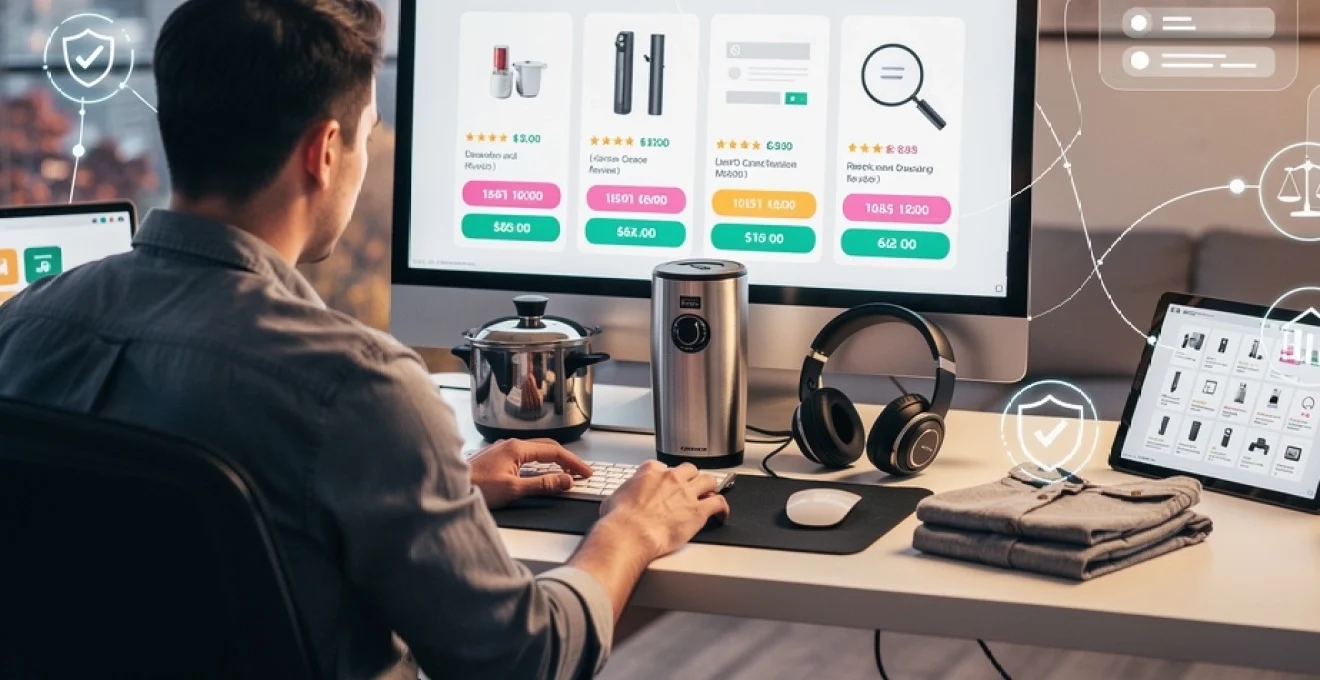
In today’s competitive marketplace, consumers face an increasingly complex challenge: securing exceptional value without sacrificing product quality or service standards. The proliferation of digital commerce platforms, combined with sophisticated pricing algorithms and dynamic inventory management systems, has created both unprecedented opportunities and significant pitfalls for discerning buyers. Modern consumers must navigate through countless promotional offers, seasonal discounts, and flash sales whilst maintaining rigorous quality standards that ensure long-term satisfaction and value retention.
The traditional notion that lower prices inevitably signal inferior quality has become increasingly outdated, particularly as supply chain optimisation and direct-to-consumer business models have fundamentally altered pricing structures across multiple industries. Today’s savvy consumers recognise that strategic purchasing decisions require sophisticated analytical approaches, combining advanced price monitoring technologies with comprehensive quality assessment methodologies to identify genuine value propositions in an overcrowded marketplace.
Strategic price comparison methodologies across digital platforms
Contemporary price comparison requires a systematic approach that extends far beyond simple manual searches across individual retailer websites. The most effective strategies leverage automated monitoring systems, algorithmic price tracking, and comprehensive market analysis tools to identify optimal purchasing opportunities. Professional buyers and informed consumers increasingly rely on sophisticated technological solutions that provide real-time pricing intelligence across multiple channels simultaneously.
Effective price comparison methodologies must account for numerous variables including shipping costs, return policies, warranty provisions, and seller reputation metrics. The complexity of modern e-commerce pricing structures means that the lowest advertised price rarely represents the most cost-effective purchasing decision when all associated factors are properly evaluated. Successful deal acquisition requires understanding the intricate relationships between pricing transparency, market competition, and seasonal demand fluctuations.
Browser extension tools: honey, InvisibleHand, and PriceBlink performance analysis
Browser extension tools have revolutionised the price comparison landscape by providing automated coupon application and real-time price monitoring capabilities directly within existing shopping workflows. These tools operate by scanning millions of promotional codes and comparing prices across extensive retailer databases, delivering immediate savings opportunities without requiring additional research time or manual verification processes.
Honey’s algorithm processes over 30 million coupon codes daily, achieving an average savings rate of 17% for users who successfully apply promotional discounts during checkout. The platform’s integration with major e-commerce sites enables automatic coupon testing, eliminating the frustration associated with expired or invalid promotional codes. However, effectiveness varies significantly across product categories, with electronics and fashion items showing higher success rates compared to specialty or niche products.
InvisibleHand focuses primarily on price comparison rather than coupon application, providing pop-up notifications when identical or similar products are available at lower prices from alternative retailers. The tool’s strength lies in its comprehensive retailer network and ability to identify cross-platform pricing discrepancies that might otherwise go unnoticed. Performance analysis indicates that users typically save between 12-25% when acting on InvisibleHand recommendations, though savings potential depends heavily on product category and market competition levels.
Api-driven price monitoring using keepa and CamelCamelCamel data
Advanced price monitoring systems utilise Application Programming Interface (API) connections to track pricing history, inventory levels, and market trends across extended timeframes. These platforms provide sophisticated analytics that reveal optimal purchasing windows based on historical pricing patterns, seasonal demand cycles, and supplier inventory management strategies.
Keepa’s comprehensive database contains over 4 billion products with pricing history extending back several years, enabling users to identify recurring discount patterns and avoid purchasing during artificially inflated pricing periods. The platform’s alert system can notify users when products reach predetermined price thresholds, allowing strategic timing of major purchases. Historical data analysis through Keepa reveals that electronics typically experience 20-30% price reductions during specific seasonal periods, whilst home goods show more consistent pricing with smaller but more frequent promotional discounts.
CamelCamelCamel specialises specifically in Amazon marketplace monitoring, providing detailed analytics on price fluctuations, seller changes, and availability status. The service tracks over 100 million products continuously, identifying pricing anomalies and alerting users to significant price drops. Research indicates that products monitored through CamelCamelCamel achieve average savings of 22% compared to immediate purchase decisions, with consumer electronics and books showing the highest discount potential.
Cross-platform search engine optimisation for deal discovery
Effective
effective cross-platform deal discovery starts with understanding how search engines index and surface product offers across different marketplaces. Instead of relying on a single retailer’s search bar, you can leverage Google Shopping, Bing Shopping, and niche comparison engines to index prices from hundreds of stores simultaneously. By combining generic queries (such as “best price 4K monitor 27 inch”) with more specific product identifiers (exact model numbers or EAN/UPC codes), you dramatically increase your chances of finding the lowest total cost, including delivery and taxes.
From an optimisation perspective, you benefit when retailers structure their product pages correctly for search engines: descriptive titles, structured data (schema.org Product markup), and transparent pricing information make it easier for comparison engines to match identical products. As a consumer, this means that searching with precise attributes – brand, capacity, year, and even colour – acts as a form of “personal SEO”, refining results to those with clearly labelled, comparable listings. Over time, you will notice that retailers who invest in robust SEO and clean data often also compete aggressively on price and transparency.
Another underused tactic involves filtering and sorting results across several platforms in parallel. For instance, you might start on Google Shopping sorted by “lowest price including tax and shipping”, then cross-check the top three offers directly on the retailers’ own sites and on marketplaces such as Amazon or eBay. This cross-platform validation helps you detect misleading “from” prices, hidden shipping fees, or marketplace sellers with poor performance metrics. The goal is not just to find the cheapest offer, but to identify the best value deal across all digital platforms.
Mobile application aggregators: shopkick, flipp, and rakuten integration strategies
Mobile deal aggregation apps consolidate promotions, coupons, and cashback offers into a single interface, turning your smartphone into a central hub for finding the best deals without compromising quality. Shopkick, for example, rewards users with “kicks” (points) simply for visiting partner stores, scanning product barcodes, or making purchases. When combined with in-store promotions, manufacturer coupons, and loyalty schemes, these rewards can translate into effective price reductions of 5–15% on everyday items while you keep buying your preferred brands.
Flipp specialises in digitising local flyers and weekly circulars, allowing you to compare supermarket and retail offers in your area without manually checking multiple websites or paper inserts. By searching for specific products – such as “laundry detergent” or “AA batteries” – you can immediately see which nearby stores run promotions, then stack these in-store discounts with manufacturer coupons or digital loyalty rewards. This approach is particularly powerful for household essentials, where quality differences matter and bulk-buying during optimal promotional windows can produce significant annual savings.
Rakuten (formerly Ebates) operates as a cashback aggregator, offering a percentage of your spend back when you shop through its affiliate links. Effective integration strategies involve making Rakuten the default starting point for your online shopping sessions, using its browser extension to capture cashback automatically, and combining that cashback with existing store discounts, coupon codes, and card-based rewards. When used systematically, it is not unusual to achieve layered savings of 20–30% on high-quality products, proving that deep discounts do not necessarily require trading down to inferior alternatives.
Quality assessment frameworks for consumer purchase decisions
Finding the lowest price is only half the equation; the more important question is whether the product or service will perform reliably over its intended lifespan. A structured quality assessment framework helps you move beyond superficial indicators such as branding or packaging and instead evaluate objective markers of safety, durability, and long-term value. By combining third-party certifications, authentic consumer feedback, warranty analysis, and material specifications, you build a multi-layered view of quality that significantly reduces the risk of costly mistakes.
For higher-value purchases, it is useful to think like a professional buyer: assess total cost of ownership rather than just the sticker price. This means factoring in expected lifespan, maintenance requirements, energy consumption, and potential resale value, alongside the likelihood of defects or performance issues. When you systematically evaluate these elements before committing, you are far less likely to fall for aggressive promotions on products that underperform or fail prematurely.
Third-party certification verification: CE marking, FCC compliance, and ISO standards
Third-party certifications serve as a critical first filter in any quality assessment framework, especially for electronics, electrical appliances, and safety-related products. The CE marking in the European Economic Area, for instance, indicates that a product meets essential health, safety, and environmental protection requirements. While CE is largely a self-declaration system, reputable manufacturers maintain detailed technical documentation and often undergo independent testing, which can be verified on request for higher-risk items.
In North America, FCC compliance is essential for electronic devices that emit radiofrequency energy, such as smartphones, routers, or Bluetooth speakers. Authentic FCC certification can usually be checked using the product’s FCC ID on the official FCC database, helping you distinguish between compliant, well-engineered devices and potentially unsafe imports. Products that lack appropriate markings or present suspiciously vague documentation are clear red flags, regardless of how attractive the price may appear.
ISO standards provide a further layer of assurance by focusing on manufacturing processes and management systems rather than individual products. For example, ISO 9001 certification demonstrates that a company adheres to internationally recognised quality management principles, while ISO 14001 focuses on environmental management. Although ISO certification does not guarantee perfection, it signals that the manufacturer follows structured procedures for design, production, and continual improvement – all of which correlate strongly with consistent product quality.
Consumer review authentication through fakespot and ReviewMeta analysis
Online reviews are among the most powerful tools for assessing real-world performance, yet they are increasingly polluted by fake or incentivised feedback. Platforms such as Fakespot and ReviewMeta analyse review patterns, linguistic signatures, and reviewer behaviour to identify suspicious activity and provide an adjusted “trust score”. By running product listings through these tools, you can filter out manipulated ratings and form a more accurate view of how an item performs in everyday use.
Practical use of these platforms involves more than simply glancing at an adjusted grade; you should also read a sample of detailed reviews, especially those around the three-star mark. Mid-range reviews often highlight both strengths and weaknesses, offering a nuanced perspective that pure star averages cannot capture. When Fakespot or ReviewMeta significantly downgrades a product’s rating, or highlights a surge in low-quality reviews from new accounts, it is often wise to look for a better-vetted alternative, even if that means paying a small premium.
Combining review authenticity tools with platform-level checks further refines your assessment. For example, prioritising “verified purchase” reviews, filtering for your region, and comparing feedback across multiple marketplaces helps you detect systemic issues such as poor build quality, inaccurate sizing, or unreliable after-sales support. This layered approach ensures that your perception of quality is grounded in real, verifiable user experiences rather than marketing claims or artificially inflated ratings.
Warranty terms evaluation and extended protection plan cost-benefit analysis
Warranty provisions are a direct signal of how confident a manufacturer is in its product. A comprehensive two- or three-year warranty on electronics, for example, often indicates robust design and testing processes, whereas minimal or convoluted coverage can suggest cost-cutting or limited durability. When comparing deals, it is therefore essential to evaluate not only the length of the warranty, but also what it actually covers: parts, labour, on-site repairs, or only depot service with lengthy turnaround times.
Extended protection plans can sometimes offer additional value, but they are not universally beneficial. A basic cost-benefit analysis should consider the incremental price of the plan, the likelihood of failure beyond the standard warranty, and the potential repair or replacement cost. For many mid-priced items, especially those with strong reliability records, self-insuring by setting aside a small contingency fund may be more cost-effective than purchasing multiple overlapping protection plans.
However, for high-ticket purchases where repair costs are substantial – such as premium laptops, large appliances, or complex electronics – a well-structured extended warranty from a reputable provider can provide meaningful risk mitigation. The key is to treat warranties as part of the overall value equation rather than an afterthought: a slightly more expensive product with a significantly better warranty may, in practice, be the best deal you can secure.
Material composition analysis and durability testing methodologies
Understanding what a product is made from, and how those materials perform under real-world conditions, is central to assessing quality. For textiles, this might involve distinguishing between natural fibres, synthetic blends, and performance fabrics, and then checking for independent tests on colour fastness, pilling resistance, or seam strength. For cookware, you might evaluate the grade of stainless steel, the thickness of the base, or the quality of non-stick coatings, all of which impact longevity and safety.
Durability testing methodologies, often referenced in technical documentation or independent reviews, provide additional insight. Standards such as Martindale abrasion tests for upholstery, IP ratings for water and dust resistance in electronics, or drop tests for mobile devices all give objective benchmarks you can compare across brands. When such data is unavailable or vague, that absence itself can be informative, signalling that the manufacturer may not be prioritising rigorous quality validation.
For everyday consumers, a practical approach involves combining manufacturer specifications with independent test results from reputable organisations, such as consumer advocacy groups or specialist review sites. Analogous to checking the “nutritional label” on food, reading the material specs and test data helps you understand what you are really buying beneath the surface. Over time, this habit reduces the likelihood of being seduced by low prices on items that will need replacing far sooner than a slightly more expensive, better-engineered alternative.
Seasonal pricing cycles and temporal purchase optimisation
Price is not a fixed attribute; it fluctuates throughout the year in response to demand cycles, inventory targets, and promotional calendars. By aligning your purchases with known seasonal pricing patterns, you can often secure premium products at substantial discounts without any reduction in quality. For instance, consumer electronics typically see aggressive price drops around Black Friday, Cyber Monday, and back-to-school periods, while home appliances are frequently discounted during spring clearance events or immediately after major product refreshes.
Understanding these cycles allows you to plan major purchases strategically. If you know you will need a new laptop within the next 12 months, monitoring prices for several months using tools like Keepa or CamelCamelCamel, and timing your purchase around expected sale periods, can easily save 15–30% off the usual retail price. Similarly, fashion and outdoor gear often follow end-of-season clearance patterns, where high-quality items are marked down significantly once retailers need to free up space for new collections.
Temporal optimisation extends beyond annual cycles to encompass monthly and even weekly dynamics. Many retailers adjust prices based on end-of-quarter sales targets or weekend traffic expectations, and airlines or travel services employ complex yield management algorithms that respond to booking patterns. While it is impossible to predict every fluctuation, being flexible about timing – and using historical price data and fare alerts – dramatically improves your odds of landing the best deal without sacrificing the calibre of the product or service you choose.
Retailer-specific deal acquisition strategies
Different retailers deploy distinct promotional strategies, loyalty programmes, and price-matching policies, all of which you can use to your advantage when seeking the best deals. Large omnichannel retailers may offer exclusive online-only discounts, in-store clearance racks, and app-based coupons concurrently, while specialist boutiques might be more open to direct negotiation, bundled offers, or loyalty discounts for repeat customers. Understanding how each retailer operates is akin to learning the “house rules” before you start playing a game.
One powerful tactic involves combining retailer price-matching guarantees with external promotions. If a store promises to beat any competitor’s advertised price, you can locate the best public offer elsewhere, then request a match or small additional discount while still benefiting from that retailer’s superior return policy or service quality. This approach enables you to secure competitive pricing and high service standards simultaneously, rather than choosing between them.
For online marketplaces, retailer-specific strategies often focus on seller selection and fulfilment options. Prioritising products sold and shipped by the platform itself, or by top-rated third-party sellers with robust feedback histories, reduces the risk of receiving counterfeit or substandard goods. In many cases, you may decide that paying slightly more to buy from a highly rated seller with reliable fulfilment and clear return rights represents a smarter deal than chasing the absolute lowest price from an unverified source.
Financial risk mitigation through payment method selection
The way you pay for a purchase can significantly influence both the effective price you pay and the level of protection you enjoy if something goes wrong. Thoughtful payment method selection is therefore an integral part of finding the best deals without compromising quality or exposing yourself to unnecessary financial risk. By optimising cashback rewards, leveraging purchase protection, and understanding dispute resolution mechanisms, you can improve value and security concurrently.
In practical terms, this means treating your payment card as more than just a means of transaction; it becomes a tool for cost optimisation and risk management. The most effective approach is to align specific cards with particular spending categories – using one for groceries and everyday essentials, another for travel and large online purchases – so that you maximise rewards and coverage where they matter most. At the same time, you should remain mindful of budgeting and debt management, ensuring that reward-seeking behaviour never leads to overspending.
Cashback credit card optimisation: chase freedom unlimited vs amex blue cash
Cashback credit cards can effectively reduce the net cost of your purchases when used strategically and paid in full each month. The Chase Freedom Unlimited card, for instance, offers a flat-rate cashback on most purchases with elevated rewards for categories such as dining and certain travel bookings. For consumers who value simplicity and make a wide variety of transactions across categories, this kind of broad-based card can provide steady savings without the need for meticulous category tracking.
The Amex Blue Cash family of cards, by contrast, often concentrates higher reward rates on specific everyday categories such as supermarkets, fuel, or selected streaming services. For households with significant grocery or commuting expenses, optimising spend through such category-boosted cards can yield higher effective discounts than a flat-rate alternative. The key is to analyse your own spending profile: where do you actually spend the most, and which card structure converts that behaviour into the greatest net cashback?
Regardless of which card you choose, it is essential to view cashback as a bonus, not a justification for additional spending. Carrying a balance and incurring interest charges will quickly erode any savings gained through rewards. Used wisely, however, targeted cashback optimisation can reduce the effective cost of high-quality purchases by several percentage points, complementing your broader efforts to secure the best deals without trading down on standards.
Purchase protection insurance coverage analysis
Beyond rewards, many premium and mid-tier payment cards include purchase protection benefits that can significantly reduce your exposure to product defects, accidental damage, or theft shortly after purchase. These policies typically cover eligible items for a defined period – often 90 to 120 days – and may reimburse repair or replacement costs up to a specified limit. When comparing deals, factoring in this invisible layer of insurance can tip the balance in favour of one payment method over another.
Some cards also extend the manufacturer’s warranty by an additional year or more, effectively enhancing the durability assurance you receive at no extra cost. For high-value electronics and appliances, this extended warranty feature can represent substantial added value, especially if the retailer’s own extended plans are expensive or restrictive. Analysing these benefits in advance allows you to align each major purchase with the card that provides the most relevant protections, rather than choosing purely on the basis of cashback rates.
However, it is important to understand the limitations and exclusions of purchase protection and extended warranty programmes. Items such as used goods, consumables, or certain categories of personal property may be excluded, and claims processes can be time-consuming if documentation is incomplete. Taking a few minutes to register major purchases, store digital copies of receipts, and familiarise yourself with claim requirements ensures that these protections deliver real value when you need them.
Dispute resolution mechanisms for online transaction security
Online transactions inherently carry some risk, ranging from delivery issues and misrepresented products to outright fraud. Selecting payment methods with robust dispute resolution mechanisms is therefore essential for protecting yourself while pursuing the best deals. Major card networks typically offer chargeback rights, allowing you to challenge unauthorised or problematic transactions and, where appropriate, recover funds when a merchant fails to deliver as promised.
Digital wallets and payment intermediaries add another layer of security, often masking your card details from merchants and providing their own buyer protection policies. While these services may sometimes add small fees for certain transactions, the additional safeguards can be worthwhile when dealing with unfamiliar retailers or cross-border purchases. The ability to escalate disputes through a recognised intermediary can deter bad actors and encourage faster resolution of legitimate complaints.
From a strategic perspective, you can think of dispute resolution capabilities as a form of “quality backstop”: even when a deal appears attractive and your preliminary checks look good, there is always a small chance that something will go wrong. Using payment methods with strong consumer protection means that you are not relying solely on a seller’s goodwill. Instead, you have institutional support that helps ensure you either receive the quality you paid for or recover your money.
Supply chain transparency and ethical sourcing verification
In recent years, many consumers have begun to view quality not only in terms of durability and performance, but also in relation to ethical sourcing and environmental impact. A product that is inexpensive yet produced under questionable labour conditions or with significant environmental harm may not align with your broader definition of “value”. As supply chains grow more complex, verifying ethical practices requires both scrutinising brand disclosures and consulting independent assessments.
Brands that prioritise transparency often publish detailed information about their suppliers, auditing practices, and sustainability goals. Third-party certifications such as Fairtrade, Rainforest Alliance, or B Corp status provide additional assurance that a company’s claims are backed by independent evaluation. While these labels are not perfect, they act as useful signals when you are comparing products at similar price points and want to ensure that your savings do not come at an unacceptable ethical cost.
Independent platforms and watchdog organisations can further support your verification efforts by aggregating data on company behaviour, supply chain risks, and environmental performance. By consulting these resources before making major purchases – especially in sectors such as fashion, electronics, and food – you integrate ethical considerations into your definition of the “best deal”. In practice, this may mean choosing a slightly higher-priced product from a transparent, responsible brand over a cheaper alternative with opaque sourcing, trusting that long-term value encompasses both performance and principles.