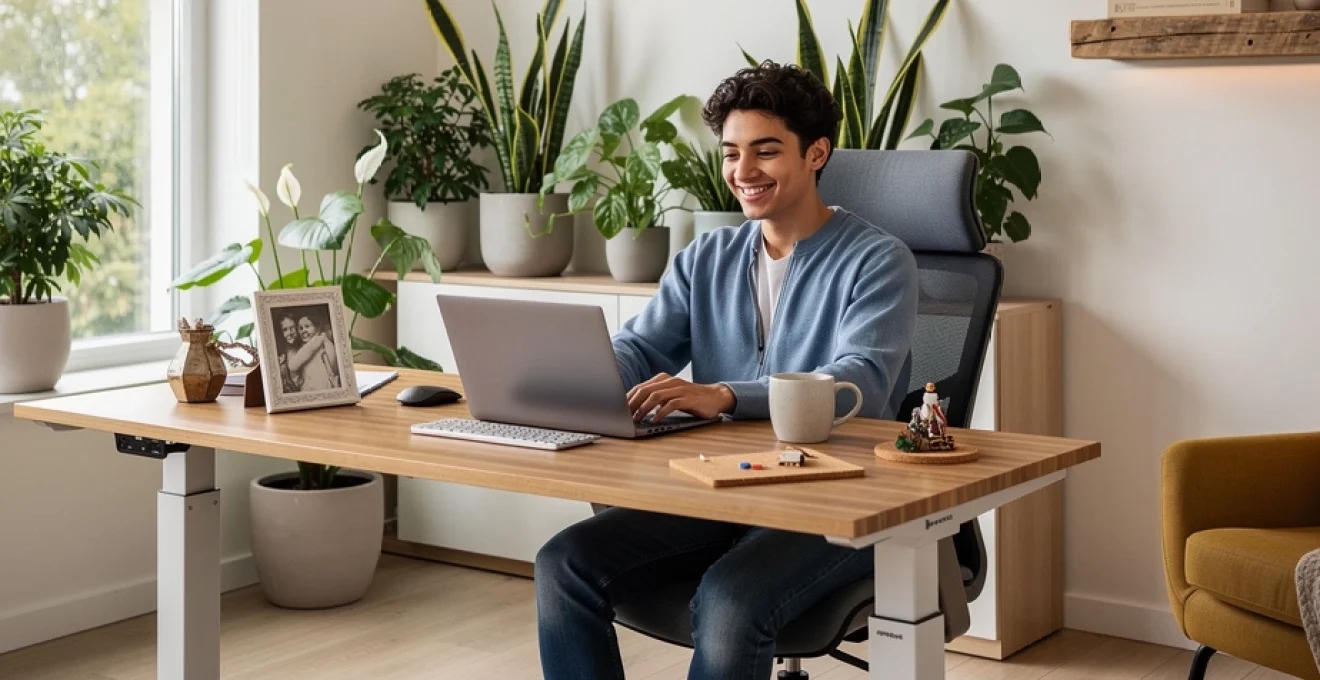
The spaces surrounding you possess an extraordinary power to influence your mood, productivity, and overall wellbeing. Research consistently demonstrates that thoughtfully designed environments can enhance cognitive function by up to 15%, while poorly conceived spaces can drain energy and stifle creativity. Your personal space serves as more than mere shelter; it functions as a catalyst for inspiration, a sanctuary for restoration, and a foundation for achieving your daily goals. Whether you’re working from a cramped studio flat or have the luxury of a dedicated office, the principles of creating an inspiring environment remain universally applicable. The key lies in understanding how environmental psychology, biophilic design, and personalisation strategies work together to create spaces that truly serve your unique needs and aspirations.
Biophilic design principles for enhanced cognitive performance
Biophilic design represents one of the most scientifically backed approaches to creating spaces that enhance human wellbeing and cognitive performance. This design philosophy recognises the innate human connection to nature and leverages this relationship to create environments that reduce stress, improve focus, and boost creativity. Studies conducted by Harvard’s School of Public Health reveal that individuals working in spaces with biophilic elements demonstrate 15% increase in productivity and 25% improvement in comfort levels compared to those in conventional environments.
The implementation of biophilic design extends far beyond simply adding a few houseplants to your desk. It encompasses a holistic approach that considers natural light patterns, air quality, organic materials, and the psychological impact of natural forms and patterns. When you integrate these elements thoughtfully, your space begins to mirror the restorative qualities found in natural environments, creating a setting that naturally energises and inspires you throughout the day.
Natural light integration through strategic window placement
Natural light serves as the cornerstone of any inspiring personal space, influencing everything from your circadian rhythms to your emotional state. The strategic positioning of your workspace relative to windows can dramatically impact your daily experience and productivity levels. Ideally, you want to position your primary work area perpendicular to windows, allowing natural light to illuminate your space without creating glare on screens or reflective surfaces.
Consider the quality and direction of light throughout the day when arranging your furniture. North-facing windows provide consistent, soft light that remains relatively stable throughout the day, making them excellent for detailed work or creative endeavours. South-facing windows offer abundant light but require careful management to prevent overheating and glare. East-facing exposure delivers energising morning light that can help establish healthy wake cycles, while west-facing windows provide warm afternoon light that can be perfect for relaxation areas.
Circadian rhythm optimisation with Full-Spectrum LED systems
When natural light proves insufficient or unavailable, full-spectrum LED lighting systems offer a sophisticated solution for maintaining healthy circadian rhythms and sustained energy levels. These advanced lighting systems can be programmed to mimic natural light patterns, gradually shifting from cool, energising blue-white light in the morning to warmer, more relaxing tones in the evening. This technological approach to lighting design can significantly impact your sleep quality, mood regulation, and cognitive performance.
The implementation of circadian lighting requires careful consideration of colour temperature and intensity throughout the day. Morning light should ideally range between 5000K to 6500K to promote alertness and focus, while evening illumination should shift to warmer temperatures around 2700K to 3000K to support natural melatonin production. Modern smart lighting systems allow you to automate these transitions, creating an environment that supports your natural biological rhythms without requiring constant manual adjustment.
Air purification through NASA-Approved plant species selection
The quality of air you breathe directly influences your cognitive function, energy levels, and overall health. NASA’s Clean Air Study identified numerous plant species that effectively remove common indoor air pollutants while adding natural beauty and vitality to your space. Spider plants, snake plants, and peace lilies rank among the most effective air purifiers, capable of removing formaldehyde, benzene, and trichloroethylene from indoor environments.
Beyond their air-purifying capabilities, plants contribute to improved humidity levels, reduced noise pollution, and enhanced psychological wellbeing. The presence of living greenery has been shown to reduce stress hormones by up to 30% and improve concentration span by approximately 20%. When selecting plants for your
workspace, consider both maintenance requirements and your daily routines. Low-maintenance varieties such as snake plants and ZZ plants suit busy schedules or low-light rooms, while ferns and peace lilies thrive in brighter, more humid environments. Aim for a mix of floor-standing plants, desk plants, and hanging planters to create layered greenery that frames your field of vision without overwhelming your surfaces. Position plants near your primary work zone and entryways so that the first and last thing you see each day is living, growing nature.
Organic material integration: cork, bamboo, and reclaimed wood applications
Biophilic design is not only about what you see, but also what you touch. Integrating organic materials such as cork, bamboo, and reclaimed wood brings subtle tactile reminders of nature into your daily routines. These materials help soften acoustics, regulate humidity, and visually warm up spaces that might otherwise feel clinical or overly minimal. When you introduce natural textures into your personal space, you create a sensory richness that encourages calm focus and reduces the sense of digital fatigue.
Cork offers excellent sound absorption and a warm, soft underfoot feel, making it ideal for pinboards, flooring, and wall tiles in reading or focus zones. Bamboo is a fast-growing, highly sustainable material that works beautifully for desks, shelving, and storage solutions, giving your workspace a clean, modern aesthetic with an organic edge. Reclaimed wood adds a sense of history and authenticity; using it for desktops, side tables, or wall cladding can instantly transform a bland corner into a grounded, characterful nook where you feel more anchored and creative.
To integrate these materials without overwhelming your design, treat them as focal accents within your personal space. You might combine a bamboo desk with a reclaimed-wood floating shelf above it, and a cork mood board to one side for pinning ideas and inspiration. This layered approach to organic materials supports both visual interest and functional performance: cork panels dampen noise, wood surfaces age gracefully with use, and bamboo elements are lightweight yet durable enough for everyday work. Over time, these natural finishes develop patina, turning your space into a living record of your creativity and daily rituals.
Psychological colour theory implementation for mood enhancement
Once your space is anchored in nature, colour becomes the next powerful tool for shaping how you feel and perform each day. Psychological colour theory explores how different hues influence mood, focus, and perceived energy levels. Rather than following blanket rules like “white walls help concentration” or “blue is always calming,” effective colour design starts with self-awareness: how do specific shades make you feel, and what activities happen in each part of your space? By aligning colour choices with your goals—deep work, relaxation, brainstorming—you can create a personal space that nudges you gently into the right mindset on cue.
Think of your environment as a living colour map, where each zone supports a specific state: a vibrant, colour-rich corner for ideation; a softer, desaturated palette for reading and reflection; a neutral backdrop for video calls and focused work. The aim is not to impress visitors with bold design, but to build a subtle system that keeps your nervous system regulated and your mind engaged. When you apply psychological colour theory with intention, even small changes—a painted ceiling, a coloured rug, or a new set of cushions—can dramatically change how inspired and supported you feel at home.
Chromotherapy techniques using pantone colour psychology
Chromotherapy, or colour therapy, is the practice of using specific hues to influence emotional and physical states. While clinical evidence is still emerging, Pantone colour psychology and environmental design research consistently show that colour associations can shape perception, behaviour, and even heart rate. For example, blues and greens tend to lower perceived stress, while yellows and oranges are linked to optimism and energy. Instead of repainting an entire room each time you need a shift, you can apply chromotherapy techniques through flexible, easily swapped elements.
Begin by identifying one to three “core” feelings you want your personal space to support—perhaps calm focus, optimistic energy, and quiet restoration. Then, choose a primary shade for each state based on Pantone’s established emotional associations: a soft blue-green for calm, a warm golden yellow for energy, a muted blush or taupe for restoration. Integrate these colours into movable items such as throws, artwork, stationery, lamp shades, or desk accessories. By clustering these chromatic cues in specific areas, you create emotional anchors your brain quickly learns to associate with particular modes of working and being.
If you struggle with low motivation, consider placing a concentrated “energy colour” accent in your direct line of sight while you work: a bold Pantone-inspired print above your monitor, or a saturated desk mat in a bright yet not jarring hue. Conversely, if anxiety or overstimulation is your main challenge, prioritise cooler, softer colours on larger surfaces (walls, curtains, rugs) and reserve vivid accents for small details only. Over time, you can treat your room like a living mood board: notice which shades you gravitate towards during different seasons or life phases, and adjust your palette so your space remains an ally in your daily emotional regulation.
Temperature-based colour schemes for productivity zones
Colour temperature—the perception of colours as “warm” (reds, oranges, yellows) or “cool” (blues, greens, purples)—plays a key role in how energised or relaxed you feel in a space. Warm palettes tend to feel activating and social, while cool palettes often feel calmer and more contemplative. Instead of applying one uniform colour scheme across your entire home, you can design temperature-based colour zones that match the cognitive demands of different activities. This is especially powerful in small homes where the same room must serve as office, studio, and sanctuary.
For high-focus tasks and analytical work, cooler hues such as soft blue-grey, sage green, or muted teal can help lower arousal levels and support sustained concentration. You might use these on the wall behind your desk, your desk surface itself, or in key textiles like your office chair upholstery and rug. For brainstorming, creative exploration, or social calls, introducing pockets of warmth—terracotta plant pots, amber glass, mustard cushions—can gently raise your perceived energy, making it easier to think broadly and speak confidently. The contrast between warm and cool zones becomes a visual signal to your brain: here I focus, here I play.
If repainting isn’t an option, you can shift colour temperature with lighting and textiles alone. Cool-white bulbs paired with cooler-toned fabrics over your desk will lean into a more alert, “daylight” feel, while warm-white lamps and honey-toned textiles around your reading chair will echo sunset light. This is similar to adjusting the thermostat in different rooms: you’re using colour temperature to fine-tune how stimulating or soothing each area feels, helping you transition more smoothly between deep work and deep rest.
Cultural colour symbolism in personal space design
Colour never exists in a vacuum; it carries cultural, spiritual, and personal meanings that can amplify or contradict its psychological effects. In Western contexts, white often symbolises purity and simplicity, while in many Eastern traditions it is associated with mourning. Red might feel festive and lucky in one culture, and aggressive or taboo in another. When you design a personal space that truly inspires you, it’s essential to consider not just generic colour psychology, but your own cultural background, memories, and associations.
Begin by reflecting on colours that feel deeply meaningful to you: perhaps the blue of your childhood bedroom, the green of your grandmother’s garden, or the gold used in places of worship you visited growing up. Ask yourself: What stories do these colours tell about who I am and what I value? Integrating these hues—whether boldly on walls or subtly in accessories—creates a sense of rootedness and authenticity that no trend-driven palette can match. Your personal colour symbolism might also draw on travel experiences, favourite artworks, or textiles from your heritage, turning your space into a visual autobiography.
At the same time, it’s worth being mindful of how colour symbolism might affect your mood in unexpected ways. If a certain red reminds you of exam halls or conflict, it may not belong in your focus zone, even if design guides insist red boosts performance. Similarly, if black is associated with strength and elegance in your culture, a deep charcoal wall behind your desk could feel empowering rather than heavy. By combining psychological colour theory with cultural colour symbolism, you create an environment that respects both research and lived experience—one that feels intellectually stimulating and emotionally safe at the same time.
Seasonal colour rotation strategies for sustained inspiration
Just as nature cycles through seasons, your personal energy and creative needs shift throughout the year. Seasonal colour rotation is a simple yet powerful strategy for keeping your space feeling fresh and aligned with your current rhythm. Instead of committing to one palette indefinitely, you build a flexible “colour wardrobe” of textiles and accessories you can rotate—light and airy in spring and summer, rich and cocooning in autumn and winter. This approach helps prevent visual stagnation and supports the natural ebb and flow of your motivation and mood.
For spring and summer, you might lean into brighter, lighter tones: soft greens, sky blues, gentle corals paired with natural linen and pale woods. These colours echo the longer days and can support a sense of optimism and outward focus. As days shorten, introducing deeper, more saturated hues—forest green, burgundy, ochre, ink blue—can help your space feel more grounded and intimate, encouraging reflection and slow work. Rather than repainting walls each season, focus on easily swappable elements: cushion covers, blankets, lampshades, desk organisers, and art prints.
If you’re worried this sounds like a lot of work, think of it like changing your bedding or rotating your wardrobe for the weather. A single afternoon spent switching out a few key items can completely shift the mood of your environment. You might even create a small “seasonal box” where you store off-season decor and colour accents, ready to bring out when you crave a change. By aligning your surroundings with the time of year, you give yourself regular, low-effort injections of novelty—crucial for sustained inspiration in a personal space you use every single day.
Ergonomic workspace configuration for physical wellbeing
An inspiring personal space cannot fulfil its purpose if it leaves your body tense, sore, or fatigued. Ergonomic workspace configuration ensures that your environment supports healthy posture, reduces strain, and enables you to work or create for longer periods without pain. According to the American Chiropractic Association, up to 80% of people will experience back pain at some point in their lives, often exacerbated by poorly arranged desks and chairs. By applying a few core ergonomic principles, you turn your desk, studio, or reading nook into a place where your body feels as supported as your mind.
Start by adjusting chair height so that your feet rest flat on the floor (or on a footrest), your knees are at roughly 90 degrees, and your hips are slightly higher than your knees. Your lower back should be supported by either a built-in lumbar curve or a small cushion. Position your desk so that your elbows form an L-shape when your hands rest on the keyboard, with shoulders relaxed rather than hunched. Your screen should sit at arm’s length, with the top third at or just below eye level to prevent neck strain. Think of this arrangement as the “neutral gear” for your body—balanced, stable, and ready for hours of comfortable focus.
If you work from a laptop, investing in a separate keyboard and mouse plus a laptop stand can be transformative. This simple setup lets you raise the screen to eye level while keeping your arms in a natural, low position, dramatically reducing tension in your neck and shoulders. For those who like to move while working, a sit-stand desk or a converter placed on an existing table allows you to change positions throughout the day, improving circulation and reducing static load on your spine. The key is variation: alternating between sitting, standing, and even perching on a stability ball or kneeling chair can keep your body engaged and your mind alert.
Finally, embed micro-breaks and movement into the very layout of your personal space. Place your printer, reference books, or frequently used tools just far enough away that you need to stand up and walk a few steps to access them. Consider keeping a yoga mat or stretching strap in sight as a visual cue to reset your body every hour. When your environment gently nudges you to move, stretch, and adjust, you’re far less likely to end the day feeling stiff and depleted—and far more likely to associate your workspace with comfort and long-term wellbeing.
Minimalist decluttering methods using marie kondo techniques
Cluttered environments compete for your attention, increasing cognitive load and subtly draining your energy. Minimalist decluttering is not about living with almost nothing; it’s about ensuring that everything in your personal space earns its place by supporting function, beauty, or meaning. Marie Kondo’s now-iconic question—“Does it spark joy?”—offers a simple yet profound filter for assessing your belongings. When you pair this philosophy with an understanding of how visual information taxes your brain, you can design a space that feels both calm and deeply personal.
Instead of approaching decluttering as a one-time purge, treat it as an ongoing conversation with your environment. As your goals and tastes evolve, so too should the objects that surround you. You might begin with one category—books, clothes, tech accessories, stationery—and ask whether each item still serves your current life. By releasing what no longer supports or inspires you, you create physical and mental space for new ideas, projects, and experiences to enter. The result is not an empty room, but a curated environment where your attention is free to focus on what matters most.
Cognitive load reduction through visual hierarchy principles
Cognitive load refers to the amount of mental effort required to process information at any given time. A desk piled with paperwork, cables, and half-finished projects forces your brain to constantly filter out irrelevant stimuli, leaving you with less bandwidth for deep work or creative thinking. Visual hierarchy—the intentional arrangement of objects so that the most important elements stand out—helps reduce this mental friction. In practice, this means designing your space so that your eyes know exactly where to land when you sit down to work or rest.
Begin by identifying the “hero” of each zone. On your desk, this might be your laptop and notebook; in a reading corner, it could be your favourite chair and lamp. Clear away or relocate anything that competes visually with these key elements, especially at eye level. Use closed storage or simple trays to group smaller items, so that your surfaces read as a few clear shapes instead of noisy clusters. Think of your field of view as a web page: the main content (your task) should be front and centre, while navigation (tools and supplies) is available but unobtrusive.
Colour and contrast also play a role in visual hierarchy. Neutral or low-contrast backgrounds—like pale walls and simple desk finishes—allow important items such as your notebook, keyboard, or inspiration board to stand out without visual shouting. If you love displaying collections or sentimental objects, consider dedicating a single shelf or framed collage to them rather than scattering them across the room. This way, you enjoy your treasures in one intentional focal area while keeping the rest of your space mentally quiet and conducive to flow.
Storage solutions: modular systems and hidden compartments
Effective storage is less about owning multiple containers and more about designing systems that align with how you naturally live and work. Modular storage—units that can be rearranged, stacked, or expanded—gives you the flexibility to adapt your personal space as your needs change. Whether it’s cube shelving with fabric bins, adjustable wall-mounted shelves, or drawer units on wheels, modular pieces make it easier to maintain order without sacrificing accessibility. The goal is to keep frequently used items within easy reach and visual proximity, while tucking away rarely used belongings out of sight but not out of mind.
Hidden storage is especially valuable in small spaces or multi-purpose rooms where you want to switch quickly between “work mode” and “home mode.” Ottomans with lift-up lids, benches with internal compartments, and desks with cable trays allow you to stow away visual clutter in seconds, restoring calm at the end of the day. Even simple solutions—such as a decorative box for chargers and headphones, or a slim rolling cart that tucks into a closet—can dramatically reduce the sense of chaos. When every item has a clearly defined home, tidying becomes a two-minute task rather than an overwhelming project.
To avoid turning storage into hidden clutter, schedule brief “reset” sessions weekly or monthly. Use this time to return items to their designated spots, reassess systems that no longer work, and remove anything that has quietly become redundant. Think of these sessions as maintenance for your inspiration levels: by preventing buildup behind closed doors, you ensure that opening a drawer or cupboard feels satisfying rather than stressful. Over time, your storage solutions should feel like an intuitive extension of your habits—supporting your focus instead of demanding constant willpower to stay organised.
Digital minimalism integration with physical space organisation
In the age of remote work and constant connectivity, digital clutter can be just as draining as physical mess. A desktop covered in files, endless notifications, and tangled charging cables all contribute to a sense of fragmentation. Digital minimalism invites you to be intentional about which tools, apps, and devices truly support your goals, and which simply consume attention. By aligning your digital environment with your physical space, you create a coherent ecosystem that feels calm and purposeful instead of scattered.
Start by simplifying your device landscape. Do you really need multiple screens, or would a single well-positioned monitor plus a tablet suffice? Can you route most charging needs to one discreet “tech station” rather than having cables snaking across every surface? Consolidating tech zones reduces visual noise and makes it easier to unplug when you choose. On the software side, consider decluttering your desktop to a single wallpaper and a small number of essential folders, mirroring the way you keep only key tools on your physical desk.
Notifications deserve special attention, as they can shatter even the most beautifully designed environment. Where possible, disable non-essential alerts and establish specific times to check email or messaging apps. This practice of “scheduled connection” turns technology into a conscious choice rather than a constant intrusion. You might even create a ritual of closing your laptop, coiling your charger, and placing your phone in a designated spot at the end of the day. These small, physical gestures help mark the boundary between work and rest, allowing your personal space to return to its role as a sanctuary rather than an extension of your inbox.
Personalisation strategies through Memory-Triggered object curation
While minimalism and biophilic design provide structure, it’s personal meaning that truly transforms a room into your inspiring space. Memory-triggered object curation is the practice of intentionally selecting items that evoke positive memories, values, or aspirations, and displaying them in ways that support your current goals. Instead of filling shelves with random decor, you curate a collection of visual anchors that remind you who you are, where you’ve come from, and where you’re heading. This turns your environment into a quiet coach, offering encouragement every time your eyes land on a particular object.
Begin by gathering items that hold genuine emotional resonance: photographs from a transformative trip, a gift from a mentor, a ticket stub from a concert that changed your perspective, a handwritten note, or a vintage tool from a relative. Ask yourself: Does this object reconnect me with a version of myself I want to nurture? If the answer is yes, consider how to showcase it with intention—framed on a gallery wall, arranged in a shallow tray on your desk, or grouped with related pieces on a dedicated shelf. Grouping by theme (creativity, resilience, relationships) can help each mini-display tell a coherent story rather than feeling like clutter.
At the same time, be discerning. Not every sentimental object needs to live in your primary field of view; some may belong in a memory box you revisit occasionally rather than in your everyday workspace. The aim is not to build a museum of your past, but to weave selective threads of memory into your present life. You can also incorporate future-oriented objects: a printed list of long-term goals, a mock cover of the book you want to write, or an emblem from a city you dream of moving to. When your surroundings hold both cherished memories and tangible symbols of your aspirations, they become a powerful daily reminder that you are in motion—and that your space is evolving with you.
Acoustic environment design for focus and creativity
Sound is an often-overlooked dimension of personal space design, yet it profoundly affects concentration, stress levels, and creative flow. A room can look perfectly composed while still feeling chaotic if noise levels are high or unpredictable. Thoughtful acoustic environment design helps you manage both unwanted noise (traffic, neighbours, household activity) and intentional sound (music, ambient noise, silence) so that your space consistently supports the kind of focus you need. In many ways, sound is like the background score to your day: when you control it, you control the emotional tone of your environment.
To reduce disruptive noise, start with simple physical interventions. Soft materials such as curtains, rugs, upholstered furniture, and fabric wall hangings help absorb sound, preventing echoes and making your space feel more intimate. Bookshelves filled with irregularly sized books act as natural diffusers, breaking up sound waves and reducing harsh reflections. If external noise is a major issue, consider weatherstripping doors, using draft excluders, or adding acoustic panels disguised as artwork. Even a strategically placed room divider or folding screen can dampen sound pathways in open-plan spaces.
Once you’ve minimised unwanted noise, you can design a positive acoustic identity for your space. Some people do their best work in near silence; others find that low-level background sound—like rainfall, café noise, or instrumental music—helps mask distractions and induce flow. Experiment with different soundscapes: white or brown noise for analytical tasks, gentle lo-fi beats for writing, classical or ambient music for reflection. Creating playlists or using dedicated focus-sound apps means you can “switch on” a particular mental state with a single click, much like turning on a specific lamp or diffuser.
Finally, establish acoustic boundaries that protect your time and energy. Noise-cancelling headphones can act as both a physical and social signal that you’re in focus mode, discouraging interruptions from housemates or family. If possible, coordinate quiet hours with those you live with, or place a small sign near your workspace when you’re in deep work sessions. Over time, your brain will associate particular sounds—or their absence—with certain activities, making it easier to transition into creativity or concentration on demand. When your visual, tactile, and acoustic environments all work in harmony, your personal space becomes more than just a room: it becomes a finely tuned instrument that helps you perform at your best, every single day.