# Why Asking for Help is Important in Motherhood
The transition into motherhood represents one of life’s most profound transformations, yet contemporary parenting culture continues to perpetuate an unrealistic narrative of maternal self-sufficiency. Despite overwhelming evidence that human beings evolved to raise children within supportive community structures, modern mothers frequently find themselves isolated, exhausted, and reluctant to acknowledge their need for assistance. This disconnect between biological necessity and social expectation creates a silent crisis affecting maternal mental health, physical recovery, and ultimately, child development outcomes. Understanding why asking for help matters—and developing the skills to do so effectively—isn’t merely about making motherhood easier; it’s about creating the conditions for both mothers and children to genuinely thrive.
Maternal mental health statistics: understanding postnatal depression and anxiety prevalence
The statistics surrounding maternal mental health paint a sobering picture of the challenges facing new mothers today. According to recent research from the Peanut motherhood app, a staggering 72% of mothers report feeling invisible, whilst an overwhelming 93% feel unappreciated after becoming parents. These aren’t merely feelings of occasional frustration; they represent a systemic issue affecting the majority of women navigating early motherhood. When such a significant proportion of mothers experience these sentiments, it signals something fundamentally problematic about how society supports—or fails to support—women during this vulnerable period.
Postnatal depression affects approximately one in ten women within the first year after giving birth, though many experts believe the actual figures are considerably higher due to underreporting. Perinatal anxiety disorders, which can occur during pregnancy or the postnatal period, affect roughly 15-20% of women. These conditions aren’t character flaws or signs of weakness; they’re genuine medical conditions exacerbated by isolation, sleep deprivation, and the absence of adequate support structures. The reluctance to seek help often stems from fear of judgement, concerns about being perceived as an inadequate mother, or simply not recognising the symptoms as something treatable rather than an inevitable aspect of motherhood.
What makes these statistics particularly concerning is their correlation with mothers who attempt to manage everything independently. Research consistently demonstrates that women with robust support networks—whether from partners, family members, friends, or professional services—report significantly lower rates of postnatal mental health difficulties. The act of asking for and receiving help isn’t merely about reducing workload; it’s a protective factor against developing serious mental health conditions. Yet cultural messaging continues to glorify the mother who « does it all, » creating a paradox where the very behaviour that might prevent mental health struggles is stigmatised as a sign of inadequacy.
Breaking the supermum syndrome: recognising psychological barriers to seeking support
The « Supermum Syndrome » refers to the pervasive belief that mothers should effortlessly balance childcare, household management, career responsibilities, and personal wellbeing without external assistance. This impossible standard has its roots in various sociocultural factors, including the breakdown of extended family structures, the glorification of productivity, and the fundamental misunderstanding of how human parenting evolved. Historically, childcare was a communal responsibility, with the Igbo proverb « Oran a azu nwa »—it takes a village to raise a child—reflecting universal human experience rather than a quaint cultural idiosyncrasy.
Cognitive distortions in maternal identity and perfectionism paradigms
Many mothers internalise distorted beliefs about what constitutes « good mothering, » often equating the need for help with personal failure. These cognitive distortions typically include all-or-nothing thinking (« If I can’t do everything myself, I’m a terrible mother »), catastrophising (« Asking for help will prove I’m not capable »), and mind reading (« Everyone will think I’m weak if I admit I’m struggling »). Such thought patterns create a psychological prison where mothers feel trapped between their genuine needs and their fear of judgement or self-criticism.
Perfectionism compounds these issues significantly. First-born daughters and individuals who’ve excelled professionally often bring workplace standards into motherhood, expecting themselves to master parenting with the same competence they demonstrated in their careers. However, motherhood operates under entirely different parameters—there are no training programmes, performance reviews, or clear metrics for success. The unpredictability of infant behaviour, combined with extreme sleep deprivation and hormonal fluctu
uations, means that perfection is not only unrealistic, it is actively harmful when it stops mothers from reaching out. Over time, these perfectionism paradigms erode self-compassion, making it harder to recognise that needing support is a normal, healthy part of maternal identity rather than evidence that you are « not good enough. »
Challenging these cognitive distortions starts with awareness. When you notice a harsh, perfectionist thought (« Any other mum would cope with this »), you can pause and ask: « Is this a fact or a feeling? » Reframing might sound like: « Many good mothers struggle, and asking for help is one way I protect my baby and myself. » Over time, this kind of gentle self-questioning helps loosen the grip of the Supermum narrative and creates space for a more balanced, sustainable version of motherhood.
Society-imposed expectations versus realistic parenting capabilities
Layered on top of individual perfectionism are powerful social expectations about what « good » motherhood should look like. Modern mothers are often expected to be endlessly patient, emotionally available, financially productive, physically fit, and domestically competent—all while maintaining relationships, careers, and a sense of self. These expectations are not only unrealistic; they are fundamentally out of sync with what is biologically and practically possible in the early years of raising children.
When you consider that new mothers may be recovering from major abdominal surgery, healing from birth injuries, or coping with hormonal upheaval, the idea that they should simultaneously maintain a spotless home and vibrant social life quickly reveals itself as absurd. Yet because these expectations are so normalised, many women internalise them as a personal to-do list rather than questioning their validity. The result is a chronic mismatch between what mothers are told they « should » be able to do and what one human nervous system can reasonably sustain.
Reclaiming realistic parenting capabilities means giving yourself permission to prioritise. In practice, that might look like accepting that some seasons of motherhood are about survival rather than optimisation: the dishes might wait, the laundry might live in a clean pile, and your social calendar might shrink. Recognising these trade-offs is not lowering your standards as a mother; it is aligning your expectations with the actual demands of caring for a dependent human being around the clock.
Shame and stigma in contemporary motherhood culture
Shame is one of the most powerful forces keeping mothers from asking for help. Unlike guilt, which says « I did something wrong, » shame whispers « I am something wrong. » When you are already exhausted, it can feel safer to present a polished version of your life than to admit that you are struggling, snapping at your partner, or silently crying during night feeds. Many mothers report feeling they must immediately defend their love for their child before they can talk honestly about how hard things feel, as though acknowledging difficulty somehow negates their gratitude.
This stigma is reinforced when comments such as « You chose to have children » or « Other women have it worse » are used to shut down honest conversation. Instead of validating the intensity of the transition into motherhood, these responses imply that difficulty is a personal failing. Over time, mothers learn to answer « How are you? » with « Fine! » even when they are anything but. This silence not only increases isolation, it also robs other mothers of the chance to hear, « Me too, » and realise that their experience is more common than they think.
Creating a healthier motherhood culture means actively challenging this shame. That might look like being honest in a group chat about having a bad day, or responding to another mother’s vulnerability with empathy instead of advice. Each time you normalise the idea that loving your child and finding motherhood hard can coexist, you chip away at the stigma that keeps so many women suffering in silence and avoiding the support that could transform their experience.
The comparison trap: social media’s impact on maternal self-efficacy
Social media can be a lifeline for connection, but it also fuels the comparison trap that undermines maternal self-efficacy. When your feed is filled with curated images of mothers who appear to be thriving—renovating rooms while their partner is away, launching businesses during nap times, or appearing perfectly groomed with impeccably dressed children—it is easy to conclude that you are the only one struggling to survive the afternoon. What you rarely see in those squares are the tears, the mess, the arguments, and, crucially, the invisible help behind the scenes.
Psychologically, these comparisons function like a rigged game. You are measuring your unedited, behind-the-scenes life against someone else’s highlight reel. This distorts your perception of what is normal and can chip away at your confidence to the point where asking for help feels like proof that you are weaker or less capable than other mothers. In reality, many of the women you admire online may have cleaners, family support, flexible jobs, or childcare arrangements that make their lives more manageable—contexts that are rarely foregrounded.
One practical way to step out of the comparison trap is to curate your feed intentionally. You might unfollow accounts that consistently leave you feeling « less than » and seek out voices that are honest about the hard parts of motherhood as well as the joys. You can also remind yourself that comparison almost never motivates positive change; it tends to erode self-worth and keep you stuck. Instead of asking, « Why can she do it and I can’t? », you might experiment with asking, « What support would I need to make my life feel one notch easier this week? » and then take one small step toward asking for that help.
Physical health consequences of unsupported maternal burnout
While the emotional toll of unsupported motherhood is significant, the physical health consequences of maternal burnout are just as serious. Burnout is not simply « feeling tired »; it is a chronic state of physical and emotional depletion that can impair every system in the body. For new mothers, who may already be recovering from pregnancy and birth, the combination of relentless demands and minimal rest can quietly push them toward a level of exhaustion that has long-term health implications.
Cortisol dysregulation and chronic stress response in new mothers
When you are consistently overwhelmed and unable to access meaningful support, your body remains in a heightened state of stress. The hormone cortisol, which is designed to help you respond to short-term threats, can become dysregulated when stress is chronic. Instead of rising and falling in a healthy daily rhythm, cortisol may remain elevated or become flattened, leaving you wired and tired, anxious yet depleted.
Over time, this chronic stress response can contribute to mood disorders, blood pressure issues, digestive problems, and difficulties with concentration and memory—symptoms that many mothers dismiss as « just being a mum. » But these are not inevitable aspects of motherhood; they are signs that your nervous system is operating without adequate recovery. Asking for help with night feeds, household tasks, or childcare is not a luxury in this context; it is a way of bringing your stress levels back within a manageable range so your body can begin to heal.
Sleep deprivation effects on immune function and recovery
Sleep deprivation is often treated as a darkly humorous badge of honour in parenting culture, but its effects on the immune system are profound. Research shows that even a few nights of restricted sleep can reduce the effectiveness of immune cells, making you more susceptible to infections and slowing wound healing. For a mother who is still recovering physically from birth, surviving on fragmented sleep for months can significantly extend the recovery timeline.
Lack of sleep also amplifies emotional reactivity, making irritability, anxiety, and intrusive thoughts more likely. It becomes harder to regulate your emotions, to think clearly, or to make balanced decisions about your baby’s care. This is one of the reasons why sharing night duties—whether with a partner, a family member, or, where possible, paid support—can be so transformative. Even one or two protected blocks of sleep per week can measurably improve mood, cognitive function, and overall resilience.
Postpartum physical recovery complications from inadequate rest
The postpartum period is often described as the « fourth trimester » for a reason: your body is still undergoing huge physiological changes. Muscles and ligaments are reconfiguring, organs are shifting back into place, and, if you are breastfeeding, your body is expending extra energy on milk production. When this intensive recovery period is layered with constant physical demands and minimal rest, complications such as delayed healing, pelvic floor dysfunction, or persistent pain are more likely.
Mothers who feel they must « bounce back » quickly—returning to work, exercise, or full domestic responsibilities without support—may inadvertently place additional strain on a body that is not yet ready. This is not about scaring you, but about validating why you feel so tired and why you genuinely need time and help to recover. Accepting offers of meals, childcare for older siblings, or help with housework is not indulgent; it is a practical strategy to protect your long-term physical health.
Secondary trauma and long-term health implications
For some women, pregnancy and birth are not only physically demanding but also traumatic. Difficult labours, emergency interventions, or experiences of not being listened to can leave psychological and physiological imprints. When these experiences are followed by an unsupported postpartum period—where there is little opportunity to rest, process, or receive comfort—the stress load on the body intensifies. This can contribute to symptoms of post-traumatic stress, chronic pain, or persistent health complaints that may surface months or years later.
Secondary trauma can also emerge when mothers repeatedly push past their limits, ignoring their own needs in order to keep caring for everyone else. Like a car running permanently in the red, the body can cope for a while, but eventually systems begin to break down. Proactively asking for help—whether through trauma-informed therapy, medical follow-up, or practical support at home—is one of the most effective ways to interrupt this pattern and protect your future health. You are not being dramatic or « making a fuss » by prioritising your recovery; you are safeguarding your capacity to care for your child over the long term.
Attachment theory and child development outcomes in stress-reduced environments
Attachment theory offers a helpful framework for understanding why maternal wellbeing and asking for help matter so profoundly for children. At its core, attachment is about the emotional bond that develops between a child and their primary caregivers. This bond is built through thousands of small, everyday interactions—feeding, comforting, playing, soothing—not through grand gestures or perfect parenting. Crucially, it is easier to offer the consistent, « good enough » care that fosters secure attachment when a mother’s own stress levels are manageable and she is not operating in continual survival mode.
Secure attachment formation through regulated maternal nervous systems
Babies are born with immature nervous systems and rely on their caregivers to help them regulate. When a mother is reasonably calm and resourced, she can more easily attune to her baby’s cues, respond sensitively, and repair misattunements when they occur. This does not mean she never feels stressed or overwhelmed; it means that, most of the time, her nervous system can return to a baseline of relative safety. Secure attachment grows out of this pattern of « rupture and repair, » not from an absence of difficulty.
Conversely, when a mother is chronically burnt out, sleep deprived, and unsupported, it becomes much harder to offer this kind of attuned, responsive care. Her own nervous system may be in a near-constant state of fight-or-flight, which can make her more irritable, numb, or checked out—not because she does not care, but because she is running on empty. By asking for help and reducing some of the load she is carrying, a mother creates the conditions in which her own nervous system can settle, making it easier to be emotionally present with her child.
Dr. john bowlby’s research on maternal responsiveness and support networks
Dr. John Bowlby, one of the founders of attachment theory, emphasised that a child’s sense of security depends not just on the mother herself but on the broader caregiving environment. He argued that when mothers are well supported—practically, emotionally, and socially—they are more likely to be consistently responsive to their infants. In other words, the village surrounding the mother indirectly shapes the child’s attachment by influencing the mother’s capacity to care.
Subsequent research has built on Bowlby’s ideas, showing that social support can buffer the impact of stress on parenting. Mothers who feel they have reliable people to turn to—partners, friends, family, health professionals—tend to report higher confidence in their parenting and show more sensitive responses to their babies’ needs. This is not about replacing the mother, but about resourcing her. Each time you allow someone to cook a meal, watch the baby while you nap, or listen without judgement, you are not only helping yourself; you are strengthening the relational environment in which your child is growing up.
Emotional availability and co-regulation in early childhood
Co-regulation—the process by which a caregiver helps a child manage their emotions—is central to healthy development. When a toddler is overwhelmed, for example, they borrow the adult’s calmer nervous system to find their way back to balance. Emotional availability is the foundation of this process: you cannot co-regulate with a child if you are permanently overstretched, dissociated, or consumed by your own unaddressed stress.
This is where the importance of asking for help becomes particularly clear. When you reduce some of your practical and emotional load, you create more space for the moments that truly matter—sitting on the floor to play, making eye contact during feeds, offering a hug when your child is distressed. These small, everyday acts of presence help wire your child’s brain for resilience. Far from being selfish, taking steps to look after yourself and accept support is one of the most child-centred choices you can make.
Practical support systems: NHS resources and community networks for mothers
Recognising the need for help is only half the journey; the next step is knowing where to find it. In the UK, a range of NHS services and community organisations exist specifically to support mothers during pregnancy and the postnatal period. While access can vary by region, understanding the options available can make it easier to reach out before you reach breaking point.
Health visitor services and perinatal mental health teams
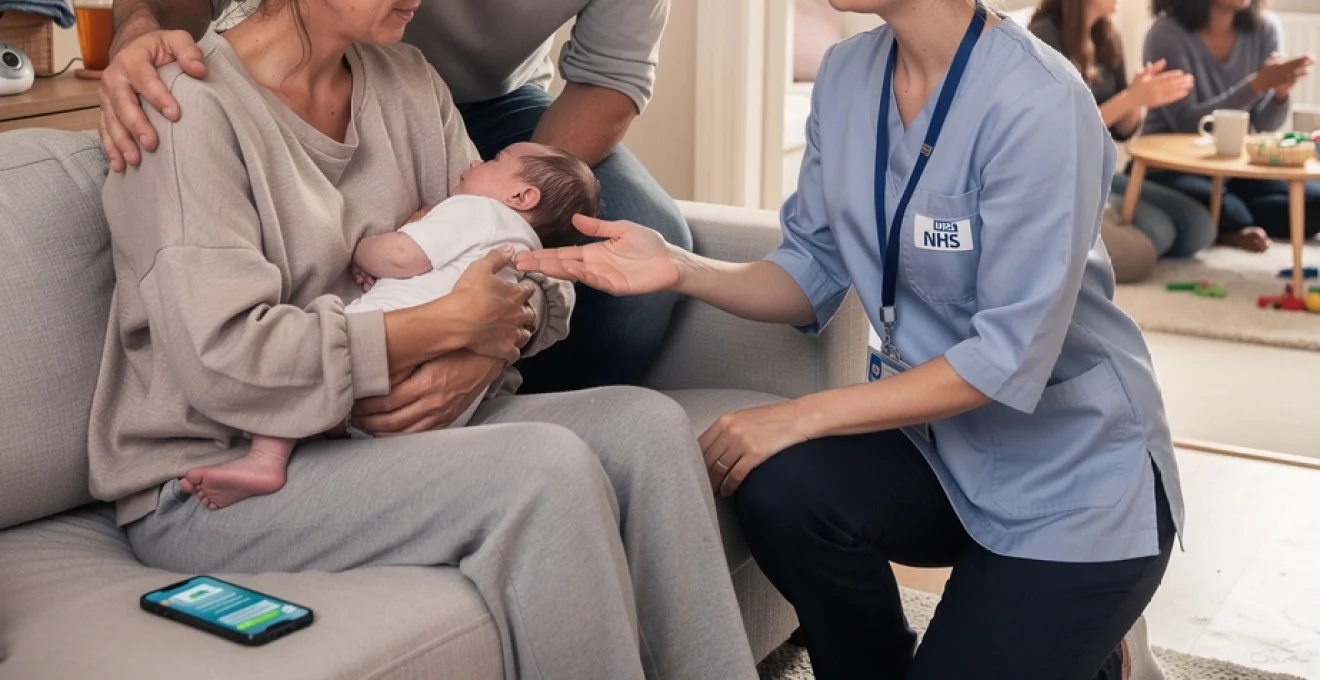
Health visitors are qualified nurses or midwives with additional training in community public health who support families with children under five. They are often one of the first points of contact for postnatal support, offering home visits, developmental checks, feeding advice, and signposting to local resources. Importantly, they are also trained to recognise signs of postnatal depression and anxiety and can refer you to specialist services if needed.
In many areas, dedicated perinatal mental health teams work within the NHS to provide assessment and treatment for women experiencing more severe or complex mental health difficulties during pregnancy and the first year postpartum. Support might include talking therapies, medication management, group programmes, or partner-inclusive interventions. If you are struggling, you can speak to your GP, midwife, or health visitor about a referral. Asking for this level of help is not an overreaction; it is a proactive step to protect your mental health at a time when you are particularly vulnerable.
National childbirth trust (NCT) support groups and local networks
The National Childbirth Trust (NCT) is best known for its antenatal classes, but its support extends well beyond birth preparation. Many areas have NCT-run postnatal groups, coffee mornings, and breastfeeding support sessions where you can connect with other parents who are at a similar stage. These networks can become a crucial part of your « village, » offering both emotional reassurance and practical tips from people who genuinely understand what you are going through.
Even if you did not attend NCT classes during pregnancy, you can usually join local events or online groups after your baby is born. The value of having a regular space where you can say, « Last night was awful, I’m exhausted, » and hear several other parents say, « Same here, » cannot be overstated. This normalisation reduces isolation and makes it easier to ask for more tangible help—such as swapping childcare for an hour, sharing hand-me-downs, or simply walking together so both babies nap while you talk.
Home-start UK volunteer programmes and family action services
For families needing more hands-on support, organisations like Home-Start UK can be transformative. Home-Start trains volunteers—often parents themselves—to offer regular, non-judgemental support to families with young children. A volunteer might visit once a week to help with practical tasks, provide adult conversation, accompany you to appointments, or offer gentle encouragement as you navigate the challenges of early parenthood.
Similarly, Family Action provides a range of services for families under pressure, including perinatal mental health support, parenting programmes, and targeted help for those experiencing financial or social difficulties. These services are designed with the recognition that no one is meant to do this alone. If you feel you are barely keeping your head above water, reaching out to a charity like Home-Start or Family Action is not an admission of defeat; it is a wise use of resources specifically created for situations like yours.
Online communities: mumsnet forums and peanut app connections
For many mothers, especially those without nearby family or friends, online communities offer a vital sense of connection. Platforms such as Mumsnet provide forums where you can ask questions anonymously, read about others’ experiences, and realise that your worries—from feeding challenges to relationship tensions—are widely shared. While online advice should never replace personalised medical or psychological support, it can be incredibly reassuring to know that you are not the only one facing a particular challenge.
Apps like Peanut take this a step further by helping mothers connect locally, functioning a bit like a friendship-focused dating app. You can match with other mums based on your children’s ages, interests, or location and arrange meetups, park walks, or coffee dates. Remember the statistic from Peanut’s own research: if 72% of mothers feel invisible and 93% feel unappreciated, you can safely assume that many women in your area are also longing for connection and would welcome being asked, « Do you fancy a walk this week? » Sometimes, asking for help starts with something as simple as sending that first message.
Communication strategies for articulating maternal needs to partners and family
Even when you are clear that you need more support, putting that into words—especially with partners or family members—can feel daunting. Many mothers worry about being seen as demanding, ungrateful, or incapable. Yet most partners and relatives are not mind readers; they may genuinely want to help but simply do not know what would be most useful or when to step in. Effective communication is therefore a key skill in learning how to ask for and receive help in motherhood.
One helpful approach is to be specific and practical in your requests. Instead of saying, « I need more help, » you might try, « Could you take over bedtime on Tuesdays and Thursdays so I can go to my exercise class? » or « When you come home from work, can you spend 30 minutes with the baby so I can shower and have a quiet cup of tea? » Specificity reduces ambiguity and makes it easier for others to say yes. It can also help to explain the « why » behind your request: « I’m finding it hard to switch off and I’m worried about how tired I’m getting. Having this regular break would really help me cope better. »
Timing and tone also matter. Trying to negotiate new arrangements in the middle of an argument or at 3 a.m. when you are both exhausted is unlikely to go well. Where possible, choose a calm moment and frame the conversation as a shared problem you are working on together rather than a list of grievances. You might say, « We’re both tired and this stage is intense. Can we sit down and look at how to make things feel fairer and more sustainable for both of us? » Approaching it as a team issue can reduce defensiveness and increase willingness to collaborate.
Finally, remember that asking for help is a skill that gets easier with practice. You may not phrase it perfectly the first time, and that is okay. Each honest conversation, each small request, is part of building a new pattern in which your needs matter alongside everyone else’s. By modelling this for your children—showing them that it is normal to reach out, to be vulnerable, and to share the load—you are not only making your own motherhood journey more sustainable; you are teaching the next generation that being strong and being supported can, and should, go hand in hand.