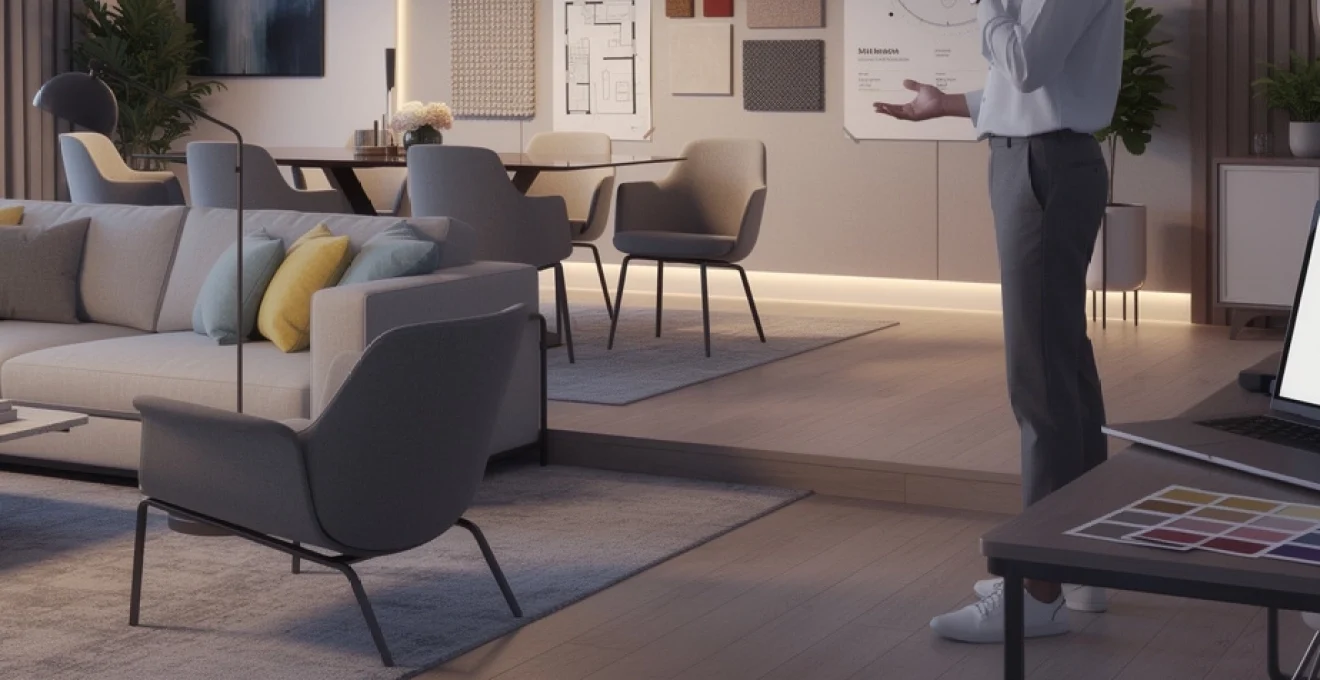
Interior design transcends mere decoration, embodying a sophisticated discipline that harmonises functionality with aesthetic appeal. The modern homeowner faces an unprecedented array of choices in materials, technologies, and design philosophies, making the journey towards creating exceptional living spaces both exciting and potentially overwhelming. Professional interior designers employ systematic methodologies, grounded in psychological principles and spatial theory, to transform ordinary rooms into extraordinary environments that enhance daily living experiences.
The mastery of residential interior design requires understanding how human behaviour intersects with architectural elements, colour psychology, and material properties. Contemporary design practices integrate traditional principles with cutting-edge technologies, sustainable materials, and wellness-focused approaches. Whether you’re embarking on a complete home renovation or seeking to refresh individual rooms, developing expertise in fundamental design concepts will empower you to make informed decisions that reflect your personal style whilst optimising spatial functionality.
Understanding fundamental design principles and spatial psychology
The foundation of exceptional interior design rests upon timeless principles that govern visual perception and spatial relationships. These fundamental concepts, when properly applied, create environments that feel naturally balanced and psychologically comfortable. Understanding how the human eye processes visual information within interior spaces enables you to manipulate proportion, scale, and composition with confidence and precision.
Golden ratio applications in room proportions and furniture placement
The golden ratio, mathematically expressed as 1:1.618, appears throughout nature and classical architecture, creating inherently pleasing proportions that resonate with human visual preferences. In interior design, this ratio can be applied to room divisions, furniture arrangements, and decorative element placement. When planning seating areas, consider positioning your main sofa at approximately 61.8% of the room’s length from one wall, creating a naturally balanced focal point. This mathematical principle also guides artwork sizing, where pieces should occupy roughly 38.2% of the wall space above furniture for optimal visual impact.
Professional designers frequently employ the golden ratio when selecting furniture pieces, ensuring that coffee tables measure approximately 61.8% of the sofa’s length. This creates subconscious visual harmony that makes spaces feel more comfortable and naturally arranged. The principle extends to vertical elements, where ceiling treatments, tall furniture, or architectural features positioned at golden ratio proportions enhance the room’s overall aesthetic appeal.
Rule of thirds implementation for visual balance and focal points
Borrowed from photography and visual arts, the rule of thirds divides any space into nine equal sections using two horizontal and two vertical lines. Positioning key design elements along these lines or at their intersections creates dynamic visual interest whilst maintaining balance. When arranging wall art, place important pieces at the intersection points rather than centring them on the wall, which often appears static and predictable.
This principle proves particularly valuable when planning room layouts. Position major furniture pieces along the tertiary lines rather than pushing everything against walls or centring items precisely. For instance, floating a dining table slightly off-centre within a room, aligned with rule-of-thirds guidelines, creates more sophisticated spatial relationships than traditional centred placement. Strategic off-centre positioning adds visual tension that keeps spaces feeling dynamic and engaging.
Gestalt principles for creating cohesive interior environments
Gestalt psychology reveals how humans perceive visual elements as unified wholes rather than individual components. Interior designers leverage these principles to create cohesive environments where every element feels intentionally connected. The principle of similarity suggests that elements sharing common characteristics—colour, texture, shape, or size—will be perceived as related, even when separated spatially.
Implementing gestalt principles involves creating visual pathways through repetition and rhythm. Repeating a specific colour in three different locations throughout a room creates visual triangulation, whilst maintaining consistent material finishes across various furniture pieces establishes unity. The principle of proximity indicates that closely positioned elements appear related, making thoughtful grouping arrangements essential for successful interior compositions.
Proxemics theory for optimising traffic flow and social spaces
Proxemics, the study of spatial relationships and their impact on human behaviour, provides crucial insights for interior space planning. Different activities require specific spatial zones: intimate spaces (0-18 inches), personal spaces (18 inches-4 feet), social spaces (4-12 feet), and public spaces (12+ feet). Understanding these distances helps you arrange furniture to support intended social interactions whilst ensuring comfortable navigation through your home.
For example, in a living room designed for conversation, arranging seating so that people sit approximately 4–8 feet apart encourages relaxed dialogue without feeling either cramped or distant. Pathways should maintain at least 36–42 inches of clear width to accommodate comfortable circulation, with 48 inches preferred in high-traffic zones such as kitchens or hallways. Applying proxemics theory in your interior design helps you avoid layouts that appear visually appealing but feel awkward or socially uncomfortable in daily use.
Mastering colour theory and advanced lighting design techniques
Whilst furniture and finishes often receive the most attention, colour and lighting quietly determine how a room actually feels. The same interior design scheme can appear calm and cohesive or harsh and chaotic depending on how light interacts with your chosen palette. Professional designers therefore treat colour theory and lighting design as inseparable disciplines, using technical frameworks to support intuitive aesthetic decisions.
Kelvin temperature selection for circadian rhythm enhancement
The colour temperature of light, measured in Kelvin (K), significantly influences mood, alertness, and circadian rhythm. Cooler light (5000–6500K) mimics daylight and promotes concentration, whilst warmer light (2700–3000K) encourages relaxation and signals the body to wind down. When planning interior lighting, align colour temperatures with each room’s primary function and the time of day it is most used.
In home offices and kitchens where task performance and focus matter, specifying 3500–4000K lighting provides a crisp yet comfortable environment. Bedrooms and living rooms benefit from warmer 2700K sources, especially in evening hours when exposure to bluish light can suppress melatonin production and disrupt sleep cycles. For holistic interior design, consider tunable white LED systems or layered lighting schemes that allow you to shift colour temperature throughout the day, supporting healthier circadian rhythms without sacrificing visual comfort.
Munsell colour system integration for professional palette development
The Munsell colour system offers a scientific approach to palette development by categorising colours according to hue (basic colour family), value (lightness), and chroma (intensity). Rather than selecting paint colours purely from small chips, you can use the Munsell framework to balance these three attributes across your interior design. For instance, combining medium-value, low-chroma wall colours with higher-chroma accents creates depth without overwhelming the senses.
When planning an interior scheme, aim for a controlled range of values and chroma levels. A typical professional palette might include one dominant low-chroma neutral for large surfaces, one or two medium-chroma hues for upholstery and textiles, and a limited number of high-chroma accents for artwork or accessories. By maintaining consistency in value and carefully varying chroma, you achieve the “edited” look characteristic of designer interiors, even when mixing multiple colours and patterns.
Layered lighting strategy using ambient, task, and accent sources
Effective lighting design relies on layering three primary types of light: ambient, task, and accent. Ambient lighting provides overall illumination—typically via ceiling fixtures, recessed downlights, or large pendants—ensuring that the room is evenly lit and safe to navigate. However, ambient light alone often produces flat, uninspiring spaces, which is why professional interior design always incorporates additional layers.
Task lighting targets specific activities requiring higher illumination levels and reduced glare, such as reading, food preparation, or grooming. Desk lamps, under-cabinet lighting, and adjustable reading sconces all fall into this category. Accent lighting, by contrast, exists primarily to create drama and highlight focal points: picture lights over artwork, wall washers, LED strips in niches, or uplighters behind plants. When you combine these layers thoughtfully and place them on separate circuits or dimmers, you gain precise control over the room’s atmosphere—from bright and functional to soft and intimate—with a single space supporting multiple moods.
CRI values and LED technology for accurate colour rendering
Colour Rendering Index (CRI) measures how accurately a light source reveals colours compared to natural daylight, on a scale from 0 to 100. In residential interior design, selecting lamps with a CRI of 90 or above ensures that fabrics, finishes, and skin tones appear natural rather than dull or distorted. Low-CRI lighting can make even carefully chosen palettes look muddy or mismatched, undermining your design work.
Modern LED technology offers energy efficiency, long lifespan, and precise control over both CRI and colour temperature. When specifying fixtures, review not only wattage and Kelvin rating but also CRI and lumen output to ensure adequate brightness and true-to-life colour. High-quality LEDs may cost slightly more initially, but they protect your investment in paint, textiles, and artwork by presenting colours as you intended. Think of them as the “lens” through which your entire interior is viewed—if the lens is poor, everything else suffers.
Space planning methodologies and ergonomic considerations
Space planning translates abstract design principles into practical room layouts that support daily life. It blends aesthetics with ergonomics, ensuring that interiors not only look harmonious but also feel comfortable to inhabit over time. By incorporating anthropometric data, circulation analysis, and inclusive design standards, you can develop interior layouts that perform as well as they photograph.
Anthropometric data application for furniture sizing and placement
Anthropometrics—the study of human body measurements—provides objective benchmarks for furniture dimensions and clearances. Rather than guessing whether a dining table is too high or a sofa seat too deep, you can reference established ranges derived from population data. For example, typical dining chair seat heights range from 17–19 inches (43–48 cm), paired with table heights of 28–30 inches (71–76 cm), maintaining ergonomically comfortable legroom.
Clearances between furniture pieces also benefit from anthropometric guidelines. An ideal distance between a sofa and coffee table is approximately 14–18 inches (35–45 cm), close enough to set down a drink without straining yet far enough to allow easy passage. Desk depths of at least 24 inches (61 cm) provide sufficient space for screens and keyboards, whilst work surfaces in kitchens should generally fall between 34–36 inches (86–91 cm) high for most adults. Using these data-driven standards in your interior design plans reduces trial and error and results in rooms that feel intuitively “right” to use.
Circulation pattern analysis using bubble diagrams
Before committing to detailed floor plans, many designers begin with bubble diagrams—simple sketches that map out functional zones and circulation patterns as overlapping circles. This low-tech tool allows you to explore how activities relate to one another without becoming distracted by specific furniture pieces. You might, for instance, represent “cooking,” “casual dining,” and “pantry storage” as separate bubbles in an open-plan kitchen, then adjust their positions until movement between them feels efficient.
Once you understand these relationships, you can translate the bubbles into scaled plans, maintaining clear pathways that support how you actually live. Aim to keep primary circulation routes free from obstructions and avoid forcing traffic through intimate seating groupings or across television viewing sightlines. By analysing circulation early, you prevent the common mistake of creating visually appealing layouts that become frustrating bottlenecks in daily use.
Universal design standards for accessible interior solutions
Universal design seeks to create environments usable by as many people as possible, regardless of age, size, or ability. Rather than treating accessibility as an afterthought, contemporary interior design increasingly integrates these standards from the outset. Clear doorway widths of at least 32–36 inches (81–91 cm), step-free thresholds, lever-style door handles, and adequate turning radii (typically 60 inches or 152 cm diameter) all contribute to inclusive, future-proof spaces.
In bathrooms, features such as walk-in showers with linear drains, reinforced walls for potential grab bar installation, and comfort-height toilets improve safety and usability without compromising aesthetics. Kitchens benefit from varied counter heights, pull-out shelves, and D-shaped handles that accommodate limited grip strength. Even if you do not currently require accessible solutions, adopting universal design principles increases long-term flexibility, supports ageing in place, and often enhances overall spatial comfort for all occupants.
Feng shui bagua map integration with contemporary design principles
Feng Shui, the ancient Chinese art of spatial arrangement, offers another lens through which to evaluate interior design decisions. The Bagua map divides a floor plan into nine energy sectors, each corresponding to aspects of life such as career, relationships, and health. While some homeowners embrace Feng Shui as a spiritual practice, others treat it as a conceptual framework that encourages intentional zoning and balance.
To integrate the Bagua map with modern interiors, overlay it onto your home’s plan with the career sector aligned to the main entrance wall. You can then reinforce each area through colour, materials, and function without resorting to literal symbolism. For example, the “wealth” corner might host well-maintained plants and curated artwork rather than overt talismans. By blending Feng Shui concepts with evidence-based design principles—such as good circulation, daylight access, and ergonomic furniture—you create interiors that feel both energetically and practically aligned.
Professional material selection and specification processes
Material selection in interior design extends far beyond aesthetic preference; it encompasses durability, maintenance, acoustics, sustainability, and health considerations. Professional designers follow structured specification processes to ensure that each surface and finish suits its intended context. Start by defining performance requirements—slip resistance in bathrooms, stain resistance in family rooms, acoustic absorption in home offices—then shortlist materials that meet those criteria before assessing visual qualities.
For flooring, this might mean comparing engineered wood with luxury vinyl tile and porcelain stoneware, evaluating not only appearance but also wear ratings, moisture tolerance, and lifecycle costs. Upholstery fabrics should be assessed by rub count (Martindale or Wyzenbeek), pilling resistance, and lightfastness to avoid premature fading or wear, especially in sunny rooms. Increasingly, homeowners also examine VOC emissions, formaldehyde content, and third-party certifications such as GREENGUARD or Cradle to Cradle, aligning material choices with wellness-focused interior design and sustainable living goals.
Budget management strategies for phased interior renovations
Even the most refined interior design concept must operate within financial constraints. Rather than viewing budget as a limitation, treat it as a design parameter that encourages strategic decision-making. Professional designers often divide projects into phases, prioritising foundational elements—space planning, electrical work, and major finishes—before allocating funds to decorative layers that can be added over time.
Begin by establishing a realistic overall budget, then break it down by room and category (construction, finishes, fixtures, furniture, accessories, and contingency). Allocate higher proportions to items that are difficult or expensive to change later, such as flooring, built-in cabinetry, and plumbing layouts. Sofas, dining chairs, and mattresses merit investment due to their heavy use and impact on comfort, whilst decorative pillows, small side tables, and artwork can be upgraded gradually. Maintaining a 10–20% contingency fund protects you from unforeseen costs, allowing your design vision to remain intact when surprises inevitably arise behind walls or under floors.
Digital design tools and professional documentation methods
Digital tools have transformed residential interior design, making professional-level planning accessible to homeowners. Simple floor-planning applications allow you to create scaled layouts, test furniture arrangements, and even visualise 3D views before committing to purchases. More advanced software, such as SketchUp, Revit, or professional CAD programs, supports detailed construction drawings, lighting plans, and custom joinery designs that contractors can price and implement accurately.
Alongside spatial modelling, digital mood boards and specification schedules help organise the many decisions involved in a project. You might compile finishes, fixtures, and furnishings in a visual board, then document each item’s supplier, dimensions, finish code, and lead time in a spreadsheet or design management platform. Clear documentation reduces errors, prevents costly ordering mistakes, and ensures that your interior design intent survives the transition from concept to installation. By combining these digital methods with the psychological and spatial principles outlined above, you equip yourself with both the creative vision and the technical tools required to master interior design in your home.