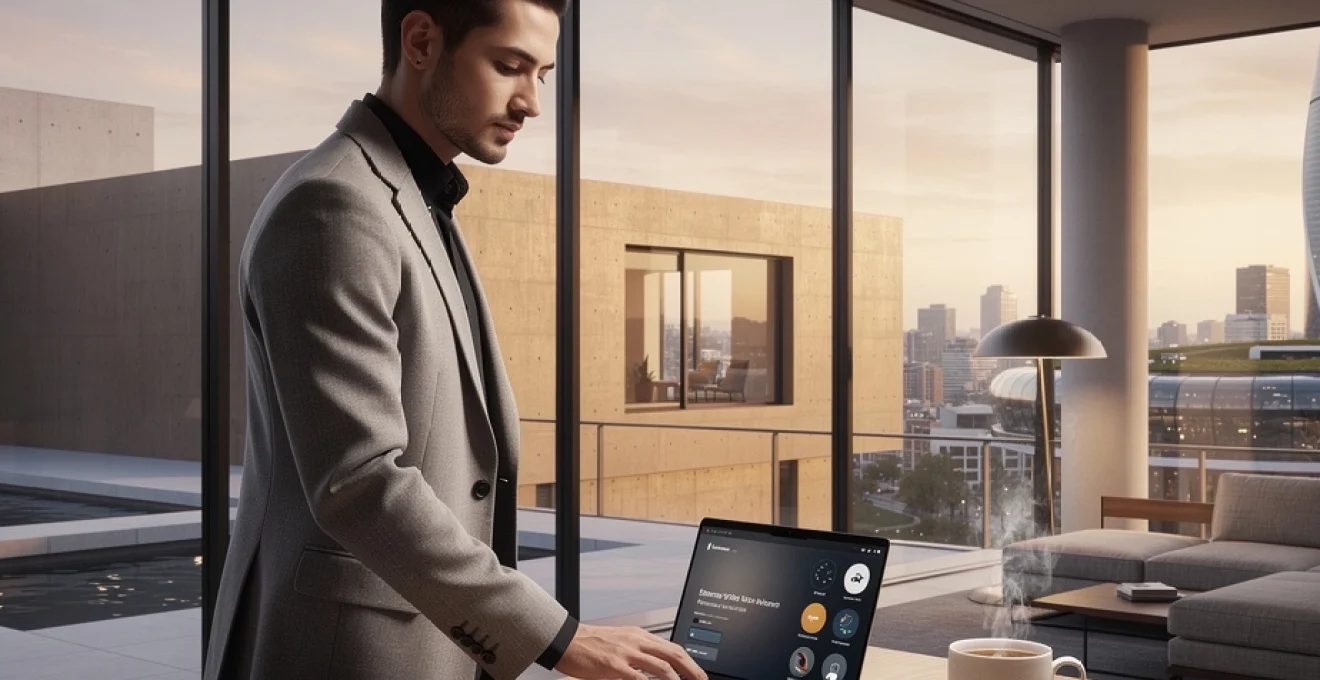
Elegance in contemporary society transcends the superficial markers of wealth or designer labels that often dominate popular perception. True elegance emerges from a sophisticated understanding of restraint, intentionality, and the masterful balance between simplicity and refinement. In our increasingly complex world, where excess often masquerades as luxury, genuine elegance stands as a beacon of thoughtful curation and conscious choice. This concept has evolved beyond traditional notions of aristocratic refinement to encompass a broader philosophy that integrates sustainable practices, technological sophistication, and authentic personal expression. Modern elegance manifests across diverse domains—from architectural spaces that breathe with minimalist precision to digital interfaces that anticipate user needs with seamless grace.
Philosophical foundations of contemporary elegance theory
The theoretical underpinnings of modern elegance draw from multiple philosophical traditions that emphasise function over ornament and quality over quantity. This approach challenges conventional luxury paradigms by prioritising enduring value and thoughtful design principles that stand the test of time.
Minimalist aesthetic principles in dieter rams’ design philosophy
Dieter Rams revolutionised design thinking through his ten principles of good design, establishing a framework that continues to influence contemporary elegance. His philosophy centres on the belief that good design is as little design as possible, emphasising functionality whilst eliminating superfluous elements that might distract from the object’s primary purpose. This approach resonates deeply with modern elegance theory, which values clarity and purposefulness above decorative complexity.
Rams’ principle that “good design is honest” particularly speaks to contemporary elegance seekers who value authenticity over artifice. His work demonstrates how restraint can amplify sophistication, creating products that feel both timeless and immediate. The lasting influence of his Braun designs illustrates how elegant solutions often emerge from rigorous editing rather than elaborate addition.
Marie kondo’s spatial harmony methodology and intentional living
The KonMari method represents a philosophical shift towards intentional curation of personal environments, aligning closely with contemporary elegance principles. Kondo’s approach transcends mere organisation, advocating for a deeper relationship with material possessions based on joy and purposefulness. This methodology emphasises respect for objects and spaces, creating environments that support both aesthetic appreciation and functional efficiency.
Her concept of “spark joy” provides a practical framework for evaluating the role of objects in elegant living. This approach encourages individuals to maintain only items that contribute meaningfully to their lives, resulting in spaces that feel both serene and sophisticated. The methodology’s emphasis on gratitude and mindful consumption aligns with sustainable luxury paradigms that define modern elegance.
Bauhaus movement’s functional beauty paradigm in modern applications
The Bauhaus movement established fundamental principles that continue to shape contemporary elegance through its integration of craftsmanship, functionality, and aesthetic beauty. This approach rejected artificial distinctions between fine art and applied design, advocating for a holistic understanding of elegant living that encompasses everything from architecture to everyday objects. The movement’s emphasis on honesty in materials and construction resonates with current sustainable luxury trends.
Modern applications of Bauhaus principles appear in everything from smartphone design to sustainable fashion. The movement’s legacy demonstrates how elegant solutions emerge from understanding the essential nature of materials and functions, rather than imposing decorative elements that serve no practical purpose.
Scandinavian hygge culture’s influence on refined simplicity
Scandinavian design philosophy contributes significantly to modern elegance through its emphasis on comfort, functionality, and connection to natural elements. Hygge culture promotes a sophisticated understanding of contentment that values quality experiences over material accumulation. This approach creates elegant living environments that prioritise wellbeing and authentic social connection.
The hygge influence on contemporary elegance extends beyond interior design to encompass lifestyle choices that emphasise balance and mindfulness. This cultural approach demonstrates how elegance can emerge from simplicity when combined with deep appreciation for natural materials, thoughtful craftsmanship, and genuine human connection.
Architectural manifestations of elegant modernism
Contemporary architecture provides compelling examples of how elegance manifests through spatial design,
demonstrating how light, materiality, and proportion can work together to create spaces that feel both grounded and transcendent. When elegance is treated as a guiding principle rather than an aesthetic afterthought, buildings begin to function as quiet companions to daily life, supporting clarity, focus, and emotional calm.
Tadao ando’s concrete minimalism and spatial meditation techniques
Tadao Ando’s architecture embodies a radical form of elegant minimalism, where exposed concrete, natural light, and voids become instruments of contemplative experience. His buildings, such as the Church of the Light in Osaka, illustrate how a single cut of light through concrete can communicate more powerfully than a dozen decorative features. In this sense, Ando’s work aligns with modern elegance by prioritising emotional impact and spatial clarity over ornamental excess.
Ando often speaks of architecture as a form of spatial meditation, where circulation paths, framed views, and controlled acoustics guide the visitor into a slower, more reflective state. This is elegance as an experiential quality: a careful orchestration of silence, shadow, and proportion that encourages introspection. In contemporary urban life, where overstimulation is common, such spaces feel almost luxurious in their restraint, reminding us that simplicity can be a powerful tool for psychological wellbeing.
John pawson’s reductive architecture in contemporary residential design
John Pawson advances elegant modernism through what he calls “the search for simplicity,” a design approach that strips residential architecture down to essential lines, volumes, and materials. His work demonstrates that pared-back interiors are not about austerity; instead, they create room for light, texture, and human presence to take centre stage. Smooth plaster walls, pale timber floors, and discreet storage solutions work together to cultivate a calm, ordered environment.
In many of Pawson’s homes, everyday objects are either meticulously chosen or intentionally hidden, reinforcing the idea that elegant living begins with considered editing. This reductive architecture resonates deeply with people seeking a minimalist lifestyle with warmth, rather than clinical minimalism. By integrating practical needs—like generous storage, intuitive circulation, and subtle zoning—into clean-lined spaces, Pawson proves that elegance in modern life is as much about how a space supports its occupants as how it looks in photographs.
Zaha hadid’s parametric elegance in fluid structural forms
Where Ando and Pawson emphasise quiet restraint, Zaha Hadid’s work represents another dimension of modern elegance: fluid dynamism made possible by advanced computational design. Her buildings, from the Heydar Aliyev Center in Baku to the MAXXI Museum in Rome, embody a parametric elegance where curves, sweeps, and flowing surfaces appear almost weightless despite their monumental scale. Rather than relying on applied ornament, Hadid’s architecture derives its sophistication from complex geometries embedded in the structure itself.
These fluid forms demonstrate that contemporary elegance does not have to be purely minimal or rectilinear; it can also be expressive, experimental, and technologically ambitious. What keeps Hadid’s work firmly within the realm of elegance is its underlying coherence: every curve follows a logic, every gesture relates to circulation, views, or structural flow. In a world where spectacle often overrides substance, her buildings remind us that innovation and refinement can coexist when guided by a strong conceptual framework.
Apple park’s biophilic integration and technological sophistication
Apple Park in Cupertino serves as a large-scale case study of elegant modernism translated into a corporate campus. Designed in collaboration with Foster + Partners, the circular “spaceship” structure is wrapped in giant glass panels and set within an expansive landscape of native trees and walking paths. This integration of biophilic design and high technology illustrates how elegance today frequently involves harmonising digital tools with human and ecological needs.
The building’s seamless glass facades, carefully tuned acoustics, and unobtrusive environmental systems support a user experience that feels effortless despite immense technical complexity. From an elegance perspective, the true achievement lies in how invisible the technology becomes to the daily user: climate control, energy management, and connectivity recede into the background, allowing comfort and clarity to take precedence. In this way, Apple Park embodies a central principle of modern elegance—sophisticated systems that quietly serve human wellbeing rather than demand attention.
Sartorial excellence through technical innovation
Clothing remains one of the most immediate expressions of elegance in modern life, yet the most refined garments today are defined less by visible logos and more by cut, construction, and material innovation. Technical advances in textile engineering and craftsmanship have enabled designers to create wardrobes that combine comfort, performance, and understated luxury. Here, elegance resides in the way fabric drapes, how a jacket moves with the body, or how a garment withstands years of wear while retaining its shape and character.
Savile row’s bespoke craftsmanship techniques in modern tailoring
Savile Row continues to represent the gold standard of elegant menswear, not because of flamboyant branding, but due to its obsession with proportion, fit, and hand-finishing. A bespoke suit from a renowned house on the Row can require over 50 hours of skilled labour, from hand-padding lapels to shaping canvases that mould to the wearer’s body over time. This process epitomises the notion that elegance in clothing is engineered from the inside out, often invisible to casual observers.
Modern clients increasingly seek suits that combine classic handcraft with contemporary functionality—lightweight canvases, breathable linings, and travel-friendly fabrics that resist creasing. This convergence of tradition and innovation mirrors broader trends in modern elegance: the aim is not to discard heritage, but to refine it for current lifestyles. For individuals cultivating an elegant wardrobe, the Savile Row philosophy offers a clear lesson: invest in fewer, better pieces that are tailored to your real life, not to fleeting trends.
Issey miyake’s pleating technology and geometric fabric engineering
Issey Miyake approached elegance through experimentation with materials and industrial processes, particularly evident in his iconic Pleats Please collections. By developing heat-set pleating techniques, Miyake created garments that are lightweight, travel-friendly, and remarkably sculptural, yet incredibly comfortable. This is a vivid example of how technical fabric innovation can redefine what everyday elegance looks and feels like.
The geometric patterns and architectural silhouettes of Miyake’s designs prove that elegance does not require rigid tailoring or conservative forms. Instead, fabric engineering allows clothing to adapt to movement, body diversity, and diverse lifestyles while maintaining visual coherence. For modern consumers, Miyake’s work suggests a practical approach to elegant dressing: prioritise garments that are easy to care for, resilient to wear, and expressive without being fussy. In other words, let technology handle the complexity so that the wearer can enjoy effortless refinement.
Brunello cucinelli’s cashmere mastery and artisanal manufacturing
Brunello Cucinelli has become synonymous with “quiet luxury,” a style of elegance that whispers rather than shouts. Central to the brand’s identity is its mastery of cashmere and other natural fibres, processed and dyed in the small Umbrian village of Solomeo. Artisans oversee each stage of production, from yarn selection to final finishing, ensuring that the tactile experience of wearing a Cucinelli garment is as refined as its silhouette.
This focus on material integrity and ethical manufacturing aligns with emerging values in modern elegance, where provenance and production ethics matter as much as appearance. Cucinelli has famously invested in restoring local architecture and supporting community life in Solomeo, positioning social responsibility as a core component of luxury. For those aiming to live more elegantly, this model reinforces a key idea: what you wear can embody not only personal taste, but also your stance on craftsmanship, community, and long-term value.
Loro piana’s fibre innovation in luxury textile development
Loro Piana operates at the intersection of science and sensibility, constantly pushing the boundaries of what natural fibres can achieve. From ultra-fine vicuña to its proprietary Storm System treatments that make wool and cashmere water-resistant, the company illustrates how fibre innovation underpins contemporary sartorial elegance. The beauty of a Loro Piana coat lies not only in its soft hand or subtle colour, but in its ability to perform in variable climates without compromising refinement.
As lifestyles become more fluid—moving between remote work, travel, and outdoor activities—such performance-driven luxury textiles help maintain an elegant presence in diverse settings. Instead of owning separate wardrobes for function and form, individuals can invest in pieces that satisfy both. This shift underscores a broader redefinition of elegance in modern life: the most sophisticated choices are often those that quietly integrate innovation, comfort, and durability beneath a deceptively simple surface.
Digital interface elegance and user experience sophistication
In an era where much of our daily life unfolds on screens, digital elegance has become just as important as physical refinement. Elegant interfaces are those that minimise friction, reduce cognitive load, and anticipate user needs with subtlety rather than flashy visuals. Think of the most intuitive apps you use: they rarely draw attention to their cleverness, instead allowing you to focus on the task at hand. This is the digital equivalent of a well-tailored suit or a perfectly proportioned room.
User experience (UX) research consistently shows that clean layouts, legible typography, and clear hierarchy improve both satisfaction and efficiency. According to a 2023 Nielsen Norman Group report, users form an impression of a website’s credibility in as little as 50 milliseconds, often based on visual simplicity and coherence. For designers and product teams, striving for elegance means editing relentlessly: removing unnecessary steps, clarifying language, and relying on consistent patterns. For everyday users, cultivating an elegant digital life might involve curating a minimal set of high-quality tools, turning off nonessential notifications, and organising information so that technology feels like an extension of your mind rather than a source of chaos.
Culinary refinement through molecular gastronomy and presentation artistry
Cuisine offers another lens through which to examine what defines elegance in modern life. Fine dining has evolved from heavy, elaborate dishes towards lighter plates that highlight seasonal ingredients, precise techniques, and thoughtful presentation. Molecular gastronomy—popularised by chefs like Ferran Adrià and Heston Blumenthal—initially captivated diners with foams, gels, and liquid nitrogen. Yet its lasting contribution to modern elegance lies not in theatrics, but in its scientific approach to flavour, texture, and sensory experience.
Many contemporary restaurants now use molecular techniques sparingly, as tools to intensify natural flavours or create surprising yet harmonious textures. This is similar to using advanced software in architecture or textiles: the technology is there, but elegance depends on restraint and coherence. Presentation artistry also plays a crucial role in culinary refinement; a well-composed plate uses negative space, colour contrast, and proportion much like a minimalist painting. For those seeking to bring this spirit into everyday life, you do not need laboratory equipment. Simple practices—like using smaller plates, arranging food with intention, and focusing on fresh, high-quality ingredients—can transform a weekday meal into an understated ritual of modern elegance.
Sustainable luxury and conscious consumption paradigms
Perhaps the most significant shift in our understanding of elegance today is the integration of sustainability and ethical considerations into the very definition of luxury. Increasingly, consumers recognise that an object cannot be truly elegant if its creation involved environmental degradation or exploitative labour. Reports from McKinsey and the Business of Fashion indicate that more than 60% of Gen Z and millennial consumers factor sustainability into their purchasing decisions, particularly in fashion and lifestyle categories. This trend reframes elegance as a holistic concept that accounts for lifecycle, provenance, and long-term impact.
Conscious consumption paradigms emphasise buying less but better—investing in timeless pieces, repairing rather than replacing, and supporting brands that demonstrate transparency across their supply chains. This is a direct extension of the minimalist and Bauhaus principles discussed earlier, now expanded to include ecological and social dimensions. For individuals, embracing sustainable luxury might mean choosing a single, beautifully made coat over multiple fast-fashion alternatives, or opting for modular furniture that can be reconfigured over time. For brands, it demands innovation in materials, circular design models, and honest communication about progress and limitations.
Ultimately, what defines elegance in modern life is not the pursuit of perfection, but the pursuit of alignment: between our values and our surroundings, our technology and our humanity, our desire for beauty and our responsibility to the planet. As we refine our choices—whether in architecture, clothing, digital tools, food, or consumption habits—we move closer to an understanding of elegance that is not only visually compelling, but deeply intelligent, humane, and enduring.