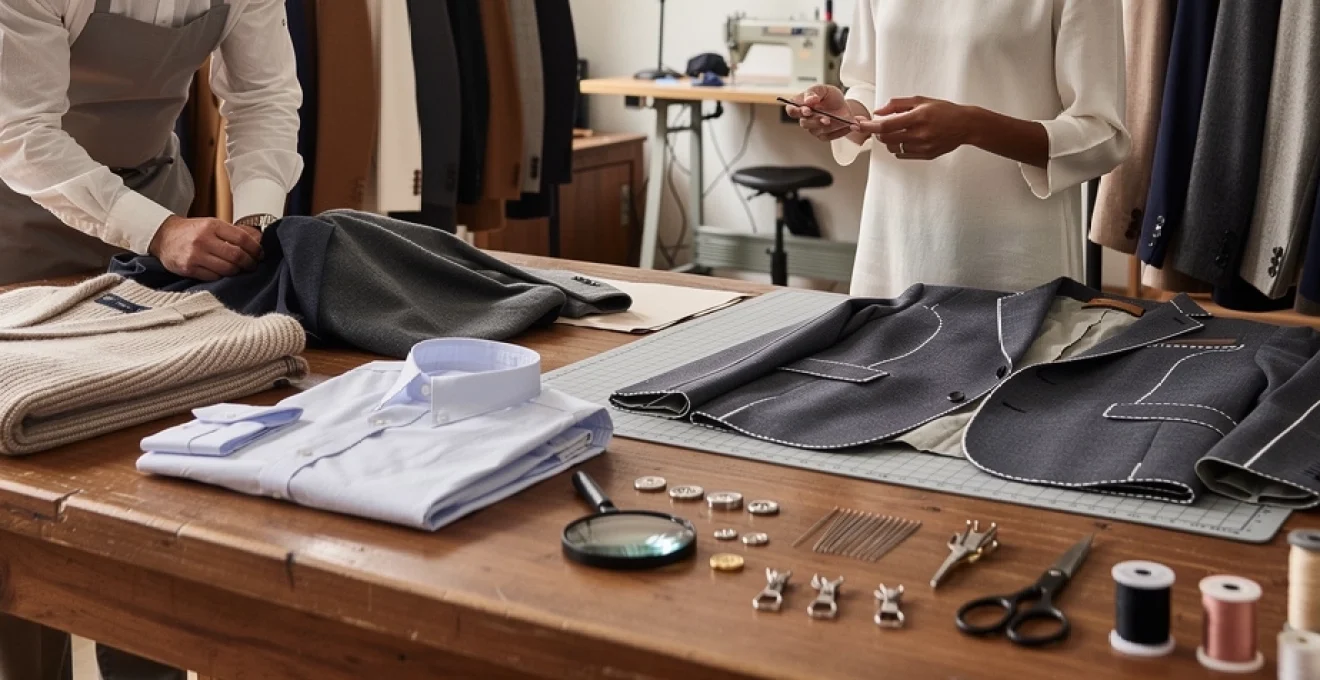
The fashion industry has become increasingly polarised between ultra-cheap fast fashion and luxury garments commanding thousands of pounds. This dramatic price disparity leaves many consumers wondering what truly determines a garment’s value beyond mere marketing and brand positioning. Understanding the complex factors that contribute to clothing prices requires examining everything from raw material sourcing to manufacturing processes, labour standards, and long-term sustainability considerations.
Recent studies have revealed surprising findings about the relationship between price and quality. Research from Leeds University tested 65 garments ranging from £6 to £150, discovering that a £5 t-shirt ranked as the second most durable among 17 tested items, even outperforming some pieces costing ten times more. This challenges conventional wisdom about price being a reliable indicator of quality, highlighting the need for consumers to develop more sophisticated evaluation criteria.
The true value of a garment extends far beyond its initial purchase price. When considering cost-per-wear calculations, ethical production standards, environmental impact, and craftsmanship quality, the seemingly expensive piece often proves more economical than its cheaper counterparts. Understanding these underlying factors empowers consumers to make informed decisions that align with both their budgets and values.
Material quality and construction methods that define garment value
The foundation of any valuable garment lies in its raw materials and construction techniques. Premium fabrics command higher prices due to their superior performance characteristics, longevity, and manufacturing complexity. Natural fibres typically outperform synthetic alternatives in breathability, comfort, and durability, though modern technology has narrowed this gap considerably in specific applications.
Natural fibre grading: cashmere, merino wool, and egyptian cotton standards
Cashmere quality varies dramatically based on fibre diameter, length, and origin. The finest cashmere fibres measure between 14-15 microns in diameter, with longer fibres producing stronger, less prone-to-pilling garments. Mongolian cashmere, particularly from the Alashan region, represents the gold standard due to harsh climate conditions that produce exceptionally fine, long fibres. Premium cashmere can cost £200-400 per kilogram compared to standard grades at £50-80.
Merino wool grading follows similar principles, with superfine merino measuring below 19.5 microns commanding premium prices. Australian and New Zealand merino wool undergoes rigorous testing for fibre diameter consistency, staple length, and crimp frequency. The difference between standard and superfine merino wool can represent a 300-400% price variation at the raw material level.
Egyptian cotton’s superiority stems from extra-long staple fibres measuring 35mm or longer, compared to standard cotton’s 25-30mm staples. Giza 45, the finest Egyptian cotton variety, produces exceptionally smooth, strong yarns that improve with washing. This cotton commands prices 5-8 times higher than conventional varieties due to limited growing regions and labour-intensive harvesting requirements.
Thread count and weave density impact on durability and feel
Thread count alone doesn’t determine fabric quality, contrary to popular marketing claims. Optimal thread counts vary by fabric type: percale cotton performs best between 200-400 threads per inch, while higher counts can create overly dense, less breathable fabrics. Luxury shirting typically uses thread counts between 120-200, prioritising weave quality and fibre length over sheer number density.
Weave structure significantly impacts garment performance and cost. Plain weaves offer maximum durability for workwear applications, while twill weaves provide superior drape and wrinkle resistance for tailoring. Jacquard weaving creates complex patterns but requires specialised machinery and programming, increasing production costs by 40-60% compared to basic weaves.
Seam construction techniques: french seams versus serged finishes
French seams represent the pinnacle of garment construction, enclosing raw edges completely within the seam for superior durability and finish quality. This technique requires additional fabric allowance and skilled seamstresses, increasing production time by 60-80% compared to standard seaming methods. French seams prevent fraying, reduce skin irritation, and maintain structural integrity through repeated washing cycles.
By contrast, overlocked or serged seams are faster and cheaper to produce. They leave the raw edge enclosed by looping threads rather than by folding the fabric in on itself. A well-executed serged seam can still be durable, especially in knitwear and casual garments, but it will rarely match the refined feel and long-term robustness of a French seam. This is why you often see French seams and other enclosed constructions reserved for premium blouses, lingerie, and fine shirting where comfort and longevity justify the extra cost.
Between these extremes lie a range of intermediate techniques—flat-felled seams on denim, bound seams in tailored jackets, or Hong Kong finishes on unlined coats. Each adds incremental labour minutes, and in garment manufacturing time is money. When you inspect a piece in person, turning it inside out and checking the seam finishes is one of the most reliable ways to judge whether its price reflects careful construction or simply a high-fashion logo.
Hardware quality assessment: YKK zippers and metal fastening longevity
Hardware is another often overlooked but critical factor in garment value. A high-quality zipper from manufacturers like YKK, Riri, or Lampo can cost several times more than a no-name alternative, yet it drastically reduces the likelihood of failure. Premium zips use stronger metal teeth, smoother sliders, and more precise tolerances, which translates into reliable performance over thousands of openings and closings. When a zipper breaks, the entire garment becomes unwearable, so skimping here is a false economy.
Buttons, snaps, and buckles follow the same logic. Real horn, mother-of-pearl, corozo nut, and solid metal fastenings are more expensive but offer superior durability and a richer tactile experience compared with cheap plastic. You can test quality by gently tugging on buttons to see if they are cross-stitched and shanked, checking whether metal hardware feels weighty rather than hollow, and examining whether closures are reinforced with extra stitching. If the hardware looks flimsy, the garment is unlikely to justify a premium price tag, no matter how polished the marketing.
Manufacturing processes and labour costs behind premium pricing
Once we move beyond fabric and trims, labour becomes the dominant driver of a garment’s true cost. Every additional operation—pressing, hand-stitching, pattern matching, or quality inspection—adds minutes to production time, and those minutes must be paid for. This is where the difference between a £40 high-street blazer and a £800 tailored jacket often lies: not just in the materials used, but in how much skilled human time has been invested in making it. Understanding these manufacturing processes helps you see when higher prices correlate with genuine craftsmanship.
Hand-finished details: milanese buttonholes and hand-sewn hems
Hand-finishing is one of the most visible indicators of elevated garment construction. A Milanese buttonhole, for example, is entirely hand-stitched in dense silk thread over a carefully prepared “gimp” core, producing a raised, rope-like finish seen on the lapels of fine suits and sport coats. One buttonhole can take 15–30 minutes to execute properly, which explains why jackets featuring genuine Milanese work sit at the upper end of the price spectrum. Cheaper garments may imitate the look with machine embroidery, but the result is flatter and less durable.
Similarly, hand-sewn hems in trousers, skirts, and jackets are more flexible and easier to alter than machine-blind hems. The tiny, uneven stitches you see on the inside of a bespoke trouser cuff are not a flaw; they are evidence of careful, labour-intensive work that allows the fabric to hang cleanly and move with your body. Other time-consuming details—hand-attached collars, hand-set sleeves, or pick-stitching along lapels—do not always increase durability dramatically, but they do reflect a higher standard of tailoring and justify part of the garment’s premium price.
Ethical production standards: fair trade certification and living wages
Beyond craftsmanship, labour costs are also shaped by how workers are treated. Garments made under Fair Trade or similar ethical certifications incorporate not only minimum wage compliance but often living wages, safe working conditions, and community investment. These standards inevitably push production costs higher than those in factories where workers are paid pennies per piece. When a brand commits to Fair Trade, SA8000, or B Corp-aligned practices, you are partially paying for human dignity embedded in the supply chain.
This ethical premium may not be visible in the stitching or fabric hand-feel, which is why some shoppers question why an apparently simple t-shirt or sweatshirt can cost £40–£60. However, when you factor in fair labour, improved factory oversight, and environmental protections, that higher price begins to make sense. The key is transparency: reputable brands will share information about their factories, certifications, and wage commitments, allowing you to decide whether the extra cost aligns with your own values and definition of garment value.
Small-batch manufacturing versus mass production cost analysis
Another major determinant of price is production volume. Mass-market retailers may produce tens of thousands of units per style, spreading fixed costs such as pattern development, grading, and sampling over huge quantities. This scale allows them to offer lower retail prices, even when using mid-range fabrics. By contrast, small-batch or limited-run brands might only make 50–200 units of a design, which means the per-unit share of those same fixed costs is much higher.
In addition, small-batch production often takes place in smaller, more specialised factories that cannot compete with the efficiency of giant facilities geared toward fast fashion. On the upside, these workshops frequently offer better oversight, more flexibility in design, and the ability to experiment with higher-quality materials and complex constructions. When you choose a garment from an independent label producing in small batches, part of the price reflects this lack of economies of scale—and, in return, you often gain uniqueness and more responsible production.
Quality control protocols in luxury fashion houses like hermès and brunello cucinelli
Luxury houses justify their prices in part through rigorous quality control. Brands such as Hermès and Brunello Cucinelli implement multi-stage inspection processes where garments are checked at various points along the production line: after cutting, after assembly, and before final pressing and packing. Items that fail to meet precise standards for stitching, pattern alignment, or fabric consistency are reworked or rejected outright. This level of scrutiny reduces defects that would otherwise surface after purchase.
These protocols require dedicated staff and time, adding hidden labour costs that never appear on the care label but are built into the final retail price. While no brand is perfect, the probability that a Hermès shirt or Brunello knit arrives with a manufacturing fault is significantly lower than with ultra-fast fashion. If you have ever had a cheap garment fall apart after one wash, you have experienced the absence of robust quality control. Paying more for a piece from a house known for meticulous standards can thus be seen as an investment in reliability and longevity.
Brand heritage and design innovation as value drivers
Not all aspects of a garment’s price are strictly material or mechanical; some are intangible yet still meaningful. Brand heritage—decades or even centuries of specialised knowledge—can influence how well a garment is designed and how confidently you can trust its quality. A trench coat from a house that invented the style and has refined it for over 100 years draws on a deep archive of pattern cutting, fabric development, and real-world testing. That history is part of what you pay for, much like you would for a watch from a storied Swiss manufacturer.
Design innovation is another key value driver. When designers push boundaries in silhouette, construction, or technical performance, they often invest heavily in research and development, prototype testing, and custom fabrics. Think of a tailored jacket engineered for travel that resists wrinkles, repels water, and still looks sharp in a boardroom; creating that balance of form and function takes significant time and experimentation. This is why you will sometimes see two visually similar pieces—a minimalist black coat, for instance—priced very differently. One may be a simple pattern in a generic wool blend, while the other embodies years of refinement, proprietary fabrics, and subtle engineering that make it drape, age, and perform in a superior way.
Of course, branding can also inflate prices without corresponding substance. A logo alone does not guarantee quality, which is why learning to separate genuine heritage and innovation from pure status signalling is essential. When you evaluate whether a brand name is “worth it,” ask: does this label have a track record of durable, well-cut garments, or is it primarily selling cultural cachet? The answer will tell you whether the brand’s contribution to price reflects real garment value or merely perceived prestige.
Garment longevity and cost-per-wear calculations
One of the most practical ways to judge whether a garment is worth its price is to consider cost per wear. Instead of focusing solely on the number on the tag, you divide the price by the number of times you realistically expect to wear it. A £300 coat worn 150 times over five winters effectively costs £2 per wear, which may represent far better value than a £60 trend piece you wear three times and then discard. Viewed this way, long-lasting garments can be more economical than cheaper, disposable alternatives.
Longevity depends not only on initial quality but also on how repairable and timeless a garment is. Classic cuts, neutral colours, and robust constructions are more likely to remain in rotation for years, giving you a lower cost per wear. You can think of it like buying kitchen equipment: a well-made chef’s knife, sharpened and cared for, will outperform a drawer full of cheap blades that dull and break quickly. Likewise, investing in resolable shoes, jackets with replaceable linings, or knitwear that can be darned extends the useful life of your wardrobe and spreads the cost over many seasons.
Your own habits play a decisive role too. Proper washing, storage, and occasional mending can double or triple the lifespan of a quality garment. Choosing fabrics suited to your lifestyle—machine-washable wool blends if you lack time for dry cleaning, for instance—helps ensure that pieces are worn often rather than left unused. When you factor in these behaviours alongside construction quality, cost-per-wear analysis becomes a powerful tool to decide when a higher upfront price is genuinely justified.
Sustainable fashion economics and environmental impact pricing
In recent years, another dimension of garment value has gained importance: environmental impact. Producing clothes consumes water, energy, and raw materials, while generating emissions and waste. Brands that strive to reduce this footprint often incur higher costs, whether through organic fibres, cleaner dyeing technologies, or investments in recycling and repair schemes. When you see a premium price on a seemingly simple sustainable garment, you are often paying for these behind-the-scenes improvements.
This raises a crucial question: should a “worthwhile” garment be judged only by its quality and longevity, or also by the damage it avoids causing? If an item costs more because it uses less toxic chemistry, supports regenerative agriculture, or funds garment repair rather than disposal, many consumers now consider that added value. Understanding the economics of sustainable fashion helps explain why responsibly made clothes rarely compete with ultra-cheap fast fashion on price alone.
Organic certification costs: GOTS and OEKO-TEX standard 100 compliance
Organic and safety certifications provide independent verification that certain environmental and health standards have been met. The Global Organic Textile Standard (GOTS), for example, requires that at least 70% of fibres are certified organic and that processing facilities meet strict criteria for chemical use, wastewater treatment, and social compliance. Achieving and maintaining GOTS certification involves audits, documentation, and licence fees, all of which add to the cost of the final garment.
Similarly, OEKO-TEX Standard 100 focuses on testing finished textiles for harmful substances, ensuring that the garment is safe for human skin contact, including for babies and people with sensitivities. While OEKO-TEX certification does not necessarily mean a product is organic, it does guarantee a level of chemical safety beyond legal minimums. For brands, this means paying for lab testing, certification management, and sometimes reformulating dyes and finishes to comply. When you buy a t-shirt or bedding set displaying these labels, you are paying a modest premium to reduce your exposure to problematic chemicals and support cleaner production.
Carbon footprint offsetting in supply chain management
Reducing greenhouse gas emissions in fashion supply chains is complex, especially when raw materials, spinning, weaving, dyeing, sewing, and distribution may occur in different countries. Some brands are beginning to measure the carbon footprint of their garments and invest in offset programmes—such as reforestation or renewable energy projects—to compensate. While offsetting is not a perfect solution, it does represent an additional cost that purely price-driven brands usually avoid.
More advanced companies go further by redesigning their logistics and materials to prevent emissions in the first place: choosing sea freight over air where possible, using lower-impact fibres, or improving factory energy efficiency. All of these measures entail upfront investments that may raise the retail price but lower the garment’s true environmental cost. If you value a lower carbon wardrobe, looking for brands that publish lifecycle assessments or carbon disclosures can help you determine when a higher price is funding genuine climate action rather than empty claims.
Circular fashion models: stella McCartney and patagonia’s repair programmes
Circular fashion aims to keep garments in use for as long as possible through repair, resale, and recycling, rather than following a linear “buy, wear, bin” model. Brands like Stella McCartney and Patagonia have become well-known for offering repair services, take-back schemes, and durable designs that retain value in second-hand markets. Building such programmes requires infrastructure—trained technicians, spare parts, customer service systems—that traditional brands seldom invest in.
These circular services effectively extend the life of a garment beyond the first owner, improving its cost-per-wear and reducing waste. For instance, Patagonia’s lifetime repair commitment encourages customers to mend rather than replace items, which benefits both the planet and the perceived value of each piece. When a brand stands behind its products in this way, any price premium reflects not just the physical garment but an ongoing relationship and support network that keeps it useful for longer.
Deadstock fabric utilisation and zero-waste pattern making
Finally, innovative approaches to material use also influence price. Some labels purchase deadstock fabrics—unused rolls left over from larger brands’ production runs—and transform them into limited-edition garments. While deadstock can sometimes be acquired at a discount, working with it also presents challenges: quantities are finite, reordering is impossible, and patterns must be carefully engineered to make the most of what is available. You are often paying for design ingenuity and flexibility rather than standardised bulk ordering.
Zero-waste pattern cutting goes a step further by designing garments so that nearly every square centimetre of the fabric is used, leaving minimal offcuts. This can lead to unconventional seam lines or silhouettes, requiring skilled pattern makers and more time in development. The savings in raw material waste may partially offset these added labour costs, but zero-waste garments are rarely the cheapest option on the rack. Instead, their value lies in demonstrating that thoughtful design can reduce environmental impact without sacrificing beauty or function. For consumers seeking clothes that align with a lower-waste lifestyle, that added consideration can make a higher price feel not only justified, but responsible.