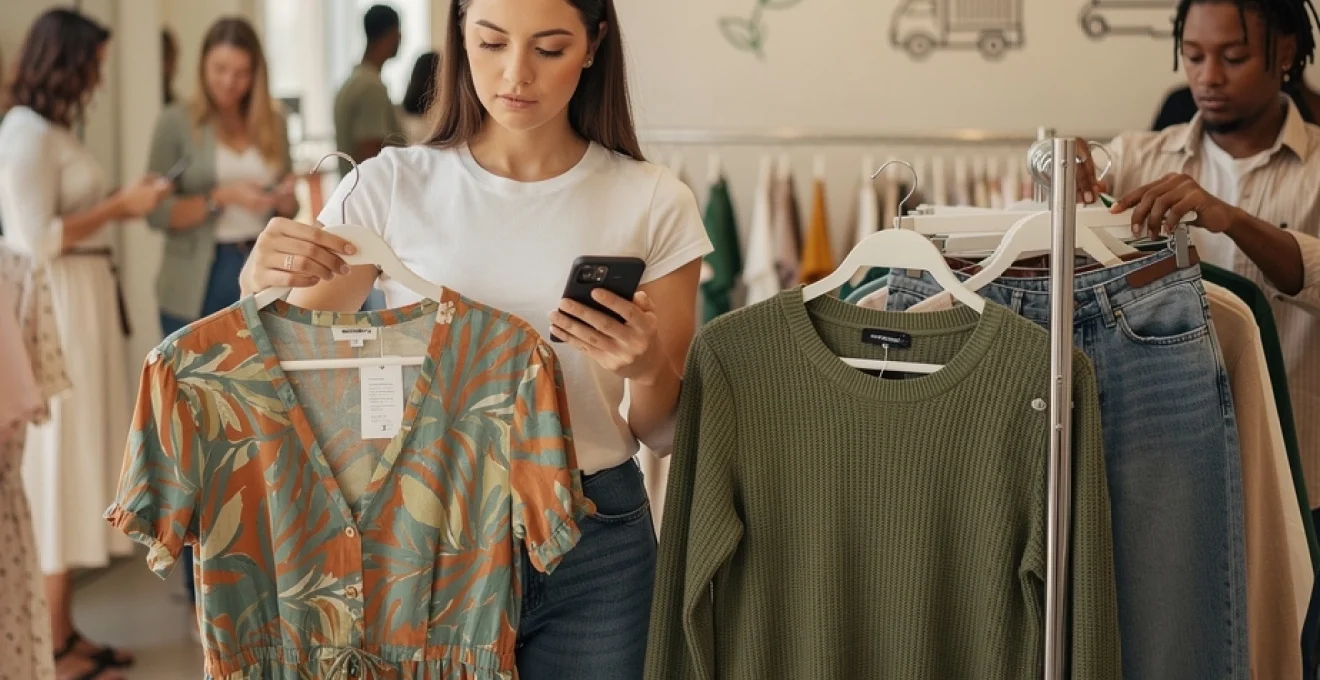
The global fashion industry produces over 100 billion garments annually, with fast fashion retailers like Shein adding up to 6,000 new styles daily to their platforms. This unprecedented pace of production has fundamentally transformed how consumers approach clothing purchases, creating a complex landscape where convenience and affordability often overshadow sustainability and ethical considerations. While completely avoiding fast fashion may seem impractical for many consumers, making more informed decisions within these ecosystems can significantly reduce environmental impact and support better industry practices.
Fast fashion’s business model relies on rapid trend cycles, low prices, and frequent inventory turnover, creating both opportunities and challenges for conscious consumers. Understanding how to navigate this system effectively requires knowledge of supply chain transparency, fabric quality assessment, cost-per-wear calculations, and sustainable shopping strategies. The key lies not in complete avoidance, but in developing the skills to identify higher-quality pieces, support more ethical practices, and maximise the lifespan of purchases within the fast fashion framework.
Understanding fast fashion supply chain transparency and ethical production standards
Supply chain transparency has become increasingly important as consumers demand greater accountability from fashion retailers. Transparency involves the disclosure of information about manufacturing processes, factory locations, worker conditions, and environmental practices throughout the production chain. Major fast fashion brands have made varying degrees of progress in this area, with some publishing detailed supplier lists whilst others remain largely opaque about their manufacturing networks.
Decoding fashion revolution’s transparency index rankings for major retailers
Fashion Revolution’s annual Transparency Index evaluates 250 major fashion brands across five key areas: policy and commitments, governance, traceability, know and show, and spotlight issues. The 2023 index revealed that most fast fashion giants scored below 50%, indicating significant room for improvement in transparency practices. Brands like H&M and Zara typically rank in the middle tier, whilst ultra-fast fashion retailers such as Shein and Temu consistently score poorly.
The index uses a scoring system that rewards brands for publishing supplier lists, disclosing factory locations, and providing information about worker welfare programmes. When evaluating fast fashion options, you can reference these rankings to identify retailers that demonstrate greater commitment to transparency. However, it’s important to note that higher transparency scores don’t automatically guarantee ethical practices – they simply indicate a brand’s willingness to share information about their operations.
Evaluating fair trade certified and GOTS organic cotton certifications
Third-party certifications provide valuable indicators of ethical and environmental standards within fast fashion supply chains. The Global Organic Textile Standard (GOTS) ensures that textiles contain a minimum of 70% organic fibres and meet strict environmental and social criteria throughout the supply chain. Fair Trade certification focuses on ensuring fair wages, safe working conditions, and community development for farmers and workers.
When shopping at fast fashion retailers, look for products that carry these certifications, even if they represent a small percentage of the brand’s overall offerings. Certified organic cotton items typically cost 20-30% more than conventional alternatives but offer superior quality and reduced environmental impact. Some fast fashion brands, including H&M and C&A, have begun incorporating certified materials into specific product lines, providing opportunities for more conscious consumption within their ecosystems.
Identifying greenwashing tactics in H&M conscious and zara join life collections
Greenwashing represents one of the most significant challenges when attempting to make ethical choices within fast fashion systems. Brands often create dedicated “sustainable” collections that may contain only marginally better materials or processes whilst the majority of their production remains unchanged. H&M’s Conscious collection and Zara’s Join Life range exemplify this approach, featuring items with organic cotton or recycled polyester alongside vague sustainability claims.
Critical evaluation of these collections reveals several red flags: limited transparency about specific environmental benefits, use of recycled materials that still contribute to microplastic pollution, and sustainability claims that apply only to material sourcing rather than entire production processes. Genuine sustainability initiatives should provide specific, measurable environmental benefits backed by third-party verification rather than relying solely on marketing language.
Many sustainability collections within fast fashion brands focus on material sourcing improvements whilst maintaining problematic production volumes and labour practices, creating an illusion of environmental responsibility that doesn’t address systemic issues.
Assessing living wage compliance through fashion checker database
Evaluating whether fast fashion brands pay a living wage across their supply chains is essential if you want your purchases to support more ethical production. The Fashion Checker database, originally developed by the Clean Clothes Campaign, compiles publicly available information and brand disclosures to assess wage practices at supplier factories. It distinguishes between legal minimum wages and living wages, highlighting that in many producing countries the legal minimum covers only a fraction of what workers actually need to live with dignity.
When researching a brand, you can use Fashion Checker to see whether it has mapped its supply chain, disclosed factory lists, and made credible commitments to pay living wages. Look for concrete data: are there time-bound targets, pilot projects with worker participation, or verified wage increases in specific regions? Vague statements about “fair compensation” without wage benchmarks or implementation timelines are a warning sign that the brand is using ethical language without delivering meaningful change on the ground.
Fashion Checker and similar tools are not perfect, but they help you distinguish between brands that are at least engaging with the living wage question and those that are ignoring it. If a retailer you often buy from has little or no information available, that is already an important data point about its priorities. In those cases, choosing to buy less, shifting part of your spending to more transparent competitors, or contacting customer service to ask about living wages can all be forms of consumer pressure that gradually influence the fast fashion landscape.
Fabric quality assessment techniques for durability and longevity
Even within fast fashion stores, fabric quality varies dramatically, and learning to assess it can significantly extend the life of your wardrobe. Durability is one of the most practical ways you can reduce your fashion footprint, because a garment worn 30–50 times has a much lower impact per wear than one that fails after a handful of outings. Simple, in-store checks of fabric density, fibre composition, seam construction and surface texture can help you avoid pieces that are likely to shrink, stretch, or fall apart prematurely.
Think of fabric quality assessment as a basic toolkit you can bring to every fitting room. You do not need specialist equipment; your eyes and hands are usually enough to spot the difference between a flimsy T-shirt that will twist after the first wash and a sturdier version that will hold its shape. By combining fibre knowledge with a few quick tests, you can make more informed choices even when your budget keeps you within fast fashion ecosystems.
Cotton thread count analysis and weave density evaluation methods
For cotton garments, overall weave density often matters more than the advertised thread count, especially outside of bedding and shirting. In fast fashion stores you are unlikely to see thread count listed, so you need to rely on visual and tactile cues instead. Hold the fabric up to the light: if you can clearly see your fingers or the outline of a pattern behind it, the weave is very loose and the item is more likely to stretch out or develop holes quickly.
Gently pull the fabric widthways and lengthways to see how much it distorts. A denser cotton jersey or plain weave will spring back to its original shape, while a loosely woven or knit fabric may stay warped or show tiny gaps between threads. You can also lightly rub the surface between your fingers; if it feels fuzzy before you have even worn it, that suggests short fibres and low-quality spinning, which tend to pill and thin out faster. Choosing heavier, tighter weaves for basics like T‑shirts, shirts and casual trousers will usually give you a much better cost-per-wear, even within the same price bracket.
In shirts and structured dresses, inspect the fabric at stress points such as cuffs, collars and button plackets. If the weave looks thinner or more transparent in these areas, it may not withstand frequent washing and ironing. On the other hand, garments with consistent density and a smooth, even surface are more likely to maintain their appearance over time, helping you build a more sustainable wardrobe even when shopping fast fashion.
Polyester blend composition impact on garment lifespan
Polyester and polyester blends dominate fast fashion because they are cheap and versatile, but not all synthetics perform the same way over time. Pure, very thin polyester can feel initially sleek yet quickly become snagged, shiny, or misshapen, especially in areas that experience friction such as inner thighs, underarms and seat seams. Blends that combine polyester with cotton, viscose or elastane can offer better comfort and durability, but only when the proportions are balanced.
A useful rule of thumb is to be cautious with garments that contain both a high percentage of polyester and more than 5–8% elastane, especially in low-cost leggings, dresses and tops. These pieces often lose elasticity after a few washes, leading to bagging, sagging and seam stress. Instead, look for mid-range blends such as 60–80% cotton with 20–40% polyester for T‑shirts and shirts, or 95% cotton with 5% elastane for body-hugging basics. These combinations tend to keep their shape longer while still being relatively affordable in fast fashion stores.
Because synthetic fibres shed microplastics when washed, extending the life of each polyester-blend garment also has a direct environmental benefit. If you do buy synthetic-heavy items, consider washing them in colder cycles, line-drying instead of tumble-drying, and using a microfibre-catching wash bag. These steps reduce fibre shedding and slow down fabric degradation, supporting both garment longevity and more responsible fast fashion consumption.
Seam construction quality indicators and reinforcement techniques
Fabric quality is only half of the durability equation; poor seam construction can cause garments to fail long before the fabric wears out. Before you buy, turn the piece inside out and examine the stitching. On side seams and shoulders, look for even stitches without loops, skipped areas or loose threads. Overlocked (serged) edges help prevent fraying, while a combination of overlocking and a straight stitch usually indicates a more robust construction than a single pass with minimal finishing.
Key stress points such as underarms, crotch seams, pockets and belt loops deserve special attention. Are there bar tacks or extra rows of stitching reinforcing these areas, or do they look as though they could tear if you sit down or stretch? Gently tug on the seam on either side; if you can see daylight between the stitches or hear threads snapping, that is a clear sign to leave the garment on the rack. Even within budget collections, some items will show better reinforcement, and prioritising those pieces can dramatically increase the number of wears you get.
Once you bring an item home, you can further extend its life with simple reinforcement techniques. Adding a few extra stitches to loose buttons, securing pocket corners, or reinforcing inner thigh seams on trousers with a zigzag stitch takes minutes but can prevent common failures. Think of this as low-cost insurance on your fast fashion investments, turning potentially disposable garments into long-term wardrobe staples.
Pre-purchase fabric hand-feel testing for pilling resistance
Pilling – those small, fuzzy balls that appear on the surface of knitwear and jerseys – is one of the most common reasons people stop wearing otherwise functional clothes. While some level of pilling is inevitable over time, you can often predict severe pilling before purchase using simple hand-feel tests. Fabrics made from short, loosely twisted fibres feel very soft and almost fluffy on first touch, but this “instant comfort” can be a sign that the garment will quickly deteriorate.
To test for pilling resistance in the fitting room, gently rub a small, inconspicuous area of the fabric in a circular motion for 10–15 seconds. If tiny balls or fuzz start to appear immediately, that indicates a high risk of pilling after just a few wears. Compare two similar items side by side: a piece that feels slightly firmer and smoother to the touch is more likely to resist surface abrasion and maintain its appearance. This is especially important for sweaters, T‑shirts, knit dresses and joggers, which see constant friction in everyday use.
It may feel counterintuitive, but the softest, fluffiest knits on a fast fashion rail are often the least durable. By training your hands to recognise more stable textures and being willing to sacrifice a little initial “cosy” feeling, you can choose garments that look presentable for much longer. Over time, this habit will save you money and reduce the number of items you feel compelled to replace, helping you move away from disposable fast fashion behaviour.
Cost-per-wear calculation models for informed purchase decisions
Cost-per-wear is a simple yet powerful framework for making more conscious choices within fast fashion ecosystems. Instead of focusing only on the price tag, you estimate how many times you are realistically going to wear an item and divide the cost by that number. A £10 top worn only twice has a cost-per-wear of £5, while a £35 pair of jeans worn 70 times costs just £0.50 per wear. Viewed through this lens, many “bargains” suddenly look expensive.
To apply this in practice, ask yourself a few questions before heading to the checkout: can you picture at least three different outfits using pieces you already own? Is the item comfortable and appropriate for your actual lifestyle, not just your aspirational one? Will the fabric and construction support frequent wear, based on the quality checks discussed earlier? If the answer to any of these is no, the effective cost-per-wear is likely to be high, even if the initial price is low.
You can refine this model further by factoring in care requirements and potential resale value. Garments that require dry cleaning or special detergents will cost more to maintain, whereas pieces that can be machine-washed at low temperatures are cheaper and more convenient to keep in circulation. Similarly, items from certain fast fashion lines with higher quality or popular designs may retain some resale value, lowering your net cost-per-wear if you sell or swap them later. Using cost-per-wear as a quick mental calculation helps shift your mindset from short-term novelty to long-term value, an essential step towards more sustainable fashion consumption.
Sustainable shopping strategies within fast fashion ecosystems
For many people, fast fashion remains the most accessible option in terms of price, sizing and location. Rather than framing the issue as a strict choice between “good” and “bad” retailers, it can be more constructive to focus on how you use these ecosystems. By applying circular economy principles, curating a capsule-inspired wardrobe, timing your purchases strategically and considering future resale value, you can reduce waste and make your existing shopping habits more sustainable.
The goal is not perfection but progress. Even small shifts, such as buying one fewer trend piece each month or choosing a more durable version of an item you know you will wear often, can add up over time. Approaching fast fashion with a deliberate strategy rather than impulse-driven behaviour allows you to align your budget, style and ethics more closely, without demanding an overnight overhaul of your wardrobe.
Circular economy principles applied to primark and shein purchases
The circular economy aims to keep products and materials in use for as long as possible, extract maximum value from them, and then recover or regenerate resources at the end of their life. Applying this to purchases from brands like Primark or Shein means thinking beyond the initial wear. Can you commit to at least 30 wears? Could the item be repaired, altered, swapped or resold instead of thrown away? This mindset contrasts with the dominant fast fashion narrative that treats clothes as disposable and endlessly replaceable.
One practical approach is to create a simple “circular checklist” before placing an order. Ask yourself: will the garment fit for more than one season, and can it be styled in multiple ways? Is the fabric sturdy enough to survive minor repairs, such as sewing up a seam or replacing a zip? Do local clothing swaps, resale apps or donation channels in your area accept and move similar items? If you cannot answer yes to at least two of these questions, the piece is more likely to become waste quickly.
You can also close the loop by planning in advance what will happen when you no longer need a fast fashion item. Setting aside a small repair kit, learning basic alterations, and familiarising yourself with resale or donation options gives you a route other than the bin. While ultra-fast fashion brands themselves are far from circular, you can still apply circular economy principles at the consumer level, reducing the overall environmental impact of each purchase.
Capsule wardrobe integration techniques for trend-driven pieces
Fast fashion thrives on constant microtrends, but you do not need to reject trends entirely to shop more responsibly. A useful strategy is to treat trend-led items as accents within a more stable, capsule-style wardrobe. Start by defining a core set of colours, silhouettes and fabrics that you feel confident in and that work well together. These might include well-fitting jeans, neutral tops, versatile dresses and jackets that you can wear across seasons.
When you encounter a new trend, ask how it can plug into this existing framework rather than requiring a complete outfit purchase. Could that statement top work with your current jeans and blazer? Will the popular skirt style pair with at least two of your existing shoes and outerwear pieces? By making sure each new, trend-driven item earns its place in your capsule, you reduce duplication and avoid creating piles of clothes that only work in one very specific combination.
Analogy can help here: think of your wardrobe as a well-stocked kitchen. The basics – oil, grains, vegetables – form the foundation, while spices and herbs (your trend pieces) add flavour and variety. Buying every new spice without checking whether it complements what you already have leads to clutter and waste. In the same way, integrating fast fashion trends into a capsule wardrobe framework allows you to enjoy novelty without losing coherence or over-consuming.
Strategic timing for end-of-season sales at ASOS and boohoo
End-of-season sales at retailers like ASOS and Boohoo can either be an opportunity to buy higher-quality items at lower prices or a trap that encourages unnecessary purchases. The difference lies in preparation and timing. Rather than browsing sales pages aimlessly, keep a running list of specific gaps in your wardrobe – perhaps a replacement black blazer, a pair of well-cut trousers, or a weather-appropriate coat. When sale time arrives, search for these items first, using filters to narrow down size, material and colour.
Understanding sales cycles can also help. Many fast fashion e‑commerce platforms run aggressive discounts at predictable times: end of summer, post-holiday in January, and around major shopping events like Black Friday. If you can delay a non-urgent purchase by a few weeks, you may be able to buy one higher-quality piece instead of two or three cheaper alternatives, improving your cost-per-wear and overall satisfaction. This approach turns fast fashion sales from a dopamine-driven rush into a more deliberate tool for sustainability.
At the same time, be wary of psychological tricks such as countdown timers, “only 1 left” labels and bundle offers that push you to exceed your original plan. Before checking out, pause and review your basket: does every item meet your quality criteria, integrate with your existing wardrobe, and serve a clear purpose? If not, removing impulse additions will help you stick to your sustainable shopping strategy while still benefiting from the lower prices that fast fashion sales provide.
Second-hand market resale value optimisation for fast fashion items
Although fast fashion garments generally have lower resale value than premium brands, the booming second-hand market on platforms like Depop, Vinted and Poshmark means that some items can still be successfully resold. To maximise this potential, think about resale value at the point of purchase. Classic cuts, neutral colours, and popular styles (such as straight-leg jeans, simple slip dresses, or minimal trainers) tend to attract more interest than hyper-specific microtrends that date quickly.
Condition is another critical factor. Fast fashion pieces that pill, fade or warp after a few washes are difficult to resell, which reinforces the importance of fabric and construction checks before buying. Once you own the item, following care instructions, avoiding excessive tumble drying, and repairing minor defects promptly will help maintain its appearance. When it is time to list, clear photos, accurate descriptions and honest notes about wear all contribute to faster sales and better prices.
You can also use resale data as feedback on your own shopping habits. If certain categories of items – say, neon crop tops or ultra-distressed jeans – consistently sit unsold in your second-hand listings, that is a sign to buy fewer of them in the future. In this way, treating the second-hand market as part of your fast fashion ecosystem encourages a more circular, reflective approach to consumption, rather than a one-way stream from checkout to landfill.
Alternative shopping channels and conscious consumption frameworks
While improving how you shop within fast fashion systems is valuable, exploring alternative channels can further reduce your environmental and social impact. Second-hand shops, clothing swaps, rental platforms and ethical independent brands all offer ways to access style without fully relying on ultra-fast production cycles. You might find that integrating even a small percentage of your wardrobe from these sources changes how you think about the rest of your clothes.
Conscious consumption is ultimately less about where you shop and more about how you decide what comes into – and leaves – your wardrobe. Frameworks such as the “30 wears” rule, one-in-one-out policies, and regular wardrobe audits help you align your purchases with your actual needs and values. Asking questions like “Will I still want to wear this in a year?” or “Does this support the kind of fashion industry I believe in?” can slow down impulse decisions and make room for more intentional choices.
It can be helpful to think of your fashion behaviour as a long-term project rather than a quick fix. You do not need to abandon fast fashion overnight to make a difference; instead, you can gradually shift a portion of your budget towards longer-lasting pieces, second-hand finds, or smaller brands with stronger ethical credentials. By combining better decision-making within fast fashion ecosystems with the exploration of alternative shopping channels, you create a more resilient, responsible wardrobe that reflects both your style and your principles.