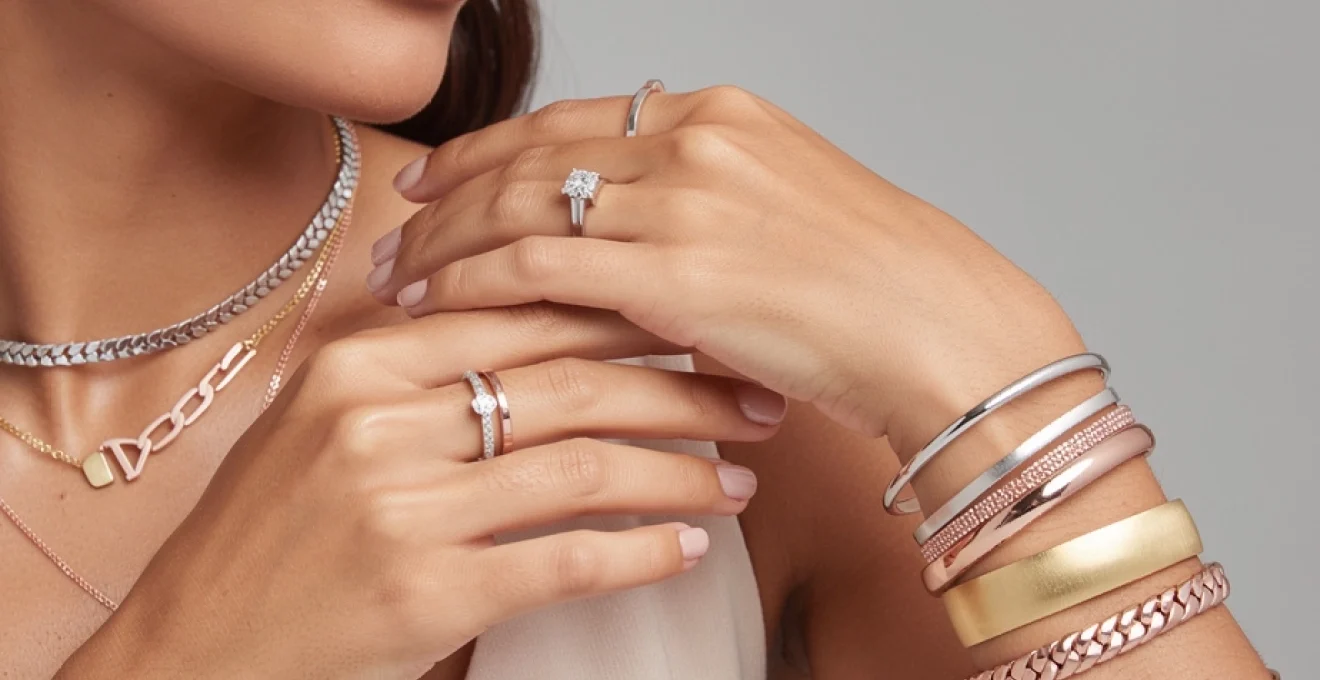
The world of jewellery has undergone a remarkable transformation in recent years. What was once considered a cardinal fashion sin—mixing gold, silver, and platinum pieces—has evolved into one of the most sophisticated styling techniques available to modern jewellery enthusiasts. This shift represents more than a passing trend; it reflects a broader movement toward personal expression and creative freedom in how we adorn ourselves. The ability to confidently combine rose gold rings with white gold necklaces, or layer yellow gold chains alongside sterling silver pieces, opens up endless possibilities for creating looks that are uniquely yours. Yet, whilst the rules have relaxed considerably, understanding the principles behind successful metal mixing remains essential for achieving polished, intentional results rather than haphazard combinations.
Understanding metal compatibility: rose gold, yellow gold, and white gold pairing principles
Before embarking on your metal-mixing journey, it’s crucial to understand the fundamental characteristics that make certain combinations work harmoniously whilst others clash. The three primary gold colours—yellow, rose, and white—each possess distinct visual properties that influence how they interact with one another and with your complexion. Yellow gold, the most traditional choice, radiates warmth and timeless elegance, making it exceptionally versatile. Rose gold, an alloy created by adding copper to pure gold, offers romantic, vintage-inspired undertones that have surged in popularity over the past decade. White gold, typically rhodium-plated to achieve its brilliant silver appearance, provides a cool, contemporary aesthetic that bridges the gap between traditional gold and platinum.
The secret to successful metal pairing lies in recognising that these metals exist on a spectrum from warm to cool. Yellow and rose gold occupy the warm end, whilst white gold, platinum, and sterling silver inhabit the cool territory. When you mix metals strategically, you’re essentially creating visual dialogue between these temperatures. The most sophisticated approaches either embrace contrast deliberately—pairing warm yellows with cool silvers—or create gradual transitions using rose gold as a middle ground. This understanding transforms metal mixing from guesswork into an intentional design choice that enhances rather than detracts from your overall appearance.
The chemistry of metal finishes: rhodium plating, PVD coating, and natural patina
Understanding surface treatments proves essential when mixing metals, as finishes significantly impact how pieces appear together. Rhodium plating, commonly applied to white gold, creates an ultra-bright, mirror-like surface that resists tarnishing but may wear over time, revealing the slightly warmer white gold beneath. This evolving appearance can affect how your white gold pieces coordinate with sterling silver items, which develop their own natural patina. Physical Vapour Deposition (PVD) coating, increasingly popular for fashion jewellery and some fine pieces, offers durability and colour consistency but presents a distinctly different lustre compared to solid metals.
Natural patina development—the subtle darkening that occurs on silver and certain gold alloys—adds character and depth to jewellery over time. When mixing metals, you’ll want to consider whether highly polished, freshly plated pieces will harmonise with items that have developed natural age characteristics. Some jewellery enthusiasts deliberately seek this contrast, pairing bright, newly finished pieces with vintage items bearing authentic patina. Others prefer consistency, regularly maintaining all pieces to similar lustre levels. Neither approach is inherently superior; what matters is that your choice aligns with the aesthetic you’re cultivating.
Warm versus cool undertones: matching gold karats with sterling silver and platinum
The karat weight of gold significantly influences its colour intensity and consequently its compatibility with other metals. Twenty-two karat gold exhibits a rich, saturated yellow that makes a bold statement when paired with cooler metals, creating dramatic contrast. Eighteen karat gold, containing 75% pure gold, offers slightly softer colour whilst maintaining substantial warmth. Fourteen karat gold, with 58.3% gold content, appears noticeably paler and can actually serve as an excellent transitional tone when mixing warm and cool metals.
Sterling silver (92.5% pure silver) and platinum (typically 95% pure) both occupy the cool end of the spectrum, yet they possess subtly different visual qualities. Sterling silver tends toward a brighter, more reflective white, whilst platinum offers a heavier, more substantial appearance with a softer sheen. When you
leans slightly greyer and more understated. When you combine high-karat yellow gold with platinum or silver, the cool metals help temper the intensity of the gold, much like adding cream to strong coffee. Conversely, pairing lower-karat yellow or rose gold (such as 10k or 14k) with bright sterling silver can create a softer, more blended effect that feels cohesive rather than high-contrast. If you have cool undertones in your skin, you may find that white gold, platinum, and sterling silver form the foundation of your look, with 14k yellow or rose gold acting as accents. Warmer complexions, on the other hand, can comfortably handle richer 18k or 22k gold anchored by one or two cooler, silvery pieces to prevent the ensemble from feeling too heavy.
When matching gold karats with sterling silver in mixed metal jewellery, pay attention to surface brightness as well as colour. Highly polished sterling silver can overpower delicate 9k or 10k yellow gold if the proportions are not balanced, whereas brushed or matte finishes bring them onto a more equal footing. Platinum naturally pairs well with higher-karat gold because both metals convey a sense of luxury and weight; this combination is particularly effective for engagement rings and wedding bands where durability and symbolism matter. You can treat platinum as the cool “frame” around warm gold centrepieces, whether that frame is a halo, a band, or a complementary stacker ring. By thinking in terms of temperature, brightness, and proportion, you can deliberately choose mixed metal jewellery combinations that flatter both the metals and your skin.
The rule of three: limiting mixed metal combinations for visual coherence
One of the most reliable safeguards against mixed metal chaos is the “rule of three”. In jewellery styling, this concept suggests limiting yourself to no more than three distinct metal tones within a single look. That might mean yellow gold, rose gold, and sterling silver, or white gold, oxidised silver, and platinum. Once you go beyond three finishes, the eye struggles to find a hierarchy, and your metal mix risks looking random rather than curated. Think of it as editing your palette the way a designer edits colours in a room.
The rule of three also applies to distribution. If you choose two dominant metals and one accent metal, you create a visual rhythm that feels intentional. For example, you might wear mostly yellow and white gold, with a few rose gold highlights that draw the eye to key areas such as your ring finger or collarbone. Alternatively, you could treat silver as the base metal for chains and bracelets, then introduce gold sparingly through pendants or earring details. Ask yourself: which metal do I want people to notice first, second, and third? By assigning roles to each metal rather than wearing them in equal competition, you achieve the kind of understated balance that characterises sophisticated mixed metal jewellery styling.
Transitional metals: using two-tone pieces as bridge elements
Two-tone and tri-tone jewellery function as powerful “bridge” pieces when you are mixing metals. These designs intentionally combine different finishes—such as yellow and white gold in a single bracelet or rose gold accents on a sterling silver pendant—creating a built-in transition between tones. When you incorporate one or two of these pieces into your look, they act like translators between otherwise contrasting metals, making bold combinations feel more cohesive. This strategy is particularly helpful if you are moving from a historically all-gold or all-silver collection into more adventurous territory.
Consider, for instance, a two-tone watch that features both steel and yellow gold links. That single item instantly justifies the presence of both silver-toned and gold-toned jewellery elsewhere on your body. Similarly, a mixed metal stacking ring that alternates rose, white, and yellow gold bands can serve as a central anchor around which you build the rest of your ring stack. Transitional metals also make practical sense: they increase the wearability of your existing pieces by giving you a focal item that “talks” to everything. When in doubt, start your mixed metal jewellery journey with one thoughtfully chosen bridge piece and let it guide the rest of your styling decisions.
Strategic layering techniques for necklaces and chain combinations
Necklaces are one of the most forgiving and expressive areas for experimenting with mixed metal jewellery. Because they sit within your field of vision, you can easily adjust lengths, swap pendants, or remove a layer until the combination feels right. Strategic layering allows you to showcase yellow, white, and rose gold simultaneously without the result feeling busy. Instead of thinking in terms of isolated pieces, imagine your neckline as a composition: different chains play different roles, from background texture to focal statement, much like instruments in an orchestra.
To build mixed metal necklace stacks that look intentional, you will want to consider length, thickness, chain style, and pendant presence as separate variables. Each variable offers an opportunity to introduce or repeat a particular metal tone. For example, you might use a fine white gold cable chain at the shortest length, a medium-weight rose gold Figaro chain at mid-length, and a bold yellow gold herringbone chain at the longest point. By spacing these elements carefully and repeating metals at least once within the stack, you maintain a sense of continuity even as you play with contrast.
Graduated length formulas: the 2-inch rule for herringbone, cable, and figaro chains
A simple way to prevent tangled, cluttered-looking layers is to follow the “2-inch rule” for necklace lengths. This guideline suggests leaving around two inches of difference between each chain in a stack, creating a clear visual staircase down your neckline. For example, you might wear a 14-inch choker, a 16-inch cable chain, an 18-inch Figaro chain, and a 20-inch herringbone. The slight spacing gives each piece room to shine and reduces friction between chains, which is especially important for delicate herringbone styles prone to kinking.
When you apply the 2-inch rule to mixed metal jewellery, it becomes a tool for distributing colour temperature along your décolletage. You could place a short white gold or sterling silver chain close to the neck for a bright, cool highlight, followed by a mid-length rose gold piece that warms the centre of the stack, and finish with a longer yellow gold chain that grounds the entire look. Alternatively, keep your base lengths all in one metal—say, layered silver cable chains—and introduce a single yellow gold herringbone or Figaro as the longest or shortest layer. By planning your necklace lengths with this formula, you avoid the “metal mash” effect and instead create deliberate, harmonious vertical lines.
Focal point hierarchy: positioning statement pieces against delicate metal accents
Every strong necklace stack has a clear focal point, whether it’s a bold pendant, a chunky chain, or a distinctive mixed metal choker. The other pieces around it should play a supporting role, framing and amplifying the star rather than competing with it. One useful analogy is to think of your focal piece as the headline and your delicate chains as subheadings and body text. Without this hierarchy, even the most beautiful mixed metal jewellery can read as noisy or overwhelming.
In practice, this means choosing one statement metal or shape and then echoing its tones more subtly in surrounding layers. For instance, if your hero piece is a substantial yellow gold padlock pendant, you might flank it with finer sterling silver and white gold chains that add sparkle without stealing attention. Conversely, if you wear a dramatic silver collar, try pairing it with a whisper-thin rose gold chain and a minimal yellow gold bar pendant. Ask yourself: where do I want the eye to land first? Once you decide, adjust the scale, shine, and complexity of the other necklaces so they complement, rather than dilute, that focal point.
Mixing chain styles: pairing box chains with rope chains and snake chains
Combining different chain structures—such as box, rope, snake, and curb—adds texture and dimension to your necklace layering, especially when you are mixing metals. Each style reflects light in a unique way: rope chains catch glints from multiple angles, snake chains offer a sleek, liquid line, and box chains provide geometric precision. When you combine these forms in yellow, white, and rose gold, you create a rich interplay of shine and shadow that elevates even a simple T-shirt. The key is to vary chain type while maintaining some continuity in either thickness or metal tone.
One effective approach is to choose a primary chain style as your base—perhaps a medium-weight silver rope chain—and then introduce one or two contrasting styles in different metals. A fine yellow gold box chain layered above and a slightly heavier rose gold snake chain below can produce a balanced, modern mixed metal jewellery look. Alternatively, keep all your chains in a similar thickness range but let the metals do the talking: a trio of 1–1.5 mm chains in box, curb, and Figaro styles looks deliberate if each one showcases a different metal. As with all mixing, moderation matters; limit yourself to three distinct chain styles at once to avoid visual overload.
Pendant integration: selecting bail metal finishes to complement mixed chain layers
Pendants introduce another variable into necklace layering: the bail, or the component attaching the pendant to the chain. In mixed metal jewellery, bail choice can either unify or disrupt your composition. A pendant with a yellow gold bail on a white gold chain, for example, acts as a subtle bridge between metals, especially if other yellow gold elements appear elsewhere in your look. Conversely, placing a cool-toned bail on a warm-toned chain can intentionally highlight the contrast between metals, turning the junction itself into a design feature.
To integrate pendants seamlessly, consider matching the bail to the dominant metal in your stack while allowing the pendant body to introduce a new tone or gemstone. For instance, a white gold bail on a sterling silver chain holding a yellow gold disc pendant neatly introduces gold without breaking the visual flow of the chain. Gemstones further influence the perception of metal temperature: diamonds and white sapphires accentuate cooler metals, while coloured stones like emeralds and sapphires can soften strong contrasts. Whenever you add a pendant to a mixed metal necklace stack, ask whether its bail is acting as a connector or a disruptor—and adjust accordingly.
Ring stacking frameworks: coordinating wedding bands, engagement rings, and fashion rings
Rings are often the most sentimental pieces in a jewellery collection, which makes mixed metal experiments on your hands both meaningful and highly visible. Many people start with an engagement ring and wedding band in one metal, then wonder how to incorporate fashion rings in other finishes without creating a clash. The good news is that modern styling embraces mixing metals across fingers, phalanges, and even hands. With a little structure, you can build ring stacks that honour your core pieces while allowing room for creative expression.
Think of your ring styling in layers: your “foundation” is usually your wedding set or everyday ring, then you add “supporting characters” like plain bands, eternity rings, or midi rings, and finally “accent pieces” such as statement signets or cocktail rings. Mixed metal jewellery on your hands looks best when there is a clear dominant finish and a few strategic contrasts rather than equal representation of all metals on every finger. By placing your warmest metals near the base of your fingers and introducing cooler tones as you move outward—or vice versa—you create a gradient that feels intentional and flattering.
The dominant metal method: establishing your primary finish across three to five rings
The dominant metal method is a practical framework for ring stacking that keeps mixed metal combinations coherent. Start by choosing one metal as the “anchor” for your hand—often the metal of your engagement ring or wedding band. This anchor metal should appear in at least 60–70% of the rings you wear on that hand. The remaining 30–40% can then introduce a second, and occasionally a third, metal for contrast and interest. This ratio ensures that your stack reads as unified rather than fragmented.
For example, if your engagement ring and wedding band are platinum, you might add one or two slim rose gold or yellow gold bands as spacers or midi rings. The platinum remains dominant, but the warm tones provide visual relief and draw attention to the central stone. Alternatively, if your primary metal is 18k yellow gold, a single white gold or silver signet ring on another finger can serve as a deliberate accent. Ask yourself which metal tells your core story—romantic, personal, or aesthetic—and let that metal lead, using others as supporting players rather than co-stars.
Spacer ring placement: using eternity bands and midi rings as visual separators
Spacer rings, such as slim eternity bands, plain stacking bands, and midi rings worn above the knuckle, play a crucial role in organising mixed metal ring stacks. These narrow pieces act like punctuation between more substantial rings, preventing different metals and gemstones from visually colliding. When used thoughtfully, spacers can also protect delicate settings by keeping bulkier rings from rubbing against them. In mixed metal jewellery styling, spacers offer an elegant way to introduce or repeat a secondary metal without overwhelming the primary finish.
You might, for instance, place a thin white gold eternity band between a yellow gold engagement ring and yellow gold wedding band to create a subtle flash of contrast that highlights both pieces. Midi rings in a contrasting metal can echo this accent further up the finger, creating a vertical line of repetition that looks artful rather than random. If you enjoy wearing chunky statement rings, consider flanking them with very slim bands in alternate metals; the negative space around the spacers allows the eye to rest while still reinforcing your mixed metal theme. Strategically placed separators turn what could be a dense cluster of metal and stones into a refined, breathable composition.
Gemstone considerations: how diamond settings, sapphire bezels, and emerald prongs affect metal choice
Gemstones introduce colour, brilliance, and symbolic meaning to ring stacks, and they also strongly influence how metals appear. Diamonds and other white stones like moissanite or white sapphire naturally amplify cool metals such as platinum and white gold, making them appear even brighter. When set in yellow or rose gold, these stones create a warm halo effect that can soften the contrast between cool accent metals elsewhere on the hand. Sapphires, with their deep blues, often bridge warm and cool tones, pairing beautifully with both white metals and high-karat yellow gold.
Emeralds and other green stones tend to sing against yellow and rose gold, evoking vintage glamour, but they can also look striking in mixed metal settings where the band is warm and the prongs or halo are cool. Bezel settings in one metal with prongs in another further expand your options; for instance, a yellow gold bezel around a diamond mounted on a white gold band creates a built-in mixed metal focal point. When you plan a mixed metal jewellery look that includes gemstones, consider whether the stone is acting as a neutral (like a diamond), a bridge colour (like sapphire), or a warm anchor (like ruby or emerald). Align your metal choices so that the stone either harmonises the differences or intentionally heightens the contrast, depending on the effect you want.
Bracelet and bangle mixing: width, texture, and metal distribution balance
Bracelets and bangles offer ample real estate for experimenting with mixed metals, especially if you enjoy stacking pieces along one or both wrists. Because this area is in constant motion, contrasts between yellow, white, and rose metals catch the light dynamically, making even simple outfits feel styled. To avoid a cluttered or noisy effect, you will want to balance width, texture, and metal distribution across your stack. Think in terms of “anchor” pieces, “fillers”, and “highlights”, much like composing a ring or necklace combination.
An anchor bracelet might be a substantial cuff in yellow gold or a chunky sterling silver chain. Around it, you can layer slimmer bangles, rope-style bracelets, or tennis bracelets in complementary metals. Aim for a mix of one or two wider pieces with several narrower ones rather than multiple broad cuffs competing for space. Textures—such as hammered finishes, high polish, or brushed surfaces—also affect how metals interact. A hammered rose gold bangle can soften the shine of a mirror-polished white gold bracelet, while a matte platinum cuff can ground an otherwise sparkling, diamond-studded stack. By distributing metals and textures intentionally from wrist bone to mid-forearm, you create a gradient that feels balanced rather than arbitrary.
Earring coordination with mixed metal ensembles
Earrings are often the first jewellery pieces people notice, which makes them a strategic tool for tying together mixed metal looks. Because they frame your face, their metal tone has a strong impact on how your complexion reads—warmer, cooler, brighter, or softer. In mixed metal jewellery styling, you can treat earrings either as the “summary” of your overall palette or as a deliberate point of contrast. For example, if most of your jewellery is silver-toned, yellow gold hoops can act as a warm focal point that draws attention upward.
Multi-pierced ears offer even more opportunities. You might wear a primary hoop or drop earring in your dominant metal and then add studs, huggies, or ear cuffs in a secondary metal to echo accents elsewhere on your body. Transitional pieces, like two-tone ear cuffs or mixed metal climbers, work particularly well as bridges between different finishes. Ask yourself whether your earrings should coordinate most closely with your necklace, your rings, or your glasses frames if you wear them; aligning at least one of these elements helps your entire look feel intentional. With the right earring strategy, you can confidently mix metals across your ensemble without sacrificing cohesion.
Skin tone analysis: matching mixed metals to warm, cool, and neutral complexions
Understanding how your skin tone interacts with different metals can dramatically improve your mixed metal jewellery styling. While “rules” about who should wear gold or silver are far more flexible today, undertones still offer a useful guide. Cool undertones—often indicated by blueish veins and a preference for silver clothing accents—tend to pair well with white metals like sterling silver, white gold, and platinum. Warm undertones, which lean more olive or golden, usually harmonise with yellow and rose gold. Neutral undertones can wear both comfortably, making mixed metal combinations especially flattering.
When you are blending metals, consider placing the metal that best flatters your undertone closest to your face and hands, where skin is most visible. For a cool-toned person experimenting with yellow gold, that might mean wearing a white gold or silver necklace nearest the neck, with a longer yellow gold pendant beneath. Warm-toned individuals can do the opposite: keep yellow or rose gold at the neckline and use silver-toned pieces as accents further away, such as on bracelets or ankle chains. Neutral skin tones can alternate freely, but may still prefer one metal as the base for most everyday pieces. By aligning your dominant metals with your undertone and using contrasting metals as accents, you ensure that even bold mixed metal jewellery combinations ultimately enhance, rather than compete with, your natural colouring.