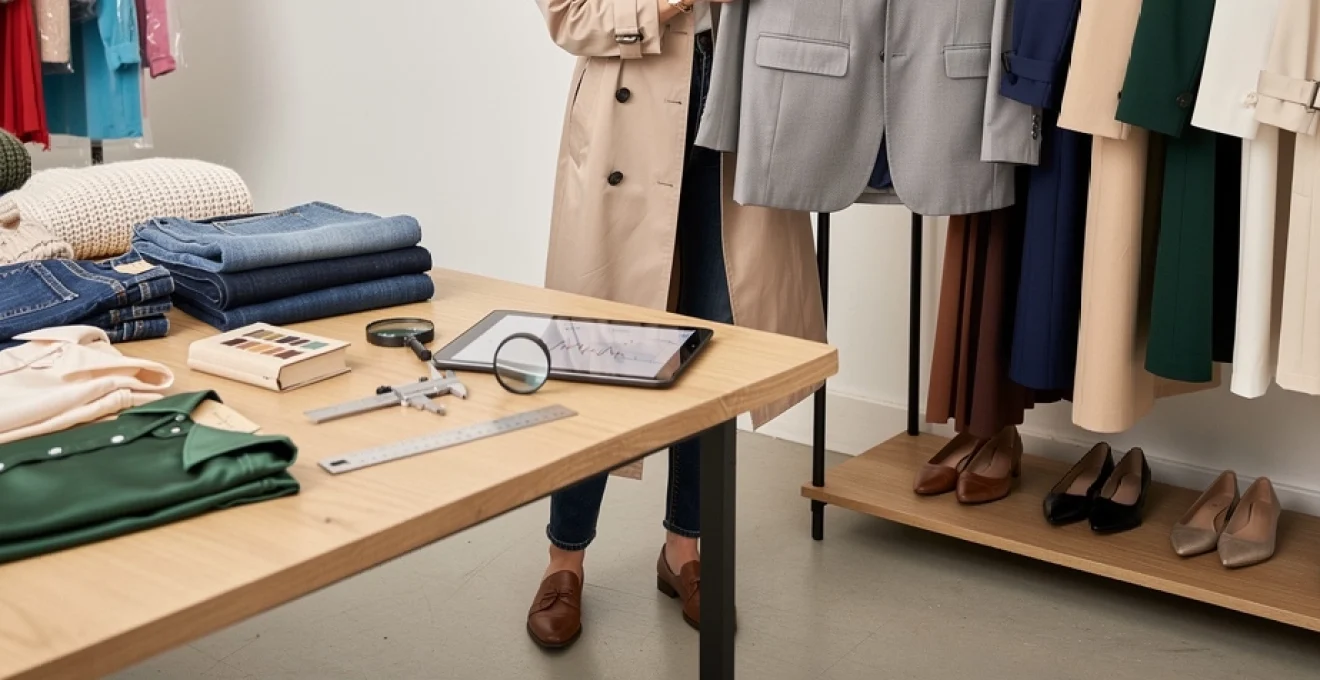
The fashion industry stands at a critical crossroads. With over 100 billion garments produced annually—more than a dozen for every person on Earth—the current consumption model has become environmentally unsustainable and ethically questionable. This represents a fourfold increase from just two decades ago, with much of this clothing discarded within twelve months of purchase. The shift towards conscious consumption isn’t merely an ethical stance; it’s an economic necessity that promises to reshape how you build and maintain your wardrobe. By prioritising quality over quantity, you can reduce your environmental footprint whilst simultaneously creating a more cohesive, functional, and personally satisfying collection of clothing that genuinely serves your lifestyle.
Understanding conscious consumerism in the fashion industry
Conscious consumerism in fashion represents a fundamental departure from the impulse-driven purchasing patterns that have dominated the retail landscape for the past three decades. The concept challenges the notion that clothing should be disposable, instead advocating for a return to viewing garments as investments worthy of care and consideration. This philosophical shift addresses several interconnected concerns: the environmental devastation caused by textile production, the exploitation of garment workers in developing nations, and the psychological emptiness that often accompanies overconsumption.
The statistical reality is sobering. According to recent research from the UK’s Sustainable Clothing Action Plan, if consumers in developed countries simply wore their garments for two years instead of one, the environmental impact would decrease by 20-30%. This simple extension of garment lifespan requires no technological innovation or industrial revolution—merely a change in purchasing behaviour and maintenance practices. The Danish Consumer Council has found that individuals aged 25-50 wear only 60% of the clothing they own, with 40% languishing unworn behind wardrobe doors. This represents not just wasted resources but also wasted money and opportunity.
Mimetic desire plays a significant role in overconsumption patterns. This psychological phenomenon describes the tendency to covet items that influential figures in your life have incorporated into their public identity. You might find yourself wanting a particular designer dress not because it suits your lifestyle or aesthetic, but because a respected entrepreneur wore it to a high-profile event. What you’re actually seeking isn’t the garment itself but rather the lifestyle, success, or identity it represents. Understanding this distinction between wanting an object and wanting what it symbolises is crucial to developing healthier shopping habits. When you recognise that purchasing a £1,500 linen outfit won’t automatically transform you into the chic editor who wore it on holiday in Capri, you can make more rational decisions about whether the garment truly serves your actual needs.
Several brands have embraced radical transparency as a counter to mindless consumption. Everlane pioneered this approach with their detailed breakdowns of production costs, factory conditions, and markup percentages. By showing customers exactly where their money goes—from material costs to labour to transportation—the brand builds trust whilst simultaneously encouraging more thoughtful purchasing decisions. When you understand that a £80 sweater includes £25 for materials, £18 for labour, £7 for transportation, and £30 for markup, you’re better equipped to evaluate whether the purchase represents genuine value or merely clever marketing.
Quality over quantity: fabric composition and garment construction standards
The foundation of a durable wardrobe rests upon understanding textile composition and construction methodologies. Not all fabrics are created equal, and the difference between a garment that lasts three years and one that deteriorates within six months often comes down to material selection and manufacturing techniques. Developing literacy in fabric composition empowers you to make informed decisions that align with both your budget and your sustainability goals.
Natural fibres vs synthetic materials: durability and longevity metrics
Natural fibres generally offer superior longevity compared to synthetic alternatives, though exceptions exist. Cotton, particularly long-staple varieties such as Supima or Egyptian cotton, demonstrates remarkable durability when properly cared for. These premium cotton types feature fibres measuring 34mm or longer, compared to 22mm for standard cotton, resulting in smoother, stronger yarn that resists pilling and maintains structural integrity through repeated washing cycles. Wool, especially merino and lambswool, possesses natural elasticity that allows garments to return to their original shape, whilst the fibre’s scales create a self
-cleaning property that allows odours and light soiling to dissipate with airing rather than constant washing. Linen, made from the flax plant, is exceptionally strong due to its crystalline cellulose structure; high-quality linen garments can last decades, softening beautifully over time instead of thinning. By contrast, many low-cost synthetics such as inexpensive polyester or acrylic may initially appear robust but tend to pill, lose shape, and trap odours, reducing their realistic lifespan. When you adopt a “buying less but better” mindset, investing in natural fibres where appropriate often delivers superior cost-per-wear and greater comfort across seasons.
Synthetics are not inherently “bad”; they simply need to be used strategically. Technical fabrics such as recycled polyester, elastane blends, and nylon can excel in performance wear, outerwear, and pieces that require stretch or water resistance. The key is to evaluate durability and longevity metrics: does the fabric maintain recovery after repeated wear, resist pilling, and hold colour fastness? Blends that combine natural fibres with a small percentage (3-5%) of elastane can offer the best of both worlds—comfort, shape retention, and reduced bagging at the knees or elbows. As conscious consumers, we should reserve synthetics for garments where their performance properties genuinely add value, rather than defaulting to them because they are cheap to produce.
Identifying superior stitching techniques and seam construction
Fabric quality is only half the story; the way a garment is assembled often determines whether it feels like an heirloom or a disposable item. High-quality stitching should be even, consistent, and secure, with 8-12 stitches per centimetre on finer garments, indicating careful tension control and robust construction. Loose threads, skipped stitches, and visible puckering along seams are red flags that the piece has been produced at speed with minimal quality control. When you run your fingers along a seam, it should feel flat and stable rather than rough or bulky.
Seam construction itself also reveals a great deal about garment quality. French seams, flat-felled seams, and bound seams enclose raw edges, reducing fraying and dramatically extending garment life—these are commonly found in heritage shirting, tailored trousers, and premium dresses. Overlocked seams (serged edges) are not necessarily inferior, but on their own they can indicate a more cost-conscious approach. The most durable pieces often combine overlocking with topstitching or double-needle stitching for added strength. As you move towards a more intentional wardrobe, training your eye to spot these details will help you distinguish between a fast-fashion imitation and a truly well-constructed piece.
Evaluating thread count, weight per square metre, and textile density
Just as discerning shoppers consider thread count when buying bed linen, understanding textile density in clothing can dramatically improve your ability to buy less but better. Thread count refers to the number of threads per square inch (or centimetre) in woven fabrics, but on its own it can be misleading. A very high thread count achieved with low-quality, multi-ply yarns can feel heavy yet wear out quickly. What you are really looking for is a balance between thread count, yarn quality, and fabric weight expressed in grams per square metre (GSM). For example, a men’s dress shirt fabric in the 120–150 GSM range, woven from long-staple cotton, usually offers a good mix of opacity, drape, and durability.
Textile density also influences how a garment behaves across its lifespan. A densely woven twill or canvas in the 250–400 GSM range will resist abrasion and hold its shape, making it ideal for trousers, workwear, and outerwear you intend to keep for many years. Lightweight jerseys or flimsy poly blends under 120 GSM, by contrast, may feel comfortable at first but are likely to twist, sag, or develop holes with regular wear. When shopping, you rarely see GSM listed on the label, but you can approximate it through touch: does the fabric feel substantial without being stiff, and does it bounce back when gently stretched? By paying attention to weight and density, you move from reacting to trends to evaluating textiles like a professional buyer.
Understanding garment grading systems and pattern-making excellence
Even the finest fabric and stitching cannot redeem a poorly graded pattern. Grading is the process of scaling a base pattern up or down to create different sizes, and it has a profound impact on comfort, proportion, and how long you will enjoy wearing a garment. In mass-market fast fashion, grading often follows a simplistic formula—adding the same increments around the body—resulting in awkward fits where shoulders slip, waistlines twist, or sleeves become disproportionately long. This kind of compromise is one reason so many pieces end up unworn at the back of the wardrobe.
High-quality brands invest heavily in pattern-making expertise, fit models, and extensive wear testing. Look for garments where seams follow the body’s natural lines, armholes are neither constricting nor gaping, and movement feels easy without excess fabric bulking up under jackets or coats. Tailored pieces should sit cleanly across the shoulders and back; casual garments should drape rather than cling. When a piece feels instantly “right” from multiple angles, it is a sign of pattern-making excellence. Because well-graded garments remain comfortable even as your body changes slightly over time, they inherently support a “buy less, buy better” wardrobe by staying in rotation for years rather than months.
Cost-per-wear analysis: calculating true value in fashion investments
One of the most powerful tools for conscious fashion shopping is cost-per-wear (CPW) analysis. Instead of focusing solely on the price tag, CPW encourages you to consider how often you will realistically wear a garment and for how many seasons it will remain relevant and functional. This reframes a £300 coat you wear 150 times over five years as better value than a £60 jacket that falls apart after one winter. By thinking like a wardrobe economist, you can align your spending with long-term satisfaction rather than short-term excitement.
Breaking down the CPW formula for wardrobe economics
The basic CPW formula is straightforward: divide the total cost of the item by the number of times you expect to wear it. For example, if you purchase a pair of high-quality leather boots for £240 and anticipate wearing them three times a week for six months of the year over four years, that equates to roughly 300 wears. Your CPW would be £0.80—excellent value compared with a £60 pair of synthetic boots that crack after one season and are worn only 40 times, resulting in a CPW of £1.50. This simple calculation highlights how cheap fashion can become expensive when viewed through the lens of longevity.
To make CPW genuinely useful, you need to be honest with yourself. Will you actually wear that statement blazer weekly, or is it more likely an occasional piece? An effective strategy is to create a short list of your core wardrobe categories—coats, knitwear, denim, footwear, tailoring—and estimate realistic wear frequencies based on your lifestyle. Office workers might prioritise CPW for blazers and trousers, while remote workers may focus on knitwear and premium loungewear. Once you start assessing purchases this way, spontaneous buys that do not fit your real life begin to lose their appeal.
Comparing fast fashion price points against heritage brand longevity
Fast fashion thrives on the illusion of affordability. A £25 dress or £15 T-shirt feels like a bargain—until you factor in the number of wears before pilling, fading, or seam failure sends it to the textile recycling bin. Heritage brands and quality-focused labels, on the other hand, often use better fabrics, more rigorous construction methods, and classic designs that age gracefully rather than dating within a single season. While the initial outlay may be significantly higher, the extended lifespan and higher CPW can make them more economical over time.
Consider denim as a case study. A pair of inexpensive jeans might cost £30 and last a year of regular wear before losing shape and colour, giving you around 80–100 wears at £0.30–£0.37 per wear. A pair of premium selvedge jeans from a brand like Nudie or Levi’s Made & Crafted might cost £140 but easily endure 400+ wears, bringing the CPW down to £0.35 or less—while also providing better fit, comfort, and repair options. When you take into account the environmental and social costs embedded in fast fashion, the economic argument for heritage quality becomes even stronger.
Amortising luxury purchases: case studies from burberry and stella McCartney
Luxury fashion often carries intimidating price tags, but when chosen carefully, certain pieces can become long-term investments rather than impulsive status symbols. Take a classic Burberry trench coat. A mid-range model might cost £1,600, yet many owners wear these coats for 10–15 years, sometimes longer, thanks to robust cotton gabardine fabric, meticulous construction, and timeless design. If you wear the trench 60 times per year over a decade, your CPW falls to around £2.66—a figure that compares favourably with repeatedly replacing cheaper coats every few seasons.
Stella McCartney offers another instructive example, particularly for shoppers prioritising vegan and sustainable luxury. A well-chosen Stella McCartney tailored blazer might cost £900 but is designed with high-quality, often recycled or responsibly sourced materials, and a cut that transcends micro-trends. Worn once a week for five years, its CPW drops to around £3.46, while also aligning with values around animal welfare and reduced environmental harm. Of course, these numbers only work if the garments genuinely fit your lifestyle, aesthetic, and wardrobe strategy—which is why applying a strict CPW lens can help distinguish a meaningful investment from a fleeting indulgence.
Seasonal versatility metrics in high-quality wardrobe staples
A crucial yet often overlooked aspect of CPW is seasonal versatility. A piece that works across multiple seasons and settings will naturally achieve a lower CPW than one confined to a narrow window of wear. Think of a mid-weight merino sweater that can be layered under a blazer in winter, worn alone on crisp spring days, and draped over your shoulders on cool summer evenings. Because it spans at least three seasons, its total annual wears multiply, improving both value and sustainability.
When evaluating potential purchases, ask yourself: how many months of the year can I realistically wear this, and in how many contexts? A high-quality cotton shirt in a neutral tone might serve for office meetings, weekend brunches, and travel, while a bold sequinned mini dress will likely see only occasional outings. By prioritising fabrics and silhouettes that adapt to different temperatures and dress codes—such as trench coats, tailored trousers in breathable wool, or leather boots with weatherproofing—you effectively build a capsule of wardrobe workhorses. These versatile staples become the backbone of a buying less but better strategy, allowing you to do more with fewer pieces.
Curating a capsule wardrobe: strategic selection methodologies
A capsule wardrobe distils your style into a tightly edited collection of pieces that mix and match effortlessly. Rather than restricting you, this approach frees you from decision fatigue and constant shopping cycles. When every item in your wardrobe earns its place through frequent wear, quality construction, and functional versatility, buying less but better becomes a natural consequence rather than a forced rule. The challenge lies in designing a capsule that reflects your real life instead of an aspirational fantasy.
The 37-piece framework: mathematical approaches to outfit combinations
The 37-piece capsule framework, popularised by stylist Caroline Joy, offers a practical starting point for many wardrobes. This model typically covers a three-month season and includes tops, bottoms, dresses, outerwear, and shoes, excluding underwear and activewear. While the exact number is flexible, the underlying mathematics remain compelling: with just 10 tops and 7 bottoms, you can theoretically create 70 unique combinations before even adding layers or accessories. The goal is not to hit a magic number but to understand how a limited set of pieces can yield exponential styling options.
To build your own version, begin by listing your weekly activities—work, socialising, exercise, at-home days—and assign approximate outfit quotas. If you work from home four days a week and go into the office once, your capsule might skew towards polished knitwear and smart-casual separates rather than formal suits. Use this data to allocate your 30–40 pieces across categories such as trousers, skirts, shirts, knitwear, dresses, and outerwear. By approaching your wardrobe like a modular system, you ensure that every new purchase integrates seamlessly, increasing rather than fragmenting your outfit possibilities.
Colour theory application: building cohesive palettes with pantone standards
Colour cohesion is the secret weapon of a successful capsule wardrobe. When most of your garments share a compatible palette, you maximise mix-and-match potential and reduce the risk of “orphan” items that go with nothing else. A helpful approach is to choose two to three core neutrals—such as black, navy, camel, or grey—then layer in two to three accent colours that flatter your skin tone. The Pantone Colour Institute publishes seasonal trend reports, but for a long-term wardrobe you are better served by focusing on enduring shades that make you feel confident year after year.
Think of your palette as a well-curated paintbox. If your core is navy and stone, you might add Pantone-aligned hues such as soft blush, forest green, and a single bold accent like cobalt or saffron. When shopping, ask whether a new piece harmonises with at least three items you already own; if it does not, it risks becoming dead weight in your closet. Over time, this disciplined use of colour theory streamlines your shopping decisions and supports a buying less but better philosophy by ensuring each new garment amplifies, rather than disrupts, the coherence of your wardrobe.
Silhouette diversification for maximum styling flexibility
Beyond colour, silhouette plays a crucial role in how often you will reach for a garment. A capsule built entirely on one silhouette—say, oversized tops and skinny jeans—can feel monotonous and limit your styling creativity. Instead, aim for a balanced mix of fitted, semi-fitted, and relaxed shapes across tops, bottoms, and outerwear. This allows you to create visually interesting proportions: a slim polo with wide-leg trousers, a boxy cropped jacket over a slip dress, or a flowing blouse tucked into straight-leg denim.
From a practical standpoint, silhouette diversification also increases your wardrobe’s adaptability to different body changes and life stages. High-rise trousers with a gentle taper, midi-length skirts with movement, and blazers with softly structured shoulders tend to remain flattering across shifting trends. When each piece can be styled in at least three distinct ways—dressed up, dressed down, and layered—you effectively multiply your outfit potential without adding more items. In this way, thoughtful silhouette selection becomes another lever in building a high-performing wardrobe with fewer but better garments.
Sustainable fashion brands leading the quality-focused movement
While individual behaviour is vital, brands also play a central role in enabling consumers to buy less but better. A growing cohort of sustainable fashion labels is redefining what quality means—prioritising durability, repairability, ethical labour practices, and reduced environmental impact. These companies view garments not as disposable commodities but as long-term companions, often backing their promises with repair services, take-back schemes, and radical transparency. Learning from their models can help you refine your criteria for future purchases.
Patagonia’s worn wear programme and lifetime guarantee model
Patagonia is perhaps the most frequently cited example of a brand actively encouraging customers to consume less. Its Worn Wear programme invites customers to repair, resell, or recycle their garments, extending product lifecycles and reducing textile waste. The company operates repair centres worldwide and has completed hundreds of thousands of fixes, from replacing zips to re-stitching torn seams, often free or at minimal cost. This infrastructure transforms a fleece or jacket from a seasonal purchase into a multi-decade investment.
Patagonia’s lifetime guarantee and “Don’t Buy This Jacket” campaign underline a radical stance: the brand publicly asks customers to think twice before buying. For you as a conscious consumer, this offers a valuable benchmark. Does a brand stand behind its products with repair services, clear care instructions, and robust after-sales support? If so, your cost-per-wear and environmental impact are likely to improve. Patagonia proves that high-quality construction and a service ecosystem can make outdoor gear genuinely long-lasting, embodying the core principles of buying less but better.
Eileen fisher’s circular economy initiative and take-back scheme
Eileen Fisher has pioneered circular fashion within the luxury and contemporary womenswear space. Through its take-back programme, the brand accepts worn Eileen Fisher garments, regardless of age or condition, and either refurbishes them for resale under the “Renew” label or transforms them into new designs through its “Waste No More” initiative. Since launch, the programme has collected millions of pieces, diverting significant textile volume from landfills and proving that elegant, minimalist clothing can be part of a closed-loop system.
For consumers, Eileen Fisher’s model highlights the importance of designing for longevity from the outset. Simple silhouettes, high-quality natural fibres, and neutral colour palettes make it easier to repair, restyle, and resell garments, thereby preserving their value. When you invest in pieces built with circularity in mind, you are not only reducing environmental impact but also protecting your own financial outlay; you know that a robust ecosystem exists to extend your clothes’ useful life even after they leave your primary wardrobe.
Veja’s transparent supply chain and ethical production standards
Veja, the French footwear brand, offers a compelling example of how transparency and ethics can sit at the heart of a successful business. Instead of pouring money into advertising, Veja channels resources into sourcing organic cotton, Amazonian wild rubber, and recycled materials, while paying above-market rates to cooperatives in Brazil. The company publishes detailed information about its factories, supply chain partners, and pricing structure, inviting scrutiny rather than hiding behind vague sustainability claims.
When you buy a pair of Veja trainers, you are investing not only in minimalist, durable design but also in a traceable value chain. This transparency empowers you to align your purchases with your values in a concrete, verifiable way. It also sets a standard you can apply to other brands: do they disclose where their products are made, how workers are treated, and what materials are used? In an era of widespread greenwashing, Veja’s approach shows that genuine sustainability and quality-focused fashion can be both stylish and commercially viable.
Nudie jeans’ free repair service and organic denim commitment
Nudie Jeans exemplifies how a single product category—denim—can be reimagined through a buy less but better lens. The Swedish brand produces jeans exclusively from organic cotton and offers free repairs for life at its global network of repair shops. Customers who no longer need their jeans can return them for resale or recycling, creating a tangible circular loop. As of recent company reports, Nudie has repaired hundreds of thousands of pairs of jeans, significantly extending their lifespan and reducing demand for new production.
For denim lovers, this model clarifies the trade-off between a cheap, short-lived pair and a slightly more expensive, fully supported investment. Knowing that your jeans can be mended at no extra cost encourages you to wear them harder and longer, extracting maximal value and emotional attachment. By choosing brands like Nudie that bake repair and responsibility into their business model, you turn each purchase into a partnership rather than a one-off transaction.
Authentication and quality assessment techniques for pre-owned luxury
Buying less but better does not always mean buying new. The pre-owned luxury market—fuelled by platforms such as Vestiaire Collective and The RealReal—offers access to high-quality garments and accessories at reduced prices, whilst extending the lifecycle of existing items. However, shopping second-hand designer pieces requires a more forensic approach. Authentication, material assessment, and condition grading become critical skills to ensure you are genuinely investing in quality rather than inheriting someone else’s mistakes.
Verifying designer pieces on vestiaire collective and the RealReal
Reputable resale platforms have built their businesses on trust, which means extensive authentication processes. Vestiaire Collective, for instance, combines AI-driven image analysis with human experts who inspect items for consistency in logos, hardware, stitching, and provenance. The RealReal employs in-house gemologists, horologists, and brand specialists to evaluate everything from handbags to haute couture. Yet even with these safeguards, it is wise for you to understand the basics of verification to make informed decisions and spot potential red flags.
Before purchasing, review the item’s detailed photos, authentication notes, and condition reports. Does the logo typography match official brand standards? Are serial numbers, date codes, and hologram stickers correctly placed and formatted for the production year? Many brands update their markings over time, so cross-referencing with credible online guides can be invaluable. Asking sellers for additional images—of interior labels, zips, lining, and corners—can further reduce risk. By combining platform-level authentication with your own due diligence, you increase the likelihood that your pre-owned purchase truly represents buying better, not just buying cheaper.
Hardware examination: logo stamps, serial numbers, and date codes
Hardware often tells the truth even when other elements are more easily faked. On luxury bags, belts, and shoes, examine metal components closely: high-quality pieces typically feature solid, weighty hardware with crisp engraving rather than lightweight, hollow parts with fuzzy logos. For brands like Chanel, Louis Vuitton, or Hermès, the precise position and style of logo stamps, screw types, and zip pulls are well documented—any deviation can signal a counterfeit. Think of hardware as the fingerprint of a luxury item: unique, consistent, and difficult to replicate perfectly.
Serial numbers and date codes provide additional layers of verification. Many brands use specific formats for particular years or factories; for example, Louis Vuitton’s date codes indicate production location and time frame, while Chanel’s serial stickers correspond to known number ranges by year. When you cross-check these codes against reliable databases, inconsistencies become apparent. Of course, codes can be forged, and older items may have worn labels, so hardware assessment should be combined with an overall evaluation of construction quality, materials, and seller credibility. With practice, your eye will become quicker at spotting the subtle cues that distinguish authentic luxury from convincing fakes.
Leather quality grading systems for vintage investment pieces
Leather is one of the most important materials in luxury fashion, and understanding its grading can help you assess whether a vintage piece is worth the investment. Full-grain leather, which uses the entire thickness of the hide including its natural surface, is the most durable and desirable; it develops a rich patina over time and resists tearing far better than lower grades. Top-grain leather is slightly sanded to remove imperfections, yielding a smoother appearance but sacrificing some strength and character. Genuine leather and bonded leather sit at the bottom of the hierarchy, often found in cheaper goods that crack, peel, or warp with regular use.
When examining pre-owned leather items, look for uniform yet natural grain, a supple but substantial hand feel, and consistent colour that deepens rather than flakes at stress points such as strap holes and corners. High-quality leather ages gracefully, showing small creases and darkening rather than surface cracking or peeling. If possible, lightly press the leather—does it spring back or leave a permanent dent? Trusted vintage pieces made from full- or high-grade top-grain leather can offer decades more wear, dramatically improving cost-per-wear and aligning perfectly with a buy less but better philosophy. By developing a basic literacy in leather grading, you ensure that your forays into the pre-owned luxury market genuinely enhance your wardrobe’s quality, rather than merely expanding its size.