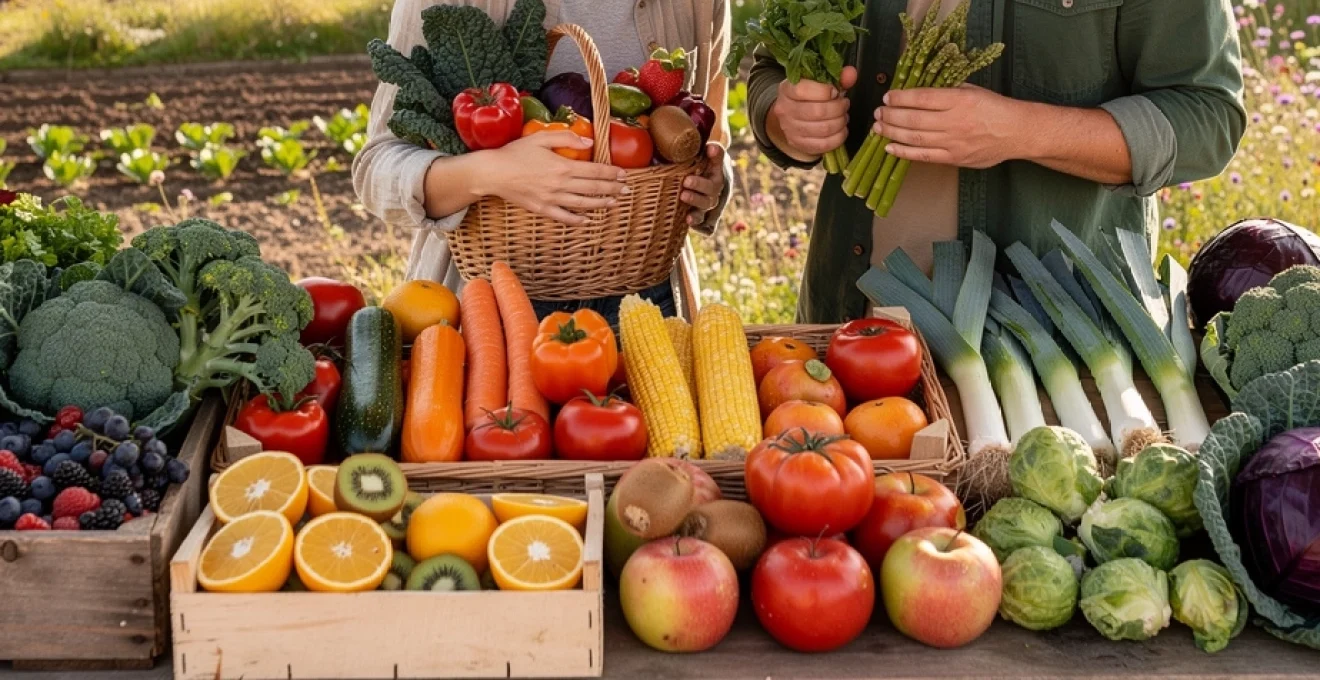
The modern supermarket creates an illusion of perpetual abundance. Strawberries in December, asparagus in October, tomatoes year-round—these once-impossible luxuries have become normalised expectations. Yet this convenience comes at a cost that extends beyond the price tag. When you prioritise seasonal fruit and vegetables in your diet, you’re making a decision that reverberates through multiple dimensions of health, environmental sustainability, and even flavour quality. The produce ripening naturally in fields during its optimal growing window possesses fundamentally different characteristics compared to crops forced into artificial maturation or shipped across hemispheres. Understanding these differences transforms seasonal eating from a nostalgic practice into an evidence-based nutritional strategy with profound implications for personal wellbeing and planetary health.
Nutritional density and phytonutrient concentration in seasonal produce
The nutritional profile of fruit and vegetables begins deteriorating the moment they’re harvested. This degradation accelerates under suboptimal storage conditions—precisely the environment encountered during transcontinental shipping and extended cold storage. Seasonal produce harvested at peak ripeness and consumed shortly thereafter retains significantly higher concentrations of vitamins, minerals, and protective plant compounds. Research published in the Journal of Agricultural and Food Chemistry has documented substantial nutrient losses in produce subjected to prolonged storage periods, with some vitamins declining by as much as 50% within days of harvest.
Polyphenol and antioxidant levels in Peak-Season harvests
Polyphenolic compounds—the diverse family of plant chemicals responsible for many of fruit and vegetables’ protective health effects—reach maximum concentrations when crops mature naturally under appropriate environmental conditions. Late-summer blueberries, for instance, accumulate dramatically higher levels of anthocyanins (a specific class of polyphenols) when exposed to the gradual temperature fluctuations and extended daylight hours characteristic of their natural growing season. Studies examining berry crops have found that anthocyanin content can vary by up to 300% between optimally grown seasonal berries and those cultivated under artificial conditions or harvested prematurely for extended transport.
These compounds aren’t merely nutritional abstractions—they translate into measurable health outcomes. The stilbenoid compounds found in late-summer grapes and berries demonstrate immunomodulatory properties, working synergistically with vitamin D to prime immune function ahead of winter’s infectious disease season. This represents nature’s elegant timing: the foods ripening in autumn provide precisely the phytochemicals needed to fortify defences against the challenges of approaching winter months.
Vitamin C retention rates in fresh vs. Cold-Stored produce
Vitamin C exemplifies the vulnerability of nutritional content to time and storage conditions. This water-soluble antioxidant oxidises readily when exposed to air, light, and temperature fluctuations. Broccoli harvested during its natural winter season in the UK and consumed within days retains approximately 100% of its vitamin C content. The same vegetable stored at refrigeration temperatures for two weeks loses 15-30% of this vitamin, whilst produce shipped internationally under variable conditions may arrive with less than half its original vitamin C intact.
Winter brassicas like kale and Brussels sprouts naturally concentrate vitamin C as an adaptation to cold stress, making them particularly valuable sources during months when other fresh produce becomes scarce. A 100-gram serving of fresh winter kale can provide 120mg of vitamin C—double the recommended daily intake—whilst the same quantity of kale grown out-of-season under polytunnels contains markedly lower concentrations, typically 40-60mg per 100 grams.
Carotenoid bioavailability in naturally ripened summer vegetables
Carotenoids—the pigments responsible for the vibrant yellows, oranges, and reds in many vegetables—require specific growing conditions to accumulate properly. Summer tomatoes ripened on the vine under natural sunlight develop lycopene concentrations up to 35% higher than those picked green and ripened artificially during transport. This matters because lycopene demonstrates protective effects against certain cancers, particularly prostate cancer, with research from the Health Professionals Follow-up Study identifying meaningful associations between tomato consumption and reduced cancer incidence.
Carotenoid bioavailability also depends on how long produce spends in storage. Over time, both light and oxygen break down these delicate compounds, so a carrot pulled from the ground in July and eaten within days delivers more usable beta-carotene than one that has spent months in cold storage. When you prioritise seasonal fruit and vegetables that are locally grown and recently harvested, you maximise not only their carotenoid content but also how efficiently your body can absorb and use these nutrients once they reach your plate.
Glucosinolate content in winter brassicas and cruciferous vegetables
Cruciferous vegetables—such as cabbage, kale, Brussels sprouts, and purple sprouting broccoli—contain a unique group of sulphur-containing compounds known as glucosinolates. When you chop, chew, or lightly cook these vegetables, glucosinolates convert into biologically active isothiocyanates and indoles, which have been widely studied for their potential cancer-protective and detoxification-supporting effects. Interestingly, glucosinolate levels in many brassicas increase when the plants are exposed to cooler temperatures and mild frost, which is precisely what happens in their natural winter growing season.
Field studies comparing winter-grown cabbage and kale to the same varieties grown out of season under heated polytunnels have shown significantly higher total glucosinolate concentrations in the naturally matured crops. In some cases, frost-exposed kale contained up to 50% more glucobrassicin and sinigrin than its out-of-season equivalent. This means that the winter vegetables you see on local market stalls are not just more traditional; they are biochemically better equipped to support your body’s own defence and detoxification systems during a time of year when we are more exposed to respiratory infections and spend less time outdoors.
Environmental impact and carbon footprint reduction through seasonal consumption
When we eat out of season, the environmental bill is often hidden from view. Energy-hungry greenhouses, refrigerated lorries travelling thousands of kilometres, and intensive irrigation systems allow us to enjoy almost any fruit or vegetable at any time—but at a cost in terms of greenhouse gas emissions, water use, and degraded soils. By choosing seasonal fruit and vegetables grown in line with local climate patterns, we can substantially reduce the carbon footprint of our diet while supporting farming systems that work with, rather than against, natural cycles.
Food miles analysis: local asparagus vs. imported off-season varieties
Asparagus is an excellent case study in the impact of food miles. In the UK, local asparagus has a short but spectacular season, usually from late April to June. When you buy spears grown just a county or two away, they may have travelled less than 100 miles to reach your plate. By contrast, asparagus available in supermarkets in winter is often flown in from countries such as Peru or Mexico, covering 6,000–10,000 miles and requiring energy-intensive cold-chain logistics at every step.
Analyses of the carbon footprint of air-freighted asparagus have found that imported, off-season spears can carry a greenhouse gas burden up to 10 times higher per kilogram than field-grown, in-season UK asparagus. The difference is not simply the distance; it is the combination of aviation fuel, refrigerated storage, and rapid distribution at both ends of the journey. By adjusting your habits—waiting for that brief local asparagus season and enjoying it in abundance while it lasts—you dramatically cut food miles without sacrificing pleasure. In fact, you gain flavour, as anyone who has tasted asparagus within hours of harvest can confirm.
Greenhouse gas emissions from heated polytunnels and artificial growing environments
It is not only long-distance transport that drives up the environmental cost of out-of-season produce. Growing crops in heated greenhouses or polytunnels to force early or extended seasons also demands large energy inputs. Tomatoes, peppers, and cucumbers grown in heated structures outside their natural summer window often rely on fossil fuel-derived heating and artificial lighting to maintain the required temperatures and daylight hours. Life-cycle assessments have shown that winter-grown greenhouse tomatoes in colder climates can have several times the carbon footprint of tomatoes imported from sunnier regions where they grow in open fields, even after accounting for transport.
This does not mean that imported produce is always the worst option, but it does highlight a key principle: crops grown in their natural season, in climates suited to them, generally require far fewer external energy inputs. When you prioritise seasonal fruit and vegetables from growers who rely primarily on sunlight, rainfall, and ambient temperatures, you reduce demand for energy-intensive infrastructure. It is similar to wearing a coat in winter instead of turning the thermostat up by five degrees—you are working with the environment, not against it.
Water usage comparison in seasonal vs. year-round crop production
Water is another critical resource affected by how and when our food is grown. Crops planted in their natural season tend to align with typical rainfall patterns and soil moisture levels, which can reduce the need for supplementary irrigation. Conversely, forcing production year-round, especially in arid regions, often relies on heavy irrigation drawing on rivers, aquifers, or desalination plants, all of which carry environmental costs. In some exporting regions, intensive irrigation for export crops has been linked to falling groundwater levels and increased water stress for local communities.
When you choose seasonal fruit and vegetables grown closer to home, you indirectly support farming systems that often require less artificial irrigation and better match local water cycles. Think of it as borrowing from a well that refills naturally rather than one that is being pumped faster than it can recover. Opting for water-wise, seasonal crops is one of the simplest ways your daily food choices can align with responsible water usage without requiring you to track complex statistics every time you shop.
Soil regeneration cycles and biodiversity in seasonal farming systems
Soils are living ecosystems, not just inert growing mediums, and they need rest and diversity to stay healthy. Seasonal farming that rotates crops, allows fields to lie fallow, and plants green manures between harvests supports soil regeneration and biodiversity. Different seasonal crops send roots to different depths, host distinct microbial communities, and attract varied insect species. Over time, this mosaic of activity improves soil structure, increases organic matter, and enhances resilience to drought and flooding.
By contrast, systems engineered for constant, year-round production of the same crop can compact soils, deplete nutrients faster than they are replenished, and encourage pest and disease pressure that then requires more agrochemicals to control. When you prioritise seasonal fruit and vegetables—particularly from farms that practise rotation and mixed cropping—you are effectively voting for landscapes that remain fertile, biologically rich, and capable of producing nutritious food for generations to come. Healthy soil is like a savings account: seasonal farming keeps paying in, while constant, intensive growing is more like an overdraft.
Economic advantages and market pricing dynamics of seasonal shopping
From a financial perspective, seasonal eating aligns your shopping basket with basic supply-and-demand economics. When a crop is in season and fields across the country are producing abundantly, supply surges and market prices generally fall. This is why British strawberries are dramatically cheaper in June than in March, and why root vegetables like carrots and parsnips offer extraordinary value in autumn and winter. By timing your purchases to coincide with natural harvest peaks, you can improve the quality of the produce you buy while often spending less overall.
Seasonal fruit and vegetables also strengthen local and regional food economies. Smaller growers, who often rely on direct sales at farmers’ markets, farm shops, or community-supported agriculture schemes, can capture a greater share of the retail price when customers buy what is currently coming out of the ground. This supports more diverse, resilient farming businesses instead of concentrating power in large, centralised supply chains. For you, that can translate to better prices, more transparency about how food is grown, and a sense of connection to the people and landscapes that feed you.
Flavour profile enhancement and organoleptic properties at peak ripeness
If you have ever bitten into a sun-warmed tomato in August and then compared it to a pale, mealy tomato in January, you already understand the flavour argument for seasonal eating. Organoleptic properties—taste, aroma, and texture—are all at their best when fruit and vegetables have been allowed to ripen fully in the right conditions. During the final stages of ripening, complex biochemical changes occur: starches convert to sugars, acids balance, volatile aroma compounds accumulate, and cell walls soften to yield the right texture. Interrupting this process by harvesting too early or ripening fruit in transit rarely produces the same result.
Seasonal fruit and vegetables therefore require less culinary intervention to be enjoyable. A ripe summer peach needs little more than a rinse. Fresh autumn carrots, stored correctly, are naturally sweet and crunchy without the need for glazing or sugar. When produce is at its seasonal best, simple preparations—light steaming, roasting with a little oil, or eating raw—highlight its inherent qualities. This not only makes home cooking easier but can also encourage you (and your family) to eat more fruit and veg simply because they taste so much better.
Specific seasonal varieties and their optimal harvest windows
Understanding which varieties are at their best in each season helps you turn the abstract idea of “eating seasonally” into concrete choices at the market. In the UK, our temperate climate offers four distinct windows of abundance, each with its own signature crops. By tuning into these rhythms—learning when English asparagus peaks or when British strawberries are at their sweetest—you can plan meals that take full advantage of nature’s calendar and the nutritional value that comes with it.
Spring: english asparagus, jersey royals, and wild garlic peak periods
Spring is the season of awakening, and the produce that emerges reflects this sense of renewal. English asparagus typically appears from late April through June, with flavour and tenderness at their best in May. Because the season is so short, it is worth making the most of it: roasting spears with a drizzle of oil, steaming and serving with poached eggs, or shaving raw into salads when they are very fresh. Jersey Royal new potatoes also have a tightly defined season, usually from April to early July, and their delicate skins and creamy texture are a direct result of the island’s soils and mild maritime climate.
Wild garlic (ramsons) pops up in woodlands and shaded areas from March through May, carpeting the ground with broad green leaves and white star-like flowers. Its flavour is gentle, more like a fusion of garlic and chives than the sharpness of garlic bulbs, and it makes an excellent seasonal pesto or aromatic addition to soups. When you prioritise these springtime delights, you are not only enjoying ingredients at their flavour peak; you are also aligning your diet with lighter, fresher foods that naturally follow the heavier dishes of winter.
Summer: heritage tomato cultivars and british strawberry season
Summer is often considered the easiest time to eat seasonally because choice and abundance are at their highest. British strawberries usually reach their prime from June to early August, depending on the weather and growing region. When picked ripe and eaten quickly, their vitamin C content and antioxidant levels are considerably higher than imported berries that have spent days in transit. For the best experience, look for fruit that smells fragrant and has a deep, even colour, and eat or freeze them within a day or two of purchase.
Heritage tomato cultivars—striped, ribbed, tiny, or unusually coloured—also come into their own in high summer. Varieties such as ‘Black Krim’, ‘Green Zebra’, or ‘Tigerella’ offer not only visual appeal but diverse flavour profiles and potentially broader phytochemical spectra compared to standard supermarket types. These tomatoes thrive under long daylight hours and warm temperatures, building layers of sweetness and acidity that simply cannot be replicated in winter. A simple salad of mixed heritage tomatoes, a pinch of salt, and a splash of good olive oil demonstrates how seasonal fruit and vegetables can turn minimal ingredients into a deeply satisfying meal.
Autumn: hedgerow foraging and root vegetable maturation
Autumn in the UK signals a shift towards deeper flavours and more robust ingredients. Hedgerows fill with blackberries, elderberries, and rosehips from late August through October, offering a free and nutrient-dense extension of the seasonal larder for those willing to forage responsibly. Blackberries, for example, are rich in anthocyanins and vitamin C, while rosehips contain exceptionally high levels of vitamin C and carotenoids. Always forage away from busy roads, take only what you will use, and leave plenty for wildlife and other foragers.
Below ground, root vegetables such as carrots, parsnips, beetroot, and turnips reach full maturity, converting more starch into sugars as the nights grow cooler. This natural sweetening is why roasted autumn roots develop such rich caramelised flavours without added sugar. These crops store well when kept cool and dark, providing a reliable supply of seasonal vegetables throughout late autumn and into winter. By basing soups, stews, and tray bakes around these maturing roots, you support your body’s need for more grounding, sustaining foods as temperatures fall.
Winter: brassica family crops and cold-hardy leafy greens
Winter may seem sparse at first glance, but it is actually a key season for certain hardy crops. Brussels sprouts, kale, savoy cabbage, and purple sprouting broccoli are designed to withstand frost, and many actually improve in flavour after exposure to cold, as plants convert stored starch into sugar as a natural antifreeze. These brassicas provide valuable vitamin C, vitamin K, folate, and glucosinolates at a time when imported salads may be tempting but are often less nutrient-dense by the time they reach your plate.
Cold-hardy leafy greens such as cavolo nero, winter purslane, and some varieties of spinach can also be harvested through much of the winter in milder regions or with minimal protection. Including these greens regularly—whether sautéed with garlic, added to soups, or finely shredded into grain dishes—helps maintain fibre intake and micronutrient diversity when fruit variety is more limited. In this way, winter seasonal vegetables play an essential role in keeping your diet balanced and colourful, even on the darkest days of the year.
Pesticide residue levels and agrochemical dependency in out-of-season production
Out-of-season production often relies more heavily on agrochemicals to overcome the natural barriers that climate and pests present. When a crop is grown outside its ideal season, it may be more vulnerable to disease, insects, and fungal pressures, prompting increased use of pesticides, fungicides, and growth regulators. In addition, imported produce may be treated with surface waxes or preservatives to extend shelf life during transport. While residue levels on supermarket shelves are regulated, regular consumption of higher-residue foods can still contribute to cumulative exposure over time.
By contrast, seasonal fruit and vegetables grown in alignment with local conditions generally require fewer chemical interventions to succeed. Pests are more predictable, disease pressures are lower, and plants are naturally more robust when grown at the right time of year. For you, this can mean lower average pesticide residues on your food and a reduced burden on surrounding ecosystems. If you choose organic or low-input producers when you can, particularly for high-residue crops like berries or leafy greens, you further minimise both personal exposure and wider environmental impact.
Ultimately, prioritising seasonal produce is about working with nature’s design rather than fighting against it. When we eat what the land is ready to give—whether that is asparagus in May, tomatoes in August, or kale in January—we benefit from higher nutritional density, better flavour, fewer hidden chemicals, and a lighter footprint on the planet. Seasonal fruit and vegetables are not a luxury; they are one of the most practical, evidence-based ways to build a healthier, more sustainable way of eating into everyday life.