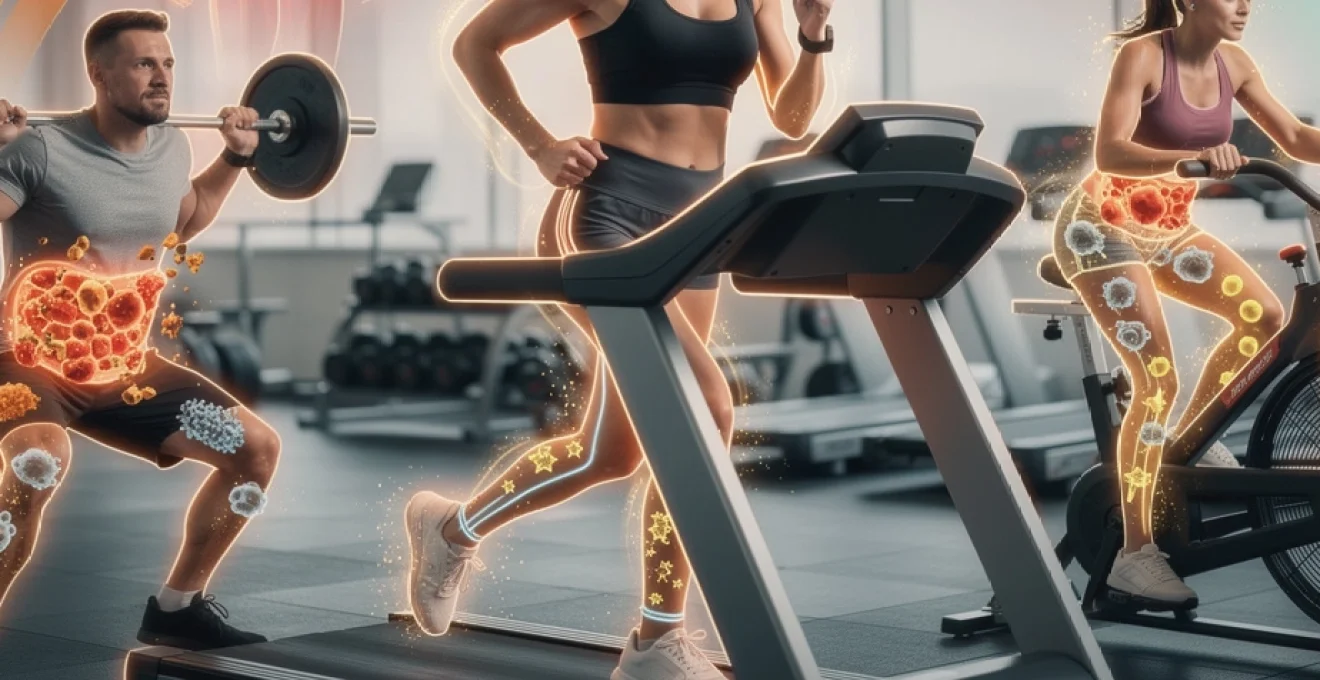
Physical activity stands as one of the most powerful tools in the battle against excess weight, yet its mechanisms extend far beyond the simple concept of “calories in, calories out.” While many individuals understand that exercise burns calories, the intricate physiological processes that make physical activity essential for sustainable weight loss remain largely misunderstood. The human body’s response to movement triggers a cascade of metabolic, hormonal, and cellular changes that collectively create an optimal environment for fat oxidation and long-term weight management.
Recent research reveals that regular physical activity doesn’t merely increase energy expenditure during exercise sessions; it fundamentally rewires your metabolic machinery to become more efficient at burning fat, regulating appetite hormones, and maintaining lean muscle mass. Understanding these mechanisms empowers you to make informed decisions about your exercise routine and maximise the weight loss benefits of your physical efforts.
Metabolic mechanisms: how exercise triggers fat oxidation and energy expenditure
The metabolic response to physical activity represents one of nature’s most sophisticated energy management systems. When you engage in exercise, your body initiates multiple pathways designed to mobilise stored energy, primarily from adipose tissue, to fuel muscular contractions and maintain physiological homeostasis. This process involves complex biochemical reactions that extend far beyond the duration of your workout session.
Lipolysis activation through catecholamine release during aerobic exercise
During aerobic exercise, your sympathetic nervous system releases catecholamines—primarily adrenaline and noradrenaline—which bind to beta-adrenergic receptors on fat cells. This binding activates hormone-sensitive lipase, the key enzyme responsible for breaking down triglycerides stored in adipocytes into free fatty acids and glycerol. These liberated fatty acids then enter the bloodstream and travel to working muscles, where they undergo beta-oxidation to produce ATP, the cellular energy currency.
The intensity and duration of exercise significantly influence the magnitude of catecholamine release. Moderate-intensity aerobic exercise sustained for 30 minutes or longer typically produces optimal conditions for lipolysis activation, whilst high-intensity intervals can trigger even more pronounced catecholamine responses, albeit for shorter durations. Research indicates that trained individuals demonstrate enhanced sensitivity to catecholamines, resulting in more efficient fat mobilisation during exercise.
EPOC (excess Post-Exercise oxygen consumption) and sustained caloric burn
The phenomenon known as EPOC represents one of exercise’s most valuable contributions to weight loss. Following intense physical activity, your body continues to consume oxygen at elevated rates for hours after exercise cessation. This increased oxygen uptake reflects ongoing metabolic processes required to restore cellular homeostasis, including lactate clearance, protein synthesis, and cellular repair mechanisms.
High-intensity interval training (HIIT) and resistance training typically produce the most significant EPOC responses, with some studies documenting elevated metabolic rates for up to 24 hours post-exercise. During this period, your body preferentially oxidises fat to fuel these recovery processes, contributing to additional caloric expenditure that extends well beyond the actual exercise session. The magnitude of EPOC can represent 6-15% of the total exercise energy expenditure, making it a substantial contributor to overall daily energy balance.
Mitochondrial biogenesis and enhanced fatty acid oxidation capacity
Regular physical activity stimulates mitochondrial biogenesis, the process by which cells create new mitochondria—the powerhouses responsible for aerobic energy production. This adaptation occurs through the activation of peroxisome proliferator-activated receptor gamma coactivator 1-alpha (PGC-1α), a master regulator of mitochondrial development. Enhanced mitochondrial density directly correlates with improved fatty acid oxidation capacity, allowing your muscles to more efficiently utilise fat as fuel during both exercise and rest.
The implications for weight loss are profound: individuals with greater mitochondrial density can sustain higher rates of fat oxidation throughout the day, effectively increasing their metabolic flexibility. This adaptation typically becomes apparent after 4-6 weeks of consistent training, with endurance athletes often displaying mitochondrial densities 50-100% higher than sedentary individuals.
Substrate utilisation
Substrate utilisation refers to the proportion of energy your body derives from different fuels—primarily carbohydrates and fats—during activity and rest. At the onset of exercise, especially at higher intensities, your muscles rely more heavily on glucose and muscle glycogen because they can be mobilised quickly. As exercise continues, and particularly during longer, moderate-intensity sessions, there is a progressive shift towards greater fatty acid utilisation, which is more efficient for sustained energy production.
Training status plays a crucial role in this shift. Well-trained individuals demonstrate an enhanced ability to oxidise fat at a given intensity compared with untrained individuals, meaning they “spare” more glycogen for when it is truly needed, such as during bursts of higher intensity. This improved metabolic flexibility not only supports endurance performance but also promotes greater overall fat oxidation, making regular physical activity particularly valuable for long-term weight loss and maintenance.
Substrate utilisation shifts: from glucose to fat during extended activity
During the first 10–20 minutes of continuous exercise, carbohydrate stores provide the majority of ATP because they can be rapidly broken down through glycolysis. As the duration extends beyond 30–40 minutes, especially at moderate intensities (around 50–70% of your VO2 max), your body increasingly taps into fat stores, and the proportion of energy derived from fatty acids rises. This transition is mediated by changes in hormone levels, increased blood flow to adipose tissue, and enhanced transport of fatty acids into muscle cells and mitochondria.
For practical weight loss, this means longer, steady-state aerobic sessions—such as brisk walking, cycling, or swimming for 40–60 minutes—encourage your body to rely more on fat as a primary fuel source. Over time, regular training shifts your “crossover point,” the intensity at which carbohydrates become the dominant fuel, to a higher workload. In simple terms, you can work harder while still burning a relatively high proportion of fat, which can significantly support your fat loss efforts when combined with a calorie-controlled diet.
Hormonal regulation: exercise-induced changes in weight management hormones
Beyond burning calories, physical activity acts like a powerful hormonal reset button for your metabolism. Exercise acutely and chronically alters the levels and sensitivity of key hormones involved in appetite regulation, fat storage, and blood sugar control. These hormonal shifts explain why two people eating the same number of calories can experience very different weight loss outcomes depending on their activity levels.
When you engage in regular physical activity, especially a mix of resistance training and aerobic exercise, you improve how your body responds to insulin, leptin, ghrelin, cortisol, and growth-related hormones. These improved hormonal responses help stabilise blood sugar, curb overeating, reduce stress-related fat storage, and preserve metabolically active lean tissue—all of which are essential for sustainable weight loss rather than short-term, yo-yo dieting.
Insulin sensitivity enhancement through GLUT4 translocation
Insulin is the primary hormone responsible for regulating blood glucose levels and directing nutrients into cells. During and after exercise, skeletal muscle contractions independently stimulate the translocation of GLUT4 transporters to the cell membrane, allowing glucose to enter muscle cells without the need for high levels of insulin. This contraction-mediated pathway is one of the reasons exercise improves insulin sensitivity even in people with insulin resistance or prediabetes.
With regular training, your muscles express more GLUT4 transporters and become more responsive to insulin, meaning you need less insulin to manage the same amount of carbohydrate. This has two major implications for weight loss: it reduces the likelihood of chronic hyperinsulinaemia (which promotes fat storage), and it improves your body’s ability to store carbohydrates as muscle glycogen rather than adipose tissue. Over time, better insulin sensitivity creates a metabolic environment that favours fat utilisation and reduces the risk of type 2 diabetes.
Leptin and ghrelin modulation: appetite control mechanisms
Leptin and ghrelin act as opposing forces in appetite regulation: leptin, produced mainly by fat cells, signals satiety and energy sufficiency, while ghrelin, secreted primarily by the stomach, stimulates hunger. In people with excess body fat, leptin levels are often chronically elevated, yet the brain becomes less responsive to its signals—a phenomenon known as leptin resistance. This can drive persistent hunger and make weight loss more challenging.
Regular physical activity appears to improve leptin sensitivity and moderate ghrelin responses, especially when combined with a balanced diet and sufficient sleep. For example, aerobic exercise and resistance training have been shown to reduce fasting leptin levels relative to fat mass and blunt excessive ghrelin spikes following meals, helping you feel fuller on fewer calories. In practical terms, this means that when you are active, you are not relying on willpower alone; your hormones are working with you to regulate appetite and support a healthy calorie deficit.
Growth hormone and IGF-1 secretion during high-intensity intervals
Growth hormone (GH) and insulin-like growth factor 1 (IGF-1) are anabolic hormones that play a key role in tissue repair, muscle growth, and fat metabolism. High-intensity interval training (HIIT), sprinting, and heavy resistance exercise trigger pronounced surges in GH secretion, particularly when workouts are performed with sufficient intensity and brief rest periods. GH, in turn, stimulates lipolysis and supports the mobilisation of fatty acids from adipose tissue.
IGF-1, largely produced in the liver in response to GH, promotes protein synthesis and muscle hypertrophy. Preserving or increasing lean muscle mass is crucial during weight loss because muscle tissue is metabolically active and helps maintain a higher basal metabolic rate. Think of GH and IGF-1 as part of your body’s internal “rebuild and repair” team: by including some higher-intensity sessions in your weekly routine, you encourage your physiology to retain muscle while liberating stored fat for fuel.
Cortisol management and stress-related fat storage prevention
Cortisol, often called the “stress hormone,” is essential for survival but can become problematic when chronically elevated. Persistently high cortisol levels are associated with increased appetite, cravings for high-sugar and high-fat foods, and central fat accumulation around the abdomen. Modern lifestyles, characterised by psychological stress and poor sleep, can drive cortisol dysregulation even in the absence of obvious physical threats.
Moderate, regular exercise acts as a buffer against chronic stress by improving your resilience to physical and emotional challenges. While intense workouts can cause a short-term rise in cortisol, the long-term adaptation is a more balanced stress response and lower baseline cortisol levels. Activities like brisk walking, cycling, swimming, and mind–body practices such as yoga not only burn calories but also help regulate stress, reducing the likelihood of stress-induced overeating and belly fat accumulation. The key is to find the right balance: enough intensity to stimulate adaptation, but not so much volume that you are constantly exhausted or overtrained.
Thermogenesis pathways: heat production and caloric expenditure during movement
Thermogenesis refers to the production of heat by your body, which is essentially a by-product of energy expenditure. When you exercise, a substantial portion of the chemical energy from nutrients is converted into heat rather than mechanical work. This thermogenic effect contributes to total daily energy expenditure and is one of the reasons physically active individuals burn more calories, even if their workouts are relatively short.
There are several components of thermogenesis relevant to weight loss: exercise activity thermogenesis (EAT), non-exercise activity thermogenesis (NEAT), and diet-induced thermogenesis (DIT). Structured workouts fall under EAT, while everyday movements such as walking, fidgeting, climbing stairs, and standing contribute to NEAT. Interestingly, research suggests that NEAT can vary by up to 2,000 kcal per day between individuals of similar size, which helps explain why some people gain weight more easily than others. By consciously increasing both formal exercise and incidental movement, you can significantly boost thermogenesis and support a higher daily caloric burn.
Body composition optimisation: lean muscle preservation through resistance training
When you aim to lose weight, the true goal is usually to lose fat while preserving—or even building—lean muscle mass. Without resistance training, a calorie deficit often leads to a combination of fat loss and muscle loss, which can lower your metabolic rate and make long-term weight maintenance harder. This is why two people with the same body weight can look and feel completely different depending on their muscle-to-fat ratio.
Resistance training sends a powerful signal to your body that muscle tissue is needed, even during periods of reduced calorie intake. Combined with adequate protein intake, strength-focused workouts help you retain muscle fibres, maintain strength, and shape your physique as the scale moves down. From a metabolic perspective, preserving lean mass is like keeping the engine size of your metabolism larger, so you burn more calories at rest and have greater capacity to handle occasional dietary indulgences without regaining fat.
Protein synthesis stimulation via mTOR pathway activation
At the cellular level, resistance exercise stimulates muscle protein synthesis through activation of the mTOR (mechanistic target of rapamycin) pathway. Mechanical tension, muscle damage, and metabolic stress from lifting weights or performing bodyweight exercises all converge to trigger this pathway. When sufficient amino acids—especially leucine-rich proteins—are available after training, mTOR activation leads to the construction of new contractile proteins and, over time, muscle hypertrophy.
For individuals pursuing weight loss, consistently activating mTOR through 2–4 resistance sessions per week helps counterbalance the catabolic effects of a calorie deficit. You do not need to train like a bodybuilder to benefit; full-body routines using compound movements such as squats, presses, rows, and hip hinges are enough to signal your muscles to grow or at least be preserved. Pairing these sessions with 20–30 g of high-quality protein within a few hours of training maximises the muscle-building stimulus and supports favourable body composition changes.
Basal metabolic rate enhancement through increased muscle mass
Basal metabolic rate (BMR) represents the number of calories your body needs to maintain basic physiological functions at rest, such as breathing, circulation, and cellular repair. Muscle tissue is more metabolically demanding than fat tissue, requiring more energy to maintain its structure and function. While estimates vary, adding several kilograms of lean mass can increase daily energy expenditure by tens to a couple of hundred calories without any change in activity level.
Although the per-kilogram difference between muscle and fat is often overstated in popular media, the cumulative effect of more lean tissue, greater NEAT, and higher training volumes can be substantial. In practice, someone who regularly lifts weights, moves frequently throughout the day, and has a higher proportion of muscle can maintain their weight on a higher calorie intake than a sedentary person of the same weight. This “metabolic cushion” provides more flexibility in your diet and helps prevent weight regain once you reach your fat loss goals.
Sarcopenia prevention during caloric restriction phases
Sarcopenia—the age-related loss of muscle mass and strength—typically begins as early as your 30s and accelerates after age 50, particularly in inactive individuals. When you combine ageing with aggressive dieting and no resistance training, muscle loss can be rapid and profound. This not only lowers metabolic rate but also increases the risk of frailty, falls, and reduced quality of life.
Integrating resistance training into your weight loss programme acts as a powerful countermeasure against sarcopenia. Studies in older adults show that strength training, even just twice per week, can increase muscle size and function despite a calorie deficit. For anyone over 40 who is trying to lose weight, maintaining or improving muscle should be considered a core objective rather than a secondary benefit. It is far easier to preserve muscle now than to rebuild it later.
Exercise modalities: comparing HIIT, LISS, and resistance training for fat loss
Not all exercise is created equal when it comes to how your body responds, but almost every modality has a place in a smart fat loss strategy. High-intensity interval training (HIIT), low-intensity steady state (LISS) cardio, and resistance training each influence metabolism, hormones, and energy expenditure in slightly different ways. The best approach for most people is not to choose one over the others, but to combine them in a way that suits their fitness level, time constraints, and preferences.
HIIT involves short bursts of high-effort work alternated with periods of low-intensity recovery. It is highly time-efficient and produces strong EPOC and hormonal responses, making it attractive for busy individuals. LISS—such as brisk walking, gentle cycling, or easy swimming—requires longer durations but is more sustainable, low impact, and easier to recover from. Resistance training, as discussed, is crucial for preserving muscle and elevating resting metabolism. By viewing these modalities as complementary tools rather than competitors, you can build a weekly routine that maximises fat loss while minimising burnout and injury risk.
Physiological adaptations: long-term metabolic changes from regular physical activity
When you maintain a consistent exercise routine for months and years, your body undergoes profound adaptations that go far beyond what the scales show. Your cardiorespiratory fitness improves, allowing your heart to pump more blood with each beat and your lungs to extract oxygen more efficiently. Capillary density in your muscles increases, facilitating better nutrient delivery and waste removal. At the same time, mitochondrial density and enzyme activity rise, enhancing your capacity for fat oxidation even at rest.
These long-term adaptations translate into what researchers call improved “metabolic flexibility”—the ability to seamlessly switch between carbohydrate and fat as fuels depending on availability and demand. People who are metabolically flexible tend to manage weight more easily, experience more stable energy levels, and have a lower risk of metabolic syndrome and type 2 diabetes. Importantly, these benefits are not reserved for athletes; even previously sedentary adults can achieve substantial gains in metabolic health with 150–300 minutes of moderate-intensity activity per week combined with 2–3 resistance training sessions.
Ultimately, physical activity is essential for weight loss not just because it burns calories in the moment, but because it reshapes almost every system involved in energy balance. From your hormones and mitochondria to your muscle mass and daily movement patterns, regular exercise creates a physiology that favours fat loss, protects against weight regain, and supports overall health. When you view physical activity as a long-term investment in your metabolic future rather than a short-term punishment for eating, it becomes far easier to build sustainable habits that keep the weight off for good.