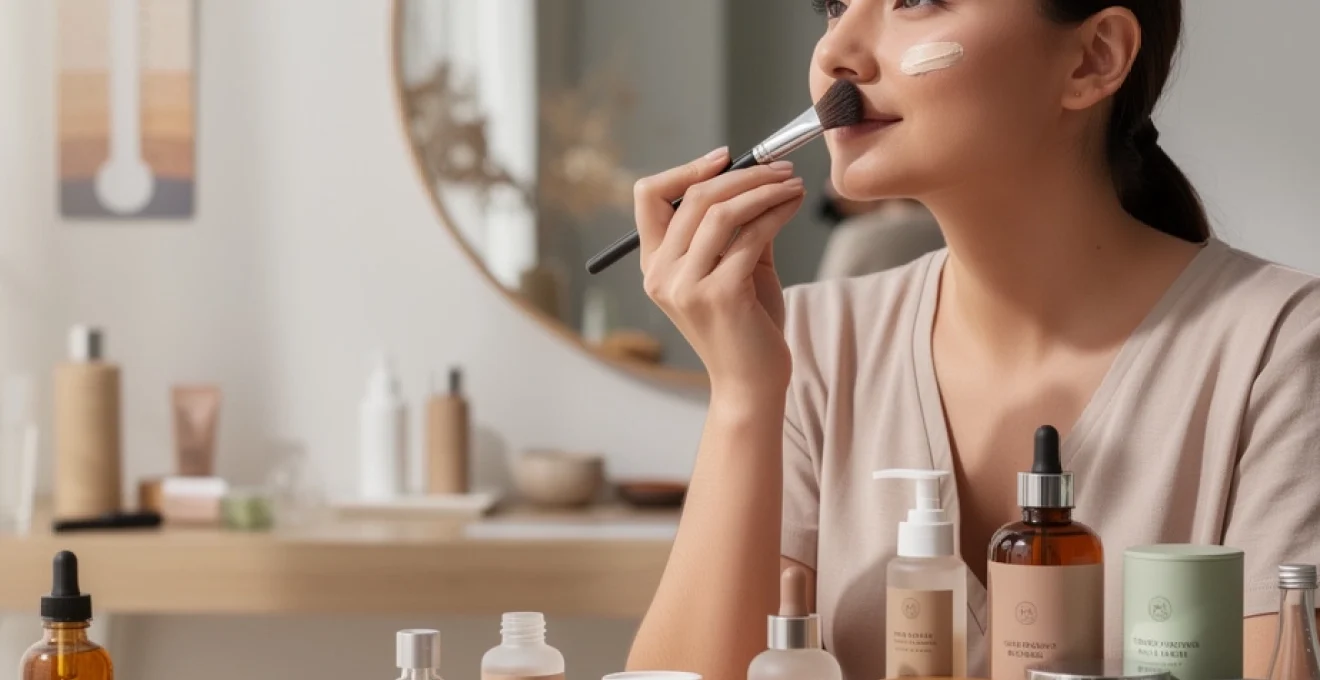
The beauty industry has undergone a remarkable transformation in recent years, with consumers increasingly prioritising skin health over superficial coverage. This shift has propelled organic cosmetics from niche specialty products to mainstream essentials, driven by mounting scientific evidence about the harmful effects of synthetic chemicals on both skin integrity and overall wellbeing. Modern organic make-up formulations offer sophisticated alternatives that deliver exceptional performance whilst nourishing the skin with carefully selected botanical ingredients.
Understanding the fundamental differences between conventional and organic cosmetics requires examining not just what these products contain, but how their ingredients interact with your skin’s complex biological systems. The choice between synthetic and natural formulations extends far beyond personal preference, encompassing considerations of long-term dermatological health, environmental impact, and the preservation of your skin’s natural protective mechanisms.
Synthetic chemical compounds in conventional cosmetics: parabens, sulphates, and phthalates
Conventional cosmetics rely heavily on synthetic preservatives, emulsifiers, and stabilising agents that, whilst extending shelf life and ensuring product consistency, can compromise skin health through various mechanisms. These chemical compounds penetrate the dermal barrier and accumulate in fatty tissues, potentially disrupting normal cellular processes and triggering inflammatory responses that manifest as sensitivity, premature ageing, and barrier dysfunction.
The widespread use of these synthetic compounds stems from their cost-effectiveness and predictable performance characteristics. However, mounting research suggests that long-term exposure to these chemicals may contribute to more serious health concerns, including hormonal disruption and increased skin sensitivity. Understanding the specific mechanisms by which these compounds affect your skin can help you make more informed decisions about your beauty routine.
Methylparaben and propylparaben: endocrine disruption mechanisms
Parabens function as preservatives by inhibiting bacterial and fungal growth, but their molecular structure closely mimics oestrogen, allowing them to bind to oestrogen receptors throughout the body. This oestrogenic activity can disrupt normal hormonal balance, potentially affecting everything from reproductive health to skin cell turnover rates. Research has detected parabens in breast tissue samples, raising concerns about their bioaccumulation potential.
The skin absorption rate of parabens varies depending on their molecular weight and the presence of other penetration enhancers in cosmetic formulations. Propylparaben, being more lipophilic than methylparaben, demonstrates greater skin penetration and longer tissue residence times. This enhanced absorption capacity makes propylparaben particularly concerning for daily-use products like foundation and concealer.
Sodium lauryl sulphate (SLS): dermal barrier compromise and irritation pathways
SLS serves as an emulsifying agent and cleansing component in many cosmetic formulations, but its defatting properties can severely compromise the skin’s natural lipid barrier. This disruption leads to increased transepidermal water loss, making the skin more susceptible to irritants, allergens, and pathogenic microorganisms. The resulting barrier dysfunction often manifests as dryness, redness, and increased sensitivity to other cosmetic ingredients.
The concentration of SLS in cosmetic products typically ranges from 0.5% to 2%, but even these relatively low levels can cause cumulative damage with repeated exposure. Studies have shown that SLS exposure can alter the skin’s pH balance and disrupt the natural microbiome, creating conditions that favour the growth of harmful bacteria whilst suppressing beneficial microorganisms.
Dibutyl phthalate (DBP): reproductive toxicity and bioaccumulation effects
DBP functions as a plasticiser and solvent in cosmetic formulations, particularly in nail polishes and fragrances. This compound readily penetrates the skin and accumulates in adipose tissue, where it can persist for extended periods. The lipophilic nature of DBP facilitates its distribution throughout the body via the lymphatic and circulatory systems, potentially affecting multiple organ systems.
Research has linked DBP exposure to reproductive toxicity, including altered hormone levels and decreased sperm quality in males. In females, DBP exposure has been associated with disrupted ovarian function and altered menstrual cycles. The compound’s ability to cross the placental barrier raises
concerns about prenatal exposure and long-term developmental outcomes. Although some regulatory bodies have restricted DBP in specific product categories, it can still be found in certain conventional cosmetics and beauty products imported from regions with less stringent regulations. For anyone aiming to build a safer, more skin-friendly make-up routine, minimising exposure to phthalates like DBP is a prudent step.
Formaldehyde-releasing preservatives: quaternium-15 and DMDM hydantoin risks
Formaldehyde-releasing preservatives such as quaternium-15 and DMDM hydantoin are used in some conventional cosmetics to control microbial growth over extended shelf lives. These compounds slowly release small amounts of formaldehyde over time, maintaining an antimicrobial environment within the product. Whilst effective from a preservation standpoint, formaldehyde is a recognised human carcinogen and a potent skin sensitiser, even at low concentrations.
For the skin, the main concerns are cumulative irritation and allergic contact dermatitis. Repeated exposure to formaldehyde-releasing preservatives can gradually weaken the skin barrier and prime the immune system to overreact, resulting in redness, itching, and chronic sensitivity. Individuals with conditions such as eczema, rosacea, or reactive skin often find that avoiding these preservatives leads to noticeable improvements in comfort and resilience. Choosing certified organic make-up is one of the most reliable ways to avoid routine exposure to formaldehyde donors.
Certified organic ingredients: COSMOS and soil association standards
Organic make-up does more than simply omit a list of questionable chemicals; it also adheres to rigorous certification standards that govern how ingredients are farmed, processed, and formulated. In Europe and the UK, two of the most respected frameworks are the COSMOS standard and the Soil Association criteria. Both focus on limiting synthetic inputs, protecting biodiversity, and ensuring that products contain a high percentage of natural and certified organic content.
When you see a COSMOS Organic or Soil Association Organic logo on a beauty product, you can be confident that key benchmarks have been met. These include restrictions on petrochemical-derived ingredients, bans on GMOs, and strict rules around preservatives, fragrances, and processing methods. For organic make-up, this means that pigments, oils, butters, and botanical extracts must meet traceability and purity standards, supporting both healthier skin and a more sustainable beauty industry.
Argan oil (argania spinosa): vitamin E and essential fatty acid profiles
Argan oil is a cornerstone ingredient in many organic foundations, concealers, and lip products due to its balanced profile of vitamin E and essential fatty acids. Naturally rich in tocopherols, argan oil provides potent antioxidant protection, helping to neutralise free radicals generated by UV exposure and pollution. This protective effect supports long-term collagen integrity and can reduce the appearance of fine lines when used consistently.
The oil’s content of oleic and linoleic acids also plays an important role in maintaining skin suppleness and barrier function. Linoleic acid, in particular, supports ceramide production, which is crucial for preventing transepidermal water loss. In organic make-up, argan oil functions almost like a treatment serum embedded in your daily cosmetics, helping dry or mature skin stay comfortable and hydrated throughout the day. Compared with mineral oil or synthetic emollients, it offers a far more skin-compatible and nutritionally dense option.
Jojoba oil (simmondsia chinensis): sebum-mimicking wax ester composition
Unlike most plant oils, jojoba oil is composed primarily of wax esters that closely resemble the natural sebum produced by human skin. This biomimetic structure allows jojoba to integrate seamlessly into the skin’s lipid matrix without clogging pores, making it highly suitable for oily, combination, and acne-prone skin types. In organic make-up, jojoba oil provides slip, spreadability, and a soft-focus finish without the heavy, occlusive feel of many synthetic alternatives.
Because jojoba helps normalise sebum production, it can be particularly beneficial in liquid foundations and tinted moisturisers designed for breakout-prone complexions. Think of it as a “smart” moisturiser: it offers lubrication where needed while signalling to the skin that less sebum needs to be produced. For anyone worried that richer natural oils might exacerbate congestion, make-up formulas featuring jojoba oil offer a balanced, complexion-friendly compromise.
Rosehip seed oil: trans-retinoic acid and linoleic acid concentrations
Rosehip seed oil is frequently highlighted in organic beauty products for its rejuvenating properties, and with good reason. It contains naturally occurring trans-retinoic acid (a vitamin A derivative), along with high levels of linoleic and alpha-linolenic acids. This combination supports gentle cell turnover, improved skin tone, and enhanced elasticity without the harshness often associated with synthetic retinoids.
In organic make-up, rosehip oil is often included in bases and complexion products to promote a smoother, more even canvas over time. Regular exposure to its fatty acid profile can help strengthen the skin barrier and reduce the appearance of post-inflammatory marks from previous breakouts. For those seeking anti-ageing and brightening benefits from their daily make-up, rosehip-infused organic formulas efficiently bridge the gap between skincare and cosmetics.
Chamomile extract (matricaria chamomilla): bisabolol anti-inflammatory properties
Chamomile extract, particularly its active component bisabolol, is renowned for its calming and anti-inflammatory properties. Bisabolol helps inhibit pro-inflammatory mediators in the skin, making it valuable for soothing redness, irritation, and sensitivity. When incorporated into organic make-up, chamomile extract moderates the potential reactivity of pigments and minerals, making products more comfortable for delicate or reactive skin types.
Concealers, mascaras, and eye products that sit close to the mucous membranes particularly benefit from chamomile’s gentleness. If you’ve ever experienced stinging eyes or eyelid irritation from conventional make-up, switching to organic formulations with bisabolol-rich chamomile can feel like changing from a scratchy fabric to a soft cotton. Over time, reduced irritation means a more stable skin barrier and fewer flare-ups, especially around the sensitive eye area.
Dermatological ph balance and skin microbiome preservation
Your skin’s surface maintains a slightly acidic environment, typically with a pH between 4.5 and 5.5, often referred to as the “acid mantle.” This delicate acidity is crucial for barrier function, enzyme activity, and the balance of the skin microbiome. Many conventional cleansers and long-wear cosmetics lean alkaline or are heavily loaded with surfactants, which can strip away natural lipids and raise the skin’s pH. The result? Increased dryness, sensitivity, and a greater tendency towards breakouts and irritation.
Organic make-up and skincare are generally formulated to be closer to the skin’s natural pH and to avoid excessively harsh surfactants. By respecting the acid mantle, these products help maintain the diversity and stability of beneficial skin bacteria. Think of your microbiome as a protective garden on the skin; when the pH is disturbed by conventional products, weeds (pathogenic microbes) can take over. Organic formulations, rich in plant oils and gentle emulsifiers, support this garden so that your skin remains resilient, less inflamed, and better able to defend itself against external stressors.
Premium organic beauty brands: dr. hauschka, weleda, and RMS beauty formulations
For anyone wondering whether organic make-up can truly compete with conventional high-performance cosmetics, established brands such as Dr. Hauschka, Weleda, and RMS Beauty provide compelling evidence. These companies have built global reputations by demonstrating that you can achieve professional-level results without relying on controversial synthetic chemicals. Their formulations prioritise whole-plant extracts, cold-pressed oils, and mineral pigments, ensuring that every application offers skincare benefits alongside colour and coverage.
Dr. Hauschka, for example, integrates medicinal plant extracts into its make-up range, drawing on decades of anthroposophic medicine and holistic skincare research. Weleda, founded over a century ago, combines biodynamic farming with dermatological expertise to create gentle yet effective colour cosmetics and tinted care products. RMS Beauty has become a favourite among make-up artists and beauty editors for its cream-based formulations that melt into the skin, relying on raw, food-grade organic ingredients. Together, these brands show that choosing organic make-up no longer means compromising on texture, pigment intensity, or wear time.
Long-term skin health: collagen synthesis and cellular regeneration benefits
One of the most compelling reasons to choose organic make-up for your skin is its impact on long-term skin health. Conventional products often provide an immediate cosmetic effect but may silently undermine collagen production and cellular repair through chronic low-level irritation and exposure to oxidative stress. Over time, this can translate into premature fine lines, dullness, and persistent sensitivity, even if your routine appears to be “working” in the short term.
Organic make-up, by contrast, tends to support collagen synthesis and cellular regeneration rather than impede it. Antioxidant-rich oils like argan and rosehip help protect fibroblasts (the cells responsible for collagen production) from free radical damage, while anti-inflammatory botanicals such as chamomile and calendula reduce micro-inflammation that can degrade collagen. When you think of your daily make-up as an extension of your skincare, it becomes clear how choosing organic formulations can act like a slow, steady investment in your future complexion.
In practical terms, this means that switching to organic make-up can help you maintain firmer, more elastic skin for longer, especially when combined with a balanced lifestyle and sun protection. Rather than masking issues created by harsh ingredients, organic formulations work in harmony with your skin’s natural repair mechanisms. Over months and years, that harmony can make the difference between skin that merely looks covered and skin that genuinely looks healthy, luminous, and resilient.