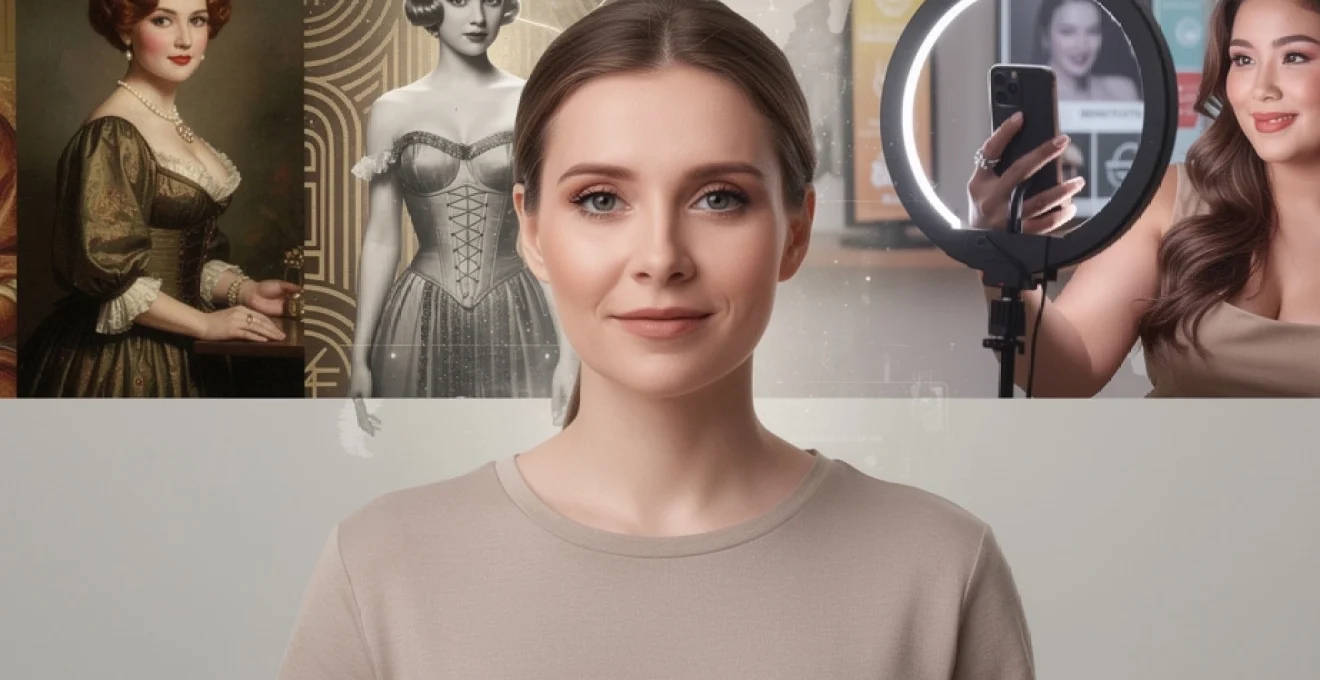
Feminine beauty stands as one of humanity’s most enduring and complex concepts, transcending mere physical appearance to encompass cultural values, social dynamics, and psychological well-being. From ancient civilisations to contemporary digital cultures, societies have consistently grappled with defining, celebrating, and critiquing ideals of feminine attractiveness. These standards carry profound implications that extend far beyond individual vanity, influencing everything from economic opportunities to mental health outcomes.
The significance of feminine beauty lies not in its superficial manifestations, but in its profound impact on social structures, personal identity formation, and collective cultural narratives. Understanding these beauty ideals requires examining their historical evolution, neurobiological foundations, and contemporary expressions across diverse global contexts. This exploration reveals how aesthetic preferences shape human behaviour, economic markets, and philosophical discourse about gender, power, and self-expression.
Historical evolution of feminine beauty standards across western civilisation
The journey of feminine beauty ideals throughout Western history reveals a fascinating tapestry of cultural values, technological advancements, and shifting social paradigms. Each era’s aesthetic preferences reflect deeper societal structures, economic conditions, and philosophical movements that shaped how beauty was conceptualised and pursued.
Renaissance venusian ideals: botticelli’s birth of venus and titian’s venus of urbino
The Renaissance period established feminine beauty ideals that celebrated curvaceous forms and pale complexions as symbols of fertility, wealth, and divine grace. Botticelli’s iconic Birth of Venus exemplified the era’s preference for soft, rounded features, flowing golden hair, and ethereal expressions that suggested both sensuality and spiritual purity. These representations weren’t merely artistic choices but reflected the period’s understanding of feminine perfection as harmonising earthly desires with heavenly aspirations.
Titian’s Venus of Urbino further refined these ideals, presenting a more intimate and humanised version of feminine beauty that emphasised the importance of domestic virtue alongside physical attractiveness. The painting’s composition suggested that true feminine beauty combined visual appeal with moral character, establishing a precedent that would influence Western beauty standards for centuries. This period’s emphasis on fuller figures stemmed from practical considerations, as plumpness indicated access to abundant food and freedom from physical labour.
Victorian era corseted silhouettes and Pre-Raphaelite alternative aesthetics
Victorian beauty standards represented a dramatic shift towards constraint and moral propriety, with the corseted waist becoming the defining feature of feminine attractiveness. The ideal Victorian woman possessed an impossibly tiny waist, achieved through tight-lacing that often caused serious health complications including organ displacement and breathing difficulties. This extreme body modification reflected the era’s emphasis on feminine suffering as a virtue and the belief that beauty required sacrifice.
However, the Pre-Raphaelite movement offered a compelling alternative vision that celebrated natural beauty and rejected artificial constraints. Artists like Dante Gabriel Rossetti portrayed women with flowing, uncorseted hair and natural figures, suggesting that authentic feminine beauty lay in embracing rather than suppressing natural forms. This artistic rebellion prefigured later feminist critiques of restrictive beauty practices and highlighted the ongoing tension between artificial enhancement and natural expression.
1920s flapper revolution: coco chanel’s androgynous paradigm shift
The 1920s witnessed a revolutionary transformation of feminine beauty ideals that coincided with women’s growing social and economic independence. The flapper aesthetic, characterised by bobbed hair, flat chests, and boyish figures, represented a dramatic departure from previous emphasis on curvy, maternal forms. This shift reflected women’s desire to participate in public life and professional activities that required greater physical freedom and mobility.
Coco Chanel’s influence during this period cannot be overstated, as she introduced designs that prioritised comfort and functionality without sacrificing elegance. Her approach to feminine beauty emphasised simplicity, sophistication, and practicality, establishing principles that continue to influence contemporary fashion and beauty standards. The androgynous aesthetic of the 1920s challenged traditional gender roles and suggested that feminine beauty could embrace masculine elements without losing its essential character.
Post-war hollywood golden age: marilyn monroe’s hourglass archetype
The post-Worl
d War Hollywood era re-centred the feminine ideal around softness, glamour, and overt sensuality. Marilyn Monroe’s hourglass figure, platinum hair, and red lips became the dominant archetype of feminine beauty, symbolising abundance, confidence, and sexual freedom after years of wartime austerity. Cinemascope technology, Technicolor film, and glossy magazine photography amplified this image, embedding it deeply into Western visual culture.
This standard, however, was both aspirational and exclusionary. It prioritised a specific body type—full bust, narrow waist, rounded hips—while marginalising women who were naturally thin, athletic, or outside Eurocentric beauty norms. Hollywood star systems and studio contracts also tied women’s economic survival to maintaining strict beauty regimens, prefiguring the contemporary pressures of image maintenance faced by influencers and celebrities today.
Contemporary instagram influencer culture and kardashian body politics
In the 21st century, feminine beauty standards have become hyper-visual and constantly mediated through platforms like Instagram, TikTok, and Snapchat. The Kardashian-Jenner dynasty, in particular, has popularised a “curvy yet sculpted” ideal: extreme hourglass proportions, contoured facial features, full lips, and impeccably styled hair and nails. This aesthetic blends elements of Black and Latinx beauty traditions with high-end luxury branding, raising complex questions about cultural appropriation and power.
Unlike the passive spectatorship of Hollywood cinema, today’s social media ecosystem encourages women not only to consume images of feminine beauty, but to produce and monetise their own. Filters, editing apps, and cosmetic procedures allow everyday users to approximate celebrity aesthetics, yet this technical accessibility often intensifies rather than reduces pressure. The result is a paradox: unprecedented diversity in visible beauty, coexisting with an increasingly narrow set of “Instagrammable” facial and body features that dominate algorithmic feeds.
Neurobiological mechanisms behind feminine aesthetic perception
While culture powerfully shapes feminine beauty ideals, our responses to beauty are also grounded in neurobiology. Over the past three decades, neuroscientists and evolutionary psychologists have explored how the brain processes attractive faces and bodies, and why certain visual cues consistently draw attention. Understanding these mechanisms does not “explain away” culture, but it does clarify why some patterns—like symmetry or specific proportions—recur across time and geography.
Evolutionary psychology theory: symmetrical facial features and reproductive fitness indicators
Evolutionary psychology suggests that many aspects of feminine beauty function as honest signals of health and reproductive fitness. Symmetrical facial features, clear skin, and bright eyes may indicate robust immune functioning and developmental stability. In numerous experiments, participants across cultures rate more symmetrical female faces as more attractive, even when they cannot consciously articulate why.
From this perspective, feminine beauty preferences are partly adaptive heuristics: quick mental shortcuts that historically helped humans select healthier mates and form cooperative bonds. Features like fuller lips, lustrous hair, and a youthful appearance may signal oestrogen levels and fertility, while gait and posture can hint at physical vitality. Of course, in modern societies, these signals are easily manipulated through cosmetics, digital editing, and surgery, which is precisely why they have become such lucrative industries.
Golden ratio mathematical proportions in facial structure assessment
The idea that mathematically precise proportions underlie beauty has captivated thinkers from Euclid to contemporary cosmetic surgeons. The Golden Ratio (approximately 1:1.618), often symbolised by the Greek letter φ, appears in art, architecture, and nature, and some researchers argue it also structures idealised human faces. Distance between facial features, width-to-height ratios, and even tooth spacing have been analysed through this geometric lens.
Modern facial mapping technologies sometimes use Golden Ratio templates to market cosmetic procedures that promise “perfect” feminine symmetry. Yet real-world application is far more nuanced. Many beloved faces—think of Barbra Streisand or Tilda Swinton—deviate substantially from these ideal grids while still being widely regarded as striking or beautiful. In practice, the Golden Ratio functions less as a universal rule and more as one influential framework among many within the aesthetics and beauty industries.
Dopamine and oxytocin neural pathways in beauty recognition processing
On a neurochemical level, perceiving beauty—whether in a face, a landscape, or a work of art—activates the brain’s reward circuitry. Studies using functional MRI show that attractive female faces stimulate regions such as the ventral striatum and orbitofrontal cortex, areas associated with dopamine release and reward prediction. This helps explain why we may feel a subtle “lift” or pleasure when seeing someone we find beautiful.
Oxytocin, often called the “bonding hormone,” is also implicated in aesthetic perception, particularly in social contexts. When we experience warmth, trust, or attachment toward someone—feelings often influenced by how they present themselves—oxytocin supports pair bonding and social cohesion. In this sense, feminine beauty operates not only as a visual stimulus, but as a relational cue that shapes how safe, connected, or engaged we feel with others.
Cross-cultural universality studies: singh’s waist-to-hip ratio research
One of the most cited pieces of empirical research on feminine beauty is Devendra Singh’s work on waist-to-hip ratio (WHR). Across numerous studies and cultural contexts, Singh found that men often rated women with a WHR around 0.7 (a waist significantly smaller than the hips) as most attractive, regardless of overall weight. This ratio appears to correlate with hormonal balance and lower risk of certain diseases, which may have made it an evolutionarily stable preference.
However, universality claims must be carefully interpreted. While WHR shows a consistent pattern in many studies, cultural contexts heavily mediate how these preferences are expressed and valued. In societies where food scarcity or manual labour dominate, higher body mass may be seen as more desirable despite WHR. Moreover, women themselves increasingly construct and pursue beauty ideals in conversation with peers, media, and subcultures, not simply in response to male preferences.
Cultural anthropology of global feminine beauty constructs
Stepping outside Western history reveals just how varied feminine beauty can be. Anthropologists emphasise that what counts as “beautiful” is never purely biological; it is always filtered through specific cosmologies, social hierarchies, and material conditions. From East Asian skincare rituals to African body modification traditions, global beauty practices help individuals signal identity, status, and belonging as much as they enhance appearance.
East asian pale skin preference: k-beauty glass skin phenomenon
In many East Asian cultures, pale, even-toned skin has long been associated with nobility, refinement, and indoor labour, in contrast to tanned skin linked with agricultural work. Contemporary Korean beauty culture (K-beauty) has transformed this historical preference into a global trend centred on “glass skin”—a smooth, translucent, intensely hydrated complexion that appears almost reflective. Multi-step skincare routines, sheet masks, and high-SPF sunscreens are marketed as pathways to this ideal.
For women, the K-beauty aesthetic carries both empowerment and pressure. On one hand, it celebrates skincare over heavy makeup and positions self-care as a daily ritual of comfort and control. On the other, the time, money, and discipline required to maintain such skin can deepen class divides and intensify perfectionism, particularly when social media filters make “flawless” skin appear effortless and ubiquitous.
African traditional body modification: mursi lip plates and ndebele neck rings
Across parts of Africa, traditional body modifications have historically signalled beauty, adulthood, and social rank. Among the Mursi of Ethiopia, for example, women may wear large clay lip plates inserted into a stretched lower lip, a practice that has been interpreted as a marker of bravery, fertility, and cultural identity. Similarly, among the Ndebele of South Africa and the Kayan (Padaung) of Myanmar and Thailand, stacked metal neck rings create the illusion of elongated necks, a trait associated with elegance and status.
From an outsider’s perspective, these practices can seem extreme or even harmful, yet they are embedded in rich symbolic systems that confer honour and belonging. Just as Victorian corsets reshaped Western women’s bodies in the name of beauty, these modifications reflect how communities inscribe values directly onto the body. Contemporary younger generations may selectively retain, reject, or repurpose such traditions as tourism, media exposure, and urbanisation transform their social landscapes.
Latin american curvilicious culture: brazilian bum bum cream and colombian bbl tourism
In many Latin American contexts, particularly Brazil, Colombia, and parts of the Caribbean, feminine beauty has long celebrated voluptuous hips, thighs, and buttocks. Products like “Brazilian Bum Bum Cream” and the global popularity of samba dancers at Carnival export this curvilicious aesthetic worldwide. Here, the ideal feminine body is energetic, sensual, and visibly alive—closely linked with dance, music, and public celebration.
At the same time, the pursuit of exaggerated curves has fuelled booming cosmetic surgery industries. The Brazilian Butt Lift (BBL), which transfers fat from other body areas to the buttocks, has become one of the fastest-growing—and most controversial—aesthetic procedures, with notable safety concerns. Medical tourism to Colombian and Brazilian clinics offers lower-cost operations, but often without robust post-operative care, revealing how global capitalism monetises local beauty ideals, sometimes at great risk to women’s health.
Middle eastern kohl-rimmed eyes and henna body art traditions
In Middle Eastern and North African cultures, eyes have historically been the central focus of feminine beauty, particularly where modest dress codes limit the display of hair or body shape. Kohl, a dark pigment applied around the eyes, has been used for millennia both as a cosmetic and, traditionally, as a protective substance believed to ward off evil and reduce glare in bright climates. Today, dramatic eyeliner, smoky eyeshadow, and thick lashes remain hallmarks of regional glamour.
Henna body art—intricate, temporary designs painted on hands, feet, and sometimes faces—plays a significant role in weddings and festivals. These swirling, organic patterns symbolise joy, fertility, and auspicious beginnings, transforming the body into a living canvas. For many women, the communal act of applying henna or sharing makeup tips becomes as meaningful as the final look itself, reinforcing the social and ritual dimensions of feminine beauty.
Psychological impact assessment of beauty standards on women’s mental health
The psychological consequences of rigid feminine beauty standards are profound. Research consistently links exposure to idealised images—whether Renaissance goddesses, Hollywood starlets, or filtered influencers—to increased body dissatisfaction, anxiety, and depressive symptoms. Girls as young as six report worrying about being “fat” or “ugly,” internalising appearance-based worth before they have fully formed a sense of self.
Social comparison plays a central role in this dynamic. When you scroll through image-saturated feeds, your brain rapidly and often unconsciously measures your own features and body against curated, edited representations. Over time, this can contribute to low self-esteem, disordered eating, compulsive exercising, or compulsive cosmetic procedures. At its most severe, appearance preoccupation manifests as body dysmorphic disorder, in which perceived flaws dominate a person’s thoughts and daily functioning.
Yet beauty culture is not purely harmful. Many women derive genuine joy, creativity, and community from makeup artistry, fashion styling, or skincare rituals. The key psychological distinction lies in motivation and flexibility: are beauty practices used as tools of self-expression and play, or as compulsory strategies to meet external expectations? Therapeutic approaches increasingly focus on helping women develop body neutrality or body functionality mindsets—valuing what the body can do rather than how it looks—and cultivating critical media literacy to resist unrealistic standards.
Economic valuation of feminine beauty in contemporary market systems
Feminine beauty is not only a cultural construct; it is a significant economic asset within modern market systems. From luxury cosmetics to budget hair dye, industries built around enhancing or maintaining women’s appearance generate hundreds of billions of dollars annually. At the same time, individual women navigate a labour market in which perceived attractiveness can influence hiring decisions, salaries, and career advancement.
Global cosmetics industry revenue analysis: l’oréal and unilever market dominance
The global beauty and personal care market was valued at well over $500 billion in the early 2020s, with forecasts suggesting continued growth driven by emerging markets and digital sales. Corporations like L’Oréal and Unilever dominate this landscape, owning portfolios that range from mass-market shampoos to high-end skincare serums. Their advertising campaigns both reflect and shape prevailing feminine beauty ideals, strategically aligning products with notions of confidence, empowerment, or agelessness.
For consumers, this concentration of power means that a relatively small number of companies have outsized influence over which looks are normalised. At the same time, indie brands, inclusive shade ranges, and “clean beauty” movements challenge these giants by centring diverse skin tones, ages, and gender expressions. As a result, the economic story of feminine beauty today is one of tension between consolidation and fragmentation, with women navigating a crowded marketplace full of competing promises.
Aesthetic surgery economic impact: brazilian butt lift and rhinoplasty pricing models
Cosmetic surgery represents another major facet of the beauty economy. Procedures like rhinoplasty, breast augmentation, and the Brazilian Butt Lift can cost anywhere from a few thousand to tens of thousands of dollars, depending on location and surgeon reputation. Financing plans, medical tourism packages, and social media marketing make these once-elitist interventions increasingly accessible to middle-class consumers.
Pricing models typically reflect not only medical costs but also aspirational branding: clinics market surgeons as artists who can sculpt the “ideal” feminine nose, waist, or jawline. This language reinforces the idea of the body as a modifiable object rather than a given reality, encouraging women to see surgical alteration as a rational investment in social capital. At the same time, under-regulated markets and discount surgeries can lead to severe complications, reminding us that the economic pursuit of beauty often externalises risks onto women’s bodies.
Social media monetisation: onlyfans creator economy and beauty content roi
The digital creator economy has introduced new ways for women to directly monetise their appearance. Platforms like OnlyFans, Instagram, and TikTok allow individuals to earn income through subscriptions, sponsorships, and brand deals, often by showcasing stylised versions of their bodies and faces. For some, this represents a form of economic autonomy: they set their own hours, control their content, and bypass traditional gatekeepers like modelling agencies or studios.
However, the return on investment (ROI) in beauty content is highly unequal. A small percentage of creators capture the majority of earnings, while many others invest significant time, emotional labour, and money into aesthetics with little financial payoff. Algorithmic bias, platform policies, and audience preferences all determine which types of feminine beauty are most profitable, potentially narrowing the range of visible and valued bodies despite the apparent openness of digital platforms.
Employment discrimination studies: physical attractiveness wage premium research
Beyond explicit beauty industries, numerous studies document a “beauty premium” in the labour market, where conventionally attractive individuals earn more and are perceived as more competent. For women, this dynamic is especially complex. While a polished, “professional” level of feminine beauty can enhance perceived credibility, deviations—being seen as either “too plain” or “too sexualised”—may invite bias or penalty.
Experimental research shows that identical resumes paired with more attractive profile photos receive more callbacks, particularly in customer-facing roles. Yet this advantage is mediated by gender stereotypes: in male-dominated fields, very attractive women may be judged as less serious or less technically capable. These findings highlight that feminine beauty functions as a form of economic capital, but one that is unstable, context-dependent, and shaped by intersecting biases related to race, age, and body size.
Feminist philosophical discourse on beauty as social construct versus biological imperative
Feminist philosophers have long debated whether feminine beauty is primarily a tool of oppression or a legitimate site of pleasure, creativity, and self-definition. On one side, critical theorists argue that beauty norms discipline women’s bodies, distract from political agency, and funnel time and resources into self-surveillance. From this perspective, the very question “What is feminine beauty?” is suspect, because it frames women’s value through a visual lens historically controlled by men.
On the other side, contemporary thinkers, particularly from intersectional and queer traditions, emphasise women’s active role in reclaiming and redefining beauty. They point out that beautification rituals can foster solidarity, cultural continuity, and personal empowerment—especially for communities whose aesthetics have been devalued or exoticised. The joy of a bold lipstick, a natural hairstyle, or a carefully chosen outfit can be understood as an assertion of agency rather than mere conformity.
Most nuanced views now accept that feminine beauty is both biologically resonant and socially constructed. We are wired to notice faces, symmetry, and movement, but what we label as “beautiful” is profoundly shaped by history, power, and technology. The ethical task, then, is not to abolish beauty but to expand it: to create cultures in which a wide spectrum of bodies, ages, and gender expressions can be seen, valued, and self-defined. In such a world, feminine beauty would matter not because it is a prerequisite for worth, but because it is one of many rich languages through which women and femmes tell the world who they are.