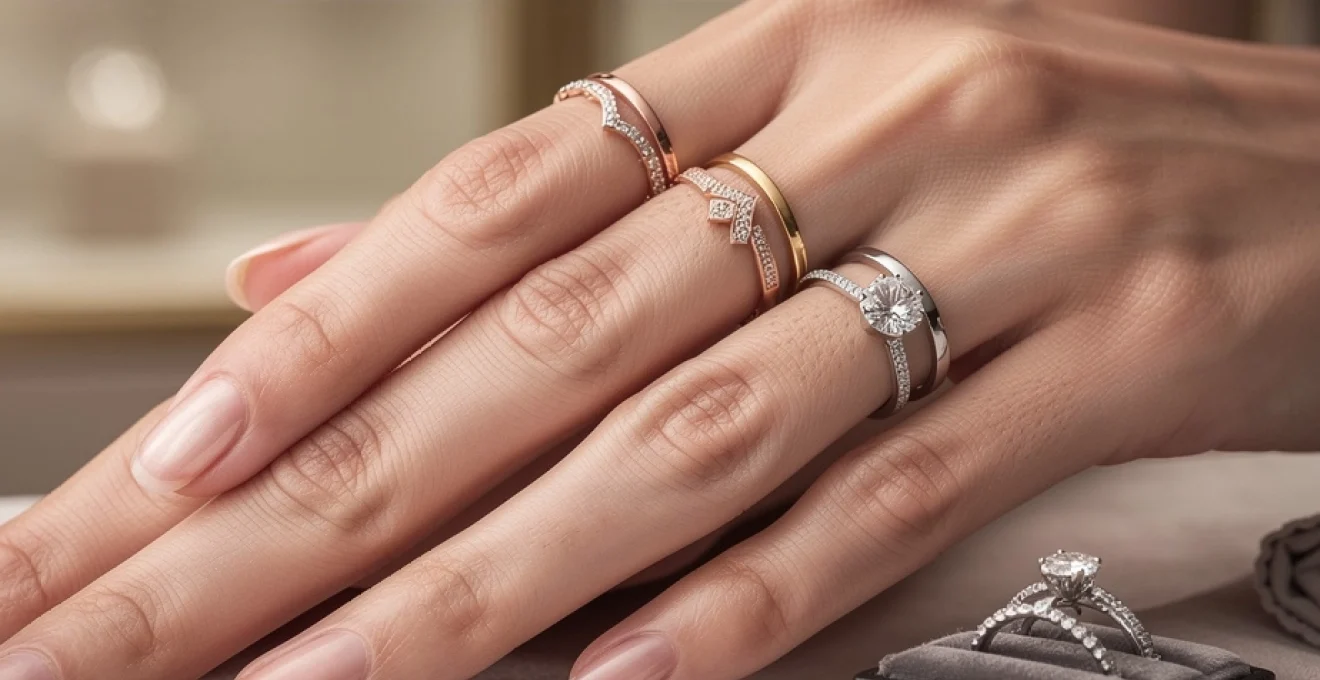
Ring stacking has evolved from a simple jewellery trend into a sophisticated art form that demands both technical precision and aesthetic sensibility. The practice transforms individual bands into cohesive compositions that express personal style whilst maintaining visual harmony across multiple fingers. Understanding the fundamental principles of proportion, metal compatibility, and strategic placement elevates ordinary ring collections into extraordinary wearable statements.
The complexity of successful ring stacking extends far beyond merely adding multiple bands to fingers. Each decision regarding placement, material selection, and spacing contributes to an overall design that must function both as individual elements and as a unified whole. Professional jewellers and style experts recognise that the most compelling stacks demonstrate mastery of fundamental design principles whilst allowing for creative expression and personal storytelling through carefully curated pieces.
Ring proportioning fundamentals and finger anatomy considerations
The foundation of exceptional ring stacking lies in understanding the unique anatomical characteristics of each finger and how different ring proportions interact with these natural variations. Finger anatomy varies significantly between individuals, with factors including knuckle prominence, finger length, and joint spacing all playing crucial roles in determining optimal stacking configurations. Professional assessment begins with measuring the diameter differences between knuckle and base positions, as these measurements directly influence ring sizing and placement decisions.
Successful proportioning requires consideration of how ring width affects visual perception of finger length and overall hand aesthetics. Wider bands tend to make fingers appear shorter and more substantial, whilst thinner rings can create an elongating effect that enhances the natural grace of longer fingers. The relationship between ring width and finger proportions becomes particularly important when creating multi-ring arrangements, as imbalanced proportions can overwhelm delicate fingers or appear insignificant on broader hands.
Knuckle-to-base ratio analysis for optimal ring placement
The dimensional relationship between knuckle circumference and finger base measurements creates unique challenges for ring stacking enthusiasts. Most fingers demonstrate a ratio difference of approximately 0.5 to 1.5 sizes between these two critical points, with this variation directly impacting how rings sit and move during daily wear. Understanding this ratio enables strategic decisions about which rings should be positioned where for both comfort and aesthetic appeal.
Professional fitting techniques involve measuring multiple points along each finger to create detailed profiles that inform stacking decisions. Rings intended for positioning closer to the knuckle require different sizing considerations than those designed to rest near the finger base, with comfort and security being paramount concerns. The natural tapering of fingers from base to tip creates opportunities for creative layering that takes advantage of these dimensional changes.
Finger length classifications and corresponding ring width guidelines
Finger length classification systems provide structured approaches to determining appropriate ring widths for optimal visual balance. Short fingers, typically measuring less than 7.5 centimetres from base to tip, benefit from ring widths between 2-4 millimetres to maintain proportional harmony. Medium-length fingers, ranging from 7.5 to 8.5 centimetres, accommodate wider ranges of ring widths from 2-6 millimetres, offering greater flexibility for mixing different band sizes within single stacks.
Long fingers, exceeding 8.5 centimetres in length, can successfully support statement rings with widths up to 8 millimetres or more without appearing disproportionate. These guidelines serve as starting points rather than rigid rules, as personal preference and individual hand characteristics may warrant deviations from standard recommendations. The key lies in maintaining visual balance whilst ensuring comfortable wear during extended periods.
Joint prominence assessment techniques for stack positioning
Evaluating joint prominence involves systematic assessment of how knuckles and interphalangeal joints affect ring positioning and movement. Prominent joints create natural stopping points that can be utilised strategically in stack design, preventing rings from sliding and creating defined zones for different design elements. Less prominent joints offer smoother transitions that enable flowing, continuous arrangements across multiple finger segments.
Assessment techniques include both visual evaluation and tactile measurement to determine joint height relative to finger circumference. This information directly influences decisions about ring profiles, with low-profile designs being preferable for prominent joints to prevent catching or discomfort. Higher-profile rings can be positioned strategically to take advantage of the natural contours created by joint prominence patterns.
When stacking multiple rings, joint analysis also helps determine where you can comfortably introduce mid-finger or midi rings. If the distance between joints is short or the joints are particularly pronounced, placing a ring above the knuckle may restrict movement or cause pressure points. In contrast, smoother joints with gradual transitions allow you to experiment with more flexible stack positioning, such as combining a base ring, a mid-shaft ring, and a midi ring on the same finger. Observing how your fingers bend and flex while wearing sample stacks is crucial; if any ring intersects a bending point directly, it will likely become uncomfortable during daily tasks.
Interphalangeal space measurements for multi-ring arrangements
Interphalangeal space refers to the distance between joints along each finger segment, and it is a key variable when configuring multi-ring arrangements. Measuring these spaces with a soft measuring tape or caliper gives you an accurate sense of how much vertical room you have for stacking rings on a single finger. As a guideline, each ring in a stack should occupy no more than one-third to one-half of the available space between two joints to preserve comfortable movement and avoid a cramped appearance. This simple proportioning principle prevents rings from colliding or pinching the skin as the finger flexes.
From a design perspective, generous interphalangeal space invites more ambitious ring stacking, including combinations of wider bands and sculptural designs. Shorter segments, by contrast, respond better to slim bands, open designs, and low-profile settings that do not fill the entire finger segment. You might find that the middle finger offers the greatest stacking potential, whereas the pinky and index may require more restraint. By mapping interphalangeal measurements across both hands, you can decide which fingers will support your most elaborate stacks and which will benefit from simpler, balancing pieces.
Metal mixing methodologies and alloy compatibility systems
Metal mixing is one of the most powerful techniques for creating visually dynamic ring stacks, yet it must be approached systematically to maintain harmony and durability. Combining yellow gold, rose gold, white gold, sterling silver, and platinum in a single composition can yield striking results when guided by clear proportioning rules and an understanding of alloy behaviour. Modern jewellery clients increasingly request mixed-metal engagement and stacking sets, reflecting a broader trend towards personalised, less traditional ring styling. To master this approach, we must consider both aesthetic transitions and the physical properties of each metal.
A well-designed mixed-metal stack relies on a clear hierarchy: a dominant metal sets the tone, whilst secondary metals act as accents and connectors. Think of the primary metal as the background colour on a canvas and the additional metals as brushstrokes that add depth and contrast. On a practical level, metals with similar hardness and wear characteristics should sit adjacent to each other wherever possible to minimise uneven scratching. Understanding how alloys respond to daily wear, skin chemistry, and cleaning methods will help you maintain both the look and the integrity of your stack over time.
Rose gold and yellow gold gradient transition techniques
Rose gold and yellow gold sit next to each other on the warm side of the colour spectrum, making them ideal candidates for gradient-style stacking. The key to a seamless transition between these two tones lies in gradual shifts rather than abrupt contrasts. One effective method is to anchor the base of the stack with the deeper hue—often rose gold—then introduce yellow gold in increasing proportions as you move towards the fingertip. This creates an ombré effect that feels intentional rather than accidental, especially when ring widths and textures are also carefully varied.
You can further refine this gradient by incorporating rings that feature both rose and yellow gold in a single design, acting as visual bridges between the two pure tones. Textured surfaces such as brushed, hammered, or matte finishes soften colour boundaries and reduce the perception of stark contrast. For clients who are hesitant about mixed metals, a subtle warm-gold gradient is a gentle introduction to more experimental stacking. Ask yourself: does the eye flow smoothly from base to tip, or does it snag on a sudden shift in tone? Adjust placement until the transition appears as fluid as a colour wash.
Sterling silver integration with platinum stack components
Integrating sterling silver with platinum components introduces a refined, cool-toned palette that works particularly well for minimalist and contemporary ring stacks. At first glance, these metals can appear similar, but platinum’s higher density and natural whiteness give it a more substantial presence, while sterling silver offers accessible versatility. To avoid silver appearing visually “lighter” or less important next to platinum, position platinum rings as structural anchors—often at the base of the finger or as statement bands—then use silver bands to fill, frame, and soften the stack. This approach acknowledges the different visual weights whilst preserving cohesion.
From a technical standpoint, you should remember that sterling silver is softer and more prone to surface scratching and tarnish than platinum. For that reason, placing silver between two heavy platinum bands may accelerate wear. Instead, consider alternating platinum and silver with mindful spacing, or use thin platinum guards at the outer edges to protect delicate silver pieces. This arrangement not only creates a balanced, cool-metal ring stack but also leverages the superior durability of platinum where it is most beneficial, such as on high-contact fingers like the middle and index.
White gold bridging methods for contrasting metal combinations
White gold functions as a powerful “bridge metal” when you want to connect contrasting tones like rich yellow gold and bright sterling silver in a single ring stack. Its neutral, slightly warm whiteness visually mediates between icy silver and saturated yellow gold, making transitions feel more coherent. To harness this bridging effect, position white gold rings between strongly contrasted metals, particularly at points where the palette might otherwise feel discontinuous. For instance, a white gold band separating a yellow gold signet and a silver eternity ring helps the eye move smoothly from one to the other.
White gold is also an excellent choice for rings that incorporate mixed-metal design elements, such as pavé bands with yellow gold prongs or silver-toned settings. Because it often receives rhodium plating, white gold can mimic platinum’s cool lustre while still harmonising with warmer metals. When building a complex mixed-metal ring stack, you might think of white gold as the “translator” that allows very different design languages to coexist. By consciously inserting white gold pieces at visual junctions, you maintain balance in metal tones while preserving the individuality of each ring.
Oxidation prevention protocols for mixed-metal configurations
Mixed-metal ring stacks present unique maintenance considerations, particularly regarding tarnish and oxidation. Sterling silver and some copper-bearing alloys are more reactive to air, moisture, and skin chemistry, which can lead to darkening or colour shifts over time. When these reactive metals are stacked directly against harder, less reactive metals like platinum or high-karat gold, the contrast in surface changes becomes more visible. To mitigate this, it is wise to establish simple oxidation prevention protocols that you follow consistently, especially if you wear your ring stacks daily.
Routine care includes removing stacks before swimming, cleaning, or applying lotions, as chlorinated water, detergents, and cosmetic residues can accelerate tarnish. Regular gentle polishing with a soft cloth designed for jewellery helps maintain sheen without stripping platings or altering patinas. For silver-heavy stacks, anti-tarnish storage pouches or lined boxes reduce exposure to sulphur in the air. You can also strategically position less reactive metals as outer guard rings, shielding more delicate or oxidation-prone bands from environmental exposure and direct friction. This disciplined approach keeps mixed-metal ring stacks looking cohesive and prevents one component from ageing noticeably faster than the others.
Gemstone hierarchy and visual weight distribution principles
Introducing gemstones into ring stacking adds colour, light, and symbolic meaning, but it also increases the importance of visual weight distribution. Large gemstones, dark colours, and highly faceted cuts attract more attention than slim metal bands; therefore, they should be treated as focal points within the overall composition. A practical way to think about gemstone hierarchy is to assign each ring a “visual weight” score based on its size, colour intensity, and sparkle. High-scoring pieces become anchor points, while low- and medium-weight rings provide support and breathing room.
For balanced stacked ring designs, you generally want no more than one dominant gemstone focus per hand, or two if they are placed on non-adjacent fingers. Surrounding a central gemstone ring with plain or lightly detailed bands directs the eye to the stone without causing visual noise. Colour also plays a critical role: saturated hues such as deep sapphire, emerald, or garnet carry more visual weight than pale stones like morganite or aquamarine. By repeating accent colours in small, subtle ways—such as a tiny matching gemstone in a neighbouring band—you create continuity without competing focal points.
Cut and setting style further refine the gemstone hierarchy in your stacking rings. High-profile solitaire settings or dramatic halo designs protrude more from the finger and will always read as statement pieces, whereas bezel-set or flush-set stones sit closer to the skin and feel more integrated. When pairing these in a stack, consider placing high-profile gems where they are less likely to snag or clash with other pieces, often closer to the base of the finger or on less active fingers. Lower-profile stones can then be layered above or alongside them to create a tapestry of light that is visually rich but still wearable.
Contemporary stack architecture patterns and band width progression
Beyond individual components, the overall “architecture” of a ring stack defines its character and modernity. Contemporary stack designs often draw on architectural concepts such as symmetry, negative space, and structural flow to create refined yet expressive arrangements. One of the most effective tools in this context is band width progression—the deliberate sequencing of thin, medium, and wide rings to guide the eye and control visual weight. Think of each finger as a vertical skyline; your choices in band width and arrangement determine whether that skyline feels cohesive and intentional or chaotic.
Current jewellery trends show strong appreciation for stacked ring combinations that blend strict geometry with organic, free-form elements. For example, a clean sequence of narrow bands may be interrupted by a single sculptural statement ring, or a set of smooth polished rings may frame a textured, hammered band. These contrasts create rhythm and interest within the stack without sacrificing balance. By consciously planning patterns and progressions rather than stacking randomly, you ensure that even the most eclectic collections of rings appear curated and design-driven.
Chevron and v-formation stacking geometries
Certain ring shapes, particularly chevron and V-shaped bands, offer powerful structural tools for shaping a stack’s geometry. These designs naturally create directional lines that point towards or away from focal elements, much like arrows or architectural arches. When positioned with the point of the V facing downwards towards the base of the finger, chevron bands can frame an engagement ring or gemstone solitaire, creating a “halo frame” effect without additional stones. In the opposite orientation, with the V pointing upwards, they elongate the finger and lead the eye towards the fingertip.
Using multiple V-formation rings in a stack allows you to build dynamic zigzag patterns that feel distinctly modern. Alternating the direction of each chevron can produce a layered, three-dimensional effect, especially when you mix plain metals with pavé-set designs. One advanced technique is to combine a central gemstone ring with two chevron bands—one above and one below—to create a customised crown or tiara-like silhouette. This approach works particularly well for those looking to transform a classic solitaire into a more contemporary stacked ring arrangement without replacing the original piece.
Asymmetrical cluster positioning for modern aesthetic appeal
Whilst traditional ring arrangements often favour symmetry, contemporary aesthetics increasingly embrace asymmetry as a hallmark of personal style. Asymmetrical cluster positioning involves grouping visual weight on one side of the hand or one area of a finger, rather than distributing it evenly. For example, you might place a bold statement ring on the index finger of one hand and balance it only with slim, subtle bands on the remaining fingers. The result feels deliberate and editorial, like a carefully styled fashion image rather than a conventional matched set.
Within a single finger stack, asymmetry can be achieved by offsetting one prominent ring—such as a signet or gemstone cluster—against several minimal bands. The key is to maintain a sense of overall balance across the hand even as you play with uneven placements. Ask yourself: does one side of the hand feel excessively heavy while the other looks bare, or does the composition still feel anchored and cohesive? By adjusting positions and widths, you can craft asymmetrical ring stacks that appear fresh and modern without sliding into visual chaos.
Graduated thickness sequencing from thin to statement bands
Sequencing bands from the thinnest to the thickest is one of the most intuitive yet effective strategies for building refined ring stacks. This “graduated thickness” approach mimics natural tapering in architecture and fashion, where garments often transition from slim to structured elements. In practice, you might begin with a delicate 1–2 millimetre band near the fingertip, add medium-width rings through the mid-section, and finish with a bold statement ring at the base. Such progression grounds the stack and prevents heavier pieces from visually “floating” in the middle of the finger.
This technique also works in reverse for dramatic effects: placing the thickest ring towards the top of the finger and finishing with slimmer bands at the base can create a unique, inverted silhouette. However, this reverse sequencing works best on long fingers or when using relatively low-profile designs to avoid a top-heavy appearance. Graduated thickness is particularly useful if you own a diverse collection of stacking rings acquired over time; by arranging them according to width, you can transform an eclectic assortment into a cohesive, design-led ring stack.
Negative space utilisation in minimalist stack compositions
Negative space—the intentional use of empty areas between rings or along the finger—is a defining characteristic of minimalist ring stacking. Rather than filling every available millimetre with metal and gemstones, negative-space strategies prioritise breathing room that allows each ring to be appreciated individually. Leaving a small gap between two bands on the same finger, or deliberately leaving one entire finger bare, can be just as impactful as adding another piece. In design terms, negative space works like silence in music: it creates rhythm, contrast, and emphasis.
Minimalist stacks often rely on ultra-thin bands, open rings, and contour designs that trace the natural lines of the finger without overwhelming it. You might combine one slender band at the base with a single midi ring above the knuckle, leaving the central space entirely open. This restrained configuration subtly accentuates finger length and elegance whilst maintaining a contemporary sensibility. For those who love stacking rings but work in conservative or professional environments, mastering negative space enables you to enjoy expressive styling in a way that still feels refined and understated.
Occasion-specific ring stack configurations and lifestyle adaptability
Effective ring stacking does not exist in a vacuum; it must adapt to the realities of your lifestyle and the context of each occasion. The stacks you wear to a formal evening reception, an office meeting, and a weekend hike should not be identical, even if they share core pieces. Instead, think of your ring collection as a modular system that can be expanded or simplified depending on your schedule and activities. This mindset helps you protect your jewellery, maintain comfort, and always appear appropriately styled.
For professional or corporate settings, streamlined stacks built from low-profile bands and modest gemstones keep the focus on polish rather than spectacle. In these scenarios, coordinating metal tones and limiting the number of statement rings creates an impression of quiet confidence. Social events, by contrast, invite more adventurous combinations: layered chevron bands, colourful gemstones, and asymmetrical placements can express personality and complement occasion-specific outfits. Finally, for high-activity days—such as travel, exercise, or hands-on work—paring back to one or two secure, smooth bands ensures that your ring stacking supports your lifestyle rather than hindering it.
Professional maintenance protocols and stack integrity preservation
Preserving the integrity of your ring stacks over time requires both routine at-home care and periodic professional attention. Because stacked rings experience more contact and friction than single bands, they are more susceptible to micro-scratches, loosening of prongs, and gradual deformation. Establishing a regular inspection habit—ideally every few weeks for frequently worn stacks—allows you to spot early signs of wear, such as slight gaps between bands, spinning stones, or rough edges that catch on fabric. Addressing these issues early prevents minor concerns from progressing into costly repairs.
Professional jewellers recommend a comprehensive check and clean for heavily worn ring stacks at least once a year. During these appointments, technicians can assess metal thickness, re-tighten stone settings, polish surfaces, and reapply rhodium plating to white gold where necessary. They may also advise on subtle design adjustments to improve long-term comfort, such as adding contoured spacer bands or reshaping slightly warped rings to restore a perfect circle. At home, storing stacked rings flat and separately in a lined box, rather than piled together, reduces abrasion and maintains each piece’s finish.
Ultimately, ring stacking is both an art and an ongoing collaboration between you, your jewellery, and your jeweller. By respecting the technical principles of proportion, metal compatibility, and structural integrity, you ensure that your carefully curated stacks remain beautiful and wearable for years. With thoughtful maintenance and occasional professional guidance, your ring stacks can evolve gracefully with your personal style, continuing to tell your story through every carefully chosen band and gemstone.