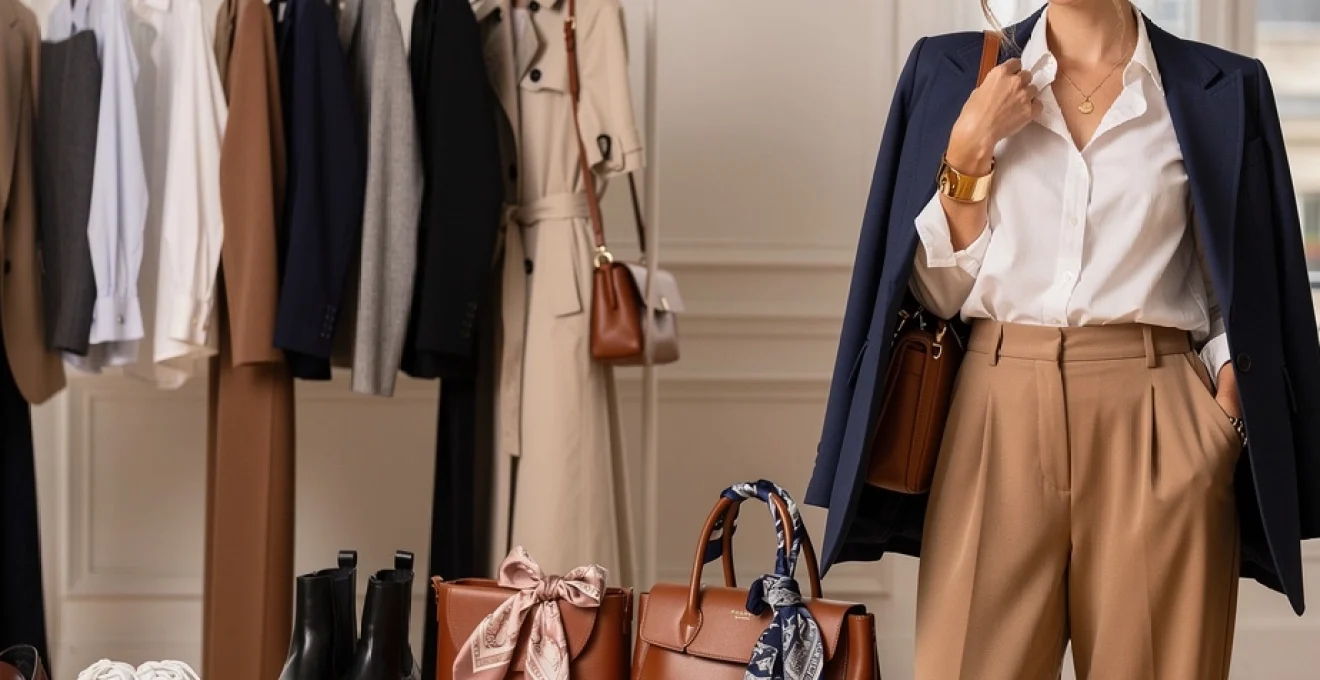
There’s a certain magnetism to someone who appears effortlessly polished—as though they simply woke up looking impeccable. This seemingly innate quality isn’t about genetics or unlimited budgets; it’s a cultivated approach to personal presentation that prioritises intention over excess. In an age where fast fashion encourages constant wardrobe turnover and social media amplifies trend cycles, the philosophy of appearing put-together without excessive effort represents a refreshing counterpoint. This approach combines strategic wardrobe planning, intelligent styling choices, and a commitment to quality that transcends seasonal fads. The result is a personal aesthetic that feels both sophisticated and authentic, professional yet relaxed.
Capsule wardrobe architecture: building a versatile foundation with minimal pieces
The foundation of effortless style lies in strategic minimalism. Rather than accumulating countless garments that struggle to work together, a thoughtfully constructed capsule wardrobe creates exponential outfit possibilities from a curated selection. This approach isn’t about deprivation—it’s about maximising versatility whilst minimising decision fatigue. Research from Princeton University suggests that excessive choice actually decreases satisfaction, a phenomenon known as “the paradox of choice.” When you streamline your wardrobe to pieces that genuinely serve you, getting dressed becomes intuitive rather than overwhelming.
The 37-piece french wardrobe method: quality over quantity principles
The concept of limiting one’s seasonal wardrobe to approximately 37 carefully selected pieces originated from Parisian styling wisdom, where quality invariably supersedes quantity. This number excludes underwear, sleepwear, and workout clothing, focusing instead on the items you wear in daily life. The methodology encourages ruthless editing: each piece must earn its place by coordinating with at least five other items in your wardrobe. This mathematical approach ensures maximum versatility whilst preventing redundancy.
When building this foundation, consider investment per wear rather than initial cost. A £300 blazer worn twice weekly for three years costs approximately 96 pence per wear—significantly less than a £40 jacket that falls apart after six months. This calculation transforms how you evaluate purchases, shifting focus from momentary affordability to long-term value. The French wardrobe method fundamentally challenges the notion that more options equal better style, proving that constraints actually foster creativity.
Neutral colour palette strategies: camel, navy, and greige as anchoring tones
A cohesive colour strategy forms the backbone of a versatile wardrobe. Anchoring your collection around sophisticated neutrals—camel, navy, greige (that perfect grey-beige hybrid), cream, and charcoal—creates endless combinations without the clashing chaos of disparate hues. These colours possess inherent sophistication whilst offering remarkable flexibility. A camel coat layers beautifully over navy trousers, greige knitwear, or cream silk blouses, creating distinct looks from the same foundational piece.
This doesn’t necessitate monotony. Within neutral families, textural variation and tonal shifts provide visual interest. Consider how ivory differs from ecru, or how charcoal creates different effects than true black. These subtle gradations allow you to build monochromatic outfits with depth rather than flatness. According to colour psychology research, neutral palettes also photograph exceptionally well and maintain relevance across changing trends—a significant advantage in our visually-driven culture.
Investment fabric selection: merino wool, silk blends, and italian cotton weaves
Fabric quality separates garments that look expensive from those that merely were expensive. Natural fibres—merino wool, silk, linen, and premium cotton—possess inherent characteristics that synthetic materials struggle to replicate. Merino wool regulates temperature beautifully, resisting odours whilst draping elegantly. Unlike cheaper wool varieties, it doesn’t pill excessively or feel scratchy against skin. A merino jumper can transition seamlessly from office to evening, maintaining its shape and appearance through countless wears.
Italian cotton weaves, particularly those with higher thread counts and longer staple fibres, create shirts and trousers that improve with age rather than deteriorating. These fabrics develop a lived-in softness
rather than thinning or losing structure. Similarly, silk blends offer a subtle sheen and fluid movement that instantly elevates even the most basic outfits. When you choose fabrics that age gracefully, your wardrobe gains a patina of refinement over time, much like a well-loved leather bag that only becomes more beautiful with use. This is the quiet power of investment fabrics: they do the heavy lifting so your overall look appears considered, even on the days you barely tried.
Proportion balancing techniques: mixing relaxed and tailored silhouettes
Even the most luxurious garments can look lacklustre if proportions are off. Effortless style relies on a considered interplay between relaxed and tailored pieces, creating visual harmony rather than volume overload. A simple principle helps: if one element is oversized, keep the rest close to the body. Wide-leg trousers pair best with a fitted turtleneck or neatly tucked shirt, while a voluminous cardigan looks most refined over slim jeans or straight-leg trousers.
Think of balancing proportions as similar to interior design: when one piece makes a statement, the others should create negative space. Cropped jackets work beautifully with high-waisted trousers or skirts because they highlight the waistline, creating shape without feeling constrictive. Conversely, longer coats over narrow silhouettes elongate the body in a quietly dramatic way. When in doubt, step back from the mirror and ask yourself: do I see shape? If everything feels boxy, refine either the top or bottom half for an instantly more put-together effect.
Effortless styling formulas: ready-made combinations for polished aesthetics
Once your capsule wardrobe foundation is in place, styling becomes a matter of simple formulas rather than daily reinvention. Certain outfit combinations function almost like uniforms: reliable, flattering, and appropriate for a range of contexts. Having these go-to pairings reduces decision fatigue whilst increasing consistency in your personal style. Instead of thinking, “What on earth do I wear?” you begin from, “Which version of my tried-and-tested formulas suits today?”
These styling equations are especially useful on busy mornings or during travel, when mental bandwidth is limited. By identifying three to five favourite combinations that align with your lifestyle—work meetings, casual weekends, evening plans—you create a personal repertoire of effortless looks. Over time, you can refine these uniforms by adjusting fabrics, footwear, and accessories, but the underlying structure remains stable. This is how some people always appear composed: they rely on frameworks, not constant reinvention.
The parisian uniform: white shirt, wide-leg trousers, and structured blazer
The white shirt, wide-leg trouser, and blazer combination is a textbook example of an outfit that appears impeccably curated yet requires little thought. Each component is a wardrobe classic in its own right, but together they create a distinctly polished, almost cinematic silhouette. The wide-leg trousers introduce drama and ease, the white shirt adds crispness, and the blazer provides structure that instantly communicates intention. You could wear this formula to a client meeting, a gallery opening, or a casual dinner simply by adjusting fabrics and footwear.
To keep this uniform from feeling corporate or dated, focus on subtle details. A slightly oversized blazer in a soft, drapey wool reads more relaxed than a very fitted, formal jacket. A white shirt with a fluid fabric and open collar feels more modern than a stiff, fully buttoned version. Finish with loafers for daytime ease, strappy heels for evening, or minimalist trainers for a contemporary edge. Because each piece is foundational, you can repeat this outfit countless times with small variations without anyone noticing you’re essentially wearing the same formula.
Monochromatic dressing psychology: tonal layering for sophisticated simplicity
Monochromatic outfits—dressing in one colour family from head to toe—convey a sense of intentionality that belies their simplicity. Psychologically, our brains interpret visual cohesion as higher effort, even when the opposite is true. When you layer similar tones, such as various shades of camel or charcoal, you create a long, uninterrupted line that elongates the body and appears inherently sophisticated. This is one of the most effective ways to look put-together without trying too hard.
The key to successful monochromatic dressing lies in playing with texture and subtle shade shifts. Imagine pairing a greige cashmere jumper with stone wool trousers and taupe leather boots: the colours whisper rather than shout, but the interplay of knit, suiting, and leather creates depth. This approach works across seasons—winter whites in cold months, sand and linen in summer. If you’re worried about looking flat or washed out, introduce a single contrasting accessory, such as a black belt or gold necklace, to break up the expanse without diluting the tonal impact.
Third-piece theory: elevating basic outfits with cardigans and waistcoats
Stylists often reference the “third-piece rule”: the idea that adding an extra layer—beyond your top and bottom—instantly makes an outfit feel complete. This third element could be a cardigan, waistcoat, blazer, or lightweight trench, and its presence creates structure and visual interest. Why does this work so well? Much like adding a frame to a painting, the third piece visually pulls an outfit together, transforming simple jeans and a T-shirt into something that appears deliberately styled.
Cardigans and waistcoats are particularly powerful third pieces for those pursuing a relaxed yet refined aesthetic. A longline cardigan over straight-leg trousers softens the silhouette, while a tailored waistcoat worn over a T-shirt or shirt introduces menswear-inspired sharpness. Both options are easy to remove if you overheat, maintaining practicality. If you’re unsure where to start, choose one neutral cardigan and one waistcoat in your core palette (perhaps navy and camel); these can be layered over dresses, shirts, and basic tops to multiply your outfit possibilities with minimal effort.
Strategic accessorising without over-embellishment
Accessories often determine whether an outfit looks intentional or incidental. However, over-accessorising can quickly tip an otherwise elegant look into visual noise. The aim is strategic accessorising: selecting a few high-impact elements that enhance your outfit rather than compete with it. Think of accessories as punctuation marks in a sentence—too many and the message becomes cluttered; just enough and the meaning is crystal clear.
By approaching jewellery, bags, shoes, and scarves with the same restraint you apply to your capsule wardrobe, you create a compact toolkit with impressive transformative power. A single swap—from a crossbody bag to a structured tote, from trainers to loafers—can reframe the entire mood of a look. When you invest in timeless, well-made accessories in a neutral palette, they become the reliable finishing touches that make you appear groomed and considered, even on low-energy days.
Signature jewellery approach: selecting one statement piece versus layering
Signature jewellery is one of the most effective ways to cultivate a recognisable personal style. Rather than rotating through dozens of trendy pieces, many stylish individuals rely on one or two consistent elements: a delicate gold chain, a pair of small hoops, a vintage signet ring, or a minimalist watch. These pieces become visual shorthand for your aesthetic, much like a logo—subtle, yet instantly identifying. This approach also simplifies your morning routine: you wear your signature piece almost automatically, without decision fatigue.
That said, there are two viable strategies: one commanding statement piece, or a curated layering of delicate items. If you choose a single statement—say, a bold cuff bracelet or sculptural earrings—keep the rest of your jewellery minimal to avoid competing focal points. If you prefer layering, ensure each piece is fine and understated so the overall effect remains refined rather than cluttered. Ask yourself, “If I removed one item, would the look improve?” Often, editing out a single piece is what transforms jewellery from “decorated” to effortlessly chic.
Leather goods investment: structured totes and crossbody bags in cognac and black
Few items influence your perceived polish as dramatically as your bag. A structured leather tote or sleek crossbody in a timeless shade communicates professionalism and attention to detail, even when the rest of your outfit is simple. Cognac and black are particularly versatile choices: black conveys classic formality, while cognac adds warmth and pairs beautifully with navy, grey, and cream. When crafted from quality leather, these bags develop character over time rather than simply deteriorating.
From a cost-per-wear perspective, investing in one or two high-quality bags often proves more economical than cycling through multiple lower-quality options. Choose clean silhouettes with minimal logos, as overt branding can quickly date a piece and compete visually with your clothes. Consider also the hardware: brushed gold or silver often appears more refined than overly shiny finishes. A well-proportioned tote that fits your laptop and daily essentials, paired with a smaller crossbody for evenings and weekends, will cover most scenarios without cluttering your wardrobe.
Footwear rotation strategy: loafers, chelsea boots, and minimal trainers
Your shoe selection can either support your effortless aesthetic or undermine it entirely. A practical yet polished footwear rotation often centres on three silhouettes: loafers, Chelsea boots, and minimalist trainers. Loafers bridge the gap between smart and casual, working seamlessly with jeans, tailored trousers, and midi skirts. Chelsea boots offer structure and protection in colder months while maintaining a slim, refined profile. Minimal trainers—think leather in white or off-white with restrained detailing—lend a contemporary ease to otherwise classic outfits.
By limiting your core rotation, you ensure each pair receives enough wear to justify its purchase, while your outfits remain coherent across different occasions. Ask yourself before buying a new pair: “Can I wear these with at least five existing outfits?” If the answer is no, they likely don’t align with your minimalist style strategy. Regular maintenance—polishing leather, replacing worn soles, storing shoes with simple care—extends their life and keeps them looking deliberately chosen rather than haphazardly thrown on.
Silk scarf styling techniques: french knots and draped necklines
A silk scarf is a small accessory with disproportionate impact, particularly when you’re aiming to look put-together with minimal effort. Its inherent sheen and fluidity add instant sophistication to even the simplest base—jeans and a T-shirt, a plain knit, or a trench coat. Two particularly effective techniques are the French knot and the draped neckline. The French knot, with the scarf folded into a narrow band and tied neatly at the front or side of the neck, creates a polished, almost editorial finish reminiscent of classic Parisian style.
The draped neckline, by contrast, embraces movement and ease. Fold the scarf into a triangle, place the point at your chest, and loosely tie the ends at the back of your neck, allowing the fabric to fall softly. This technique works especially well with monochromatic outfits, introducing a focal point without overwhelming the look. Beyond the neck, scarves can be tied to bag handles, worn as headbands, or used as belts—each variation offering a fresh way to repeat the same accessory, reinforcing your personal style while keeping your wardrobe intentionally lean.
Hair and grooming minimalism: low-maintenance routines for refined appearance
Effortless style doesn’t stop at clothing; hair and grooming choices significantly influence how polished you appear. The goal is not perfection, but consistency—a routine that supports your natural features rather than fights them. A study published in the journal Perception found that people often judge attractiveness and competence within milliseconds, and grooming plays a major role in those snap evaluations. When your hair and skin appear cared for, your entire look reads as deliberate, even if your outfit is simple.
Adopting a minimalist grooming routine means identifying a few high-impact habits and products, then performing them regularly. Instead of extensive, time-consuming rituals, you create streamlined systems that deliver reliable results: a flattering haircut that air-dries well, a skincare routine that supports a healthy glow, and one or two easy hairstyles you can execute in minutes. This approach aligns perfectly with the overarching theme of appearing put-together without trying too hard—it’s about intelligent effort, not constant labour.
The lived-in texture: air-drying methods and salt spray applications
Lived-in texture offers a sweet spot between undone and unkempt. It suggests movement and ease, yet still feels intentional. For many hair types, achieving this effect is less about hot tools and more about how you let your hair dry. After gently towel-drying (avoid vigorous rubbing, which causes frizz), apply a lightweight leave-in conditioner or cream to mid-lengths and ends. Then, twist sections loosely or scrunch with your hands, allowing your natural wave pattern to emerge as it air-dries.
Salt sprays and texture mists can enhance this effect, mimicking the slightly gritty feel of sea air. Apply sparingly: start with less than you think you need, focusing on mid-lengths rather than roots to avoid greasiness. Once dry, you can refine the look by smoothing the top layer with a small amount of hair oil or serum, ensuring the overall finish reads as purposeful rather than messy. Think of lived-in texture as the denim of hairstyles—relaxed, versatile, and rarely out of place.
Slicked-back and loose bun techniques: polished hairstyles in under five minutes
On days when air-dried texture doesn’t cooperate, having one or two emergency hairstyles you can execute quickly is invaluable. The slicked-back style, for example, instantly communicates modern minimalism. Comb a small amount of styling cream or gel through damp or dry hair, brushing it back from your face and securing it in a low ponytail or bun. This approach draws attention to your facial features and pairs particularly well with structured outfits and statement earrings.
A loose bun offers a softer alternative that still feels refined. Gather your hair at the nape of your neck or slightly higher, twist it gently, and secure with a hair tie and a few pins, allowing some pieces to escape naturally. The aim is controlled ease, not rigid perfection. Both styles are forgiving to second- or third-day hair, making them powerful tools in a low-maintenance routine. When your hair looks deliberately styled, the rest of your appearance benefits by association—even if you’re wearing the simplest jeans-and-shirt combination.
Skin-first beauty philosophy: dewy complexion over heavy makeup coverage
A skin-first beauty approach prioritises a healthy, luminous complexion over elaborate makeup techniques. Rather than relying on heavy foundation to mask concerns, you focus on skincare that strengthens your barrier and supports natural radiance. According to data from the NPD Group, prestige skincare sales have grown faster than makeup in recent years, reflecting a broader shift towards this philosophy. When your skin looks well-cared for, you can often wear less makeup while still appearing fresh and polished.
Practically, this might mean a routine with a gentle cleanser, hydrating serum, moisturiser, and daily SPF as non-negotiables. Makeup then becomes a light enhancement: a tinted moisturiser or sheer foundation, strategic concealer, brushed-up brows, and a hint of cream blush to mimic a natural flush. A touch of highlighter on the high points of the face can create that coveted dewy finish without veering into shine. The result is a face that looks alive and rested, aligning seamlessly with the theme of effortlessness—you’re not hiding behind a mask, but refining what is already there.
Fit and tailoring precision: the difference between casual and careless
One of the most underrated secrets of looking put-together is impeccable fit. Even the most expensive garments fall flat if they don’t align with your proportions, while relatively modest pieces can appear luxurious when tailored correctly. Think of tailoring as editing: small adjustments that sharpen the narrative your clothes tell. Shortening trouser hems, nipping in a blazer waist, or refining sleeve lengths can transform how an item sits on your body, shifting an outfit from “fine” to “flawless” without changing your overall style.
Many people mistake oversized or ill-fitting clothing for casual cool, but there’s a fine line between relaxed and careless. True effortlessness still respects your frame—you should look as though the clothes belong to you, not that you’re borrowing them at random. If you’re unsure where to begin, consider having your most-worn items assessed by a tailor: jeans you reach for weekly, your favourite blazer, or trousers you wear to important meetings. The relatively small investment often yields outsized returns in confidence and perceived polish.
A useful analogy is that of a well-framed photograph. The image itself may be simple, but a frame of the right size and proportion enhances its impact and presence. In the same way, clothes that subtly follow your natural lines create visual harmony. When shopping, don’t be discouraged if items are not perfect off the rack; instead, ask, “Could this be perfect with one or two adjustments?” Approaching your wardrobe with this mindset gradually builds a collection that appears custom-made for you, even when it isn’t.
Anti-trend dressing mentality: timeless style principles from coco chanel to phoebe philo
At the heart of appearing effortlessly put-together is a quiet resistance to the churn of trends. Anti-trend dressing doesn’t mean ignoring fashion entirely; rather, it means filtering trends through a lens of longevity and personal relevance. Coco Chanel famously advised women to remove one accessory before leaving the house, emphasising restraint over excess. Decades later, designers like Phoebe Philo cemented the appeal of clean lines, neutral palettes, and intelligent minimalism—an aesthetic that still feels relevant regardless of current runway cycles.
Adopting an anti-trend mentality starts with clarity: understanding which silhouettes, colours, and fabrics make you feel most like yourself. Instead of asking, “Is this in?” you begin to ask, “Will this still feel like me in five years?” When you invest in pieces that pass this test, your wardrobe naturally becomes more coherent and resilient to shifting fashions. Trends can still inspire you, but they become seasoning rather than the main ingredient—perhaps a modern shoe shape, a subtle colour accent, or an updated neckline that integrates seamlessly into your existing capsule.
This approach brings psychological benefits too. By opting out of constant trend-chasing, you sidestep the perpetual dissatisfaction that comes from feeling perpetually “behind.” Your style evolves slowly and intentionally, like a well-curated art collection rather than a revolving gallery of impulses. Ultimately, the art of feeling put-together without trying too hard is less about what you add, and more about what you choose to keep: enduring shapes, refined details, high-quality materials, and a consistent commitment to dressing for yourself rather than the algorithm.