# Statement Jewellery: How to Wear Bold Pieces with Confidence
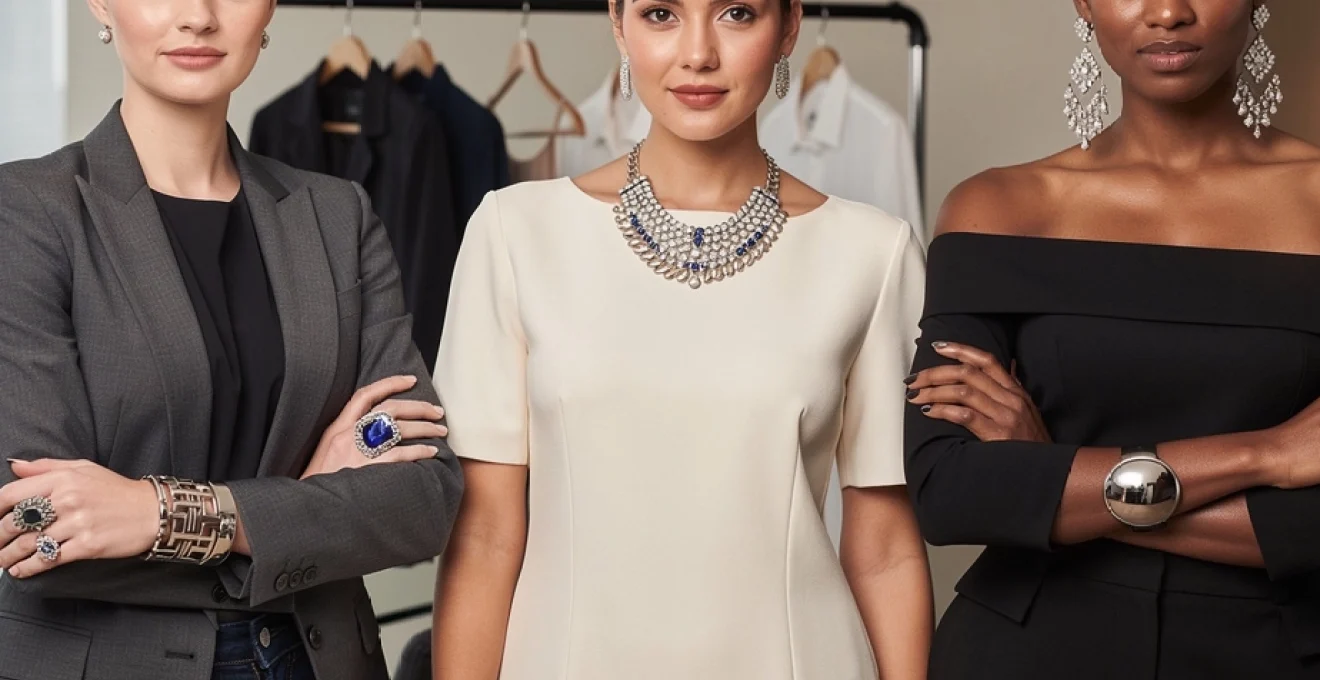
Statement jewellery possesses a transformative power that extends far beyond mere decoration. A single bold necklace can elevate a simple outfit into something memorable, whilst oversized earrings can communicate confidence before you’ve spoken a single word. Yet many people accumulate stunning pieces that languish unworn in jewellery boxes, intimidated by the very boldness that drew them to these treasures initially. The art of wearing statement jewellery isn’t about following rigid rules—it’s about understanding proportion, balance, and the interplay between accessories and attire. When you master these principles, you unlock the ability to express your personality through accessories that command attention and spark conversation. Bold jewellery represents an investment in self-expression, a wearable form of art that deserves to be showcased with intention and flair.
Anatomy of statement jewellery: defining bold pieces in contemporary fashion
Understanding what constitutes statement jewellery forms the foundation for wearing it successfully. Statement pieces aren’t simply large accessories—they’re designs that command visual attention through size, colour, texture, or intricate craftsmanship. These pieces typically feature at least one distinctive characteristic that sets them apart from everyday jewellery: dramatic scale, unusual materials, complex construction, or eye-catching gemstones. The distinction between accent jewellery and statement pieces lies in their relationship to your overall ensemble. Whilst delicate chains and simple studs complement outfits, statement jewellery becomes a focal point that anchors your entire look.
Oversized cocktail rings and sculptural metalwork characteristics
Cocktail rings emerged during Prohibition-era America as bold declarations of personality, and they’ve retained their capacity to make powerful impressions. Contemporary cocktail rings range from vintage-inspired designs featuring large gemstones surrounded by smaller stones to avant-garde sculptural pieces that wrap around fingers like miniature artworks. The defining characteristic is their substantial presence—these rings typically extend beyond the finger’s width and often incorporate three-dimensional elements. Modern sculptural metalwork has pushed boundaries even further, with designers creating rings that blur the line between jewellery and wearable sculpture. These pieces might feature asymmetrical forms, mixed metals, or architectural elements inspired by everything from organic forms to industrial design.
Layered chainwork and multistrand necklace construction
Multistrand necklaces create impact through repetition and texture rather than a single bold element. These pieces might combine chains of varying lengths and thicknesses, creating a cascading effect that draws the eye downward and frames the face beautifully. The construction techniques vary widely: some feature delicate chains layered to create volume, whilst others incorporate chunky links with deliberately varied finishes—polished, hammered, or oxidised. Contemporary designers have elevated layered chainwork by mixing metals, introducing gemstone stations at strategic intervals, or creating pieces that can be reconfigured into different configurations. The beauty of well-designed multistrand pieces lies in their ability to look complex whilst being remarkably easy to wear, as the designer has already solved the proportional challenges of layering.
Chandelier earrings and Shoulder-Grazing drop designs
Chandelier earrings derive their name from their resemblance to ornate light fixtures, featuring tiered construction that creates movement and catches light from multiple angles. These dramatic pieces typically incorporate dangling elements suspended from a decorative top, creating length that can extend several inches below the earlobe. Shoulder-grazing designs take this concept further, with drops that literally brush the shoulders with movement. The construction might include gemstone cascades, metalwork chains, or mixed materials like feathers and beads. Modern interpretations range from geometric minimalism in precious metals to maximalist bohemian designs incorporating colourful stones and intricate wirework. What these designs share is their ability to frame the face dramatically and create motion that responds to the wearer’s movements.
Cuff bracelets and arm candy stacking techniques
Cuff bracelets make bold statements through their substantial presence on the wrist. Unlike delicate bangles, cuffs typically feature wider bands—often an inch or more—that may be rigid or slightly
flexible. They often hug the wrist or forearm, leaving an intentional negative space that becomes part of the design. Contemporary cuff bracelets may feature cut-out patterns, hammered textures, or bold gemstones set into wide metal bands. Arm stacking techniques build on this drama by combining one hero cuff with slimmer bangles or chain bracelets on the same arm, creating a curated “arm party” that still feels considered. The key is to allow one bold bracelet to dominate, with supporting pieces echoing its metal colour or design language rather than competing for attention.
Strategic styling principles for maximum visual impact
Once you understand the anatomy of statement jewellery, the next step is learning how to style bold pieces so they enhance rather than overwhelm you. Strategic styling is less about rigid rules and more about guiding the eye: where do you want people to look first when they see you? By thinking in terms of focal points, harmony, and proportion, you can create outfits where statement jewellery feels intentional and cohesive. These principles apply whether you’re dressing for everyday wear, professional environments, or special occasions that call for maximum impact.
The one-statement rule: balancing focal points in your ensemble
In most situations, the one-statement rule is your best friend: choose a single bold jewellery piece to serve as the star of your look and let everything else play a supporting role. This doesn’t mean you can only wear one item of jewellery; rather, it means you allow one clear focal point—perhaps an oversized cocktail ring, a dramatic necklace, or chandelier earrings—to carry the visual weight. Supporting pieces should be slimmer, simpler, and tonally related so they harmonise without shouting for attention. Think of it like composing a photograph: the statement jewellery is your subject, and the rest of your accessories are the background that helps it stand out.
There are, of course, deliberate exceptions for those who enjoy maximalist styling, but even the most layered looks usually follow an internal logic. You might combine a strong earring with a bold cuff, for example, but keep the neckline bare and the outfit palette neutral to avoid visual overload. Ask yourself: if someone took a photo of you right now, where would their eye go first? If there are three competing answers—earrings, necklace, and ring—it’s usually time to edit. Removing one bold element often makes the remaining pieces look more luxurious and considered.
Neckline-to-jewellery pairing: v-necks, bardot, and high collars
Necklines and statement jewellery should work in partnership; when they fight each other, the entire outfit can feel off. As a rule of thumb, necklaces look best when they either mirror the line of the neckline or clearly contrast it in a deliberate way. V-necklines, wrap dresses, and surplice tops pair beautifully with pendant or V-shaped statement necklaces that echo the triangular shape, drawing the eye towards the face and elongating the torso. Bardot and off-the-shoulder styles, by contrast, create a natural frame for collar-style necklaces or structured chokers that sit just above the collarbone, emphasising the neck and shoulders.
High collars, turtlenecks, and mock necks are ideal canvases for long statement necklaces, lariats, or bold pendants that break up the vertical line of fabric. If your neckline already features strong detailing—ruffles, bows, or heavy embellishment—it’s often wiser to skip the necklace entirely and focus on statement earrings instead. Boat necks and crew necks tend to work well with mid-length statement pieces that sit just below the collarbone, creating a clean visual break. When in doubt, try your jewellery on with the garment and check in the mirror: do the shapes complement each other, or does one obscure the other’s design?
Colour theory application: complementary metals and gemstone coordination
Colour plays a decisive role in how bold jewellery reads against your skin and clothing. Applying basic colour theory helps you choose statement pieces that feel harmonious rather than chaotic. Complementary colours (opposites on the colour wheel, such as blue and orange or purple and yellow) create vivid contrast, making gemstones or enamel details stand out sharply against your outfit. Analogous schemes (neighbouring colours like blue, teal, and green) produce a more subtle, tonal statement that feels elegant and cohesive. For example, pairing an emerald statement necklace with a deep teal dress creates depth without visual noise.
Metal choice also influences the overall effect of statement jewellery. Yellow gold tends to enhance warm skin tones and rich hues like burgundy, forest green, and chocolate brown, while white metals (silver, platinum, white gold) flatter cooler palettes such as navy, charcoal, and icy pastels. Rose gold often acts as a soft bridge between the two, particularly flattering on neutral and warm undertones. If you’re wearing bold jewellery with multi-coloured gemstones, pick out one shade to echo in your outfit and let the others provide subtle contrast. This approach keeps even very colourful statement pieces grounded and wearable.
Scale and proportion: matching body frame to jewellery size
Proportion is one of the most overlooked aspects of styling statement jewellery, yet it has a huge impact on how comfortable and confident you feel. As a guideline, the larger your physical frame or the more voluminous your clothing, the bolder your jewellery can be without appearing overwhelming. Taller individuals or those wearing strong-shouldered blazers, wide-leg trousers, or dramatic coats can carry oversized necklaces and wide cuffs particularly well. If you have a more petite frame or prefer minimalist silhouettes, you might opt for pieces that are still visually striking—through colour, texture, or unusual design—but slightly scaled down in physical size.
Think of proportion in the same way you consider furniture in a room: a large sofa needs a substantial coffee table, while a small space looks best with lighter, more streamlined pieces. Similarly, a tiny stud earring may disappear against a voluminous hairstyle, whereas a shoulder-grazing drop will feel balanced. When trying on statement jewellery, move around, sit down, and look at yourself from different angles. Does the piece still look proportional when you’re not standing perfectly straight? If the jewellery seems to wear you, rather than the other way around, consider adjusting the scale.
Confidence-building techniques for bold accessory wear
Even the most perfectly styled statement jewellery will fall flat if you don’t feel at ease wearing it. Confidence is the invisible element that makes bold pieces look intentional rather than costume-like. The good news is that confidence with statement jewellery can be built over time, much like any other style skill. Start by introducing bold accessories into familiar outfits so the only variable you’re experimenting with is the jewellery itself. A favourite blazer, your go-to jeans, or a much-loved little black dress provide a psychological anchor, making it easier to adjust to the extra attention a dramatic necklace or earring will attract.
If you’re new to bold pieces, consider a gradual progression. You might begin with a single strong element—such as a sculptural ring or medium-sized hoop—before advancing to chandelier earrings or a collar necklace. Pay attention to which compliments you receive and how you feel throughout the day; positive feedback often helps reinforce your willingness to experiment further. Practically speaking, ensure your statement jewellery is physically comfortable: well-balanced earrings that don’t tug on the lobes, necklaces that don’t twist constantly, and cuffs that fit securely without pinching. Discomfort is one of the quickest ways to undermine your confidence.
Finally, give yourself permission to stand out. Many of us hesitate to wear bold jewellery because we worry about drawing “too much” attention, but style icons are rarely remembered for blending in. Ask yourself: what message do I want this piece to send? Strength, creativity, glamour, playfulness? When you align your jewellery choices with the personality you want to project, bold accessories start to feel like a natural extension of who you are rather than something you’re “trying on” for effect.
Capsule wardrobe integration: styling statement pieces with minimalist fashion
A capsule wardrobe and statement jewellery might seem like opposites, but in reality they complement each other beautifully. Minimalist fashion relies on high-quality basics—well-cut trousers, neutral knitwear, tailored shirts—that can be mixed and matched with ease. Statement jewellery functions as the visual punctuation that keeps these combinations from feeling repetitive. By investing in a handful of bold pieces that work with your core colour palette, you can radically shift the mood of a single outfit with a quick change of accessories. This approach is not only cost-effective but also sustainable, as you get more mileage out of fewer garments.
Monochromatic dressing as a canvas for dramatic jewellery
Monochromatic dressing—wearing different shades of a single colour—creates an elegant, elongated silhouette that is ideal for showcasing bold jewellery. The uniform backdrop allows your statement pieces to take centre stage, much like artwork against a gallery wall. A head-to-toe black outfit with a sculptural gold necklace, for instance, reads as modern and powerful, while an all-cream ensemble with a chunky gemstone cuff feels soft yet luxurious. Because there is minimal competition from prints or clashing tones, you can be more adventurous with scale, colour, and texture in your accessories.
When styling statement jewellery with monochrome looks, consider whether you want to maintain tonal harmony or introduce contrast. Tonal harmony might involve pairing a navy outfit with deep blue sapphires or midnight enamel, creating a subtle, almost smoky effect. High contrast, on the other hand, could mean layering a bright coral necklace over khaki or a vivid amethyst ring against grey wool. Both strategies work; the choice depends on whether you prefer a quieter sophistication or a more striking, editorial feel. Either way, the simplicity of monochrome dressing makes even very bold jewellery feel intentional and chic.
Tailored basics: pairing blazers and shift dresses with bold accessories
Tailored basics such as blazers, shift dresses, and structured shirts offer the perfect framework for statement jewellery because their clean lines create visual order. A sharply cut blazer in black, navy, or camel becomes a versatile stage for everything from oversized brooches to layered chain necklaces peeking out from beneath the lapel. For workwear, a single dramatic cuff or a geometric pendant can inject personality into a classic suit without undermining professionalism. On off-duty days, the same blazer might partner with stacked rings and long earrings for a more relaxed yet still polished look.
Shift dresses—particularly in solid colours—are another ideal partner for bold accessories. Their straightforward silhouette allows you to experiment with neckline-adjacent pieces: think bib-style necklaces, collar-length strands, or large pendants that fall at the centre of the chest. If your dress has sleeves, a substantial bracelet or statement watch can balance the look, drawing the eye down the body. The key is to let the garment’s structure do some of the work. Because tailored pieces already convey intention and sharpness, they prevent bold jewellery from veering into theatrical territory, even when you push the boundaries of scale or colour.
Denim and statement jewels: elevating casual wear
Denim is one of the most effective backdrops for statement jewellery because of its inherent casualness and texture. A simple jeans-and-tee combination can be transformed with the addition of a bold necklace, large hoops, or a stack of mixed-metal bracelets. The contrast between relaxed fabric and refined accessories creates a high-low balance that feels modern and effortless. This is especially useful if you want to experiment with very glamorous pieces—such as crystal-encrusted earrings or ornate cocktail rings—without waiting for a formal event.
When styling bold jewellery with denim, consider the wash and cut of the fabric. Dark, clean-wash jeans tend to pair well with polished metals and gemstones, leaning into a more sophisticated feel, while distressed or light-wash denim can handle bohemian or eclectic pieces—think tassels, beads, or hammered metals. A classic denim jacket worn open over a plain vest becomes a frame for layered necklaces, while rolled sleeves create space to showcase cuffs and bangles. If you ever feel that a statement piece looks too “dressy,” try it with denim; you may find the contrast is exactly what makes it feel wearable for everyday life.
Designer inspiration: iconic statement jewellery from chanel to bvlgari
Looking to designers who have shaped the history of statement jewellery can be incredibly helpful when developing your own bold accessory style. Iconic maisons and visionary creators have long used jewellery as a language of power, rebellion, and glamour. By studying their approach to scale, materials, and styling, you gain a toolkit of ideas you can adapt to your own wardrobe. From Chanel’s layered pearls to Bvlgari’s coiled serpents, these references remind us that statement jewellery has always been about more than decoration—it’s a form of storytelling.
Coco chanel’s costume jewellery revolution and layering philosophy
Coco Chanel revolutionised the way women wore jewellery by embracing costume pieces at a time when fine jewels were the norm. Rather than viewing non-precious materials as inferior, she used faux pearls, glass stones, and gilt metals to create dramatic, accessible designs that could be worn day and night. Her philosophy encouraged women to layer multiple strands of pearls, chains, and pendants over simple knitwear or the now-iconic little black dress. This approach democratised glamour and cemented the idea that bold jewellery could be playful, experimental, and not restricted to the vault.
Chanel’s styling signatures offer practical lessons for wearing bold pieces today. She often combined long and short necklaces together, mixing textures and materials while keeping the colour palette tight—pearls with gold chains, for example. She also embraced asymmetry, pinning oversized brooches to one side of a jacket or dress to create a deliberate focal point. When you layer your own necklaces or stack bracelets, you’re participating in this lineage of expressive, rule-breaking adornment. Ask yourself: how would this simple outfit look with one more strand, one more brooch, or an unexpected mix of textures?
Elsa peretti’s organic forms for tiffany & co.
Elsa Peretti brought a very different sensibility to statement jewellery when she began designing for Tiffany & Co. in the 1970s. Her pieces, inspired by natural and organic forms—bean shapes, bones, teardrops—proved that boldness doesn’t always require ornate detail. Instead, she used fluid, sculptural silhouettes in polished silver and gold to create jewellery that felt both modern and sensual. Many of her designs are generous in scale yet incredibly wearable, draping along the body’s curves rather than sitting stiffly on top of them.
Peretti’s work offers a masterclass in understated statement jewellery. If you’re drawn to bold pieces but shy away from heavy embellishment, her philosophy shows how a single sweeping curve or enlarged everyday motif can be striking on its own. Translating this to your wardrobe might mean choosing one large, smooth cuff instead of several decorated bangles, or opting for a single, elongated pendant on a fine chain rather than a multi-gemstone bib. The effect is still impactful, but the focus shifts to silhouette and movement rather than sparkle alone.
Bvlgari’s serpenti collection and bold italian goldsmithing
Bvlgari’s Serpenti collection is one of the most recognisable examples of statement jewellery in modern history. Drawing on ancient symbolism, these pieces wrap sinuous serpent forms around the wrist, neck, or fingers, often with gemstone eyes and intricate scales crafted from articulated gold segments. The combination of rich yellow gold, precise engineering, and sensual design embodies Italian boldness: unapologetic, glamorous, and luxurious. Serpenti pieces are not meant to blend in; they are designed to be seen across a room.
From a styling perspective, Serpenti teaches us about the power of a singular, recognisable motif. Rather than dispersing attention across many small details, Bvlgari concentrates visual impact into one strong shape that repeats across bracelets, watches, and rings. You can borrow this approach by choosing a signature motif of your own—perhaps a recurring geometric shape, a favourite symbol, or a particular texture—and building your statement jewellery collection around it. When you do, even the boldest accessories begin to feel cohesive and personal rather than random.
Kenneth jay lane’s oversized glamour for runway and street
Kenneth Jay Lane became famous for his fearless use of scale and colour, creating costume jewellery that graced both couture runways and everyday wardrobes. His designs often featured oversized faux gems, dramatic collars, and chandelier earrings with unapologetic sparkle. Crucially, he understood that fashion jewellery could be whimsical and theatrical without losing its sophistication. By using high-quality plating and meticulous detailing, he elevated costume pieces into objects of desire, proving that impact doesn’t depend solely on precious materials.
Lane’s work is a reminder that bold jewellery can—and perhaps should—be fun. If you’ve ever hesitated over a pair of brightly coloured earrings or an exuberant cocktail ring, consider how he styled such pieces with simple dresses or clean silhouettes, allowing them to shine without competition. Adopting a similar strategy, you might pair a vivid statement necklace with a plain black polo neck, or let one show-stopping ring be the only accessory you wear with an otherwise minimal outfit. This blend of everyday clothing and runway-level jewellery is where much of the magic happens.
Occasion-specific styling: from boardroom to black-tie events
The final piece of the puzzle is understanding how to adapt statement jewellery to different contexts so you always look appropriately polished. What works for a black-tie gala may feel excessive in a conservative office, while the subtle pieces you wear to a client presentation might disappear at a candlelit evening event. Rather than maintaining completely separate jewellery wardrobes, you can choose versatile bold pieces and modify how you style them based on setting, time of day, and dress code.
For professional environments, think of statement jewellery as a tool for conveying authority and individuality without distraction. A single strong element—such as a geometric pendant, structured cuff, or medium-scale hoop—worn with tailored separates can read as confident and contemporary. Keep colours relatively muted and avoid pieces that jingle loudly or require constant adjustment. In creative industries, you may have more freedom to experiment with bolder colours or layered looks, but the principle of clarity still applies: one main focal point is more effective than several competing ones.
For social occasions and black-tie events, you can lean further into drama. Evening lighting—especially warm, low light—tends to soften bold jewellery, making sparkle and movement particularly effective. Chandelier earrings, multi-strand necklaces, and elaborate cuffs come into their own here, especially when paired with simple gowns or jumpsuits. Ask yourself what the event calls for: do you want your jewellery to be the conversation starter, or to quietly enhance an already show-stopping dress? There’s no wrong answer, as long as you choose deliberately.
Finally, for everyday and off-duty moments, don’t underestimate the pleasure of wearing one standout piece simply because it delights you. A sculptural ring with a white T-shirt, a bold necklace with a knit jumper, or ornate earrings with a messy bun can turn even the most ordinary day into an opportunity for self-expression. When you approach statement jewellery with a mix of strategy and playfulness, you’ll find that bold pieces no longer feel intimidating—they become some of the most enjoyable, versatile tools in your style arsenal.