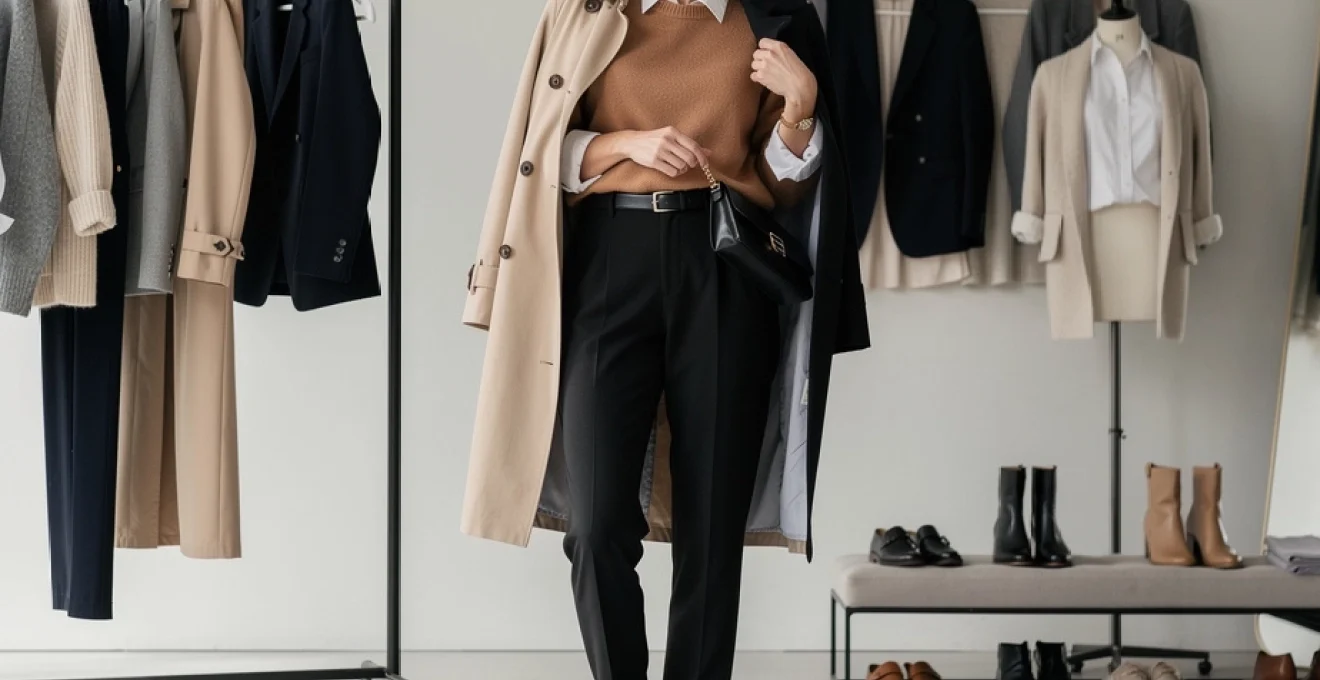
Professional stylists understand that exceptional dressing isn’t about owning the most expensive pieces or following every trend. Instead, it’s about mastering the art of layering simple wardrobe staples to create sophisticated, cohesive looks that appear effortless yet intentional. The ability to transform basic garments into polished ensembles through strategic layering techniques separates those who merely get dressed from those who truly understand style. This approach not only maximises wardrobe potential but also ensures you look put-together regardless of the occasion or season.
Foundational wardrobe architecture: building your core capsule collection
Creating a wardrobe that functions like a well-oiled machine requires careful consideration of foundational pieces that work harmoniously together. The concept of wardrobe architecture involves selecting items based on their versatility, quality, and ability to serve multiple styling purposes. Think of your wardrobe as a puzzle where each piece should complement at least three others, creating endless combination possibilities.
Essential neutral base pieces: white Button-Downs and black trousers
The white button-down shirt remains the ultimate wardrobe workhorse, capable of transitioning from corporate boardrooms to weekend brunches with simple styling adjustments. Look for shirts with quality construction details like mother-of-pearl buttons, reinforced seams, and substantial cotton that won’t become transparent after washing. The key lies in finding the right fit – neither too tight nor overly loose – allowing for comfortable layering underneath blazers or over lightweight knits.
Black trousers serve as the perfect neutral canvas for creative layering. Whether choosing tailored cigarette pants, wide-leg silhouettes, or classic straight cuts, prioritise fabrics that maintain their shape throughout the day. Wool blends offer durability and professional appearance, while ponte knits provide comfort without sacrificing polish. The rise of your trousers significantly impacts styling options, with high-waisted versions creating opportunities for strategic tucking and belt placement.
Investment knitwear: cashmere jumpers and merino wool cardigans
Quality knitwear forms the backbone of sophisticated layering, particularly during transitional seasons. Cashmere jumpers in neutral tones like cream, navy, and charcoal provide luxurious texture whilst maintaining versatility. The investment in genuine cashmere pays dividends through longevity and the elevated appearance it brings to any ensemble. Choose classic crew necks and V-necks for maximum styling flexibility.
Merino wool cardigans offer unparalleled layering potential, functioning as both standalone pieces and intermediate layers beneath coats. The breathable nature of merino wool prevents overheating whilst providing insulation, making it ideal for unpredictable weather. Consider both button-front and open-front styles to accommodate different layering scenarios and personal preferences.
Versatile outerwear selection: trench coats and tailored blazers
The trench coat represents timeless sophistication whilst offering practical weather protection. Classic features like double-breasted closures, storm flaps, and adjustable belts provide both functional benefits and styling opportunities. The length of your trench significantly impacts its versatility – midi-length versions complement both skirts and trousers, whilst longer coats create dramatic silhouettes perfect for evening occasions.
Tailored blazers serve as instant outfit elevators, transforming casual combinations into polished ensembles. Navy blazers offer maximum versatility, pairing seamlessly with jeans for smart-casual occasions or coordinating with matching trousers for formal settings. The key lies in finding blazers with structured shoulders that enhance your natural silhouette whilst allowing comfortable arm movement.
Strategic footwear foundation: leather loafers and block heel boots
Quality leather loafers provide comfort and sophistication for extended wear periods. Choose styles with substantial soles for added comfort during long days, and prioritise genuine leather that will develop character with age. Penny loafers offer classic appeal, whilst tassel variations add subtle detail. The colour selection should coordinate with your primary wardrobe palette, with black and brown being the most versatile options.
Block heel boots offer stability and style for various occasions. The moderate heel
height creates a leg-lengthening effect while still allowing you to move comfortably. Look for ankle boots that fit closely around the ankle to streamline the leg line, especially when worn with cropped trousers or midi skirts. Suede finishes add softness and depth to layered outfits, whereas smooth leather reads more polished and urban. Neutral tones like black, cognac, and taupe integrate seamlessly into most capsule wardrobes, giving you multiple autumn and winter layering options.
Professional styling techniques: proportion and silhouette manipulation
Once your foundational pieces are in place, the next step is learning how to manipulate proportion and silhouette like a professional stylist. Layering is less about piling on clothes and more about sculpting shape, balance, and visual interest. By understanding how different lengths, volumes, and textures interact, you can transform a simple jeans-and-shirt combination into a considered, three-dimensional look. Think of it as architecture on the body: you are constantly adjusting lines and structure until the outfit feels harmonious.
French tuck method: creating defined waistlines with oversized shirts
The French tuck—tucking just the front section of your top into your waistband while leaving the back loose—has become a go-to styling trick for a reason. When working with oversized shirts or slouchy knits, this partial tuck instantly creates a defined waistline without sacrificing ease. It breaks up large blocks of fabric, reveals a hint of the waistband, and elongates the legs, making it especially effective with high-waisted trousers or skirts.
To execute a polished French tuck, start by loosely tucking the central front portion of your shirt into the waistband, then gently pull some fabric out until it drapes softly rather than pulling taut. The sides should fall naturally, creating a curved line that narrows the silhouette through the midsection. This technique works particularly well under blazers or trench coats, where too much fabric at the waist can create bulk. If you are styling a thinner blouse, a slimmer tuck will maintain refinement, whereas thicker fabrics like flannel or chunky cotton benefit from a more relaxed, voluminous tuck.
You can also play with asymmetry by tucking only one side of the shirt and leaving the other out. This creates subtle movement and visual interest, ideal for casual looks with straight-leg jeans and loafers. Ask yourself: do I want more structure or more ease from this outfit today? The answer will guide how tightly or loosely you French tuck, helping you fine-tune the overall vibe of your layered ensemble.
Layering hierarchy: mastering texture combinations and fabric weight
Professional stylists rely on an invisible hierarchy when layering: lightest fabrics closest to the body, mid-weight pieces in the middle, and the heaviest layer on top. This simple rule helps maintain comfort, mobility, and a clean silhouette. Start with breathable base layers such as cotton tanks, silk camisoles, or fine merino knits that sit smoothly against the skin. These create a non-bulky foundation that supports everything you add on top.
Next, introduce mid-weight layers that offer structure or softness depending on your goal—a cotton shirt, lightweight cashmere jumper, or thin cardigan. These pieces should be substantial enough to be seen but slim enough to fit beneath jackets or blazers without creating strain at the seams. Finally, finish with your heaviest outer layer: a trench coat, wool blazer, leather jacket, or winter coat. This outer shell not only protects you from the elements but also determines the dominant shape of your outfit.
Texture mixing is where layering truly becomes interesting. Pair smooth fabrics like silk or poplin with tactile knits, tweeds, or suede to add depth, much like a well-designed interior layers different materials to avoid flatness. For example, a silk camisole under a chunky cardigan and structured wool coat creates a rich contrast that feels deliberate rather than accidental. When in doubt, keep your colour palette tight but vary the fabric textures—this allows you to wear multiple layers without the look becoming visually overwhelming.
Belt positioning strategies: high-waist cinching and hip-level styling
Belts are one of the most powerful tools in a stylist’s kit for controlling silhouette during layering. A high-waist belt worn over a dress, long cardigan, or blazer immediately creates an hourglass effect, even on straighter body types. By drawing the eye to the narrowest point of your torso, it counterbalances volume in wide-leg trousers, maxi skirts, or statement coats. This approach is particularly effective when you are working with multiple layers that might otherwise obscure your shape.
When belting at the natural waist, choose medium-width belts in leather or suede that feel proportional to your frame. Too thin, and the belt disappears within the layers; too wide, and it can cut the body in an unflattering way. Experiment with placing the belt slightly above the natural waist to lengthen the legs, especially over midi dresses or tunic-length tops. You will notice how even a relaxed cardigan suddenly looks intentional once cinched with a structured belt.
Hip-level styling, by contrast, is more about creating a casual, low-slung effect. Threading a belt through the loops of mid- or low-rise jeans draws attention to the hip area and can visually shorten the torso in a balanced, fashion-forward way. This works well when you are layering cropped jackets or shorter knits on top. Consider using belts with subtle hardware or unique finishes—braided leather, brushed metal buckles—to add a touch of interest to otherwise minimal outfits. Like fine-tuning a photograph with a filter, small shifts in belt placement can completely change the energy of your look.
Sleeve styling variations: cuffing, rolling, and push-back techniques
Sleeve styling might seem like a minor detail, but it dramatically impacts overall proportion and polish. A simple roll or push-back can reveal the wrist, one of the slimmest points on the body, instantly lightening the appearance of heavier layers. This is especially useful when wearing oversized blazers, trench coats, or chunky knits that risk feeling overpowering. By exposing just a little skin, you create a sense of ease and balance.
For shirts, a classic double-roll—folding the cuff back once, then rolling again to mid-forearm—offers structure without looking messy. When layering a blazer over a shirt, allow a hint of shirt cuff to peek out from the jacket sleeve. You can even fold the blazer sleeve back over the shirt cuff for a deliberate, editorial touch that feels very “stylist at work”. This stacking of cuffs adds dimension and nods to professional styling techniques used in editorial and red carpet preparation.
The push-back technique works particularly well with knitwear and soft tailoring. Simply slide sleeves up to just below the elbow, allowing natural creasing to form around the forearm. This creates an undone, effortless attitude that contrasts beautifully with more formal pieces like tailored trousers or sharp pencil skirts. Consider it the equivalent of loosening your tie at the end of the day: still put-together, but with an air of relaxed confidence that makes your layers feel lived-in rather than rigid.
Colour theory application in personal styling
Layering is not only about shape and texture; colour plays a crucial role in how cohesive and expensive an outfit appears. Applying basic colour theory in personal styling helps you combine garments in a way that feels intentional, even if each piece is simple. Working with a coherent colour palette—often 8 to 12 core shades—allows your capsule wardrobe to mix and match effortlessly. It also ensures that when you add multiple layers, the result is harmonious rather than chaotic.
A monochromatic outfit in varying tones of one colour, such as different shades of beige, grey, or navy, is a stylist-approved shortcut to looking polished. You can then use layering to introduce subtle depth: a slightly darker blazer over a lighter knit, or a charcoal coat over a pale grey shirt and mid-grey trousers. Complementary colours (opposites on the colour wheel, such as blue and orange) create a bolder, high-contrast effect when layered, ideal if you want a statement look without relying on loud prints. Analogous colours (neighbours on the colour wheel, like olive, khaki, and forest green) produce a softer, more blended appearance perfect for everyday dressing.
Neutrals provide the anchor for your layering colour strategy. Shades like black, white, navy, camel, grey, and cream pair effortlessly with both muted and saturated tones. When you want to introduce a statement colour, treat it like an accent wall in interior design—use it in one or two strategic places rather than everywhere. For instance, a cobalt blue knit under a camel coat, repeated in a patterned scarf, ties the look together. Ask yourself: where do I want the eye to land first? Use stronger colours in those areas and keep the rest of the palette subdued.
Skin tone and personal colouring also influence how you apply colour theory to layering. If certain shades make you look tired when worn near the face, consider pushing them to outer layers such as trousers, skirts, or accessories, and keep face-framing pieces in your most flattering hues. You can even use colour placement to subtly reshape your proportions—darker colours recede and are slimming, while lighter or brighter colours advance and draw focus. This means a dark column of colour in the centre (top and trousers) with a lighter coat over the top can create the illusion of a slimmer, elongated frame, a trick professional stylists use frequently in red carpet preparation.
Accessory integration: elevating basic combinations
Accessories are often the missing link between “dressed” and “styled”. When you are working with a streamlined wardrobe of basics, carefully chosen accessories can shift the entire mood of an outfit without requiring additional garments. A simple jeans-and-white-shirt combination, for example, can read minimalist, bohemian, or corporate depending on the jewellery, bags, and shoes you add. Accessories also allow you to experiment with trends in a low-commitment, budget-friendly way.
Jewellery is the most direct way to build layers without adding physical warmth. Layered necklaces of varying lengths create a vertical line that visually elongates the torso, especially when worn over a simple knit or under an open shirt. Stacking rings, bracelets, and ear cuffs introduces subtle sparkle and texture against the skin. If you are wearing a statement earring, consider keeping necklaces minimal or skipping them altogether to avoid visual competition. Think of jewellery layering as editing a sentence: you add, remove, and rearrange until every element feels purposeful.
Scarves, belts, hats, and bags offer additional opportunities to enhance simple outfits. A silk scarf tied around the neck, threaded through belt loops, or knotted to the handle of a tote introduces colour, pattern, and movement, often transforming the most basic look into something editorial. Structured leather bags bring polish to relaxed outfits, while woven or textured bags add interest to otherwise neutral, minimal combinations. The “wrong shoe theory”—pairing a non-obvious shoe with an outfit, like chunky loafers with a feminine dress—can inject tension and personality into your layering choices.
To avoid over-accessorising, apply a simple rule: choose one hero accessory and let the others support it. If your belt is bold, keep jewellery minimal; if your necklace stack is the focal point, opt for a sleek bag and understated shoes. Ask yourself what story you want the outfit to tell—is it sharp and professional, laid-back and creative, or quietly luxurious? Once you decide, you can curate accessories that reinforce that narrative, turning even the simplest layered base into a complete, considered look.
Seasonal adaptation strategies: year-round wardrobe maximisation
Stylist-level layering is ultimately about maximising your wardrobe all year round, not just in cold months. By rethinking how you use each piece across seasons, you reduce the need for constant shopping and build a more sustainable, cost-effective closet. The key lies in treating most garments as seasonless, with only a small percentage reserved exclusively for extreme temperatures. This allows you to transition outfits smoothly from summer to autumn, winter to spring, with minor tweaks.
In warmer months, focus on light layering that adds interest without overheating. A crisp button-down worn open over a tank top, a linen shirt tied at the waist over a slip dress, or a thin cotton cardigan draped over the shoulders acts as a “third piece” without adding significant warmth. You can also repurpose swimwear or bodysuits as base layers under wide-leg trousers or shorts, then add an oversized shirt or blazer in the evening. Think of it as building a sandwich with more air than filling—breathable fabrics and strategic openings keep you comfortable.
As temperatures drop, you can gradually introduce denser layers while keeping your favourite pieces in rotation. Slip dresses become winter-appropriate when worn over fine-knit turtlenecks and under long coats, with tights and boots completing the look. Wide-leg linen trousers gain new life paired with knee-high boots hidden underneath, topped with a cashmere jumper and tailored coat. Instead of packing away summer tops, style them as underpinnings beneath cardigans, blazers, and vests. This approach stretches your wardrobe’s utility and encourages creative combinations you might not have considered otherwise.
Weather unpredictability calls for flexible layering strategies. Consider modular outfits that can be adjusted throughout the day: a base of trousers and a lightweight knit, layered with a shirt, then topped with a blazer or trench. As the day warms, you can remove one layer at a time while still maintaining a complete outfit at each stage. Much like adjusting the volume settings in a sound mix, you are constantly fine-tuning warmth, coverage, and visual impact to suit changing conditions. Over time, you will develop go-to layering formulas for each season, dramatically simplifying your daily dressing decisions.
Celebrity stylist case studies: deconstructing red carpet layering
Observing how celebrity stylists approach layering on the red carpet can offer valuable lessons for everyday dressing. While gowns and tuxedos might seem far removed from daily life, the underlying principles—proportion, colour balance, texture contrast, and focal points—are identical. When you start to analyse these looks, you realise that what appears effortless is often the result of meticulous planning and subtle layering decisions.
Take the example of layering sheer elements over solid foundations. Many red carpet looks feature semi-transparent overlays—tulle skirts, chiffon capes, or lace panels—worn over opaque slip dresses or bodysuits. This creates depth and movement without adding bulk, similar to how you might layer a sheer blouse over a camisole for evening. The stylist chooses where to reveal and where to conceal, using layering to guide the viewer’s eye and flatter the client’s proportions. You can translate this approach into your wardrobe by experimenting with sheer shirts, mesh tops, or lightweight overlays under blazers or over simple dresses.
Another common stylist technique is structured outerwear over formalwear. A sharply tailored coat draped over the shoulders of a gown or suit adds an architectural element, instantly elevating the ensemble. This “coat as cape” styling can be adapted for real life with blazers and trench coats worn loosely over office outfits or event looks. It projects confidence and intentionality, as though each layer was chosen for a specific reason rather than out of necessity. Ask yourself: would this outfit still feel complete if I removed the outer layer? If the answer is no, consider whether you need to refine the base or adjust the layering piece.
Finally, pay attention to how celebrity stylists use accessories to complete layered outfits. A strategic belt over a blazer, a carefully chosen clutch that echoes a colour in the dress, or statement earrings framed by a sleek updo all serve as finishing touches that knit the look together. These details are never random; they are selected to support the overall theme and enhance the client’s features. By applying the same mindset—considering proportion, colour, and focal points—you can approach your own everyday layering with the precision of a stylist, turning simple pieces into complete, polished looks.