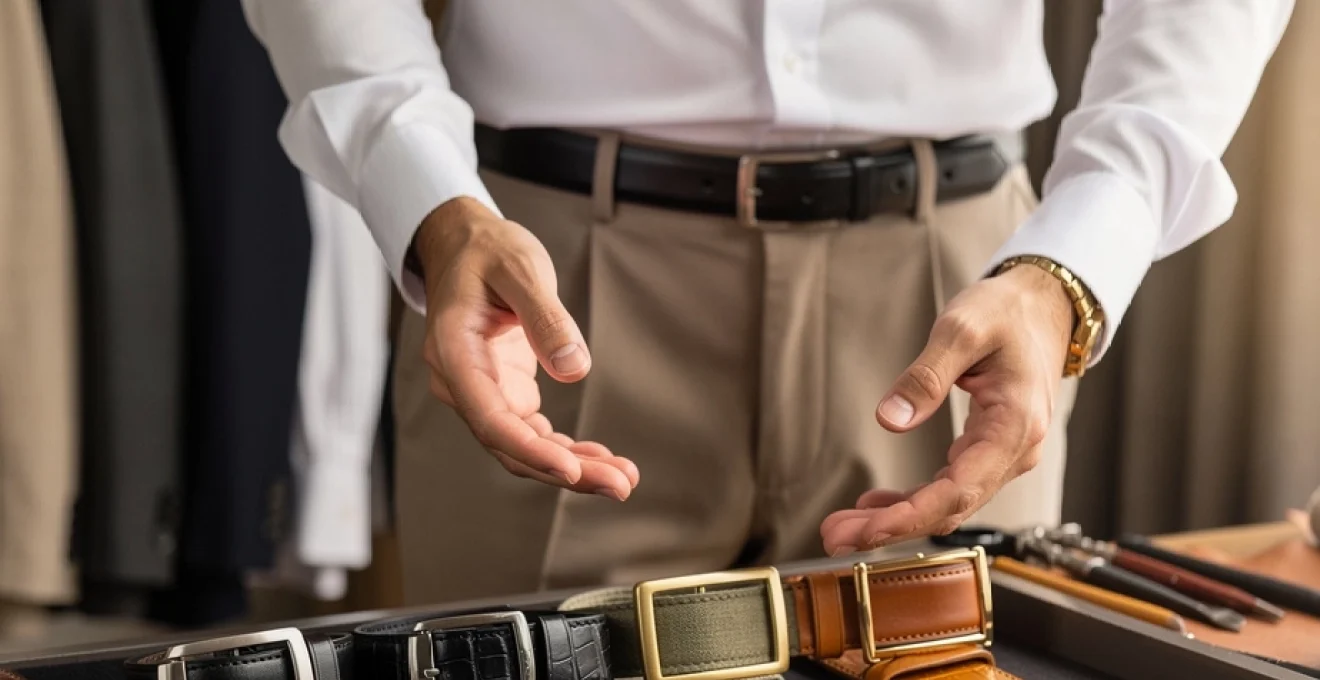
A well-chosen belt transforms an ordinary ensemble into a polished, cohesive look that reflects attention to detail and personal style. Far beyond its utilitarian purpose of keeping trousers secure, the modern belt serves as a crucial accessory that can define your waistline, add colour depth to neutral outfits, or provide that finishing touch that elevates casual wear to sophisticated attire. Whether you’re navigating the complexities of business formal dress codes or seeking to master the art of weekend styling, understanding how to select the appropriate belt requires knowledge of materials, proportions, colour theory, and occasion-specific requirements.
The resurgence of belts in contemporary fashion coincides with the return of higher waistlines and more structured silhouettes across both menswear and womenswear. This renewed emphasis on waist definition has positioned belts as essential wardrobe components rather than afterthoughts. The key lies not simply in ownership but in strategic selection – choosing belts that complement your body proportions, enhance your existing wardrobe, and adapt seamlessly across various styling contexts.
Belt construction materials and manufacturing techniques for optimal style integration
Understanding belt construction materials forms the foundation of making informed purchasing decisions that will serve your wardrobe for years to come. The material composition directly influences durability, appearance, maintenance requirements, and styling versatility. Different materials excel in specific contexts, making it essential to match material properties with intended use patterns and aesthetic preferences.
Full-grain leather properties and patina development characteristics
Full-grain leather represents the pinnacle of belt construction materials, utilising the complete thickness of the hide without surface alterations. This construction method preserves the natural grain pattern and inherent strength of the leather, resulting in belts that improve aesthetically over time. The patina development process creates unique character markings that reflect individual wear patterns, making each full-grain leather belt distinctly personal.
The initial investment in full-grain leather pays dividends through longevity and visual enhancement. Unlike processed leather alternatives, full-grain construction maintains structural integrity under stress while developing rich colour depth through natural oils and regular use. Quality full-grain belts often outlast multiple wardrobe updates, making them exceptional value propositions for style-conscious individuals.
Canvas and webbing belt durability for casual outfit applications
Canvas and webbing materials excel in casual styling contexts where durability and comfort take precedence over formal appearance. These textile-based constructions offer superior flexibility and moisture resistance compared to leather alternatives, making them ideal for active lifestyles and warm-weather wear. The weaving techniques used in quality canvas belts create visual texture that complements casual fabrics like denim, chino, and cotton blends.
Modern manufacturing processes have elevated canvas belt construction beyond basic utility items. Premium canvas belts feature reinforced stitching, metal hardware protection, and fade-resistant dye applications that maintain appearance integrity through repeated washing and extended sun exposure. The key advantage lies in their ability to maintain consistent appearance regardless of environmental conditions.
Exotic leather options: crocodile, snake, and ostrich texture analysis
Exotic leather belts introduce distinctive textures and patterns that serve as conversation pieces and statement accessories. Crocodile leather provides geometric scale patterns with natural variation, while snake leather offers sinuous markings that create visual movement. Ostrich leather delivers unique follicle patterns that provide both visual interest and tactile appeal.
The selection of exotic leathers requires consideration of maintenance requirements and styling limitations. These materials typically command higher price points and demand specialised care routines. However, their distinctive appearance makes them invaluable for creating memorable outfits and establishing personal style signatures that differentiate you from conventional accessory choices.
Synthetic material performance in contemporary fashion contexts
Contemporary synthetic materials have evolved beyond basic leather imitations to offer unique properties that address specific styling challenges. High-quality synthetic belts provide consistent appearance, weather resistance, and ethical alternatives for environmentally conscious consumers. Modern manufacturing techniques create synthetic materials that closely mimic natural leather textures while offering enhanced durability in challenging conditions.
The performance advantages of synthetic materials include resistance to water damage, consistent colour retention, and simplified maintenance routines. These properties make synthetic belts particularly suitable for travel, outdoor activities, and situations where leather care constraints might limit w
here leather would be impractical. While early synthetic belts often looked overly glossy or plastic, current-generation options achieve a refined, understated finish that integrates smoothly into both casual and smart-casual outfits. For those prioritising vegan fashion or working within a modest budget, a well-constructed synthetic belt can be a strategic addition rather than a compromise.
Belt width specifications and proportional matching strategies
Belt width is one of the most overlooked yet impactful factors when you want to select the perfect belt to enhance your outfit. The width not only dictates how formal or casual a belt appears, it also affects body proportions, visual balance, and overall outfit cohesion. As a rule of thumb, narrower belts skew more formal and refined, standard widths are the workhorses of business casual dressing, and wider belts function as statement pieces, especially with high-waisted garments.
To achieve a harmonious look, it helps to think of belt width as a visual line that crosses your body. The thicker that line, the stronger the visual break it creates between your upper and lower half. This can be used strategically: you can lengthen your legs, visually define your waist, or deliberately ground an outfit with a bold statement belt. The key is to align belt width with trouser style, belt loops, and your own body proportions.
Narrow belt applications for tailored trousers and dress shirts
Narrow belts, typically between 1″ and 1 1/8″ (around 2.5–3 cm), are best suited to tailored trousers and formal dress codes. Their slim profile aligns with the subtle, clean lines of suit trousers and dress shirts, creating a seamless transition between garments instead of drawing attention to the midsection. This is why most classic dress belts fall into this narrow width range.
If you wear suits frequently or adhere to a business formal environment, investing in one or two high-quality narrow belts in black and dark brown full-grain leather is highly effective. They will pair effortlessly with tailored trousers, dress shoes, and crisp shirts without overpowering the outfit. For petite frames or those with a shorter torso, narrow belts can also be visually lengthening, creating the illusion of more space between bust and hips.
Standard width belt compatibility with business casual attire
Standard width belts, generally between 1 1/4″ and 1 3/8″ (about 3–3.5 cm), are the most versatile option for everyday wear. This width works well with chinos, dark denim, and the kind of five-pocket trousers that often appear in business casual environments. It strikes a balance between structure and ease: wide enough not to look dressy, but not so wide that it reads as purely casual.
When you build a capsule wardrobe, a standard width belt in a neutral shade like cognac, tan, or dark brown can bridge the gap between office and weekend outfits. It is also the width most trouser manufacturers design their belt loops around for modern casual and smart-casual pieces. If you tend to move between meetings during the week and relaxed social events on the weekend, a standard width belt is likely to be your default choice.
Wide belt statement techniques for high-waisted garments
Wide belts, which start at around 1 1/2″ (4 cm) and can extend far beyond that for fashion belts, are powerful visual tools. On high-waisted trousers, skirts, and dresses, a wide belt creates a strong horizontal line that emphasizes the narrowest part of the torso. This can be incredibly flattering when used thoughtfully, especially on hourglass, pear, or inverted triangle body shapes seeking clearer waist definition.
Because wide belts make such a statement, they work best when the rest of the outfit is relatively streamlined. Imagine a minimalist, high-waisted midi skirt and a tucked-in blouse, grounded by a structured wide leather belt in a contrasting colour: the belt becomes the focal point, adding polish and a sense of intention. For those concerned about midsection emphasis, pairing a wide belt with a blazer or long cardigan worn open can create a sculpted waist from the front while softening the profile from the side.
Belt loop clearance calculations for optimal fit parameters
Even the most beautifully designed belt will underperform if it physically does not work with your clothing. Belt loop clearance refers to the relationship between belt width and the size of the loops on your trousers, skirts, or dresses. Ideally, the belt should slide through the loops without resistance, but not have so much room that it shifts or twists visibly as you move.
As a practical guideline, your belt width should be 2–3 mm narrower than the inner space of the loops for a clean, functional fit. If you frequently wear different types of bottoms, it is helpful to measure a favourite pair of jeans and a favourite pair of tailored trousers. This allows you to choose at least one belt that fits each loop size properly instead of assuming one width will suit all garments. Thinking in terms of “loop clearance” may sound technical, but in practice, it simply ensures your belt looks intentional rather than forced.
Buckle design classifications and metal finish coordination
Belt buckles act as both engineering solutions and style statements. From minimalist single-prong frames to bold logo plates and Western-inspired designs, the buckle you choose can shift an outfit from understated to expressive in seconds. On a functional level, the buckle must be proportional to the belt width and comfortable at your waist; on an aesthetic level, it should align with the formality and mood of your look.
Frame-style buckles with a single prong are the standard for dress belts. They are slim, discrete, and pair well with tailored clothing where subtlety is key. For casual and smart-casual belts, you have greater freedom: double-prong buckles, roller buckles, plaque buckles, and even reversible mechanisms that allow the strap to flip from black to brown. Larger, more sculptural buckles naturally read as more casual and work best with denim, workwear, or fashion-forward ensembles where the belt is intended as a focal point.
Metal finish coordination is an often-missed detail that can dramatically increase how polished you appear. While you do not need to match every metal perfectly, keeping your buckle finish in the same family as your watch, jewellery, or bag hardware creates visual harmony. Silver-tone buckles pair well with cool palettes, grey suits, and stainless-steel watches, while gold-tone buckles flatter warm palettes, camel coats, and brass jewellery. Mixed metals and brushed finishes offer a modern middle ground when you enjoy combining silver and gold in one outfit.
Colour theory application in belt selection for wardrobe harmony
Colour is what turns a purely functional belt into an intentional style tool. When you apply basic colour theory, you can use belts to tie together shoes and bags, add depth to monochromatic outfits, or inject a controlled pop of colour into a minimalist look. Instead of defaulting to “black or brown,” it becomes easier to ask: What visual role do I want this belt to play?
Thinking in terms of monochromatic, complementary, and neutral schemes simplifies decisions. A monochromatic belt reinforces an existing colour story; a complementary belt adds energy and contrast; a neutral belt grounds the look and often extends the life of your wardrobe by working across multiple palettes. This strategic approach helps you select the perfect belt for each outfit instead of relying on one belt for every scenario.
Monochromatic scheme implementation with brown and black belt variants
Monochromatic belt styling focuses on staying within the same colour family to create a smooth, elongated line from top to bottom. In practical terms, this often means pairing black belts with black shoes and darker outfits, or various brown belts with earth-toned clothing. The result is refined and slightly formal, ideal for business settings, evening wear, or situations where you want your clothing to “speak quietly” but confidently.
With black, the monochromatic approach is straightforward: a black full-grain leather belt with a subtle buckle integrates perfectly with black oxfords, loafers, and tailored separates. Brown offers more nuance. Dark chocolate, espresso, chestnut, and slightly warmer brown shades each interact differently with navy, charcoal, and tan garments. Owning two or three brown belt variants in slightly different tones allows you to fine-tune an outfit while still staying within a cohesive, understated palette.
Complementary colour pairing techniques for statement belt integration
Complementary colour pairings sit opposite each other on the colour wheel—think blue and orange, green and red, or purple and yellow. Used with restraint, a belt in a complementary colour can inject energy and personality into an otherwise simple look. For example, a deep rust or burnt orange belt against dark indigo denim and a navy shirt introduces warmth without overwhelming the outfit.
Because a belt occupies a narrow horizontal space, it is an ideal area for controlled experimentation. You might pair a forest green belt with a burgundy sweater and charcoal trousers, or a rich plum belt with olive chinos and a cream shirt. The key is to echo the belt colour subtly elsewhere—perhaps in a pattern on your shirt or a small accessory—so that the statement feels intentional rather than random. Think of the belt as a visual “underline” highlighting your chosen accent colour.
Neutral tone foundation building with cognac and tan leather options
Neutrals like cognac, tan, taupe, and soft grey are the unsung heroes of belt collections. These mid-tone shades bridge the gap between dark and light garments, allowing you to style the same belt with navy, black, cream, and even bolder colours. Cognac and tan in particular pair beautifully with denim, khaki, white, and navy, making them ideal for smart-casual wardrobes and travel capsules.
When you are unsure which belt will work with the widest range of outfits, a cognac or medium tan full-grain leather option is often the most strategic first purchase. It develops an attractive patina over time, softens with wear, and complements both cool and warm colour palettes. By building a neutral belt foundation, you can later add more directional colours or textures (such as suede or woven designs) without sacrificing everyday versatility.
Occasion-specific belt selection methodology
Context is everything when it comes to choosing the right belt. The same piece that looks perfect at a weekend brunch may feel out of place in a boardroom or at a formal evening event. An occasion-specific methodology helps you match belt material, width, and buckle style to the expectations of each environment while still expressing personal style.
For business formal settings, the formula is clear: full-grain leather, narrow width, subtle frame buckle, and conservative colours like black or dark brown that closely align with your dress shoes. Business casual offers more latitude, allowing standard widths, softer shades like cognac, and slightly more textured leathers or discreet stitching details. In creative or relaxed workplaces, you can introduce braided leather, canvas, or discreet patterning, provided the belt still coordinates with your overall outfit.
Casual and off-duty occasions open the door to experimentation. Here, woven belts, colourful webbing, and statement buckles can shine, especially with denim, shorts, and casual dresses. At the opposite end of the spectrum, formal black-tie events often call for complete minimalism—if a belt is worn at all, it should be almost invisible: slim, black, and perfectly matched to patent or high-shine dress shoes. By asking “What does this situation require?” before “Which belt do I feel like wearing?”, you ensure that your accessory supports rather than undermines the impression you aim to create.
Belt maintenance protocols and longevity enhancement techniques
Once you have invested in well-constructed belts, a few simple maintenance routines can dramatically extend their lifespan and preserve their appearance. Leather, in particular, behaves much like skin: it benefits from gentle cleaning, conditioning, and protection from extreme conditions. Treating your belts as long-term wardrobe assets rather than disposable items pays off in both cost-per-wear and overall polish.
For leather belts, avoid bending them sharply or leaving them coiled tightly for long periods, as this can cause creasing and cracking at stress points. Instead, hang them vertically from a belt rack or hook, or roll them loosely and store in a drawer. Wipe them down occasionally with a soft, dry cloth to remove dust, and apply a quality leather conditioner a few times per year, especially if you live in a dry climate or wear the same belt frequently. If a belt becomes wet, let it dry naturally away from direct heat sources.
Canvas, webbing, and synthetic belts are generally lower maintenance but still benefit from thoughtful care. Spot-clean stains with mild soap and water, and avoid aggressive scrubbing that could distort the weave or damage printed designs. Rotating between two or three belts for everyday use allows each one to rest and recover, reducing stress on the material and holes. By following these straightforward belt maintenance protocols, you preserve not only the structural integrity of each piece but also the subtle, refined look that helps every outfit feel considered and complete.