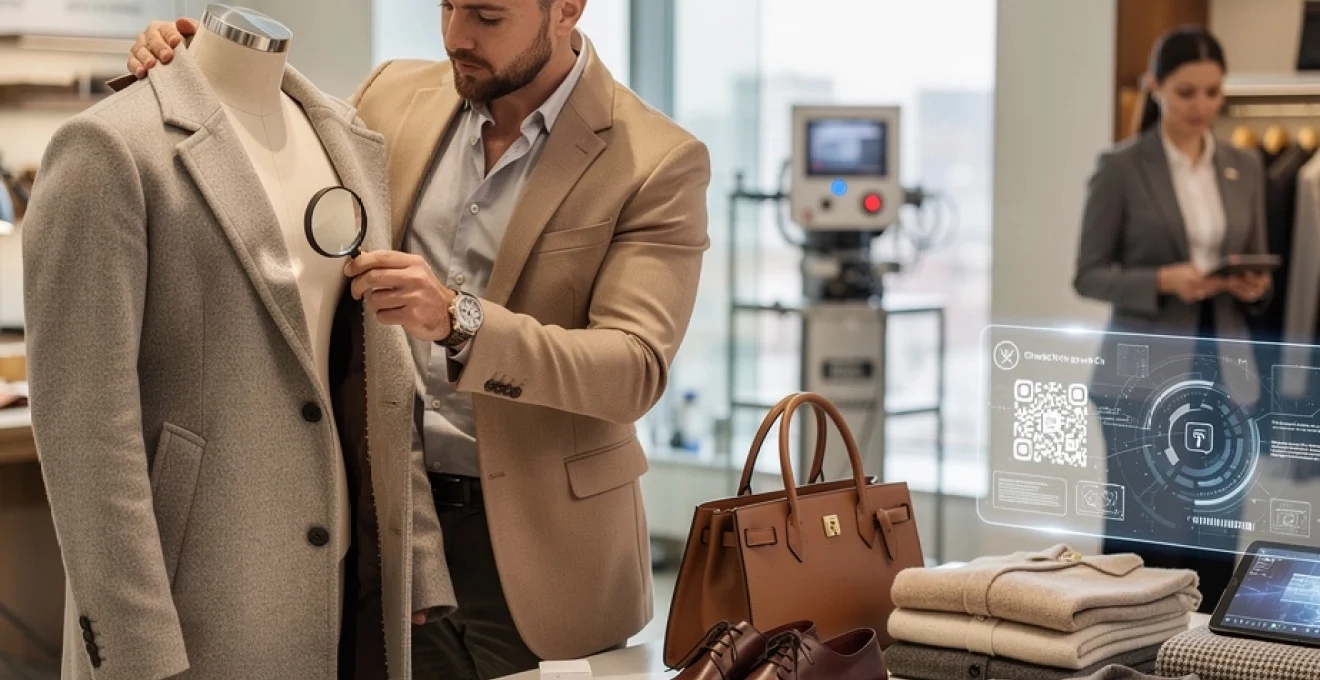
In today’s saturated fashion marketplace, distinguishing between authentic quality brands and clever marketing facades has become increasingly challenging. With counterfeit goods flooding online marketplaces and fast fashion brands mimicking luxury aesthetics, consumers need sophisticated strategies to identify truly reliable fashion houses. The stakes are higher than ever, as a single misguided purchase can result in wasted money, disappointment, and environmental impact through premature disposal. Understanding the intricate details that separate exceptional craftsmanship from mediocre production requires knowledge of manufacturing processes, material sciences, and brand authentication technologies that extend far beyond surface-level marketing claims.
Brand heritage analysis and manufacturing transparency assessment
Establishing a brand’s credibility begins with examining its historical foundation and commitment to transparency. Reliable fashion brands typically demonstrate consistent quality standards over decades, building reputations through sustained excellence rather than temporary marketing campaigns. This assessment requires understanding how established fashion houses maintain their standards while adapting to contemporary manufacturing challenges.
Evaluating established fashion houses: hermès, chanel, and burberry legacy indicators
Traditional luxury houses like Hermès, Chanel, and Burberry have spent generations perfecting their craft, creating detailed documentation of their manufacturing processes. These brands typically maintain in-house ateliers where skilled artisans undergo years of training to master specific techniques. For instance, Hermès maintains detailed records of each Birkin bag’s creation, including the artisan’s signature and production timeline, demonstrating the level of accountability that distinguishes genuine luxury from mass production.
However, heritage alone doesn’t guarantee contemporary quality. Some established brands have outsourced production to reduce costs, potentially compromising the standards that built their reputation. Authentic heritage brands will provide detailed information about their current manufacturing locations, quality control processes, and craftsperson training programmes. They often maintain flagship stores that showcase their craftsmanship through live demonstrations or detailed exhibits explaining their techniques.
Supply chain traceability through RFID technology and blockchain implementation
Modern quality brands increasingly implement advanced tracking technologies to ensure transparency throughout their supply chains. RFID (Radio Frequency Identification) technology allows brands to monitor each garment’s journey from raw material sourcing to final retail sale. This technology creates an unbreakable chain of custody that helps prevent counterfeiting while ensuring quality standards are maintained at every production stage.
Blockchain implementation represents the next evolution in supply chain transparency. Leading fashion brands now use blockchain ledgers to create immutable records of material sourcing, manufacturing processes, and quality inspections. This technology allows consumers to verify a garment’s authenticity by scanning QR codes that provide access to the complete production history. Brands implementing these technologies demonstrate a commitment to accountability that extends beyond traditional marketing promises.
Artisanal craftsmanship documentation and atelier verification methods
Genuine quality brands maintain detailed documentation of their artisanal processes, often providing videos, photographs, or written descriptions of specific techniques used in creating their products. This documentation serves multiple purposes: educating consumers about the value they’re receiving, preserving traditional craftsmanship knowledge, and demonstrating the time investment required for quality production.
Verification of these claims requires examining whether brands provide facility tours, apprenticeship programmes, or partnerships with traditional craft schools. Reliable brands often collaborate with recognised artisanal institutions and provide continuing education for their craftspeople. They may also participate in cultural preservation initiatives that protect traditional manufacturing techniques from being lost to industrialisation.
Ethical sourcing certifications: GOTS, OEKO-TEX, and cradle to cradle standards
Third-party certifications provide objective validation of a brand’s quality and ethical commitments. The Global Organic Textile Standard (GOTS) ensures that organic fibres meet strict environmental and social criteria throughout the supply chain. OEKO-TEX certifications verify that textiles are free from harmful chemicals and produced under environmentally sound conditions. Cradle to Cradle certification assesses products across five sustainability categories: material health, material reutilisation, renewable energy use, water stewardship, and social fairness.
These certifications require regular audits by independent organisations, making them more reliable indicators than self-proclaimed sustainability claims. Brands holding multiple certifications typically demonstrate a comprehensive commitment to quality that
extends beyond surface-level aesthetics. When you see GOTS, OEKO-TEX, or Cradle to Cradle on a label, you are not just paying for a logo; you are accessing an independently verified framework that covers fibre quality, chemical safety, and long-term environmental impact. While certifications are not a guarantee of flawless practices, brands that invest in them are far more likely to maintain consistent standards, publish detailed sustainability reports, and submit to external scrutiny rather than relying on vague claims about “eco-friendly” or “conscious” collections.
Material quality inspection techniques and fabric authentication
Once you have assessed a brand’s heritage and transparency, the next step is to evaluate the material quality behind its fashion items. Even the most prestigious name can produce mediocre garments if the underlying textiles are weak, over-processed, or poorly blended. Reliable brands combine clear fabric information, scientifically backed testing methods, and conservative design choices that favour longevity over fleeting trends. Learning to read fibre composition labels, understand basic textile science, and spot red flags in fabric descriptions empowers you to separate marketing language from genuine material performance.
Natural fibre analysis: cashmere grading systems and wool micron measurements
High-quality natural fibres like wool and cashmere remain the benchmark for luxury fashion items, but not all natural fibres are equal. Cashmere, for example, is graded according to fibre length and diameter, with premium grades using longer, finer fibres that feel softer, resist pilling, and retain shape. Many mass-market “cashmere” sweaters rely on short-staple fibres or aggressive processing, resulting in garments that look luxurious on day one but degrade after a single season. Reliable brands disclose the cashmere grade or micron range, often indicating terms like “Grade A” or “14–16 micron” for ultra-fine fibres.
Wool quality is also measured in microns, with lower numbers indicating finer, softer fibres. Merino wool used in high-quality knitwear typically falls between 17 and 21 microns, while coarser wools above 25 microns are better suited to outerwear and heavy-duty garments. Brands that care about material quality often specify wool type, origin, and micron count, rather than using generic terms like “pure new wool” with no supporting data. When you combine tactile assessment (softness, elasticity, resistance to visible pilling) with these technical indicators, you can quickly identify which labels are investing in superior natural fibres and which are simply charging a premium for a logo.
Luxury leather assessment: full-grain versus corrected-grain identification
Leather goods are often seen as one-time investments, so misjudging quality can be an expensive mistake. The most reliable brands clearly identify the leather type they use and rarely hide behind vague phrases like “genuine leather,” which simply means that animal hide is present somewhere in the construction. Full-grain leather represents the top tier, retaining the hide’s natural surface and fibre structure for maximum strength and durability. It develops a rich patina over time rather than cracking or peeling, much like a well-cared-for wooden table that becomes more beautiful with age.
Corrected-grain or split leathers are sanded, coated, or embossed to hide imperfections, creating a more uniform but less durable surface. Reliable fashion brands are transparent when using these lower grades, often positioning them in more affordable lines or fashion-forward pieces where extreme longevity is not the primary goal. You can visually inspect luxury leather by looking for irregular, organic grain patterns and subtle variation in pores; printed or perfectly repetitive patterns suggest heavy correction. When brands pair full-grain leather with robust linings, reinforced stress points, and detailed care instructions, they signal a commitment to creating leather items that can be repaired, conditioned, and worn for decades rather than discarded after a few seasons.
Textile weave density evaluation and thread count specifications
Beyond fibre type, the way a fabric is woven or knitted has a profound impact on durability and comfort. Weave density—how tightly threads are packed together—affects everything from abrasion resistance to opacity. While consumers often associate higher thread counts with better quality, extremely high counts can signal overly fine, fragile yarns that sacrifice resilience for initial softness, especially in fashion garments that undergo frequent wear and washing. Reliable brands strike a balance, using medium to high thread counts appropriate to the garment’s purpose, whether that is a breathable summer shirt or a structured pair of trousers.
Evaluating weave density in person is similar to examining a painting up close: hold the garment to the light to see how much passes through. For everyday fashion items that should not appear sheer, a tightly woven fabric with even, consistent threads is a strong indicator of quality. Online, brands that value transparency will specify GSM (grams per square metre), fabric weight descriptors (like “midweight twill” or “heavyweight canvas”), and sometimes even loom techniques when relevant. When you see detailed textile specifications instead of generic adjectives, it suggests that the brand treats fabric as a technical foundation of quality fashion items rather than a secondary consideration.
Synthetic blend composition testing and performance fabric standards
While natural fibres dominate traditional luxury, synthetic and semi-synthetic materials play a crucial role in modern high-performance and everyday fashion. The challenge is distinguishing carefully engineered blends from low-cost synthetics designed to mimic natural fibres without matching their comfort or longevity. High-quality brands typically limit synthetic content to enhance specific properties—such as adding 2–5% elastane for stretch recovery, or using nylon ripstop for tear-resistant outerwear—rather than relying on polyester-heavy blends that trap heat and age poorly. They may also highlight recycled fibres or advanced polymers tested for durability, colourfastness, and moisture management.
Performance standards offer objective benchmarks in this space. For instance, outdoor and technical fashion brands might refer to ISO or ASTM tests for abrasion resistance, UV protection, or water repellency, providing measurable data rather than vague promises about “high-tech fabrics.” Some even publish lab results or explain their in-house testing protocols, from pilling tests to stretch recovery cycles. When evaluating synthetic blend garments, you can think of them like high-performance sports equipment: you want a clear rationale for each material choice and evidence that it has been systematically tested, not simply added to reduce production costs.
Construction quality benchmarks and seam integrity evaluation
Even the finest fabrics can fail in real-world use if the construction is weak. Construction quality is where reliable brands differentiate themselves most clearly from fast fashion, which often prioritises visual appeal over structural integrity. High-quality fashion items display consistent, tight stitching, reinforced stress points, and thoughtful internal finishes that you might never see when wearing the garment but feel over time through comfort and durability. When you turn a piece inside out, you should see the same level of care and precision as on the outside.
Seam integrity is a key benchmark. Look for straight seams with evenly spaced stitches, typically around 8–12 stitches per inch for most ready-to-wear garments, depending on fabric type. Areas prone to stress—such as armholes, crotch seams, pocket openings, and button plackets—should feature reinforcement stitching, bar tacks, or double seams. Brands that invest in flat-felled, French, or bound seams are effectively adding a “safety belt” to the garment, preventing fraying and seam slippage even after repeated laundering. Poor-quality seams, by contrast, often show loose threads, skipped stitches, or visible puckering, signalling rushed production or inadequate quality control.
Reliable brands also focus on structural features that affect comfort and fit over time. Proper pattern cutting ensures that fabric panels follow the body’s natural lines, reducing strain on seams and allowing garments to drape rather than pull. Quality zippers glide smoothly and are securely anchored with fabric guards to protect surrounding material. Buttonholes are cleanly cut and tightly stitched, and buttons are cross-stitched or shanked to withstand frequent use. When brands complement these details with in-house tailoring services or recommended alteration partners, they implicitly acknowledge that true quality fashion items should be repairable and adjustable, not disposable.
Digital authentication methods and anti-counterfeiting technologies
As counterfeit operations become more sophisticated, reliable brands increasingly rely on digital authentication and advanced security features to protect both their reputation and their customers. For consumers, being able to verify a product’s authenticity directly can mean the difference between investing in a genuine heirloom piece and unintentionally supporting grey-market or counterfeit networks. Modern anti-counterfeiting technologies act like a digital identity card for each garment or accessory, linking physical items to secure databases that record their origin, ownership, and sometimes even repair history.
NFC tag implementation and QR code verification systems
Near Field Communication (NFC) tags and QR codes are among the most accessible tools for everyday shoppers. Embedded NFC chips—often hidden in labels, linings, or hardware—can be scanned with a smartphone to access brand-managed authentication portals. Reliable brands use these systems to confirm that an item was produced in an authorised facility, list key specifications, and sometimes display care instructions or styling tips. Because each NFC tag can carry a unique encrypted identifier, cloning them at scale is significantly harder than copying a logo or hologram.
QR codes offer a more visible but still effective layer of verification. When scanned, a genuine code will typically redirect you to a secure section of the brand’s official website, rather than a generic or unsecured page. You should see product-specific information, such as collection name, colourway, size range, and sometimes even production batch data. If a QR code leads to an error page, an unrelated site, or asks for unnecessary personal data, that is a strong warning sign. Reliable brands explain how to use these technologies either on their product tags or on dedicated “authenticity” pages, reducing confusion and empowering you to check before committing to a high-value purchase.
Holographic security features and microprinting analysis
Physical security features remain a core part of the anti-counterfeiting toolkit, especially for accessories, footwear, and limited-edition collaborations. Holographic labels, security threads, and complex foil patterns function similarly to those used on banknotes: they rely on detailed, multi-layered designs that are difficult and costly to replicate accurately. Reliable fashion brands update these elements periodically and communicate key identifiers—such as colour shifts, embossed logos, or lens effects—through official channels so that customers and resellers know what to look for.
Microprinting takes this a step further by including extremely small text, serial numbers, or patterns that are invisible at a glance but become clear under magnification. This can appear on care labels, authenticity cards, or even metal hardware. When combined with serialised numbering and centralised databases, microprinting helps brands trace products, identify production runs, and flag suspicious items. For you as a consumer, learning to recognise these subtle signs is like understanding a secret language of quality fashion items: the more precise and documented the security features, the less likely it is that the piece in your hands is an imitation.
Brand-specific authentication apps: entrupy scanner and certilogo platform
Beyond in-house systems, third-party authentication technologies have emerged to support both consumers and resellers. Tools like the Entrupy scanner use machine learning and image recognition to analyse microscopic details in materials, stitching, and logos, comparing them to extensive databases of known authentic products. While primarily used by professional resellers and authorised retailers, the existence of such tools underscores how complex genuine fashion items are at a micro level—complexity that counterfeiters struggle to replicate consistently.
Platforms like Certilogo provide more accessible solutions for individual buyers by linking product codes, NFC tags, or QR codes to a cloud-based verification system. Users can scan or enter a code and receive a real-time assessment of authenticity, along with guidance if the item appears suspicious. Reliable brands increasingly partner with these platforms to extend trust beyond their own channels, especially when their products frequently appear in secondary markets. When you see a brand formally associated with such authentication providers, it is a strong indicator that it takes long-term product integrity seriously, not just the initial sale.
Retailer vetting processes and authorised dealer networks
Even the best anti-counterfeiting technologies lose effectiveness if you consistently shop through unreliable channels. One of the most practical ways to ensure you are buying quality fashion items is to assess the reliability of the retailer itself. Authorised dealer networks, official stockist lists, and strict distribution agreements are signs that a brand controls where its products appear, reducing the risk of counterfeits and quality compromises. Before making a high-value purchase, especially online, checking whether the retailer is listed on the brand’s website can save you both money and frustration.
Reliable retailers typically provide detailed product descriptions, high-resolution images from multiple angles, and clear information about returns, warranties, and aftercare. They are transparent about where they source inventory, whether directly from brands, official distributors, or verified secondary markets. Many also participate in industry associations or quality assurance schemes that require compliance with ethical and consumer protection standards. By contrast, marketplaces or boutiques that offer unusually steep discounts, limited product information, or vague contact details should raise questions. If a retailer cannot or will not confirm its supply chain, you should treat any “luxury” or “designer” items it sells with caution.
Another indicator of a reliable fashion retailer is the level of support offered after purchase. Do they provide repair referrals, maintenance advice, or access to brand-specific services such as re-soling shoes or reconditioning leather? Do they proactively educate customers about how to authenticate and care for their items? Retailers invested in long-term relationships see themselves as custodians of both the products and the brands they represent. In this ecosystem, you are not just buying a garment; you are entering into a service relationship that supports the full lifecycle of the piece, from first wear to potential resale.
Customer review analysis and expert fashion critique evaluation
Finally, no assessment of a brand’s reliability is complete without listening to the experiences of other wearers and independent experts. Customer reviews—when interpreted critically—offer valuable insights into how garments perform in real life, far beyond studio photography and runway shows. Pay particular attention to reviews that mention long-term wear, washing behaviour, seam integrity, and comfort over multiple seasons. Repeated complaints about shrinking, fading, pilling, or hardware failure, even on otherwise well-reviewed items, suggest that the brand may be cutting corners in specific product lines.
However, raw star ratings rarely tell the whole story. Reliable fashion brands engage constructively with feedback, responding to issues, clarifying care instructions, or even adjusting future production runs based on recurring concerns. When you see this kind of dialogue—whether on brand websites, multi-brand e-commerce platforms, or social media—it signals a commitment to continuous improvement rather than one-off sales. You can think of it like a conversation between maker and wearer: the more open and responsive the brand, the more likely its products will evolve toward genuine quality over time.
Expert critiques from fashion journalists, textile specialists, and sustainability researchers add another layer of perspective. Long-form reviews, lab tests, and brand rating platforms that assess impact on people, planet, and animals can spotlight hidden strengths and weaknesses that casual shoppers might miss. When independent experts consistently praise a brand for construction quality, fabric choices, and ethical practices—and back those claims with specific examples—that is a powerful endorsement. Cross-referencing this commentary with your own research on materials, construction, and authentication allows you to build a nuanced, evidence-based view of which brands truly deliver reliable quality fashion items and which rely mainly on marketing narratives.