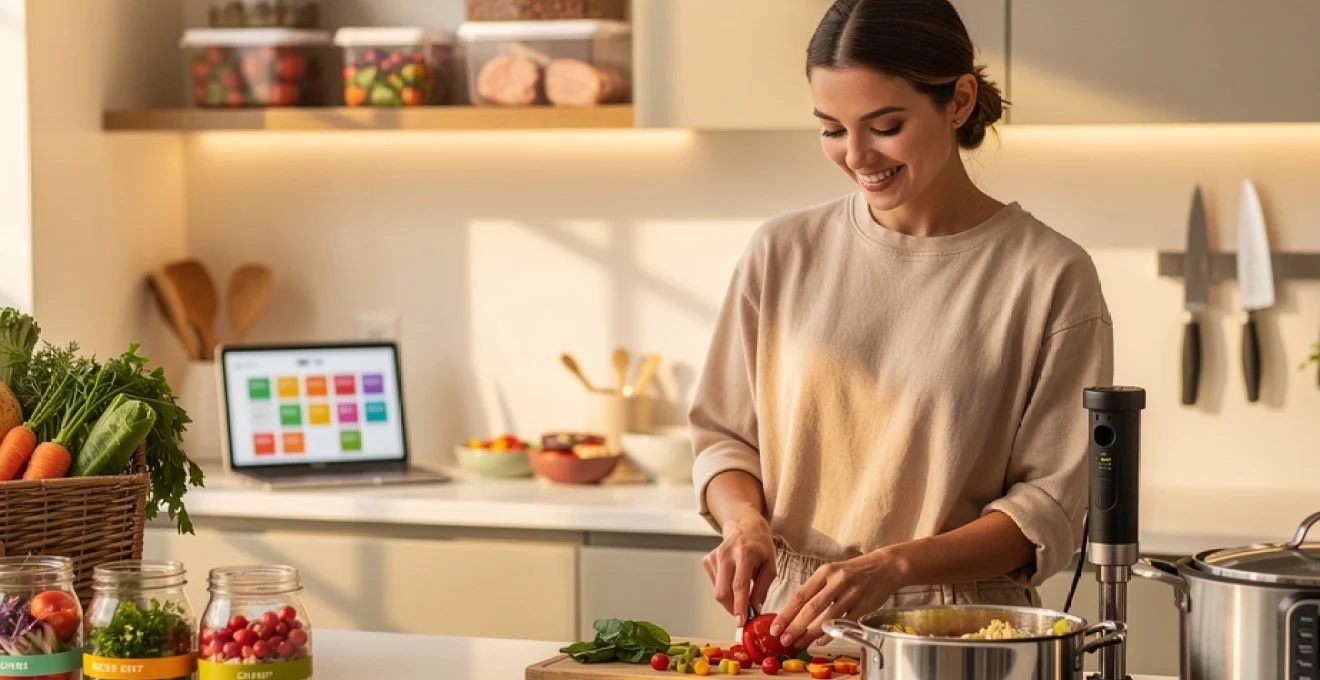
Modern life demands efficiency in every aspect, and the kitchen is no exception. The challenge of preparing nutritious, delicious meals whilst managing busy schedules has become a universal struggle. Yet, cooking doesn’t have to be a time-consuming burden that drains your energy after a long day. With strategic planning, proper equipment selection, and refined techniques, you can transform your culinary routine into an enjoyable, streamlined experience that saves precious hours each week.
The key lies in understanding that efficient cooking isn’t about rushing through recipes or sacrificing quality. Instead, it’s about implementing systems that work for you, not against you. Professional chefs have long understood these principles, and now these same methodologies can revolutionise your domestic kitchen experience. By mastering time-compression techniques whilst preserving flavour integrity, you’ll discover that cooking can become both a source of satisfaction and a practical solution to your daily nutrition needs.
Strategic meal planning systems for maximum kitchen efficiency
Effective meal planning forms the cornerstone of efficient cooking, requiring a systematic approach that goes beyond simple weekly menus. Research indicates that households with structured meal planning systems reduce food waste by up to 40% whilst cutting shopping time by an average of 25 minutes per week. The most successful planning strategies integrate multiple components: ingredient overlap optimisation, seasonal availability awareness, and flexible template systems that accommodate unexpected schedule changes.
Professional food service operations have long relied on systematic planning to manage complex requirements efficiently. This same principle applies to domestic kitchens, where advance planning can eliminate the daily stress of deciding what to cook. The most effective systems balance structure with flexibility, allowing for spontaneous adjustments whilst maintaining overall efficiency.
Batch cooking methodology using mason jar storage solutions
Mason jar storage systems represent one of the most versatile approaches to batch cooking preparation. Glass containers offer superior food preservation compared to plastic alternatives, maintaining ingredient freshness for up to seven days in refrigerated conditions. The transparent nature of mason jars allows for quick inventory assessment, reducing the likelihood of forgotten ingredients spoiling in refrigerator corners.
Successful batch cooking requires understanding which ingredients maintain quality over extended storage periods. Hardy vegetables like carrots, bell peppers, and broccoli retain their texture and nutritional value when properly stored, whilst leafy greens benefit from specific preparation techniques. Pre-washing and thoroughly drying greens before storage can extend their usability from two days to over a week, representing significant time savings for busy households.
Weekly menu rotation templates with ingredient crossover optimisation
Template-based menu rotation eliminates decision fatigue whilst maximising ingredient utilisation efficiency. Studies show that households using structured rotation systems reduce shopping frequency by 30% and minimise impulse purchases. The most effective templates incorporate ingredient crossover principles, where single purchases serve multiple recipe applications throughout the week.
Consider a rotation system where Monday’s roasted chicken becomes Tuesday’s sandwich filling and Wednesday’s soup base. This approach requires initial planning investment but yields substantial time dividends. Professional kitchen managers routinely employ similar strategies to optimise food costs and preparation efficiency, principles that translate effectively to domestic applications.
Digital recipe management using paprika app and notion databases
Digital recipe management systems streamline the planning process whilst providing instant access to ingredient lists and preparation instructions. The Paprika app offers comprehensive recipe organisation features, including automatic grocery list generation and meal planning calendars. Alternative systems like Notion databases provide customisable organisation structures for users preferring greater control over their digital workflow.
Effective digital systems incorporate tagging features that allow rapid recipe identification based on preparation time, dietary requirements, or available ingredients.
Digital organisation eliminates the frustration of searching through physical cookbooks or scattered notes, reducing meal planning time by an average of 15 minutes per session.
Integration with shopping applications can further streamline the procurement process, creating seamless workflows from planning to plate.
Seasonal produce planning with local farm box integration
Seasonal produce planning aligns menu creation with natural growing cycles, ensuring peak flavour whilst often reducing costs. Local farm box subscriptions provide predictable ingredient deliveries that support community agriculture whilst introducing variety into weekly menus. This approach requires flexible planning strategies that accommodate seasonal variations in available produce.
To make the most of a farm box, invert the usual planning process: instead of choosing recipes first and then shopping, you start with what arrives at your door and build simple, flexible dishes around it. Core formulae like sheet pan dinners, grain bowls, frittatas, and soups adapt well to whatever vegetables are in season. Over time, you develop a personal “seasonal playbook” so that courgettes in summer or root vegetables in winter immediately suggest fast, reliable meals you already enjoy cooking.
Advanced kitchen equipment selection for time-sensitive cooking
Beyond planning, the tools you use have a measurable impact on how much time you spend in the kitchen. High-efficiency appliances and professional-grade equipment do more than look impressive; they shorten cooking times, reduce prep work, and improve consistency. Investing wisely in a few key pieces can make everyday cooking feel smoother, more predictable, and ultimately more enjoyable.
The goal is not to fill your cupboards with gadgets but to choose multi-functional, durable tools that earn their place on your countertop. When the right appliance can replace two or three others and cut your active cooking time in half, it becomes a strategic asset rather than kitchen clutter. As with any investment, understanding how these tools fit into your routine will help you decide what is genuinely worth buying.
Multi-functional appliance integration: instant pot duo crisp combinations
The Instant Pot Duo Crisp exemplifies how one appliance can consolidate multiple cooking methods and save significant time. Combining pressure cooking and air frying in a single unit, it allows you to cook foods quickly and finish them with a crisp texture that traditional pressure cookers cannot achieve. For example, you can pressure cook chicken thighs in under 10 minutes and then switch lids to air fry for a golden, crispy finish without dirtying a second pan.
For busy households, the Duo Crisp simplifies weeknight cooking by reducing both hands-on time and washing up. It replaces separate slow cookers, steamers, rice cookers, and even some oven functions, which is particularly valuable in smaller kitchens. When integrated into your meal planning system, you can schedule “Instant Pot nights” for the days when you know you will arrive home late but still want a home-cooked meal ready in under 30 minutes.
Professional-grade knife systems: wüsthof classic vs global g-series analysis
A sharp, well-balanced knife is one of the most powerful time-saving tools you can own. Professional-grade knife systems, such as Wüsthof Classic and Global G-Series, both offer excellent performance but with distinct characteristics that suit different preferences. Wüsthof Classic knives use German high-carbon stainless steel and feature a heavier, full-bolster design, providing a robust, traditional feel that many home cooks find reassuring when chopping denser ingredients.
Global G-Series knives, by contrast, are forged from Japanese stainless steel and have a lighter, slimmer profile with a distinctive dimpled handle. Their reduced weight and thinner blades excel at precise slicing and fine chopping tasks, which can make extended prep sessions less fatiguing. From a time-efficiency standpoint, either system dramatically outperforms inexpensive, dull knives by reducing the effort required for each cut and increasing accuracy, which also improves safety and confidence in the kitchen.
High-efficiency cookware: all-clad d3 stainless steel performance metrics
Cookware may seem like a secondary consideration, but high-efficiency pans like All-Clad D3 stainless steel can noticeably shorten cooking times and improve results. The D3 line uses a tri-ply construction with an aluminium core sandwiched between stainless steel layers, providing rapid, even heat distribution. This means fewer hotspots, more predictable browning, and less time spent adjusting burners or rotating pans to compensate for uneven heating.
In practical terms, a high-quality stainless steel sauté pan allows you to sear proteins quickly while maintaining control over delicate pan sauces, which reduces the risk of burning and having to start again. Because these pans respond quickly to changes in heat, you can move efficiently between high-heat searing and low-heat simmering within a single vessel. Over a week of cooking, these small efficiencies compound, making it easier to execute “one-pan” meals that minimise both active time and washing up.
Smart kitchen technology: anova sous vide precision cooking applications
Sous vide technology, popularised by devices like the Anova Precision Cooker, offers a different kind of time saving: it shifts your effort away from the dinner rush and into quieter parts of your day. By cooking vacuum-sealed food in a precisely controlled water bath, you can achieve perfectly cooked proteins with almost no risk of overcooking. For instance, you might start chicken breasts or salmon fillets in the morning, hold them safely at temperature, and then simply sear them for a minute or two in a hot pan when you are ready to eat.
This “hands-off precision” is particularly valuable if you often get interrupted during cooking, whether by work calls or family responsibilities. Because sous vide delivers consistent results, you also waste less time troubleshooting unevenly cooked meat or dry, overcooked fish. When paired with batch preparation—cooking several portions at once and chilling them for later in the week—sous vide becomes a powerful tool for building fast, restaurant-quality meals on demand.
Culinary mise en place techniques for domestic kitchens
Mise en place, the professional practice of having “everything in its place,” is one of the simplest ways to make home cooking faster and more relaxing. Instead of starting a recipe and then scrambling to find and chop ingredients mid-way, you prepare and organise everything in advance. This technique may seem like it adds extra steps, but in reality it compresses chaos into a short, focused prep window and makes the actual cooking phase smoother and quicker.
To implement mise en place at home, begin by reading the entire recipe and mentally rehearsing the steps. Then measure spices, liquids, and chopped ingredients into small bowls or onto a tray grouped by when they will be used. By the time you turn on the hob, you have transformed cooking from a frantic, multi-tasking exercise into a calm assembly process.
For everyday efficiency, you do not need restaurant-level precision; a few plastic or glass prep bowls and a clear section of worktop are enough. Many home cooks find it helpful to keep a “prep bin” in the fridge—a container where pre-chopped onions, carrots, and celery live for the week—so that part of the mise en place is always ready. This way, you can start soups, sauces, and stir-fries in minutes instead of beginning with a full chopping session each time.
Time-compression cooking methods with flavour preservation
Saving time in the kitchen often raises a valid concern: will quick methods compromise flavour? The most effective time-compression cooking techniques answer this by leveraging physics and food science to speed up processes without sacrificing taste. By manipulating temperature, pressure, and moisture, you can dramatically shorten cooking times while still encouraging browning, tenderness, and aromatic development.
In practice, this means understanding when to use high-intensity methods like pressure cooking, when to harness steam for gentle speed, and how to accelerate flavour-building steps such as marinading. Instead of treating “fast” and “delicious” as opposites, we can design cooking methods that prioritise both.
Pressure cooking science: maillard reaction acceleration techniques
Pressure cooking is one of the most powerful tools for time-compressed cooking, especially for legumes, grains, and tougher cuts of meat that traditionally require hours. Inside a sealed pot, water can reach temperatures above 100°C, dramatically accelerating the breakdown of collagen and the infusion of flavours. However, because pressure cooking involves moist heat, you might wonder: how do we still achieve the rich, browned flavours associated with the Maillard reaction?
The solution is a hybrid approach. First, use high heat in an open pot or directly in the base of your pressure cooker (if it allows sautéing) to brown onions, garlic, and proteins before adding liquids. This initial browning step creates a foundation of complex flavours. Then, once liquid is added and the lid is locked, the elevated pressure speeds up the tenderising process, allowing you to achieve in 30 minutes what might otherwise take two hours.
Another strategy is to finish pressure-cooked foods under a grill or in an air fryer lid to restore surface texture and deepen flavour. For example, pressure cook pork shoulder until tender, then shred and crisp it briefly for tacos. By separating the “browning” and “tenderising” phases but aligning them in a single workflow, you preserve flavour while enjoying significantly reduced total cooking time.
Steam-roasting hybrid methods using combi-steam ovens
Combi-steam ovens, increasingly available in domestic kitchens, combine dry heat with controlled steam injection to deliver faster, more consistent results. By adding moisture to the oven environment, they improve heat transfer and prevent foods from drying out, even at higher temperatures. The result is a form of “steam-roasting” that can cook vegetables, poultry, and fish more quickly than traditional roasting while preserving juiciness and colour.
For time-sensitive cooking, steam-roasting is particularly effective for dense vegetables and whole joints of meat. You might, for instance, roast a tray of root vegetables with added steam so they cook through in less time but still develop caramelised edges. Similarly, a whole chicken can reach a safe internal temperature faster with steam support, then finish with a brief dry-heat phase to crisp the skin.
If you do not own a combi-steam oven, you can emulate aspects of this method by placing a small tray of water in your regular oven or covering dishes for part of the cooking time. While not as precise, these tricks still enhance moisture and heat transfer, allowing you to shave minutes off cooking times while reducing the risk of dry, overcooked food.
Flash-marinating protocols with enzymatic tenderisers
Traditional marinades often require several hours or even overnight resting to tenderise and flavour meat. Flash-marinating techniques aim to compress this timeline to 15–30 minutes without losing impact. They rely on a combination of mechanical action, surface area, and targeted ingredients, such as enzymes and acids, to speed up the process.
To start, slicing proteins into thinner pieces or scoring their surface increases the area that the marinade can contact, allowing flavours to penetrate more quickly. Adding enzymatic tenderisers—like bromelain from pineapple, papain from papaya, or commercial meat tenderiser powders—further accelerates the breakdown of muscle fibres. However, because enzymes are powerful, exposure times must be short; leaving meat in such marinades for too long can result in a mushy texture.
Vacuum sealing can enhance flash-marinating by removing air and pressing the marinade into the food’s surface, but even a simple zip-top bag works well if you massage it periodically. The key is to design marinades that do not rely solely on salt and acid, which take longer to move deeply into the protein, but also include aromatic oils and finely grated garlic, ginger, or spices that deliver strong surface flavour fast. This way, you can decide to grill or pan-fry flavourful meat after work without needing to plan the night before.
Ingredient preparation automation and storage optimisation
One of the biggest drains on daily cooking time is repetitive ingredient preparation: chopping onions, mincing garlic, slicing vegetables, and washing salad greens. Automating and front-loading these tasks turns them from daily obstacles into occasional, manageable sessions. When your fridge is stocked with ready-to-use components, assembling a meal becomes closer to “cooking with building blocks” than starting from raw basics every time.
Food processors, mandolines, and high-powered blenders can dramatically reduce prep time when used strategically. For example, dedicating 30 minutes on a Sunday to process onions, carrots, and celery into a classic soffritto mix provides a base for soups, stews, and sauces all week. Stored in airtight containers or frozen in portions, this mix can go straight from fridge or freezer to pan, bypassing daily chopping altogether.
Storage optimisation is equally important. Clear, stackable containers and labelled jars help you see at a glance what you have available, reducing the likelihood of duplicate purchases or forgotten produce. Grouping prepared ingredients by function—for instance, keeping a “stir-fry box” with sliced vegetables and a jar of pre-mixed sauce—streamlines decision-making on busy evenings. The more your fridge resembles a well-organised mise en place station, the easier it becomes to enjoy cooking without feeling rushed.
Food safety and shelf life must also guide your approach. Pre-washed greens wrapped in a clean tea towel or stored with paper towels in a container typically last longer, while cut vegetables like carrots and celery keep well submerged in water that is changed regularly. Knowing these storage techniques means your batch prep remains an asset rather than turning into waste, preserving both time and ingredients.
Recipe modification strategies for reduced active cooking time
Even your favourite recipes can often be adapted to fit a busy schedule without losing their essential character. Recipe modification focuses on reducing active cooking time—the minutes when you must be in front of the hob—by simplifying steps, consolidating pans, and shifting work to passive phases like baking or slow cooking. The aim is to preserve flavour and satisfaction while making the process more compatible with real life.
Start by identifying where a recipe spends most of its time: is it in chopping, simmering, or multiple separate cooking stages? Once you understand the time profile, you can look for shortcuts. For instance, replacing individual vegetable sautés with a single sheet pan roast consolidates work and washing up. Using pre-cooked grains from a previous batch session instead of starting from dry each time can also shave 20–30 minutes off many meals.
Another effective strategy is to design “modular” recipes that share core components across multiple dishes. A large batch of tomato sauce can appear as pasta sauce one night, shakshuka base the next, and soup foundation later in the week. By writing your own notes directly onto recipes—such as reduced steps that worked, substitutions that saved time, or adjusted cooking times for your equipment—you build a personalised, efficient version of your favourite dishes.
Finally, do not underestimate the value of setting realistic flavour goals for weeknights. Not every dinner needs to be a complex, multi-course experience; sometimes the most enjoyable cooking is the simplest. When you accept that a well-seasoned frittata with a quickly dressed salad can be just as satisfying as an elaborate stew, you free yourself to choose recipes that respect both your time and your taste buds, making it far easier to enjoy cooking every single day.