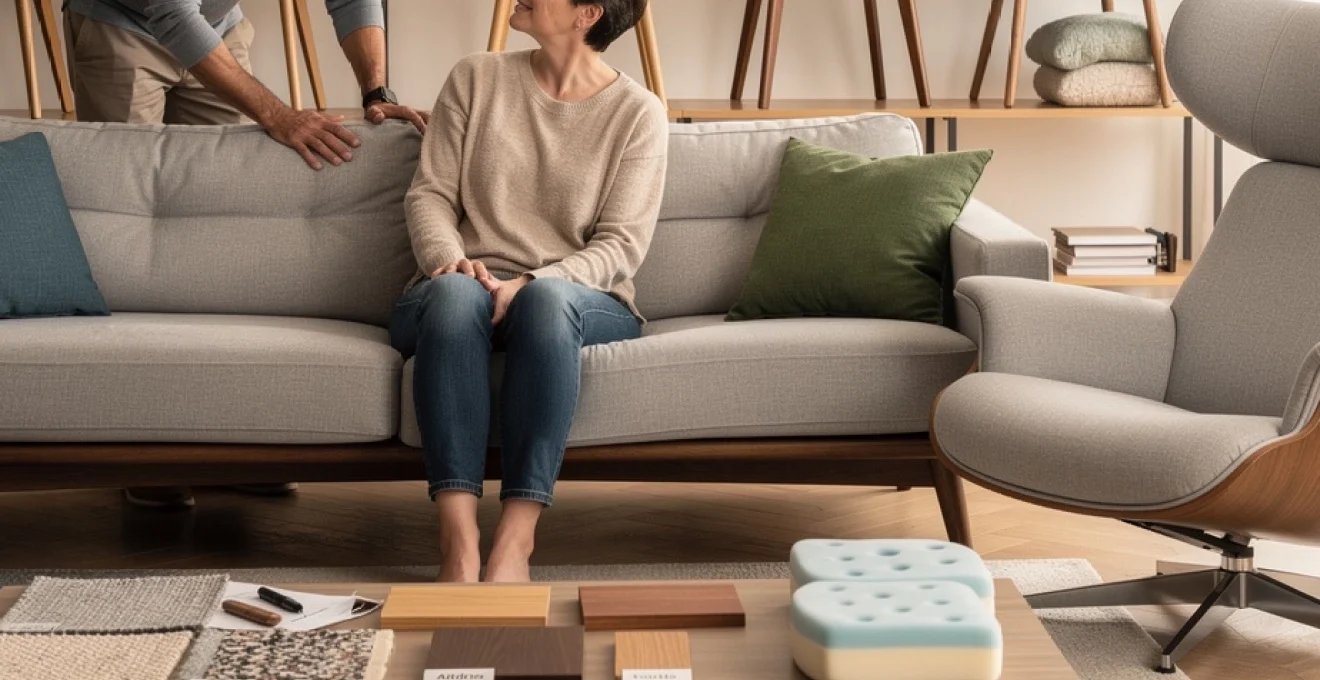
Selecting furniture that seamlessly blends comfort with visual appeal represents one of the most challenging aspects of interior design. The modern consumer faces an overwhelming array of choices, from mass-produced pieces to bespoke creations, each promising the perfect balance of form and function. Yet achieving this harmony requires more than simply choosing attractive pieces that feel comfortable at first touch. It demands a comprehensive understanding of ergonomic principles, material science, construction techniques, and design philosophy. The investment in well-chosen furniture extends far beyond immediate satisfaction, influencing daily comfort, long-term health, and the overall aesthetic coherence of living spaces for years to come.
Ergonomic design principles for residential furniture selection
The foundation of comfortable furniture lies in its adherence to ergonomic principles that support the human body’s natural alignment and movement patterns. Modern furniture design increasingly incorporates scientific research on human physiology, biomechanics, and comfort perception to create pieces that enhance rather than compromise physical well-being. This approach transforms furniture selection from a purely aesthetic decision into a health-conscious investment that can significantly impact daily comfort and long-term physical health.
Anthropometric measurements and body support alignment
Understanding anthropometric data forms the cornerstone of ergonomic furniture selection. These measurements, which document average human body dimensions across different populations, inform the design of seating heights, depths, and widths that accommodate the broadest range of users comfortably. For dining chairs, the standard seat height of 17-19 inches accommodates most adults, while sofa seats typically range from 15-17 inches to encourage relaxation. However, individual variations in height, leg length, and torso proportions mean that testing furniture personally remains essential, as anthropometric averages cannot account for every body type.
The relationship between seat depth and thigh support exemplifies the importance of proper anthropometric consideration. Optimal seat depth should support approximately 80% of the thigh length, leaving a small gap between the seat edge and the back of the knee to prevent circulation restriction. This measurement varies significantly among individuals, making adjustable or modular furniture increasingly valuable for households with multiple users of different heights.
Lumbar support mechanisms in seating systems
Effective lumbar support represents perhaps the most critical aspect of ergonomic seating design. The natural S-curve of the spine requires specific support at the lower back’s inward curve, typically positioned 6-8 inches above the seat surface. Quality furniture incorporates this support through various mechanisms, from built-in lumbar cushions to adjustable support systems that can be customised to individual needs.
Modern seating solutions employ sophisticated approaches to lumbar support, including memory foam inserts that conform to individual spine curvatures and spring-loaded mechanisms that provide dynamic support during movement. The effectiveness of lumbar support extends beyond immediate comfort, potentially preventing the development of chronic back problems associated with prolonged sitting in poorly designed furniture.
Pressure distribution analysis for upholstered surfaces
The distribution of body weight across furniture surfaces significantly affects both comfort and long-term health outcomes. Advanced upholstery systems utilise multiple foam densities and support mechanisms to distribute pressure evenly, preventing the concentration of weight in specific areas that can lead to discomfort and circulation problems. High-quality seating incorporates zoned support systems, with firmer materials supporting heavier body areas and softer materials cushioning pressure points.
Pressure mapping technology, increasingly used in furniture development, reveals how different body shapes interact with various surface materials and construction methods. This scientific approach to comfort design helps manufacturers create furniture that maintains consistent support levels over extended periods, addressing the common problem of furniture that feels comfortable initially but becomes uncomfortable during prolonged use.
Joint-friendly angular positioning for extended use
The angles at which furniture positions the human body profoundly influence comfort and health outcomes. Optimal seating maintains hip angles between 90-110 degrees, knee angles between 90-120 degrees, and provides armrests at elbow height to reduce shoulder strain. These angular relationships work together to maintain proper circulation, reduce muscle fatigue, and prevent the development of repetitive strain injuries.
Contemporary furniture design increasingly recognises that static positioning can be as problematic as poor positioning. Features like reclining mechanisms, adjustable components, and surfaces that encourage position changes throughout use
encourage micro-movements rather than locking the user into a single posture. When you try a chair or sofa, pay attention to whether you can easily change position, sit upright to read, then recline to relax. Furniture that allows subtle shifts in angle will feel more comfortable over hours of use and is far kinder to your joints than pieces that only look good in photos.
Material science and construction methods for durability
Beyond ergonomics, the materials and construction methods used in furniture determine how well it will perform over time. Two sofas can look almost identical in a showroom, yet one may remain stable and supportive for decades while the other sags and loosens within a few years. Understanding basic material science and joinery techniques helps you distinguish genuine quality from purely cosmetic appeal. When comfort and aesthetics are both priorities, investing in durable construction ensures that the furniture continues to look and feel good throughout its lifespan.
Hardwood species comparison: oak, walnut, and teak performance
For structural frames, hardwood selection plays a crucial role in long-term stability. Oak is widely used in residential furniture for its strength, relatively high hardness, and excellent resistance to wear. Its pronounced grain and warm tone also lend themselves to both traditional and contemporary aesthetics, making oak a versatile choice when you want furniture that feels substantial yet visually timeless. Properly kiln-dried oak resists warping and can comfortably support heavy upholstery and frequent use.
Walnut offers a different balance of properties. Slightly softer than oak but still robust, it is prized mainly for its rich, deep colour and refined grain pattern. Walnut furniture often reads as more luxurious and sculptural, making it ideal when you want a piece to function as a visual focal point. From a performance perspective, walnut holds joinery well and resists movement when seasoned correctly, though it may show dents more readily than oak in high-traffic family environments.
Teak, traditionally used in marine and outdoor applications, excels where moisture resistance and dimensional stability are critical. Its natural oils help protect against rot, insects, and humidity changes, which is why teak is common in bathroom furniture, outdoor seating, and coastal homes. For indoor pieces, teak offers exceptional longevity with minimal maintenance, though its distinct golden-brown colour and visible grain demand thoughtful integration into your overall interior palette. If you live in a climate with strong humidity swings, teak frames can be an excellent insurance policy for long-term stability.
High-density foam vs memory foam longevity testing
The comfort of upholstered furniture depends heavily on the performance of its cushioning materials. High-density polyurethane foam remains the industry standard for seat cores, with density levels around 1.8–2.5 lb/ft³ for residential use and higher for commercial applications. In independent longevity tests, quality high-density foam can retain 80–90% of its original firmness after several years of regular use, provided it is paired with appropriate support systems such as webbing or springs. When you sit, the foam should compress gradually and recover quickly rather than bottoming out.
Memory foam, by contrast, offers a slower, contouring response that many people associate with luxury. It excels at distributing pressure and sculpting to individual body shapes, making it a popular choice for mattress toppers and specific ergonomic cushions. However, pure memory foam cores can be prone to heat retention and may soften excessively over time, especially in warm climates or with heavy daily use. To balance comfort and durability, many high-quality sofas now use layered constructions—dense base foam for structural support topped with thinner memory foam or latex for surface comfort.
When comparing furniture, ask about both foam density and indentation load deflection (ILD), which describes firmness. You are aiming for a combination where the foam is dense enough to resist premature sagging but not so hard that it feels unyielding. As a quick, practical test, press down with your hand and note how quickly the surface rebounds; sluggish recovery can be a sign of lower-quality or already fatigued foam.
Mortise and tenon joinery for structural integrity
While upholstery and finishes often capture attention, the true strength of furniture lies in its hidden joinery. Mortise and tenon joints, used for centuries in fine woodworking, remain one of the most reliable methods for creating strong, rigid connections between two pieces of wood. In this technique, a projecting tenon fits snugly into a corresponding cavity or mortise, often reinforced with glue and sometimes wooden pegs. This large glue surface and mechanical interlock distribute loads effectively, making the joint highly resistant to twisting and racking forces.
In practical terms, chairs, tables, and bed frames that use mortise and tenon joinery are far less likely to wobble or loosen with daily movement. By contrast, frames assembled primarily with nails, thin metal brackets, or simple dowels may begin to squeak or sway after repeated use. When evaluating a piece in person, try gently rocking or twisting it; minimal movement indicates well-executed joinery. Many high-end manufacturers highlight mortise and tenon construction in their specifications, so checking product descriptions can also give you valuable clues about structural quality.
Fabric martindale abrasion ratings and wear resistance
For upholstery, the Martindale abrasion test provides an objective measure of how well a fabric will resist wear. In this test, a fabric sample is rubbed in a controlled circular motion with a standard abrasive surface until threads break or visible wear appears. The number of cycles endured—the Martindale rating—indicates suitability for different usage levels. For residential furniture, ratings of 20,000–30,000 cycles typically suffice, while heavy-use family rooms or rental properties benefit from fabrics rated 40,000 cycles or more.
However, abrasion resistance is only one part of the durability equation. Fibre content, weave structure, and surface texture all influence how a fabric will look and feel over time. Tightly woven blends that combine natural fibres like cotton or linen with synthetic fibres such as polyester often provide an excellent balance of comfort, wrinkle resistance, and strength. Textured weaves and small-scale patterns can be more forgiving of everyday marks than flat, solid-colour fabrics, which tend to highlight every crease and stain.
When you are choosing upholstery for furniture that combines comfort and aesthetics, ask retailers for technical data sheets where possible. Look for Martindale ratings, pilling resistance scores, and lightfastness values to ensure that the fabric will withstand both physical wear and exposure to sunlight. This small step can significantly extend the visual life of your furniture and keep it looking refined rather than prematurely tired.
Contemporary design movements and aesthetic integration
Once ergonomic and material considerations are addressed, the question becomes: how do you select furniture that feels visually coherent in your home? Contemporary design movements provide helpful frameworks for balancing comfort and aesthetics, even if you do not follow any style dogmatically. By understanding the core principles behind Scandinavian minimalism, mid-century modern, Japandi, and industrial aesthetics, you can mix and match elements with confidence, creating interiors that feel intentional rather than chaotic.
Scandinavian minimalism: functionality through clean lines
Scandinavian minimalism is renowned for its emphasis on functionality, light, and simplicity. Furniture in this style typically features clean lines, slim profiles, and a restrained colour palette dominated by whites, soft greys, and natural wood tones. The goal is to create calm, uncluttered environments where each piece serves a clear purpose. Comfort is delivered through thoughtful ergonomics, tactile textiles, and warm materials rather than visual excess.
From a practical standpoint, Scandinavian-inspired pieces work well in smaller homes and apartments where visual lightness helps spaces feel larger. Slim-legged sofas, open-frame armchairs, and simple dining tables avoid overwhelming the room, yet their proportions are often carefully tuned to support the body comfortably. To keep the look from feeling sterile, layer in knitted throws, wool rugs, and linen cushions; these soft textures add warmth and invite everyday use without compromising the minimalist aesthetic.
Mid-century modern revival: eames and saarinen influence
The enduring popularity of mid-century modern furniture—shaped by designers such as Charles and Ray Eames or Eero Saarinen—speaks to its successful balance of innovation, comfort, and sculptural form. Hallmarks of this movement include organic curves, tapered legs, and thoughtful integration of materials like moulded plywood, fibreglass, and metal. Many iconic mid-century pieces were designed with human comfort in mind, using ergonomic shells and supportive contours long before “ergonomics” became a marketing term.
In contemporary interiors, mid-century modern pieces can serve as characterful anchors around which more neutral elements revolve. A classic lounge chair or pedestal dining table instantly lends personality to a room, while its refined proportions prevent it from feeling bulky. When integrating mid-century furniture, aim for balance: pair a visually strong chair or sideboard with simpler, softer pieces so that the space remains welcoming rather than museum-like. You can echo the movement’s spirit by choosing furniture with visible structure and honest materials, even if the designs themselves are current.