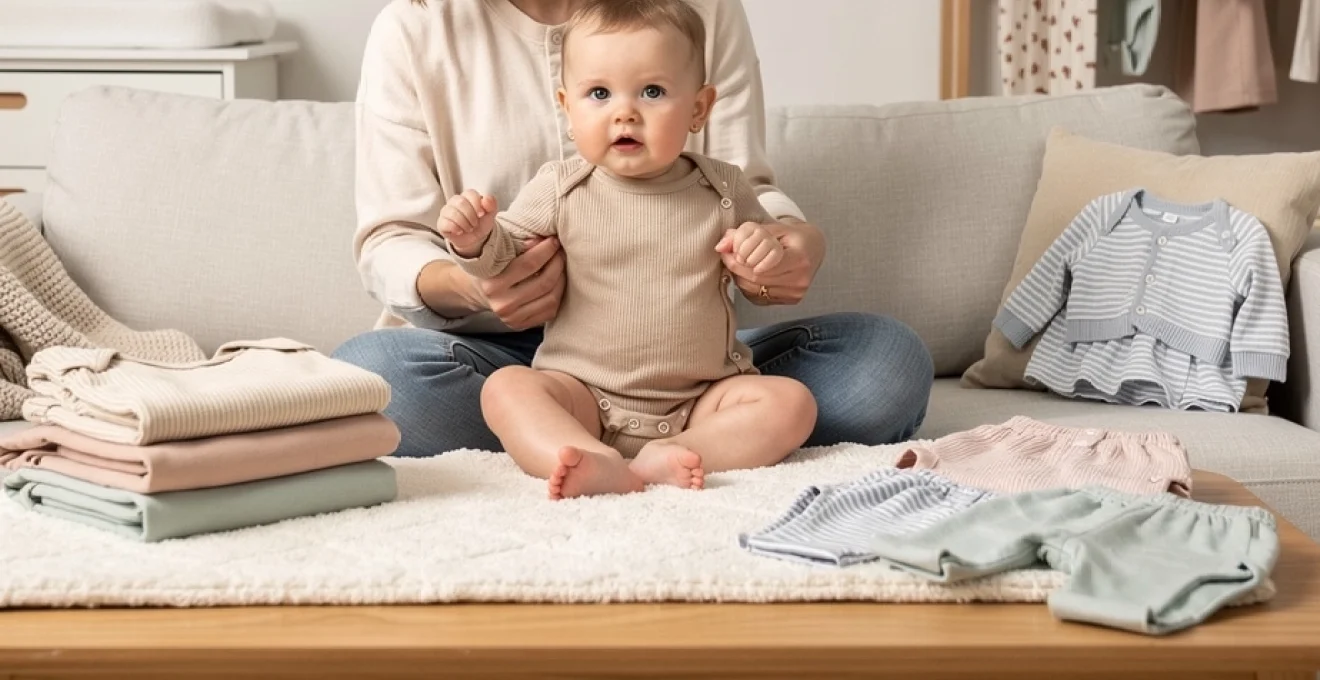
Selecting the perfect baby clothes requires balancing comfort, safety, and style considerations that go far beyond simply choosing adorable patterns. Your infant’s delicate skin, rapid growth patterns, and unique temperature regulation needs demand careful attention to fabric composition, construction quality, and sizing strategies. Modern parents face an overwhelming array of choices, from organic cotton basics to innovative moisture-wicking blends, each promising superior comfort and durability.
The global baby clothing market has evolved dramatically, with premium brands investing heavily in research-driven fabric technologies and safety innovations. Contemporary infant fashion combines aesthetic appeal with functional design elements, creating garments that support healthy development whilst maintaining visual appeal. Understanding the technical specifications behind quality baby clothes empowers parents to make informed decisions that prioritise their child’s wellbeing without compromising on style preferences.
Essential fabric selection criteria for infant comfort and durability
Fabric selection forms the foundation of comfortable baby clothing, directly impacting your infant’s skin health, temperature regulation, and overall comfort throughout daily activities. Quality materials determine not only immediate wearability but also long-term durability, affecting the garment’s ability to withstand frequent washing cycles whilst maintaining softness and structural integrity. Modern textile innovations have revolutionised infant clothing, introducing advanced fibres that offer superior performance characteristics compared to traditional materials.
Organic cotton vs bamboo fibre: breathability and hypoallergenic properties
Organic cotton remains the gold standard for infant clothing, offering exceptional breathability and natural hypoallergenic properties that protect sensitive skin from irritation. This premium fabric undergoes cultivation without synthetic pesticides or fertilisers, eliminating potential chemical residues that could trigger allergic reactions in susceptible infants. The natural cotton fibres create microscopic air pockets that promote airflow, preventing moisture accumulation and maintaining optimal skin temperature throughout various weather conditions.
Bamboo fibre presents compelling advantages for infant clothing applications, demonstrating superior moisture-wicking capabilities and natural antibacterial properties that inhibit bacterial growth. The bamboo cultivation process requires significantly less water than conventional cotton farming, making it an environmentally sustainable choice for eco-conscious parents. Research indicates that bamboo fabric maintains its softness even after numerous wash cycles, whilst providing UV protection that shields delicate infant skin from harmful solar radiation during outdoor activities.
Merino wool temperature regulation for seasonal wear
Merino wool offers unparalleled temperature regulation capabilities, making it ideal for transitional seasons when weather conditions fluctuate throughout the day. The fine wool fibres naturally adjust to ambient temperature changes, providing warming insulation during cool periods whilst allowing heat dissipation when temperatures rise. This adaptive quality eliminates the need for frequent clothing changes, simplifying daily care routines whilst ensuring consistent infant comfort.
Quality merino wool garments feature lanolin content that provides natural water resistance and antimicrobial properties, reducing odour development between washing cycles. The wool’s crimp structure creates insulating air pockets that maintain warmth even when slightly damp, making it particularly suitable for active infants who generate moisture through movement and play activities.
Modal and tencel blends: Moisture-Wicking performance analysis
Modal and Tencel fibres, derived from sustainable beech wood sources, offer superior moisture management compared to conventional cotton materials. These advanced cellulose fibres demonstrate exceptional absorbency rates, capable of absorbing up to 50% more moisture than cotton whilst maintaining a dry surface feel against infant skin. The smooth fibre surface reduces friction, minimising skin irritation during extended wear periods.
Tencel production utilises a closed-loop manufacturing process that recycles 99% of solvents, making it one of the most environmentally responsible fabric choices available. The resulting fabric exhibits natural antibacterial properties and biodegradability, appealing to parents seeking sustainable clothing options that align with environmental values whilst delivering superior performance characteristics.
OEKO-TEX standard 100 certification requirements
OEKO-TEX Standard 100 certification ensures that textile products undergo rigorous testing for harmful substances throughout the entire production chain, from raw materials to finished garments. This internationally recognised standard tests for over 300 potentially harmful chemicals, including formaldehyde, heavy metals, and carcinogenic compounds that could pose health risks to infants. Certified fabrics
Certified fabrics in the baby clothing market must meet stricter threshold limits than garments intended for adults, reflecting infants’ greater vulnerability to chemical exposure. When you see the OEKO-TEX Standard 100 label, it indicates that every component of the product – thread, buttons, zips, prints and labels – has been independently tested and verified. For newborn and baby categories (product class I), limits are particularly tight, giving you additional assurance that sleepwear, bodysuits and rompers are safe for prolonged skin contact.
Parents looking for comfortable and stylish baby clothes can use this certification as a quick filter when comparing brands. Whilst OEKO-TEX does not measure overall garment quality or design, it significantly reduces the risk of hidden toxic substances in dyes, finishes, and accessories. Combining this label with other quality markers, such as organic fibre content and reputable manufacturing standards, helps you build a wardrobe that is both gentle on delicate skin and aligned with higher safety expectations.
GSM (grams per square metre) guidelines for different garment types
GSM (grams per square metre) is a key technical indicator of fabric weight and density, directly influencing warmth, drape, and durability in baby clothing. Lightweight fabrics in the 120–160 GSM range are ideal for summer bodysuits, vests and breathable layering pieces, providing sufficient coverage without causing overheating. Mid-weight fabrics around 160–220 GSM work well for everyday rompers, leggings and sleepsuits, balancing softness with resilience under frequent washing.
For cooler seasons, heavier jerseys and fleece in the 220–300 GSM range offer enhanced insulation suitable for joggers, cardigans and pram suits, especially when combined with smart layering. When you are evaluating comfortable and stylish baby clothes online, checking GSM values (where listed) helps you anticipate how a garment will feel and perform across different temperatures. As a general rule, aim for lighter GSM next to the skin and reserve higher GSM fabrics for outer layers, which you can add or remove as your baby’s temperature changes.
Age-appropriate sizing systems and growth accommodation strategies
Even the softest fabric will feel uncomfortable if the fit is restrictive or poorly matched to your baby’s stage of development. Age-appropriate sizing systems for baby clothes vary significantly between regions and brands, which can make online shopping particularly challenging. Understanding how European and American sizing correlate, and how growth spurts affect fit, allows you to plan a flexible wardrobe that lasts more than a few weeks.
Thoughtful growth accommodation strategies – such as adjustable waistbands, roll-up cuffs and snap extenders – transform stylish baby outfits into long-lasting investment pieces. By prioritising baby clothing designs that adapt as your baby grows, you reduce waste, save money, and maintain a consistent aesthetic without constantly replacing entire size ranges. The goal is to create a capsule wardrobe of baby clothes that can bridge size gaps and support rapid changes in height and weight from 0–24 months.
European vs american sizing charts: 0–24 months conversion
European baby clothing sizes are typically based on body length in centimetres (for example, 56, 62, 68), whereas American systems use age ranges such as 0–3 months or 6–9 months. This difference can lead to confusion, particularly when your baby’s age and length sit between categories. As a starting point, size 50–56 in EU charts often corresponds to newborn or 0–1 month, 62 to roughly 0–3 months, 68 to 3–6 months, 74 to 6–9 months, and 80–86 to 9–18 months, depending on brand-specific cut.
Because growth patterns vary, you should always prioritise your baby’s current height and weight over the nominal age label. Many parents find that their baby outgrows width before length (or vice versa), making it useful to consult each brand’s detailed size guide rather than relying on generic conversion charts. When in doubt between two sizes of baby clothes, it is usually safer to choose the larger option and use roll-up sleeves or layered bodysuits to fine-tune the fit in the early weeks.
Adjustable waistband and expandable seam construction techniques
Adjustable waistbands are one of the most effective ways to extend the usable life of leggings, trousers and skirts in your baby’s wardrobe. Designs featuring soft elastic casings with buttonhole elastic or multiple snap settings allow you to customise the fit without compressing your baby’s abdomen. This is especially important after feeds, when a tight waistband can contribute to discomfort or reflux.
Expandable seam construction techniques, such as extra seam allowances or cleverly placed gussets, provide hidden growth room in more structured garments. Some premium baby clothing brands incorporate concealed panels that can be let out as your infant grows, similar to traditional tailoring but adapted for rapid developmental changes. While these details are not always obvious at first glance, they significantly increase comfort and reduce the need to replace stylish baby outfits after only a few wears.
Snap extenders and roll-up sleeve design features
Snap extenders, which can be added to the crotch area of bodysuits and rompers, are a simple yet powerful tool for bridging size gaps between 3–6 month stages. By adding a few centimetres of length, they prevent garments from pulling at the shoulders or riding up when your baby stretches, without compromising the overall silhouette. This is particularly useful for taller infants who quickly outgrow length but still fit comfortably in the chest and waist.
Roll-up sleeve and leg designs further enhance versatility, allowing a single piece to transition from slightly oversized to perfectly fitted over several months. Cuffed hems, tab-and-button roll-up systems, or reversible fold-over cuffs keep excess fabric secure whilst your baby crawls or sleeps. You might compare these design features to adjustable furniture: a single well-designed item can serve you through multiple stages rather than being discarded at each minor change in size.
Growth spurts: 3–6 month size gap planning
Many parents notice the most dramatic growth spurts between 3–6 months, when babies often gain both length and weight at accelerated rates. Planning ahead for this period involves stocking a small but strategic selection of overlapping sizes, such as a mix of 62, 68 and 74 in European sizing or 0–3, 3–6 and 6–9 months in American labels. Instead of purchasing large volumes in a single size, focus on layering pieces and adjustable baby clothing that can flex with these rapid changes.
During growth spurts, comfortable and stylish baby clothes should prioritise stretch, soft waistbands and generous length to accommodate sudden increases in movement, such as rolling and early crawling. Monitor how garments sit at the shoulders, crotch and ankles; tightness or constant riding up are signs that it is time to transition to the next size or use extenders. By anticipating these growth windows, you can maintain a cohesive wardrobe aesthetic without last-minute shopping stress.
Safety standards and construction details for infant garments
Safety considerations underpin every aspect of well-designed baby clothing, from fabric choice and dyes to fasteners and seam finishes. Infants explore the world through touch and mouthing, which means that any loose threads, detachable decorations or poorly secured buttons can pose a choking hazard. At the same time, seams that rub or fastenings that press into the skin may cause irritation, disrupting sleep and play.
Understanding core safety standards and construction details helps you evaluate comfortable and stylish baby clothes beyond appearance alone. When you know what CPSIA compliance means, how to differentiate flat seams from bulkier alternatives, and which closure systems are appropriate for different age groups, you can shop with greater confidence. This knowledge is especially useful when assessing lesser-known brands or handmade garments that may not follow mainstream design conventions.
CPSIA compliance: lead-free dyes and non-toxic fasteners
In the United States, the Consumer Product Safety Improvement Act (CPSIA) sets strict regulations for children’s products, including baby garments. CPSIA-compliant clothing must meet low limits for lead and phthalates in both fabrics and components such as snaps, zips and decorative elements. For parents, this translates into greater assurance that brightly coloured prints and metallic details will not introduce harmful substances into daily contact with baby’s skin or mouth.
When reviewing product descriptions, look for explicit references to CPSIA compliance or equivalent regional safety standards, particularly for imported or embellished items. Non-toxic fasteners made from nickel-free metal or high-grade, BPA-free plastics are preferable to generic hardware of unknown origin. If in doubt, simpler is often safer: minimalist baby clothing without small decorative attachments reduces both chemical and mechanical risk factors.
Flat-seam construction vs french seams: skin irritation prevention
Seam construction may seem like a minor detail, but for a newborn lying on their back for much of the day, poorly placed or bulky seams can quickly cause friction and redness. Flat-seam construction, in which seam allowances are either covered or laid flat against the fabric, minimises raised edges that can dig into the skin. This technique is particularly beneficial for sleepsuits, bodysuits and leggings designed for extended wear.
French seams, commonly used in higher-end garments, enclose raw edges within the seam itself, creating a clean interior finish with no exposed threads. While slightly bulkier than true flat seams, they still provide a smooth, durable finish suitable for baby clothing made from lightweight woven fabrics. As you evaluate comfortable and stylish baby clothes, running your fingers along the inside of seams is a quick way to judge whether a garment will feel gentle against delicate skin or cause irritation over time.
Snap vs zip vs envelope neckline: dressing ease comparison
Closure systems on baby garments directly affect both safety and day-to-day practicality for parents. Snaps (press studs) along the inseam or front opening allow for targeted access during nappy changes, reducing the need to fully undress your baby. However, low-quality snaps may misalign or lose tension over time, so it is worth testing their strength and alignment before purchase.
Zips offer rapid opening and closing, which is invaluable for night-time changes, but they must be designed with protective plackets and chin guards to prevent pinching. Envelope necklines, commonly seen on bodysuits, use overlapping shoulder panels that stretch over your baby’s head or even slide down the body for removal following messy accidents. This design can be more comfortable for babies who dislike garments passing tightly over their face, and it simplifies dresser routines when you are managing multiple outfit changes per day.
Flame retardant chemical alternatives in sleepwear
In several markets, children’s sleepwear must either be treated with flame retardant chemicals or designed to fit snugly to reduce flammability risk. Many parents prefer to avoid chemical flame retardants due to concerns about long-term exposure, especially for infants with sensitive skin or respiratory issues. As an alternative, some brands opt for close-fitting, natural-fibre sleepwear that meets flammability standards through design rather than chemical treatment.
When choosing baby sleepwear, check labels for phrases like “not flame resistant – wear snug-fitting” or explicit statements that garments are free from added flame retardant chemicals. Opting for snug-fitting organic cotton or merino wool pyjamas and sleep sacks can provide both safety and comfort without additional treatments. Paired with safe sleep practices, these garments help maintain a low-risk sleep environment while remaining soft and breathable against your baby’s skin.
Contemporary fashion trends in premium baby clothing brands
Premium baby clothing brands increasingly blend minimalist aesthetics with functional details, mirroring broader slow-fashion movements in adult wardrobes. Neutral palettes – think soft oatmeal, stone, sage and muted terracotta – dominate many collections, allowing pieces to mix seamlessly and photograph beautifully without feeling overstated. These tones also make gender-neutral dressing straightforward, extending the re-wear potential of garments across siblings or future children.
Subtle design accents, such as tonal embroidery, textural knits and micro-prints, add visual interest without compromising comfort or washability. Parents seeking comfortable and stylish baby clothes often gravitate towards capsule collections that include versatile rompers, organic cotton bodysuits, ribbed leggings and oversized cardigans that can be layered across seasons. Sustainability has become a defining trend as well, with many premium labels highlighting traceable supply chains, recycled packaging and repair or take-back schemes that extend garment life beyond the initial wearer.
Seasonal wardrobe planning and layering techniques for infants
Building a seasonally appropriate baby wardrobe is less about owning large quantities of clothing and more about selecting adaptable layers that work together. Infants cannot regulate body temperature as efficiently as adults, so layering allows you to fine-tune warmth in response to indoor heating, outdoor weather and car travel. A practical framework is to treat your baby’s outfit as a three-layer system: a moisture-wicking base layer, an insulating mid-layer and a protective outer layer for colder conditions.
In warmer months, the base layer – usually a lightweight organic cotton or bamboo bodysuit – may be sufficient indoors, with a thin muslin or modal cardigan added for breezy evenings. During autumn and winter, you can introduce merino wool or brushed cotton mid-layers, such as rompers or footed sleepsuits, topped with a pram suit or soft-shell jacket for outdoor use. Accessories like hats, mittens and booties act as removable micro-layers that help fine-tune comfort without needing a complete outfit change.
Care instructions and longevity optimisation for investment pieces
Even the best-made baby clothes will lose their shape, colour and softness if they are not cared for correctly. Investment pieces – such as premium merino knits, organic cotton rompers and special-occasion outfits – benefit from a considered laundry routine that balances hygiene with fabric preservation. Always begin by reading the care label, paying attention to recommended water temperatures, spin speeds and drying methods.
Using a gentle, fragrance-free detergent formulated for sensitive skin helps protect both your baby’s skin and the integrity of fibres. Washing baby clothing inside out, fastening zips and snaps, and placing delicate items in mesh laundry bags can prevent snagging and reduce pilling. Whenever possible, line-drying or flat-drying garments instead of tumble-drying preserves elasticity and reduces shrinkage, particularly in natural fibres like wool and cotton.
To maximise the lifespan of comfortable and stylish baby clothes, consider creating a small rotation of everyday garments rather than overusing a single favourite item. Treating stains promptly with baby-safe stain removers, and storing outgrown but high-quality pieces in clean, dry containers, ensures they remain in good condition for resale, donation or future siblings. By aligning fabric choice, sizing strategies, and care practices, you create a sustainable wardrobe that supports your baby’s comfort and style from newborn through toddlerhood.