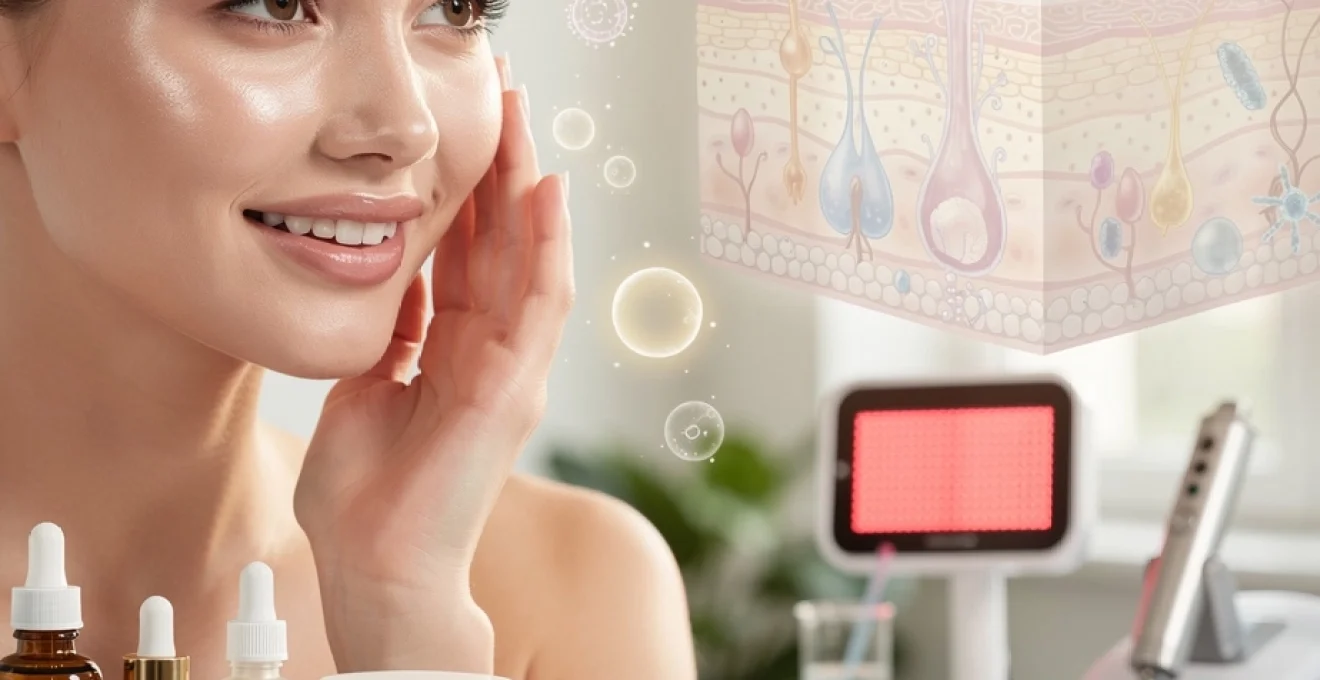
The pursuit of luminous, radiant skin has become a cornerstone of modern skincare philosophy, with countless individuals seeking that coveted natural glow that transcends the need for cosmetic enhancement. This quest for skin perfection isn’t merely about vanity; it represents a fundamental shift towards understanding skin health as a reflection of overall wellbeing. When your skin exhibits that naturally radiant quality, characterised by even tone, optimal hydration, and healthy cellular function, you’ve achieved what dermatologists consider the gold standard of complexion health. The science behind achieving this luminous complexion involves understanding multiple layers of skin physiology, from barrier function to cellular regeneration processes.
Achieving genuinely glowing skin requires a comprehensive approach that addresses the skin’s biological mechanisms rather than simply masking imperfections with cosmetic products. Modern dermatology has identified specific protocols and active ingredients that can dramatically enhance your skin’s natural radiance through targeted interventions. These evidence-based approaches work at the cellular level to optimise skin function, promoting the natural processes that create that enviable glow from within.
Understanding your skin’s natural barrier function and microbiome balance
The skin’s barrier function represents one of the most critical aspects of achieving naturally radiant skin, serving as your body’s first line of defence against environmental aggressors whilst maintaining optimal hydration levels. This complex system, primarily located in the stratum corneum, functions like a sophisticated brick-and-mortar structure where corneocytes (skin cells) act as bricks, and lipids serve as the mortar binding them together. When this barrier operates optimally, it creates the ideal conditions for skin luminosity by preventing excessive water loss whilst blocking harmful substances from penetrating deeper skin layers.
Sebaceous gland regulation and natural oil production mechanisms
Sebaceous glands play a pivotal role in maintaining skin radiance through their production of sebum, a complex mixture of triglycerides, fatty acids, and squalene. Optimal sebum production creates a natural protective film that enhances skin suppleness and provides that subtle glow associated with healthy skin. However, disrupted sebaceous function can lead to either excessive oiliness or insufficient lubrication, both of which compromise skin luminosity. Understanding how to regulate these glands through targeted skincare approaches and lifestyle modifications forms the foundation of achieving naturally glowing skin.
Stratum corneum integrity and transepidermal water loss prevention
The stratum corneum’s integrity directly influences your skin’s ability to maintain that plump, dewy appearance characteristic of radiant complexions. This outermost layer contains natural moisturising factors (NMFs) including amino acids, lactate, and urea, which work collectively to maintain optimal hydration levels. When transepidermal water loss (TEWL) exceeds normal parameters, skin appears dull and lacklustre. Implementing strategies to strengthen this barrier through appropriate skincare ingredients and environmental protection measures ensures your skin maintains its natural luminous quality throughout varying environmental conditions.
Maintaining optimal ph levels between 4.5-5.5 for skin health
Skin pH balance represents a critical yet often overlooked factor in achieving natural radiance. The skin’s acid mantle, maintaining a pH between 4.5-5.5, creates an environment that supports beneficial bacterial growth whilst inhibiting pathogenic microorganisms. This slightly acidic environment enhances the skin’s barrier function and promotes optimal enzyme activity required for healthy cellular turnover. Disrupted pH balance can lead to compromised barrier function, increased sensitivity, and reduced skin luminosity.
Beneficial bacteria cultivation through prebiotic skincare approaches
The skin microbiome’s composition significantly influences skin appearance and radiance. Beneficial bacteria such as Staphylococcus epidermidis and various Cutibacterium species contribute to maintaining skin health through the production of antimicrobial peptides and maintenance of optimal pH levels. Prebiotic skincare ingredients, including oligosaccharides and specific botanical extracts, support beneficial bacterial growth whilst creating an inhospitable environment for pathogenic organisms. This balanced microbiome contributes to reduced inflammation, improved barrier function, and enhanced natural
radiance by minimising subclinical inflammation and supporting the skin’s own defence mechanisms. When you integrate prebiotic formulations with a gentle, low-pH cleanser and lipid-replenishing moisturiser, you effectively create a long-term ecosystem in which your microbiome can thrive. Over time, this translates into fewer flare-ups, smoother texture, and a more consistent, naturally glowing complexion without relying on makeup for coverage.
Clinical-grade skincare actives for luminous complexion enhancement
Once the skin barrier and microbiome are stable, clinical-grade actives can be introduced to strategically enhance luminosity. These potent ingredients work by accelerating cell turnover, boosting collagen synthesis, evening out pigmentation, and optimising sebum regulation. The goal is not to overload your routine, but to introduce a small number of well-studied molecules in concentrations that have been shown in clinical trials to improve radiance. By respecting skin physiology and phasing in actives slowly, you minimise irritation while maximising that refined, lit-from-within glow.
Retinoid protocols: tretinoin, adapalene, and retinyl palmitate applications
Retinoids remain the gold standard for improving overall skin quality and brightness. Prescription-strength tretinoin and over-the-counter adapalene increase cellular turnover, normalise keratinisation, and stimulate collagen production, leading to smoother texture and more uniform tone. Gentler ester forms such as retinyl palmitate are less potent but often better tolerated for sensitive or reactive skin, serving as a useful entry point into retinoid use. Over several months, consistent application can noticeably reduce fine lines, post-inflammatory hyperpigmentation, and dullness—key factors that undermine natural radiance.
For most individuals, a structured retinoid protocol begins with application two to three nights per week, using a pea-sized amount for the entire face and buffering with moisturiser where necessary. You can think of this as strength training for your skin: the aim is gradual adaptation rather than rapid, aggressive results that compromise the barrier. If you are prone to sensitivity, sandwiching your retinoid between two layers of moisturiser, or using lower-strength formulations around 0.1–0.3% retinol equivalents, can help minimise irritation. As tolerance builds, application frequency can slowly increase to nightly use, which typically yields the most profound glow-enhancing benefits.
Alpha hydroxy acid exfoliation: glycolic and lactic acid concentrations
Alpha hydroxy acids (AHAs) such as glycolic and lactic acid provide chemical exfoliation that dissolves the bonds between dead skin cells at the surface. This mechanism reveals fresher, more uniform skin and improves light reflection—one of the defining characteristics of a luminous complexion. Glycolic acid, with its smaller molecular size, penetrates more deeply and is often used in concentrations between 5–10% for at-home products and 20–70% in professional peels. Lactic acid, slightly larger and naturally humectant, is often preferred for sensitive skin at 5–10% as it gently resurfaces while drawing moisture into the stratum corneum.
How often should you use AHAs if you are aiming for glowing skin without makeup? In many cases, once or twice weekly is sufficient to maintain radiance without disrupting the barrier or microbiome balance. Over-exfoliation can actually dull the complexion by triggering inflammation and increasing transepidermal water loss, so you should treat AHAs like a precision tool rather than a daily staple. Combining AHAs with barrier-supportive ingredients such as ceramides, cholesterol, and fatty acids helps maintain the integrity of the skin while still benefiting from improved clarity, refined texture, and reduced appearance of superficial pigment irregularities.
Niacinamide 10% formulations for pore refinement and sebum control
Niacinamide (vitamin B3) has emerged as a multi-tasking active ingredient particularly suited to those targeting natural glow without heavy cosmetic coverage. At concentrations around 5–10%, niacinamide has been shown to reduce sebum production, improve barrier function, and decrease the appearance of enlarged pores and redness. This combination of effects translates into a smoother, more uniform surface that scatters light evenly—a core feature of luminous skin. Additionally, niacinamide exhibits anti-inflammatory properties, making it compatible with acne-prone and rosacea-prone skin types that may be sensitive to more aggressive actives.
For optimal integration, niacinamide serums are typically applied after cleansing and before heavier creams, both morning and night. Because niacinamide is generally well tolerated, it can serve as a foundational active around which you layer more targeted treatments like retinoids or vitamin C. If you are concerned about potential interactions, most modern formulations are designed to be pH compatible with other actives when used in a standard skincare layering routine. Over 8–12 weeks of consistent use, users often report more balanced oil production, reduced blotchiness, and a “soft-focus” effect that supports a no-makeup aesthetic.
Vitamin C stabilisation: l-ascorbic acid vs magnesium ascorbyl phosphate
Vitamin C is a cornerstone antioxidant for brightening and protecting the skin, but not all forms are created equal. L-ascorbic acid is the pure, biologically active form with the most robust clinical evidence for improving hyperpigmentation, boosting collagen synthesis, and neutralising free radicals generated by UV and pollution exposure. However, it is also highly unstable and requires precise formulation: typically concentrations of 10–20%, an acidic pH around 3, and opaque, airtight packaging. In contrast, derivatives such as magnesium ascorbyl phosphate (MAP) offer greater stability and are often better tolerated by sensitive skin, though they may deliver slower or more modest brightening effects.
When choosing a vitamin C serum for a glowing complexion, your skin type and tolerance should guide your decision. If your skin can tolerate lower pH products, an L-ascorbic acid formula combined with vitamin E and ferulic acid can significantly enhance radiance and provide robust antioxidant defence. If you are prone to stinging, redness, or barrier compromise, a derivative such as MAP or ascorbyl glucoside can be a more comfortable option for daily use. Applied consistently in the morning under sunscreen, vitamin C not only helps fade existing discolouration but also prevents new oxidative damage, creating a more even-toned, light-reflective complexion over time.
Professional dermatological treatments for skin radiance
While a well-structured home routine forms the backbone of long-term skin health, professional treatments can accelerate progress and address more entrenched concerns such as deep pigmentation, textural irregularities, and early photoaging. These interventions are particularly valuable if you want to rely less on makeup for camouflage and more on your skin’s own clarity and smoothness. Under the guidance of a qualified dermatologist or aesthetic practitioner, in-clinic technologies can be precisely calibrated to your skin type, tolerance, and specific glow-related goals, from increased luminosity to refined texture.
Chemical peel protocols: jessner’s solution and TCA applications
Chemical peels remain one of the most time-tested methods for rapidly enhancing radiance and evening skin tone. Jessner’s solution, a blend typically containing salicylic acid, lactic acid, and resorcinol, offers a controlled medium-depth exfoliation well suited to addressing melasma, post-inflammatory hyperpigmentation, and rough texture. Trichloroacetic acid (TCA) peels, used in strengths from 10–35% or higher under medical supervision, can penetrate even more deeply to remodel the epidermis and upper dermis. These peels disrupt the bonds between keratinocytes, prompting a controlled shedding process that reveals newer, more uniform skin beneath.
Because deeper peels involve downtime, including visible peeling, erythema, and temporary sensitivity, your clinician will design a protocol around your lifestyle and tolerance for recovery. Many patients start with lighter Jessner-type formulations or low-percentage TCA to gauge responsiveness before progressing to stronger applications. Pre-peel preparation with sunscreen, gentle cleansers, and sometimes topical retinoids can optimise outcomes, while post-peel care focuses on barrier repair, strict photoprotection, and avoiding active ingredients until healing is complete. When performed correctly, these protocols can substantially reduce the need for concealer and foundation, as skin tone becomes more even and reflective.
Microneedling with radiofrequency: morpheus8 and potenza technologies
Microneedling with radiofrequency (RF) combines mechanical stimulation with controlled thermal energy to induce robust dermal remodelling. Devices such as Morpheus8 and Potenza deliver RF energy through insulated or non-insulated needles, creating precise micro-injuries at customisable depths. This process stimulates fibroblasts to produce new collagen and elastin, improving firmness, reducing the appearance of acne scars, and subtly tightening lax skin. Over a series of sessions, the cumulative effect is a smoother, more uniform skin surface that naturally reflects light more evenly.
One of the advantages of RF microneedling for those pursuing glowing skin without makeup is that it targets deeper structural issues that topical products cannot fully address. Treatment protocols generally involve three to four sessions spaced four to six weeks apart, with peak results emerging several months after the final treatment as neocollagenesis continues. Downtime can vary from one to several days of redness and mild swelling, depending on intensity and needle depth. When combined with appropriate at-home support—such as hydrating serums and gentle barrier-repair creams—these procedures can significantly reduce reliance on coverage products to mask textural imperfections.
LED light therapy: red light 660nm and near-infrared 830nm wavelengths
LED light therapy offers a non-invasive, low-downtime method for enhancing skin radiance and supporting overall skin health. Red light around 660 nm penetrates the upper dermis where it can influence mitochondrial activity, increasing ATP production and promoting cellular repair processes. Near-infrared wavelengths around 830 nm reach deeper tissues, contributing to reduced inflammation and improved microcirculation. Together, these wavelengths can improve skin tone, reduce low-grade redness, and enhance luminosity by optimising the skin’s energy metabolism and vascular function.
Treatments may be performed in-clinic using high-output panels or domes, or at home with properly calibrated consumer devices. For visible glow enhancement, consistency is crucial: multiple sessions per week over several weeks tend to yield the best results. While LED therapy is not a stand-alone cure for pigmentation or deep wrinkles, it serves as an excellent adjunct to other glow-oriented interventions, supporting recovery after peels or microneedling and helping maintain results between more intensive procedures. Many patients report a softer, more even appearance and a subtle “lit-from-within” quality after completing a treatment series.
Hydrafacial MD and dermaplaning mechanical exfoliation techniques
Mechanical exfoliation, when conducted professionally, can instantly enhance surface smoothness and brightness. HydraFacial MD combines vacuum-assisted extraction, gentle acid-based exfoliation, and infusion of hydrating serums in a single session. This multi-step process helps clear congested pores, remove superficial dead cells, and saturate the skin with humectants and antioxidants. The result is often an immediately visible “HydraFacial glow” that can be especially appealing if you prefer a bare-skin look for special events or day-to-day life.
Dermaplaning, by contrast, utilises a sterile surgical blade to manually remove vellus hair (peach fuzz) and superficial stratum corneum buildup. This creates an exceptionally smooth surface that scatters light evenly and allows skincare actives to penetrate more efficiently. While the idea of a blade on the face can sound intimidating, in trained hands it is a controlled, quick procedure with minimal downtime, often performed in combination with hydrating masks or LED therapy. For many individuals, periodic HydraFacials or dermaplaning sessions—every four to six weeks—serve as a maintenance strategy that sustains clarity and radiance between more intensive treatments.
Nutritional dermatology and skin-supporting supplementation
Topical regimens and in-clinic treatments are only part of the equation when it comes to achieving glowing skin without makeup. Nutritional dermatology emphasises that the skin’s appearance reflects internal factors such as micronutrient status, glycaemic control, and systemic inflammation. Diets rich in colourful fruits and vegetables, omega-3 fatty acids, and lean proteins provide the building blocks for collagen, ceramides, and antioxidant defences that underpin a luminous complexion. Conversely, frequent consumption of ultra-processed foods, refined sugars, and trans fats can exacerbate glycation and oxidative stress, dulling the skin and promoting premature ageing.
Targeted supplementation may be appropriate when dietary intake is suboptimal or specific concerns are present. For instance, omega-3 fatty acids from fish oil or algae sources can support barrier function and reduce inflammatory conditions that compromise glow, such as acne or eczema. Antioxidants like vitamins C and E, carotenoids (including beta-carotene and lycopene), and polyphenols from green tea or grape seed extract help neutralise free radicals generated by UV and pollution exposure. Collagen peptides have shown promising data in improving skin elasticity and hydration in some controlled trials, potentially contributing to a plumper, more radiant appearance.
Hydration also plays a central role. While the exact volume needed varies, maintaining adequate fluid intake supports microcirculation and assists in nutrient delivery to the skin. Probiotic and prebiotic foods—such as yoghurt, kefir, sauerkraut, and high-fibre plants—support a healthy gut microbiome, which emerging research links to reduced systemic inflammation and improved skin conditions. If you are considering higher-dose supplements or have underlying health conditions, consultation with a dermatologist or healthcare professional ensures that your internal glow strategy is safe, evidence-based, and tailored to your individual needs.
Advanced skincare layering techniques and application protocols
How you apply your skincare can be just as important as what you apply when the goal is a naturally radiant complexion. Advanced layering techniques focus on optimising penetration of active ingredients while preserving the skin barrier and microbiome. In general, products are applied from thinnest to thickest texture: watery essences and serums first, followed by lotions and creams, and finally occlusive balms or oils where appropriate. This sequence helps ensure that high-value actives such as vitamin C, niacinamide, or peptides reach their intended targets without being blocked by heavier formulations.
Timing can further refine results. Morning routines typically prioritise antioxidant protection and hydration to defend against UV, pollution, and blue light exposure, while evening routines emphasise repair through retinoids, gentle exfoliants, and barrier-repairing moisturisers. Leaving a brief interval—around 60–90 seconds—between layers allows products to settle and reduces the risk of pilling, which can interfere with even application. Facial massage techniques, using light upward strokes or gentle tapping, can enhance microcirculation, aiding nutrient delivery and imparting an immediate, healthy flush that supports a no-makeup aesthetic.
For those using multiple potent actives, strategic separation can help minimise irritation. For example, you might apply vitamin C in the morning and reserve retinoids for the evening, while limiting AHA use to once or twice per week on nights when you skip retinoids. This “actives rotation” approach allows you to enjoy the benefits of each ingredient without overwhelming the skin. Ultimately, a well-designed protocol feels sustainable: it supports your skin’s biology, respects your time, and fits seamlessly into your lifestyle, so that consistent care—not occasional intensity—drives your glow.
Environmental protection strategies against photoaging and pollution damage
Environmental factors such as UV radiation, particulate pollution, and blue light exposure are among the most significant external contributors to loss of radiance and premature ageing. Photoaging alone accounts for an estimated 80–90% of visible skin ageing, making robust photoprotection non-negotiable if you want naturally glowing skin without relying on makeup. Daily application of a broad-spectrum sunscreen with SPF 30 or higher protects against both UVA and UVB rays, reducing the formation of hyperpigmentation, fine lines, and textural changes that dull the complexion. Modern formulations include elegant mineral, chemical, or hybrid filters that sit comfortably under other skincare and do not leave significant residue on most skin tones.
Beyond sunscreen, environmental defence involves a multi-layered strategy. Antioxidant serums containing vitamin C, ferulic acid, resveratrol, or niacinamide help neutralise reactive oxygen species generated by UV, infrared radiation, and pollution. Barrier-supportive moisturisers rich in ceramides, cholesterol, and fatty acids reinforce the stratum corneum, making it less permeable to irritants and pollutants. Cleansing routines tailored to your environment—such as a gentle double cleanse in heavily polluted urban settings—can remove particulate matter and oxidised sebum without stripping the skin, thereby preserving both barrier integrity and microbiome balance.
Behavioural adjustments also play a role in long-term glow preservation. Seeking shade during peak sun hours, wearing wide-brimmed hats and UV-protective clothing, and using physical barriers such as sunglasses reduce cumulative damage to exposed areas. Indoors, minimising direct exposure to high-intensity screens or using blue light–filtering settings can be beneficial for individuals prone to hyperpigmentation. When these environmental protection strategies are integrated with thoughtful skincare and lifestyle habits, they create a robust framework in which your skin can function optimally. Over time, this synergy between protection, repair, and nourishment reveals what many consider the ultimate beauty benchmark: skin that looks clear, even, and luminous with nothing more than moisturiser and sunscreen.