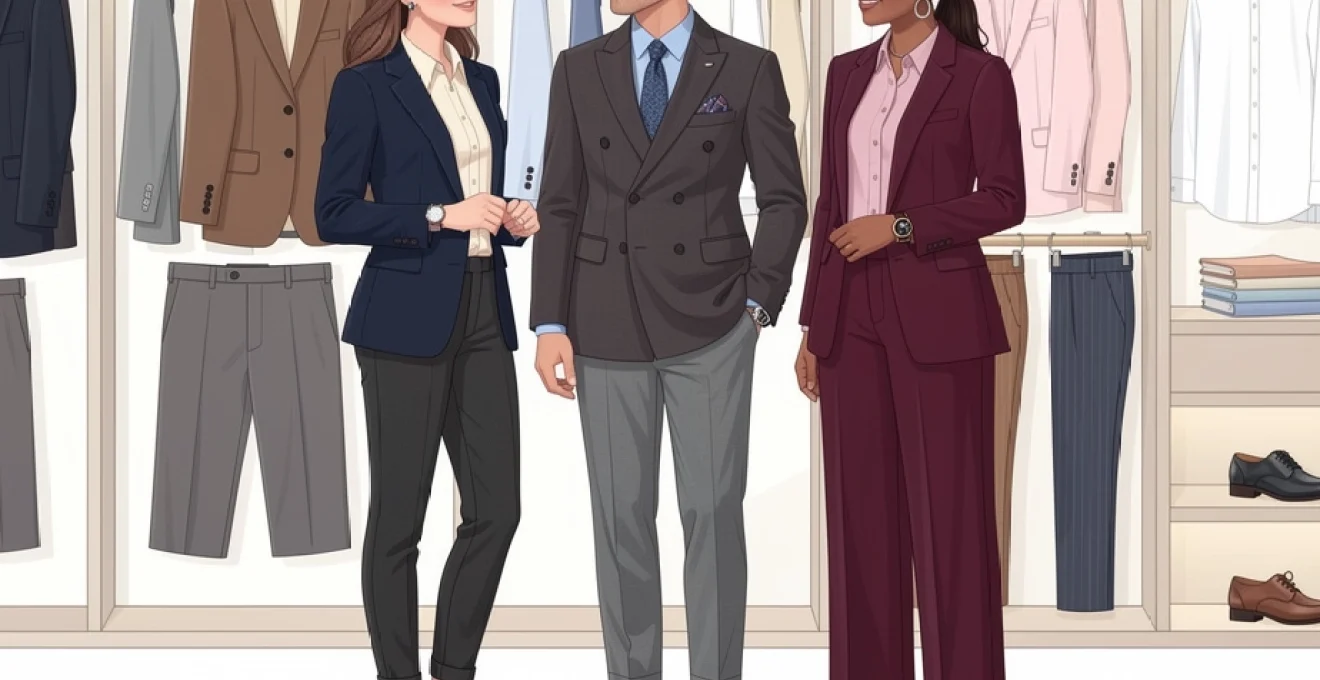
The modern professional wardrobe exists at the intersection of corporate expectations and individual expression. While traditional business attire once demanded conformity to rigid standards, today’s workplace fashion landscape offers unprecedented opportunities to showcase personality whilst maintaining professional credibility. The challenge lies not in choosing between professionalism and personal style, but in masterfully blending both elements to create a distinctive professional identity.
Contemporary office environments increasingly value authenticity alongside competence, making personal style expression not just acceptable but often advantageous for career advancement. Research indicates that professionals who successfully integrate their personality into their work wardrobe report 23% higher confidence levels and 18% improved workplace satisfaction compared to those who adopt purely conventional business attire.
The evolution from strict dress codes to more flexible professional standards reflects broader cultural shifts towards individualisation and authentic self-expression. This transformation has created space for innovative approaches to professional dressing that honour both corporate culture and personal aesthetic preferences.
Professional wardrobe architecture: building your foundation pieces
Creating a professional wardrobe that accommodates personal style begins with understanding the architectural principles of business attire. Like constructing a building, your professional wardrobe requires a solid foundation of versatile, high-quality pieces that can support various style expressions whilst maintaining workplace appropriateness.
The foundation approach prioritises investment in fewer, better pieces rather than accumulating numerous lower-quality items. This strategy proves both financially sustainable and stylistically coherent, as quality pieces tend to fit better, last longer, and provide superior drape and finish that elevates your overall appearance.
Essential blazer silhouettes: Single-Breasted vs Double-Breasted construction
The blazer represents the cornerstone of professional attire, offering immediate sophistication whilst providing substantial flexibility for personal expression. Single-breasted blazers deliver versatility and contemporary appeal, working equally well in formal presentations and casual Friday environments. Their streamlined silhouette accommodates various body types whilst allowing for easy layering over different shirt styles and textures.
Double-breasted blazers command attention through their structured formality and distinctive button arrangement. These pieces make powerful statements in senior-level meetings and client-facing situations, though they require more careful styling to avoid appearing overly formal in relaxed workplace settings. The choice between constructions often depends on your role’s requirements and personal comfort with making bold sartorial statements.
Trouser cut analysis: Straight-Leg, tapered, and Wide-Leg professional fits
Trouser selection significantly influences both comfort and visual impact throughout your workday. Straight-leg cuts provide timeless appeal and universal flattery, working seamlessly across various professional contexts from boardroom presentations to networking events. Their consistent width from hip to hem creates clean lines that complement most body types whilst maintaining appropriateness across conservative and progressive workplace cultures.
Tapered fits offer contemporary styling with practical benefits, providing freedom of movement whilst creating a polished silhouette. The narrowing towards the ankle creates visual length and works particularly well with modern footwear choices. Wide-leg styles are experiencing renewed popularity, offering comfort and distinctive style for those willing to embrace more fashion-forward professional dressing.
Investment shirt fabrics: egyptian cotton, supima, and performance blends
Shirt fabric quality directly impacts both comfort and professional presentation throughout demanding workdays. Egyptian cotton provides exceptional breathability and develops a beautiful patina with proper care, making it ideal for important meetings and extended wear. The long fibres create smooth surfaces that resist wrinkles whilst maintaining structural integrity through multiple cleaning cycles.
Supima cotton offers similar benefits with enhanced durability and colour retention, making it excellent for frequent travellers or those requiring consistent professional appearance. Performance blends incorporating moisture-wicking technology address modern workplace demands whilst maintaining traditional professional aesthetics. These fabrics prove particularly valuable for active professionals or those working in varied climate conditions.
Footwear hierarchy: oxford, derby, and loafer classifications for office environments
Professional footwear establishes the foundation of workplace credibility whilst offering opportunities for subtle personal expression. Oxford shoes represent the pinnacle of formal business footwear, featuring closed lacing systems that create sleek profiles appropriate for the most conservative professional environments. Their clean lines and traditional construction make them essential for client meetings, presentations, and
formal reviews. Derbies sit just beneath Oxfords on the formality spectrum, with open lacing that offers greater comfort for higher insteps and slightly broader feet. They pair well with business casual outfits, making them ideal for days that move between internal meetings and focused desk work.
Loafers introduce an element of ease into professional wardrobes without compromising polish. Sleek penny or tassel loafers in leather or suede can be styled with tailored trousers, chinos, or even refined dark denim in more relaxed offices. By maintaining your footwear in excellent condition through regular cleaning and resoling, you reinforce a message of attention to detail that aligns with strong professional performance.
Colour psychology in corporate dressing: strategic palette selection
Colour selection in professional dressing functions as a non-verbal communication tool, influencing how colleagues and clients perceive your authority, approachability, and creativity. Numerous workplace studies suggest that colour can affect both self-perception and the responses of others, with 62% of professionals reporting they feel more confident when wearing colours they associate with competence. Rather than viewing corporate colours as restrictive, you can approach them as a strategic palette that supports your professional goals.
A thoughtfully curated colour palette also simplifies dressing for work, reducing decision fatigue on busy mornings. When your suits, shirts, and accessories sit within a coordinated spectrum, creating cohesive outfits becomes as straightforward as following a well-designed brand style guide. This architectural approach to colour ensures you appear consistent and intentional, while still leaving space for personal style signatures.
Power colour theory: navy, charcoal, and burgundy impact studies
Power colours – shades empirically linked with authority, trust, and focus – form the backbone of an effective work wardrobe. Navy consistently emerges in research as the most universally flattering and trustworthy business colour, associated with reliability and calm competence. Charcoal grey conveys gravitas and analytical strength, making it an excellent choice for high-stakes presentations, performance reviews, or negotiation scenarios.
Burgundy functions as a sophisticated accent colour, striking a balance between boldness and restraint. While a full burgundy suit may be too assertive for conservative environments, a burgundy tie, knit, or pair of shoes can inject controlled energy into an otherwise neutral outfit. Think of these power colours as your professional “brand colours”: deploy navy for approachability, charcoal for authority, and burgundy when you want to signal decisive, creative leadership without overwhelming the room.
Seasonal colour adaptation: pantone workplace trends and professional applications
Seasonal colour shifts in professional dressing operate much like seasonal marketing campaigns: the core message remains consistent, but the visuals evolve. Each year, Pantone and major trend agencies highlight palettes that gradually influence office wear, from muted earthy tones to optimistic pastels. You do not need to chase every trend; instead, selectively incorporate seasonal shades that complement your existing business wardrobe foundation.
In spring and summer, lighter neutrals – stone, light grey, soft blue – communicate freshness and optimism while keeping you physically cooler. In autumn and winter, deeper tones like forest green, rust, and ink blue provide visual warmth and depth, pairing naturally with heavier fabrics such as flannel and tweed. By framing seasonal colours as subtle accents (for example, in knitwear, ties, or blouses) rather than full head-to-toe looks, you stay relevant without compromising the timelessness of your professional image.
Cultural colour considerations: international business dress codes
As remote work and global teams become standard, understanding cultural colour associations is increasingly important for international business interactions. Colours can carry very different meanings across regions – white may symbolise purity in one culture and mourning in another, while red can communicate luck, power, or even risk depending on context. When preparing for cross-border presentations or travel, researching local norms shows respect and cultural intelligence.
A practical approach is to anchor your outfits in universally accepted neutrals – navy, grey, black, beige – and use accent colours sparingly until you understand the regional business culture. For virtual meetings, even your choice of shirt colour against a webcam background can influence perceptions of professionalism and approachability. When in doubt, ask a local colleague for guidance or observe what senior leaders in that market wear; mirroring their colour choices within your own style parameters helps you integrate smoothly while still feeling like yourself.
Personal style integration techniques within dress code parameters
Once your foundational pieces and colour palette are established, the next step is integrating your personal style into office wear without clashing with the dress code. This balance is similar to customising a standard software platform: the underlying architecture remains consistent, but the user interface reflects your preferences. Thoughtful use of accessories, textures, patterns, and tailoring allows you to refine your professional image so you feel both authentic and appropriately polished.
The aim is not to transform office corridors into runways, but to align how you look with how you work. When your external presentation reflects your personality and strengths, you are more likely to move, speak, and lead with confidence. The following techniques show how to achieve this integration in practical, workplace-friendly ways.
Accessory personalisation: statement watches, cufflinks, and pocket squares
Accessories function as low-risk, high-impact avenues for self-expression in professional environments. A well-chosen watch, for example, signals not only punctuality but also your design sensibility: minimalist dials and leather straps suggest quiet precision, while bolder chronographs communicate energy and dynamism. For those in creative or client-facing roles, a distinctive yet refined timepiece can become a subtle conversation starter.
Cufflinks and pocket squares offer similar opportunities to introduce colour and personality into otherwise classic outfits. Simple metal cufflinks with geometric designs feel modern and professional, while heritage motifs or engraved initials can nod to personal history. Pocket squares, when folded neatly and kept within a cohesive colour story, add visual interest without overpowering your suit. Even in more casual offices, equivalent accessories – such as statement earrings, belts, or scarves – can serve the same role: small details that quietly say, “this is me,” while still reading as business appropriate.
Texture mixing strategies: combining tweed, wool, and contemporary fabrics
Texture is often overlooked in discussions of business casual style, yet it can be one of the most sophisticated tools for personalisation. Combining smooth worsted wool with tactile tweed or brushed cotton creates visual depth that reads as deliberate and elevated. For example, pairing a fine-gauge merino roll-neck with a softly structured tweed blazer transforms a simple silhouette into something rich and memorable, without introducing loud colours or patterns.
Contemporary technical fabrics – such as stretch wool blends, performance cotton, or water-repellent outerwear – allow you to dress smart for work while prioritising comfort and practicality. Think of texture mixing like layering different instruments in a piece of music: each fabric adds its own note, and together they create harmony. To keep the look cohesive, limit yourself to two or three main textures per outfit and repeat at least one element (such as a matte leather belt matching matte leather shoes) to anchor the composition.
Pattern coordination methods: stripes, checks, and subtle print integration
Patterns let you express creativity while still operating within formal dress codes, provided they are coordinated with intention. Classic stripes and checks are easier to integrate than large-scale prints, making them ideal entry points if you are experimenting with patterned work outfits. A striped shirt under a solid blazer, or a windowpane check jacket paired with plain trousers, adds dynamism without threatening professionalism.
When mixing patterns, scale and contrast are your primary tools. A useful guideline is to vary the size of each pattern – combining a fine pinstripe shirt with a larger check blazer, for instance – and to keep your colour palette tight, usually within two or three complementary tones. Subtle prints, such as micro-dots on ties or delicate florals on blouses, can also soften very structured tailoring, allowing your personality to emerge gently rather than dominate. Ask yourself: does this pattern support my message in the meeting I am attending, or distract from it?
Silhouette modification: tailoring adjustments for individual body types
Tailoring is the point at which clothing stops being generic and becomes genuinely yours. Even modest adjustments – shortening sleeves, nipping in a waist, tapering trousers – can transform how you feel in professional outfits. Studies on “enclothed cognition” suggest that when garments fit well and align with our self-image, we perform better in tasks requiring focus and interpersonal interaction, which makes alterations an investment in both style and productivity.
Different body types benefit from different silhouette strategies. Those with broader shoulders may prefer slightly structured jackets with gentle waist suppression, while individuals with narrower frames might opt for soft-shouldered blazers to avoid a boxy effect. Wide-leg trousers can balance proportions for some, whereas tapered cuts might create visual length for others. Working with a skilled tailor allows you to refine ready-to-wear pieces so they express your taste while still reading unequivocally as business attire.
Industry-specific style adaptations and professional codes
“Dressing smart for work” means different things in finance, tech, law, healthcare, and the creative industries. Understanding your sector’s style code is similar to learning its internal jargon: you can technically operate without it, but fluency helps you integrate faster and influence more effectively. Rather than asking, “What is everyone wearing?” ask, “What signals do people at my level and the next level up send with their clothes?”
In conservative fields such as law, banking, and certain corporate roles, suiting remains the default visual language of professionalism, though cuts have softened and colours expanded beyond black. In technology, start-ups, and many media environments, business casual style dominates: chinos, dark denim, knitwear, and unstructured blazers create a polished yet relaxed aesthetic. Client-facing roles in marketing, design, or consultancy often sit somewhere between, requiring you to look credible to traditional clients while still reflecting a creative edge. Adapting your wardrobe to these contexts does not mean abandoning your style; it means translating it into a dialect your industry understands.
Sustainable fashion choices: ethical professional wardrobe development
Building a professional wardrobe today also involves considering its environmental and social impact. The shift away from fast fashion toward mindful consumption aligns neatly with the “fewer, better pieces” philosophy that underpins effective office dressing. High-quality garments made from durable, responsibly sourced fabrics may carry a higher upfront cost, but they often outlast several cheaper alternatives, reducing both long-term expense and waste.
You can approach sustainable workwear development through several practical strategies. First, audit your existing wardrobe to identify gaps rather than shopping reactively; this prevents duplicate purchases and helps you focus on true essentials. Second, prioritise materials with strong longevity profiles – wool, organic cotton, quality leather, and reputable recycled blends – and look for certifications such as GOTS (for organic textiles) or Leather Working Group ratings. Finally, consider pre-owned or vintage tailoring for unique, characterful pieces that can be tailored to fit, combining sustainability with individuality.
Technology integration: smart fabrics and modern professional wear
Advances in textile technology have reshaped what it means to dress smart for work, allowing you to prioritise comfort and performance without sacrificing polish. Smart fabrics now offer features such as four-way stretch, moisture management, odour resistance, and even UV protection, all integrated into garments that appear indistinguishable from classic office wear. For professionals navigating long commutes, variable climates, or hybrid workdays, these innovations function like productivity tools built directly into your wardrobe.
Performance dress shirts that resist wrinkles and regulate temperature, blazers constructed from knit suiting that moves like sportswear, and machine-washable tailored trousers are no longer niche products but mainstream options. Some brands are also experimenting with RFID tags and digital IDs in clothing, enabling easier tracking of care instructions and material origins – a potential bridge between sustainability and convenience. By selectively integrating these modern pieces into your rotation, you create a professional wardrobe that works as hard as you do, supporting both your personal style and your day-to-day performance in the workplace.