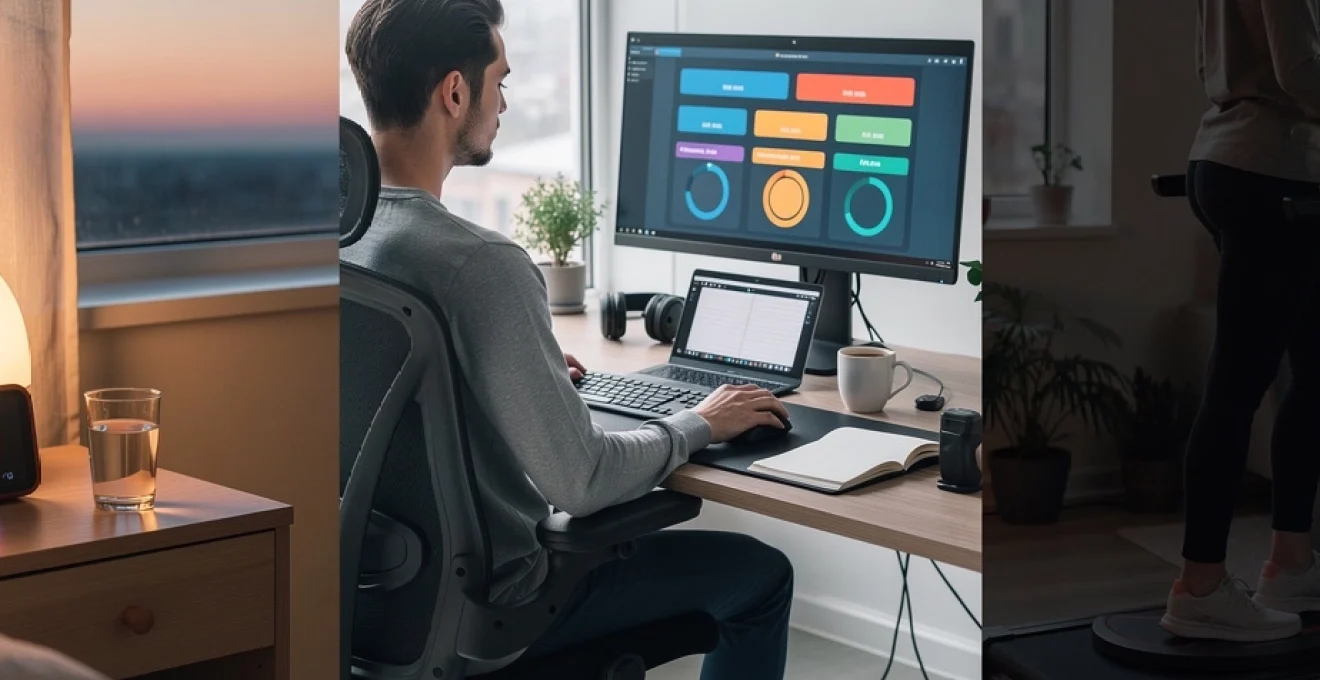
The modern workplace demands unprecedented levels of focus and cognitive performance, yet our natural biological rhythms often conflict with traditional work structures. Research indicates that knowledge workers lose an average of 2.1 hours daily to interruptions and inefficient routines, highlighting the critical importance of establishing scientifically-backed daily practices. When you align your daily routines with your body’s natural systems—circadian rhythms, attention cycles, and neurochemical patterns—productivity increases dramatically while stress levels plummet.
The difference between high performers and average achievers often lies not in talent or hours worked, but in the systematic optimisation of daily routines. These routines serve as the foundation for sustained cognitive performance, enabling you to maintain focus during demanding tasks while preserving energy for creative work. Understanding the science behind productivity routines transforms arbitrary habits into powerful tools for professional excellence.
Circadian rhythm alignment and sleep architecture optimisation
Your circadian rhythm acts as the master conductor of productivity, orchestrating hormonal releases, body temperature fluctuations, and cognitive performance throughout the day. This internal biological clock operates on approximately 24-hour cycles, influencing when you naturally feel alert, creative, or ready for rest. Research from Harvard Medical School demonstrates that individuals who align their work schedules with their circadian preferences experience 15-20% higher productivity rates compared to those working against their natural rhythms.
Sleep architecture—the structured progression through different sleep stages—directly impacts your cognitive resources for the following day. During deep sleep phases, your brain consolidates memories, processes information, and clears metabolic waste through the glymphatic system. When this process is disrupted, you experience reduced attention span, impaired decision-making abilities, and increased susceptibility to stress.
Temperature-based sleep scheduling using core body temperature fluctuations
Your core body temperature follows a predictable pattern throughout the day, dropping 1-2 degrees Celsius approximately two hours before your natural bedtime. This temperature decline triggers the release of melatonin, preparing your body for sleep. By monitoring these fluctuations, you can optimise your sleep schedule for maximum restorative benefit. Consider using a continuous temperature monitoring device or simply noting when you naturally feel cooler in the evening.
Strategic temperature manipulation can enhance this natural process. Lowering your bedroom temperature to 16-19°C creates an environment conducive to deep sleep, while a warm bath 90 minutes before bed initially raises your temperature, causing a more pronounced cooling effect afterward. This temperature drop signals your circadian system to initiate sleep processes more efficiently.
Light exposure timing protocol: blue light management and dawn simulation
Light exposure serves as the primary zeitgeber—environmental cue—for your circadian system. Blue light wavelengths (480-490 nanometres) are particularly effective at suppressing melatonin production, making strategic exposure crucial for maintaining alertness during work hours while avoiding disruption before sleep. Research indicates that exposure to 10,000 lux of bright light within the first hour of waking advances your circadian phase, promoting earlier sleep onset and improved morning alertness.
Dawn simulation devices gradually increase light intensity over 30-60 minutes before your scheduled wake time, mimicking natural sunrise patterns. This gradual illumination helps transition your brain from sleep to wakefulness more naturally than jarring alarm sounds, reducing sleep inertia—the grogginess experienced upon waking. Evening light management is equally important: dimming lights and using blue light filters on devices two hours before bedtime supports natural melatonin production.
Sleep debt calculation and recovery window implementation
Sleep debt accumulates when you consistently obtain less sleep than your individual requirement, typically 7-9 hours for adults. Unlike financial debt, sleep debt cannot be fully “repaid” through weekend sleeping; chronic sleep restriction requires gradual recovery over multiple nights. A practical approach involves calculating your weekly sleep deficit and implementing strategic recovery periods.
Track your sleep duration and quality for two weeks to establish your baseline requirements. If you typically need 8 hours but average 6.5 hours on weeknights, you accumulate a weekly deficit of 7.5 hours. Rather than attempting to recover this debt through extended weekend sleep—which can disrupt your circadian rhythm—gradually extend weeknight sleep by 15-30 minutes until reaching your target duration.</p
Additionally, designate specific “recovery windows” after periods of high demand—such as product launches, audit deadlines, or intensive study weeks. During these windows, protect 8.5–9 hours in bed per night, limit early-morning meetings, and reduce evening screen time. You can also use brief 20-minute afternoon naps (ending before 3 p.m.) to alleviate acute sleepiness without impacting night-time sleep architecture.
Chronotype assessment using munich ChronoType questionnaire (MCTQ)
Not everyone is wired for a 6 a.m. start and a 10 p.m. bedtime. Your chronotype—your individual preference for sleep and wake times—has a strong genetic component and influences when you perform best cognitively. The Munich ChronoType Questionnaire (MCTQ) is one of the most robust tools for assessing chronotype by analysing your actual sleep-wake behaviour on workdays versus free days.
By completing the MCTQ, you can determine your midpoint of sleep on free days, adjusted for sleep debt, which provides a reliable indicator of whether you are an early, intermediate, or late type. This information allows you to schedule demanding tasks during your biological daytime and avoid forcing deep-focus work into your circadian “night.” When possible, negotiate start times, core hours, or remote work blocks that respect your chronotype to sustain daily productivity without chronic fatigue.
If your job offers little flexibility, you can still use chronotype insights to your advantage. Early types should front-load analytical work and decision-making into the first half of the day and reserve afternoons for collaboration or routine tasks. Late types, conversely, benefit from slow, low-stakes mornings—email triage, light admin, or movement—followed by deep work blocks from late morning into early evening when alertness peaks.
Cognitive load management through time-blocking methodologies
Once your sleep and circadian rhythm are aligned, the next lever for staying productive and focused is cognitive load management. Our brains have limited working memory, and constantly juggling tasks, notifications, and priorities rapidly exhausts that bandwidth. Time-blocking provides a structure that reduces decision fatigue by deciding in advance when you will do specific types of work, rather than continuously reacting to incoming demands.
Effective time-blocking routines transform a chaotic calendar into themed blocks: deep work, shallow work, meetings, admin, and recovery. By clustering similar activities and protecting extended periods for focus, you dramatically reduce context switching and attention residue. The result is fewer partially completed tasks and more high-quality output in less total time spent.
Deep work sessions using cal newport’s four-hour focus blocks
Cal Newport’s research on “deep work” suggests that most knowledge workers can achieve between 2–4 hours of truly intense, distraction-free concentration per day. Instead of scattering that focus across dozens of micro-sessions, you can deliberately schedule one or two extended blocks of 60–120 minutes for cognitively demanding tasks: strategy development, coding, writing, design, or complex analysis.
To implement a deep work routine, choose your highest-energy period based on your chronotype and reserve it as a recurring calendar event at least four days per week. During this time, silence notifications, close non-essential tabs, and communicate clear “do not disturb” boundaries to colleagues. Start each block with a single, well-defined objective—such as “draft section two of the report”—rather than a vague intention like “work on report,” so your brain knows exactly what to target.
Over time, you can build up to approximately four total hours of deep work per day, either in a single long block or two shorter sessions. Think of this as your “cognitive prime time,” similar to an athlete’s key training window. Protecting these hours consistently will do more for your long-term productivity than any number of late-night email marathons.
Attention residue mitigation between task transitions
Every time you switch tasks, a portion of your attention stays stuck on the previous activity—a phenomenon known as attention residue. This is why jumping straight from a budget spreadsheet into a strategic planning session feels mentally jarring. To maintain sustained focus throughout your daily routine, you need mini-protocols that help your brain fully disengage before switching contexts.
Build short “closing rituals” at the end of each time block. For example, spend two minutes documenting your current progress, outlining the next steps, and parking any open questions in a dedicated note or project management tool. This simple habit tells your brain that the task is safely stored and reduces the urge to mentally rehearse it while you are supposed to focus on something else.
Between demanding blocks, insert brief transition breaks of 3–5 minutes. Stand up, stretch, gaze at a distant point to relax your visual system, and take 5–10 slow exhalation-focused breaths. These micro-resets act like clearing the “RAM” on your mental computer, so your next task receives fresh cognitive resources instead of leftovers from the last one.
Pomodoro technique variants: flowtime and timeboxing integration
The classic Pomodoro Technique—25 minutes of work followed by a 5-minute break—can be a powerful starting point for managing daily productivity. However, many professionals find that rigid intervals interrupt emerging flow states. This is where modern variants like Flowtime and flexible timeboxing become valuable tools for customising your routine to your natural attention span.
Flowtime reverses the usual pattern: instead of pre-setting a fixed work interval, you start a task and only stop when your concentration naturally wanes. At that point, you log the duration, take a short break, and repeat. Over several days, you will see your typical focus window (for example, 42–55 minutes), which you can then use to design personalised work-break cycles.
Timeboxing combines this insight with calendar-based planning. Rather than creating endless to-do lists, you allocate realistic time boxes in your schedule for each major task, using your Flowtime data to guide block length. For lighter tasks or administrative work, classic Pomodoro intervals may still work well, while deep creative work is reserved for longer, uninterrupted stretches. This blended approach respects both the need for structure and the importance of protecting flow.
Task switching costs analysis and context preservation strategies
Task switching carries hidden costs beyond lost minutes; research from the American Psychological Association suggests that frequent switching can reduce productivity by up to 40%. Each switch requires your brain to reconfigure which rules, information, and goals are relevant—a process that consumes executive function. To stay productive and focused, you want to minimise unnecessary switches and preserve context when they are unavoidable.
Start by conducting a simple task switching audit over two or three days. Note each time you change activities—email to coding, meeting to writing, messaging to analysis—and estimate how long it takes to feel fully engaged again. Many people are surprised to discover dozens of micro-switches triggered by notifications, impromptu chats, or internal urges to “just check” something.
To reduce these costs, batch similar tasks into dedicated blocks: process all email twice a day, group meetings into specific windows, and reserve uninterrupted periods for single high-value tasks. When you must interrupt deep work, leave “breadcrumbs” in the form of a quick summary line at the top of your document or task: what you were doing, what you planned next, and any unresolved uncertainties. This lightweight context preservation strategy dramatically shortens re-entry time when you return.
Neurochemical optimisation via strategic nutrition timing
Your brain accounts for roughly 2% of your body weight yet consumes about 20% of your resting energy. The timing and composition of your meals directly influence key neurochemicals such as dopamine, serotonin, and acetylcholine, which in turn shape motivation, focus, and mood stability throughout the day. By aligning your nutrition routine with your work demands, you can create sustained mental clarity instead of post-meal crashes.
For most people aiming for a productive morning, a balanced, lower-glycaemic breakfast supports stable blood sugar and attention. Combine protein (eggs, Greek yogurt, tofu), healthy fats (nuts, seeds, avocado), and high-fibre carbohydrates (oats, whole grains, berries) to slow digestion and avoid rapid spikes. Large doses of simple sugars early in the day may provide a brief dopamine hit but often lead to mid-morning fatigue and difficulty concentrating.
Caffeine can be a powerful tool when used strategically. Rather than consuming coffee immediately upon waking—when cortisol levels are naturally high—waiting 60–90 minutes can reduce tolerance and extend alertness. Aim to taper caffeine intake after 2 p.m. to protect your sleep architecture, especially deep and REM sleep, which are essential for memory consolidation and emotional regulation.
Midday meals should support afternoon productivity without inducing lethargy. Heavy, high-fat lunches divert blood flow toward digestion and can impair sustained focus. Prioritise moderate portions, adequate hydration, and a 10–15 minute walk afterward to stabilise energy. If you notice consistent afternoon slumps, experiment with slightly higher protein and fibre, while reducing refined carbohydrates, and track how your concentration responds over one to two weeks.
Physical movement protocols for cognitive enhancement
Physical activity is not just about fitness; it is a potent cognitive enhancer. Even brief movement breaks can increase cerebral blood flow, elevate brain-derived neurotrophic factor (BDNF), and improve executive function. In practical terms, this means that well-timed movement can make it easier to learn complex material, solve problems creatively, and maintain focus during intellectually demanding tasks.
One effective daily routine pairs a short, moderate-intensity workout with your first deep work block. A 10–20 minute brisk walk, light jog, or cycling session raises heart rate and primes your nervous system without exhausting you. Think of it as a gentle “on-ramp” for your brain. If you prefer strength training, focus on compound movements—such as squats, rows, and presses—and keep sessions under 45 minutes on heavy workdays to avoid excessive fatigue.
Throughout the workday, micro-movements help counteract the cognitive decline associated with prolonged sitting. Set reminders every 60–90 minutes to stand, roll your shoulders, stretch your hip flexors, or climb a flight of stairs. These brief “movement snacks” are like hitting the reset button on your focus, restoring alertness without the jitteriness that often accompanies extra caffeine. Over time, they also reduce musculoskeletal strain that can quietly drain your attention.
Evening movement should prioritise recovery and parasympathetic activation rather than performance. Gentle yoga, stretching, or a slow walk after dinner supports digestion and signals to your body that the high-intensity portion of the day is over. This shift helps protect your sleep quality so that the next day’s productivity routine starts with a fully recharged nervous system.
Environmental design principles for sustained attention
Your physical and digital environments act as silent partners in your daily productivity. A cluttered, noisy, visually chaotic workspace forces your brain to filter irrelevant stimuli, consuming attentional resources before you even begin your primary tasks. By deliberately designing your environment for focus, you convert willpower challenges into default behaviours.
Think of your workspace as a user interface for your brain: the fewer friction points and random “buttons” to click, the easier it is to enter and maintain a flow state. Small adjustments to ergonomics, sound, temperature, and digital boundaries can collectively produce a substantial increase in sustained attention. The goal is not aesthetic perfection but functional support for the type of work you perform most often.
Workspace ergonomics and visual field optimisation
Ergonomic design reduces physical discomfort that can erode focus over hours of knowledge work. Position your monitor so the top of the screen is at or slightly below eye level, at roughly an arm’s length distance, to minimise neck strain and eye fatigue. Your keyboard and mouse should allow your elbows to rest at a 90-degree angle, with wrists in a neutral position, reducing the micro-tensions that accumulate during long typing sessions.
Equally important is your visual field. A desk cluttered with unrelated documents, devices, and reminders creates constant low-level distraction. Aim to keep only the tools relevant to your current time block within your immediate field of view and move everything else to trays, drawers, or digital systems. This is the cognitive equivalent of closing background apps on your phone—it frees up mental processing power for the task at hand.
Consider using a dedicated “focus zone” in your workspace, even if you work from home. This might be a specific side of your desk or a particular chair where you only perform deep work. Over time, your brain will associate that physical location with focused effort, making it easier to drop into concentration when you sit there, much like stepping onto a running track cues an athlete’s body for performance.
Ambient sound management: brown noise and binaural beats implementation
Sound is one of the most underrated levers for maintaining concentration. Sudden, unpredictable noises—phone rings, hallway conversations, nearby meetings—trigger orienting responses in the brain, pulling attention away from your work. By shaping your sound environment, you can either dampen these distractions or replace them with audio that actually supports focus.
Many people find that constant, low-frequency sounds such as brown noise or gentle fan noise help mask disruptive background activity. Unlike music with lyrics, which competes with verbal processing, neutral soundscapes provide an acoustic “blanket” that reduces the cognitive cost of filtering external noise. You can experiment with brown noise playlists or dedicated apps and track whether your perceived focus and output improve over a week.
Binaural beats—two slightly different frequencies played separately to each ear—are sometimes used to nudge brainwave patterns toward states associated with relaxed focus. While research is still emerging and effects vary by individual, some users report easier entry into deep work when using low-intensity beta or alpha-range binaural tracks. If you choose to experiment, keep the volume low and reserve these tracks for repetitive or creative tasks rather than activities that demand detailed analytical precision.
Temperature and humidity control for peak mental performance
Suboptimal temperature and humidity function like silent productivity drains. Studies suggest that knowledge work performance peaks in environments between roughly 20–23°C, with excessive heat leading to slower reaction times and more errors. If you routinely feel either chilled or overheated at your desk, your brain is expending energy on thermal regulation that could otherwise support complex thinking.
Where possible, adjust your workspace temperature within this optimal band and use clothing layers to fine-tune comfort. Even small changes—a light sweater, a desk fan, or repositioning away from drafts—can have outsized effects on your ability to concentrate for long stretches. Pay attention to patterns: do you always feel drowsy mid-afternoon in a warm office, or find your hands uncomfortably cold during morning calls?
Humidity also plays a role. Air that is too dry can cause eye irritation and throat discomfort, particularly in heated or air-conditioned buildings, which may subtly reduce your willingness to stay at your desk. Aim for a relative humidity of 40–60% using humidifiers, ventilation, or simple measures like indoor plants to stabilise the microclimate. Think of temperature and humidity as part of your “mental hardware” configuration—fine-tune them, and your cognitive software runs more smoothly.
Digital minimalism: notification batching and device placement strategies
Even in a perfectly arranged physical workspace, digital clutter can quickly fracture your attention. Every notification is an invitation to context switch, and as we have seen, those switches carry real costs. Digital minimalism is about designing your tech environment so that your devices serve your priorities, not the other way around.
Start by disabling non-essential notifications on your phone and computer, keeping only those that are genuinely time-sensitive, such as direct messages from key stakeholders or system alerts. Then, schedule specific windows—perhaps late morning and late afternoon—for batch processing of email, chat, and social updates. During deep work blocks, activate “Do Not Disturb” modes and keep communication tools closed entirely.
Physical device placement also matters. Keeping your phone on your desk, within arm’s reach and in your line of sight, increases the likelihood of impulsive checking, even when no alerts sound. Simply moving it to a drawer, bag, or another room during focus periods can dramatically reduce temptation. This is the digital equivalent of removing sugary snacks from your kitchen counter: you are not relying on constant self-control, but on smarter default settings.
Stress response regulation through parasympathetic activation
Even the best-designed daily routine will occasionally collide with unexpected stressors—urgent requests, technical failures, or personal challenges. In these moments, your sympathetic nervous system (the “fight or flight” branch) activates, raising heart rate, sharpening threat detection, and often narrowing your cognitive bandwidth. While this response is useful in short bursts, chronic activation impairs decision-making, creativity, and long-term health.
To sustain productivity under pressure, you need simple, repeatable methods for activating the parasympathetic nervous system—the “rest and digest” counterpart that restores balance. One of the most accessible tools is controlled breathing. Techniques such as the 4–6 breath (inhale for 4 seconds, exhale for 6) or box breathing (4–4–4–4) signal safety to your body, lowering physiological arousal within minutes. Incorporating three to five breathing cycles before important meetings or deep work blocks can prevent stress from hijacking your focus.
Another effective practice is brief body scanning. Take 60–90 seconds to mentally move attention from your forehead to your toes, consciously relaxing any areas of tension, particularly in the jaw, shoulders, and abdomen where we often store stress. This simple somatic check-in helps you shift from reactive to responsive mode, so you can engage with tasks from a place of clarity rather than urgency.
Finally, build micro-recovery rituals into your daily routine, especially after intense cognitive or emotional effort. A short walk outside, a few minutes of mindful journalling, or a deliberate transition activity—closing your laptop, dimming lights, and reflecting on one thing that went well—signals to your nervous system that the high-demand phase is complete. Over days and weeks, these small acts of parasympathetic activation compound into greater resilience, allowing you to stay productive and focused without burning out.