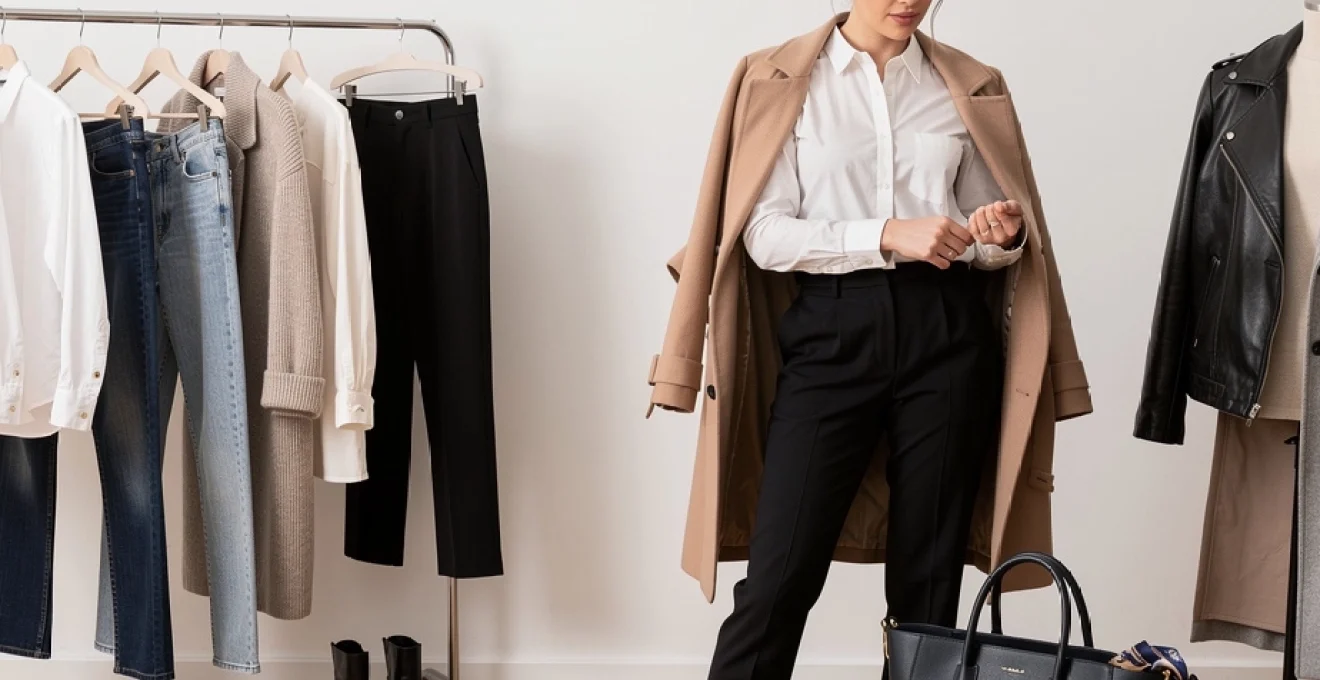
The art of creating exceptional outfits from simple, foundational pieces represents the pinnacle of sophisticated dressing. Rather than relying on statement items or trend-driven purchases, mastering the basics allows for endless versatility whilst maintaining a cohesive personal style. This approach not only proves more economical in the long term but also develops a deeper understanding of what truly works for your body type, lifestyle, and aesthetic preferences.
Contemporary fashion has witnessed a significant shift towards minimalist wardrobes, with industry reports indicating that the average person wears only 20% of their wardrobe 80% of the time. This statistic underscores the importance of investing in quality foundational pieces that can be styled multiple ways rather than accumulating numerous single-purpose garments. The key lies in understanding how basic elements can be transformed through thoughtful styling, layering techniques, and strategic accessorising.
Foundation wardrobe architecture: essential capsule pieces for versatile styling
Building a capsule wardrobe requires careful consideration of each piece’s versatility, quality, and ability to coordinate with other elements. The foundation should consist of neutral-toned, well-fitted items that serve as building blocks for countless outfit combinations. These pieces form the backbone of your styling repertoire, allowing you to create looks suitable for various occasions whilst maintaining consistency in your personal aesthetic.
White Button-Down shirt variations and fabric weight selection
The white button-down shirt stands as perhaps the most versatile piece in any wardrobe, capable of transitioning seamlessly from casual to formal settings. When selecting this foundational garment, fabric weight becomes crucial for both durability and styling flexibility. Heavyweight cotton poplin offers structure and longevity, whilst lighter-weight options provide better draping for layering purposes.
Consider investing in multiple variations to maximise styling potential. A crisp, tailored fit works excellently for professional environments when tucked into trousers, whilst an oversized boyfriend-style shirt provides relaxed sophistication when worn loose over fitted bottoms. The key lies in understanding how different cuts and proportions serve various styling needs throughout your weekly routine.
Classic denim selection: raw, dark wash, and Mid-Tone options
Denim serves as the ultimate democratic fabric, working across age groups, body types, and style preferences. Dark wash jeans offer the greatest versatility, easily transitioning from casual daywear to evening occasions when paired with elevated accessories and footwear. The absence of distressing or fading ensures a more polished appearance that ages gracefully over time.
Raw denim, whilst requiring more initial investment in time and care, develops unique characteristics through wear, creating a personalised garment that improves with age. Mid-tone options provide excellent contrast when styling with darker or lighter pieces, though they typically offer less formal versatility than their darker counterparts.
Neutral knitwear investment pieces: cashmere, merino, and cotton blends
Quality knitwear forms the cornerstone of comfortable yet sophisticated dressing. Cashmere, despite its higher price point, offers unmatched softness, warmth, and longevity when properly maintained. The natural fibres regulate temperature effectively, making cashmere pieces suitable for year-round wear through strategic layering.
Merino wool provides excellent value, offering many of cashmere’s benefits at a more accessible price point. Its natural odour-resistance and moisture-wicking properties make it ideal for active lifestyles. Cotton blends offer breathability and easy care, though they may lack the sophisticated drape of their wool counterparts. Investment in neutral tones such as cream, camel, navy, and charcoal ensures maximum coordination potential.
Black trousers silhouette analysis: Straight-Leg, tailored, and Wide-Leg cuts
Black trousers represent perhaps the hardest-working piece in any capsule wardrobe, serving duty for professional settings, evening events, and elevated casual occasions. Straight-leg cuts offer timeless appeal and universal flattery, working equally well with fitted tops and flowing blouses. The clean lines create a streamlined silhouette that pairs beautifully with both structured blazers and relax
sed knitwear. Tailored cigarette styles introduce a sharper, office-ready finish, especially when cut to skim the ankle and worn with loafers or low pumps. Wide-leg trousers, by contrast, create drama and movement; they work particularly well with fitted knitwear or tucked shirts to maintain balance. When choosing between these silhouettes, consider both your lifestyle and footwear preferences, as hem length and break will determine how polished your outfit appears.
For maximum versatility, many stylists recommend owning at least two black trouser cuts: one streamlined pair for formal and professional environments and one with a more relaxed, fashion-forward shape. Pay close attention to fabric composition; a mid-weight wool blend or high-quality crepe will drape cleanly and resist creasing, helping you move from desk to dinner without looking rumpled. Subtle details such as pressed front creases, discreet pockets, and a refined waistband can quietly elevate even the most basic look.
Footwear foundation trinity: oxford shoes, white trainers, and ankle boots
A strong footwear foundation acts as the anchor of every standout look. Oxford shoes bring a polished, androgynous edge that works brilliantly with tailored trousers, straight-leg denim, and even midi skirts. Opt for smooth or slightly grained leather in black or deep brown for maximum wearability, and ensure the sole is sturdy enough for regular use. This single pair can instantly smarten a white T-shirt and jeans, proving that classics often do the heavy lifting in a capsule wardrobe.
White trainers, meanwhile, deliver practicality and modern ease. A minimalist leather or canvas design with a slim profile will complement both casual and semi-formal combinations, from knit dresses to wide-leg trousers. Finally, ankle boots – whether with a block heel or flat sole – extend the usability of your basics across seasons. Choose a sleek, close-fitting ankle boot that disappears under hemlines rather than competing with them; this will allow you to wear the same pair with jeans, dresses, and tailored pants without visual interruption.
Advanced layering techniques using core wardrobe components
Once your foundational pieces are in place, the next step is learning to layer them in ways that feel intentional rather than improvised. Advanced layering is less about piling on garments and more about controlling volume, proportion, and texture so each element contributes to a cohesive whole. When done well, you can transform a handful of items into dozens of distinctive outfits that respond to both your schedule and the weather. Think of it as architectural design using cotton, wool, and leather instead of bricks and glass.
Proportional balance methods: fitted base with oversized outer layers
One of the most reliable methods for building visually interesting outfits from basics is to start with a fitted base and then add oversized outer layers. A slim ribbed tank or close-fitting T-shirt worn with straight or tapered trousers creates a clean foundation that can support more dramatic silhouettes on top. When you introduce an oversized blazer, trench coat, or boyfriend shirt, the contrast between the fitted underlayer and the relaxed outer piece creates deliberate shape rather than bulk.
This principle mirrors interior design: a streamlined sofa allows for generous throws and cushions without overwhelming the room. In your wardrobe, keep at least one “hero” outer layer – such as an oversized wool coat or boxy denim jacket – dedicated to this function. You can then rotate your fitted underlayers (white shirt, black turtleneck, simple tee) beneath it, achieving different looks while maintaining balanced proportions. If you ever feel “swamped” by an outfit, ask whether adding or emphasising a fitted base layer might restore structure.
Textural contrast strategies: mixing cotton, wool, and leather elements
When you rely on wardrobe basics, texture becomes a powerful styling tool. Combining matte cotton with plush wool and smooth leather adds depth to even the simplest monochrome outfit. For instance, pairing a crisp cotton shirt with soft cashmere knitwear and a structured leather belt creates a layered effect that feels considered, despite each item being relatively understated. This is particularly effective in neutral colour palettes where nuance comes from tactile variation rather than bold prints.
To apply this in practice, think in terms of “texture stacks”. Start with the smoothest fabric – often cotton or silk – closest to your skin, then add increasingly tactile layers such as merino, bouclé, or suede. Introduce leather through footwear, belts, or bags to ground the look. Much like a well-constructed meal balances crunch, creaminess, and acidity, a standout outfit from basics balances smooth, fuzzy, and structured surfaces so the eye has multiple points of interest.
Transitional layering systems for climate adaptability
Climate adaptability is essential if you want to make your capsule wardrobe work hard all year round. Rather than owning separate sets of clothes for each season, you can build a transitional layering system that allows you to adjust insulation levels throughout the day. A typical system begins with a breathable base (cotton tank or merino tee), followed by a mid-layer (lightweight knit or shirt), and finishes with an outer layer (trench, wool coat, or leather jacket). By adding or removing one layer at a time, you maintain comfort without needing an entirely different outfit.
Consider your commute and work environment: do you move between cold outdoor spaces and overheated offices? In such cases, a thin merino jumper under a blazer offers more flexibility than a single thick sweater. According to recent consumer surveys, people now prioritise “thermal versatility” when shopping, favouring pieces that can be worn across multiple seasons. Investing in a few trans-seasonal basics – such as a mid-weight trench or unlined wool coat – can dramatically extend the life of your existing wardrobe.
Monochromatic layering approaches using tonal variations
Monochromatic dressing – wearing different shades of the same colour – is one of the easiest ways to make basics look exceptional. When you layer tonal variations of beige, grey, navy, or black, you create visual interest without the complexity of colour blocking. For example, a charcoal turtleneck, black tailored trousers, and a soft grey coat form a subtle gradient that appears intentional and refined. The result is sleek, cohesive, and surprisingly forgiving when you are dressing in a hurry.
The key lies in varying both shade and texture so each piece remains distinguishable. You might combine off-white denim with a cream knit and an ecru trench, or pair ink-blue jeans with a navy blazer and a slate shirt. This approach is particularly effective if you prefer a minimalist wardrobe but still want standout outfits from your basics. Ask yourself: if you converted this look to black-and-white, would the layers still be visible? If the answer is yes, your tonal contrasts are likely strong enough.
Colour theory application with limited palette basics
Working with a limited palette does not mean your outfits must be monotonous. In fact, colour theory can make a small selection of hues feel almost endlessly versatile. By choosing two to three core neutrals (for example, black, white, and camel) alongside one or two accent colours (such as deep green or burgundy), you create a framework that simplifies every future purchase. Each new basic should harmonise with this palette, ensuring that it can be integrated into multiple outfits with minimal effort.
Two simple strategies are especially useful when building standout looks from basics. The first is the accent pop: keep your outfit mostly neutral and introduce a single, repeated accent like a red lip, burgundy bag, or forest-green knit. The second is the complementary duo, where you pair colours opposite each other on the colour wheel – think navy with rust or soft blue with warm tan – while grounding them with a neutral base. This mirrors the logic of graphic design, where limited but well-chosen colours communicate more effectively than a crowded palette.
If you are unsure which colours to prioritise, start by analysing the pieces you already wear most often. Do you consistently reach for cool tones like grey and blue, or do you prefer warmer shades such as camel and olive? Building your capsule wardrobe around these preferences makes colour combinations feel intuitive instead of forced. Over time, your basics will work together like a well-rehearsed orchestra, with each hue playing its part without overpowering the others.
Strategic accessorising techniques for elevated basic combinations
Accessories function as the “punctuation marks” of your outfits, turning simple sentences into memorable statements. When your wardrobe is built around high-quality basics, strategic accessorising becomes the primary way to signal mood, occasion, and personality. A white shirt and dark denim can appear corporate, creative, or casual depending on the jewellery, bag, shoes, and belts you select. Rather than owning a vast array of accessories, a focused edit of well-chosen pieces will offer far more styling power.
Statement jewellery integration: chunky gold chains and geometric earrings
Statement jewellery is one of the fastest ways to transform a basic outfit without compromising its timeless appeal. Chunky gold chains, whether worn close to the neck or layered at varying lengths, add structure and warmth to simple knitwear or plain T-shirts. Geometric earrings – such as sculptural hoops or angular studs – bring a modern edge that pairs especially well with clean, minimalist silhouettes. The contrast between refined clothing and bold jewellery creates a dynamic tension that feels deliberate rather than over-styled.
To avoid overwhelming your look, treat statement pieces like focal points in a gallery. Choose one hero item – a substantial necklace, a pair of architectural earrings, or a strong cuff – and let the rest of your accessories play a supporting role. This is particularly effective with monochrome outfits, where metal tones add depth and light. You might ask yourself before leaving the house: which element is meant to draw the eye first? Adjust your jewellery accordingly so the answer is always clear.
Handbag selection matrix: structured totes, crossbody bags, and clutch options
Your choice of handbag can dramatically shift the message of an outfit built from basics. A structured tote in leather or high-quality faux leather communicates professionalism and capability, making it ideal for office settings or travel days. Crossbody bags, by contrast, suggest ease and mobility; they keep your hands free and work well with casual uniforms like jeans, trainers, and a trench coat. In the evening, a compact clutch or small shoulder bag instantly elevates the same core pieces for dinners and events.
Think of your handbag collection as a functional matrix rather than a trend-led assortment. Aim to cover three categories – work, off-duty, and occasion – in colours that harmonise with your capsule palette. For instance, a black structured tote, a tan crossbody, and a metallic or jewel-toned clutch can collectively support dozens of outfits. This approach also helps reduce impulse buying, as you will quickly recognise when a bag duplicates an existing function instead of filling a genuine gap.
Scarf styling methods: french knots, neck ties, and hair accessories
Scarves are often underestimated, yet they are among the most versatile tools for refreshing wardrobe basics. A lightweight silk square can be tied in a French knot at the neck to add polish to a white button-down, or styled as a simple neck tie over a plain T-shirt to introduce colour and pattern. Larger wool or cashmere scarves not only provide warmth but can also change the proportions of an outfit when draped asymmetrically over a coat or blazer.
Beyond the neck, scarves can double as hair accessories or even as belt substitutes. Tying a patterned scarf around a ponytail or bun instantly softens a structured outfit, while threading one through belt loops adds interest to otherwise minimal denim. This multifunctionality aligns perfectly with capsule wardrobe principles: a single accessory can be deployed in multiple ways, offering seasonal variety without adding clutter to your closet.
Belt positioning strategies for silhouette manipulation
Belts serve both practical and aesthetic purposes, and their placement can significantly alter your silhouette when you are styling basics. Worn at the natural waist over a blazer, dress, or oversized shirt, a belt creates an hourglass effect and introduces definition to voluminous layers. Positioned lower on the hips with jeans or trousers, it reinforces a relaxed, off-duty mood. Even within a single outfit, shifting the belt position can change the overall impression, making belts one of the most powerful yet subtle tools at your disposal.
For a streamlined accessory collection, prioritise one classic leather belt in black or tan with a simple metal buckle, then consider a second, slightly bolder design for statement looks. Use belts to “edit” proportions: if an untucked shirt feels too long, cinching it at the waist and blousing the fabric over the belt can instantly refine the line. Much like a tailor’s chalk, a belt allows you to redraw the visual outline of your outfit without permanent alterations.
Occasion-specific styling formulas using wardrobe staples
With a well-curated collection of basics, you can rely on repeatable styling formulas rather than starting from scratch each morning. These formulas act like templates: you swap individual items in and out while keeping the overall structure consistent. For a polished workwear look, for instance, pair a white button-down with black tailored trousers, Oxford shoes, and a structured tote; on colder days, simply add a neutral knit and a wool coat. The building blocks remain the same, but small adjustments adapt the outfit to varying temperatures and formality levels.
For smart-casual events, straight-leg dark denim, a fine-gauge knit, and ankle boots form an easy base that can be elevated with a statement necklace or bold earrings. Weekend dressing might revolve around white trainers, mid-tone jeans, and a relaxed shirt layered over a ribbed tank – practical yet cohesive. Evening occasions call for higher contrast: black wide-leg trousers or a dark denim paired with a silky camisole, blazer, and low pumps will read sophisticated without requiring dedicated “event-only” clothes. By rehearsing these formulas, you reduce decision fatigue and ensure that even last-minute outfits feel intentional.
Fabric care and maintenance protocols for longevity maximisation
Maintaining a capsule wardrobe built on high-quality basics requires thoughtful care routines. The goal is to preserve fabric integrity so each piece retains its shape, colour, and texture over time. Simple habits – such as airing garments between wears, using gentle detergents, and avoiding excessive tumble drying – can significantly prolong their lifespan. Industry data suggests that extending the life of a garment by just nine months can reduce its carbon footprint by 20–30%, making proper maintenance both an economic and environmental priority.
Different fabrics demand tailored protocols. Cashmere and merino knitwear benefit from hand washing or delicate machine cycles in cool water, followed by flat drying on a towel to prevent stretching. Raw and dark-wash denim should be washed sparingly, inside out, and ideally air-dried to preserve colour and minimise fading. For cotton shirts and T-shirts, lower-temperature washes and prompt removal from the machine reduce creasing and help maintain brightness. Investing in a good clothes brush, fabric shaver, and quality hangers may seem minor, but these tools help keep your basics looking fresh.
Storage is equally important. Rotate heavy items off thin hangers to prevent shoulder dents, fold knitwear rather than hanging it to avoid distortion, and use breathable garment bags for coats you do not wear daily. Seasonal pieces can be stored clean and fully dried in fabric bags with cedar blocks to deter moths. By integrating these fabric care protocols into your regular routine, you protect the time and money invested in your wardrobe and ensure that your favourite basics remain the foundation of standout looks for years to come.