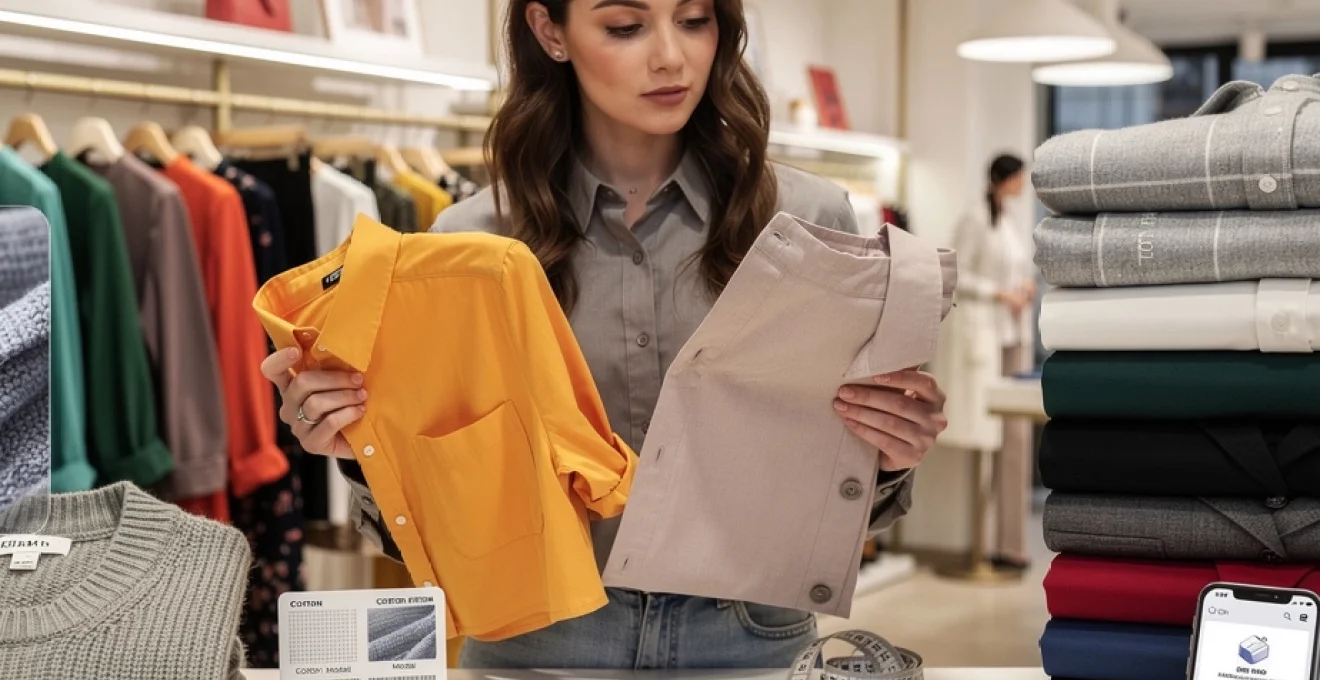
The fashion retail landscape presents countless opportunities for missteps that can leave you with unwearable garments, wasted money, and that familiar pang of buyer’s remorse. Whether you’re browsing high street brands or investing in designer pieces, understanding the technical aspects of garment construction, fabric quality, and proper sizing can transform you from an impulsive shopper into a discerning consumer. The difference between a wardrobe filled with cherished pieces and one cluttered with regrettable purchases often comes down to knowledge—knowing what to look for, what questions to ask, and when to walk away from a seemingly attractive deal.
Understanding fabric composition labels and textile quality indicators
The fabric composition label serves as your first line of defence against poor-quality purchases, yet many shoppers glance past this crucial information. Every garment sold in the UK must display fibre content by weight percentage, providing transparency about what you’re actually buying. A shirt labelled “cotton blend” might contain anywhere from 51% to 99% cotton, with the remainder consisting of polyester, elastane, or other synthetics that dramatically affect how the garment wears, breathes, and ages over time.
When examining these labels, you’ll notice that fibres are listed in descending order by weight. A jumper reading “60% cotton, 40% polyester” will behave quite differently from one marked “60% polyester, 40% cotton,” even though both qualify as blends. The majority fibre typically dominates the garment’s characteristics—its drape, temperature regulation properties, and care requirements. Understanding this hierarchy helps you predict whether a piece will meet your expectations for comfort and performance.
Decoding GSM weight specifications for knitted and woven materials
GSM, or grams per square metre, quantifies fabric density and substantially influences how a garment performs across seasons. T-shirts typically range from 145 GSM for lightweight summer wear to 200+ GSM for substantial, long-lasting pieces. You’ll find that premium t-shirt brands often advertise their GSM specifications precisely because this measurement correlates directly with durability and opacity. A 180 GSM cotton tee offers the sweet spot between breathability and longevity, whilst anything below 150 GSM may appear transparent or develop holes after minimal wear.
For woven fabrics like shirting and trousers, GSM takes on different significance. Oxford cloth shirts typically sit between 200-250 GSM, whilst lightweight summer shirting might measure 100-130 GSM. Winter-weight denim commonly exceeds 400 GSM, providing structure and warmth that lighter alternatives cannot match. When you’re shopping online and GSM specifications aren’t listed, this represents a red flag—quality-focused retailers understand that informed consumers value this data and make it readily available.
Natural fibres versus synthetic blends: mercerised cotton, modal, and tencel properties
Natural fibres have dominated fashion for millennia, but modern textile engineering has introduced semi-synthetic alternatives that sometimes outperform their traditional counterparts. Mercerised cotton undergoes a caustic soda treatment that increases lustre, strength, and dye affinity, creating a fabric with silky hand feel and enhanced durability. You’ll recognise mercerised cotton by its subtle sheen and smoother surface compared to standard cotton—characteristics that justify its premium pricing.
Modal and Tencel, both derived from wood pulp through chemical processing, offer exceptional softness and moisture-wicking properties whilst maintaining environmental credentials superior to conventional cotton cultivation. Modal drapes beautifully and resists shrinkage, making it ideal for jersey tops and undergarments. Tencel (a branded lyocell fibre) regulates temperature remarkably well and possesses natural antibacterial properties, explaining its prevalence in activewear and summer clothing. When you encounter these materials in blends—say, 70% cotton, 30% Modal—you’re looking at an attempt to combine cotton’s familiarity with Modal’s enhanced performance characteristics.
Thread count myths in shirting and how ply construction affects durability
Thread count has become a marketing buzzword that often misleads rather than informs, particularly in shirting and bedding. Manufacturers promote astronomical
figures that sound impressive but tell you very little about how the fabric will behave in real life. In shirting, what matters more than a headline thread count is how those threads are constructed and woven. A 120s two-ply poplin can outlast and outshine a flimsy 200s single-ply fabric because two finer yarns twisted together (two-ply) create a stronger, more stable thread. When brands stack multiple picks as “counts” or use cheap, short-staple cotton to chase high numbers, you often end up with shirts that feel papery, crease easily, and wear out faster. As a rule of thumb, look for long-staple cotton (such as Egyptian or Pima), moderate counts (80s to 140s for everyday shirts), and clear information about whether the yarns are single or double ply.
Durability is closely linked to ply construction because twisting fibres into a multi-ply yarn distributes stress along more filaments. You’ll notice that good-quality business shirts maintain their shape around the collar and cuff for years, whereas bargain options begin to fray after a few washes. If product descriptions mention terms like “two-ply 100s” or “100/2,” you’re looking at a sign of considered construction rather than pure marketing. When that information is missing entirely, treat extravagant thread count claims with healthy scepticism and rely instead on touch, opacity, and how tightly the fabric is woven.
Identifying pre-shrunk treatments and sanforisation processes
Another frequent shopping mistake is assuming that a garment’s tagged size reflects how it will fit after multiple washes. Most natural fibres, particularly cotton and linen, are prone to shrinkage unless they have undergone stabilising treatments. Sanforisation is a mechanical process that compresses and pre-shrinks fabric before cutting, reducing post-purchase shrinkage to typically less than 1%. Denim, chinos, and many casual shirts benefit from sanforised cloth, which helps them maintain predictable dimensions over time.
How can you tell whether a piece has been pre-shrunk? Sometimes brands will state “pre-shrunk,” “sanforised,” or “minimal shrinkage” on the care label or product page, but not always. In the absence of clear wording, assume raw denim, heritage workwear, and some unwashed cotton tees will shrink by 3–10% in length and width. This means you may need to size up, especially in garments where leg length, sleeve length, and rise are critical to comfort. When in doubt, factor potential shrinkage into your decision instead of discovering too late that your once-perfect trousers now sit awkwardly above the ankle.
Sizing systems across international markets: UK, EU, and US conversion pitfalls
Navigating fashion sizing across different markets is one of the quickest ways to end up with items that never leave the wardrobe. UK, EU, and US sizes follow different numbering logics and, to complicate matters further, brands often introduce their own proprietary scales. A UK women’s size 10, for instance, typically corresponds to a US size 6 and an EU size 38, but this can vary by brand and garment type. Men’s footwear and tailoring have their own conversion quirks, with US shoes usually one size larger than their UK counterparts, and EU sizes following a separate metric-based system. When shopping online from international retailers, blindly trusting automatic conversion charts is a common mistake that leads to costly returns.
Instead of relying solely on label numbers, pay attention to the exact garment measurements provided in size guides. Chest width, shoulder span, waist circumference, and leg length in centimetres or inches are far more reliable than “Medium” or “Size 12.” Because there is no global legal standard enforcing sizing consistency, you should treat every new brand like unfamiliar territory until you’ve tested its fit. Keep a note on your phone with your best-fitting size in each frequently used brand to avoid repeating trial-and-error purchases.
Vanity sizing inflation in high street brands versus designer labels
Vanity sizing is the practice of labelling garments with smaller size numbers than their true measurements to flatter customers. High street brands targeting mass-market shoppers tend to inflate sizing more aggressively, meaning that a UK 10 today might measure closer to a historical UK 12. Designer labels, on the other hand, often adhere to more traditional, slimmer blocks, so you may find yourself needing one or even two sizes up compared with your usual fast-fashion purchases. This discrepancy can be frustrating when you’re trying to build a coherent wardrobe across different price brackets.
Why does this matter when you’re trying to avoid common shopping mistakes? Because vanity sizing can trick you into focusing on the number on the tag rather than the actual fit on your body. You might buy a dress just because it’s a smaller size than you usually wear, even though the cut pulls at the hips or gapes at the bust. To sidestep this psychological trap, ignore any emotional attachment to the size label and evaluate the garment purely on comfort, mobility, and silhouette. Remember: no one else can see the number inside your clothes, but they can see when an outfit doesn’t fit properly.
Body measurement techniques: chest drop, rise length, and inseam calculations
Accurate self-measurement is one of the most powerful tools you have as a fashion shopper, especially when buying online. For jackets and tailoring, understanding chest drop—the difference between your chest and waist measurement—is essential. A typical “drop 6” suit is cut with a six-inch difference between chest and waist (for example, a 40-inch chest paired with a 34-inch waist), which suits average proportions. If your drop is larger or smaller, you may need separates or made-to-measure options to avoid excessive alterations that ruin the original lines of the garment.
For trousers and jeans, rise length and inseam are non-negotiable if you want pieces that feel comfortable when you sit, stand, and move. Rise is measured from the crotch seam up to the top of the waistband and dictates where the trousers sit on your torso—high, mid, or low. Inseam runs from the crotch down to the hem, determining leg length and how the fabric breaks over your shoes. A common mistake is to buy based only on waist size, assuming that rise and inseam will magically align; instead, take a pair of well-fitting trousers, measure their rise and inseam, and use those figures as your benchmark when evaluating product descriptions.
Fit terminology: slim, regular, relaxed, and oversized cut specifications
Fit terminology can be surprisingly inconsistent across brands, yet it has a profound impact on how a garment sits on your frame. A slim fit shirt is usually tapered through the waist and narrower at the sleeves, designed to follow the contours of the body without excess fabric. In contrast, a regular fit offers a straighter cut with more room in the torso and upper arms, suitable for everyday wear and layering. Relaxed or loose fits add even more ease, often with dropped shoulders or wider legs, prioritising comfort and ease of movement over a sharply defined silhouette. Oversized garments are intentionally cut much larger than your measured size, creating a dramatic, fashion-forward look that can overwhelm if not balanced correctly with the rest of your outfit.
To avoid misjudging these categories, check measurement charts whenever possible instead of relying only on descriptive terms. Ask yourself how you intend to use the piece: are you layering a jumper over shirts, or wearing it alone next to the skin? Do you prefer your jeans to skim the leg or pool slightly at the ankle? Visualising how a particular fit term translates into real-world volume on your body can prevent you from buying items that technically “fit” but don’t align with your personal style. Think of fit labels as starting points rather than guarantees, and be prepared to adjust your chosen size when a brand’s definition of “slim” or “relaxed” diverges from your expectations.
Construction quality assessment through seam types and stitching density
Once you’ve navigated composition labels and sizing, construction quality is the next frontier in smart fashion shopping. The way a garment is assembled—its seam types, stitching density, and reinforcements—directly influences how long it will last and how well it will retain its shape. Cheaper pieces often hide corner-cutting behind trendy designs, but a quick inspection of seams can reveal whether a garment is built for a single season or many years. Think of it like inspecting the foundations of a house: attractive paintwork is meaningless if the structure underneath is weak.
You don’t need specialist training to assess these details in-store or upon delivery. By learning to identify a few key seam constructions and understanding what constitutes acceptable stitches per inch, you can quickly separate genuinely well-made garments from those that merely look good on the hanger. This attention to construction quality is particularly crucial for high-stress items such as jeans, tailored jackets, and everyday shirts that you expect to wear on heavy rotation.
French seams, flat-felled seams, and overlock finishing standards
Different seam types serve different purposes, and recognising them helps you gauge where a brand has invested effort. French seams, commonly found in higher-end blouses and delicate fabrics, enclose raw edges within a double-stitched channel, creating a clean, refined interior with no fraying threads. They are more time-consuming to execute, signalling a higher standard of workmanship. Flat-felled seams, often used in jeans and Oxford shirts, involve folding and stitching fabric layers so that raw edges are completely trapped, resulting in a very strong, durable seam that lies flat against the body.
By contrast, overlock (or serged) seams use looping threads to encase raw edges quickly, which is standard for many knits and casual garments. Overlocking is not inherently a sign of poor quality—when tension is balanced and stitches are even, it provides flexible strength suitable for stretch fabrics. The issue arises when overlock is used everywhere instead of more robust constructions in high-stress areas, or when threads are loose, uneven, or already shedding. When you turn a garment inside out, you should see tidy, consistent stitching, not hanging threads, skipped stitches, or fabric that puckers along the seam line.
Stitches per inch (SPI) benchmarks for longevity in tailored garments
Stitches per inch (SPI) is a useful indicator of how carefully a garment has been sewn. Higher SPI means more stitches packed into each inch of seam, which generally improves strength and creates smoother curves, particularly around armholes and collars. For tailored garments like jackets and dress shirts, an SPI of around 12–18 is typical for quality construction, whereas very low counts can signal rushed manufacturing. However, there is a balance to maintain: extremely high SPI on heavy fabrics can actually weaken the material by perforating it excessively, much like tearing along a perforated line.
When you examine a piece in person, run your eye (or finger) along a seam and count how many stitches fall within a 2.5 cm (one inch) section. Are they evenly spaced, with no visible gaps or loose loops? Inconsistent stitching tension, wavering seam lines, and skipped stitches are all warning signs that the garment may fail at stress points long before its time. Investing a few seconds in this simple inspection can save you from adding fragile pieces to your wardrobe that won’t withstand regular wear and laundering.
Interlining and interfacing: fused versus floating canvas in jackets
In jackets, blazers, and coats, the unseen internal structure—interlining and interfacing—plays a huge role in shaping and longevity. Most off-the-rack tailoring today uses fused interfacings: a layer of adhesive-backed material pressed onto the outer fabric to create structure in areas like the front panels, lapels, and collars. Fusing allows for faster, cheaper production but can lead to problems if low-quality adhesives are used, including bubbling or delamination after repeated dry-cleaning. You may have seen older jackets with a rippled chest area; that’s often failed fusing.
Higher-end tailoring may feature a floating canvas, a layer of horsehair or other canvas material that is stitched—not glued—between the lining and outer fabric. Full-canvas or half-canvas constructions allow the jacket to mould to your body over time, improving drape and comfort much like a good pair of leather shoes conforms to your foot. While canvassed jackets are more expensive, they typically outlast fused equivalents and age more gracefully. If a product description mentions “half-canvas construction” or “floating canvas chest piece,” you’re looking at an investment piece likely to deliver a better price-per-wear over the long term.
Bartack reinforcement points and stress area fortification
Small reinforcement details often distinguish robust garments from flimsy ones. Bartacks—dense clusters of zigzag or straight stitches—are used to strengthen high-stress points such as pocket openings, belt loops, and the base of fly zips. On jeans, for instance, you’ll frequently see bartacks securing the edges of back pockets or the top of coin pockets. These reinforcements help prevent the fabric from tearing away under strain, especially if you habitually stuff your pockets with keys, phones, or wallets.
When evaluating construction quality, check whether critical stress areas are reinforced or simply left to the mercy of a single line of stitching. Are belt loops anchored with bartacks at both top and bottom? Do pockets feel securely attached, or can you already see light between the stitching and the body of the garment when you tug gently? Even on lighter garments such as shirts and dresses, reinforcement at points like side-seam pockets and button plackets can dramatically extend lifespan. Overlooking these micro-details is a common shopping mistake that leads to premature failures despite otherwise decent fabric and fit.
Colour fastness testing and dye stability across wash cycles
Colour is often what draws you to a garment in the first place, but poor dye stability can quickly turn a rich shade into a faded disappointment. Colour fastness describes how resistant a fabric is to fading or bleeding during washing, exposure to light, and contact with sweat or friction. Lower-quality dyes and inadequate fixing processes can result in garments that transfer colour onto skin, furniture, or other clothes—particularly problematic with dark denim, vivid reds, and saturated blacks. While lab tests exist to measure colour fastness objectively, you can perform quick, practical checks as a shopper to avoid the worst offenders.
One simple test involves rubbing a discreet area of the garment with a slightly damp white cloth; if significant colour transfers onto the cloth, expect bleeding in the wash. You can also gently stretch a section of fabric: if the colour appears markedly paler along the stretch, the dye may not be deeply penetrated. Always read care labels for instructions such as “wash separately” or “colour may transfer,” which signal a higher risk of dye migration. To preserve colour stability across wash cycles, turn garments inside out, use cooler temperatures, and avoid harsh detergents or overloading the machine. Prioritising pieces from brands that openly discuss their dyeing standards and testing is a wise strategy when building a long-lasting, colour-consistent wardrobe.
Price-per-wear economics and cost-per-quality analysis models
One of the biggest traps in fashion shopping is focusing solely on ticket price instead of value over time. A £30 shirt that falls apart or loses shape after five wears effectively costs you £6 per wear, while a £120 shirt that remains sharp and comfortable for 60 wears costs only £2 per wear. This price-per-wear or cost-per-wear calculation is a simple but powerful way to make more rational decisions, especially when you’re torn between a fast-fashion bargain and a higher-quality alternative. By looking beyond the initial outlay, you can start to see quality garments as long-term investments rather than indulgences.
To apply this model, estimate realistically how often you’ll wear the item in the next one to three years based on your lifestyle, climate, and existing wardrobe. Are you buying another party dress you’ll wear once, or a pair of black trousers that could be part of your weekly uniform? Combine this forecast with an honest assessment of quality indicators—fabric, construction, brand reputation, and care requirements—to arrive at a rough cost-per-quality estimate. Behaving like this turns you from a reactive buyer into a strategic wardrobe planner, reducing clutter and ensuring that most pieces you own earn their keep.
Return policy clauses and garment care label compliance requirements
Even with careful research, not every purchase will be a success, which makes understanding return policies a vital part of smart shopping. Many retailers differentiate between in-store and online returns, impose strict timeframes, or exclude sale and outlet items from full refunds. Before you commit, scan the retailer’s return conditions for key details: are shipping costs refundable, who pays for return postage, and are there restocking fees? Overlooking these clauses can turn a disappointing garment into sunk cost because returning it is too expensive or impossible.
Equally important is your willingness to comply with garment care label instructions, which are more than just suggestions. If a piece is labelled “dry clean only” or “hand wash cold,” ignoring these guidelines can void your consumer rights if the garment is damaged, as retailers may argue misuse. Are you realistically going to hand wash that delicate silk blouse every time, or take that tailored coat to a professional cleaner a few times a season? Aligning care requirements with your actual habits prevents shrinkage, colour loss, and fabric distortion that shorten a garment’s lifespan. In practice, choosing machine-washable, low-maintenance fabrics for everyday wear is often the most cost-effective and sustainable decision.