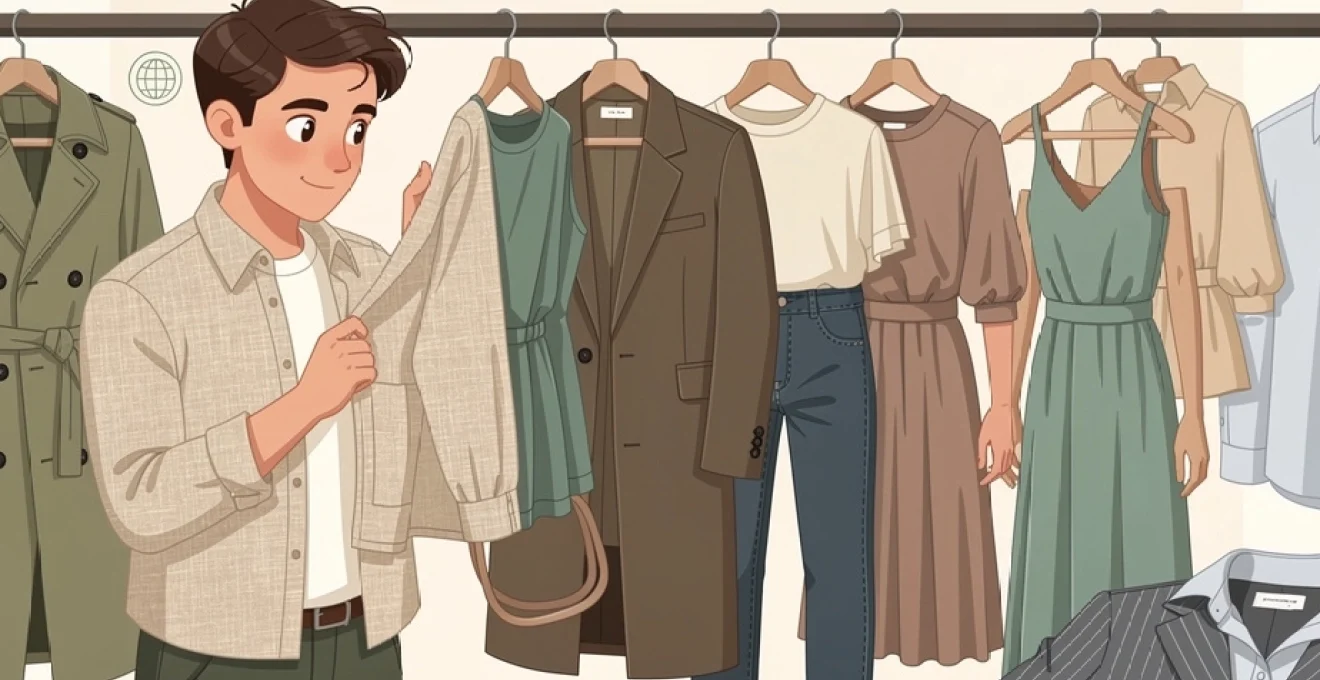
Making intelligent fashion choices requires more than simply falling in love with a garment’s aesthetic appeal. Today’s discerning consumers understand that true value lies in the intersection of quality craftsmanship, sustainable production practices, and long-term wearability. The modern approach to building a wardrobe demands a systematic evaluation process that considers everything from fibre composition to manufacturing ethics.
The fashion industry has witnessed significant shifts in recent years, with consumers increasingly prioritising durability and sustainability over fast fashion trends. Industry reports indicate that 73% of global consumers are willing to pay more for sustainable products, while the average garment is worn only seven times before disposal. These statistics highlight the critical importance of making informed purchasing decisions that extend beyond immediate gratification.
This comprehensive evaluation framework transforms the shopping experience from an emotional impulse into a strategic investment. By understanding the technical aspects of garment construction, sustainable certification systems, and cost-per-wear calculations, you can build a wardrobe that serves both your personal style and environmental consciousness. The following checklist provides the tools necessary to navigate the complex landscape of contemporary fashion retail with confidence and expertise.
Pre-purchase fabric analysis and material quality assessment
Understanding fabric composition forms the foundation of any intelligent fashion purchase. The material choices manufacturers make directly impact a garment’s durability, comfort, and environmental footprint. Modern textile technology offers an unprecedented range of options, from traditional natural fibres to innovative synthetic blends engineered for specific performance characteristics.
Natural fibre durability testing: cotton, wool, and linen longevity indicators
Natural fibres represent the gold standard for longevity when properly sourced and processed. Cotton quality varies dramatically based on staple length, with Egyptian and Pima cotton offering superior durability due to their longer fibres. When examining cotton garments, look for a smooth, even texture without visible loose threads or pilling. High-quality cotton should feel substantial in weight while maintaining flexibility.
Wool assessment requires attention to both fibre origin and processing methods. Merino wool, sourced from specific sheep breeds, offers exceptional durability and natural odour resistance. The micron count indicates fibre fineness, with 18-21 microns providing optimal comfort without sacrificing strength. Premium wool garments should demonstrate consistent yarn thickness and minimal shedding when gently rubbed between fingers.
Linen evaluation focuses on fibre length and weave density. Belgian and Irish linens typically offer superior quality due to ideal growing conditions and traditional processing methods. Quality linen should feel crisp initially but soften with wear while maintaining structural integrity. Avoid garments with excessive slubbing or uneven yarn thickness, which indicate lower-grade processing.
Synthetic blend performance metrics: polyester, elastane, and modal composition analysis
Modern synthetic fibres, when properly engineered, can enhance natural fibre performance while reducing maintenance requirements. Polyester blends offer wrinkle resistance and colour retention, but the percentage matters significantly. Blends containing 5-15% polyester provide benefits without compromising breathability, while higher percentages may reduce comfort.
Elastane content determines stretch and recovery properties. Professional-grade garments typically contain 1-3% elastane for subtle shape retention, while activewear may incorporate 15-20% for enhanced mobility. Excessive elastane content often leads to premature deterioration and loss of shape, particularly in warmer climates.
Modal, derived from beech trees, offers silk-like properties with enhanced durability. Quality modal blends should feel smooth and lustrous while maintaining colour vibrancy after multiple washes. The manufacturing process significantly impacts modal quality, with closed-loop production methods producing superior environmental and performance outcomes.
Thread count evaluation and weave density impact on garment lifespan
Thread count alone doesn’t determine fabric quality, but it provides valuable insights when combined with other factors. Optimal thread counts vary by fabric type: cotton shirts perform best between 200-400 thread count, while linen benefits from lower counts around 100-150 to maintain characteristic texture and breathability.
Weave density affects both durability and drape characteristics. Percale weaves offer crisp, breathable properties ideal for shirts
with a matte surface, while sateen weaves deliver a smoother, more fluid drape suited to dresses, skirts, and blouses. When you handle a garment in-store, gently hold it up to the light: if you can easily see through multiple layers, the weave is likely too loose to withstand frequent wear. Dense but flexible fabrics generally indicate longer garment lifespan, better abrasion resistance, and reduced risk of seam slippage.
Beyond visual inspection, basic touch tests help you assess weave quality before purchase. Lightly scratch the surface with your nail; if fibres raise or fuzz immediately, the yarns may be loosely spun and prone to pilling. Rub two sections of the fabric together and listen: a crisp, slightly “rustling” sound in cotton and linen often signals tight weaving, whereas a limp, noisy fabric can indicate cheaper yarns or excessive synthetic content. Over time, these small clues translate directly into how your wardrobe performs after dozens of wears and washes.
Care label decoding: understanding GINETEX symbols and maintenance requirements
The care label is effectively the operating manual for your clothing, yet it is one of the most overlooked tools for smarter fashion purchases. Most global brands follow the GINETEX system, an international standard for textile care symbols that indicates how to wash, dry, iron, and professionally clean a garment. Before you commit to buying anything, ask yourself whether the recommended care realistically fits your lifestyle and budget.
Start by identifying the main symbols: a washtub indicates washing instructions, a triangle covers bleaching, a square represents drying, an iron indicates heat tolerance, and a circle refers to professional cleaning. A washtub with a hand means handwash only, while a crossed-out tub signals “do not wash” and likely requires dry cleaning. Multiple bars under the tub symbol indicate a gentle or very delicate cycle, which can add maintenance time and cost over the garment’s life.
Pay special attention to combinations of symbols, as they reveal the true maintenance level of a piece. A dress labelled “handwash, dry flat, cool iron, do not tumble dry” might be manageable for an occasional evening piece, but will quickly become frustrating for everyday wear. Conversely, a blazer marked “machine wash cold, low spin, line dry” offers the structure of tailoring without the recurring expense of dry cleaning. By decoding these GINETEX symbols before you reach the till, you protect yourself from buying beautiful but impractical garments that will simply sit in your wardrobe.
Garment construction standards and manufacturing quality markers
Once fabric quality passes your initial checks, the next step in your fashion purchase checklist is construction. Even the finest wool or cotton can underperform if it is cut and sewn poorly. Construction quality determines how a garment hangs on the body, how it withstands movement, and whether it keeps its shape over time. With a few quick visual and tactile tests, you can distinguish between pieces designed to last and those likely to twist, fray, or lose structure after a single season.
High-quality construction is not limited to luxury labels; many mid-price and independent brands invest heavily in better stitching and finishing. As you shop, think of yourself as a quiet quality inspector. You are looking for signs of care: neat seams, secure hardware, smooth linings, and patterns that align. These clues collectively tell you whether a garment has been treated as a long-term wardrobe investment or a short-term trend piece.
Seam construction techniques: french seams vs overlock finishing methods
Seams are the skeleton of a garment. They hold panels together, distribute tension, and determine how well a piece copes with daily movement. Two of the most common finishing methods you will encounter are French seams and overlock (serged) seams, each with its own benefits and typical use cases. Understanding these will help you judge whether the finishing matches the garment’s price point and intended lifespan.
French seams, often found in higher-end blouses, dresses, and delicate fabrics, encase the raw fabric edges within two lines of stitching. This creates a clean interior finish with no visible raw edges, reducing fraying and increasing durability. If you turn a silk or lightweight cotton shirt inside out and see neat, double-stitched seams with no exposed threads, that is a strong indicator of meticulous construction. French seams are more time-consuming to sew, which is why their presence often correlates with higher garment quality.
Overlock seams, by contrast, are produced by serger machines that trim and wrap the raw edge in thread in one continuous motion. This method is efficient and perfectly acceptable for everyday garments, denim, and knitwear. However, quality varies dramatically. On well-made pieces, overlock stitches will be even, tightly spaced, and consistent along the entire seam. Loose, uneven, or excessively stretchy overlocking suggests cost-cutting and may lead to splitting or fraying over time. As a shopper, you do not need to reject overlock seams outright, but you should ensure they are executed cleanly and appropriate to the garment’s price and category.
Button and hardware quality assessment: corozo, mother-of-pearl, and metal fastening durability
Buttons, zips, and other hardware may seem like small details, but they are often the first components to fail on a garment. High-quality fastenings indicate that a brand expects its pieces to be worn frequently and repaired rather than discarded. When assessing smarter fashion purchases, take a moment to examine these details closely; you are evaluating both material choice and attachment method.
Corozo buttons, made from the nut of the tagua palm, offer a dense, slightly textured feel and are less prone to cracking than cheap plastic. Mother-of-pearl buttons, common on premium shirts, have a subtle iridescence and cool touch that plastic imitations cannot replicate. If you gently tap them against your teeth, real shell will feel harder and sound crisper than plastic. On outerwear and tailored garments, quality metal hardware should feel weighty rather than hollow, with smooth zips that glide easily without catching or separating under gentle tension.
Equally important is how hardware is attached. Look for buttons sewn on with a secure cross or shank stitch, ideally with a reinforcing button on the inside for coats and blazers. Loose threads, mismatched buttons, or zippers with visible gaps at the base are red flags. Ask yourself: if this fastening fails after a month, will I repair it or abandon the piece? Robust, replaceable hardware extends the practical life of your wardrobe and reduces the likelihood of early disposal due to minor, preventable faults.
Lining integration and interfacing quality in structured garments
In structured garments such as blazers, coats, and formal dresses, what you cannot see is often just as important as what you can. Linings and interfacings provide shape, comfort, and longevity, yet their quality can vary widely. A well-integrated lining should move with your body, protect the outer fabric from friction, and allow for easy on-and-off without clinging or twisting. Poorly executed linings, on the other hand, can cause bunching, restrict movement, and shorten a garment’s lifespan.
When trying on a lined piece, slip it on and rotate your arms: the lining should not pull tight across your back or shoulders. Check for pleats or vents in the lining at the centre back and at the hem of skirts or coats; these allow for movement and prevent tearing at stress points. The lining fabric itself should feel smooth and substantial, not thin and plasticky. High-quality garments often use viscose, cupro, or Bemberg linings, which are breathable and comfortable against the skin, unlike cheaper polyester that can trap heat and moisture.
Interfacing—the hidden layer that gives collars, lapels, and waistbands their structure—is harder to see but easy to test. Gently pinch the lapel or waistband between your fingers and feel for a smooth, integrated layer rather than a stiff, bubbling surface. If you notice rippling or “bubbles” on the outside, especially after pressing, this may indicate fused interfacing of poor quality that has separated from the outer fabric. Over time, this separation makes garments look prematurely worn. In contrast, traditionally tailored pieces with sewn-in canvases may cost more upfront but maintain their shape gracefully for years.
Pattern matching and grainline alignment in professional tailoring
Pattern matching and grainline alignment are subtle but powerful indicators of professional tailoring. On garments with stripes, checks, or bold prints, high-quality construction ensures that patterns align at side seams, centre fronts, and pockets. Misaligned patterns create visual noise and can signal rushed production. While perfect matching may not be realistic at every price point, especially on very complex prints, a consistent attempt to align patterns at major seams shows respect for both the fabric and the wearer.
To check grainline alignment, hang or hold the garment by its shoulders and observe whether the side seams run straight from underarm to hem. Twisting seams or hemlines that dip unevenly often indicate that the fabric was cut off-grain, which can cause twisting after washing. Try the garment on and walk a few steps: if the skirt or trouser leg rotates around your body or the side seams visibly creep forward, this is a sign of poor cutting rather than a simple fit issue.
These details may sound forensic, but with practice they become quick visual checks you perform almost automatically. Ask yourself: would a skilled tailor be proud of this piece? When you train your eye to look for grainline integrity and pattern care, you naturally gravitate towards garments that will sit better on the body, wash more predictably, and retain their shape across many seasons.
Sustainable fashion certification systems and ethical manufacturing verification
Quality and sustainability are increasingly intertwined in modern fashion. A garment that falls apart quickly, sheds large amounts of microplastics, or is produced under exploitative conditions cannot be considered high quality in any meaningful sense. However, navigating sustainability claims can be confusing, especially as greenwashing becomes more sophisticated. Certification systems provide a useful shorthand, but they are not all equal. Understanding what key labels and standards actually cover will help you prioritise truly responsible fashion purchases.
Instead of taking brand marketing at face value, use certifications and published policies as a starting point for deeper evaluation. Look for independent, third-party standards rather than vague phrases like “eco-friendly” or “conscious.” Ask: which part of the supply chain is being certified—the fibre, the dyeing process, the final factory, or the overall brand operations? The more precise your questions, the better equipped you are to differentiate between superficial badges and meaningful commitments.
GOTS and OEKO-TEX standard 100 certification requirements
The Global Organic Textile Standard (GOTS) is one of the most rigorous certifications for organic fibres. For a garment to carry the GOTS label, at least 70% of its fibres must be certified organic, and the entire supply chain—from spinning and dyeing to manufacturing and labelling—must meet strict environmental and social criteria. This includes limits on toxic chemicals, wastewater treatment requirements, and basic worker protections. If you are prioritising organic cotton or wool in your wardrobe, GOTS is a strong indicator that your purchase supports lower-impact agriculture and cleaner textile processing.
OEKO-TEX Standard 100, by contrast, focuses on product safety rather than fibre origin. A garment bearing this label has been tested for harmful substances and found to be below established limit values. This can be particularly relevant for items worn close to the skin, such as underwear, loungewear, and children’s clothing. While OEKO-TEX does not guarantee organic or fair-trade fibre sourcing, it does signal that the finished textile is less likely to contain residues of heavy metals, formaldehyde, or certain allergenic dyes.
When you see these labels, consider how they align with your personal priorities. GOTS helps you support more sustainable farming and processing for natural fibres, while OEKO-TEX supports your desire to avoid harmful substances in daily wear. Some garments may carry both, offering a higher level of assurance. If a brand references these standards in marketing but does not display official logos or certificate numbers, you can always contact customer service for clarification—transparent companies will be willing and able to provide proof.
Fair trade fashion accreditation and worker rights compliance
Sustainability is not just about materials; it is also about the people who grow, weave, dye, and sew your clothes. Fair trade accreditations help you identify fashion purchases that contribute to safer working conditions and more equitable pay structures. Organisations such as Fairtrade International, Fair Trade Certified, and the World Fair Trade Organization (WFTO) set social and economic standards for producers and brands, including minimum pricing, community premiums, and protections against forced or child labour.
In the context of fashion, fair trade certification is still less widespread than in coffee or chocolate, but its presence is growing, particularly in cotton farming and small-scale artisanal production. When evaluating a brand, look beyond individual garments to see whether they publish factory lists, living wage commitments, or audit summaries. Independent tools like the Fashion Transparency Index and Clean Clothes Campaign research can also provide context on how seriously a brand takes worker rights.
If you are unsure where to start, prioritise fair trade or independently verified ethical practices for categories you buy less frequently but wear for years—coats, knitwear, tailoring, and denim. Each ethically-made investment piece becomes a long-term ally in your wardrobe, and your purchase helps support better standards across the industry. Over time, directing your spending power towards brands with verifiable labour practices sends a clear signal about the kind of fashion system you want to participate in.
Carbon footprint assessment in fashion supply chain management
The climate impact of fashion extends far beyond the moment you tap “buy now.” From fibre cultivation and fabric production to transport, retail, and end-of-life disposal, each stage carries a carbon cost. While few consumers have the tools to calculate exact emissions per garment, you can make lower-impact choices by understanding common drivers of fashion-related carbon footprints. Fibre type, production location, and longevity all play crucial roles.
Natural fibres like organic cotton and wool generally have lower fossil fuel inputs than synthetics, but they are not automatically low-carbon, especially when grown with intensive irrigation or transported across multiple continents. Recycled fibres can reduce demand for virgin resources yet still involve energy-intensive processing. As a rule of thumb, the most effective way to reduce the carbon footprint of your wardrobe is to buy fewer, better pieces and wear them longer. Extending the life of a garment by just nine months can reduce its carbon, waste, and water footprint by 20–30%, according to WRAP (the Waste & Resources Action Programme).
Some brands now publish garment-level or collection-level carbon estimates, often using life cycle assessment (LCA) tools. When you encounter these figures, use them comparatively rather than as absolute truth; methodologies are still evolving. Compare like-for-like categories—trainers with trainers, T-shirts with T-shirts—and consider distance travelled to reach you. Local or regional production can significantly reduce transport emissions, especially when paired with renewable energy use in factories. When faced with two similar options, choosing the one with more transparent carbon reporting and a clear plan for reduction is a practical way to align your purchases with climate-conscious values.
Circular fashion principles: cradle-to-cradle design assessment
Circular fashion moves beyond “less harmful” production towards systems where garments are designed from the outset to be reused, repaired, or regenerated. The cradle-to-cradle approach evaluates products based on how well their materials can re-enter biological or technical cycles without becoming waste. For clothing, this means prioritising mono-materials where possible, designing for disassembly, and avoiding blends or finishes that hinder recycling or biodegradation.
As a shopper, you can apply circular thinking by asking a few targeted questions. Is this garment made primarily from a single fibre that can be recycled more easily, such as 100% cotton or 100% wool? Are trims and embellishments minimal enough that the piece could be repaired or altered without excessive effort? Does the brand offer take-back schemes, repair services, or resale platforms that keep its products in circulation? Each “yes” increases the likelihood that your purchase will contribute to a more circular wardrobe.
Look out for certifications such as Cradle to Cradle Certified or brand-specific circularity programs, but do not underestimate your own role in closing the loop. Choosing timeless designs over ultra-specific trends, learning basic repair skills, and supporting brands that facilitate resale or rental all form part of a practical circular fashion strategy. Ultimately, circularity is less about perfection and more about consistent, better decisions; every garment you keep in active rotation for years rather than months is a step towards a wardrobe that supports, rather than strains, planetary boundaries.
Cost-per-wear analysis and investment fashion mathematics
One of the most powerful tools for smarter fashion purchases is the simple concept of cost per wear. Instead of focusing solely on the initial price tag, cost-per-wear analysis encourages you to consider how much value you will extract from a garment over its lifetime. A £250 blazer worn twice a week for three years may be more economical—and more sustainable—than a £40 trend jacket worn only three times before it feels outdated or falls apart.
The basic formula is straightforward: divide the total cost of the item by the number of times you realistically expect to wear it. For example, if you buy a pair of high-quality leather boots for £200 and anticipate wearing them 100 times over several seasons, your cost per wear is £2. Compare that with a £60 pair of poorly made boots that start to fail after 10 outings: the cost per wear jumps to £6. When you factor in comfort, repairability, and emotional satisfaction, the “expensive” option often turns out to be the smarter financial decision.
Of course, cost-per-wear calculations require honest forecasting. Before purchasing, ask yourself: can I style this in at least three different outfits with pieces I already own? Does it suit my current lifestyle rather than an imagined future scenario? Is the fabric and construction robust enough to support the number of wears I am projecting? If the answer to any of these questions is no, the cost-per-wear will almost certainly be higher than you would like, regardless of the initial price point.
Seasonal versatility assessment and wardrobe integration strategies
Even the most durable, ethically produced garment will underperform if it is difficult to style or only works for a narrow slice of your life. That is why a key step in any smarter fashion checklist is assessing seasonal versatility and integration potential. In essence, you are asking: how easily will this piece move through different temperatures, dress codes, and occasions using items I already own?
Start by considering fabric weight and layering possibilities. Mid-weight knits, cotton shirting, and unlined blazers can bridge multiple seasons, working with tights and coats in winter, and lighter bases in spring and autumn. Neutral or versatile colours—navy, camel, black, white, and certain earth tones—pair well across existing wardrobes, acting as anchors for bolder accents. Patterned or statement pieces certainly have their place, but they earn their keep when they harmonise with your core palette and can be dressed up or down with simple swaps of shoes and accessories.
When you try on a potential purchase, mentally style it for at least two different seasons. Could a summer dress be layered over a fine turtleneck and worn with boots in cooler months? Can a tailored trouser work with loafers and a T-shirt for casual days, as well as with heels and a blazer for more formal settings? By favouring chameleon-like pieces that adapt to context, you reduce the overall number of items you need and increase the likelihood that every garment in your wardrobe will see regular use.
Brand reputation analysis and designer heritage evaluation
The final layer in your smarter fashion purchase checklist involves evaluating the brand or designer behind the garment. While individual pieces should always be assessed on their own merits, a company’s track record provides valuable context. Brands that consistently invest in fabric quality, fair labour, and transparent communication are more likely to deliver on their promises across multiple categories and seasons. Conversely, if a label frequently faces recalls, scandals, or customer complaints about quality, that should inform your risk assessment before buying.
To analyse brand reputation, look beyond glossy campaigns and influencer posts. Read customer reviews with a critical eye, noting recurring themes around sizing consistency, fabric performance, and durability. Explore “about” pages, sustainability reports, and third-party evaluations where available. Does the brand share factory locations, material breakdowns, or repair options? Does it have a meaningful history in a specific category—such as denim, outerwear, or tailoring—that suggests deep expertise rather than surface-level trend chasing?
Designer heritage can also play a role, especially for higher-ticket investment pieces. Labels with decades-long archives often refine certain signature cuts, materials, or techniques over time, which can translate into better fit and longevity. That does not mean you must only shop heritage houses, but understanding a brand’s core strengths helps you choose wisely within its range. Ultimately, your goal is to curate a roster of trusted brands whose values and quality standards align with your own, so that each future purchase becomes less of a gamble and more of a considered addition to a wardrobe that works hard—and looks good—for years.